Typical Munich: Lifestyle Between Tradition and the Alps
Experience Typical Munich in the Future: Events, Tours & Participation Formats (from Fall 2026)
If you want to not only read about “typical Munich” but experience it yourself in the future, you will find many formats in the coming months and seasons that make lifestyle, language, and mentality tangible: from neighborhood walks to dialect and language evenings, to cultural programs, folk festivals, and beer garden experiences. This overview bundles upcoming opportunities and shows where you can find reliable dates and ticket information.
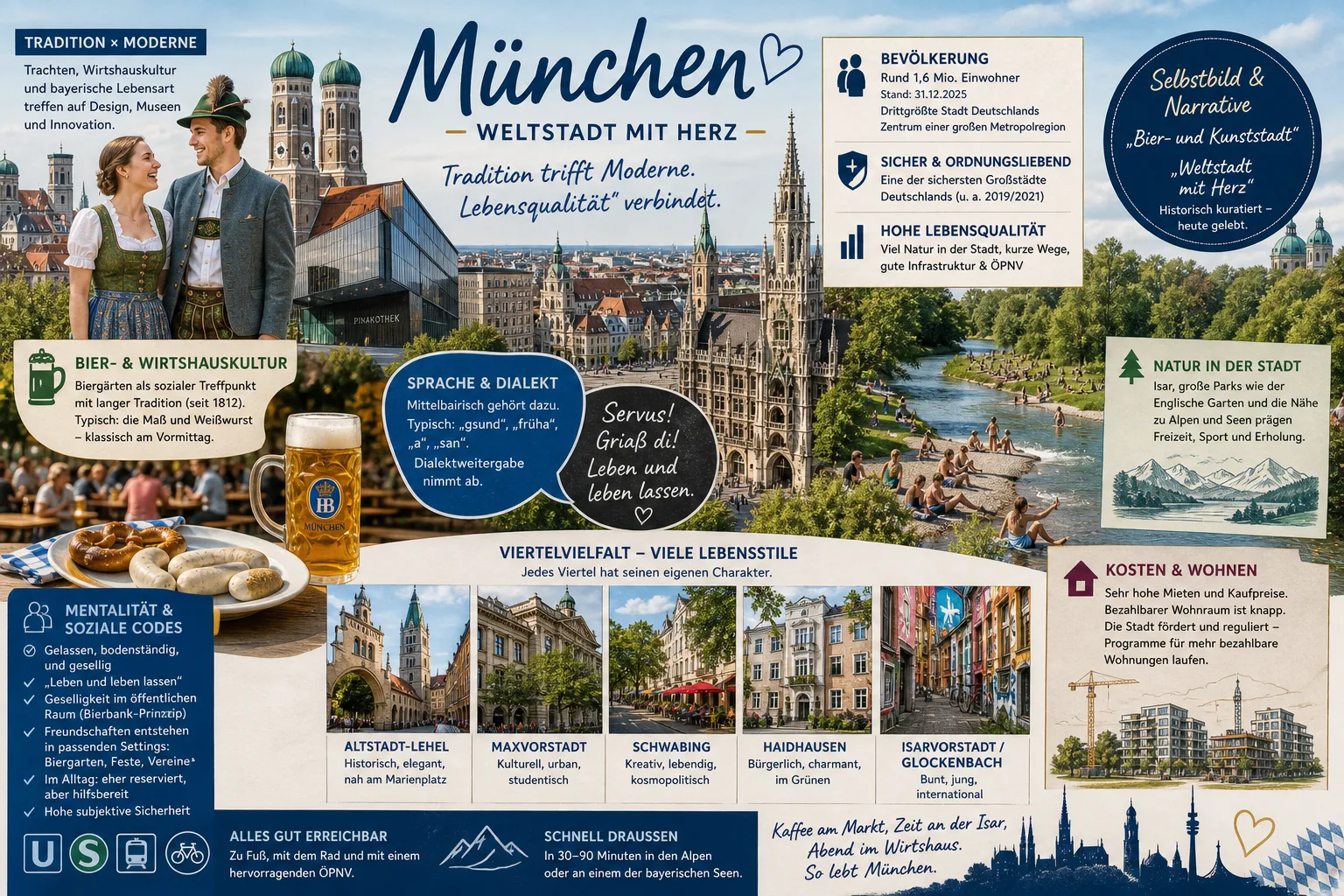
Tradition Meets Cosmopolitan City: Event Formats That Show Munich’s Mix
In Munich, numerous programs will be announced in the coming period that deliberately address the tension between traditional costume & modernity, local identity & international scene. If you want to experience “typical Munich” in the future, these formats are particularly suitable:
- Curated exhibitions in museums and city venues that negotiate cityscapes, everyday culture, and self-image (program and ticket info via the official pages of the respective institutions).
- City tours focusing on everyday culture (e.g., markets, residence surroundings, neighborhood routes). Look for providers who describe their route transparently and specify clear meeting points/terms and conditions.
- Talks, readings, and panels on urban development, housing, culture, and mobility – often announced in cultural centers and libraries.
- Festival and event calendars of the city and major venues as the most reliable orientation if you are looking for specific dates for the coming weeks.
For current and upcoming program points, preferably use official calendars (City of Munich) or the organizers’ pages. This way you avoid outdated or incomplete date information.
Isar, Parks & Alpine Views: Outdoor Dates and Seasonal Experiences
A large part of what many people will appreciate about Munich in the future takes place outdoors – and is highly seasonal. For the next few months and the following warm weather phases, the following are particularly suitable:
- Guided Isar walks (nature & city history along typical riverbank sections) – often scheduled as weekend dates in various providers’ programs.
- Open-air culture in parks and squares (concerts, cinema, theater) – announcements are usually made at shorter notice, so check calendars regularly.
- Day trips to the surrounding area (lakes/mountains) with train or group offers: For concrete travel planning, the timetables of the transport companies are decisive.
Practical for planning: Save the official calendar pages as bookmarks and check in advance whether registration is required and which weather or safety rules apply.
Beer Garden & Tavern: How to Find Upcoming Dates – and Behave Confidently
If you want to experience beer garden or tavern culture in the near future, it’s worth taking a look at upcoming music evenings, after-work formats, action days, and seasonal menus that many establishments announce online. For a relaxed, “Munich-style” experience, these rules of conduct help, which work well in most classic settings:
- Share your seat: If it’s crowded, asking (“Is this seat free?”) and joining is common – especially at long tables.
- Respect the pace: Ordering and paying works differently depending on the establishment (table service vs. self-service). Briefly observe how other guests do it.
- Start conversations easily: A friendly “Servus” or “Grüß Sie” is often a good start; small talk often arises about food/environment/event.
- Consideration in public spaces: Especially at large evenings/events: keep pathways clear, adjust volume, dispose of waste.
Upcoming Major Events: Where to Find Official Information
For large festival and event formats, the official website of the respective organizer is the most important source (dates, safety rules, arrival, tickets/reservations). A well-known example with its own official information page is Oktoberfest.
Language & Dialect: Future Opportunities for “Servus” in Real Life
If you want to actively experience Munich’s linguistic feeling in the future, there are several everyday entry points – without having to speak dialect “perfectly.” In upcoming programs, look out for:
- Language meetups and meetups (German conversation, sometimes with regional touches) – dates are often published via event pages or community platforms.
- Readings, cabaret, and stage programs in which regional language coloring appears (ticketing via the respective venues).
- Market and neighborhood tours where typical greetings and phrases appear in context – especially suitable for hearing nuances of politeness and tone.
If you are new to Munich: The safest strategy for the next meetings is to remain friendly and initially speak standard German; you can then adopt dialect words situationally when you have heard them several times and feel confident.
Mentality in Everyday Life: Events Where Contacts Are Made
Munich contacts will often arise in the future through suitable “settings”: recurring dates, clubs, sports, neighborhood formats, or cultural evenings. For the next few weeks and months, these formats are particularly effective if you are looking for connections:
- Club and trial trainings (sports, music, customs, volunteering) with open entry points.
- Neighborhood events in district centers (exchange/repair formats, open evenings, workshops).
- Cultural center programs (small stages, film series, discussions), where it’s easy to start a conversation because everyone is there for the same topic.
For many people, “typical Munich” feels right when you accept the mix of openness in the right setting and respect for private space: don’t start too pushy, but use opportunities that are explicitly social.
Neighborhood Diversity: Future District Programs to Get to Know
If you really want to “read” Munich in the future, plan to visit several districts – ideally through upcoming tours, cultural dates, or market days. Depending on your interests, these approaches often work:
- Old Town & city center routes: good for architecture, central museums, and major program points.
- University and cultural axes: suitable if you are looking for future exhibitions, lectures, and student-oriented events.
- Districts near the Isar: sensible if you want to combine outdoor, gastronomy, and evening programs.
- Residential and changing districts: good for neighborhood formats, smaller stages, local initiatives, and new concepts.
Practical tip for your next visits: For each date, prepare a “triangle” of program (event), route (public transport/on foot), and wind-down (café/beer garden nearby). This way, the city feels less “big” and more like a series of easily walkable neighborhoods.
Planning & Trust: Tickets, Safety, Accessibility, Reliable Sources
This Is How You Reliably Plan Upcoming Dates
- Official calendars first: Use city and organizer pages before relying on third-party platforms.
- Check for up-to-dateness: Pay attention to the date of the event, admission times, possible changes, and contact options.
- Arrival: For future journeys, the current information from transport companies is decisive (construction work/diversions can be short-term).
- Accessibility: Reliable organizers provide information on access, seating, companion regulations, or assistance.
Safe & Respectful on the Go
For both large and small events in the future: Follow house rules, use official entrances and exits, and follow staff instructions. For official and safety-relevant information, the city’s and responsible authorities’ pages are the most reliable sources.
Note: This article is an editorial overview for event planning and does not replace individual information from organizers or authorities. Please always check the official information of the respective event before visiting.