Wine Festivals, Beer Festivals & Food Events in Munich
Wine Festivals, Beer Festivals & Food Events in Munich (Preview of Upcoming Dates)
A forward-looking overview of how Munich's beer, wine, and food events are distributed over the coming months and seasons – from folk festivals and wine villages to street food formats. Dates and details may change at short notice; the official organizer information is decisive.
For whom: Munich residents, weekend visitors, and culinary travelers who want to plan future events and find suitable formats (family, after-work, culinary tours, special fairs).
Tradition & City Center: Markets, City Birthday & Viktualienmarkt
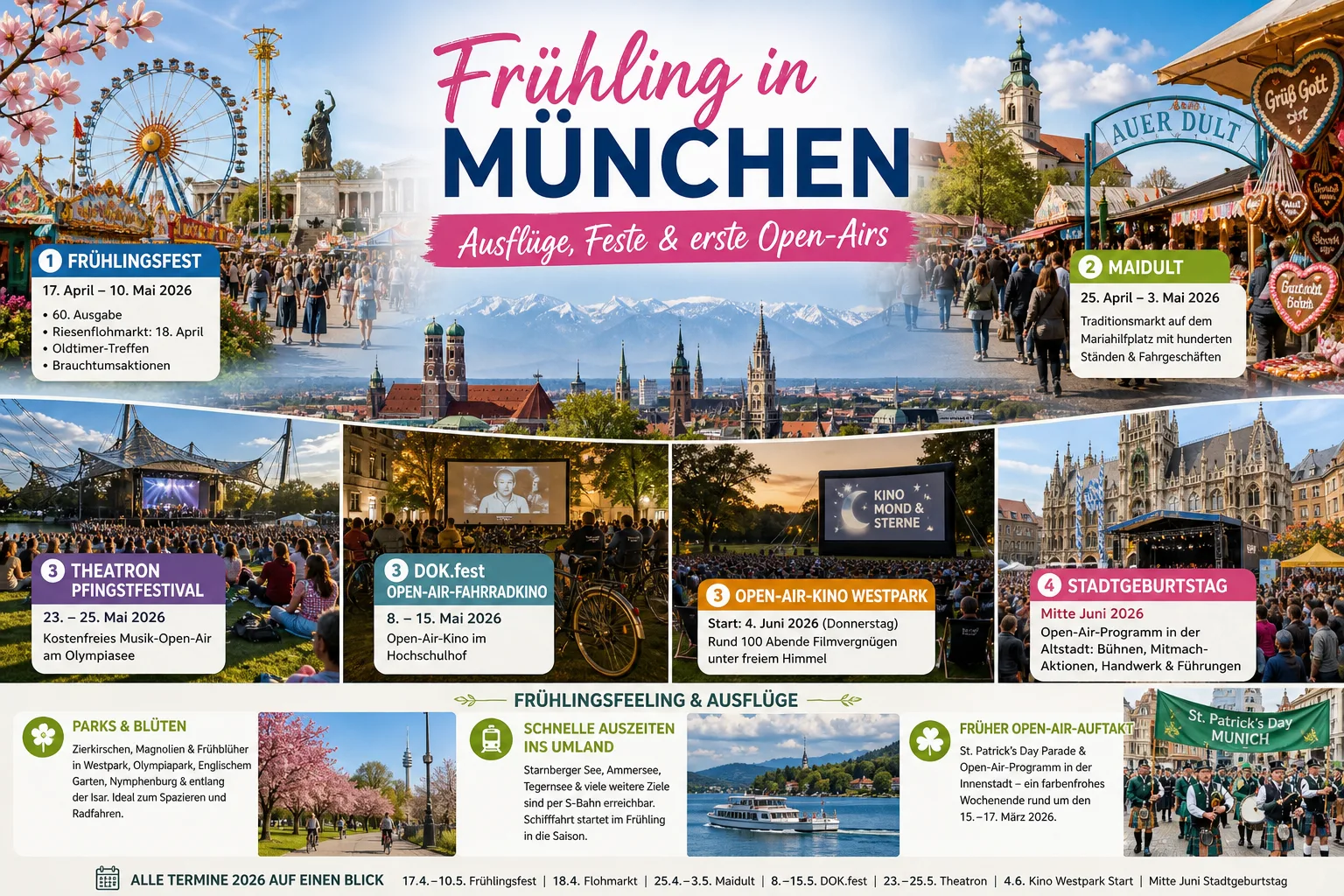
Apart from the large Wiesn formats, markets and city center festivals will especially shape Munich's culinary calendar in the coming months and next year. They often combine cuisine, crafts, and city life in a particularly low-threshold way: ideal for a spontaneous afternoon without a long journey or ticket planning.
Markets with Folk Festival Flair
Recurring highlights include markets with a fairground atmosphere, where a unique food cosmos unfolds between stalls for crafts and household goods. The culinary spectrum usually ranges from sweets (e.g., fried pastries) to hearty grilled dishes – complemented by seasonal specialties.
City Birthday & Old Town Events
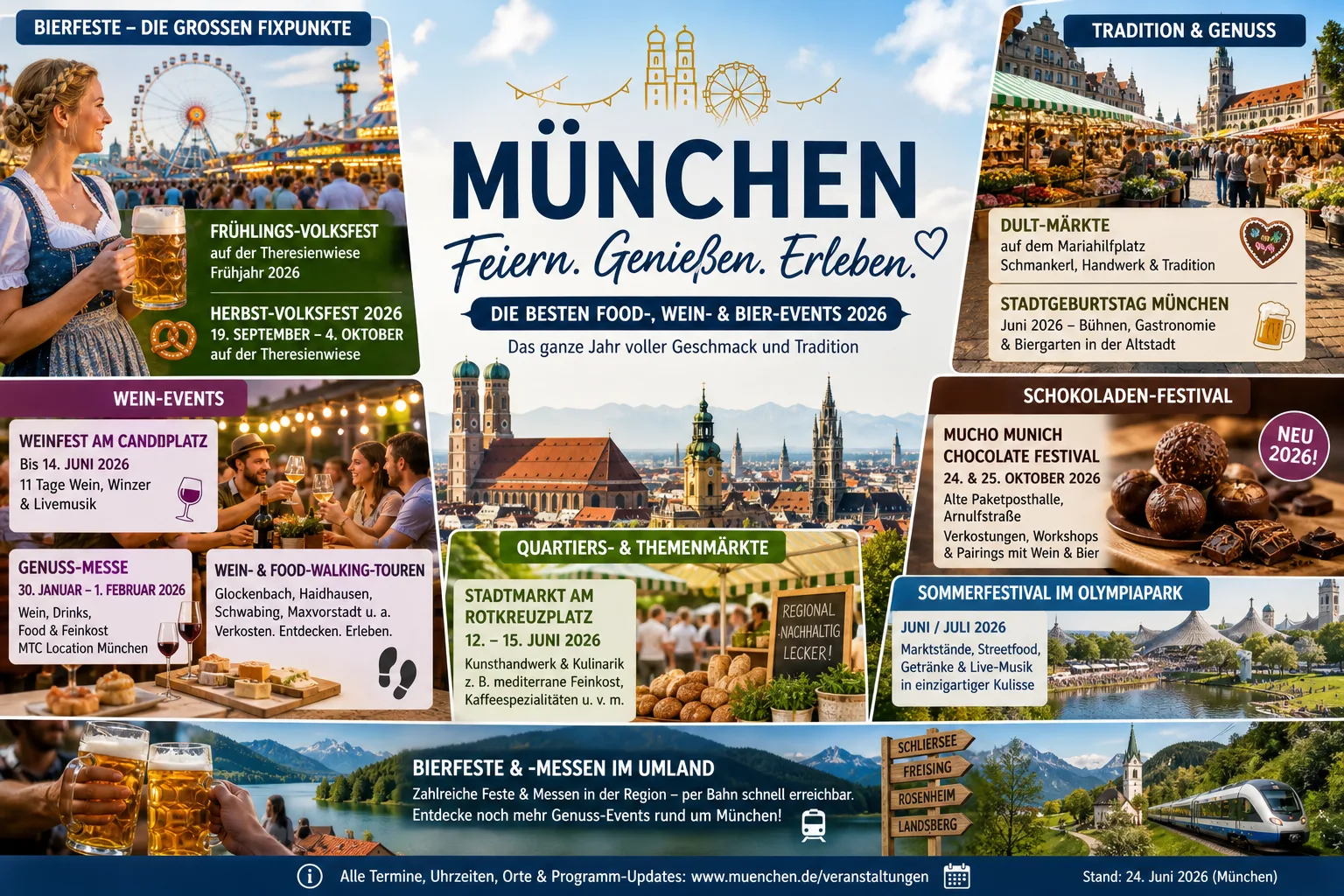
For upcoming city festivals in the old town: They thrive on a mix of stage programs, beer garden areas, and street food offerings. Those wanting to try international cuisine will often find something here – while classic Bavarian options are also available. Since program areas and access can change depending on security situations, it's advisable to check the official information in advance.
Viktualienmarkt: Year-Round Anchor for Culinary Planning
The Viktualienmarkt is not a single event, but as a year-round market, it is a reliable anchor for anyone planning future food outings in Munich. Many trends (regional concepts, delicacies, new snack ideas) can be discovered here early. For visitors, the market is also practical: You can easily put together your own "mini-tour" – for example, with cheese, baked goods, fruit, delicacies, and a stop at the beer garden.
Wine Festivals, Culinary Fairs & Walking Tours through the Districts
Munich remains a beer city, but for the coming seasons, a vibrant wine scene is also firmly to be expected. Particularly attractive are formats that combine wine with atmosphere, music, and matching cuisine – from open-air wine villages to indoor fairs and guided tours.
Open-Air Wine Festivals in Early Summer
In the next early summer weeks, multi-day open-air wine festivals are typically expected in Munich, where squares and areas become "wine villages": with wine stands, vintner booths, seating areas, and food offerings that often pair well with summer (e.g., cheese, tarte flambée, Mediterranean dishes). For your visit, it's worth checking the serving times and possible glass deposit rules.
Culinary and Wine Fairs in the Indoor Season
When the weather turns, enjoyment in Munich often moves indoors. In the coming winter months, fairs and indoor formats that combine wine, delicacies, and tastings are again conceivable. For connoisseurs, such events are helpful for meeting producers directly, comparing styles, and getting targeted advice. For many visitors, it's also a good setting to find gifts and supplies for the next season.
Walking Tours through Glockenbach, Haidhausen, Schwabing & Co.
Guided wine and food walking tours remain a strong option for the coming months: Small groups move through a district, sample at several stops, and get background on cuisine, drinks, and the respective business. This is especially suitable for those who want to enjoy more consciously without the hustle and bustle of large festivals – and who also want to discover new addresses in their own district.
Summer Outdoors: Olympiapark, Street Food & District Markets
For upcoming summer dates: Open-air formats are often the most convenient way in Munich to combine culture and cuisine. Those who want to eat diversely (street food trucks, mobile bars, international cuisine, regional products) will find especially many opportunities in the warm months.
Summer Festival in Olympiapark
Olympiapark is one of the most reliable addresses for future summer events: lots of space, good public transport connections, and a program that often includes cuisine as a fixed component. Depending on the event, the gastronomy areas are curated differently – from classic beer garden feeling to international street food. In advance, you should check the admission rules, ticket models, and permitted items, as these can vary from year to year.
Street Food Formats & District Markets
At the same time, smaller, district-based markets and time-limited street food events remain particularly interesting in the coming months: They are often less crowded, closer to everyday life, and allow you to try new concepts. You often meet local producers and young gastronomy projects there, who start with small menus or specialties before opening permanently.
Chocolate, Special Formats & Excursions to the Surrounding Area
For the coming autumn and winter seasons, special formats are increasingly relevant in Munich that do not focus on "everything for everyone," but on a clear theme. These include – depending on the program year – chocolate and patisserie events, craft and manufactory formats, or curated culinary markets.
Chocolate and Patisserie Events
If a chocolate festival or patisserie fair is announced, early ticket and slot planning is worthwhile, as workshops and tastings are often limited. Culinary-wise, such formats are more than just "sweet": They often focus on sensory experience, craftsmanship, origin (cocoa/chocolate), and combinations with drinks. If you have allergies, check labeling, ingredient information, and tasting conditions in advance.
Looking to the Surroundings: Beer Festivals, Breweries & Day Trips
Excursions to the Munich surrounding area remain attractive in the coming months, especially to beer festivals, brewery events, or regional culinary markets. Many destinations are accessible by regional train and S-Bahn – practical if you consume alcohol and want to return safely. The surrounding area often complements Munich's offerings with smaller settings, rural brewing traditions, and more family-friendly dimensions.
What Festivals Will Mean for City Life & Culinary Culture in the Future
In the coming years, wine festivals, beer festivals, and food events in Munich are expected to continue to act as a "city engine": They bring people together, make districts tangible, and create opportunities to directly support local businesses. At the same time, they are likely to continue to change – not only in terms of cuisine, but also organizationally.
- Sustainability: Reusable systems, waste concepts, and regional supply chains remain central criteria – especially for large open-air formats.
- Inclusion & Family Friendliness: More accessible access, quieter zones, and non-alcoholic alternatives are gaining importance.
- Digital Planning: Online tickets, time slots, cashless payment, and live updates will continue to be standard for many events.
For visitors, this mainly means: Those who want the best experience in the future should plan their visit a bit more consciously (arrival, peak times, tickets, rules) – and will then benefit from an increasingly diverse culinary landscape.
Planning Tips: How to Keep Track of Upcoming Dates
- Official Calendars First: Check the event calendar of the City of Munich as well as the pages of the respective organizers (Theresienwiese/folk festivals, Olympiapark, fair and event locations).
- Updates on the Event Day: Especially for open-air events, weather, security situations, and logistics can lead to last-minute changes.
- Public Transport Planning: Expect full trains and closures at major events; plan alternative routes.
- Culinary Enjoyment & Safety: If alcohol is involved, choose a safe way home (public transport/taxi/on foot) and drink enough water.
- Allergies & Diet: Actively ask stands about ingredients/allergens; many providers now have good alternatives, but labeling varies.