
Dennis Hormes
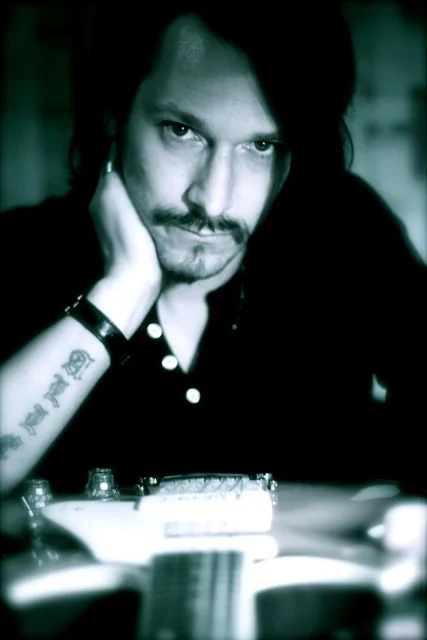
Image from Wikipedia
Image from Wikipedia
Dennis Hormes: The German Blues and Rock Guitarist of International Fame
An Exceptional Musician Between Blues Rock, Stage Routine, and Personal Style
Dennis Hormes, born in July 1981 in Kempen, is part of that rare generation of German guitarists who naturally combine virtuosity, stage presence, and songwriting. As a blues and rock guitarist, singer, producer, and songwriter, he has built a music career that extends far beyond regional scenes since his early teenage years. His story represents perseverance, early professionalism, and an artistic development shaped by international tours, studio work, and a clear love for the live moment. ([de.wikipedia.org](https://de.wikipedia.org/wiki/Dennis_Hormes))
Early Influences: Kempen, Guitar, and the Urge to Perform
Dennis Hormes’ musical career began strikingly early. He was already on stage at twelve, followed by his first endorsement deal at fourteen, and a collaboration with Gibson at sixteen, making him the youngest musician associated with that brand. His first steps into the public eye were not cautious approaches but real tests of endurance: early live experiences, sessions with seasoned musicians, and an environment that quickly allowed him to grow into professional working methods. ([erlebekempen.de](https://erlebekempen.de/der-rockstar-der-aus-kempen-in-die-welt-zog/))
It is precisely this early phase that explains why Hormes is repeatedly described as an exceptional guitarist in reports. He self-taught many skills, played by ear, and thus developed a distinctive style that emerged not from textbook knowledge, but from practice, intuition, and musical instinct. This mix of individuality and discipline shaped an artistic personality that feels at home in blues rock as well as in pop, rock, and musical contexts. ([erlebekempen.de](https://erlebekempen.de/der-rockstar-der-aus-kempen-in-die-welt-zog/))
International Experience and a Career Path Beyond the Norm
Hormes’ career reads like a long series of intense encounters with live music. Even as a teenager, he was drawn to New York City, where he worked in T.M. Stevens’ touring band, experiencing a hard rock’n’roll school. Later, he performed on world and tour stages with artists such as Fettes Brot, DJ Bobo, Tom Beck, Luxuslärm, Roachford, The BossHoss, Marc Terenzi, Daliah Lavi, Mark Medlock, Dieter Falk, and Richard Sanderson. ([dennis-hormes.de](https://www.dennis-hormes.de/Home.asp?L=ENG&UID=))
In addition, he had long-term engagements in the musical field, especially in "Richard O'Brien's Rocky Horror Show," with which he toured Europe for almost three years. This versatility is what makes the appeal of his music career stand out: Hormes confidently navigates between band, show production, and solo artistry, without losing the recognizability of his guitar work. In the trade press and concert reviews, he is seen as a musician who works as precisely in the studio as he does on stage. ([erlebekempen.de](https://erlebekempen.de/der-rockstar-der-aus-kempen-in-die-welt-zog/))
Solo Work: "Six String Therapy" as an Artistic Benchmark
His solo album "Six String Therapy," released in 2015 and listed in the Wikipedia discography in 2016, marks a central reference in Hormes’ discography. The work was released through A1 Records and SPV, presented as an independent statement: twelve songs entirely written by him, featuring him on guitar, vocals, and production. This consistent authorship shows that Hormes shines not only as a supporting musician but also as a musical storyteller with his own dramaturgy. ([de.wikipedia.org](https://de.wikipedia.org/wiki/Dennis_Hormes))
The tone of the album is noticeably rockier than earlier contexts and focuses on the balance of technique, songwriting, and voice. Apple Music lists the album as a central release, while the official website describes it as his second solo album, naming the band lineup with Robert Lindemann on bass and Jerome Lellouche on drums. Overall, it creates the image of an artist who not only masters his instrument virtuously, but also transforms it into a cohesive narrative form compositionally. ([music.apple.com](https://music.apple.com/us/artist/dennis-hormes/164174447))
Work in a Band Context: Blues Band, Go Music, and Collaborations
A significant part of Hormes' profile stems from working with other musicians. In the Dennis Hormes Blues Band, he played and sang alongside Martin Engelien on bass and Dieter Steinmann on drums, both with ties to the Klaus Lage Band. His connections to Engelien also remain influential: he has appeared multiple times in Engelien's project "Go Music," becoming recognizable on the stages of these open concert formats as a spontaneous, quick-reacting guitarist. ([dennis-hormes.de](https://www.dennis-hormes.de/Home.asp?L=ENG&UID=))
These collaborations explain why he appears on so many productions. The official website mentions over 40 recordings he has contributed to, while Apple Music lists his participation in projects such as "Unsere Zeit," "Moment," or the live EP "Dirty Dietz Band Live in Köln 2010." His discography should thus be seen less as a linear solo career, but rather as a web of contributions, sessions, and tours that document his stylistic agility. ([dennis-hormes.de](https://www.dennis-hormes.de/Home.asp?L=ENG&UID=&utm_source=openai))
Current Projects: Dennis Hormes & Friends and the Return to the Stage
Even in 2024 and 2025, Hormes remained active. RockTimes reports on regular performances under the banner "Dennis Hormes & Friends" at Butze by Falko in Tönisvorst, with concert reports mentioning changing but well-rehearsed lineups. Here, the guitarist's current musical practice is exhibited as a lively mix of rock, funk, pop, and grunge, featuring fresh songs and a solid core of fellow musicians. ([rocktimes.info](https://www.rocktimes.info/kuenstler/dennis-hormes/))
The echoes website also featured Hormes in 2024, emphasizing his longstanding recurring role as a representative in the "Gilmour position." The editorial team highlighted his stage presence, his enthusiasm for Pink Floyd and David Gilmour, and his reliability as a live musician. It becomes clear: Hormes is not stuck in the past but continuously develops his stage presence while remaining firmly anchored in the German live scene. ([echoes.de](https://www.echoes.de/2024/03/28/echoes-2024_dennis-hormes/))
Style, Technique, and Musical Development
Stylistically, Dennis Hormes operates at the intersection of blues rock, rock, and popular band contexts. AllMusic categorizes him within the Pop/Rock genre, while German-language sources repeatedly emphasize his bluesy origins and his rock energy. These transitions make his artistic development interesting: he remains committed to the guitar ideal of expressive lead playing but simultaneously thinks in terms of songs, arrangements, and overall sound. ([allmusic.com](https://www.allmusic.com/artist/dennis-hormes-mn0002418659))
Additionally, there is a particular form of authenticity. Because Hormes developed much by ear and does not bind himself slavishly to musical notation, his playing creates an immediate and physical approach to the music. This fits the image of an artist who places the stage at the center: Here, technique, improvisation, dynamics, and a voice that is explicitly described as remarkable come together. ([erlebekempen.de](https://erlebekempen.de/der-rockstar-der-aus-kempen-in-die-welt-zog/))
Cultural Influence and Recognition in the Music Scene
Dennis Hormes is not an artist of the large mainstream marketing apparatus, but a musician whose reputation stems from work, reliability, and quality. Reports from Kempen and music media describe him as a valued colleague, a guitarist with international experience, and someone whose name carries weight in industry circles. Such attributions are central to understanding his significance, as they demonstrate cultural influence not only through charts but through respect within the scene. ([erlebekempen.de](https://erlebekempen.de/der-rockstar-der-aus-kempen-in-die-welt-zog/))
His role as an endorser, touring musician, and solo artist points to a career that expands the classic image of the rock guitarist. Hormes embodies that modern musician figure who operates between live performance, production, and collaboration, gaining authority precisely through this. For fans of blues rock and handcrafted guitar music, he stands for substance over posturing, for stage presence rather than mere self-presentation. ([dennis-hormes.de](https://www.dennis-hormes.de/Home.asp?L=ENG&UID=))
Conclusion: Why Dennis Hormes Remains Fascinating
Dennis Hormes captivates because he combines technical brilliance with genuine musical experience. He started working internationally at an early age, established himself as a solo artist, and has never allowed his identity to be reduced to a single format. Those who experience him live see not just a guitarist, but a fully thinking musician who shapes blues, rock, and songwriting into a compelling whole. ([dennis-hormes.de](https://www.dennis-hormes.de/Home.asp?L=ENG&UID=))
Especially in today’s live culture, this remains the true appeal: Dennis Hormes stands for a music career with integrity, for artistic development without stagnation, and for a stage presence born from experience. Anyone seeking a guitarist who not only plays fast but tells stories should definitely see him live on stage. ([rocktimes.info](https://www.rocktimes.info/kuenstler/dennis-hormes/))
Official Channels of Dennis Hormes:
- Instagram: No official profile found
- Facebook: No official profile found
- YouTube: No official profile found
- Spotify: https://open.spotify.com/intl-ja/artist/6IYt7bWa8ajRjGha4Nhd6w
- TikTok: No official profile found