
Emanuel Ax
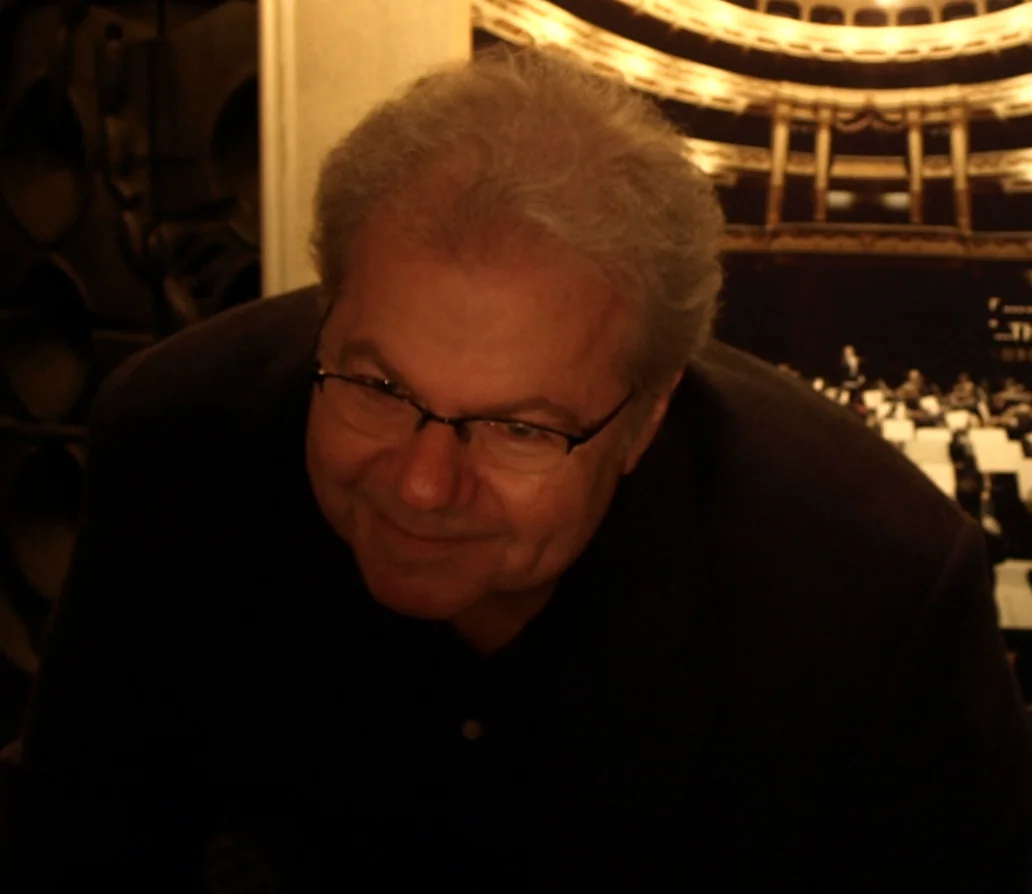
Image from Wikipedia
Image from Wikipedia
Emanuel Ax – the elegant master of the piano between classical depth and chamber music intelligence
A world-class pianist: Emanuel Ax in portrait
Emanuel Ax has been one of the defining pianists of the international classical music scene for decades. The U.S. artist, born in Lviv in 1949 to Polish-Jewish parents, developed a musical career characterized by technical sovereignty, stylistic clarity, and a remarkable connection to the essence of the works. His official profile describes him as a pianist whose artistic journey is fueled by early successes, worldwide concert appearances, and a long partnership with the great orchestras and chamber music partners of the present. (emanuelax.com)
What makes Emanuel Ax particularly special is not only the length of his career but the consistency of his musical authority. He combines pianistic sensitivity with analytical sharpness, while always remaining devoted to the score. This blend of humility, virtuosity, and maturity explains why he is regarded as an exceptional artist in solo recitals, orchestral concerts, and chamber music projects. (emanuelax.com)
Early years, education, and the path to the big stage
Ax grew up in a Polish family and came to Winnipeg, Canada, as a child with his parents. He later continued his education in the United States, studying at the Juilliard School with Mieczyslaw Munz, while also taking French courses at Columbia University; Yale and Columbia later awarded him an honorary doctorate in music. This academic and artistic dual formation explains why his interpretations often seem so well-considered: Ax thinks musically in structural terms, but never dryly, always with lyrical tension. (emanuelax.com)
The decisive international breakthrough came in 1974 with his victory at the first Arthur Rubinstein Piano Competition in Tel Aviv. Just a year earlier, he had drawn attention in New York with his debut in the Young Concert Artists Series; in 1975, he received the Michaels Award from Young Concert Artists, and in 1979, the Avery Fisher Prize. These awards established the young pianist as a fixture in global concert life and laid the foundation for a world career that continues to this day. (emanuelax.com)
The international breakthrough and establishment as a soloist
Since his victory at the Rubinstein competition, Emanuel Ax has been present on significant stages. He has performed as a soloist with leading orchestras worldwide, including the Berliner Philharmoniker, the Royal Concertgebouw Orchestra, the Gewandhausorchester Leipzig, and the Orchestre National de France, as well as significant U.S. orchestras in New York, Los Angeles, San Francisco, Chicago, and Boston. His concert activity showcases a repertoire understanding that spans from classical to modern, consistently emphasizing sonic balance and formal precision. (dso-berlin.de)
His collaborations with renowned conductors also shape this profile: Sir Simon Rattle, Mariss Jansons, Sir John Eliot Gardiner, Vladimir Jurowski, and Iván Fischer are among his regular musical partners. The press has long described Ax as an interpreter of calm authority, whose playing is characterized by “creamy technique,” great expressive culture, and intellectual depth. Such voices from the music press underline his position as a pianist who relies not on external effects but on substance. (dso-berlin.de)
Chamber music as an artistic home
A significant part of Emanuel Ax's profile is his chamber music. With Isaac Stern, Peter Serkin, Yefim Bronfman, and especially Itzhak Perlman and Yo-Yo Ma, he has built an outstanding reputation as a sensitive partner at the piano. This work demands different qualities than solo recitals: listening, reacting, transparency in touch, and the fine balancing of timbres. Ax embodies precisely this chamber music intelligence with great naturalness. (dso-berlin.de)
His involvement in recordings with Yo-Yo Ma and Itzhak Perlman has been particularly closely watched, such as with Mendelssohn's piano trios and Brahms's works for cello and piano. The reception consistently emphasizes the musical partnership on equal footing: Ax does not accompany; he collaborates. This is a central feature of his artistic development and one of the reasons why his discography in chamber music repertoire continues to hold reference status today. (dso-berlin.de)
Discography, repertoire, and artistic signature
Among Emanuel Ax's defining recordings are his interpretations of Haydn's piano sonatas, works by Beethoven and Brahms, as well as the complete recording of Chopin's works for piano and orchestra. His solo album Variations, for which he received the ECHO Klassik award in 2013, is particularly highlighted. This discography showcases an artist who understands the great forms of piano literature not as spectacles but as intellectual landscapes. (dso-berlin.de)
Critics regard Ax as an interpreter of exceptional clarity and expressive control. Collected press reviews speak of a pianist with "authority," a "lyrical" tone, and a technique that never becomes an end in itself. His interpretations of Chopin, Schumann, Mozart, Beethoven, and Brahms are regularly praised for their balance of structure, warmth, and emotional tension; thus, he belongs to that rare generation of artists who combine virtuosity and insight. (emanuelax.com)
Style and musical language: between brilliance and intimacy
Emanuel Ax’s style is characterized by a controlled, cultivated touch, nuanced phrasing, and a deep affinity for classical formal rigor. Critics repeatedly highlight his ability to maintain transparency even in virtuosic passages and to shape musical lines in such a way that each voice gains significance. This approach makes him a pianist whose interpretations do not aim for short-term impact but for long-term authenticity. (emanuelax.com)
His artistic curiosity also manifests in his engagement with the 20th century. In recent years, Ax has increased his attention to contemporary music and has premiered works by John Adams, Christopher Rouse, Melinda Wagner, HK Gruber, Bright Sheng, and Krzysztof Penderecki. This expands his image from a pure classical interpreter to a pianist actively shaping the repertoire and integrating the present into concert practice. (dso-berlin.de)
Current projects, residencies, and new impulses
For the 2026/2027 season, Emanuel Ax is announced as Artist in Residence with Radio France. The kickoff includes a European tour with concerts in Munich, Paris, and Amsterdam; thereafter, performances with The Knights, as well as chamber music with Yo-Yo Ma and Itzhak Perlman, along with numerous orchestra and recital engagements in North America and Europe will follow. Simultaneously, a documentary titled All the Music in the World, which follows Ax on tour, is set to premiere at DOC NYC. (emanuelax.com)
Additionally, he received special attention in 2026 as Musical America Artist of the Year. His WQXR podcast series Classical Music Happy Hour had a successful launch in 2026, and a new season is in preparation. This demonstrates an artist who remains deeply rooted in the classical performance tradition while also embracing new media formats and current programming concepts. (emanuelax.com)
Cultural influence and significance in classical concert life
Emanuel Ax represents a tradition of thoughtful, never mannered piano playing. His significance lies not just in awards and recordings but in an attitude that places the work above the ego. Especially in a time when the classical music scene mediates between repertoire preservation, event culture, and market logic, Ax remains a benchmark for musical integrity. (emanuelax.com)
His influence is also reflected in the fact that colleagues, orchestras, and critics repeatedly cite him as a reference for stylistic balance and interpretative maturity. The combination of solo career, chamber music, and contemporary projects makes him an artist whose impact extends far beyond individual recordings. Emanuel Ax embodies that rare form of authority that does not assert itself loudly but convinces through lasting quality. (dso-berlin.de)
Conclusion: Why Emanuel Ax continues to fascinate today
Emanuel Ax fascinates because his music career translates the great ideals of classical interpretation into the present: precision, warmth, stylistic awareness, and a deep love for the score. He is a pianist who instills trust with every note while maintaining the tension that makes great music come alive. Those who experience him live encounter not a show star but a great interpreter in the best sense. (emanuelax.com)
For this reason, a concert by Emanuel Ax remains an event for music lovers seeking substance. His stage presence, thoughtful repertoire choices, and sensitivity in chamber music make every performance an invitation not just to hear classical music but to understand it anew. Anyone who has the opportunity to experience Emanuel Ax live should seize it. (emanuelax.com)
Official channels of Emanuel Ax:
- Instagram: no official profile found
- Facebook: no official profile found
- YouTube: no official profile found
- Spotify: no official profile found
- TikTok: no official profile found