
Hans A. Guttner
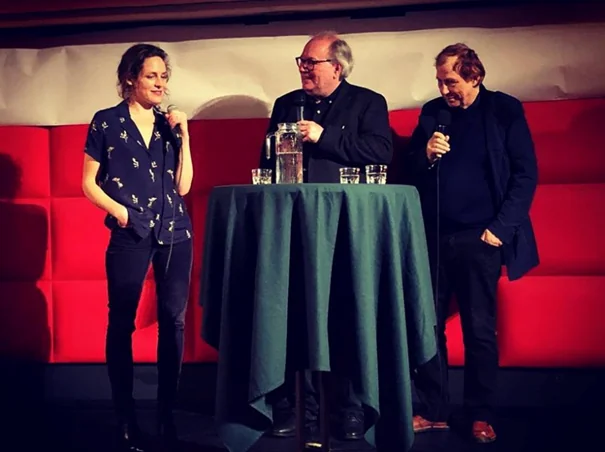
Image from Wikipedia
Image from Wikipedia
Hans A. Guttner – The Chronicler of Documentary Film Between Migration, Institutions, and Human Proximity
A Filmmaker Who Made the Invisible Visible
Hans Andreas Guttner was among those auteur filmmakers who sustainably expanded documentary filmmaking in Germany and Austria. Born on May 6, 1945, in St. Christophen, Lower Austria, and passed away on April 14, 2025, in Munich, he worked as a director, author, and producer with a clear signature: attentive, respectful, analytical, and endowed with great empathy. Early on, he developed a form of long cinema documentary that focused not on quick effects, but on proximity, observation, and narrative condensation. (de.wikipedia.org)
His work stands at the intersection of cultural history, political reality, and poetic observation. Guttner did not come from nowhere: he studied law and psychology in Vienna, later communication and theatre studies in Munich, and gained experiences in very different life worlds before his filmmaking career – from fairs to London’s Fleet Street to ships and Lake Wörthersee. This biography sharpened his perception of social spaces, work, foreignness, and belonging. (de.wikipedia.org)
Biographical Influences: From Studies to His Own Production Company
The early career of Hans A. Guttner served as a school of observation. Those who connect law, psychology, communication studies, and theatre studies, while also working as a waiter, puppet-show assistant, or steward, develop a keen eye for roles, conflicts, and power dynamics. This very mixture of intellectual discipline and lived experience later shaped his documentaries, where he did not explain environments but rather let them speak from their own rhythm. (de.wikipedia.org)
In 1976, Guttner founded Sisyphos Film in Munich, followed by Guttner Film in Vienna in 2014. This established the production basis for independent, long-term artistic work. His career began with short films that also ran as previews in cinemas and quickly led him to the form of documentary storytelling that made his work famous: long, accurately observed films often institutionally or socially anchored, with a high degree of formal consistency. (de.wikipedia.org)
The Breakthrough: Migration as a Grand Narrative of European Cinema
Guttner achieved his first major success in 1979 with Alamanya Alamanya – Germania Germania. The film thematized labor migration as one of the first and marked the beginning of the pentalogy Europa – A Transnational Dream (1979–1996). The fact that this subject gained attention at a time when cinema barely spoke about migration with today's depth showcases Guttner's sensitivity to the political and cultural relevance of his theme. The film was shown internationally in more than 50 countries. (de.wikipedia.org)
With Familie Villano Returns Not, Guttner set the tone for a whole generation of documentary migration stories in 1981. The film is now regarded as a classic of German documentary film and became a reference point for the later development of cinema documentary. The work already highlighted the method that characterized his work: closeness without intrusion, distance without coldness, observation without prescriptive commentary. (de.wikipedia.org)
Cinematic Signature: Respect, Distance, and Narrative Consistency
What made Guttner particularly stand out in documentary filmmaking was his attitude toward the portrayed individuals. Filmdienst describes his trademarks as familiarity with the protagonists, combined with respect, distance, avoidance of commentary, and thesis-based proof. Exactly from this arose a tension that kept his films alive: he sought not sensational images but social details, everyday gestures, and the slow transformation of life contexts. (filmdienst.de)
This method is also evident in later works such as Im Niemandsland (1983), which focused on Turkish-speaking youth, and Die Megaklinik (2004), an institutional study of the Nuremberg Clinic. Guttner followed a documentary line that recalls great observers like Frederick Wiseman: institutions do not appear as abstract systems but as social organisms with their own dramaturgy, hierarchy, and vulnerable humanity. (filmdienst.de)
Late Works and Artistic Expansion
In the 2000s and 2010s, Guttner expanded his view to include art, work, and rural life. Sean Scully – Art Comes from Need (2010) follows the Irish painter as he creates an autobiographically influenced painting, merging the art process with life history. By Day and by Night – A Country Doctor from Carinthia (2016) centers on his brother Martin Guttner while simultaneously creating a mosaic of disappearing village life in the mountainous region of Carinthia. (filmdienst.de)
With Die Burg (2019), he focused on the Vienna Burg Theatre, one of the most important playhouses in the German-speaking world. Critics highlighted that Guttner examined the theater operation neutrally and with a distanced view, while providing a solid, empathetic overview of the work behind the big stage. His last major film, Tiergarten (2024), continued this approach and dedicated itself to zoos as the last hope for endangered animal species. (filmdienst.de)
Current Projects and Late Presence
Even after his death, Guttner remained present in the cultural memory. The official website reported in 2026 on continued screenings of Im Niemandsland at the Munich Film Festival, as well as Alamanya Alamanya – Germania Germania as part of programs at the International Short Film Festival Oberhausen and an exhibition at the Maxim Gorki Theater. This enduring visibility demonstrates that his work is not only historically significant but also continues to be engaged with current cultural-political contexts. (guttner.info)
The late notifications of screenings also show how alive Guttner’s films have remained. They do not function as closed historical documents but as open observations about migration, institutions, city, countryside, and cultural identity. It is precisely in this that their contemporaneity lies: they speak in a language that precisely registers societal changes while simultaneously placing human dignity at the center. (guttner.info)
Critical Reception and Cultural Impact
Guttner was awarded numerous accolades for his work and contributed to the visibility of the genre as a co-initiator of the International Documentary Film Festival Munich and as a member of German and Austrian documentary film professional associations. His influence thus extends beyond his filmography alone: he helped strengthen the infrastructure and attention that documentary cinema lacked in the early 1980s. (filmdienst.de)
His cultural impact lies primarily in the precision of his gaze. Guttner did not treat migration as a mere subject but as a contemporary European question; he did not present institutions as mere backdrops but as social spaces; he did not make observation passive but artistically productive. The obituary from Filmdienst therefore honored him as a sensitive chronicler of our time, uniting dialogue, social relevance, and artistic depth. (filmdienst.de)
Conclusion: Why Hans A. Guttner Endures
Hans A. Guttner leaves behind a body of work of exceptional clarity and moral sensitivity. His films combine documentary precision with narrative elegance, social reality with artistic form, and historical experience with personal proximity. Anyone who wants to understand how German-Austrian documentary film has developed from the 1970s to the present cannot overlook him. (filmdienst.de)
Guttner remains fascinating because he never simplified the world but took it seriously in its contradictions. This is precisely why it is worthwhile to watch his films, to see them again, and to experience them in cinemas or special screenings: they show how powerful documentary film can be when it does not display people but seeks to understand them. (guttner.info)
Official Channels of Hans A. Guttner:
- Instagram: no official profile found
- Facebook: no official profile found
- YouTube: no official profile found
- Spotify: no official profile found
- TikTok: no official profile found
Sources:
- Wikipedia – Hans A. Guttner
- Hans A. Guttner – Official Website
- Filmdienst – Obituary for Hans Andreas Guttner
- film.at – Review of "Die Burg"
- Wikipedia: Image and text source