
Jörg Widmann
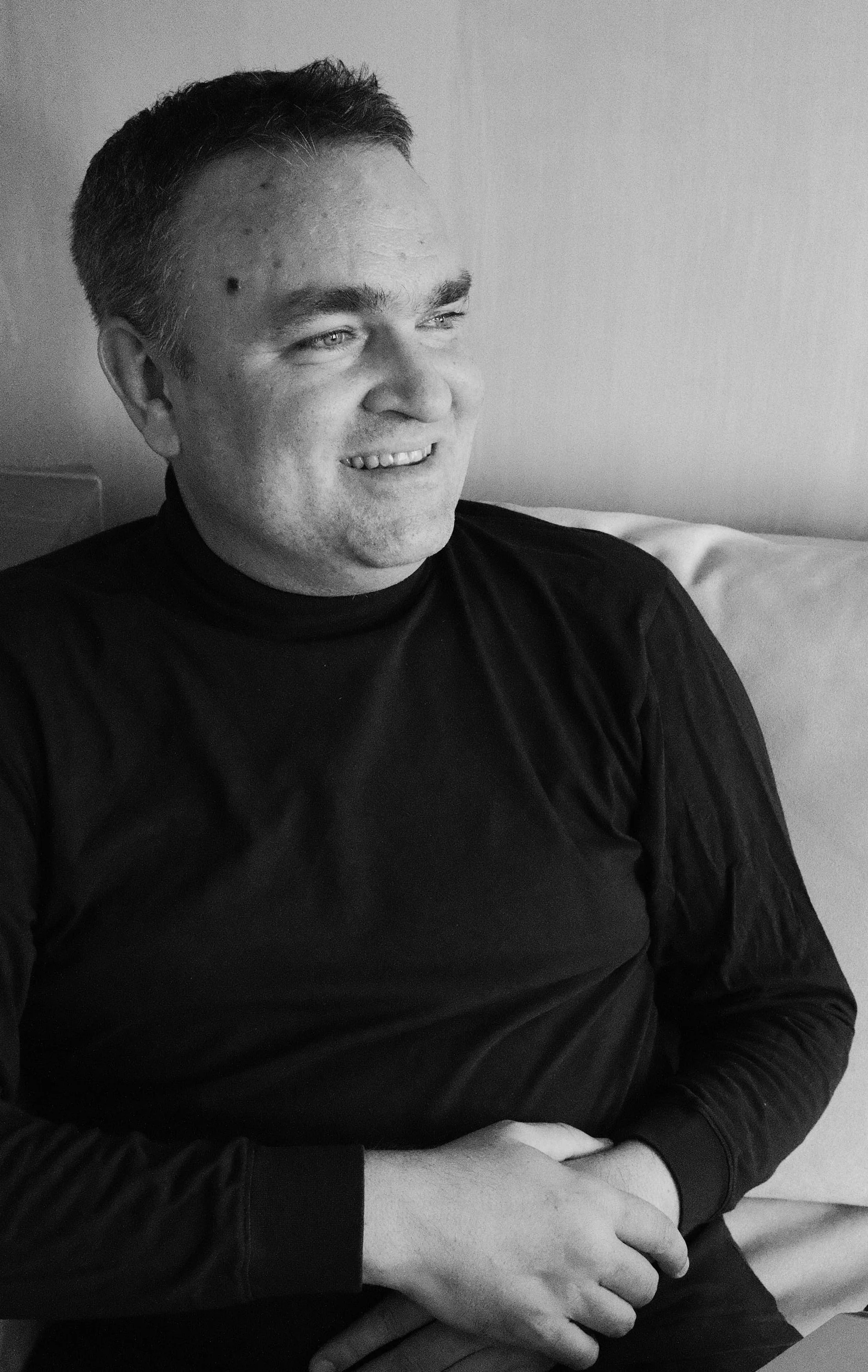
Image from Wikipedia
Image from Wikipedia
Jörg Widmann – Clarinet, Composition, and Conducting at the Highest Level
An artist who shapes contemporary music with energy, virtuosity, and a sense of form
Jörg Widmann, born on June 19, 1973, in Munich, is one of the defining musicians of his generation: as a clarinetist, composer, and conductor, he combines technical mastery with an unusually broad artistic vision. His profile is rare in today’s music scene as it does not separate the roles of interpreter and creator, but rather intertwines them productively. This fusion is precisely what gives rise to the fascination of his music career, which oscillates between chamber music, orchestral repertoire, music theater, and international concert engagements. ([joergwidmann.com](https://www.joergwidmann.com/vita.html))
Biography: From Munich to the International Music Scene
Widmann began playing the clarinet at an early age and received composition lessons as a child; his education took him from Munich to the Juilliard School in New York, followed by composition studies with Hans Werner Henze, Wilfried Hiller, Heiner Goebbels, and Wolfgang Rihm. This dual influence—instrumental practice and compositional training—explains the high stylistic differentiation of his work. Even at a young age, he developed an artistic understanding that perceives sound not as a surface, but as dramatic form. ([joergwidmann.com](https://www.joergwidmann.com/vita.html))
As a clarinetist, he developed a special affinity for chamber music, which remains a core of his work to this day. He frequently collaborates with partners such as Daniel Barenboim, Tabea Zimmermann, Heinz Holliger, András Schiff, Kim Kashkashian, and Hélène Grimaud, and is also successful as a soloist both at home and abroad. This collaboration with leading musicians from different aesthetic fields demonstrates how Widmann thinks beyond stylistic boundaries. ([joergwidmann.com](https://www.joergwidmann.com/vita.html))
Career Path: Professorships, Residencies, and International Visibility
His career is marked by institutions known for the highest standards of music education and artistic quality. From 2001 to 2015, Widmann taught clarinet at the Freiburg University of Music, and from 2009, he also held a professorship in composition; since 2017, he has held a chair at the Barenboim-Said Academy in Berlin. Between 2017 and 2021, he served as the chief conductor of the Irish Chamber Orchestra, and in 2023, he became the Associated Conductor of the Munich Chamber Orchestra and the First Guest Conductor of the NDR Radiophilharmonie. ([joergwidmann.com](https://www.joergwidmann.com/vita.html))
The current season and upcoming projects showcase his exceptional presence in international musical life. For the 2025/26 season, Widmann will be present worldwide in all roles, taking on the artistic direction of the Lucerne Festival Academy in 2026 and conducting the Cleveland Orchestra for the first time with his own music and Mendelssohn's works; additionally, guest conducting engagements are scheduled in Atlanta, Detroit, Oslo, Paris, Helsinki, Taiwan, Budapest, and with the Bamberg Symphony. As a composer, he will premiere the Jupiter Etude at the Mozart Festival in Würzburg in 2026, while the clarinet concerto Zones of Blue, written for him by Olga Neuwirth, will be performed in Munich. ([joergwidmann.com](https://www.joergwidmann.com/vita.html))
Compositional Profile: Between Formal Experimentation and Emotional Directness
Widmann's catalogue reveals a composer who does not treat classical forms as museum pieces but translates them into an intense contemporary language. His string quartets are particularly significant, designed as large-scale cycles that connect traditional forms, references to Beethoven, and formal reflection. The sixth quartet, Studie über Beethoven, began a second cycle in 2019, followed by further quartets in 2020 and 2022; in addition, major orchestral works such as Lied, Chor, and Messe, as well as the Labyrinth series—with the trumpet concerto Towards Paradise as its latest addition—are included. ([joergwidmann.com](https://www.joergwidmann.com/vita.html))
Characteristic of Widmann's work is his handling of timbres and spaces. In Armonica, he utilizes the spherical possibilities of the glass harmonica; in Con brio, he writes an energetic homage to Beethoven, and in Flûte en suite, he juxtaposes a virtuosic solo voice with a differentiated orchestral dramaturgy. His compositions employ contrasts, transitions, and compressions, resulting in a style that is both analytical and immediate. ([joergwidmann.com](https://www.joergwidmann.com/vita.html))
Music Theater and Dramatic Signature
As a stage composer, Widmann has developed a distinctive profile. His opera Das Gesicht im Spiegel was selected by Opernwelt as the most important premiere of the 2003/04 season, an early signal of the significance of his music theater. With Am Anfang, he created a work in collaboration with Anselm Kiefer, while Babylon, as an ambitious music-dramatic Gesamtkunstwerk, is based on a text by Peter Sloterdijk and reinterprets the Babylon myth. ([joergwidmann.com](https://www.joergwidmann.com/vita.html))
These works demonstrate that Widmann understands music as a theatrical form in which sound, idea, and space enhance each other. His music theater does not rely on mere illustration but works with large symbolic arcs, historical depth, and a strong scenic identity. This embodies a significant part of his authority as a contemporary composer. ([joergwidmann.com](https://www.joergwidmann.com/vita.html))
Discography and Reception: Recordings, Interpretations, and Recognition
Widmann's discography is extensive and documents him both as an interpreter of his own works and as a clarinetist within an expanded repertoire. Recordings range from Widmann: Elegie and Widmann: Piano Works to recordings of string quartets and clarinet music; albums featuring Mozart, Weber, Brahms, and Boulez have also been released, including 2024's Mozart & Widmann: Clarinet Quintets and 2026's Invitation with Mozart, Mendelssohn, and Schumann. His presence with labels like ECM, Orfeo, Harmonia Mundi, Wergo, Myrios Classics, and others underscores his reach in the high-quality classical market. ([open.spotify.com](https://open.spotify.com/artist/7drHkRrCNABV4BkAuVF6nu?utm_source=openai))
The critical reception has been marked by high esteem. His concert and opera works have received important awards, including the Arnold Schönberg Prize, the Robert Schumann Prize, the Bavarian Maximilian Order, the Hamburger Bach Prize, and the Munich Music Prize; in 2019, ARCHE was awarded Composer of the Year by OPUS KLASSIK. At the same time, specialized media recognize his versatility, interpretative presence, and the exceptional impact of his oeuvre within contemporary musical life. ([joergwidmann.com](https://www.joergwidmann.com/vita.html))
Style, Influence, and Artistic Importance
Widmann's style unites an awareness of form, expressive energy, and historical reflection. His music navigates between tonal allusions, sound experiences at the edge, and precise motivic work; this tension makes it equally appealing to performers and listeners. That conductors like Daniel Barenboim, Daniel Harding, Kent Nagano, Franz Welser-Möst, Christian Thielemann, Iván Fischer, Andris Nelsons, and Sir Simon Rattle regularly perform his works attests to the significance of his compositional language in the international concert scene. ([joergwidmann.com](https://www.joergwidmann.com/vita.html))
Culturally and historically, Widmann occupies a special position because he carries the tradition of the composing virtuoso into the present. His closeness to Beethoven, Schumann, Mozart, and German Romanticism is never merely citation, but serves as a starting point for a reflected updating. Thus, a body of work emerges that expands the repertoire without losing the dialogue with the past. ([joergwidmann.com](https://www.joergwidmann.com/vita.html))
Conclusion: An Artist Balancing Experiment, Precision, and the Grand Stage
Jörg Widmann fascinates because he does not simply manage musical roles but fills them with life: as a clarinetist with a sensitivity for chamber music, as a composer with structural imagination, and as a conductor with a secure grip on large musical forms. His career showcases artistic development at the highest level, supported by international recognition, esteemed institutions, and a body of work that remains permanently relevant in contemporary music. Anyone wishing to experience contemporary music with historical depth and intense stage presence should see Widmann live. ([joergwidmann.com](https://www.joergwidmann.com/vita.html))
Official Channels of Jörg Widmann:
- Instagram: no official profile found
- Facebook: no official profile found
- YouTube: no official profile found
- Spotify: https://open.spotify.com/artist/7drHkRrCNABV4BkAuVF6nu
- TikTok: no official profile found
Sources:
- Jörg Widmann – Official Website
- Jörg Widmann – Vita
- Jörg Widmann – Contact / Management
- Jörg Widmann – Biography (English)
- Jörg Widmann – Curriculum Vitae
- Jörg Widmann – Curriculum Vitae (English)
- Spotify – Jörg Widmann
- Klassik Heute – Jörg Widmann: Biography, Discography
- AllMusic – Jörg Widmann Biography, Discography & Reviews
- Staatsphilharmonie Rheinland-Pfalz – Composer in Portrait: Jörg Widmann
- Wikipedia – Jörg Widmann