
Joost Klein
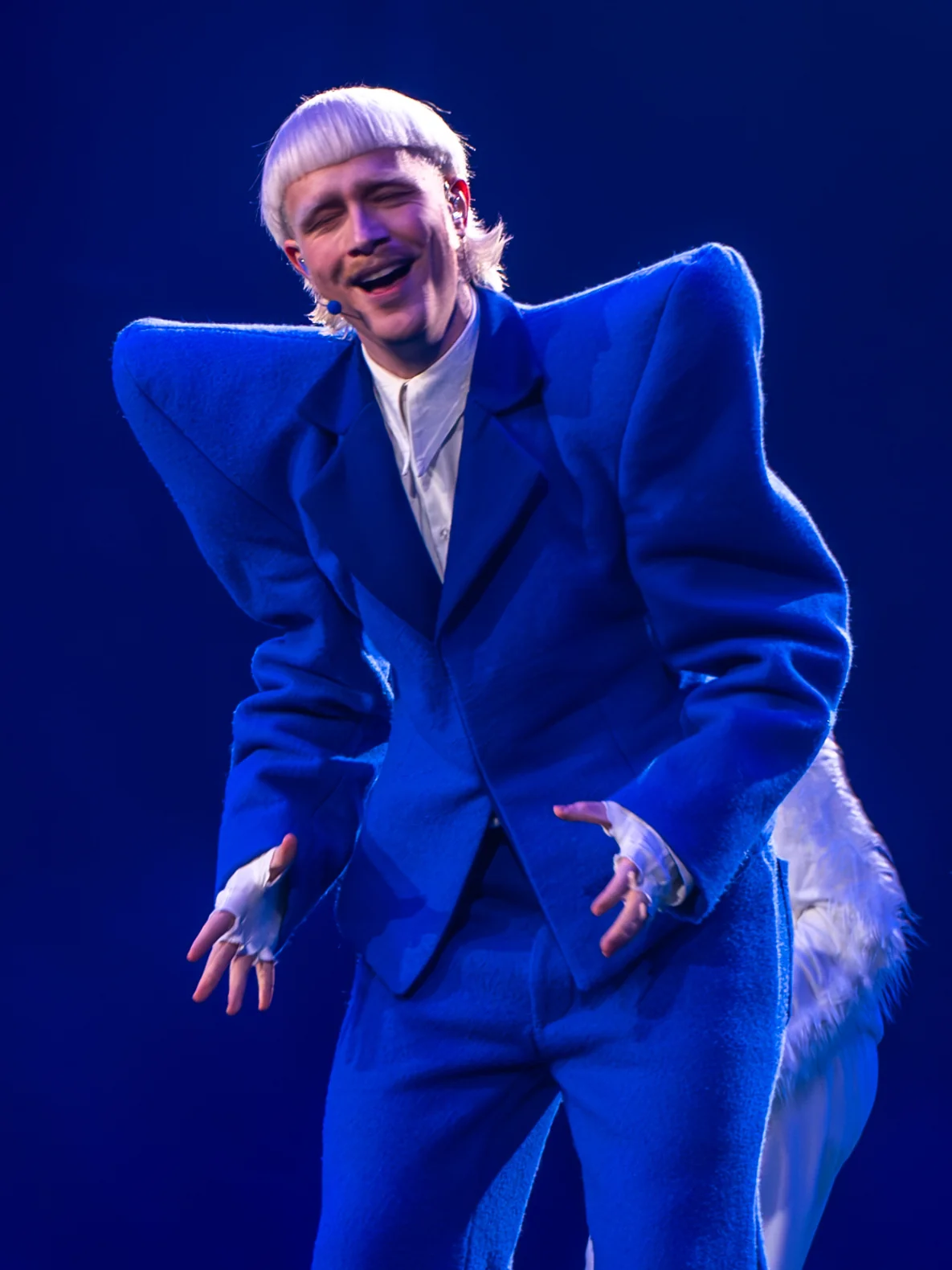
Image from Wikipedia
Image from Wikipedia
Joost Klein: The Dutch Pop Provocateur Bridging Rap, Hyperpop, and Eurovision Mythos
An Artist Merging Internet Culture, Emotion, and Stage Instinct into a Unique Musical Figure
Joost Klein, born on November 10, 1997, in Leeuwarden and raised in Britsum, is among the most distinctive Dutch pop and rap acts of the present day. Emerging from an early YouTube project called EenhoornJoost, he has crafted a persona that condenses music, performance, visual aesthetics, and digital self-narration into a unique brand. His career combines humor, vulnerability, and escalation with a clear musical signature that swings between hip-hop, electronic influences, gabber, and hyperpop. (en.wikipedia.org)
Early Years: Loss, Self-Design, and the First Creative Space
The biography of Joost Klein is marked early on by significant disruptions. His father died when he was thirteen, followed by the death of his mother a year later; after these losses, he lived with his older brother and sister. This biographical heaviness significantly influences his art: beneath the bright surface of many songs lies a palpable urge to transform sorrow, loneliness, and overwhelm into energy. (en.wikipedia.org)
In 2010, he launched his YouTube channel under the name EenhoornJoost. There he released sketches and mini-documentaries, building an audience early on. That he did not finish school fits the image of an artist who sought his path outside traditional careers and established an autonomous creative identity early on. (en.wikipedia.org)
Musical Breakthrough: From Internet Phenomenon to Serious Rapper
In 2016, his debut EP, Dakloos, marked the definitive shift in focus toward music. The song “Bitches” became his first music video to reach one million views on YouTube, marking an early surge in popularity. For a short time, Klein was signed to TopNotch before founding his label Albino Sports, thereby taking control of his artistic releases and positioning. (en.wikipedia.org)
With the mixtape Scandinavian Boy and the later collaborative album M van Marketing with Donnie, he expanded his profile: ironic, playful, aggressive in attitude, and firmly rooted in the linguistic spirit of Dutch rap. The concert “Viraal in Carré” in Amsterdam and his subsequent appearances at major Benelux festivals like Pukkelpop, Pinkpop, Lowlands, and Zwarte Cross made it clear that the online artist had become a serious live act. (en.wikipedia.org)
A Discography with Concept, Impact, and Identity
By early 2026, Joost Klein has released ten studio albums, two EPs, numerous singles, music videos, and featured appearances. His early albums include Albino and 1983, followed by Joost Klein 7, the collaborative Albino Sports, Vol. 1 with Brunzyn, and finally Fryslân, a work that carries a reference to his home province already in the title. His discography shows a consistent evolution: from internet subculture to a more broadly positioned pop-rap universe. (en.wikipedia.org)
Fryslân was released in 2022, fully produced by Tantu Beats, and includes singles like “Florida 2009”, “Wachtmuziek”, and “Papa en mama”. On the album, Klein plays with samples from, among others, Doe Maar and Crazy Frog, linking pop history, nonsense, and personal memories. Especially “Florida 2009” sets an emotional counterpoint: the song reflects on the death of his parents and shows how precisely Joost connects pop energy with biographical wounds. (en.wikipedia.org)
With Unity and Kleinkunst, his repertoire shifted further toward a large-scale, collaborative, yet maximally individual overall concept. Unity was released on February 21, 2025, and Kleinkunst on January 1, 2026; both releases emphasize that Klein does not narrate his career as a linear rap biography but as an ongoing artistic project with constantly changing masks, features, and references. (en.wikipedia.org)
“Friesenjung”, “Europapa”, and the Great Public
The breakthrough in German-speaking countries came in 2023 with “Friesenjung,” a collaboration with Ski Aggu and an adaptation of a song by Otto Waalkes. The track reached number 1 on the German Single Top 100, making Joost a recognizable pop figure in the German-speaking region. Here, irony, dialect, party aesthetics, and meme competency met surprisingly coherent hit sensation. (en.wikipedia.org)
Even greater international visibility was brought by “Europapa,” with which Joost was set to represent the Netherlands at the Eurovision Song Contest 2024. After the second semifinal, he qualified for the final but was disqualified following an incident; the Swedish prosecution later dropped the case as no criminal offense could be proven. The incident cemented Klein as a polarizing figure between pop, politics, media logic, and public interpretation. (en.wikipedia.org)
Style, Sound, and Artistic Development
Musically, Joost Klein is primarily rooted in hip-hop, yet his songs and performances significantly reach into electronic spaces. Drum and bass, hardstyle, hyperpop, and gabber are as much part of his vocabulary as classic rap staging and catchy pop refrains. This mixture creates a style that is deliberately exaggerated, rhythmically edgy, yet remains melodically accessible. (en.wikipedia.org)
In particular, this aesthetic unfolds with special effect in live performances. Klein is a performer who does not see the stage as merely a presentation space but as a site of exaggeration, emotional excess, and calculated disruption. His stage presence thrives on the interplay of irony and seriousness, choreography and loss of control, as well as digital iconography and very physical energy. (en.wikipedia.org)
Cultural Impact, Critiques, and Awards
Joost Klein has transformed from a YouTuber into one of the most influential Dutch pop figures of his generation. His journey illustrates how media transformation, musical self-promotion, and genre dissolution can strongly influence each other in the 21st century. That he now resonates not only in the Netherlands but also in Germany, Belgium, and on major European stages makes him a case study in contemporary pop mobility. (en.wikipedia.org)
The music press has also recognized his evolution with awards and nominations. Among the accolades are a Popprijs, several 3FM Awards, a 1LIVE Krone for “Friesenjung,” as well as later nominations and further honors for his albums and songs. At the same time, critical reception has not been uniform: particularly with Unity, the humorous tone was described as somewhat lacking in sharpness, while others emphasized his complexity and genre fluidity as strengths. (en.wikipedia.org)
Current Projects and Future
2026 is set to be a particularly active year for Joost Klein. His official website announces the World Tour 2026, with dates in Europe, North America, Latin America, Australia, and New Zealand; in the Wikipedia biography, this tour is described as the first world tour by a Dutch-speaking artist. Additionally, he was appointed as a coach in the tenth season of The Voice van Vlaanderen in February 2026, and in April 2026, he performed at the Coachella Valley Music and Arts Festival as part of this tour. (joostklein.eu)
This highlights that Joost Klein is far more than a viral hype or an Eurovision episode. He represents a music career in which authorship, sound design, performance, and public narration are inextricably intertwined. It is this blend that makes him exciting, contradictory, and relevant. Anyone wanting to experience pop, rap, and contemporary culture in an uncompromising, energetic form should see Joost Klein live. (joostklein.eu)
Official Channels of Joost Klein:
- Instagram: No official profile found
- Facebook: No official profile found
- YouTube: https://www.youtube.com/@joostklein1
- Spotify: No official profile found
- TikTok: No official profile found
Sources:
- Joost Klein: World Tour 2026 - official website
- Wikipedia - Joost Klein
- Wikipedia - Joost Klein discography
- YouTube - joost klein
- NU.nl - News about Joost Klein
- AVROTROS - Eurovision Communication
- Swedish Prosecution Authority - Statement on the proceedings
- de Volkskrant - Portrait of Joost Klein
- Het Parool - News about Joost Klein
- Wikipedia: Image and text source