
Josephine Baker
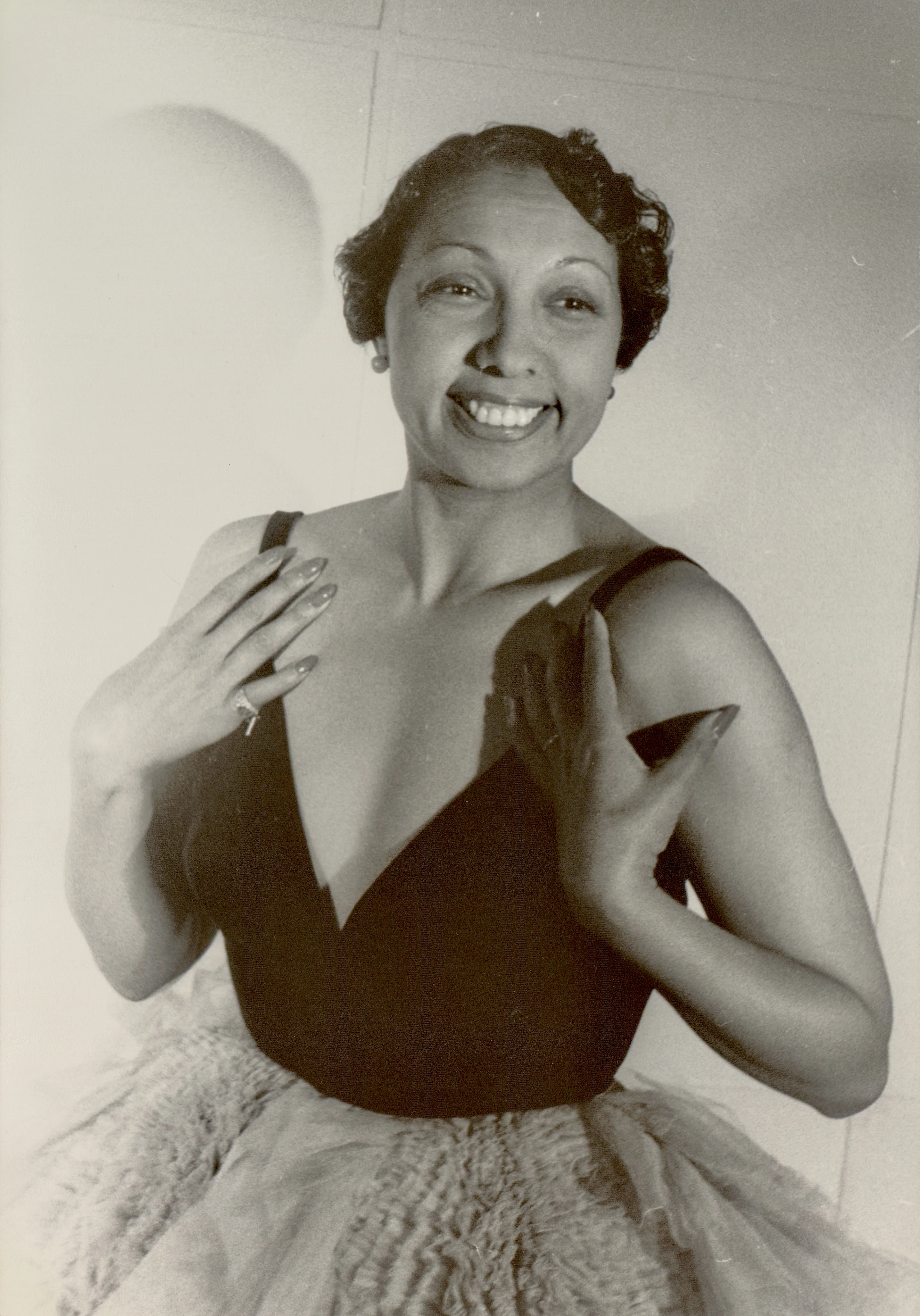
Image from Wikipedia
Image from Wikipedia
Josephine Baker: The Immortal Icon between Charleston, Cabaret, and Resistance
An Artist Who Redefined Stage, Music, and History
Josephine Baker, born Freda Josephine McDonald on June 3, 1906, in St. Louis, Missouri, is one of the most defining figures in the history of music and entertainment in the 20th century. She was a dancer, singer, and actress, but her significance extends far beyond the classical artist biography: Baker became a symbol of artistic freedom, cultural self-assertion, and political courage. In 1937, she accepted French citizenship and permanently associated her life with Paris, the city where she became a legend. ([de.wikipedia.org](https://de.wikipedia.org/wiki/Josephine_Baker))
From St. Louis to the World: Early Years and Artistic Influences
Baker's childhood was marked by poverty, hard work, and the social tensions of segregated America. As a teenager, she found herself on stage, first as an extra in St. Louis, later in Philadelphia and New York, where she established herself in vaudeville productions and Broadway environments. A formative experience was the East St. Louis pogrom in 1917, which shaped her later determined stance against racism. Her early marriages to Willie Wells and later to Willie Baker also demonstrate how early her life was marked by upheaval. ([de.wikipedia.org](https://de.wikipedia.org/wiki/Josephine_Baker))
Her actual breakthrough began after moving to New York, where from 1922 to 1924, she worked as a chorus girl in Shuffle Along and subsequently appeared in The Chocolate Dandies. Through connections in artist and intellectual circles, she received engagements in Europe, including an offer for La Revue Nègre, which premiered on October 2, 1925, at the Théâtre des Champs-Élysées in Paris. It was there that the blend of dance, timing, physical control, and stage magnetism that made Baker instantly famous in Europe ignited. ([de.wikipedia.org](https://de.wikipedia.org/wiki/Josephine_Baker))
Paris, Charleston, and the Triumph of Musical Excess
With the Charleston, Baker stormed the Paris audience. Her performances in the Revue Nègre and later at the Folies Bergère made her the central figure of Paris in the "Années folles"; she was the star there in 1926 and 1927. Contemporary reactions described her art as both provocative and electrifying, and critic André Levinson painted a picture that charged her appearance with mythic qualities. Baker utilized not just dance, but also costume, gesture, and irony as means of a radically modern stage presence. ([de.wikipedia.org](https://de.wikipedia.org/wiki/Josephine_Baker))
During this phase, her international image as "Black Venus" and glamour icon also developed, colored by the fantasies of exoticism in the European public. This ambivalence formed part of her career: Baker played with colonial projections, employed them on stage, and subverted them simultaneously through self-staging, humor, and control over her performance. By the time she reached Paris, she had become an artist who did not just deliver entertainment, but actively reorganized cultural signs. ([de.wikipedia.org](https://de.wikipedia.org/wiki/Josephine_Baker))
The Singer: From Dance Sensation to the Voice of Parisian Chanson
After tours through Eastern Europe and South America, Baker increasingly emerged as a singer. Among her most successful songs are J’ai deux amours, Aux Îles Hawaï, and Pretty Little Baby; these became part of her enduring repertoire and established her as a chanson singer beyond the stage. The recording of Sous le Ciel d’Afrique with the Comedy Harmonists in 1935 highlights her stylistic openness and her connection to European entertainment culture during the interwar period. ([de.wikipedia.org](https://de.wikipedia.org/wiki/Josephine_Baker))
Her discography shows a remarkable range: from early recordings and collections from the 1930s to later albums such as Josephine Baker en La Habana (1966) and The Fabulous Josephine Baker (1960). Today, numerous remasters and compilations are documented on modern platforms, including Les chansons d'or, Voilá Paris!, and the remastered edition Les Géants Du Jazz: The Echo of Elegance released in 2024. The ongoing presence of her catalog shows that Baker's music has not become a museum piece, but continues to be newly edited and listened to. ([music.apple.com](https://music.apple.com/us/artist/jos%C3%A9phine-baker/858421))
Film Career, Star Persona, and Transatlantic Impact
Josephine Baker also acted in a number of important films, including La Sirène des Tropiques (1927), Zouzou (1934), and Princesse Tam-Tam (1935). These film roles expanded her stage persona into the audiovisual realm and solidified her image as a modern, international entertainer. Baker combined dance, singing, and screen presence into a media figure who influenced all formats decades before the term pop icon existed. ([de.wikipedia.org](https://de.wikipedia.org/wiki/Josephine_Baker))
Her impact in Europe was particularly extraordinary. In France, she became the most successful American entertainer of her time, while she continued to face overt racism in the USA. The contrast between American exclusion and French admiration continues to shape her biography today and explains why Baker is regarded not only as a musician, but as a transatlantic symbol. ([de.wikipedia.org](https://de.wikipedia.org/wiki/Josephine_Baker))
Resistance, Intelligence Service, and Recognition in Wartime France
With World War II, Baker's significance shifted definitively from entertainer to historical figure. She initially worked with the French Red Cross, joined the Résistance and the intelligence service, and later supported the Free French Air Force as a propaganda officer with the rank of sous-lieutenant. She used her travels and performances to pass on information; her artistic prominence served as a cover and a tool of resistance. ([de.wikipedia.org](https://de.wikipedia.org/wiki/Josephine_Baker))
For these merits, she received the Médaille de la Résistance in 1946, the Croix de Guerre in 1957, and was inducted into the Legion of Honor; the official award took place in 1961. Further honors followed, including her induction into the Panthéon in Paris in 2021. Baker thus stands not only for music history but also for political integrity and an extraordinary life dedicated to France. ([de.wikipedia.org](https://de.wikipedia.org/wiki/Josephine_Baker))
Style, Interpretation, and Cultural Influence
Baker's artistic development can be described as a movement from physically intense, avant-garde dance to a mature chanson interpreter. Her style thrived on precision, ironic exaggeration, and a stage intelligence that balanced seduction, humor, and self-assurance. This very mix made her one of the most enduring figures in European entertainment culture of the 20th century. ([de.wikipedia.org](https://de.wikipedia.org/wiki/Josephine_Baker))
Her influence extends deeply into fashion, performance art, Black history, and feminist memory culture. Exhibitions, biographies, new editions of her memoirs, and musical re-releases keep her presence alive; for instance, in 2024, an exhibition curated by her was displayed in Berlin, while in 2025, her memoirs will be released in a new edition. This shows: Josephine Baker remains a reference figure for female artists who understand stage, identity, and self-staging as cultural power. ([reclam.de](https://www.reclam.de/produktdetail/tanzen-singen-freiheit-memoiren-9783150115220?utm_source=openai))
Current Reception and Enduring Relevance
Even though Baker has long passed away, her work remains active through remasters, compilations, books, and stage projects. Streaming catalogs document current re-releases and collections from her repertoire, while publishers are reintroducing her texts. The present continues to engage with Josephine Baker, rather than speaking about her in the past tense. ([music.apple.com](https://music.apple.com/us/artist/jos%C3%A9phine-baker/858421))
Her posthumous fame arises from a rare constellation: Josephine Baker was both a great entertainer, an international style figure, a political fighter, and a historical witness of the 20th century. Anyone who listens to her recordings or studies her performances encounters an artist who transformed entertainment into a stance. This is precisely why her art continues to feel fresh, contradictory, and electrifying today. ([allmusic.com](https://www.allmusic.com/artist/baker-mn0000764178))
Conclusion: Why Josephine Baker Continues to Fascinate
Josephine Baker fascinates not only because of her success but also because she changed the image of the Black artist in Europe, the treatment of glamour, and the role of the stage as a political space. Her music career, stage presence, and courage in resistance make her an exceptional figure with lasting radiance. Those interested in music history, cabaret, the jazz era, cultural politics, and great performances will find in Baker an inexhaustible source. She deserves to be heard, seen, and rediscovered time and again. ([de.wikipedia.org](https://de.wikipedia.org/wiki/Josephine_Baker))
Her work belongs on stage, in the ears of listeners, and in memory. Josephine Baker remains an invitation to perceive art as freedom and to trace the magic of a legendary live presence. ([allmusic.com](https://www.allmusic.com/artist/baker-mn0000764178))
Official Channels of Josephine Baker:
- Instagram: No official profile found
- Facebook: No official profile found
- YouTube: No official profile found
- Spotify: https://open.spotify.com/artist/2RXsHRCnva6BsZ12SSAzcz
- TikTok: No official profile found
Sources:
- Wikipedia - Josephine Baker
- German Historical Museum - LeMO Biography Josephine Baker
- Berlin Museum - Josephine Baker
- Apple Music - Joséphine Baker
- Spotify - Joséphine Baker
- AllMusic - Josephine Baker Biography, Discography, Albums & Expert Reviews
- Josephine Baker Commemorative Site
- Reclam Publishing - Dancing, Singing, Freedom. Memoirs
- Penguin Random House - Fearless and Free
- Wikipedia: Image and text source
Upcoming Events
Josephine Baker - Theater Freiburg