
Karol Szymanowski
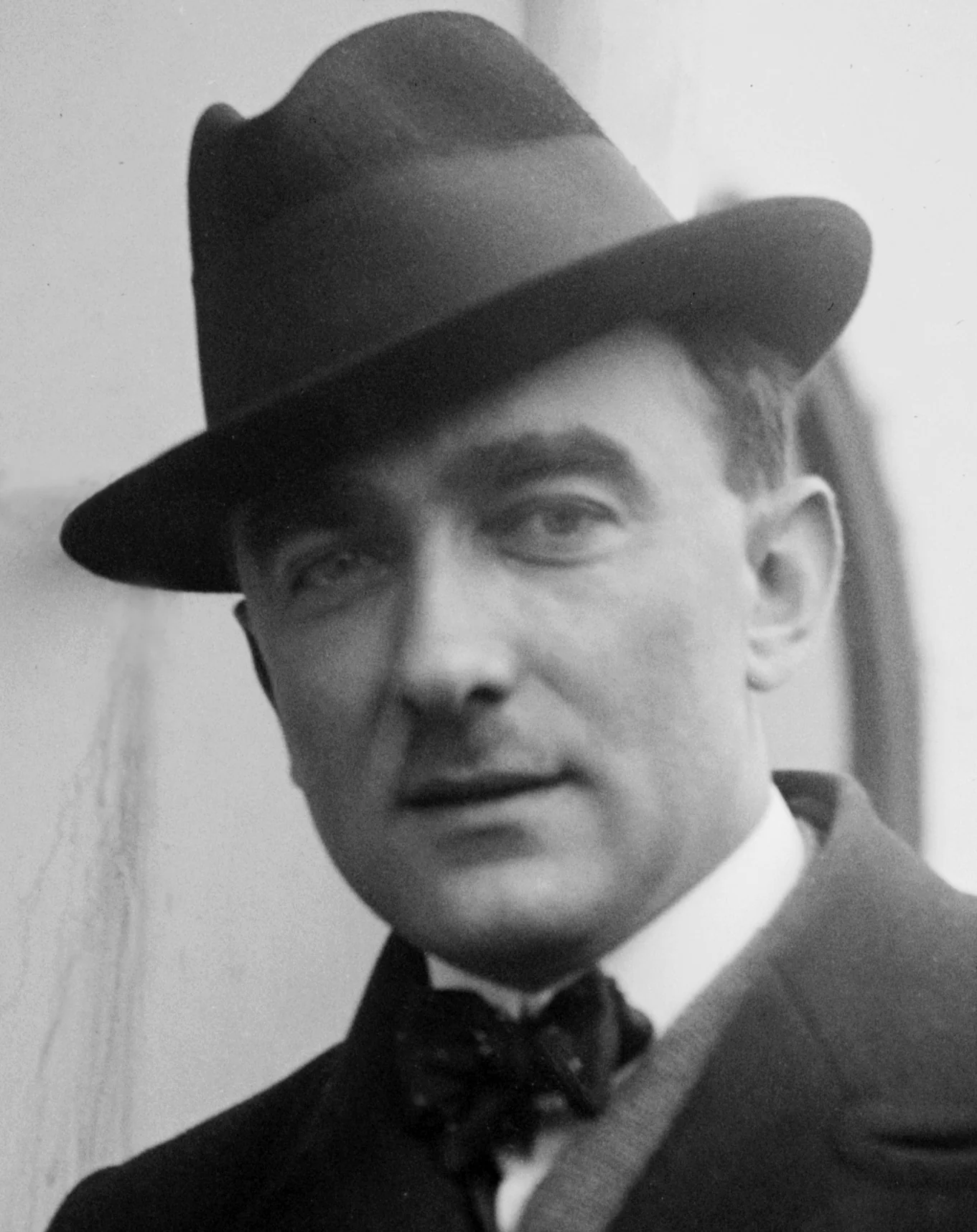
Image from Wikipedia
Image from Wikipedia
Karol Szymanowski – The Great Sound Magician of Polish Modernism
A composer between Impressionism, Folk Music, and Spiritual Vastness
Karol Maciej Szymanowski is one of the defining figures in European music of the 20th century and is regarded as the most significant representative of "Young Poland" around 1900. His career combines late-impressionistic colors, expressive harmony, ambitious form design, and continuous artistic renewal, which led him from his early symphonies to his later works shaped by Polish folklore. Born on October 6, 1882, in Tymoschiwka and died on March 29, 1937, in Lausanne, he left behind a body of work that encompasses piano music, chamber music, vocal music, opera, ballet, and choral works. ([de.wikipedia.org](https://de.wikipedia.org/wiki/Karol_Szymanowski?utm_source=openai))
Early Influences and the Path to Modernism
Szymanowski's musical biography began in an environment where education and cultural ambition were closely intertwined. After private lessons in Warsaw, including with Zygmunt Noskowski, he quickly emerged as a composer who did not simply continue tradition but encountered European styles attentively. The founding of “Młoda Polska w muzyce” in Berlin in 1905 marked a decisive step: Together with Ludomir Różycki, Apolinary Szeluto, and Grzegorz Fitelberg, he advocated for new Polish music and sought to connect with the musical avant-garde of his time. ([dzieje.pl](https://dzieje.pl/postacie/karol-szymanowski-1882-1937))
Even in his early years, Szymanowski demonstrated himself as a composer with broad horizons. During his time in Berlin and Warsaw, he absorbed influences from late Romanticism and German Modernism, particularly from Richard Strauss. The first two symphonies were composed in 1907 and 1909 under this influence and showcase a composer who connects orchestral density, formal control, and harmonic boldness. That his music initially met with skepticism in Poland while gaining appreciation abroad is one of the defining tensions of his career. ([allmusic.com](https://www.allmusic.com/artist/karol-szymanowski-mn0001191556))
Italy, Vienna, and the Breakthrough of Individual Sound
In 1908, he traveled to Italy, later living in Vienna from 1910 to 1914. These years were decisive for his musical language, as he not only became acquainted with Impressionism and early ballets by Stravinsky but also creatively processed them. During this phase, his sound ideal shifted: Transparency, shimmering harmony, and a finer treatment of color and line became more pronounced. Szymanowski thus evolved far beyond the national school to become a composer of European stature. ([de.wikipedia.org](https://de.wikipedia.org/wiki/Karol_Szymanowski?utm_source=openai))
The international resonance of his work grew before World War I. During years of extensive travel across Europe, he gained supporters such as Arthur Rubinstein and violinist Paul Kochanski, who promoted and performed his music. These networks helped him build a career rooted in concert practice, exchange with performers, and a clear compositional voice, despite facing opposition at home. Szymanowski was never merely a quiet desk composer but an artist whose work thrived on encounters, performances, and cultural impulses. ([allmusic.com](https://www.allmusic.com/artist/karol-szymanowski-mn0001191556))
War Years, Transformation, and Artistic Condensation
During World War I, Szymanowski retreated to the family estate in Tymoschiwka, where he composed very productively. Central works from this time include the Third Symphony, the First Violin Concerto, the First String Quartet, and other pieces that document his expressive maturity. The political upheavals, particularly the Revolution of 1917, destroyed not only family property but also the foundation of his previous life. The loss of the estate forced the family to reorient themselves and eventually led to Warsaw. ([allmusic.com](https://www.allmusic.com/artist/karol-szymanowski-mn0001191556))
After his return to Poland in 1919, Szymanowski experienced his third stylistic turn. Now Polish folk music, particularly motifs from Podhale and Kurpien, moved to the forefront of his inspiration. However, this closeness to folk music was not mere folk citation art but a highly artistic transformation into a modern musical language, which Béla Bartók can be recognized as a compositional reference point. This is a core aspect of his significance: Szymanowski shaped a universally readable, poetic modernity from regional impulses. ([de.wikipedia.org](https://de.wikipedia.org/wiki/Karol_Szymanowski?utm_source=openai))
Opera, Symphony, and the Masterwork "Król Roger"
In the 1920s, Szymanowski's output reached a special density. He composed several cycles of songs, piano miniatures, and, above all, his most famous opera "Król Roger," completed in 1924 and considered a key work of his stage art. The work combines symbolist drama, spiritual questions, and music that swings between sensuality and asceticism. His opera "Hagith" and the ballet and choral work "Litania" also show how broad his compositional scope truly was. ([dzieje.pl](https://dzieje.pl/postacie/karol-szymanowski-1882-1937))
Among his most important vocal-symphonic works is the Third Symphony "Pieśń o nocy," which has recently been re-released on recording. The 2024 recording by the National Forum of Music in Wrocław, featuring Iwona Sobotka, the NFM Choir, and the NFM Wrocław Philharmonic under Giancarlo Guerrero, brings this score back into focus for a wide audience. The release's program shows how closely Szymanowski's great orchestral pieces are connected to his poetic and spiritual world. ([tvpkultura.tvp.pl](https://tvpkultura.tvp.pl/77707653/karol-szymanowski-premiera-nowego-albumu-wydanego-przez-narodowe-forum-muzyki))
Teacher, Cultural Politician, and Reformer of Polish Music
Szymanowski was not only a composer but also a significant cultural political figure. In 1926, he took over the directorship of the Warsaw Conservatory and fought for reforms in the education of young musicians. AllMusic emphasizes his role as a teacher and administrator who opposed a regressive local tradition and brought new European currents to Poland. His cultural authority was grounded in his own artistic substance: He embodied the claim to reconcile heritage and modernity. ([allmusic.com](https://www.allmusic.com/artist/karol-szymanowski-mn0001191556))
This position made him a key figure in the history of Polish music. Later honors describe him as the "father of 20th-century Polish music" and place him in a line with Chopin. The fact that his music receded into the background for a time after World War II and is now significantly present in the repertoire shows the lasting impact of his artistic authority. His works are now being revisited and performed by international soloists and ensembles. ([dzieje.pl](https://dzieje.pl/postacie/karol-szymanowski-1882-1937))
Style, Sound Language, and Cultural Influence
Szymanowski's style is characterized by remarkable adaptability. Early works are influenced by German late Romanticism, Strauss's orchestral language, and later Impressionism; middle works open up to a floating, color-saturated harmony; late compositions integrate folk music and modal structures. This development makes him a composer whose discography is not linear but rather the result of several aesthetic breakthroughs. ([allmusic.com](https://www.allmusic.com/artist/karol-szymanowski-mn0001191556))
Conceptually, his music was also modern. Travel experiences in Southern Europe and North Africa, encounters with ancient mythology, oriental spirituality, and literary texts flowed into his oeuvre. The opera subject of "Król Roger," as well as the poetic world of his song cycles, reveal an artist who understood sound as a cultural dialogue. His work therefore possesses not only music-historical value but also a significant place in the European intellectual history of the early 20th century. ([dzieje.pl](https://dzieje.pl/postacie/karol-szymanowski-1882-1937))
Discography, Rediscovery, and Contemporary Relevance
The discography of Karol Szymanowski is now broad and diverse: It ranges from piano works and chamber music to two violin concertos, four symphonies, and songs, as well as operas and choral works. AllMusic notes his position as a composer whose works have been supported in international performance practice by significant interpreters. Universal Edition also documents the historical significance of his publishing contact in Vienna, thereby highlighting the international spread of his oeuvre. ([allmusic.com](https://www.allmusic.com/artist/karol-szymanowski-mn0001191556))
The current recording practice confirms this lasting relevance. In addition to the 2024 NFM release, other projects around Szymanowski are being realized, including a recording scheduled for 2025 at the Silesian Philharmonic, which places his music in a new context alongside works by Wojciech Kilar. Such projects demonstrate that Szymanowski is not perceived as a museum figure but as a living part of a repertoire that continues to challenge today's performers. ([tvpkultura.tvp.pl](https://tvpkultura.tvp.pl/77707653/karol-szymanowski-premiera-nowego-albumu-wydanego-przez-narodowe-forum-muzyki))
Conclusion: A Cosmopolitan of Sound Who Continues to Fascinate Today
Karol Szymanowski fascinates because he understood the music of the 20th century not as a rupture but as an aesthetic transformation. He combined European modernity, Polish identity, mythical imagery, and personal experience into an unmistakable musical language. Those who listen to his works experience not only technical mastery but an artistic development filled with risk, longing, and spiritual vastness. Szymanowski belongs to those composers whose significance grows with each new interpretation. ([allmusic.com](https://www.allmusic.com/artist/karol-szymanowski-mn0001191556))
For this reason alone, the encounter with his music in concert halls, on recordings, and in the intensive engagement with his scores is worthwhile. His stage presence lives posthumously in the tension between intimacy and monumentality, between sonic opulence and formal precision. Those who have the chance to experience Szymanowski's works live encounter one of the most original sound thinkers in Europe. ([tvpkultura.tvp.pl](https://tvpkultura.tvp.pl/77707653/karol-szymanowski-premiera-nowego-albumu-wydanego-przez-narodowe-forum-muzyki))
Official Channels of Karol Szymanowski:
- Instagram: No official profile found
- Facebook: No official profile found
- YouTube: No official profile found
- Spotify: No official profile found
- TikTok: No official profile found
Sources:
- Wikipedia: Karol Szymanowski – Image and Text Source
- AllMusic – Karol Szymanowski: Biography, Discography, Albums & Expert Reviews
- Karol Szymanowski Music Society – Biography
- Polish Music Center, USC – Karol Szymanowski
- dzieje.pl – Karol Szymanowski (1882–1937)
- TVP Kultura – “Karol Szymanowski” – Premiere of the new Album by the National Forum of Music
- Silesian Philharmonic – Szymanowski and Kilar – Album Release
- Iwona Sobotka – New Album Release: SZYMANOWSKI
Upcoming Events
KING ROGER by Karol Szymanowski
KING ROGER by Karol Szymanowski
King Roger by Karol Szymanowski
KING ROGER by Karol Szymanowski
KING ROGER by Karol Szymanowski
KING ROGER by Karol Szymanowski
KING ROGER by Karol Szymanowski
KING ROGER by Karol Szymanowski
KING ROGER by Karol Szymanowski