
Ludger Lohmann
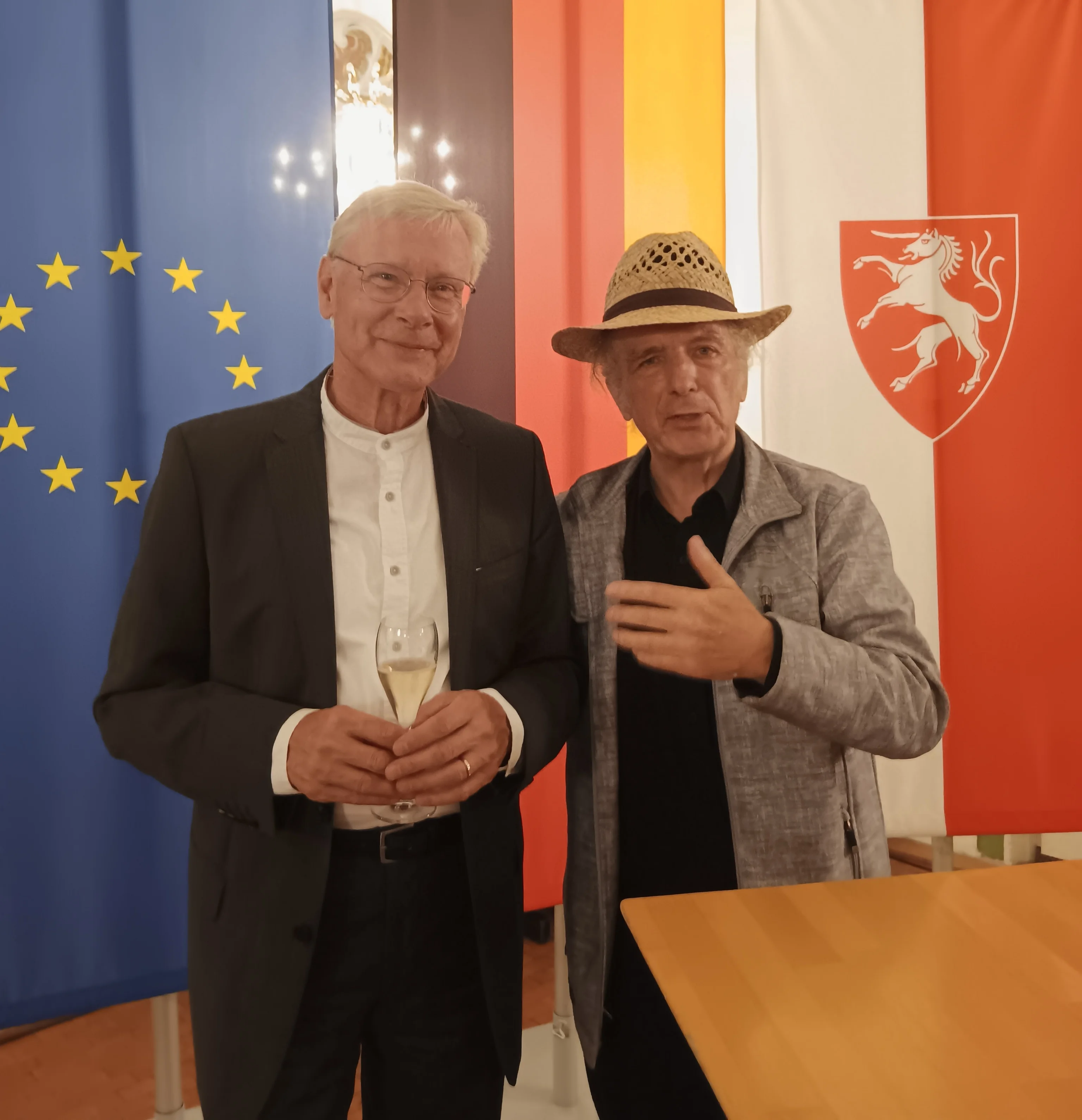
Image from Wikipedia
Image from Wikipedia
Ludger Lohmann: The German Organ Virtuoso Between Science, Stylistic Fidelity, and Global Career
An Organist Who Turns Interpretation into an Art of Knowledge
Ludger Lohmann, born in 1954 in Herne, is one of the defining German organists and university professors of his generation. His career combines concert practice, research, and pedagogy into a rarely consistent artistic profile. As an internationally sought-after organ virtuoso, he has significantly influenced the culture of the organ far beyond the German-speaking regions. ([ludgerlohmann.de](https://ludgerlohmann.de/vita_de.html))
His name stands not only for technical sovereignty but also for an interpretational attitude where stylistic awareness, source study, and auditory imagination come together. This very mix gives his music career its tension: Lohmann does not understand the organ as a museum piece but as a living instrument for historical and contemporary interpretation. This connection between practice and science still shapes his artistic self-understanding today. ([career.phil-fak.uni-koeln.de](https://career.phil-fak.uni-koeln.de/karrierewege/prof-em-dr-ludger-lohmann))
Biographical Roots: Education, Teachers, and Early Influences
Ludger Lohmann studied church music and school music at the Cologne University of Music, as well as musicology, philosophy, and geography at the University of Cologne. His teachers included Wolfgang Stockmeier, Hugo Ruf, Marie-Claire Alain, and Anton Heiller, all of whom influenced him in both sound aesthetics and historical performance practice. In 1981, he received his doctorate with a dissertation on articulation in keyboard instruments. ([de.wikipedia.org](https://de.wikipedia.org/wiki/Ludger_Lohmann))
This academic training was never merely supplementary to the stage but the foundation of his entire artistic development. Even in his dissertation, a way of thinking took shape that places articulation, musical phrasing, and the rhetorical function of sound at the center. In later years, this very attitude became a trademark of his organ interpretations. ([ludgerlohmann.de](https://ludgerlohmann.de/vita_de.html))
The Breakthrough: Competitions, International Concerts, and Initial Recognition
The international career began with awards at significant competitions, including the ARD Competition in Munich in 1979 and the Grand Prix de Chartres in 1982. These successes opened the way for Lohmann to an active concert career in churches, cathedrals, and concert halls worldwide. From the very start, his reputation as an interpreter was intertwined with the acclaim of a researcher who analytically penetrates musical works. ([ludgerlohmann.de](https://ludgerlohmann.de/vita_de.html))
The Irish press already described him in 1996 as an artist with international renown, both as a scholar and an interpreter. His clear articulation, conscious registration, and understanding of baroque rhetoric, which is crucial in the music of Bach and his contemporaries, were particularly highlighted. Lohmann early demonstrated that high virtuosity and intellectual precision are not opposing forces. ([irishtimes.com](https://www.irishtimes.com/culture/ludger-lohmann-organ-1.92011))
Professor in Stuttgart: Pedagogy as a Second Artistic Stage
From 1979 to 1984, Lohmann taught at the Cologne University of Music, and in 1983 he became a professor at the Stuttgart University of Music, where he served until his retirement in 2020. Additionally, he was the organist at the Cathedral of St. Eberhard in Stuttgart for 25 years. This dual anchoring in higher education and liturgical practice made him a formative figure for generations of organists. ([de.wikipedia.org](https://de.wikipedia.org/wiki/Ludger_Lohmann))
His teaching activities gained international visibility: masterclasses, guest professorships, and jury duties took him to numerous countries. Many of his students later achieved prominent positions in concert and church music. Lohmann's pedagogical authority derives from the same source as his stage presence: from the interplay of knowledge, discipline, and auditory imagination. ([ludgerlohmann.de](https://ludgerlohmann.de/vita_de.html))
Research, Performance Practice, and Musicological Authority
A central work of his career is the study on articulation in keyboard instruments from the 16th to the 18th centuries, which is considered a standard reference. The official biography emphasizes that he developed a consistent, stylistically oriented interpretive practice from the insights gained from this work and later expanded it in numerous publications on music of the 19th and 20th centuries. Lohmann thus represents an organ aesthetic in which historical accuracy and vibrant present do not exclude each other. ([ludgerlohmann.de](https://ludgerlohmann.de/vita_de.html))
He also remained active in scientific and heritage preservation areas. He was involved in the major organ research project GOArt at the University of Gothenburg and served as an expert for organ building and restoration projects in several countries. Since 2020, he has also been a voluntary representative for building and art heritage preservation and has been an organ expert for the Diocese of Rottenburg-Stuttgart since 1986. ([ludgerlohmann.de](https://ludgerlohmann.de/vita_de.html))
Discography: Sound Documents Between Baroque, Romanticism, and Work Profiles
Ludger Lohmann's discography showcases an artist who chooses repertoire not by fashion but out of inner necessity. The selection of recorded works includes Franz Liszt, Johann Sebastian Bach, Rinck, Rheinberger, Reger, and Mendelssohn. This range highlights the breadth of his artistic horizon: from baroque sound language to romantic coloration and late romantic density. ([de.wikipedia.org](https://de.wikipedia.org/wiki/Ludger_Lohmann))
On his own website, Lohmann points to CD and book publications, making clear that his work extends beyond the concert hall. The available pages for individual recordings like “Wie schön leuchtet der Morgenstern” or “Allein Gott in der Höh sei Ehr” also demonstrate how strongly he shapes individual programs as interpretive essays. His recordings therefore document not only repertoire but also a musical attitude. ([ludgerlohmann.de](https://ludgerlohmann.de/home.html))
Musical Style: Articulation, Registration, and Auditory Rhetoric
Those who listen to Lohmann experience an organ language of high precision. The critique in the Irish Times praised his clear articulation, meaningful ornamentation, fine pacing, and imaginative registration. Particularly in Bach interpretations, it becomes audible how much he understands musical rhetoric as a formative principle. ([irishtimes.com](https://www.irishtimes.com/culture/ludger-lohmann-organ-1.92011))
The official biography also describes a central concern of his work: orientation towards the stylistic conventions of each era of composition. This does not lead to dry historicism but rather to a vibrant, expressive sound art. Lohmann's interpretations therefore come across as both analytical and empathetic, scholarly yet sensual. ([ludgerlohmann.de](https://ludgerlohmann.de/vita_de.html))
Cultural Influence: A Teacher of Global Format
Lohmann's influence extends far beyond his concert activities. Over more than four decades, he has trained organists from around the world in Cologne and Stuttgart, many of whom are now active internationally. Among his students are numerous prominent musicians, which impressively attests to his role as a musical multiplier. ([de.wikipedia.org](https://de.wikipedia.org/wiki/Ludger_Lohmann))
His significance has also been recognized institutionally. The Royal College of Organists awarded him its honorary medal as the first recipient, and in 2023 he received the European Church Music Prize. Such honors reflect not only a long career but a lasting contribution to European organ culture. ([ludgerlohmann.de](https://ludgerlohmann.de/vita_de.html))
Current Projects and Presence Today
Even at a high level of artistic maturity, Ludger Lohmann remains active. His official website announces upcoming concert and teaching dates, as well as CD and book releases, demonstrating a continued active career. For 2026, the site indicates a concert in Lindau, as well as a date in Stuttgart-Degerloch; the site was last updated in May 2026. ([ludgerlohmann.de](https://ludgerlohmann.de/home.html?utm_source=openai))
This means Lohmann remains a musician who not only reflects on his past but continually furthers his profile: as an interpreter, educator, authority on performance practice, and vibrant voice in the world of the organ. It is this continuity that lends an extraordinary tension to his biography. Those who experience him live hear not just a concert but a condensed story of style, research, and sonic mastery. ([ludgerlohmann.de](https://ludgerlohmann.de/home.html))
Conclusion: Why Ludger Lohmann Continues to Fascinate
Ludger Lohmann fascinates because he unites the seemingly separate spheres of science and art in a single artistic personality. His music career is characterized by competition successes, international concert activities, pioneering teaching, and a deep connection to historical performance practice. From this emerges an image of an artist of rare wholeness and authority. ([ludgerlohmann.de](https://ludgerlohmann.de/vita_de.html))
For those who wish to experience organ music beyond mere virtuosity, Ludger Lohmann is an interpreter of stature, character, and unmistakable signature. His concerts connect intellectual depth with sonic brilliance and make the organ known as a grand narrative instrument. Experiencing him live means attending a masterclass in listening. ([ludgerlohmann.de](https://ludgerlohmann.de/vita_de.html))
Official Channels of Ludger Lohmann:
- Instagram: no official profile found
- Facebook: no official profile found
- YouTube: no official profile found
- Spotify: no official profile found
- TikTok: no official profile found
Sources:
- Ludger Lohmann – Vitae
- Ludger Lohmann – Vita English
- Ludger Lohmann – Homepage
- Wikipedia – Ludger Lohmann
- University of Cologne – Alumni Portrait Series: Prof. em. Dr. Ludger Lohmann
- The Irish Times – Ludger Lohmann (organ)
- Bach Concerts Ghent – Ludger Lohmann
- Ludger Lohmann – The Articulation on Keyboard Instruments of the 16th-18th Centuries
- Ludger Lohmann – How Beautifully Shines the Morning Star
- Ludger Lohmann – Alone God in the Highest be Glory
- Wikipedia: Image and Text Source