
Maximilian Dortu
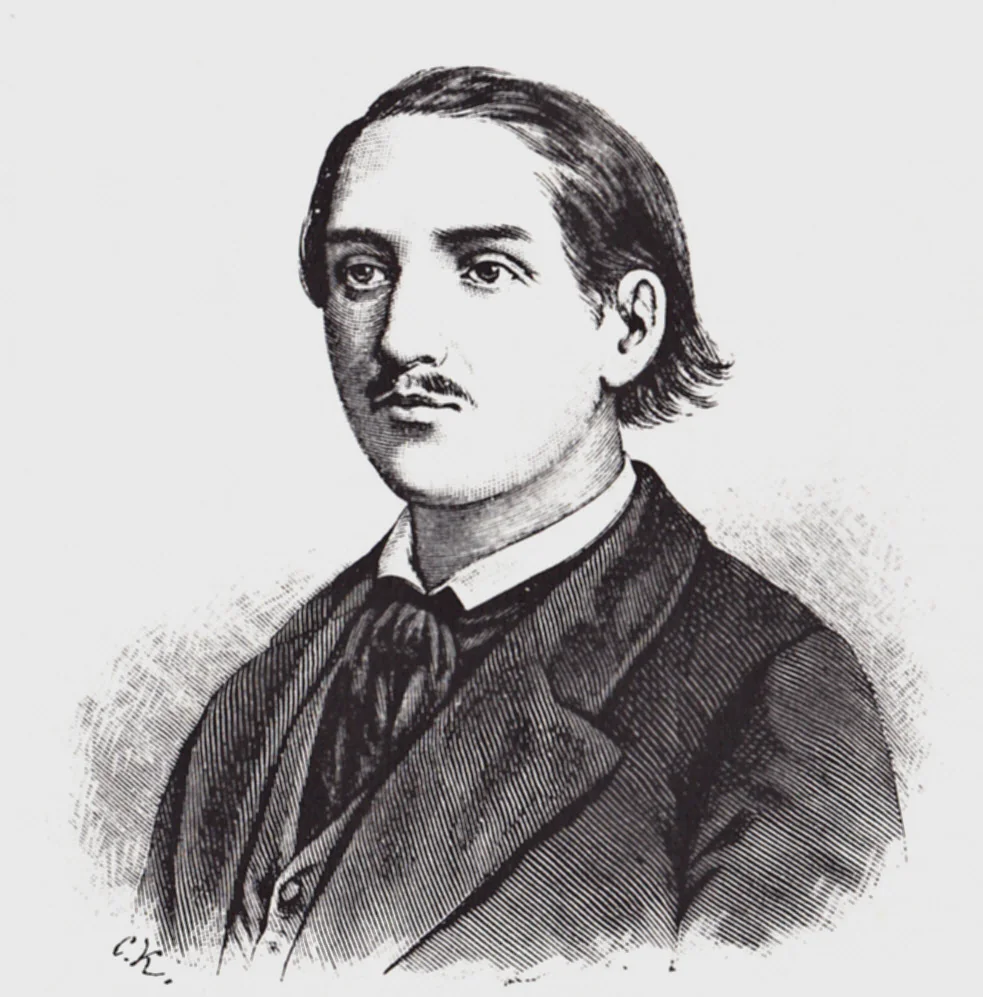
Image from Wikipedia
Image from Wikipedia
Maximilian Dortu – The Young Revolutionary from Potsdam and His Legacy for German Democracy
A Life Between Bourgeois Origins, Political Awakening, and Historical Sacrifice
Maximilian Dortu, born Johann Ludwig Maximilian Dortu, is one of the most notable figures of the German Revolution of 1848/49. Born on June 29, 1826, in Potsdam and executed on July 31, 1849, in Freiburg im Breisgau, he became a symbol of the radical democratic movement during the Vormärz period and the failed Baden Revolution. His name continues to represent political courage, the conflict between monarchical order and republican ideals, and the harshness of Prussian military justice. ([de.wikipedia.org](https://de.wikipedia.org/wiki/Maximilian_Dortu?utm_source=openai))
Unlike many historical figures, Dortu is remembered not for a vast oeuvre or a long political career, but for the convergence of biography and political significance. He became part of the revolutionary movement early on, caught up in the turmoil of 1848/49, and remains particularly significant as an uncompromising democrat in collective memory. His story connects the history of Potsdam with the cultural memory of Freiburg, demonstrating how individual life paths can shape the political symbolism of an era. ([potsdam-wiki.de](https://www.potsdam-wiki.de/Maximilian_Dortu?utm_source=openai))
Origins and Early Influences in Potsdam
Maximilian Dortu came from a wealthy bourgeois background. He was born in the house on what was then Waisenstraße, now Dortustraße in Potsdam, as the son of the judicial advisor and lawyer Ludwig Wilhelm Dortu; the family influenced the urban environment, and the birthplace later became part of the cultural memory. To this day, the renaming of the street in 1948 reflects the historical significance of the revolutionary. ([potsdam-wiki.de](https://www.potsdam-wiki.de/Maximilian_Dortu?utm_source=openai))
Dortu's school and academic career progressed remarkably early and purposefully. He attended the Great City School, graduated with his Abitur at just 17, and studied law and Cameral Sciences in Berlin and Heidelberg from 1844. He then worked as an Auscultator at the Potsdam District Court, which is a legal preliminary stage to the preparatory service. This education not only provided him with formal competence but also insight into the political and legal tensions of his time. ([potsdam-wiki.de](https://www.potsdam-wiki.de/Maximilian_Dortu?utm_source=openai))
The Path to the Revolution of 1848
The Revolution of 1848 encountered a generation of educated young men demanding press freedom, freedom of speech and assembly, and the end of absolutist rule. Dortu positioned himself early in this political climate, which oscillated between liberal reform hopes and radical democratic demands. In March 1848, he actively participated in the revolution in Berlin, openly opposing the existing power structures in Prussia. ([zeit.de](https://www.zeit.de/2001/12/Ein_Preusse_gegen_Preussen?utm_source=openai))
His stance reflects the dynamics of the 1848 movement, where constitutional monarchists, liberals, and republicans fought over Germany's future. Dortu was among those actors who demanded not just reforms but a fundamental political overhaul. This radicalism brought him into direct confrontation with the state apparatus and later made him a figurehead for the democratic memory culture. ([potsdam-wiki.de](https://www.potsdam-wiki.de/Maximilian_Dortu?utm_source=openai))
Baden Revolution, Persecution, and Execution
In 1849, conditions in southwestern Germany dramatically worsened. Following the decline of the Baden revolutionary movement, Dortu was captured in Freiburg by Prussian intervention troops; in July 1849, summary or court-martial-like proceedings against revolutionaries took place there. On July 31, 1849, Dortu was executed at the age of 23, a decision whose repercussions would resonate far beyond that moment. ([en.wikipedia.org](https://en.wikipedia.org/wiki/Max_Dortu?utm_source=openai))
The memory of Dortu in Freiburg is closely associated with his grave in the former Wiehre Cemetery, which is still regarded as a historical site of remembrance. The preservation of this site, according to later accounts, is primarily due to the care of his mother, who bequeathed money to the city of Freiburg for the permanent maintenance of the grave. Thus, a site of execution transformed into a place of remembrance for the German democracy movement. ([videoportal.vm.uni-freiburg.de](https://videoportal.vm.uni-freiburg.de/video/sa-uni-ws-25-26-11-siebold/82b9cfdcb1b75643a4499cba80cfa961?utm_source=openai))
The "Cannon Prince" and the Linguistic Power of Protest
Maximilian Dortu also became famous through a neologism that made political history: the term "Cannon Prince" for the Prince of Prussia, the later King and Emperor Wilhelm I. The term became a sharp and polemical cipher for the repressive nature of the Prussian reaction, embedding Dortu in the political vocabulary of the era. This linguistic precision illustrates how intimately rhetoric, symbolism, and political identity were intertwined during the revolutionary age. ([de.wikipedia.org](https://de.wikipedia.org/wiki/Maximilian_Dortu?utm_source=openai))
The term has shaped the historical reception of Dortu, as he appeared not only as a victim of state violence but also as an actor in political attack. In cultural memory, he thus represents the courage to intensify issues, for journalistic impact, and for the willingness to openly name power relations. In this sense, Dortu became a voice for a radical democratic tradition that opposed monarchical authority. ([de.wikipedia.org](https://de.wikipedia.org/wiki/Maximilian_Dortu?utm_source=openai))
Historical Reception and Cultural Memory
Maximilian Dortu was by no means forgotten after his death. Streets in Potsdam, Freiburg, and Karlsruhe bear his name, as well as a primary school in Potsdam; his birthplace honors him with a commemorative plaque at his birthplace and public memorial events. These forms of remembrance show that Dortu is understood not only as a historical figure but as part of local and national democratic history. ([de.wikipedia.org](https://de.wikipedia.org/wiki/Maximilian_Dortu?utm_source=openai))
Moreover, historical research and public memory have sharpened his profile. Contemporary and later texts describe him as a freedom fighter, democrat, and participant in the March Revolution and the Baden Revolution. His biography thus becomes an exemplary case for the persecution of political opposition in the 19th century and for the gradual formation of democratic memory culture in Germany. ([zeit.de](https://www.zeit.de/2001/12/Ein_Preusse_gegen_Preussen?utm_source=openai))
Why Maximilian Dortu Remains Relevant Today
Maximilian Dortu fascinates because his life encapsulates the weight of an entire era. He embodies the hope for freedom, the harshness of defeat, and the remarkable endurance of historical memory. Those who engage with the Revolution of 1848/49 encounter a figure who does not fade into the shadow of great names but rather brings the political radicalism of his time into sharp focus. ([de.wikipedia.org](https://de.wikipedia.org/wiki/Maximilian_Dortu?utm_source=openai))
For this reason, it is worthwhile to look at places of remembrance in Potsdam and Freiburg. They make visible that history does not remain abstract but continues in street names, monuments, school names, and public rituals. Maximilian Dortu thus remains a striking example of how a short life can create a long-lasting memory. ([potsdam-wiki.de](https://www.potsdam-wiki.de/Dortustra%C3%9Fe?utm_source=openai))
Conclusion: A Freedom Fighter Whose Name Keeps the History of Democracy Alive
Maximilian Dortu stands for the unbroken will for political self-determination, for republican conviction, and for the price of resistance. His biography weaves together bourgeois education, revolutionary practice, and an early, violent end into a story of high symbolic power. Anyone who wants to understand the Revolution of 1848/49 should not read Dortu as a marginal figure but as one of its most significant and culturally impactful representatives. ([potsdam-wiki.de](https://www.potsdam-wiki.de/Maximilian_Dortu?utm_source=openai))
His grave, street names, and recurring memorial events demonstrate: Dortu continues to live on in historical memory. It is precisely in this that his lasting significance lies – in the combination of personal courage, political consistency, and public remembrance. Those who visit the sites of his history experience not only the past but the ongoing presence of democratic discourse. ([ph-freiburg.de](https://www.ph-freiburg.de/fileadmin/shares/Institute/Sozialwissenschaften/Geschichtswissenschaft/Publikationen_und_Plakate/Unserem_Stadtteil_auf_der_Spur_Broschuere.pdf?utm_source=openai))
Official Channels of Maximilian Dortu:
- Instagram: No official profile found
- Facebook: No official profile found
- YouTube: No official profile found
- Spotify: No official profile found
- TikTok: No official profile found
Sources:
- Wikipedia – Maximilian Dortu
- PotsdamWiki – Maximilian Dortu
- PotsdamWiki – Dortustraße
- Tagesspiegel – Commemoration of Revolutionary Dortu
- Tagesspiegel – A House with a Past
- City of Freiburg – Maximilian Dortu and the Revolution 1848/49 in Baden
- University of Freiburg – The Dortu Mausoleum at the Old Wiehre Cemetery
- State Capital Potsdam – Potsdam Commemorates Max Dortu
- Wikipedia: Image and Text Source