
Rocko Schamoni
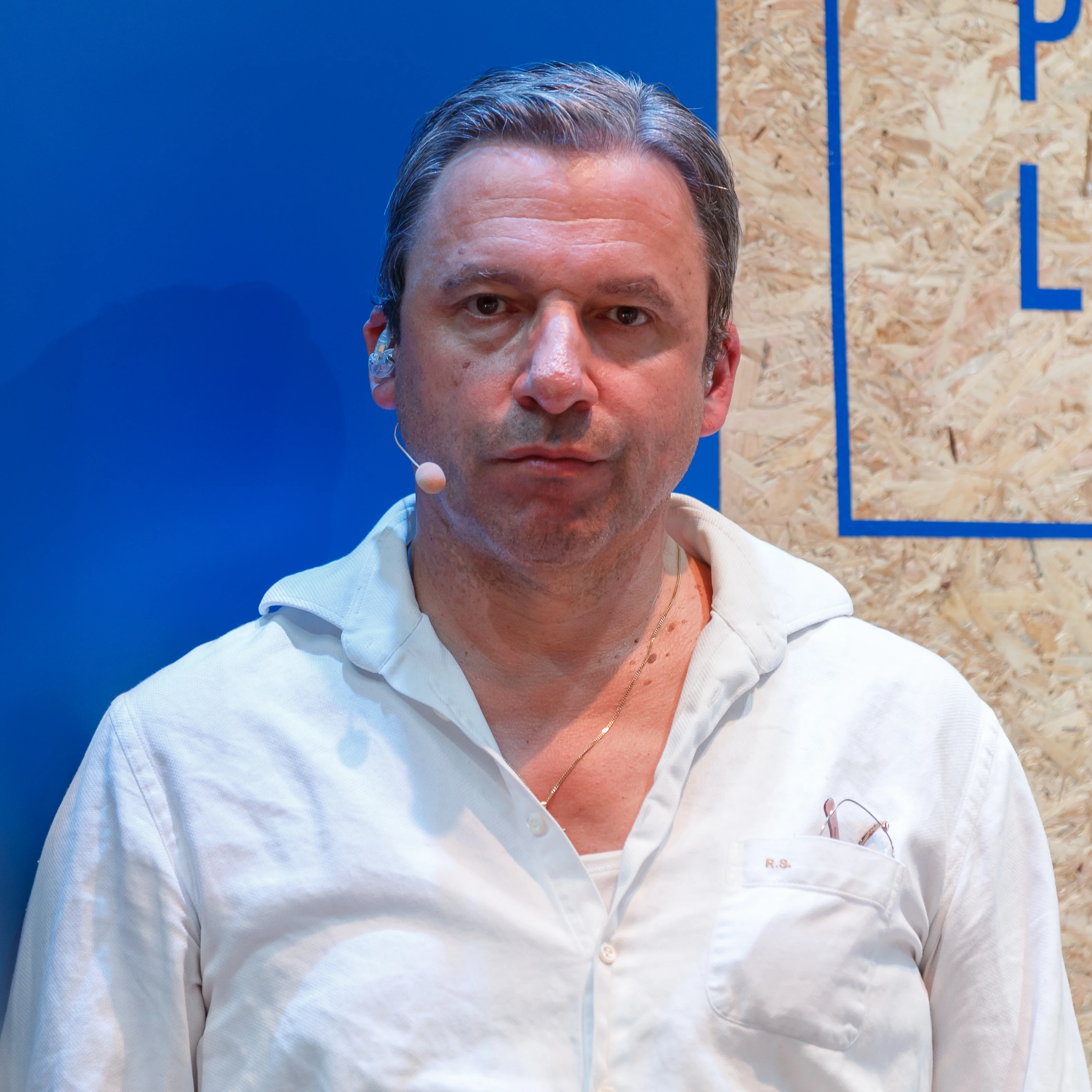
Image from Wikipedia
Image from Wikipedia
Rocko Schamoni: The Dandy of the German Underground Between Punk, Pop, and Provincial Poetry
An artist who has turned stage, books, and club culture into a unique brand
Rocko Schamoni, born Tobias Albrecht on May 8, 1966, in Kiel and raised in Lütjenburg, is one of the most unconventional figures in German pop and subculture. As a musician, writer, actor, and club operator, he has built a body of work since the 1980s that oscillates between punk, schlager parody, melancholic pop, and literary self-exploration. His career is closely linked to Hamburg, where he is regarded not just as an artist but also as a defining figure in the scene. ([literaturland-sh.de](https://literaturland-sh.de/autorinnen/schamoni-rocko))
From Kiel to Hamburg: Background, Counterculture, and Artistic Influence
Schamoni's biography starts in the provincial region of Schleswig-Holstein and quickly leads to the counterworld of the metropolis. The experience of Lütjenburg, later processed in the novel Dorfpunks, became a fundamental motif of his work: the perspective on origins, narrowness, and friction, but also on the desire to free oneself from the province through style, attitude, and language. In Hamburg, he found the right stage for this – as a place of night, experiments, and subcultural self-empowerment. ([literaturland-sh.de](https://literaturland-sh.de/autorinnen/schamoni-rocko))
From an early age, it became clear that Schamoni was not aiming for a linear pop career but rather a holistic picture composed of art, performance, and ironic exaggeration. In the early 1980s, he was known as a punk rocker in the milieu of the Goldene Zitronen, later moving between electronic projects, fun-punk, schlager gestures, and avant-garde stage comedy. This stylistic flexibility made him an artist who never confined himself to a single genre, but instead consciously pushed its boundaries. ([ox-fanzine.de](https://www.ox-fanzine.de/review/rocko-schamoni-musik-fuer-jugendliche-118292))
The Breakthrough as a Live Artist: Between Provocation and Cult Status
His musical breakthrough emerged less from a radio hit than from an attitude: Schamoni developed a persona that combined provocation, elegance, and absurdity. With his performances as a provocative schlager entertainer, he toured Germany, Austria, and Switzerland, developing a stage presence that oscillated deliberately between seriousness and parody. Later, he became a key figure in Hamburg's pop avant-garde with projects like Studio Braun and the Golden Pudel Club. ([de.wikipedia.org](https://de.wikipedia.org/wiki/Rocko_Schamoni))
Especially crucial to his authority in the German cultural landscape is the connection between music and scene work. The Golden Pudel Club still represents a milieu where Schamoni not only performed but also helped shape cultural spaces. Music journalism portraits describe him as a humorous boundary-crossing figure who operates equally well on stage as in the club, in novels, or in film projects. ([en.wikipedia.org](https://en.wikipedia.org/wiki/Rocko_Schamoni?utm_source=openai))
Discography: From Early Singles to Mature Late Works
Schamoni's discography shows an unusually consistent development: from the first single Liebe kann man sich nicht kaufen in 1987 to albums like Vision (1988), Jeans und Elektronik (1990), Disco (1991), and Ex-Leben with Motion (1993), to later releases such as Die Vergessenen (2015), Musik für Jugendliche (2019), and All Ein (2022). Additionally, there are numerous singles, collaborations, and contributions with Studio Braun that solidify his position as a dynamic boundary-crosser between pop, satire, and conceptual art. ([de.wikipedia.org](https://de.wikipedia.org/wiki/Rocko_Schamoni))
Notably, there’s a shift from earlier, more ironically charged pop gestures to a more mature, melancholic tone. On the later albums, Schamoni works more with arrangements, orchestral colors, brass, and strings, giving his songs a larger, warmer, and at the same time more vulnerable quality. The discography thus not only documents a career but also an artistic evolution that transitions from a punk attitude to a reflective pop intelligence. ([ox-fanzine.de](https://www.ox-fanzine.de/review/rocko-schamoni-musik-fuer-jugendliche-118292))
Musical Development: From Fun-Punk to Elegiac Pop Grotesque
Music critics repeatedly emphasize how much Schamoni’s sound has changed over the years. While earlier works were more situated within the realms of punk and electronic experimentation, his later work feels significantly more orchestrated and melodic, often with a nostalgic touch towards Italo-pop, soul, and classically arranged entertainment music. The album Musik für Jugendliche was described as both light and existential, referencing 70s Italo-pop, brass, piano, and emotional themes such as death, farewell, and transience. ([ox-fanzine.de](https://www.ox-fanzine.de/review/rocko-schamoni-musik-fuer-jugendliche-118292))
Die Vergessenen also showcases this attitude: Schamoni stages a revue of songs that should be heard again, transforming the principle of cover or remembrance work into a cultural mission. It is precisely this strength as a musician and interpreter: he uses pop not only as a stylistic device but also as an archive of longing, humor, and social observation. ([musikexpress.de](https://www.musikexpress.de/reviews/rocko-schamoni-lorchestre-mirage-die-vergessenen/))
Current Projects: 40 Years on Stage and a New Album in Preparation
On his official website, Schamoni announces 2026 as a jubilee year under the motto "40 Years of Rocko Schamoni." It also states that he intends to record a new album and is working on alternative financing pathways; meanwhile, current dates in Basel, Stuttgart, Munich, and Kassel are listed. This shows an artist who does not rely on nostalgia but extends his productivity into the present. ([rockoschamoni.de](https://www.rockoschamoni.de/?utm_source=openai))
The music criticism is closely following this phase as well. Musikexpress points to an interview in 2026 about a circular saw accident and four decades on stage, while laut.de and other formats place his late releases and ongoing stage activity in context. This means Schamoni is not a monument of his past but an active contemporary artist with remarkable endurance. ([musikexpress.de](https://www.musikexpress.de/artists/rocko-schamoni/))
Literature, Film, and Artistic Persona: The Hybrid Pop Author
Schamoni is not only a musician but also an author of successful novels. Works like Risiko des Ruhms, Dorfpunks, Sternstunden der Bedeutungslosigkeit, Tag der geschlossenen Tür, Fünf Löcher im Himmel, Große Freiheit, and Der Jaeger und sein Meister expand his artistic language to literary perspectives on origins, failure, nightlife, and identity. These books are closely linked to his musical cosmos and often function as continuations of the narratives presented on stage. ([literaturland-sh.de](https://literaturland-sh.de/autorinnen/schamoni-rocko))
In the film and television context, he has also established himself as a distinctive figure, for instance in the milieu of Studio Braun or in projects like Fraktus. This creates a rare form of authorship: Schamoni is not just an interpreter of his own persona but has consciously operated a fragmented yet highly recognizable pop identity for decades. It is precisely this multiplicitous role that makes him exciting for music lovers, literature fans, and cultural critics alike. ([zeit.de](https://www.zeit.de/campus/2015/02/rocko-schamoni-kuenstler-pudel-club-hamburg?utm_source=openai))
Cultural Influence: Hamburger Schule, Club Culture, and Pop Historical Unconventionality
His cultural influence extends far beyond individual songs. As a co-founder of the Golden Pudel Club and a part of Studio Braun, Schamoni has contributed to a form of Hamburger pop culture that combines humor, intellect, nonsense, and musical experimentation. In this context, he has become a figure that can be read both as a relic of punk and as a club authority and pop dandy. ([en.wikipedia.org](https://en.wikipedia.org/wiki/Rocko_Schamoni?utm_source=openai))
The press regularly describes him as a "Hamburg original" and as an artist who has transformed his provincial biography into an urban artistic language. It is precisely this connection between social origins, ironic distance, and emotional openness that lends his work a special depth. Rocko Schamoni represents a German pop culture that remains not smooth, but rather contradictory, theatrical, and human. ([sz-magazin.sueddeutsche.de](https://sz-magazin.sueddeutsche.de/leben-und-gesellschaft/rocko-schamoni-depression-scham-scheitern-95297?utm_source=openai))
Conclusion: Why Rocko Schamoni Continues to Fascinate Today
Rocko Schamoni fascinates because he has never just been a singer, never just an author, and never just a scene figure. His musical career merges punk, schlager, soul, retro-pop, and performance art into a body of work that continually opens new perspectives on age, identity, class, and culture. Experiencing him live does not encounter a nostalgic throwback but rather an artist who is constantly rewriting his own legend. ([ox-fanzine.de](https://www.ox-fanzine.de/review/rocko-schamoni-musik-fuer-jugendliche-118292))
It is precisely this particular charisma that shines through: Schamoni masters the art of transforming wit into depth and irony into genuine melancholy. His concerts, readings, and stage performances are thus more than mere program points – they are chapters in a long, resistant pop history. Anyone who appreciates cultural eccentricity, strong stage presence, and clever storytelling should experience Rocko Schamoni live. ([musikexpress.de](https://www.musikexpress.de/artists/rocko-schamoni/))
Official Channels of Rocko Schamoni:
- Instagram: No official profile found
- Facebook: No official profile found
- YouTube: No official profile found
- Spotify: No official profile found
- TikTok: No official profile found