
Tom Waits
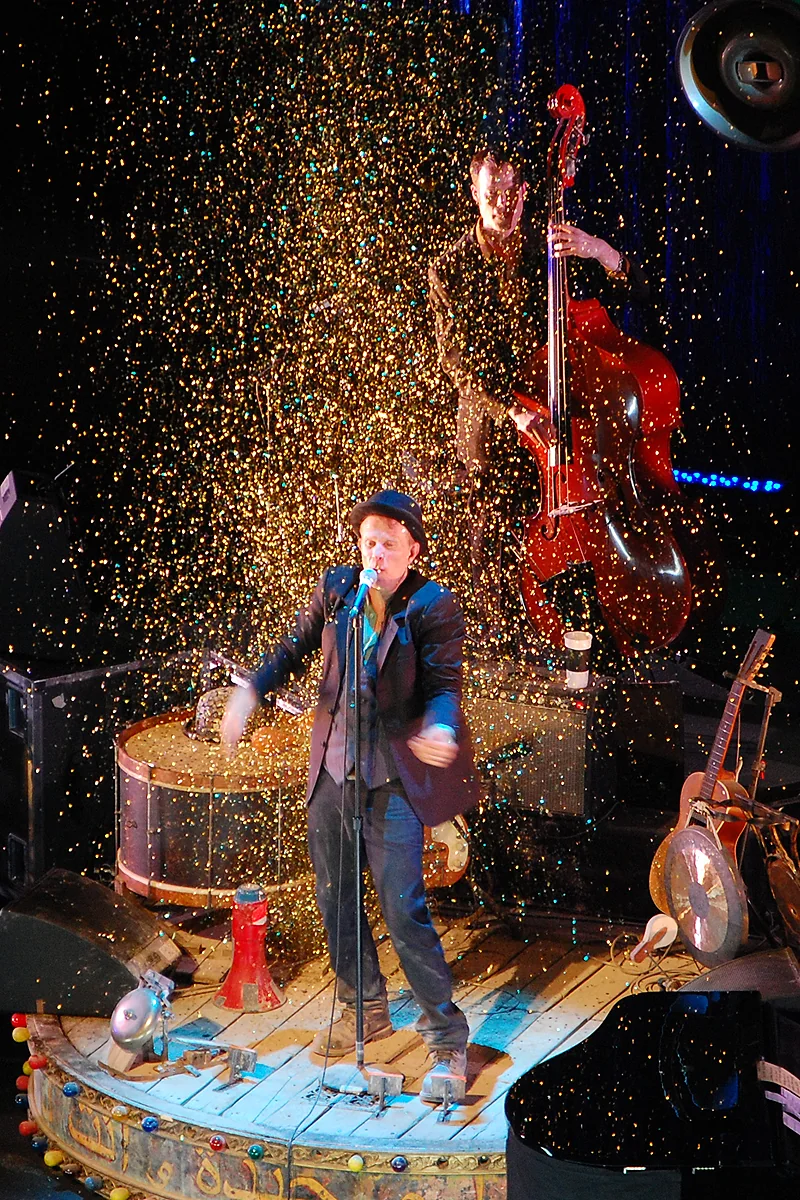
Image from Wikipedia
Image from Wikipedia
Tom Waits – The Master of Raw America between Blues, Theater, and Poetic Nightlife
Tom Waits: An Artist Biography Full of Shadows, Storytelling, and Musical Eccentricity
Thomas Alan "Tom" Waits, born on December 7, 1949, in Pomona, California, is one of the most distinctive voices in American pop and rock history. The singer, songwriter, actor, and author has developed a body of work since the 1970s that melds blues, rhythm and blues, jazz, folk, beat poetry, vaudeville, theatrical music, and later avant-garde influences into a unique sonic language. His rough, distinctive voice and perspective on the lives of outsiders quickly made him a cult figure with international impact. (de.wikipedia.org)
The Early Years: From Pomona to San Diego, from the Jukebox to the Stage
Waits initially grew up in Whittier and later in Chula Vista; his family circumstances shaped him as much as the musical environment of his youth. In San Diego, at the end of his schooling, he worked as a dishwasher and cook at Napoleone’s Pizza, where he listened to Ray Charles and James Brown on the jukebox, while being equally fascinated by Bob Dylan, Frank Sinatra, and Cole Porter. This mix of street realism, crooner aesthetics, and literary observation became the foundation of his music career. (de.wikipedia.org)
It became clear early on that Waits was not chasing the zeitgeist, but rather building his own cosmos. He taught himself to play the piano, joined a high school R&B combo, and navigated a world of bars, nightclubs, and small stages that would later serve as the backdrop for his songs. His early performances established him as a storyteller with presence, crafting dense, often cinematic vignettes out of everyday scenes. (de.wikipedia.org)
The Breakthrough: The 1970s and the Birth of a Cult Status Songwriter
With albums like Closing Time (1973), The Heart of Saturday Night (1974), Nighthawks at the Diner (1975), and Small Change (1976), Waits established himself as an original songwriter on the West Coast. His lyrics revolve around bars, nocturnal marginal figures, lost dreams, and an urban melancholy that made him well known beyond the singer-songwriter scene. Small Change in particular is regarded as a work that solidified his financial and artistic breakthrough. (de.wikipedia.org)
Even in this phase, one of the great constants of his career emerged: Other artists turned Waits’ songs into hits, often achieving greater commercial success than he himself. A prominent example is Rod Stewart's version of "Downtown Train," which became a major hit in 1989 and confirmed Waits' quality as a songwriter far beyond his own discography. The fact that his compositions have been covered by numerous musicians is part of his cultural legacy. (de.wikipedia.org)
The Artistic Turning Point: Experimentation, Theater, and Collaboration with Kathleen Brennan
A crucial turning point came after his encounter with Kathleen Brennan, who became his wife and creative partner in 1980. With her support, Waits moved away from a more jazz-oriented, barroom approach and developed a more experimental, rougher sound, influenced by figures such as Harry Partch and Captain Beefheart. This period produced some of his most influential works within the loosely connected trilogy of Swordfishtrombones (1983), Rain Dogs (1985), and Franks Wild Years (1987). (en.wikipedia.org)
These albums transformed the songwriter into a sound architect. Waits increasingly relied on unusual instrumentation, noise, and an understanding of arrangement that blurred the lines between music, performance, and audio drama. The music press describes this phase as a turning point toward a unique universe often characterized as "Waitsian," where theater, grime, humor, and poetry interlace.
Style and Sonic Language: Between Blues, Cabaret, Beat Poetry, and Industrial Rawness
Tom Waits' style is hard to reduce to a single genre because he consciously works against genre boundaries. AllMusic categorizes him in pop/rock and comedy/spoken word, describing his music as a meeting point of swampy blues, beat poetry, West Coast jazz, Tin Pan Alley, country, cabaret, and experimental rhythms with improvised instrumentation. This complexity explains why his work is revered in both alternative rock and indie circles. (allmusic.com)
His singing works like a narrative instrument: hoarse, brittle, quirky, and full of friction. This rough voice, often perceived as the result of a life storyteller in smoky rooms, amplifies the drama of his compositions. Waits never sounds agreeable but always credible; therein lies a core quality of his authority as an interpreter. (de.wikipedia.org)
Major Works, Awards, and Musical Recognition
In the 1990s and beyond, Waits refined his aesthetic radicalism with works such as Bone Machine (1992), Mule Variations (1999), Real Gone (2004), Orphans: Brawlers, Bawlers & Bastards (2006), Glitter and Doom Live (2009), and Bad As Me (2011). For Bone Machine and Mule Variations, he won Grammys in the categories of Best Alternative Music Album and Best Contemporary Folk Album. His discography showcases a rare mix of artistic consistency and formal adaptability. (en.wikipedia.org)
Critical responses also underscore his unique position. Official and editorial texts on TomWaits.com emphasize that the live release Glitter and Doom Live received widespread acclaim in the music press, while AllMusic describes his catalog as a self-contained universe that is often imitated but never replicated. Such assessments make clear that Waits has remained not only popular but also aesthetically groundbreaking. (tomwaits.com)
Film, Stage, and Literature: The Artist Beyond the Albums
Waits is not only a musician but also a defining character actor in American cinema. He has appeared in films such as Down By Law, Bram Stoker’s Dracula, Short Cuts, The Imaginarium of Doctor Parnassus, Seven Psychopaths, and The Ballad of Buster Scruggs. This extended his stage presence onto the screen and solidified the image of the enigmatic, artistically unpredictable outsider. (de.wikipedia.org)
This is complemented by theatrical projects like The Black Rider, Alice, and Woyzeck, which showcase his collaboration with Robert Wilson. These works demonstrate how deeply Waits thinks about the relationship between music, staging, and storytelling as a total artwork. Consequently, his career is also a story of consistent boundary crossings between song, stage, and dramatic form. (en.wikipedia.org)
Current Projects: Reissues, Poems, and Archiving Instead of New Studio Albums
The last new studio album was released in 2011 with Bad As Me; the official sites have since documented primarily reissues, book projects, and archival work. In 2025, the reissue of WAITS/CORBIJN ’77-’11 was a focal point, along with the third edition of the poem Seeds On Hard Ground, the proceeds of which benefit charitable causes. Additionally, the 50th anniversary of Nighthawks at the Diner was celebrated with a reissue campaign. (tomwaits.com)
The official website has also released hints about the project The Last Ride, a documentary about homelessness in the American South, in which Waits contributes poetry and voice. These later activities showcase an artist who does not limit his cultural responsibility to music but also expands his work into social and visual contexts. This too is part of his relevance today. (tomwaits.com)
Cultural Influence: The Archetype of the American Outsider Artist
Tom Waits has profoundly shaped music history by making the marginalized an aesthetic center. His songs have been interpreted by many artists, his dramaturgy in pop music quoted, and his sound reimagined in alternative scenes. On Spotify, he is described as one of the great songwriters whose work transcends pop boundaries and connects generations. (en.wikipedia.org)
His influence extends from Americana and alternative rock to theatrical music and experimental sound art. Waits has demonstrated that authenticity need not be smooth and that artistic authority can emerge from resistance. Those who look at his music career see not only a discography and awards but a life's work that unites American mythology, social observation, and musical inventiveness. (allmusic.com)
Conclusion: Why Tom Waits Continues to Fascinate
Tom Waits remains captivating because he has built a unique world like few other singers and composers: dark, funny, sentimental, sharply observed, and full of sonic surprises. His stage presence, experimental production, and inimitable style make him an exceptional figure in music history. Engaging with Tom Waits reveals not just a catalog but a great, living work of art. (allmusic.com)
Particularly because his songs function like little films and his albums maintain a high artistic tension over decades, every encounter with this work is worthwhile. Tom Waits is not an artist for quick effects but for long nights, attentive ears, and an audience seeking intensity. Experiencing him live remains an unforgettable event. (tomwaits.com)
Official Channels of Tom Waits:
- Instagram: https://www.instagram.com/tomwaits
- Facebook: https://www.facebook.com/tomwaits/
- YouTube: No official profile found
- Spotify: https://open.spotify.com/artist/7x83XhcMbOTl1UdYsPTuZM
- TikTok: No official profile found
Sources:
Upcoming Events
In the Service of the Lord