
Trygve Seim
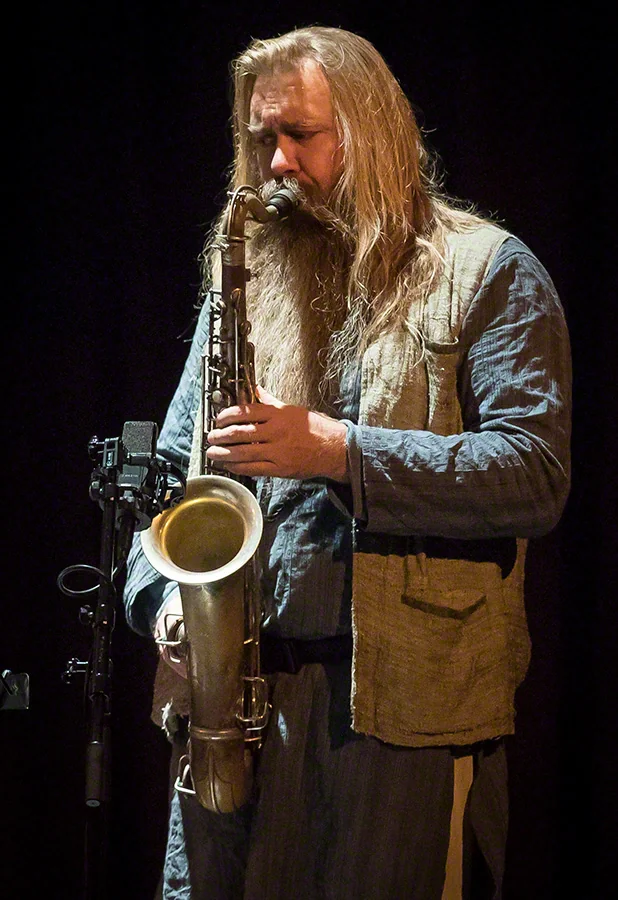
Image from Wikipedia
Image from Wikipedia
Trygve Seim: The Norwegian Jazz Saxophonist Between Lyrical Melody and Free Imagination
A Master of Nordic Jazz with a Distinctive Sound Language
Trygve Seim, born on April 25, 1971, in Oslo, is one of the defining voices of Norwegian jazz. As a saxophonist, composer, and arranger, he has built a music career characterized by compositional discipline, improvisational openness, and a pronounced sensitivity to timbre. Since 1992, he has been working full-time as a musician, composer, and arranger; he received his education at the Jazz Conservatory in Trondheim, where he studied both saxophone and composition. (trygveseim.com)
Early Influences: From Jan Garbarek to His Own Voice
Seim's journey to the saxophone began after encountering Jan Garbarek's album Eventyr in 1985, a key moment explicitly mentioned in biographical sources. This early exposure to Nordic jazz aesthetics served not merely as inspiration but as an aesthetic starting point for a personal sound language that would later oscillate between free jazz, thematically based improvisation, and carefully composed forms. The Norwegian jazz landscape in which Seim grew up provided the ideal resonance space for this development. (de.wikipedia.org)
Even during his studies in Oslo and Trondheim, Seim connected with central figures in the Scandinavian scene. He played with Jon Balke in Oslo 13, co-founded the group Airamero with Christian Wallumrød and Per Oddvar Johansen, and was involved in the birth of The Source, an ensemble that later became a significant reference point in his work. These early stages reveal a musician focused not on solo runs but on collective form, ensemble sound, and musical architecture. (de.wikipedia.org)
Career Beginnings and Artistic Development
Trygve Seim's career is closely linked to the tension between compositional control and improvisational freedom. According to Store norske leksikon, his music ranges from free improvisation to more structured compositions, with a clear focus on melody and sound, often realized in unusual line-ups. This development makes him an artist who shapes, layers, and transforms material into organic dramaturgies rather than merely playing it. (snl.no)
A pivotal moment was his collaboration with Finnish drummer Edward Vesala starting in 1995, which spanned several years and later included Iro Haarla and Anders Jormin. Although Vesala passed away in 1999 before any recordings could be made, this connection remained influential in Seim's musical development. The proximity to Vesala's expansive ensemble ideas and an open, timbrally conceived jazz language can be recognized in many of Seim's later projects. (snl.no)
The Source, Airamero, and the Breakthrough in European Jazz
With The Source, Seim gained early international visibility. The quartet recorded five CDs and toured throughout Europe and Russia; this formation is documented as a fundamental building block of his career. Simultaneously, Seim worked with Airamero and other ensembles that shaped Scandinavian jazz in the 1990s. This group work combined improvisation, chamber-music precision, and a sense for longer formal developments, which later became a hallmark of his style. (de.wikipedia.org)
Notably, Seim's early projects did not focus on short-term effects, but on long-term sound identity. The Source is considered one of the most creative ensembles in Nordic jazz; the band's own website even quotes a formulation from The Guardian that describes the group as particularly creative at the forefront of the northern European scene. This underscores Seim's role not only as a soloist but as a driving force behind an ensemble mentality that continues to shape his music career today. (trygveseim.com)
ECM Records and International Recognition
Seim's closest artistic home has become ECM Records. According to his official biography, Trygve Seim has released 22 CDs on the prestigious German label, eight of which are as a composer and bandleader or co-bandleader. This figure reflects an extraordinarily continuous relationship with one of the most important European jazz labels and demonstrates Seim's significance as an independent voice with high recognizability. (trygveseim.com)
The international breakthrough came with Different Rivers, Seim's ECM debut from 2000, or rather 2001 in the realm of reception. The album received the German Record Critics' Award for the best jazz album of 2001 and was widely celebrated by the press. According to The New York Times, the music sounded "melancholic, lonely, hypnotic," while The Guardian classified the album as a future ECM classic. Such reviews convey not only approval but an aesthetic positioning: Seim was seen as an artist who occupies a unique place in modern jazz. (trygveseim.com)
Discography and Stylistic Signatures
Seim's central releases include not only Different Rivers but also Sangam, Yeraz, Helsinki Songs, and the duo album Our Time with Frode Haltli, released in 2024. The ECM descriptions emphasize the lyrical character, strong themes, and melodic inventiveness of Helsinki Songs; with Our Time, the music shifts between folk song, free improvisation, and composed passages into an almost timeless space. This is typical of Seim's discography: it does not follow a linear trend of styles but rather a consistent deepening of his own sound. (trygveseim.com)
His sound ideal is often described with terms like melancholy, transparency, lyricism, and subtle texture. Biographies note a development away from purely free playing toward more structured, melody-focused forms; press reports highlight the clarity of his larger ensemble works. Especially in larger formations with unusual instrumentation, Seim's signature emerges particularly clearly: bass clarinets, bassoons, tuba, accordion, and strings expand the classical jazz language with chamber music and almost orchestral colors. (snl.no)
Current Projects: New Formations, New Spaces
In the 2020s, Seim remains active in varying configurations. His official website currently lists or recently listed the Trygve Seim Ensemble, Rumi Songs, the Helsinki Songs Quartet, as well as duo formations with Frode Haltli and Andreas Utnem. The duo with Haltli is particularly noteworthy, as it refers to an almost 25-year collaboration and has reached a new height with Our Time in 2024. This showcases Seim as a musician who understands continuity not as repetition, but as a foundation for new nuances. (trygveseim.com)
There is also the project Arcanum, documented for 2025, a Scandinavian ECM ensemble featuring Arve Henriksen, Anders Jormin, and Markku Ounaskari, described as a joint endeavor by ECM and the project appearance. The connection of these four names suggests music that brings together collective improvisation, lyrical line development, and reflective group interaction. Additionally, Seim and Tord Gustavsen will appear at ECM as a live event in 2026, emphasizing his ongoing presence in the European jazz scene. (arcanumquartet.com)
Collaboration with International Artists
Another key to Seim's significance lies in his role as a sought-after sideman and collaborator. He has toured and worked with Manu Katché, Jacob Young, Sinikka Langeland, Iro Haarla, Fathy Salama, and many other musicians; his Wikipedia biography also mentions collaborations with Kenny Wheeler and Edward Vesala. This breadth demonstrates an artist who operates confidently in very different contexts without losing his own sound identity. (trygveseim.com)
In such collaborations, his authority as a jazz musician becomes apparent. Seim does not merely fit in; he enhances the ensemble with a characteristic phrasing often described as breathing, melancholic, and melodically precise. In the Nordic jazz tradition, he stands alongside the defining names of the genre, while always maintaining his own compositional voice. (snl.no)
Cultural Influence and Reception
Trygve Seim’s cultural influence extends beyond mere discography. His music is regularly associated with the Scandinavian ideals of expansiveness, space, and restraint, combined with high compositional density. The press describes his pieces as remarkably well-structured, with his larger ensemble works noted for being organic and dramatically convincing; thus, Seim represents a jazz aesthetic that merges intelligence, emotion, and structure. (trygveseim.com)
His accolades further underscore this impact. The German Record Critics' Award for Different Rivers not only marked an early highlight but established Seim as a serious international voice within the ECM cosmos. The later classification of Different Rivers as an ECM Touchstone confirmed this position and solidified the album's status as a reference point for lyrical, Nordic-influenced jazz. (trygveseim.com)
Conclusion: Why Trygve Seim Remains So Engaging Today
Trygve Seim fascinates as an artist who understands jazz not as a style, but as a mindset. His music career intertwines improvisation, composition, ensemble art, and sonic poetry into an unmistakable signature that has resonated in Europe and beyond. Those who listen to Seim encounter not an effect-driven musician, but a sonic architect who perceives melody as a form of depth. (trygveseim.com)
Especially live, this music unfolds its full tension: the subtle stage presence, the audible trust among the players, and the openness to spontaneous development make every concert an event. Anyone searching for modern jazz with character, depth, and exquisite sound aesthetics should definitely experience Trygve Seim on stage. (trygveseim.com)
Official Channels of Trygve Seim:
- Instagram: no official profile found
- Facebook: no official profile found
- YouTube: no official profile found
- Spotify: no official profile found
- TikTok: no official profile found
Sources:
- Trygve Seim – official website
- Trygve Seim – Biography
- Trygve Seim – Press reactions
- Trygve Seim – Contact / Management
- ECM Records – Our Time
- ECM Records – Trygve Seim Artist Page
- Trygve Seim – Helsinki Songs Quartet
- Trygve Seim – Rumi Songs
- Store norske leksikon – Trygve Seim
- Wikipedia: Trygve Seim
Upcoming Events
Tord Gustavsen & Trygve Seim