
Universitätschor München
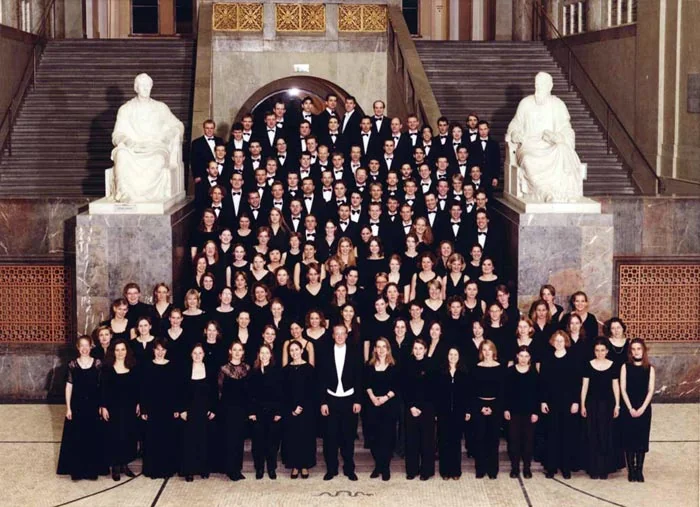
Image from Wikipedia
Image from Wikipedia
University Choir Munich – Sound Power from the Academy, Tradition and Contemporary in Dialogue
A Munich choir with academic energy and a grand stage
The University Choir Munich is much more than a traditional university choir: it brings together around 200 students and members of the academic mid-level of Ludwig Maximilian University and the Technical University of Munich into a powerful ensemble with a distinct artistic signature. Since its founding in 1950, the choir has evolved from an academically shaped body into a fixture in Munich’s musical life. Its programs blend grand choral symphonies, challenging a cappella literature, and rediscovered works into a profile that convincingly unites tradition and contemporary relevance. ([vdkc.de](https://www.vdkc.de/verband/landesverband-bayern/universitaetschor-muenchen))
From foundation to renowned university ensemble
The history of the University Choir begins in 1950 with its founding by Prof. Wilhelm Gebhardt under the name "Collegium Musicum Vocale." At that time, about 45 singers were involved, while today, a choir of nearly 200 participants shapes the musical life at two of the most significant universities in Munich. This step in growth is not just a number, but an expression of an artistic continuity cultivated over decades. The choir serves as an example of a vibrant academic music culture where community, discipline, and expressiveness come together. ([vdkc.de](https://www.vdkc.de/verband/landesverband-bayern/universitaetschor-muenchen))
The development of the ensemble can particularly be traced through its leadership figures. Hans Rudolf Zöbeley led the choir from 1969 to 2002, shaping it through his pedagogical and musical impact; in 1979 he was appointed University Music Director at Ludwig Maximilian University of Munich. From 2003 to 2013, Johannes Kleinjung set his own accents, particularly with an expanded focus on contemporary music. Since the winter semester of 2013/14, the artistic direction has been under Anna Verena Egger, who continues the continuity of the ensemble while also sharpening the work with young voices and academic singers. ([vdkc.de](https://www.vdkc.de/verband/landesverband-bayern/universitaetschor-muenchen))
Musical development between oratorio, a cappella, and film music
The University Choir Munich primarily dedicates itself to the grand choral symphonies of the Romantic period and the Modern era. Its repertoire features not only canonical works but also rarely performed scores, including Tippett's A Child of Our Time, Britten's Cantata Misericordium, and Andrew Lloyd Webber's Requiem. This mix of the familiar and the surprising lends a dramatic tension to the concerts that appeals to both experienced choral enthusiasts and a broad audience. ([de.wikipedia.org](https://de.wikipedia.org/wiki/Universit%C3%A4tschor_M%C3%BCnchen))
Additionally, there is regular work on demanding a cappella programs. The spectrum ranges from early music and Venetian polychoral works to pieces by Distler, Whitacre, Buchenberg, and Nystedt. This stylistic diversity specifically illustrates the choir's musical development: The University Choir Munich masters the transparent sound of historical literature just as well as the dense, colorful harmonies of modern choral music. This sharpens its profile as an ensemble that not only performs but also interprets and contextualizes. ([vdkc.de](https://www.vdkc.de/verband/landesverband-bayern/universitaetschor-muenchen))
Repertoire with radiance: major works and special projects
A defining chapter in the concert history has been the large productions with the Munich Symphony Orchestra. In July 2003, as part of the Orff Festival at Kloster Andechs, Carl Orff’s Carmina Burana was performed five times alongside Ariel Ramírez’s Misa Criolla. From 2008 to 2015, the choir attracted a broader audience with the live-to-projection concerts of the Lord of the Rings trilogy at the Philharmonie am Gasteig. Such projects demonstrate how confidently the University Choir Munich navigates between classical concert formats and popular cultural openings. ([de.wikipedia.org](https://de.wikipedia.org/wiki/Universit%C3%A4tschor_M%C3%BCnchen))
Currently, the ensemble remains programmatically ambitious. For the summer semester of 2026, the choir announces Antonín Dvořák's Stabat Mater, one of the most significant sacred choral works of the 19th century, which is set to be performed in the Great Hall of LMU Munich as well as at the Music Festival ION in Nuremberg. The announcement already points to the choir's aesthetic direction: spiritual depth, orchestral power, and emotional differentiation. Thus, the University Choir Munich continues to work on its reputation for combining grand scores with academic precision and a warm sound. ([unichor.de](https://www.unichor.de/konzerte/konzerte-aktuell/))
Artistic leadership and cultural identity
Since 2013, Anna Verena Egger has shaped the choir with a blend of pedagogical experience, choral expertise, and a focus on youth work. Her background as a school musician, lecturer in choral conducting, and leader of several youth and school choirs reflects an artistic stance that closely connects vocal development and ensemble culture. This perspective is mirrored in the University Choir Munich: the choir is not an anonymous large ensemble but a learning, breathing community with high personnel dynamics. ([unichor.de](https://www.unichor.de/ueber-uns/chorleitung/))
The choir's identity is nourished by both the university and the city of Munich. As an ensemble with members from LMU and TUM, it bridges the gap between science and art, between academic routine and concert stage. This dual connection lends the choir’s musical career a special credibility: here, artistic quality emerges not through distance but through intensive rehearsal work, disciplined preparation, and a shared growth into large forms. Thus, a university choir becomes a cultural actor with its own weight. ([vdkc.de](https://www.vdkc.de/verband/landesverband-bayern/universitaetschor-muenchen))
Discography, reception, and public perception
The University Choir Munich does not have a classic discography in the sense of a pop or solo artist; its significance unfolds primarily live on stage. Nevertheless, its artistic profile is clearly documented: through concert programs, archival pages, press releases, and classification in professional associations. The reception regularly emphasizes the choir's high performance density, broad repertoire, and continuity over several generations. Particularly striking is the connection of standard works of oratorio literature with rarely performed pieces and contemporary impulses. ([vdkc.de](https://www.vdkc.de/verband/landesverband-bayern/universitaetschor-muenchen))
The public perception is also strengthened by special concert formats. The choir has performed in large Munich halls such as the Herkulessaal, the Prinzregententheater, and the Philharmonie am Gasteig, achieving visibility that extends far beyond the university context. Additionally, current programs such as Mendelssohn’s Paulus or Dvořák’s Stabat Mater document that the choir defines its musical identity not through trend logic but through substance. This makes it interesting for music lovers who want to experience choral culture as a serious art form. ([de.wikipedia.org](https://de.wikipedia.org/wiki/Universit%C3%A4tschor_M%C3%BCnchen))
Current projects and concert work
The latest and upcoming projects showcase a choir that plans its season dramaturgically wisely. For February 2024, Mendelssohn’s Paulus was on the program, and for the summer semester of 2026, Dvořák’s Stabat Mater follows. In between lies a repertoire ranging from Romantic choral symphonies to stylistically diverse concert formats. The programs are not merely announced but are elaborately explained and musically contextualized, underscoring the educational aspiration of the ensemble. ([unichor.de](https://www.unichor.de/unichor_wordpress/wordpress/wp-content/uploads/2023/09/Unichor_Presseinfo_WS2324_vorab.pdf))
This blend of academic university tradition and vibrant concert practice makes the University Choir Munich exciting. Here, youth, experience, musical education, and artistic ambition converge. Those who experience the choir live hear not only great choral music but also a community that understands sound as a cultural language. The result is an ensemble that has shaped the Munich music landscape for decades and will continue to remain a powerful voice in the academic choral scene. ([vdkc.de](https://www.vdkc.de/verband/landesverband-bayern/universitaetschor-muenchen))
Conclusion: Why the University Choir Munich is inspiring
The University Choir Munich combines historical depth, interpretive sovereignty, and a repertoire that spans from Romantic oratorio literature to contemporary choral music. Its artistic development tells of continuity, curiosity, and a clear stance towards choral music as a demanding art form. For those seeking an ensemble that merges academic precision with emotional directness, this choir offers a profile, substance, and radiance. A live visit is worthwhile, as this choir not only sings great literature but transforms it into a compelling musical experience. ([vdkc.de](https://www.vdkc.de/verband/landesverband-bayern/universitaetschor-muenchen))
Official channels of University Choir Munich:
- Instagram: https://www.instagram.com/unichormuenchen/
- Facebook: https://www.facebook.com/unichor
- YouTube: https://www.youtube.com/@Universitaetschor
- Spotify: no official profile found
- TikTok: no official profile found
Sources:
- University Choir Munich – Official Website
- University Choir Munich – History and Repertoire
- University Choir Munich – Choral Leadership
- University Choir Munich – Current Concerts
- University Choir Munich – Press Info Winter Semester 2023/24
- Association of German Concert Choirs – University Choir Munich
- Wikipedia: University Choir Munich
Upcoming Events
Stabat Mater