
Alter Markt, Potsdam
Alter Markt, 14467 Potsdam, Germany
Alter Markt Potsdam | Directions & Parking
The Alter Markt in Potsdam is much more than a central square in the city center. It is the place where the historical heart of the city, significant buildings, political presence, and vibrant use converge in a small space. Those who arrive here stand between Nikolaikirche, Landtag, Potsdam Museum, and Museum Barberini in an environment that not only tells the city's history but makes it visible. The official city description summarizes the Alter Markt as a historical space around the Nikolaikirche up to the Alte Fahrt, thus as an area that has shaped the heart of Potsdam for centuries. At the same time, it is today a public place for culture, orientation, walks, and events. For visitors, the square is therefore both an entry point into Potsdam's history and a practical hub for arrival, parking, and the way to the most important sights of the historical center. ([potsdam.de](https://www.potsdam.de/de/alter-markt))
Alter Markt Potsdam: History, Significance, and Cityscape
The Alter Markt was designed in the mid-18th century under Frederick the Great as a Roman-inspired square. This conscious staging is still part of its character today, as the place was meant to be not just an open square but an urban center with a claim to representation. The city of Potsdam describes it as the heart of the city and refers to the special historical environment around the Nikolaikirche. The marble obelisk erected in 1753 and altered in 1979 is also one of these defining elements that mark the square in its form and symbolism. Historical representations of the city also make it clear that the Alter Markt was considered one of the most beautiful squares in Europe by contemporaries in the 19th century. This is not a sober administrative formulation but an expression of a long tradition in which architecture, openness, and sight axes at the Alter Markt were perceived as extraordinary. Today, this effect can still be felt, as the open square feeling connects with striking facades and sacred as well as political buildings. ([potsdam.de](https://www.potsdam.de/de/alter-markt))
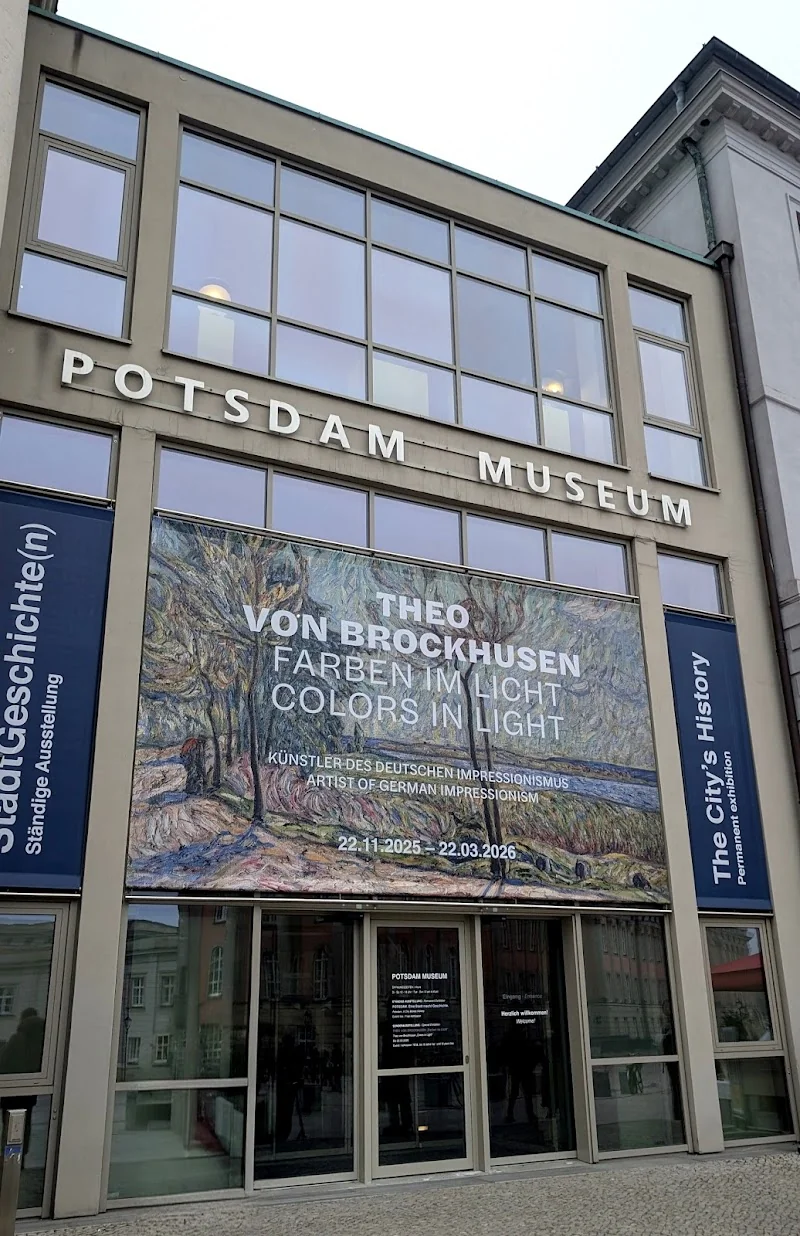
The current shape of the square is also a story of loss and reconstruction. After the destruction of the bombing night of April 14, 1945, only four buildings of the historical ensemble survived the war; the worthy ruins of the City Palace were demolished in 1959/60. Later, a new Landtag Brandenburg was built on this site after the reconstruction of the Fortuna portal in 2002. This makes the Alter Markt a place where the fractures of the 20th century can be read as well as the will for urban recovery. The Old Town Hall at the square, now the seat of the Potsdam Museum, has its own multifaceted history: it was rebuilt as a cultural house from 1960 to 1966 and extensively renovated from 2010 to 2012 before the museum returned to its founding location. Thus, at the Alter Markt, not only is Baroque reconstructed or cited, but modern urban development is also connected with historical identity. ([potsdam.de](https://www.potsdam.de/de/alter-markt))
Directions to Alter Markt: Tram, Bus, Train, and Walking Path
The Alter Markt is excellently connected for arrival, as it is located in the middle of Potsdam's city center. The city explicitly mentions the tram stop Alter Markt and points out that you can reach the square from Potsdam Central Station on foot in about eight minutes via the Lange Brücke. Those coming from Berlin can reach the central station via the S-Bahn line S7, and regional express, InterCity, and InterCityExpress trains also stop there. This makes the Alter Markt not only a destination for local visitors but also a very accessible starting point for day guests from the region and travelers from the capital. In the historical center, this is particularly pleasant because upon arrival, you do not have to search long: the square is quickly found, clearly readable, and well integrated into the urban pathways. For guests who wish for initial orientation from the station, the path is also simple and intuitive, as it leads through one of the most important connections in the city center. ([potsdam.de](https://www.potsdam.de/de/content/so-finden-sie-uns))
Especially practical is that the Alter Markt is not only accessed via a single stop but lies within a dense network of tram, bus, and pedestrian connections. For the Potsdam Museum, lines 91, 92, and 96, as well as buses 603 and 605, are mentioned, which stop at the Alter Markt / Landtag stop or nearby. The city also describes that tram and bus stops are only about two minutes away. This is especially helpful when you want to connect several destinations in one day, such as the Landtag, Museum Barberini, and the Potsdam Museum. For guests with little time, this is an advantage, as the square serves as a natural transition between arrival, sightseeing, and further exploration. Those who want to explore the historical center on foot can also use the Alter Markt as a starting point and reach the other stations of the center in short distance. ([potsdam.de](https://www.potsdam.de/de/alter-markt-als-veranstaltungsort))
Parking at Alter Markt Potsdam
When it comes to parking, it is important to pay close attention to the official notices, as the Alter Markt is a historical square with special use and should not be confused with a normal parking area. The city mentions around 70 paid parking spaces at the canal for events; additionally, the city train station is about five minutes away and offers parking garages as well as an S-Bahn connection to Berlin. This makes arriving by car generally possible, but it requires a bit of planning. Those who combine a visit to the Alter Markt with a longer stay in the city center often travel more relaxed if they use a parking garage or a combined park-and-ride solution. Especially for events or on heavily frequented days, it is worthwhile to plan the walking routes and the return trip in advance. The historical center is compact, and therefore the paths on foot can be much shorter than one might initially think. ([potsdam.de](https://www.potsdam.de/de/alter-markt-als-veranstaltungsort))
For the Landtag area, it is also important to note: There are no regular parking spaces available on the premises of the Landtag. The Landtag side points out that due to construction work in the vicinity, the disabled parking spaces in front of the Potsdam Museum are currently not usable; holders of the blue, Europe-wide valid disabled parking permit can park in this situation at the Alter Markt. Additionally, access to the Landtag is possible via the Fortuna portal, and the walking distance from the central station is about ten minutes or around 700 meters, according to the Landtag. For event organizers, the condition of the square is also relevant: the Alter Markt is paved with natural stone, and the city points out weight restrictions. This means that planning, technology, and logistics for events must be carefully coordinated with the historical surface. This combination of monument protection, urban quality, and practical usability makes the place so special. ([landtag.brandenburg.de](https://www.landtag.brandenburg.de/de/landtag_kennenlernen/gebaeude_und_verwaltung/anfahrt_zugang_und_oeffnungszeiten/25863))
Sights at Alter Markt: Nikolaikirche, Landtag, and Museums
The Alter Markt thrives primarily on its immediate surroundings. Centrally located between Nikolaikirche, the new Landtag, Potsdam Museum, and Museum Barberini, it is a square from which the most important sights of the historical center can be accessed almost like a walkable city map. The Nikolaikirche shapes the skyline with its large dome, while the Landtag Brandenburg sets a strong political and architectural accent with the baroque facade of the former City Palace. The Potsdam Museum in the Old Town Hall, in turn, tells the eventful history of the city and integrates the square into the cultural memory. The Museum Barberini complements this axis through its central address at Alter Markt and through its exhibition house, which also makes the square visible as an art location. Therefore, those who visit the Alter Markt experience not only an open square but a concentrated urban space where religion, politics, museums, and public space are intertwined. ([potsdam.de](https://www.potsdam.de/de/alter-markt-als-veranstaltungsort))
Particularly impressive is the perspective from the Landtag, as it opens the view over the Alter Markt to the Nikolaikirche and the Old Town Hall. The Landtag combines the appearance of the historical City Palace with the requirements of a modern parliamentary building. Through the Fortuna portal, one enters the courtyard, from there to the foyer, and further into publicly accessible areas via the Knobelsdorff staircase. The cafeteria with its rooftop garden offers a spectacular view of the Alter Markt and St. Nikolaikirche; additionally, there are changing exhibitions in the foyer and an interactive information terminal. This makes the place interesting not only for political visits but also for anyone who wants to compare historical city views with new architecture. With the Potsdam Museum in the Old Town Hall and the Museum Barberini, two more cultural destinations are directly at the square, allowing for a compact tour without long transfers. ([potsdam.de](https://www.potsdam.de/en/content/city-palace-landtag-brandenburg))
Events and Public Use of the Alter Markt
The Alter Markt is not just a backdrop but an active event venue. The city of Potsdam explicitly designates it as an event space and mentions a usable area of around 3,300 m². This makes the square suitable for public formats, city festivals, and urban cultural events, where the historical center serves as a stage. The location is ideal for this: tram and bus stops can be reached in just a few minutes, the square lies between the most important attractions of the city center, and the open spatial structure allows for larger scenes. At the same time, the historical surface with natural stone paving and weight restrictions provides a clear framework that must be considered in technical planning. This is important for the character of the place, as the Alter Markt should not be transformed into an anonymous event space but retain its urban dignity. The official description thus shows that tradition and contemporary use are consciously thought together here. ([potsdam.de](https://www.potsdam.de/de/alter-markt-als-veranstaltungsort))
A concrete example of this use is the XXL Silent Disco announced and conducted by the city at the Alter Markt. There, the square was staged as a pulsating heart of Potsdam, with Nikolaikirche, Landtag, obelisk, and Old Town Hall as a backdrop. The event concept relied on multiple DJ channels, more than 1,000 headphones, a light show, bar and food offerings, as well as the special atmosphere of the open urban space. Such formats show how flexibly the Alter Markt can be used today: during the day as a historical orientation point, in the evening as an atmospheric event space. At the same time, the city makes it clear that the execution of the event is always subject to official approval. For visitors, this means: the Alter Markt is a lively place with changing programs, where one can experience urban culture in the best sense alongside museums and architecture. ([potsdam.de](https://www.potsdam.de/de/veranstaltung/stadtgefluester-open-air-xxl-silent-disco-auf-dem-alten-markt-potsdam))
Museums, Opening Hours, and Visit Planning
Those who want to experience the Alter Markt consciously should not only remember the paths but also the opening hours of the most important institutions. The Potsdam Museum in the Old Town Hall opens Tuesday to Friday from 10 AM to 5 PM, Thursdays until 7 PM, and Saturdays and Sundays from 10 AM to 6 PM. This makes it suitable for both a classic city tour and a longer weekend visit. The Museum Barberini at Alter Markt is open Monday and Wednesday to Sunday from 10 AM to 7 PM, and it is closed on Tuesdays. The Landtag Brandenburg, on the other hand, opens its courtyard daily from 8 AM to 8 PM; the Knobelsdorff staircase, exhibitions in the Landtag, and the foyer with the interactive building model are accessible Monday to Friday from 8 AM to 6 PM. These three buildings together form a strong visiting axis, as they bundle history, art, and the present in immediate proximity. ([potsdam.de](https://www.potsdam.de/de/content/potsdam-museum-forum-art-and-history))
For planning, accessibility is also an important topic. The Landtag emphasizes barrier-free public areas, easily accessible wheelchair spaces, induction loops for hearing aids, and orientation aids for visually impaired people; there is also Braille in the public area and a guidance system from the Fortuna Portal to the Public Gallery and cafeteria. The Museum Barberini, in turn, mentions barrier-free access, elevators, barrier-free WCs, and nearby stops such as Potsdam Central Station, Alter Markt / Landtag, and Am Bassinplatz. This information is particularly helpful for families, seniors, school groups, and guests with special needs. Those who want to discover the Alter Markt at a leisurely pace in one day can start with a tour, then visit one of the museums, and end the visit in the evening at a café or at an event. Thus, the Alter Markt becomes not just a point on the map but a versatile experience space in the center of Potsdam. ([potsdam.de](https://www.potsdam.de/en/content/city-palace-landtag-brandenburg))
Sources:
- State Capital Potsdam – Alter Markt
- State Capital Potsdam – Alter Markt as an Event Venue
- State Capital Potsdam – How to Find Us
- State Capital Potsdam – Potsdam Museum / Forum for Art and History
- State Capital Potsdam – City Palace / Landtag of Brandenburg
- Landtag Brandenburg – Directions, Access, and Opening Hours
- Museum Barberini – Contact
- State Capital Potsdam – Stadtgeflüster Open Air at the Alter Markt
Show moreShow less
Alter Markt Potsdam | Directions & Parking
The Alter Markt in Potsdam is much more than a central square in the city center. It is the place where the historical heart of the city, significant buildings, political presence, and vibrant use converge in a small space. Those who arrive here stand between Nikolaikirche, Landtag, Potsdam Museum, and Museum Barberini in an environment that not only tells the city's history but makes it visible. The official city description summarizes the Alter Markt as a historical space around the Nikolaikirche up to the Alte Fahrt, thus as an area that has shaped the heart of Potsdam for centuries. At the same time, it is today a public place for culture, orientation, walks, and events. For visitors, the square is therefore both an entry point into Potsdam's history and a practical hub for arrival, parking, and the way to the most important sights of the historical center. ([potsdam.de](https://www.potsdam.de/de/alter-markt))
Alter Markt Potsdam: History, Significance, and Cityscape
The Alter Markt was designed in the mid-18th century under Frederick the Great as a Roman-inspired square. This conscious staging is still part of its character today, as the place was meant to be not just an open square but an urban center with a claim to representation. The city of Potsdam describes it as the heart of the city and refers to the special historical environment around the Nikolaikirche. The marble obelisk erected in 1753 and altered in 1979 is also one of these defining elements that mark the square in its form and symbolism. Historical representations of the city also make it clear that the Alter Markt was considered one of the most beautiful squares in Europe by contemporaries in the 19th century. This is not a sober administrative formulation but an expression of a long tradition in which architecture, openness, and sight axes at the Alter Markt were perceived as extraordinary. Today, this effect can still be felt, as the open square feeling connects with striking facades and sacred as well as political buildings. ([potsdam.de](https://www.potsdam.de/de/alter-markt))
The current shape of the square is also a story of loss and reconstruction. After the destruction of the bombing night of April 14, 1945, only four buildings of the historical ensemble survived the war; the worthy ruins of the City Palace were demolished in 1959/60. Later, a new Landtag Brandenburg was built on this site after the reconstruction of the Fortuna portal in 2002. This makes the Alter Markt a place where the fractures of the 20th century can be read as well as the will for urban recovery. The Old Town Hall at the square, now the seat of the Potsdam Museum, has its own multifaceted history: it was rebuilt as a cultural house from 1960 to 1966 and extensively renovated from 2010 to 2012 before the museum returned to its founding location. Thus, at the Alter Markt, not only is Baroque reconstructed or cited, but modern urban development is also connected with historical identity. ([potsdam.de](https://www.potsdam.de/de/alter-markt))
Directions to Alter Markt: Tram, Bus, Train, and Walking Path
The Alter Markt is excellently connected for arrival, as it is located in the middle of Potsdam's city center. The city explicitly mentions the tram stop Alter Markt and points out that you can reach the square from Potsdam Central Station on foot in about eight minutes via the Lange Brücke. Those coming from Berlin can reach the central station via the S-Bahn line S7, and regional express, InterCity, and InterCityExpress trains also stop there. This makes the Alter Markt not only a destination for local visitors but also a very accessible starting point for day guests from the region and travelers from the capital. In the historical center, this is particularly pleasant because upon arrival, you do not have to search long: the square is quickly found, clearly readable, and well integrated into the urban pathways. For guests who wish for initial orientation from the station, the path is also simple and intuitive, as it leads through one of the most important connections in the city center. ([potsdam.de](https://www.potsdam.de/de/content/so-finden-sie-uns))
Especially practical is that the Alter Markt is not only accessed via a single stop but lies within a dense network of tram, bus, and pedestrian connections. For the Potsdam Museum, lines 91, 92, and 96, as well as buses 603 and 605, are mentioned, which stop at the Alter Markt / Landtag stop or nearby. The city also describes that tram and bus stops are only about two minutes away. This is especially helpful when you want to connect several destinations in one day, such as the Landtag, Museum Barberini, and the Potsdam Museum. For guests with little time, this is an advantage, as the square serves as a natural transition between arrival, sightseeing, and further exploration. Those who want to explore the historical center on foot can also use the Alter Markt as a starting point and reach the other stations of the center in short distance. ([potsdam.de](https://www.potsdam.de/de/alter-markt-als-veranstaltungsort))
Parking at Alter Markt Potsdam
When it comes to parking, it is important to pay close attention to the official notices, as the Alter Markt is a historical square with special use and should not be confused with a normal parking area. The city mentions around 70 paid parking spaces at the canal for events; additionally, the city train station is about five minutes away and offers parking garages as well as an S-Bahn connection to Berlin. This makes arriving by car generally possible, but it requires a bit of planning. Those who combine a visit to the Alter Markt with a longer stay in the city center often travel more relaxed if they use a parking garage or a combined park-and-ride solution. Especially for events or on heavily frequented days, it is worthwhile to plan the walking routes and the return trip in advance. The historical center is compact, and therefore the paths on foot can be much shorter than one might initially think. ([potsdam.de](https://www.potsdam.de/de/alter-markt-als-veranstaltungsort))
For the Landtag area, it is also important to note: There are no regular parking spaces available on the premises of the Landtag. The Landtag side points out that due to construction work in the vicinity, the disabled parking spaces in front of the Potsdam Museum are currently not usable; holders of the blue, Europe-wide valid disabled parking permit can park in this situation at the Alter Markt. Additionally, access to the Landtag is possible via the Fortuna portal, and the walking distance from the central station is about ten minutes or around 700 meters, according to the Landtag. For event organizers, the condition of the square is also relevant: the Alter Markt is paved with natural stone, and the city points out weight restrictions. This means that planning, technology, and logistics for events must be carefully coordinated with the historical surface. This combination of monument protection, urban quality, and practical usability makes the place so special. ([landtag.brandenburg.de](https://www.landtag.brandenburg.de/de/landtag_kennenlernen/gebaeude_und_verwaltung/anfahrt_zugang_und_oeffnungszeiten/25863))
Sights at Alter Markt: Nikolaikirche, Landtag, and Museums
The Alter Markt thrives primarily on its immediate surroundings. Centrally located between Nikolaikirche, the new Landtag, Potsdam Museum, and Museum Barberini, it is a square from which the most important sights of the historical center can be accessed almost like a walkable city map. The Nikolaikirche shapes the skyline with its large dome, while the Landtag Brandenburg sets a strong political and architectural accent with the baroque facade of the former City Palace. The Potsdam Museum in the Old Town Hall, in turn, tells the eventful history of the city and integrates the square into the cultural memory. The Museum Barberini complements this axis through its central address at Alter Markt and through its exhibition house, which also makes the square visible as an art location. Therefore, those who visit the Alter Markt experience not only an open square but a concentrated urban space where religion, politics, museums, and public space are intertwined. ([potsdam.de](https://www.potsdam.de/de/alter-markt-als-veranstaltungsort))
Particularly impressive is the perspective from the Landtag, as it opens the view over the Alter Markt to the Nikolaikirche and the Old Town Hall. The Landtag combines the appearance of the historical City Palace with the requirements of a modern parliamentary building. Through the Fortuna portal, one enters the courtyard, from there to the foyer, and further into publicly accessible areas via the Knobelsdorff staircase. The cafeteria with its rooftop garden offers a spectacular view of the Alter Markt and St. Nikolaikirche; additionally, there are changing exhibitions in the foyer and an interactive information terminal. This makes the place interesting not only for political visits but also for anyone who wants to compare historical city views with new architecture. With the Potsdam Museum in the Old Town Hall and the Museum Barberini, two more cultural destinations are directly at the square, allowing for a compact tour without long transfers. ([potsdam.de](https://www.potsdam.de/en/content/city-palace-landtag-brandenburg))
Events and Public Use of the Alter Markt
The Alter Markt is not just a backdrop but an active event venue. The city of Potsdam explicitly designates it as an event space and mentions a usable area of around 3,300 m². This makes the square suitable for public formats, city festivals, and urban cultural events, where the historical center serves as a stage. The location is ideal for this: tram and bus stops can be reached in just a few minutes, the square lies between the most important attractions of the city center, and the open spatial structure allows for larger scenes. At the same time, the historical surface with natural stone paving and weight restrictions provides a clear framework that must be considered in technical planning. This is important for the character of the place, as the Alter Markt should not be transformed into an anonymous event space but retain its urban dignity. The official description thus shows that tradition and contemporary use are consciously thought together here. ([potsdam.de](https://www.potsdam.de/de/alter-markt-als-veranstaltungsort))
A concrete example of this use is the XXL Silent Disco announced and conducted by the city at the Alter Markt. There, the square was staged as a pulsating heart of Potsdam, with Nikolaikirche, Landtag, obelisk, and Old Town Hall as a backdrop. The event concept relied on multiple DJ channels, more than 1,000 headphones, a light show, bar and food offerings, as well as the special atmosphere of the open urban space. Such formats show how flexibly the Alter Markt can be used today: during the day as a historical orientation point, in the evening as an atmospheric event space. At the same time, the city makes it clear that the execution of the event is always subject to official approval. For visitors, this means: the Alter Markt is a lively place with changing programs, where one can experience urban culture in the best sense alongside museums and architecture. ([potsdam.de](https://www.potsdam.de/de/veranstaltung/stadtgefluester-open-air-xxl-silent-disco-auf-dem-alten-markt-potsdam))
Museums, Opening Hours, and Visit Planning
Those who want to experience the Alter Markt consciously should not only remember the paths but also the opening hours of the most important institutions. The Potsdam Museum in the Old Town Hall opens Tuesday to Friday from 10 AM to 5 PM, Thursdays until 7 PM, and Saturdays and Sundays from 10 AM to 6 PM. This makes it suitable for both a classic city tour and a longer weekend visit. The Museum Barberini at Alter Markt is open Monday and Wednesday to Sunday from 10 AM to 7 PM, and it is closed on Tuesdays. The Landtag Brandenburg, on the other hand, opens its courtyard daily from 8 AM to 8 PM; the Knobelsdorff staircase, exhibitions in the Landtag, and the foyer with the interactive building model are accessible Monday to Friday from 8 AM to 6 PM. These three buildings together form a strong visiting axis, as they bundle history, art, and the present in immediate proximity. ([potsdam.de](https://www.potsdam.de/de/content/potsdam-museum-forum-art-and-history))
For planning, accessibility is also an important topic. The Landtag emphasizes barrier-free public areas, easily accessible wheelchair spaces, induction loops for hearing aids, and orientation aids for visually impaired people; there is also Braille in the public area and a guidance system from the Fortuna Portal to the Public Gallery and cafeteria. The Museum Barberini, in turn, mentions barrier-free access, elevators, barrier-free WCs, and nearby stops such as Potsdam Central Station, Alter Markt / Landtag, and Am Bassinplatz. This information is particularly helpful for families, seniors, school groups, and guests with special needs. Those who want to discover the Alter Markt at a leisurely pace in one day can start with a tour, then visit one of the museums, and end the visit in the evening at a café or at an event. Thus, the Alter Markt becomes not just a point on the map but a versatile experience space in the center of Potsdam. ([potsdam.de](https://www.potsdam.de/en/content/city-palace-landtag-brandenburg))
Sources:
- State Capital Potsdam – Alter Markt
- State Capital Potsdam – Alter Markt as an Event Venue
- State Capital Potsdam – How to Find Us
- State Capital Potsdam – Potsdam Museum / Forum for Art and History
- State Capital Potsdam – City Palace / Landtag of Brandenburg
- Landtag Brandenburg – Directions, Access, and Opening Hours
- Museum Barberini – Contact
- State Capital Potsdam – Stadtgeflüster Open Air at the Alter Markt
Alter Markt Potsdam | Directions & Parking
The Alter Markt in Potsdam is much more than a central square in the city center. It is the place where the historical heart of the city, significant buildings, political presence, and vibrant use converge in a small space. Those who arrive here stand between Nikolaikirche, Landtag, Potsdam Museum, and Museum Barberini in an environment that not only tells the city's history but makes it visible. The official city description summarizes the Alter Markt as a historical space around the Nikolaikirche up to the Alte Fahrt, thus as an area that has shaped the heart of Potsdam for centuries. At the same time, it is today a public place for culture, orientation, walks, and events. For visitors, the square is therefore both an entry point into Potsdam's history and a practical hub for arrival, parking, and the way to the most important sights of the historical center. ([potsdam.de](https://www.potsdam.de/de/alter-markt))
Alter Markt Potsdam: History, Significance, and Cityscape
The Alter Markt was designed in the mid-18th century under Frederick the Great as a Roman-inspired square. This conscious staging is still part of its character today, as the place was meant to be not just an open square but an urban center with a claim to representation. The city of Potsdam describes it as the heart of the city and refers to the special historical environment around the Nikolaikirche. The marble obelisk erected in 1753 and altered in 1979 is also one of these defining elements that mark the square in its form and symbolism. Historical representations of the city also make it clear that the Alter Markt was considered one of the most beautiful squares in Europe by contemporaries in the 19th century. This is not a sober administrative formulation but an expression of a long tradition in which architecture, openness, and sight axes at the Alter Markt were perceived as extraordinary. Today, this effect can still be felt, as the open square feeling connects with striking facades and sacred as well as political buildings. ([potsdam.de](https://www.potsdam.de/de/alter-markt))
The current shape of the square is also a story of loss and reconstruction. After the destruction of the bombing night of April 14, 1945, only four buildings of the historical ensemble survived the war; the worthy ruins of the City Palace were demolished in 1959/60. Later, a new Landtag Brandenburg was built on this site after the reconstruction of the Fortuna portal in 2002. This makes the Alter Markt a place where the fractures of the 20th century can be read as well as the will for urban recovery. The Old Town Hall at the square, now the seat of the Potsdam Museum, has its own multifaceted history: it was rebuilt as a cultural house from 1960 to 1966 and extensively renovated from 2010 to 2012 before the museum returned to its founding location. Thus, at the Alter Markt, not only is Baroque reconstructed or cited, but modern urban development is also connected with historical identity. ([potsdam.de](https://www.potsdam.de/de/alter-markt))
Directions to Alter Markt: Tram, Bus, Train, and Walking Path
The Alter Markt is excellently connected for arrival, as it is located in the middle of Potsdam's city center. The city explicitly mentions the tram stop Alter Markt and points out that you can reach the square from Potsdam Central Station on foot in about eight minutes via the Lange Brücke. Those coming from Berlin can reach the central station via the S-Bahn line S7, and regional express, InterCity, and InterCityExpress trains also stop there. This makes the Alter Markt not only a destination for local visitors but also a very accessible starting point for day guests from the region and travelers from the capital. In the historical center, this is particularly pleasant because upon arrival, you do not have to search long: the square is quickly found, clearly readable, and well integrated into the urban pathways. For guests who wish for initial orientation from the station, the path is also simple and intuitive, as it leads through one of the most important connections in the city center. ([potsdam.de](https://www.potsdam.de/de/content/so-finden-sie-uns))
Especially practical is that the Alter Markt is not only accessed via a single stop but lies within a dense network of tram, bus, and pedestrian connections. For the Potsdam Museum, lines 91, 92, and 96, as well as buses 603 and 605, are mentioned, which stop at the Alter Markt / Landtag stop or nearby. The city also describes that tram and bus stops are only about two minutes away. This is especially helpful when you want to connect several destinations in one day, such as the Landtag, Museum Barberini, and the Potsdam Museum. For guests with little time, this is an advantage, as the square serves as a natural transition between arrival, sightseeing, and further exploration. Those who want to explore the historical center on foot can also use the Alter Markt as a starting point and reach the other stations of the center in short distance. ([potsdam.de](https://www.potsdam.de/de/alter-markt-als-veranstaltungsort))
Parking at Alter Markt Potsdam
When it comes to parking, it is important to pay close attention to the official notices, as the Alter Markt is a historical square with special use and should not be confused with a normal parking area. The city mentions around 70 paid parking spaces at the canal for events; additionally, the city train station is about five minutes away and offers parking garages as well as an S-Bahn connection to Berlin. This makes arriving by car generally possible, but it requires a bit of planning. Those who combine a visit to the Alter Markt with a longer stay in the city center often travel more relaxed if they use a parking garage or a combined park-and-ride solution. Especially for events or on heavily frequented days, it is worthwhile to plan the walking routes and the return trip in advance. The historical center is compact, and therefore the paths on foot can be much shorter than one might initially think. ([potsdam.de](https://www.potsdam.de/de/alter-markt-als-veranstaltungsort))
For the Landtag area, it is also important to note: There are no regular parking spaces available on the premises of the Landtag. The Landtag side points out that due to construction work in the vicinity, the disabled parking spaces in front of the Potsdam Museum are currently not usable; holders of the blue, Europe-wide valid disabled parking permit can park in this situation at the Alter Markt. Additionally, access to the Landtag is possible via the Fortuna portal, and the walking distance from the central station is about ten minutes or around 700 meters, according to the Landtag. For event organizers, the condition of the square is also relevant: the Alter Markt is paved with natural stone, and the city points out weight restrictions. This means that planning, technology, and logistics for events must be carefully coordinated with the historical surface. This combination of monument protection, urban quality, and practical usability makes the place so special. ([landtag.brandenburg.de](https://www.landtag.brandenburg.de/de/landtag_kennenlernen/gebaeude_und_verwaltung/anfahrt_zugang_und_oeffnungszeiten/25863))
Sights at Alter Markt: Nikolaikirche, Landtag, and Museums
The Alter Markt thrives primarily on its immediate surroundings. Centrally located between Nikolaikirche, the new Landtag, Potsdam Museum, and Museum Barberini, it is a square from which the most important sights of the historical center can be accessed almost like a walkable city map. The Nikolaikirche shapes the skyline with its large dome, while the Landtag Brandenburg sets a strong political and architectural accent with the baroque facade of the former City Palace. The Potsdam Museum in the Old Town Hall, in turn, tells the eventful history of the city and integrates the square into the cultural memory. The Museum Barberini complements this axis through its central address at Alter Markt and through its exhibition house, which also makes the square visible as an art location. Therefore, those who visit the Alter Markt experience not only an open square but a concentrated urban space where religion, politics, museums, and public space are intertwined. ([potsdam.de](https://www.potsdam.de/de/alter-markt-als-veranstaltungsort))
Particularly impressive is the perspective from the Landtag, as it opens the view over the Alter Markt to the Nikolaikirche and the Old Town Hall. The Landtag combines the appearance of the historical City Palace with the requirements of a modern parliamentary building. Through the Fortuna portal, one enters the courtyard, from there to the foyer, and further into publicly accessible areas via the Knobelsdorff staircase. The cafeteria with its rooftop garden offers a spectacular view of the Alter Markt and St. Nikolaikirche; additionally, there are changing exhibitions in the foyer and an interactive information terminal. This makes the place interesting not only for political visits but also for anyone who wants to compare historical city views with new architecture. With the Potsdam Museum in the Old Town Hall and the Museum Barberini, two more cultural destinations are directly at the square, allowing for a compact tour without long transfers. ([potsdam.de](https://www.potsdam.de/en/content/city-palace-landtag-brandenburg))
Events and Public Use of the Alter Markt
The Alter Markt is not just a backdrop but an active event venue. The city of Potsdam explicitly designates it as an event space and mentions a usable area of around 3,300 m². This makes the square suitable for public formats, city festivals, and urban cultural events, where the historical center serves as a stage. The location is ideal for this: tram and bus stops can be reached in just a few minutes, the square lies between the most important attractions of the city center, and the open spatial structure allows for larger scenes. At the same time, the historical surface with natural stone paving and weight restrictions provides a clear framework that must be considered in technical planning. This is important for the character of the place, as the Alter Markt should not be transformed into an anonymous event space but retain its urban dignity. The official description thus shows that tradition and contemporary use are consciously thought together here. ([potsdam.de](https://www.potsdam.de/de/alter-markt-als-veranstaltungsort))
A concrete example of this use is the XXL Silent Disco announced and conducted by the city at the Alter Markt. There, the square was staged as a pulsating heart of Potsdam, with Nikolaikirche, Landtag, obelisk, and Old Town Hall as a backdrop. The event concept relied on multiple DJ channels, more than 1,000 headphones, a light show, bar and food offerings, as well as the special atmosphere of the open urban space. Such formats show how flexibly the Alter Markt can be used today: during the day as a historical orientation point, in the evening as an atmospheric event space. At the same time, the city makes it clear that the execution of the event is always subject to official approval. For visitors, this means: the Alter Markt is a lively place with changing programs, where one can experience urban culture in the best sense alongside museums and architecture. ([potsdam.de](https://www.potsdam.de/de/veranstaltung/stadtgefluester-open-air-xxl-silent-disco-auf-dem-alten-markt-potsdam))
Museums, Opening Hours, and Visit Planning
Those who want to experience the Alter Markt consciously should not only remember the paths but also the opening hours of the most important institutions. The Potsdam Museum in the Old Town Hall opens Tuesday to Friday from 10 AM to 5 PM, Thursdays until 7 PM, and Saturdays and Sundays from 10 AM to 6 PM. This makes it suitable for both a classic city tour and a longer weekend visit. The Museum Barberini at Alter Markt is open Monday and Wednesday to Sunday from 10 AM to 7 PM, and it is closed on Tuesdays. The Landtag Brandenburg, on the other hand, opens its courtyard daily from 8 AM to 8 PM; the Knobelsdorff staircase, exhibitions in the Landtag, and the foyer with the interactive building model are accessible Monday to Friday from 8 AM to 6 PM. These three buildings together form a strong visiting axis, as they bundle history, art, and the present in immediate proximity. ([potsdam.de](https://www.potsdam.de/de/content/potsdam-museum-forum-art-and-history))
For planning, accessibility is also an important topic. The Landtag emphasizes barrier-free public areas, easily accessible wheelchair spaces, induction loops for hearing aids, and orientation aids for visually impaired people; there is also Braille in the public area and a guidance system from the Fortuna Portal to the Public Gallery and cafeteria. The Museum Barberini, in turn, mentions barrier-free access, elevators, barrier-free WCs, and nearby stops such as Potsdam Central Station, Alter Markt / Landtag, and Am Bassinplatz. This information is particularly helpful for families, seniors, school groups, and guests with special needs. Those who want to discover the Alter Markt at a leisurely pace in one day can start with a tour, then visit one of the museums, and end the visit in the evening at a café or at an event. Thus, the Alter Markt becomes not just a point on the map but a versatile experience space in the center of Potsdam. ([potsdam.de](https://www.potsdam.de/en/content/city-palace-landtag-brandenburg))
Sources:
- State Capital Potsdam – Alter Markt
- State Capital Potsdam – Alter Markt as an Event Venue
- State Capital Potsdam – How to Find Us
- State Capital Potsdam – Potsdam Museum / Forum for Art and History
- State Capital Potsdam – City Palace / Landtag of Brandenburg
- Landtag Brandenburg – Directions, Access, and Opening Hours
- Museum Barberini – Contact
- State Capital Potsdam – Stadtgeflüster Open Air at the Alter Markt
Frequently Asked Questions
Reviews
Sîlê
3. October 2025
Potsdam's most beautiful square is surrounded by beautiful buildings.
Rahul Patni
26. June 2025
Very beautiful place
Karten Kauz
25. August 2025
The Old Market Square is the vibrant heart of Potsdam, blending the city's rich history with modern life. Surrounded by architectural masterpieces such as the majestic St. Nicholas Church and the impressive Brandenburg State Parliament building, reconstructed as the former city palace, the square is a true feast for the eyes. Very large and beautifully designed, and also easily accessible by tram (stop: Alter Markt/Landtag). A well-deserved five stars ⭐️
Danièle Arnaud
9. June 2025
It's the end of the day, and after visiting the Sans Soucis Palace, I found this beautiful square further on, with almost no one in sight, making it a quiet, peaceful place. Very beautiful, very serene: a real pleasure to see such beautiful architecture.
dagny pogorzalek
19. July 2025
We've been living here in Potsdam for so long now... But this square, with all its sights—St. Nicholas Church, the State Parliament, the Fortuna Portal, the Egyptian Obelisk, the Barberini Museum, and the Potsdam Museum—is always worth visiting! As an amateur photographer, it's one of my favorite photo motifs in Potsdam ;)