
Rotenbergplatz 19, Eupen
Rotenbergplatz 19, 4700 Eupen, Belgium
Old Slaughterhouse Eupen | Program & Tickets
The Old Slaughterhouse in Eupen is much more than a venue with history. The cultural center is located in close proximity to the city center, is architecturally striking, and combines the atmosphere of a former industrial building with a contemporary program that ranges from concerts and readings to exhibitions, dance, theater, and family formats. The building complex covers around 2,000 m² and was built between 1901 and 1903; since September 4, 2015, it has been officially used as a cultural center. This is particularly exciting for visitors because not only individual evenings take place here, but a vibrant cultural location has emerged that is clearly anchored in the heart of Eupen. The official website also shows that the location is continuously active and attracts both classical stage formats and interdisciplinary projects. ([alter-schlachthof.be](https://www.alter-schlachthof.be/schlachthof/geschichte/))
Program & Events at the Old Slaughterhouse Eupen
Those looking for the Old Slaughterhouse Eupen program will find an astonishingly broad mix of genres and formats on the official website. Currently, the homepage and the program page feature music evenings, readings, jazz concerts, theater productions, exhibitions, family offerings, cabaret, dance, pedagogy, and bar-operated event formats. This diversity makes the search term program so important: visitors want to know not only what is on stage on a particular evening but also what kind of culture the venue offers overall. Currently, for example, the website shows auserLESEN 2026, an exhibition by Mavi Garcia & Kai Savelsberg, the SCENAR!O Festival, as well as other formats like FEIERabend: JUKEBOX Edition, Comic Workshop, Jazz in Eupen, or Jam Session. This is typical for the Old Slaughterhouse: the house is not a monolithic hall but a flexibly usable cultural framework where very different audience groups come together. ([alter-schlachthof.be](https://www.alter-schlachthof.be/))
A second reason for the strong program search is the regional significance of the house. The Old Slaughterhouse was already a place for concerts, theater performances, art exhibitions, and interactive projects before its complete transformation into a cultural center. The website explicitly states that Chudoscnik Sunergia and other associations have been culturally utilizing the location since 1993, even during the renovation phase. This explains why the location has a special program DNA: it is not only about classical guest performances but also about recognition, local anchoring, and the mix of established and experimental formats. For seekers, this is particularly relevant when searching for old slaughterhouse eupen program 2026 or old slaughterhouse events, as the page is not limited to one category. Rather, it shows a cultural place where new focuses develop throughout the year. This makes the Old Slaughterhouse interesting for both regular guests and first-time visitors. ([alter-schlachthof.be](https://www.alter-schlachthof.be/schlachthof/geschichte/))
Tickets, Advance Sale & Opening Hours
Regarding tickets, the Old Slaughterhouse Eupen is very clearly organized. The advance sales office of Chudoscnik Sunergia is located at Rotenbergplatz 19, right next to the cultural center. The German ticket page states that the opening hours for advance sales are Monday to Friday from 09:00 to 12:30 and 13:30 to 16:00. At the same time, the ticket page mentions modern payment methods such as KBC/CBC Payment Button, Belfius Direct Net, credit and debit cards, Apple Pay, Google Pay, and Pay by Bank. This is important for visitors because it allows for convenient booking both online and on-site. Also important: remaining tickets at the box office are possible, provided the respective event is not sold out. For event seekers, this is relevant because many search for the terms tickets, box office, or prices and want a reliable, up-to-date answer. ([alter-schlachthof.be](https://www.alter-schlachthof.be/tickets/))
The opening hours of the cultural center itself are also clearly described: the house is not permanently open but only in connection with events. This means that a visit is primarily linked to a program point. This logic fits well with a specialized cultural house that does not offer classic everyday gastronomy or a museum with free permanent admission but rather provides strong experiences at specific times. Those wishing to give tickets as gifts will also find an official solution: vouchers can be purchased at the advance sales office and redeemed there or online, but not at the day or evening box office. This way, the location also covers typical user questions such as old slaughterhouse contact, old slaughterhouse opening hours, and old slaughterhouse tickets very well. Especially for visitors who plan an evening in advance, this structure is practical because booking, payment, and any advance sale options are transparently presented. ([alter-schlachthof.be](https://www.alter-schlachthof.be/tickets/))
Access, Parking & Public Transport
Access to the Old Slaughterhouse Eupen is deliberately kept uncomplicated. Officially, the cultural center is located at Rotenbergplatz 17, B-4700 Eupen. For drivers, the website mentions two free parking options in close proximity: the Hufengasse parking lot and the Stockem parking lot. Additionally, there are bicycle parking spaces on the premises. Therefore, those searching for old slaughterhouse parking or old slaughterhouse access will receive a practical answer immediately on the official page. This is a plus for concert and festival visitors because the parking question often determines how relaxed the evening begins. A cultural location with clearly marked free parking is not a given in many cities, but in Eupen, it is explicitly part of the visitor information. ([alter-schlachthof.be](https://www.alter-schlachthof.be/fr/informations-pratiques/))
Those arriving by bus or train will also find well-structured information. The nearest stops mentioned on the official arrival page are Athenäum and Rotenberg, both about a five-minute walk away, as well as the bus station with about a 15-minute walk. For train travelers, the site refers to Belgian Train, and for local transport to the TEC information. This makes the location attractive for regional guests as well as for visitors from the broader tri-border area who wish to arrive by public transport. The location near the city center also ensures that arrival and going out can be easily combined. Those who want to eat something or walk through the city before or after the event in Eupen have short distances. This combination of central location, parking, bicycle parking spaces, and public transport connections is one of the reasons why the Old Slaughterhouse appears so often in search queries related to access, parking, and events. ([alter-schlachthof.be](https://www.alter-schlachthof.be/fr/informations-pratiques/))
History & Architecture of the Old Slaughterhouse
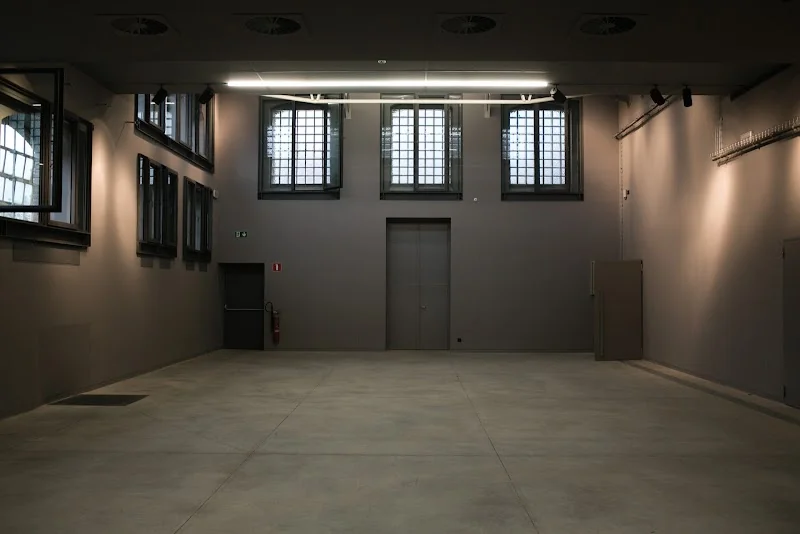
The history of the Old Slaughterhouse is an essential part of its current appeal. The building complex was constructed between 1901 and 1903 in the Prussian industrial style of the founding era and served as a municipal slaughterhouse until 1991. The official history page emphasizes that it is an architecturally striking complex located on around 2,000 m² in close proximity to the Eupen city center. This industrial origin is still palpable today and shapes the atmosphere of the house. Therefore, when entering the place, one does not experience just any event building, but a piece of city history that has been transformed into a new cultural use. This combination of authenticity and repurposing creates a special charm. This is also why guests often perceive the place as characterful, unusual, and visually memorable. ([alter-schlachthof.be](https://www.alter-schlachthof.be/schlachthof/geschichte/))
The transformation into a cultural center was a multi-stage process. Under the supervision of Liège architect Daniel Dethier, the conversion was implemented in two phases: first, the renovation of the existing buildings, then the restoration and expansion into a cultural center. The website lists important milestones: the building application was submitted in July 2004, approved in November 2004, the contract for the first phase was awarded in July 2007, the work started in August 2007 and lasted until April 2009. The project was realized with investments of around 2.9 million euros including VAT; through the Interreg project GEMAAL, about 850,000 euros in European funding could also be accessed. In partnership with AGR Tilia of the city of Eupen, the German-speaking community, the Walloon region, and the European Union, the building received a new, meaningful use. Since a unanimous decision by TILIA in March 2015, Chudoscnik Sunergia was initially defined as a service provider and manager; a few months later, on September 4, 2015, the Old Slaughterhouse was finally described as an adequate cultural center for Eupen. This history explains why the place not only functions well but also has a strong cultural symbolism. ([alter-schlachthof.be](https://www.alter-schlachthof.be/schlachthof/geschichte/))
Accessibility & Rooms On-Site
A particularly important plus point of the Old Slaughterhouse Eupen is its accessibility. The official site explicitly describes the cultural center as open to all and designed to provide people with limited mobility a comprehensive cultural experience. The entrance is at ground level, and several event areas are accessible without restrictions. These include the bistro, hall, cooling room, boiler room, and storage. This is very practical for visitors because the location is suitable not only for individual hall formats but also for various room sizes and event types. Those searching for old slaughterhouse accessibility will find a clear and concrete statement directly from the operator. Especially in cultural houses with historical building substance, this transparency is an important decision criterion for guests, families, and groups. ([alter-schlachthof.be](https://www.alter-schlachthof.be/schlachthof/barrierefreiheit/))
The official site asks people with severe mobility restrictions, such as wheelchair users, to announce themselves by phone or email before their visit to ensure a largely unrestricted audiovisual experience. This shows that accessibility here is understood not just as a duty but as active visit organization. At the same time, the listing of the rooms emphasizes that the Old Slaughterhouse is not just a single large hall but an ensemble of different functional zones. This flexibility arises from the fact that depending on the event, different rooms can be used, making the place equally interesting for concerts, exhibitions, literature, dance, or workshops. For queries related to space, seating plan, or rooms, this may not be a classic numerical seating arrangement, but it provides very clear information about the building structure of the house. ([alter-schlachthof.be](https://www.alter-schlachthof.be/schlachthof/barrierefreiheit/))
Bistro & Visitor Comfort
Visitor comfort at the Old Slaughterhouse also includes the bistro. The official bistro description shows that the location is not only a stage or exhibition house but also has a social meeting point with gastronomic added value. The accessibility page explicitly mentions the bistro as an accessible area, and the bistro description states that it is also available for celebrations or meetings outside of opening hours. For events, this means that the stay is not limited to the pure show time. Guests can meet, arrive, linger during breaks, and experience the place as a lively cultural and meeting space. This is a real added value, especially for longer cultural evenings, workshops, or festivals, as the duration of stay and atmosphere are often just as important as the stage program itself. ([alter-schlachthof.be](https://www.alter-schlachthof.be/schlachthof/barrierefreiheit/))
Even though the website does not make strong culinary prestige promises at the bistro, it clearly shows that the place is designed to connect culture and stay. This fits well with a house that regularly offers diverse formats from afternoon to evening. Therefore, those visiting the Old Slaughterhouse should not only look at the start time and ticket price but also at the framework: where can one arrive, where can one wait, where does one meet other visitors, and how comfortable is the place overall? This is where the bistro showcases its strengths. Together with the free parking, bicycle parking spaces, public transport connections, and barrier-free accessibility, a rounded visitor experience emerges. The Old Slaughterhouse Eupen is thus not only well organized culturally but also practically. ([alter-schlachthof.be](https://www.alter-schlachthof.be/wp-content/uploads/2017/09/Speisekarte.pdf))
Why the Old Slaughterhouse Eupen is Convincing for Events
The Old Slaughterhouse Eupen convinces mainly through the combination of history, location, flexibility, and visitor friendliness. It is a former slaughterhouse with a strong architectural identity, but at the same time, a modern cultural location with a clear program structure, practical ticket organization, free parking options, bicycle parking spaces, public transport connections, and barrier-free accessible rooms. This mixture makes it attractive for both organizers and audiences. Those looking for a place where atmosphere and practicality do not exclude each other will find a very convincing solution here. The official website also shows that the cultural center regularly addresses very different audience groups: from jazz to theater and literature to festivals, workshops, and exhibitions. Thus, the place is not just a backdrop but a real cultural engine for Eupen. ([alter-schlachthof.be](https://www.alter-schlachthof.be/))
Sources:
Show moreShow less
Old Slaughterhouse Eupen | Program & Tickets
The Old Slaughterhouse in Eupen is much more than a venue with history. The cultural center is located in close proximity to the city center, is architecturally striking, and combines the atmosphere of a former industrial building with a contemporary program that ranges from concerts and readings to exhibitions, dance, theater, and family formats. The building complex covers around 2,000 m² and was built between 1901 and 1903; since September 4, 2015, it has been officially used as a cultural center. This is particularly exciting for visitors because not only individual evenings take place here, but a vibrant cultural location has emerged that is clearly anchored in the heart of Eupen. The official website also shows that the location is continuously active and attracts both classical stage formats and interdisciplinary projects. ([alter-schlachthof.be](https://www.alter-schlachthof.be/schlachthof/geschichte/))
Program & Events at the Old Slaughterhouse Eupen
Those looking for the Old Slaughterhouse Eupen program will find an astonishingly broad mix of genres and formats on the official website. Currently, the homepage and the program page feature music evenings, readings, jazz concerts, theater productions, exhibitions, family offerings, cabaret, dance, pedagogy, and bar-operated event formats. This diversity makes the search term program so important: visitors want to know not only what is on stage on a particular evening but also what kind of culture the venue offers overall. Currently, for example, the website shows auserLESEN 2026, an exhibition by Mavi Garcia & Kai Savelsberg, the SCENAR!O Festival, as well as other formats like FEIERabend: JUKEBOX Edition, Comic Workshop, Jazz in Eupen, or Jam Session. This is typical for the Old Slaughterhouse: the house is not a monolithic hall but a flexibly usable cultural framework where very different audience groups come together. ([alter-schlachthof.be](https://www.alter-schlachthof.be/))
A second reason for the strong program search is the regional significance of the house. The Old Slaughterhouse was already a place for concerts, theater performances, art exhibitions, and interactive projects before its complete transformation into a cultural center. The website explicitly states that Chudoscnik Sunergia and other associations have been culturally utilizing the location since 1993, even during the renovation phase. This explains why the location has a special program DNA: it is not only about classical guest performances but also about recognition, local anchoring, and the mix of established and experimental formats. For seekers, this is particularly relevant when searching for old slaughterhouse eupen program 2026 or old slaughterhouse events, as the page is not limited to one category. Rather, it shows a cultural place where new focuses develop throughout the year. This makes the Old Slaughterhouse interesting for both regular guests and first-time visitors. ([alter-schlachthof.be](https://www.alter-schlachthof.be/schlachthof/geschichte/))
Tickets, Advance Sale & Opening Hours
Regarding tickets, the Old Slaughterhouse Eupen is very clearly organized. The advance sales office of Chudoscnik Sunergia is located at Rotenbergplatz 19, right next to the cultural center. The German ticket page states that the opening hours for advance sales are Monday to Friday from 09:00 to 12:30 and 13:30 to 16:00. At the same time, the ticket page mentions modern payment methods such as KBC/CBC Payment Button, Belfius Direct Net, credit and debit cards, Apple Pay, Google Pay, and Pay by Bank. This is important for visitors because it allows for convenient booking both online and on-site. Also important: remaining tickets at the box office are possible, provided the respective event is not sold out. For event seekers, this is relevant because many search for the terms tickets, box office, or prices and want a reliable, up-to-date answer. ([alter-schlachthof.be](https://www.alter-schlachthof.be/tickets/))
The opening hours of the cultural center itself are also clearly described: the house is not permanently open but only in connection with events. This means that a visit is primarily linked to a program point. This logic fits well with a specialized cultural house that does not offer classic everyday gastronomy or a museum with free permanent admission but rather provides strong experiences at specific times. Those wishing to give tickets as gifts will also find an official solution: vouchers can be purchased at the advance sales office and redeemed there or online, but not at the day or evening box office. This way, the location also covers typical user questions such as old slaughterhouse contact, old slaughterhouse opening hours, and old slaughterhouse tickets very well. Especially for visitors who plan an evening in advance, this structure is practical because booking, payment, and any advance sale options are transparently presented. ([alter-schlachthof.be](https://www.alter-schlachthof.be/tickets/))
Access, Parking & Public Transport
Access to the Old Slaughterhouse Eupen is deliberately kept uncomplicated. Officially, the cultural center is located at Rotenbergplatz 17, B-4700 Eupen. For drivers, the website mentions two free parking options in close proximity: the Hufengasse parking lot and the Stockem parking lot. Additionally, there are bicycle parking spaces on the premises. Therefore, those searching for old slaughterhouse parking or old slaughterhouse access will receive a practical answer immediately on the official page. This is a plus for concert and festival visitors because the parking question often determines how relaxed the evening begins. A cultural location with clearly marked free parking is not a given in many cities, but in Eupen, it is explicitly part of the visitor information. ([alter-schlachthof.be](https://www.alter-schlachthof.be/fr/informations-pratiques/))
Those arriving by bus or train will also find well-structured information. The nearest stops mentioned on the official arrival page are Athenäum and Rotenberg, both about a five-minute walk away, as well as the bus station with about a 15-minute walk. For train travelers, the site refers to Belgian Train, and for local transport to the TEC information. This makes the location attractive for regional guests as well as for visitors from the broader tri-border area who wish to arrive by public transport. The location near the city center also ensures that arrival and going out can be easily combined. Those who want to eat something or walk through the city before or after the event in Eupen have short distances. This combination of central location, parking, bicycle parking spaces, and public transport connections is one of the reasons why the Old Slaughterhouse appears so often in search queries related to access, parking, and events. ([alter-schlachthof.be](https://www.alter-schlachthof.be/fr/informations-pratiques/))
History & Architecture of the Old Slaughterhouse
The history of the Old Slaughterhouse is an essential part of its current appeal. The building complex was constructed between 1901 and 1903 in the Prussian industrial style of the founding era and served as a municipal slaughterhouse until 1991. The official history page emphasizes that it is an architecturally striking complex located on around 2,000 m² in close proximity to the Eupen city center. This industrial origin is still palpable today and shapes the atmosphere of the house. Therefore, when entering the place, one does not experience just any event building, but a piece of city history that has been transformed into a new cultural use. This combination of authenticity and repurposing creates a special charm. This is also why guests often perceive the place as characterful, unusual, and visually memorable. ([alter-schlachthof.be](https://www.alter-schlachthof.be/schlachthof/geschichte/))
The transformation into a cultural center was a multi-stage process. Under the supervision of Liège architect Daniel Dethier, the conversion was implemented in two phases: first, the renovation of the existing buildings, then the restoration and expansion into a cultural center. The website lists important milestones: the building application was submitted in July 2004, approved in November 2004, the contract for the first phase was awarded in July 2007, the work started in August 2007 and lasted until April 2009. The project was realized with investments of around 2.9 million euros including VAT; through the Interreg project GEMAAL, about 850,000 euros in European funding could also be accessed. In partnership with AGR Tilia of the city of Eupen, the German-speaking community, the Walloon region, and the European Union, the building received a new, meaningful use. Since a unanimous decision by TILIA in March 2015, Chudoscnik Sunergia was initially defined as a service provider and manager; a few months later, on September 4, 2015, the Old Slaughterhouse was finally described as an adequate cultural center for Eupen. This history explains why the place not only functions well but also has a strong cultural symbolism. ([alter-schlachthof.be](https://www.alter-schlachthof.be/schlachthof/geschichte/))
Accessibility & Rooms On-Site
A particularly important plus point of the Old Slaughterhouse Eupen is its accessibility. The official site explicitly describes the cultural center as open to all and designed to provide people with limited mobility a comprehensive cultural experience. The entrance is at ground level, and several event areas are accessible without restrictions. These include the bistro, hall, cooling room, boiler room, and storage. This is very practical for visitors because the location is suitable not only for individual hall formats but also for various room sizes and event types. Those searching for old slaughterhouse accessibility will find a clear and concrete statement directly from the operator. Especially in cultural houses with historical building substance, this transparency is an important decision criterion for guests, families, and groups. ([alter-schlachthof.be](https://www.alter-schlachthof.be/schlachthof/barrierefreiheit/))
The official site asks people with severe mobility restrictions, such as wheelchair users, to announce themselves by phone or email before their visit to ensure a largely unrestricted audiovisual experience. This shows that accessibility here is understood not just as a duty but as active visit organization. At the same time, the listing of the rooms emphasizes that the Old Slaughterhouse is not just a single large hall but an ensemble of different functional zones. This flexibility arises from the fact that depending on the event, different rooms can be used, making the place equally interesting for concerts, exhibitions, literature, dance, or workshops. For queries related to space, seating plan, or rooms, this may not be a classic numerical seating arrangement, but it provides very clear information about the building structure of the house. ([alter-schlachthof.be](https://www.alter-schlachthof.be/schlachthof/barrierefreiheit/))
Bistro & Visitor Comfort
Visitor comfort at the Old Slaughterhouse also includes the bistro. The official bistro description shows that the location is not only a stage or exhibition house but also has a social meeting point with gastronomic added value. The accessibility page explicitly mentions the bistro as an accessible area, and the bistro description states that it is also available for celebrations or meetings outside of opening hours. For events, this means that the stay is not limited to the pure show time. Guests can meet, arrive, linger during breaks, and experience the place as a lively cultural and meeting space. This is a real added value, especially for longer cultural evenings, workshops, or festivals, as the duration of stay and atmosphere are often just as important as the stage program itself. ([alter-schlachthof.be](https://www.alter-schlachthof.be/schlachthof/barrierefreiheit/))
Even though the website does not make strong culinary prestige promises at the bistro, it clearly shows that the place is designed to connect culture and stay. This fits well with a house that regularly offers diverse formats from afternoon to evening. Therefore, those visiting the Old Slaughterhouse should not only look at the start time and ticket price but also at the framework: where can one arrive, where can one wait, where does one meet other visitors, and how comfortable is the place overall? This is where the bistro showcases its strengths. Together with the free parking, bicycle parking spaces, public transport connections, and barrier-free accessibility, a rounded visitor experience emerges. The Old Slaughterhouse Eupen is thus not only well organized culturally but also practically. ([alter-schlachthof.be](https://www.alter-schlachthof.be/wp-content/uploads/2017/09/Speisekarte.pdf))
Why the Old Slaughterhouse Eupen is Convincing for Events
The Old Slaughterhouse Eupen convinces mainly through the combination of history, location, flexibility, and visitor friendliness. It is a former slaughterhouse with a strong architectural identity, but at the same time, a modern cultural location with a clear program structure, practical ticket organization, free parking options, bicycle parking spaces, public transport connections, and barrier-free accessible rooms. This mixture makes it attractive for both organizers and audiences. Those looking for a place where atmosphere and practicality do not exclude each other will find a very convincing solution here. The official website also shows that the cultural center regularly addresses very different audience groups: from jazz to theater and literature to festivals, workshops, and exhibitions. Thus, the place is not just a backdrop but a real cultural engine for Eupen. ([alter-schlachthof.be](https://www.alter-schlachthof.be/))
Sources:
Old Slaughterhouse Eupen | Program & Tickets
The Old Slaughterhouse in Eupen is much more than a venue with history. The cultural center is located in close proximity to the city center, is architecturally striking, and combines the atmosphere of a former industrial building with a contemporary program that ranges from concerts and readings to exhibitions, dance, theater, and family formats. The building complex covers around 2,000 m² and was built between 1901 and 1903; since September 4, 2015, it has been officially used as a cultural center. This is particularly exciting for visitors because not only individual evenings take place here, but a vibrant cultural location has emerged that is clearly anchored in the heart of Eupen. The official website also shows that the location is continuously active and attracts both classical stage formats and interdisciplinary projects. ([alter-schlachthof.be](https://www.alter-schlachthof.be/schlachthof/geschichte/))
Program & Events at the Old Slaughterhouse Eupen
Those looking for the Old Slaughterhouse Eupen program will find an astonishingly broad mix of genres and formats on the official website. Currently, the homepage and the program page feature music evenings, readings, jazz concerts, theater productions, exhibitions, family offerings, cabaret, dance, pedagogy, and bar-operated event formats. This diversity makes the search term program so important: visitors want to know not only what is on stage on a particular evening but also what kind of culture the venue offers overall. Currently, for example, the website shows auserLESEN 2026, an exhibition by Mavi Garcia & Kai Savelsberg, the SCENAR!O Festival, as well as other formats like FEIERabend: JUKEBOX Edition, Comic Workshop, Jazz in Eupen, or Jam Session. This is typical for the Old Slaughterhouse: the house is not a monolithic hall but a flexibly usable cultural framework where very different audience groups come together. ([alter-schlachthof.be](https://www.alter-schlachthof.be/))
A second reason for the strong program search is the regional significance of the house. The Old Slaughterhouse was already a place for concerts, theater performances, art exhibitions, and interactive projects before its complete transformation into a cultural center. The website explicitly states that Chudoscnik Sunergia and other associations have been culturally utilizing the location since 1993, even during the renovation phase. This explains why the location has a special program DNA: it is not only about classical guest performances but also about recognition, local anchoring, and the mix of established and experimental formats. For seekers, this is particularly relevant when searching for old slaughterhouse eupen program 2026 or old slaughterhouse events, as the page is not limited to one category. Rather, it shows a cultural place where new focuses develop throughout the year. This makes the Old Slaughterhouse interesting for both regular guests and first-time visitors. ([alter-schlachthof.be](https://www.alter-schlachthof.be/schlachthof/geschichte/))
Tickets, Advance Sale & Opening Hours
Regarding tickets, the Old Slaughterhouse Eupen is very clearly organized. The advance sales office of Chudoscnik Sunergia is located at Rotenbergplatz 19, right next to the cultural center. The German ticket page states that the opening hours for advance sales are Monday to Friday from 09:00 to 12:30 and 13:30 to 16:00. At the same time, the ticket page mentions modern payment methods such as KBC/CBC Payment Button, Belfius Direct Net, credit and debit cards, Apple Pay, Google Pay, and Pay by Bank. This is important for visitors because it allows for convenient booking both online and on-site. Also important: remaining tickets at the box office are possible, provided the respective event is not sold out. For event seekers, this is relevant because many search for the terms tickets, box office, or prices and want a reliable, up-to-date answer. ([alter-schlachthof.be](https://www.alter-schlachthof.be/tickets/))
The opening hours of the cultural center itself are also clearly described: the house is not permanently open but only in connection with events. This means that a visit is primarily linked to a program point. This logic fits well with a specialized cultural house that does not offer classic everyday gastronomy or a museum with free permanent admission but rather provides strong experiences at specific times. Those wishing to give tickets as gifts will also find an official solution: vouchers can be purchased at the advance sales office and redeemed there or online, but not at the day or evening box office. This way, the location also covers typical user questions such as old slaughterhouse contact, old slaughterhouse opening hours, and old slaughterhouse tickets very well. Especially for visitors who plan an evening in advance, this structure is practical because booking, payment, and any advance sale options are transparently presented. ([alter-schlachthof.be](https://www.alter-schlachthof.be/tickets/))
Access, Parking & Public Transport
Access to the Old Slaughterhouse Eupen is deliberately kept uncomplicated. Officially, the cultural center is located at Rotenbergplatz 17, B-4700 Eupen. For drivers, the website mentions two free parking options in close proximity: the Hufengasse parking lot and the Stockem parking lot. Additionally, there are bicycle parking spaces on the premises. Therefore, those searching for old slaughterhouse parking or old slaughterhouse access will receive a practical answer immediately on the official page. This is a plus for concert and festival visitors because the parking question often determines how relaxed the evening begins. A cultural location with clearly marked free parking is not a given in many cities, but in Eupen, it is explicitly part of the visitor information. ([alter-schlachthof.be](https://www.alter-schlachthof.be/fr/informations-pratiques/))
Those arriving by bus or train will also find well-structured information. The nearest stops mentioned on the official arrival page are Athenäum and Rotenberg, both about a five-minute walk away, as well as the bus station with about a 15-minute walk. For train travelers, the site refers to Belgian Train, and for local transport to the TEC information. This makes the location attractive for regional guests as well as for visitors from the broader tri-border area who wish to arrive by public transport. The location near the city center also ensures that arrival and going out can be easily combined. Those who want to eat something or walk through the city before or after the event in Eupen have short distances. This combination of central location, parking, bicycle parking spaces, and public transport connections is one of the reasons why the Old Slaughterhouse appears so often in search queries related to access, parking, and events. ([alter-schlachthof.be](https://www.alter-schlachthof.be/fr/informations-pratiques/))
History & Architecture of the Old Slaughterhouse
The history of the Old Slaughterhouse is an essential part of its current appeal. The building complex was constructed between 1901 and 1903 in the Prussian industrial style of the founding era and served as a municipal slaughterhouse until 1991. The official history page emphasizes that it is an architecturally striking complex located on around 2,000 m² in close proximity to the Eupen city center. This industrial origin is still palpable today and shapes the atmosphere of the house. Therefore, when entering the place, one does not experience just any event building, but a piece of city history that has been transformed into a new cultural use. This combination of authenticity and repurposing creates a special charm. This is also why guests often perceive the place as characterful, unusual, and visually memorable. ([alter-schlachthof.be](https://www.alter-schlachthof.be/schlachthof/geschichte/))
The transformation into a cultural center was a multi-stage process. Under the supervision of Liège architect Daniel Dethier, the conversion was implemented in two phases: first, the renovation of the existing buildings, then the restoration and expansion into a cultural center. The website lists important milestones: the building application was submitted in July 2004, approved in November 2004, the contract for the first phase was awarded in July 2007, the work started in August 2007 and lasted until April 2009. The project was realized with investments of around 2.9 million euros including VAT; through the Interreg project GEMAAL, about 850,000 euros in European funding could also be accessed. In partnership with AGR Tilia of the city of Eupen, the German-speaking community, the Walloon region, and the European Union, the building received a new, meaningful use. Since a unanimous decision by TILIA in March 2015, Chudoscnik Sunergia was initially defined as a service provider and manager; a few months later, on September 4, 2015, the Old Slaughterhouse was finally described as an adequate cultural center for Eupen. This history explains why the place not only functions well but also has a strong cultural symbolism. ([alter-schlachthof.be](https://www.alter-schlachthof.be/schlachthof/geschichte/))
Accessibility & Rooms On-Site
A particularly important plus point of the Old Slaughterhouse Eupen is its accessibility. The official site explicitly describes the cultural center as open to all and designed to provide people with limited mobility a comprehensive cultural experience. The entrance is at ground level, and several event areas are accessible without restrictions. These include the bistro, hall, cooling room, boiler room, and storage. This is very practical for visitors because the location is suitable not only for individual hall formats but also for various room sizes and event types. Those searching for old slaughterhouse accessibility will find a clear and concrete statement directly from the operator. Especially in cultural houses with historical building substance, this transparency is an important decision criterion for guests, families, and groups. ([alter-schlachthof.be](https://www.alter-schlachthof.be/schlachthof/barrierefreiheit/))
The official site asks people with severe mobility restrictions, such as wheelchair users, to announce themselves by phone or email before their visit to ensure a largely unrestricted audiovisual experience. This shows that accessibility here is understood not just as a duty but as active visit organization. At the same time, the listing of the rooms emphasizes that the Old Slaughterhouse is not just a single large hall but an ensemble of different functional zones. This flexibility arises from the fact that depending on the event, different rooms can be used, making the place equally interesting for concerts, exhibitions, literature, dance, or workshops. For queries related to space, seating plan, or rooms, this may not be a classic numerical seating arrangement, but it provides very clear information about the building structure of the house. ([alter-schlachthof.be](https://www.alter-schlachthof.be/schlachthof/barrierefreiheit/))
Bistro & Visitor Comfort
Visitor comfort at the Old Slaughterhouse also includes the bistro. The official bistro description shows that the location is not only a stage or exhibition house but also has a social meeting point with gastronomic added value. The accessibility page explicitly mentions the bistro as an accessible area, and the bistro description states that it is also available for celebrations or meetings outside of opening hours. For events, this means that the stay is not limited to the pure show time. Guests can meet, arrive, linger during breaks, and experience the place as a lively cultural and meeting space. This is a real added value, especially for longer cultural evenings, workshops, or festivals, as the duration of stay and atmosphere are often just as important as the stage program itself. ([alter-schlachthof.be](https://www.alter-schlachthof.be/schlachthof/barrierefreiheit/))
Even though the website does not make strong culinary prestige promises at the bistro, it clearly shows that the place is designed to connect culture and stay. This fits well with a house that regularly offers diverse formats from afternoon to evening. Therefore, those visiting the Old Slaughterhouse should not only look at the start time and ticket price but also at the framework: where can one arrive, where can one wait, where does one meet other visitors, and how comfortable is the place overall? This is where the bistro showcases its strengths. Together with the free parking, bicycle parking spaces, public transport connections, and barrier-free accessibility, a rounded visitor experience emerges. The Old Slaughterhouse Eupen is thus not only well organized culturally but also practically. ([alter-schlachthof.be](https://www.alter-schlachthof.be/wp-content/uploads/2017/09/Speisekarte.pdf))
Why the Old Slaughterhouse Eupen is Convincing for Events
The Old Slaughterhouse Eupen convinces mainly through the combination of history, location, flexibility, and visitor friendliness. It is a former slaughterhouse with a strong architectural identity, but at the same time, a modern cultural location with a clear program structure, practical ticket organization, free parking options, bicycle parking spaces, public transport connections, and barrier-free accessible rooms. This mixture makes it attractive for both organizers and audiences. Those looking for a place where atmosphere and practicality do not exclude each other will find a very convincing solution here. The official website also shows that the cultural center regularly addresses very different audience groups: from jazz to theater and literature to festivals, workshops, and exhibitions. Thus, the place is not just a backdrop but a real cultural engine for Eupen. ([alter-schlachthof.be](https://www.alter-schlachthof.be/))
Sources:
Upcoming Events
No events found
Frequently Asked Questions
Reviews
Eric Bruls
30. September 2021
Very nice venue.. really small and very cosy.. hopefully more bands will perform.. love the gigs.
TheMystery Lights (The Mystery Lights)
6. March 2017
Great venue! Great people! Great beer! Amazing greenroom! Excellent hospitality! Thank you Alter Schlachthof for having us! Hope to return again sooner than later Xo, The Mystery Lights
Till Lentzen
23. January 2018
A very good location if you are looking for an event. As it's built in an old slaughterhouse there are different rooms with excellent acoustics! But it has its price...
Yasser Sarout
2. October 2023
I visited the Cultural center because of a photography exposition about Cuba. The photos were very interesting, but the center itself is quite good.
Sascha Voncken
28. January 2018
What a nice location! Been there for a concert, cool location, nice little bistro.