
Kaiserstraße 10, Neubiberg
Kaiserstraße 10, 85579 Neubiberg, Germany
Apothekarium Neubiberg | Pharmacy Museum & Opening Hours
The Apothekarium Neubiberg is a lovingly curated pharmacy museum in the south of Munich, whose heart beats in an original pharmacy: the rooms of the former Hubertus Pharmacy. At Kaiserstraße 10, visitors can expect a carefully preserved collection of pharmaceutical craftsmanship: noble standing vessels made of wood, glass, and porcelain, working tools made of bronze and brass, travel pharmacies with original contents, as well as curious objects found in historical pharmacies and cabinets of curiosities. The house is open on Fridays and Saturdays, and the entrance fee is intentionally kept low. The location is practical: not far from the S-Bahn line S7, with bus stops just around the corner and some parking spaces right in front of the door. Those seeking a dense time travel through 400 years of pharmacy and everyday history will find here a compact, personal museum that impresses with regular events, knowledgeable explanations, and a family atmosphere. In the following sections, you will find answers to the most common inquiries regarding images, history, directions, opening hours, programs, and the difference between museum and pharmacy, as well as practical tips for your visit.
Images of Apothekarium Neubiberg: Motifs, Impressions, and Where to Find Them
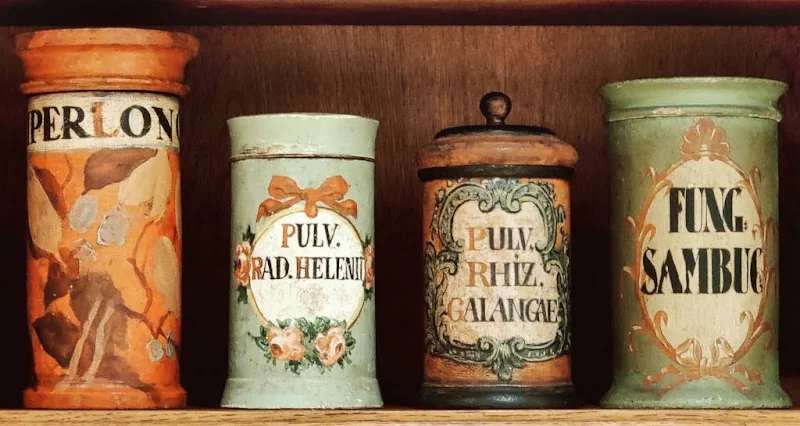
If you want to get an idea of the Apothekarium Neubiberg in advance, you often look for photos of the rooms, showcases, and exhibits. Particularly impressive are the motifs in the restored pharmacy: labeled standing vessels in neatly arranged shelves, apothecary cabinets with small drawers, mortars and pestles from different eras, as well as scales that illustrate the precise weighing of precious substances. The travel pharmacies with tiny bottles and boxes also attract attention because they show the mobility of pharmaceutical knowledge in pocket format. Many of these elements reflect the artisanal ethos and the material traces of pharmacology before industrial ready-made medicines shaped everyday life. Official insights and current photos can be found on the museum's website, especially in posts and announcements that introduce new theme evenings or special pieces from the collection. Additionally, there is a freely licensed exterior photo of the Apothekarium on Wikimedia Commons; it shows the facade on Kaiserstraße and conveys the character of the building as a former residential and commercial building. Those who want to take photos on-site should act respectfully and considerately towards other visitors; some objects are sensitive and benefit from avoiding flash photography. Authentic motifs can be captured by focusing on small artisanal details: carved wooden profiles on the cabinet fronts, hand-painted labels on porcelain vessels, the patina of a brass mortar, or the finely balanced tongues of a beam scale. Still lifes made of tools and recipe books also tell stories. The spatial proximity of the exhibits allows for close-ups that make structures and materiality visible. Photos taken in the late afternoon are particularly atmospheric when warm light emphasizes the wooden surfaces. Those who want to capture the historical atmosphere can choose perspectives where the counter and shelf wall are visible at the same time, allowing the pharmacy to be experienced as a workspace. For publications, a brief inquiry with the museum team is advisable to ensure the correct attribution of the origin and context of the images. Thus, the search for images becomes a visual companion booklet for a later visit.
Pharmacy Museum Neubiberg: History, Collection, and Special Features
The roots of the Apothekarium lie in the Hubertus Pharmacy, which opened in 1950 as the first pharmacy in Neubiberg. For over half a century, it shaped the place, run by Valentin Arnold Mayring. The combined residential and commercial building is – alongside the town hall – one of the few preserved buildings from that construction period. Over four generations, the Mayring family assembled an ensemble of house, property, and collection. In the fourth generation, when no further licensed pharmacist could be found in the family, the pharmacy was transformed into a museum: the current Apothekarium Neubiberg. This biographical continuity gives the museum a special authenticity. Instead of a staged backdrop, one sees the evolved material culture of a real pharmacy, supplemented by pieces from the history of pharmacy. Characteristic exhibits include historical standing vessels made of various materials – wood, glass, porcelain – documenting the storage of drugs, tinctures, and powders. Working tools made of bronze and brass illustrate the artisanal process, from the grinding of plant, mineral, or animal raw materials to weighing and mixing. Travel pharmacies with original contents show how pharmacists and doctors kept knowledge and supplies mobile. Last but not least, exotic and curious objects give an impression of the ideas about healing powers that moved earlier centuries and how the relationship between empiricism, tradition, and superstition shifted over time. The museum sees itself as a place of mediation: Regular events illuminate historical recipes, medicinal plants, or symbolic representations found in pictorial programs and devotional images. Particularly noteworthy is the regional classification: In the greater Munich area, the Apothekarium is considered the only pure pharmacy museum, making it an important complement for schools, clubs, and those interested in cultural history to large technology and medical histories. The spatial proximity to the former pharmacy allows for a close look at workflows, materials, and tools; visitors can trace the relationship between material, ritual, and regulation – from official drugs anchored in pharmaceutical books to traditional applications that are more rooted in folk medicine. This mix of everyday history, craftsmanship, and science makes the charm of the house and explains why many guests highlight its personal character.
Directions, Opening Hours, and Parking at Kaiserstraße 10
The address of the Apothekarium is Kaiserstraße 10, 85579 Neubiberg. The house is located next to the church and is easily accessible from the Munich urban area. By public transport, the S-Bahn line S7 to the Neubiberg station is recommended; from there, it is about 600 meters on foot. Alternatively, bus lines 211, 212, and 229 stop at the Kaiserstraße stop almost at the door. Those arriving by car will find some public parking spaces directly at the museum. The opening hours are intentionally compact and visitor-friendly: Fridays from 2 PM to 6 PM and Saturdays from 12 PM to 4 PM. The entrance fee is 2 euros. For groups, school classes, or individual concerns, visits by prior arrangement are possible; direct contact by phone or email is expressly welcomed. Since it is a family-run establishment with personal care, seasonal notices can be important – especially around holidays. Check the current announcements on the website before your visit, especially if you are planning a longer journey or want to see a specific topic. The location in the town center makes orientation easy: Those coming from the S-Bahn follow Kaiserstraße towards the church; the path is clear. Cyclists will find suitable parking options in the area. For those who prefer to take breaks during their journey, a short pause in the church square is recommended before entering the quiet, concentrated atmosphere of the museum. Tip for public transport users: Allow a few minutes of buffer time for the return trip to sort impressions after the visit or to ask questions to the museum team. Overall, the journey is uncomplicated and quick, favoring spontaneous visits on Friday afternoons or Saturday afternoons.
Events, Tours, and Programs at the Apothekarium
The Apothekarium Neubiberg is not only a showcase but a lively place for learning and encounters. Regular events make the collection tangible and bridge to the present. In contributions and theme evenings, topics such as historical herbal medicine, recipes from apothecary books, symbolism and iconography surrounding the healing arts, or the cultural history of certain substances are addressed. Examples range from formats like incense for the smoke night to botanical excursions to birch, to recipe-related introductions focusing on seasonal liqueurs or tinctures. Additionally, contributions reflect the long breath of artisanal learning and show how much patience and precision is involved in historical manufacturing processes. A special plus is the pharmacy garden on the premises, which is opened on selected occasions and provides insights into fruits, roots, and leaves from which traditional home remedies and pharmaceutical extracts were prepared. Visitors thus gain a sensory access to the metabolism between nature, workbench, and pharmaceutical book: One sees, smells, and understands how parts of plants become the basic substances for ointments, tinctures, and powders. Those interested in the program can find current information on the museum's website; there, event announcements are published and often accompanied by small content insights that create anticipation for the evening. Since places can be limited in compact formats, a brief pre-registration is advisable. For groups, individual tours can be arranged by agreement, where focuses – such as tool knowledge, history of druggists and pharmacies, or the development from pharmacy operation to modern pharmacy – can be set. Each format thrives on the direct view of the objects: A mortar that bears visible signs of use tells more than many text panels; a finely labeled porcelain jar reveals the pharmacists' desire for standardization, which later culminated in pharmaceutical books and legal regulations. Thus, the program becomes the common thread that continually illuminates the collection anew.
Pharmacy Neubiberg or Museum? How to Distinguish Both
The search query for pharmacies in Neubiberg is obvious – and often leads online parallel to the Apothekarium. The distinction is important: The Apothekarium Neubiberg is a museum and does not dispense medications. It explains, shows, and contextualizes the work of pharmacists in history and the present but is not a supply pharmacy. If you need medications, prescriptions, or advice on current preparations, please contact the public pharmacies in the area. For those interested in cultural and medical history, the Apothekarium is the right address. The misunderstanding often arises because the museum is located in the rooms of a real historical pharmacy – the Hubertus Pharmacy was the first pharmacy in Neubiberg in 1950. This is precisely where its charm lies: One enters an authentic workspace whose order, materials, and tools are preserved. The shelves with standing vessels, scales, mortars, and recipe books are not mere decoration but the inherited infrastructure of a profession that oscillated between herbal medicine, chemistry, alchemy, and legal norms. Those who want to sharpen the differences can orient themselves to three questions: Am I concerned with the supply of medications today – then to the pharmacy. Am I concerned with understanding pharmaceutical practice in the past – then to the museum. Am I concerned with both – then it is worth first looking into the past, as many principles of care, hygiene, standardization, and documentation seen in the history of pharmacies are still part of the profession today. For families, the Apothekarium is a vivid complement to school education; for pharmacy students, it opens a historical depth that textbooks alone rarely convey.
Practical Visit Tips: Admission, Groups, Accessibility, and Contact
The admission fee is intentionally set low at 2 euros, making spontaneous visits on Friday afternoons or Saturday afternoons easy. If you wish for a guided tour, a themed format, or an individual appointment, you can contact by phone or email; the museum team responds promptly and assists with planning. For school classes or clubs, it is advisable to specify focuses to make the best use of the available time – for example, a concentrated introduction to objects in the pharmacy, a tool knowledge session on the production of traditional medicinal forms, or a visit to the pharmacy garden on suitable occasions. The building dates from the post-war period; if you have special needs regarding accessibility or seating, you should inquire briefly in advance so that the team can provide the best possible support. The connection to public transport is comfortable, so visitors without a car can also manage well. For drivers, the parking spaces directly at the house are practical; those arriving during peak times should plan a few minutes buffer for parking search. Since the Apothekarium values a personal atmosphere, time for inquiries and exploration is expressly welcomed: Many objects only reveal themselves when one looks closely and hears the stories behind them – how drugs and tinctures became standardized recipes, how scales were calibrated and mortars maintained, or why some standing vessels are now empty and serve only as witnesses. During the tour, keep an eye out for information on current events; notices and posts on the website are regularly updated. Around holidays, there may be special openings or short closing times. If you want to take a look beyond the horizon, you can find parallel exhibitions on health and medicine in Munich, but the Apothekarium claims its special niche in the region: as a compact, specialized house that places the pharmacy itself – not just medicine in general – at the center. For questions and arrangements, the house's phone and email are available; this makes the path to a successful visit short, personal, and uncomplicated.
Sources:
Show moreShow less
Apothekarium Neubiberg | Pharmacy Museum & Opening Hours
The Apothekarium Neubiberg is a lovingly curated pharmacy museum in the south of Munich, whose heart beats in an original pharmacy: the rooms of the former Hubertus Pharmacy. At Kaiserstraße 10, visitors can expect a carefully preserved collection of pharmaceutical craftsmanship: noble standing vessels made of wood, glass, and porcelain, working tools made of bronze and brass, travel pharmacies with original contents, as well as curious objects found in historical pharmacies and cabinets of curiosities. The house is open on Fridays and Saturdays, and the entrance fee is intentionally kept low. The location is practical: not far from the S-Bahn line S7, with bus stops just around the corner and some parking spaces right in front of the door. Those seeking a dense time travel through 400 years of pharmacy and everyday history will find here a compact, personal museum that impresses with regular events, knowledgeable explanations, and a family atmosphere. In the following sections, you will find answers to the most common inquiries regarding images, history, directions, opening hours, programs, and the difference between museum and pharmacy, as well as practical tips for your visit.
Images of Apothekarium Neubiberg: Motifs, Impressions, and Where to Find Them
If you want to get an idea of the Apothekarium Neubiberg in advance, you often look for photos of the rooms, showcases, and exhibits. Particularly impressive are the motifs in the restored pharmacy: labeled standing vessels in neatly arranged shelves, apothecary cabinets with small drawers, mortars and pestles from different eras, as well as scales that illustrate the precise weighing of precious substances. The travel pharmacies with tiny bottles and boxes also attract attention because they show the mobility of pharmaceutical knowledge in pocket format. Many of these elements reflect the artisanal ethos and the material traces of pharmacology before industrial ready-made medicines shaped everyday life. Official insights and current photos can be found on the museum's website, especially in posts and announcements that introduce new theme evenings or special pieces from the collection. Additionally, there is a freely licensed exterior photo of the Apothekarium on Wikimedia Commons; it shows the facade on Kaiserstraße and conveys the character of the building as a former residential and commercial building. Those who want to take photos on-site should act respectfully and considerately towards other visitors; some objects are sensitive and benefit from avoiding flash photography. Authentic motifs can be captured by focusing on small artisanal details: carved wooden profiles on the cabinet fronts, hand-painted labels on porcelain vessels, the patina of a brass mortar, or the finely balanced tongues of a beam scale. Still lifes made of tools and recipe books also tell stories. The spatial proximity of the exhibits allows for close-ups that make structures and materiality visible. Photos taken in the late afternoon are particularly atmospheric when warm light emphasizes the wooden surfaces. Those who want to capture the historical atmosphere can choose perspectives where the counter and shelf wall are visible at the same time, allowing the pharmacy to be experienced as a workspace. For publications, a brief inquiry with the museum team is advisable to ensure the correct attribution of the origin and context of the images. Thus, the search for images becomes a visual companion booklet for a later visit.
Pharmacy Museum Neubiberg: History, Collection, and Special Features
The roots of the Apothekarium lie in the Hubertus Pharmacy, which opened in 1950 as the first pharmacy in Neubiberg. For over half a century, it shaped the place, run by Valentin Arnold Mayring. The combined residential and commercial building is – alongside the town hall – one of the few preserved buildings from that construction period. Over four generations, the Mayring family assembled an ensemble of house, property, and collection. In the fourth generation, when no further licensed pharmacist could be found in the family, the pharmacy was transformed into a museum: the current Apothekarium Neubiberg. This biographical continuity gives the museum a special authenticity. Instead of a staged backdrop, one sees the evolved material culture of a real pharmacy, supplemented by pieces from the history of pharmacy. Characteristic exhibits include historical standing vessels made of various materials – wood, glass, porcelain – documenting the storage of drugs, tinctures, and powders. Working tools made of bronze and brass illustrate the artisanal process, from the grinding of plant, mineral, or animal raw materials to weighing and mixing. Travel pharmacies with original contents show how pharmacists and doctors kept knowledge and supplies mobile. Last but not least, exotic and curious objects give an impression of the ideas about healing powers that moved earlier centuries and how the relationship between empiricism, tradition, and superstition shifted over time. The museum sees itself as a place of mediation: Regular events illuminate historical recipes, medicinal plants, or symbolic representations found in pictorial programs and devotional images. Particularly noteworthy is the regional classification: In the greater Munich area, the Apothekarium is considered the only pure pharmacy museum, making it an important complement for schools, clubs, and those interested in cultural history to large technology and medical histories. The spatial proximity to the former pharmacy allows for a close look at workflows, materials, and tools; visitors can trace the relationship between material, ritual, and regulation – from official drugs anchored in pharmaceutical books to traditional applications that are more rooted in folk medicine. This mix of everyday history, craftsmanship, and science makes the charm of the house and explains why many guests highlight its personal character.
Directions, Opening Hours, and Parking at Kaiserstraße 10
The address of the Apothekarium is Kaiserstraße 10, 85579 Neubiberg. The house is located next to the church and is easily accessible from the Munich urban area. By public transport, the S-Bahn line S7 to the Neubiberg station is recommended; from there, it is about 600 meters on foot. Alternatively, bus lines 211, 212, and 229 stop at the Kaiserstraße stop almost at the door. Those arriving by car will find some public parking spaces directly at the museum. The opening hours are intentionally compact and visitor-friendly: Fridays from 2 PM to 6 PM and Saturdays from 12 PM to 4 PM. The entrance fee is 2 euros. For groups, school classes, or individual concerns, visits by prior arrangement are possible; direct contact by phone or email is expressly welcomed. Since it is a family-run establishment with personal care, seasonal notices can be important – especially around holidays. Check the current announcements on the website before your visit, especially if you are planning a longer journey or want to see a specific topic. The location in the town center makes orientation easy: Those coming from the S-Bahn follow Kaiserstraße towards the church; the path is clear. Cyclists will find suitable parking options in the area. For those who prefer to take breaks during their journey, a short pause in the church square is recommended before entering the quiet, concentrated atmosphere of the museum. Tip for public transport users: Allow a few minutes of buffer time for the return trip to sort impressions after the visit or to ask questions to the museum team. Overall, the journey is uncomplicated and quick, favoring spontaneous visits on Friday afternoons or Saturday afternoons.
Events, Tours, and Programs at the Apothekarium
The Apothekarium Neubiberg is not only a showcase but a lively place for learning and encounters. Regular events make the collection tangible and bridge to the present. In contributions and theme evenings, topics such as historical herbal medicine, recipes from apothecary books, symbolism and iconography surrounding the healing arts, or the cultural history of certain substances are addressed. Examples range from formats like incense for the smoke night to botanical excursions to birch, to recipe-related introductions focusing on seasonal liqueurs or tinctures. Additionally, contributions reflect the long breath of artisanal learning and show how much patience and precision is involved in historical manufacturing processes. A special plus is the pharmacy garden on the premises, which is opened on selected occasions and provides insights into fruits, roots, and leaves from which traditional home remedies and pharmaceutical extracts were prepared. Visitors thus gain a sensory access to the metabolism between nature, workbench, and pharmaceutical book: One sees, smells, and understands how parts of plants become the basic substances for ointments, tinctures, and powders. Those interested in the program can find current information on the museum's website; there, event announcements are published and often accompanied by small content insights that create anticipation for the evening. Since places can be limited in compact formats, a brief pre-registration is advisable. For groups, individual tours can be arranged by agreement, where focuses – such as tool knowledge, history of druggists and pharmacies, or the development from pharmacy operation to modern pharmacy – can be set. Each format thrives on the direct view of the objects: A mortar that bears visible signs of use tells more than many text panels; a finely labeled porcelain jar reveals the pharmacists' desire for standardization, which later culminated in pharmaceutical books and legal regulations. Thus, the program becomes the common thread that continually illuminates the collection anew.
Pharmacy Neubiberg or Museum? How to Distinguish Both
The search query for pharmacies in Neubiberg is obvious – and often leads online parallel to the Apothekarium. The distinction is important: The Apothekarium Neubiberg is a museum and does not dispense medications. It explains, shows, and contextualizes the work of pharmacists in history and the present but is not a supply pharmacy. If you need medications, prescriptions, or advice on current preparations, please contact the public pharmacies in the area. For those interested in cultural and medical history, the Apothekarium is the right address. The misunderstanding often arises because the museum is located in the rooms of a real historical pharmacy – the Hubertus Pharmacy was the first pharmacy in Neubiberg in 1950. This is precisely where its charm lies: One enters an authentic workspace whose order, materials, and tools are preserved. The shelves with standing vessels, scales, mortars, and recipe books are not mere decoration but the inherited infrastructure of a profession that oscillated between herbal medicine, chemistry, alchemy, and legal norms. Those who want to sharpen the differences can orient themselves to three questions: Am I concerned with the supply of medications today – then to the pharmacy. Am I concerned with understanding pharmaceutical practice in the past – then to the museum. Am I concerned with both – then it is worth first looking into the past, as many principles of care, hygiene, standardization, and documentation seen in the history of pharmacies are still part of the profession today. For families, the Apothekarium is a vivid complement to school education; for pharmacy students, it opens a historical depth that textbooks alone rarely convey.
Practical Visit Tips: Admission, Groups, Accessibility, and Contact
The admission fee is intentionally set low at 2 euros, making spontaneous visits on Friday afternoons or Saturday afternoons easy. If you wish for a guided tour, a themed format, or an individual appointment, you can contact by phone or email; the museum team responds promptly and assists with planning. For school classes or clubs, it is advisable to specify focuses to make the best use of the available time – for example, a concentrated introduction to objects in the pharmacy, a tool knowledge session on the production of traditional medicinal forms, or a visit to the pharmacy garden on suitable occasions. The building dates from the post-war period; if you have special needs regarding accessibility or seating, you should inquire briefly in advance so that the team can provide the best possible support. The connection to public transport is comfortable, so visitors without a car can also manage well. For drivers, the parking spaces directly at the house are practical; those arriving during peak times should plan a few minutes buffer for parking search. Since the Apothekarium values a personal atmosphere, time for inquiries and exploration is expressly welcomed: Many objects only reveal themselves when one looks closely and hears the stories behind them – how drugs and tinctures became standardized recipes, how scales were calibrated and mortars maintained, or why some standing vessels are now empty and serve only as witnesses. During the tour, keep an eye out for information on current events; notices and posts on the website are regularly updated. Around holidays, there may be special openings or short closing times. If you want to take a look beyond the horizon, you can find parallel exhibitions on health and medicine in Munich, but the Apothekarium claims its special niche in the region: as a compact, specialized house that places the pharmacy itself – not just medicine in general – at the center. For questions and arrangements, the house's phone and email are available; this makes the path to a successful visit short, personal, and uncomplicated.
Sources:
Apothekarium Neubiberg | Pharmacy Museum & Opening Hours
The Apothekarium Neubiberg is a lovingly curated pharmacy museum in the south of Munich, whose heart beats in an original pharmacy: the rooms of the former Hubertus Pharmacy. At Kaiserstraße 10, visitors can expect a carefully preserved collection of pharmaceutical craftsmanship: noble standing vessels made of wood, glass, and porcelain, working tools made of bronze and brass, travel pharmacies with original contents, as well as curious objects found in historical pharmacies and cabinets of curiosities. The house is open on Fridays and Saturdays, and the entrance fee is intentionally kept low. The location is practical: not far from the S-Bahn line S7, with bus stops just around the corner and some parking spaces right in front of the door. Those seeking a dense time travel through 400 years of pharmacy and everyday history will find here a compact, personal museum that impresses with regular events, knowledgeable explanations, and a family atmosphere. In the following sections, you will find answers to the most common inquiries regarding images, history, directions, opening hours, programs, and the difference between museum and pharmacy, as well as practical tips for your visit.
Images of Apothekarium Neubiberg: Motifs, Impressions, and Where to Find Them
If you want to get an idea of the Apothekarium Neubiberg in advance, you often look for photos of the rooms, showcases, and exhibits. Particularly impressive are the motifs in the restored pharmacy: labeled standing vessels in neatly arranged shelves, apothecary cabinets with small drawers, mortars and pestles from different eras, as well as scales that illustrate the precise weighing of precious substances. The travel pharmacies with tiny bottles and boxes also attract attention because they show the mobility of pharmaceutical knowledge in pocket format. Many of these elements reflect the artisanal ethos and the material traces of pharmacology before industrial ready-made medicines shaped everyday life. Official insights and current photos can be found on the museum's website, especially in posts and announcements that introduce new theme evenings or special pieces from the collection. Additionally, there is a freely licensed exterior photo of the Apothekarium on Wikimedia Commons; it shows the facade on Kaiserstraße and conveys the character of the building as a former residential and commercial building. Those who want to take photos on-site should act respectfully and considerately towards other visitors; some objects are sensitive and benefit from avoiding flash photography. Authentic motifs can be captured by focusing on small artisanal details: carved wooden profiles on the cabinet fronts, hand-painted labels on porcelain vessels, the patina of a brass mortar, or the finely balanced tongues of a beam scale. Still lifes made of tools and recipe books also tell stories. The spatial proximity of the exhibits allows for close-ups that make structures and materiality visible. Photos taken in the late afternoon are particularly atmospheric when warm light emphasizes the wooden surfaces. Those who want to capture the historical atmosphere can choose perspectives where the counter and shelf wall are visible at the same time, allowing the pharmacy to be experienced as a workspace. For publications, a brief inquiry with the museum team is advisable to ensure the correct attribution of the origin and context of the images. Thus, the search for images becomes a visual companion booklet for a later visit.
Pharmacy Museum Neubiberg: History, Collection, and Special Features
The roots of the Apothekarium lie in the Hubertus Pharmacy, which opened in 1950 as the first pharmacy in Neubiberg. For over half a century, it shaped the place, run by Valentin Arnold Mayring. The combined residential and commercial building is – alongside the town hall – one of the few preserved buildings from that construction period. Over four generations, the Mayring family assembled an ensemble of house, property, and collection. In the fourth generation, when no further licensed pharmacist could be found in the family, the pharmacy was transformed into a museum: the current Apothekarium Neubiberg. This biographical continuity gives the museum a special authenticity. Instead of a staged backdrop, one sees the evolved material culture of a real pharmacy, supplemented by pieces from the history of pharmacy. Characteristic exhibits include historical standing vessels made of various materials – wood, glass, porcelain – documenting the storage of drugs, tinctures, and powders. Working tools made of bronze and brass illustrate the artisanal process, from the grinding of plant, mineral, or animal raw materials to weighing and mixing. Travel pharmacies with original contents show how pharmacists and doctors kept knowledge and supplies mobile. Last but not least, exotic and curious objects give an impression of the ideas about healing powers that moved earlier centuries and how the relationship between empiricism, tradition, and superstition shifted over time. The museum sees itself as a place of mediation: Regular events illuminate historical recipes, medicinal plants, or symbolic representations found in pictorial programs and devotional images. Particularly noteworthy is the regional classification: In the greater Munich area, the Apothekarium is considered the only pure pharmacy museum, making it an important complement for schools, clubs, and those interested in cultural history to large technology and medical histories. The spatial proximity to the former pharmacy allows for a close look at workflows, materials, and tools; visitors can trace the relationship between material, ritual, and regulation – from official drugs anchored in pharmaceutical books to traditional applications that are more rooted in folk medicine. This mix of everyday history, craftsmanship, and science makes the charm of the house and explains why many guests highlight its personal character.
Directions, Opening Hours, and Parking at Kaiserstraße 10
The address of the Apothekarium is Kaiserstraße 10, 85579 Neubiberg. The house is located next to the church and is easily accessible from the Munich urban area. By public transport, the S-Bahn line S7 to the Neubiberg station is recommended; from there, it is about 600 meters on foot. Alternatively, bus lines 211, 212, and 229 stop at the Kaiserstraße stop almost at the door. Those arriving by car will find some public parking spaces directly at the museum. The opening hours are intentionally compact and visitor-friendly: Fridays from 2 PM to 6 PM and Saturdays from 12 PM to 4 PM. The entrance fee is 2 euros. For groups, school classes, or individual concerns, visits by prior arrangement are possible; direct contact by phone or email is expressly welcomed. Since it is a family-run establishment with personal care, seasonal notices can be important – especially around holidays. Check the current announcements on the website before your visit, especially if you are planning a longer journey or want to see a specific topic. The location in the town center makes orientation easy: Those coming from the S-Bahn follow Kaiserstraße towards the church; the path is clear. Cyclists will find suitable parking options in the area. For those who prefer to take breaks during their journey, a short pause in the church square is recommended before entering the quiet, concentrated atmosphere of the museum. Tip for public transport users: Allow a few minutes of buffer time for the return trip to sort impressions after the visit or to ask questions to the museum team. Overall, the journey is uncomplicated and quick, favoring spontaneous visits on Friday afternoons or Saturday afternoons.
Events, Tours, and Programs at the Apothekarium
The Apothekarium Neubiberg is not only a showcase but a lively place for learning and encounters. Regular events make the collection tangible and bridge to the present. In contributions and theme evenings, topics such as historical herbal medicine, recipes from apothecary books, symbolism and iconography surrounding the healing arts, or the cultural history of certain substances are addressed. Examples range from formats like incense for the smoke night to botanical excursions to birch, to recipe-related introductions focusing on seasonal liqueurs or tinctures. Additionally, contributions reflect the long breath of artisanal learning and show how much patience and precision is involved in historical manufacturing processes. A special plus is the pharmacy garden on the premises, which is opened on selected occasions and provides insights into fruits, roots, and leaves from which traditional home remedies and pharmaceutical extracts were prepared. Visitors thus gain a sensory access to the metabolism between nature, workbench, and pharmaceutical book: One sees, smells, and understands how parts of plants become the basic substances for ointments, tinctures, and powders. Those interested in the program can find current information on the museum's website; there, event announcements are published and often accompanied by small content insights that create anticipation for the evening. Since places can be limited in compact formats, a brief pre-registration is advisable. For groups, individual tours can be arranged by agreement, where focuses – such as tool knowledge, history of druggists and pharmacies, or the development from pharmacy operation to modern pharmacy – can be set. Each format thrives on the direct view of the objects: A mortar that bears visible signs of use tells more than many text panels; a finely labeled porcelain jar reveals the pharmacists' desire for standardization, which later culminated in pharmaceutical books and legal regulations. Thus, the program becomes the common thread that continually illuminates the collection anew.
Pharmacy Neubiberg or Museum? How to Distinguish Both
The search query for pharmacies in Neubiberg is obvious – and often leads online parallel to the Apothekarium. The distinction is important: The Apothekarium Neubiberg is a museum and does not dispense medications. It explains, shows, and contextualizes the work of pharmacists in history and the present but is not a supply pharmacy. If you need medications, prescriptions, or advice on current preparations, please contact the public pharmacies in the area. For those interested in cultural and medical history, the Apothekarium is the right address. The misunderstanding often arises because the museum is located in the rooms of a real historical pharmacy – the Hubertus Pharmacy was the first pharmacy in Neubiberg in 1950. This is precisely where its charm lies: One enters an authentic workspace whose order, materials, and tools are preserved. The shelves with standing vessels, scales, mortars, and recipe books are not mere decoration but the inherited infrastructure of a profession that oscillated between herbal medicine, chemistry, alchemy, and legal norms. Those who want to sharpen the differences can orient themselves to three questions: Am I concerned with the supply of medications today – then to the pharmacy. Am I concerned with understanding pharmaceutical practice in the past – then to the museum. Am I concerned with both – then it is worth first looking into the past, as many principles of care, hygiene, standardization, and documentation seen in the history of pharmacies are still part of the profession today. For families, the Apothekarium is a vivid complement to school education; for pharmacy students, it opens a historical depth that textbooks alone rarely convey.
Practical Visit Tips: Admission, Groups, Accessibility, and Contact
The admission fee is intentionally set low at 2 euros, making spontaneous visits on Friday afternoons or Saturday afternoons easy. If you wish for a guided tour, a themed format, or an individual appointment, you can contact by phone or email; the museum team responds promptly and assists with planning. For school classes or clubs, it is advisable to specify focuses to make the best use of the available time – for example, a concentrated introduction to objects in the pharmacy, a tool knowledge session on the production of traditional medicinal forms, or a visit to the pharmacy garden on suitable occasions. The building dates from the post-war period; if you have special needs regarding accessibility or seating, you should inquire briefly in advance so that the team can provide the best possible support. The connection to public transport is comfortable, so visitors without a car can also manage well. For drivers, the parking spaces directly at the house are practical; those arriving during peak times should plan a few minutes buffer for parking search. Since the Apothekarium values a personal atmosphere, time for inquiries and exploration is expressly welcomed: Many objects only reveal themselves when one looks closely and hears the stories behind them – how drugs and tinctures became standardized recipes, how scales were calibrated and mortars maintained, or why some standing vessels are now empty and serve only as witnesses. During the tour, keep an eye out for information on current events; notices and posts on the website are regularly updated. Around holidays, there may be special openings or short closing times. If you want to take a look beyond the horizon, you can find parallel exhibitions on health and medicine in Munich, but the Apothekarium claims its special niche in the region: as a compact, specialized house that places the pharmacy itself – not just medicine in general – at the center. For questions and arrangements, the house's phone and email are available; this makes the path to a successful visit short, personal, and uncomplicated.
Sources:
Upcoming Events
No events found
Frequently Asked Questions
Reviews
Darcy Mcloughlin
15. September 2025
Very cool museum and the owners are very knowledgeable about pharmacy history and herbology. Would definitely recommend a visit, you'll be surprised by what you learn!
25. June 2022
Really interesting exhibit with lots of things to see! Very friendly owners who told an interesting and personal story about the pharmacy business in their family. Lovely insight into the 17th to 20th century apothecary arts!
Irene Marquez
4. June 2022
Step back in time when apothecary care came from the wisdom of your pharmacist and not big pharma. Fascinating story of the owner of the Hubertus Apotheke. Many family heirlooms on display.
Julia Thissen
18. September 2025
A wonderful museum that inspires its visitors with the history of pharmacology. The owners are extremely knowledgeable, enjoy guiding visitors through the exhibitions, and regularly host exciting events!
Andrea Hiering
14. December 2023
Products from the pharmaceutical sector, lovingly collected and designed.