
München
Residenzstraße 1, 80539 München, Deutschland
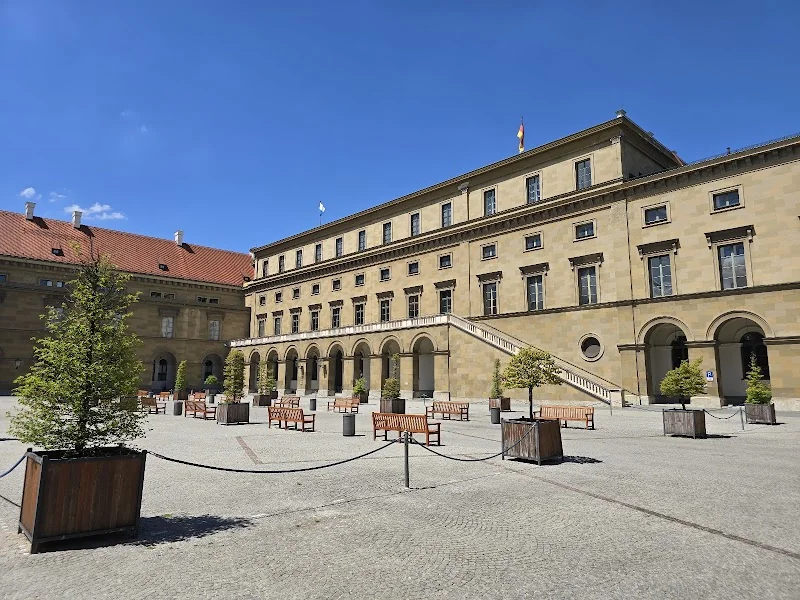
Pharmacy Courtyard | Residence Munich & Directions
The Pharmacy Courtyard in the Residence Munich is one of those places where the history of the city is not revealed in a single moment, but rather layer by layer. Those searching for Pharmacy Courtyard Maps, Pharmacy Courtyard Photos, or directions usually want to find not just a single building, but rather a precise point of orientation in one of the most significant residence complexes in Germany. This is precisely the charm of this courtyard: it is not an isolated monument, but a historical inner courtyard that opens the view to the evolved structure of the Munich Residence. The complex traces back to the Neuveste built in 1385, from which a large building complex with several courtyards developed over centuries. Today, the Pharmacy Courtyard is a quiet but central key to understanding the Residence as an ensemble. ([residenz-muenchen.de](https://www.residenz-muenchen.de/englisch/c-yards/index.htm))
Especially because the Pharmacy Courtyard is often experienced as a passage, meeting point, or way station in everyday life, the online search for photos, maps, and site plans plays such a significant role. Many visitors want to know how the courtyard fits into the courtyard system, where the access to the Cuvilliés Theater is located, and which neighboring areas can be seen in close proximity. The official pages of the Bavarian Palace Administration help with this, as they not only show the overall plan of the Residence but also describe the courtyards as a characteristic feature of the complex. From an SEO perspective, it is therefore clear: anyone who wants to explain the Pharmacy Courtyard well must consider history, location, pathways, and the connection to the surrounding courtyards together. ([residenz-muenchen.de](https://www.residenz-muenchen.de/englisch/c-yards/index.htm))
History and Development of the Pharmacy Courtyard
The Pharmacy Courtyard is historically closely linked to the development of the Munich Residence. According to the Bavarian Palace Administration, the Neuveste built in 1385 formed the origin of the current Residence. From there, the complex grew over centuries into an extensive ensemble with several courtyards. In the area of the later Pharmacy Courtyard, parts of this older building substance have been preserved. The official building history pages explicitly state that sections from the early expansion phase can still be found under the Pharmacy Courtyard and the east wing of the ceremonial building, which can be visited during special events. Thus, the courtyard is not only a beautiful open space but also a place where the medieval substance of the Residence continues to resonate today. ([residenz-muenchen.de](https://www.residenz-muenchen.de/deutsch/residenz/bau.htm))
In the 17th century, new courtyards were created and existing areas were connected as part of the ongoing expansion. For the later Pharmacy Courtyard, it is important that it was initially used as a kitchen courtyard. It was located east of the Kaiserhof or the Imperial Courtyard and originated from the merging of older building parts and connecting passages. This early function explains why the place does not begin in historical sources as a decorative representation area, but rather as a pragmatically used part of the courtyard system. This makes it particularly exciting for history enthusiasts: here, one sees not only baroque staging but also the gradual transformation of a residence that adapted to new needs over generations. ([residenz-muenchen.de](https://www.residenz-muenchen.de/englisch/c-yards/index.htm))
In the 19th century, Leo von Klenze decisively shaped the current character of the courtyard. From 1832, King Ludwig I commissioned the planning of two new buildings: one on the baroque north side of the Kaiserhof and one overlooking the Marstallplatz. On the north side, the ceremonial building was constructed with rooms for royal ceremonies, while the court pharmacist was housed in the east wing. The official description also mentions Max von Pettenkofer, who worked there before the area later moved into the context of the Cuvilliés Theater. Since this redesign, the courtyard has been called the Pharmacy Courtyard. This is a beautiful example of how a functional use transforms into a historical designation that still preserves the memory of the original court pharmacy. ([residenz-muenchen.de](https://www.residenz-muenchen.de/englisch/c-yards/index.htm))
The fact that the Pharmacy Courtyard is searched for so frequently today is also due to its place in the larger narrative of the Residence Munich. The Residence was the seat of government and residence of the Bavarian dukes, electors, and kings from 1508 to 1918. The Pharmacy Courtyard thus stands not only for architectural history but also for the continuity of courtly representation in Bavaria. When visitors see the courtyard, they simultaneously see a piece of the development from the medieval city fortress to the magnificent residence city. The courtyard is therefore not simply a pretty interior space but a historical link between several epochs. This is precisely why it is excellently suited for content that fulfills the desire for classification, context, and authentic history. ([residenz-muenchen.de](https://residenz-muenchen.de/englisch/residenc/?utm_source=openai))
Location in the Residence Complex and Orientation
Anyone searching for the Pharmacy Courtyard on a map should always understand it as part of the entire courtyard system of the Residence. The official overview names ten courtyards and describes their formation as a result of continuous expansions. The courtyards are a characteristic feature of the Residence because new construction phases were repeatedly connected with existing parts. The Pharmacy Courtyard is located at a particularly important point in the eastern part of the complex and forms a transition between historical construction phases, cultural institutions, and the paths that lead visitors through the facility. Thus, navigating through the courtyard system does not only experience a place but a sequence of spaces with much history. ([residenz-muenchen.de](https://www.residenz-muenchen.de/englisch/c-yards/index.htm))
Particularly helpful for orientation is the reference to the Cabinet Garden. Between the classicist wings built after 1832 on the east side of the Pharmacy Courtyard and the Allerheiligen-Hofkirche, a courtyard was created that was separated from the Marstallplatz by a wall and was only accessible through a narrow opening. Today, this Cabinet Garden is publicly accessible after its redesign in 2003. For visitors, this means: The Pharmacy Courtyard is part of a spatially closely linked system, where courtyard, garden, and church directly relate to each other. Understanding the surroundings allows for quicker orientation and recognition of how carefully the Residence was urbanistically composed. ([residenz-muenchen.de](https://www.residenz-muenchen.de/englisch/c-yards/index.htm))
The proximity to the Cuvilliés Theater also makes the Pharmacy Courtyard an important point of orientation. The official page for the theater explicitly states that the entrance is located in the passage between the Brunnenhof and the Pharmacy Courtyard. This is a central hint for visitors, as many questions surrounding the courtyard revolve not only around its history but also about how to get from there to cultural spaces inside the Residence. Those searching for Pharmacy Courtyard Maps or images of the Pharmacy Courtyard usually want to see exactly this relationship: which courtyards are adjacent, where is the theater access, and how does the historical path network connect with today's visitor flow? The Pharmacy Courtyard is thus a practical orientation node in the ensemble. ([residenz-muenchen.de](https://www.residenz-muenchen.de/deutsch/tourist/eintritt.htm?utm_source=openai))
For the content of a location page, it is sensible to not only describe this location but to explain it. The Pharmacy Courtyard is not an isolated inner courtyard but a permeable part of the Residence that consolidates the paths between important points. The building history shows that the facility has functioned as a multi-part structure with courtyards for centuries. This is precisely why maps, overview plans, and photos are so in demand: they help to understand the movement through the Residence. When visiting the courtyard, one experiences not only a specific place but an entire sequence of spaces that historically and architecturally complement each other. This characteristic makes the Pharmacy Courtyard an ideal topic for SEO content with strong user value. ([residenz-muenchen.de](https://www.residenz-muenchen.de/englisch/c-yards/index.htm))
Directions, Location, and Parking at the Residence Munich
The Residence Munich is centrally located in the city center and is easily accessible by public transport according to official visitor information. Nearby stops include S-Bahn Marienplatz, U-Bahn Marienplatz, and Odeonsplatz, as well as the Nationaltheater stop for bus and tram. For the Pharmacy Courtyard, this information is particularly valuable because many visitors aim for the courtyard as part of a city tour and not as an isolated destination. Its location in the middle of the old town makes it easy to combine the visit with other stops such as Hofgarten, Max-Joseph-Platz, or the cultural institutions of the Residence. Therefore, those searching for Pharmacy Courtyard Munich or directions to Residence Munich will find the most practical routes directly from official sources. ([residenz-muenchen.de](https://www.residenz-muenchen.de/deutsch/tourist/anfahrt.htm?utm_source=openai))
For drivers, the most important information is very clear: the Residence does not have its own visitor parking. Paid parking is available in the underground garage of the National Theater at Max-Joseph-Platz. Those traveling in the city center should definitely plan for this requirement, as the Pharmacy Courtyard is located in a densely built, heavily frequented center with limited parking spaces. The official directions page also refers to an overview plan of the Residence that helps with navigation. For SEO and user-friendliness, this is a perfect mix: clear parking information, central location, and a publicly accessible location plan that facilitates orientation from the very first moment. ([residenz-muenchen.de](https://www.residenz-muenchen.de/deutsch/tourist/anfahrt.htm?utm_source=openai))
The bicycle and pedestrian paths are also interesting for the visit, as the Residence is located right in the center. Those exploring Munich by bike can easily reach the nearby area and then walk through the courtyards. The official page recommends the city’s information for cyclists, which makes sense because the old town around the Residence and Hofgarten is heavily designed for short distances and pedestrian movements. For visitors to the Pharmacy Courtyard, this is particularly pleasant: one usually approaches the courtyard not via long access roads but as part of an urban cultural walk. Thus, the journey itself becomes part of the experience. ([residenz-muenchen.de](https://www.residenz-muenchen.de/deutsch/tourist/anfahrt.htm?utm_source=openai))
Those arriving with limited mobility will also find official information. Near the Residence, there are four disabled parking spaces on Maximilianstraße opposite house number 2. This is important for planning because the old town is central but densely trafficked. At the same time, one should know that the courtyards of the Residence are largely flat and connected without steps. This combination of central location, clear parking indications, and a relatively barrier-free courtyard system makes the Pharmacy Courtyard easily accessible for many visitors, as long as one checks the pathways in advance. Therefore, it is always advisable to take a quick look at directions, opening hours, and the respective access point of the target area. ([residenz-muenchen.de](https://www.residenz-muenchen.de/englisch/tourist/mobility.htm?utm_source=openai))
Pharmacy Courtyard Photos, Images, and Maps for Orientation
The frequent search for Pharmacy Courtyard photos and images of the Pharmacy Courtyard is no coincidence. The courtyard is historically significant but particularly strong as a visual spatial figure. The official bodies of the Bavarian Palace Administration have an extensive photo archive that is continuously expanded. The catalog sheets of the archive explicitly include entries for Pharmacy Courtyard motifs. This shows that the courtyard is considered not only as a visitor location but also as an image motif of documentary value. For pages that work with real facts, this is ideal: one can describe the visual character of the place without inventing anything and simultaneously refer to the existence of official image sources. ([schloesser.bayern.de](https://www.schloesser.bayern.de/deutsch/service/fotoarch/fotoarch.htm?utm_source=openai))
Photographically, the Pharmacy Courtyard thrives on its interplay with the surrounding facades and the open courtyard structure. The Residence is organized as a complex grown from several courtyards, and this sequence of spaces makes images so interesting. A good photo therefore shows not only an empty inner courtyard but the relationship between architecture, pathways, and historical material. Those searching in the photo archive will find not only modern shots but also documentary motifs around the Pharmacy Courtyard. For editorial, commercial, or cultural uses, the Bavarian Palace Administration also points out that a photo permit is usually required for interior and exterior shots. This is particularly relevant when images of the Pharmacy Courtyard are to be actively published, not just viewed. ([schloesser.bayern.de](https://www.schloesser.bayern.de/deutsch/service/fotogenehm/fotogenehm.htm?utm_source=openai))
The Pharmacy Courtyard is also a very grateful topic for map and navigation searches. The Residence provides an overview plan, and the courtyard overview makes it clear how strongly the courtyards are interconnected. When one sees the Pharmacy Courtyard on a map, one quickly understands why so many search queries revolve around maps, photos, and locations: the courtyard is part of an inner-city labyrinth of historical spaces that would be difficult to fully grasp without good orientation. Precisely for this reason, a good location page should always achieve both: it should emotionally describe the courtyard while also providing concrete orientation. In the case of the Pharmacy Courtyard, maps are therefore not just an addition but a central usage signal for the visitor. ([residenz-muenchen.de](https://www.residenz-muenchen.de/englisch/c-yards/index.htm))
Anyone wanting to prepare the Pharmacy Courtyard photographically or editorially should not forget the cultural context. The Bavarian Palace Administration emphasizes with its photo archive and its permit notes that images of monuments and historical interiors must be treated with care. This fits well with the character of the place, as the Pharmacy Courtyard is not an accidental background but part of a listed overall facility. For seekers, this means: good images and good maps are more than useful accessories here; they are central tools for capturing the spatial and historical significance of the courtyard. This is precisely why the terms photos, images, maps, and residence are so closely intertwined in this context. ([schloesser.bayern.de](https://www.schloesser.bayern.de/deutsch/service/fotoarch/fotoarch.htm?utm_source=openai))
Cuvilliés Theater, Cabinet Garden, and Cultural Environment
A particularly important reference point of the Pharmacy Courtyard is the Cuvilliés Theater. The official visitor information of the Residence clearly states that the entrance to the theater is located in the passage between the Brunnenhof and the Pharmacy Courtyard. This makes the courtyard a practical waypoint for all those who want to attend performances, tours, or visits in the theater. At the same time, this location explains why Pharmacy Courtyard search queries often coincide with events and theater visits. The courtyard is not only a historical space but also a functional connection between the cultural offerings of the Residence. Those arriving here are therefore directly moving towards one of the most well-known venues of the facility. ([residenz-muenchen.de](https://www.residenz-muenchen.de/deutsch/tourist/eintritt.htm?utm_source=openai))
The Residence Munich itself offers numerous cultural events throughout the year in its rooms and courtyards. The municipal and state information emphasize that the house is not limited to museum and treasury but is repeatedly used as a vibrant cultural place. In this context, the Pharmacy Courtyard is not the actual event hall, but it belongs to the path network and the perception of the entire ensemble. This is particularly true when visitors navigate between the museum ticket office, theater entrance, and other courtyards. This is also important for SEO: those searching for Pharmacy Courtyard Munich are often indirectly interested in culture, programs, tickets, or the question of how the courtyards function as a visitor environment. ([residenz-muenchen.de](https://www.residenz-muenchen.de/?utm_source=openai))
Immediately adjacent is the Cabinet Garden, which has been publicly accessible since its redesign in 2003. It is located between the classicist wings on the east side of the Pharmacy Courtyard and the Allerheiligen-Hofkirche. This spatial proximity is extremely useful for visitors as it clusters several attractions in a short distance. The Pharmacy Courtyard thus does not appear isolated but as part of a concentrated cultural area that connects courtyard, church, and garden. Anyone planning a location page should highlight this connection, as it answers many search intentions in a single section: what is there, what can be seen next to it, and why is the journey worthwhile? ([residenz-muenchen.de](https://www.residenz-muenchen.de/englisch/c-yards/index.htm))
Particularly interesting is also the historical depth layer of the place. According to building history, parts of the early Residence are still preserved under the Pharmacy Courtyard and the east wing of the ceremonial building and can be visited during special events. This means that the courtyard not only conveys historical atmosphere on the surface but literally stands over older layers. This information is very valuable for cultural-historical content as it shows that the place is more than just a beautiful passage. The Pharmacy Courtyard thus becomes a visible sign of the long-term development of the Residence, where various uses, architectural styles, and epochs stand in close spatial relation. ([residenz-muenchen.de](https://www.residenz-muenchen.de/deutsch/residenz/bau.htm))
Accessibility, Visitor Tips, and Why the Courtyard is Searched So Often
For practical planning, it is important that the courtyards of the Residence Munich are largely flat and connected without steps according to official information. However, the ground consists of small and large cobblestones as well as stone slabs. This means: The Pharmacy Courtyard is generally walkable, but the historical surface remains visible and tangible. This mixture of accessibility and historical material makes the place authentic. Those traveling with a stroller, wheelchair, or just with little time should plan the visit relaxed and check the pathways in advance on the overview plan. This way, a short stop becomes a much more pleasant walk through the Residence. ([residenz-muenchen.de](https://www.residenz-muenchen.de/deutsch/tourist/mobilitaet.htm?utm_source=openai))
Clear entry and visitor information from the Residence also help with orientation. Tickets are available at the museum ticket office or online, and for the Cuvilliés Theater, the entrance is explicitly mentioned in the passage between the Brunnenhof and the Pharmacy Courtyard. The Residence is open daily, only closed on a few holidays. Therefore, those searching for Pharmacy Courtyard Maps, opening hours, or visitor tips ideally find everything on one page: location, access, ticket purchase, and the connection to the most important neighboring attractions. This is valuable from an SEO perspective because users expect not only a description but a real decision-making aid. ([residenz-muenchen.de](https://www.residenz-muenchen.de/DEUTSCH/tourist/oeffnung.htm?utm_source=openai))
Another useful note concerns image use and the handling of the monument complex. The Bavarian Palace Administration manages a large photo archive and also points out permit requirements for certain photo captures. This fits with the Pharmacy Courtyard because the place often appears in image searches and has a very strong visual impact. Therefore, anyone wanting to document the courtyard should distinguish between private memory, journalistic use, and commercial publication. For visitors themselves, however, the focus remains on the experience: a historical inner courtyard that functions as part of a much larger ensemble and remains memorable precisely because of its quiet, understated presence. ([schloesser.bayern.de](https://www.schloesser.bayern.de/deutsch/service/fotoarch/fotoarch.htm?utm_source=openai))
So why is the Pharmacy Courtyard searched so often? Because it fulfills several search intentions simultaneously. Some users want to understand the history, others search for directions, while others want to see photos or find the theater access. Additionally, the courtyard is not defined by a single function but by its embedding in the Residence, the largest inner-city palace complex in Germany, and an ensemble of courtyards, churches, gardens, and exhibition spaces. This is precisely why the Pharmacy Courtyard is a prime example of how local SEO for cultural sites should work: one answers questions about location, history, access, images, and surroundings together and anchors them in real, verifiable facts. ([residenz-muenchen.de](https://residenz-muenchen.de/englisch/residenc/?utm_source=openai))
Sources:
- Bavarian Palace Administration - Munich Residence | Courtyards
- Bavarian Palace Administration - Residence Munich | Building History
- Bavarian Palace Administration - Residence Munich | Directions
- Bavarian Palace Administration - Residence Munich | Opening Hours and Tours
- Bavarian Palace Administration - Residence Munich | Admission Prices
- Bavarian Palace Administration - Residence Munich | Service for People with Mobility, Visual, or Hearing Impairments
- Bavarian Palace Administration - Photo library
- Bavarian Palace Administration - Photo Permit
- muenchen.de - Residence Munich: Interesting Facts, Info, Tips
Show moreShow less
Pharmacy Courtyard | Residence Munich & Directions
The Pharmacy Courtyard in the Residence Munich is one of those places where the history of the city is not revealed in a single moment, but rather layer by layer. Those searching for Pharmacy Courtyard Maps, Pharmacy Courtyard Photos, or directions usually want to find not just a single building, but rather a precise point of orientation in one of the most significant residence complexes in Germany. This is precisely the charm of this courtyard: it is not an isolated monument, but a historical inner courtyard that opens the view to the evolved structure of the Munich Residence. The complex traces back to the Neuveste built in 1385, from which a large building complex with several courtyards developed over centuries. Today, the Pharmacy Courtyard is a quiet but central key to understanding the Residence as an ensemble. ([residenz-muenchen.de](https://www.residenz-muenchen.de/englisch/c-yards/index.htm))
Especially because the Pharmacy Courtyard is often experienced as a passage, meeting point, or way station in everyday life, the online search for photos, maps, and site plans plays such a significant role. Many visitors want to know how the courtyard fits into the courtyard system, where the access to the Cuvilliés Theater is located, and which neighboring areas can be seen in close proximity. The official pages of the Bavarian Palace Administration help with this, as they not only show the overall plan of the Residence but also describe the courtyards as a characteristic feature of the complex. From an SEO perspective, it is therefore clear: anyone who wants to explain the Pharmacy Courtyard well must consider history, location, pathways, and the connection to the surrounding courtyards together. ([residenz-muenchen.de](https://www.residenz-muenchen.de/englisch/c-yards/index.htm))
History and Development of the Pharmacy Courtyard
The Pharmacy Courtyard is historically closely linked to the development of the Munich Residence. According to the Bavarian Palace Administration, the Neuveste built in 1385 formed the origin of the current Residence. From there, the complex grew over centuries into an extensive ensemble with several courtyards. In the area of the later Pharmacy Courtyard, parts of this older building substance have been preserved. The official building history pages explicitly state that sections from the early expansion phase can still be found under the Pharmacy Courtyard and the east wing of the ceremonial building, which can be visited during special events. Thus, the courtyard is not only a beautiful open space but also a place where the medieval substance of the Residence continues to resonate today. ([residenz-muenchen.de](https://www.residenz-muenchen.de/deutsch/residenz/bau.htm))
In the 17th century, new courtyards were created and existing areas were connected as part of the ongoing expansion. For the later Pharmacy Courtyard, it is important that it was initially used as a kitchen courtyard. It was located east of the Kaiserhof or the Imperial Courtyard and originated from the merging of older building parts and connecting passages. This early function explains why the place does not begin in historical sources as a decorative representation area, but rather as a pragmatically used part of the courtyard system. This makes it particularly exciting for history enthusiasts: here, one sees not only baroque staging but also the gradual transformation of a residence that adapted to new needs over generations. ([residenz-muenchen.de](https://www.residenz-muenchen.de/englisch/c-yards/index.htm))
In the 19th century, Leo von Klenze decisively shaped the current character of the courtyard. From 1832, King Ludwig I commissioned the planning of two new buildings: one on the baroque north side of the Kaiserhof and one overlooking the Marstallplatz. On the north side, the ceremonial building was constructed with rooms for royal ceremonies, while the court pharmacist was housed in the east wing. The official description also mentions Max von Pettenkofer, who worked there before the area later moved into the context of the Cuvilliés Theater. Since this redesign, the courtyard has been called the Pharmacy Courtyard. This is a beautiful example of how a functional use transforms into a historical designation that still preserves the memory of the original court pharmacy. ([residenz-muenchen.de](https://www.residenz-muenchen.de/englisch/c-yards/index.htm))
The fact that the Pharmacy Courtyard is searched for so frequently today is also due to its place in the larger narrative of the Residence Munich. The Residence was the seat of government and residence of the Bavarian dukes, electors, and kings from 1508 to 1918. The Pharmacy Courtyard thus stands not only for architectural history but also for the continuity of courtly representation in Bavaria. When visitors see the courtyard, they simultaneously see a piece of the development from the medieval city fortress to the magnificent residence city. The courtyard is therefore not simply a pretty interior space but a historical link between several epochs. This is precisely why it is excellently suited for content that fulfills the desire for classification, context, and authentic history. ([residenz-muenchen.de](https://residenz-muenchen.de/englisch/residenc/?utm_source=openai))
Location in the Residence Complex and Orientation
Anyone searching for the Pharmacy Courtyard on a map should always understand it as part of the entire courtyard system of the Residence. The official overview names ten courtyards and describes their formation as a result of continuous expansions. The courtyards are a characteristic feature of the Residence because new construction phases were repeatedly connected with existing parts. The Pharmacy Courtyard is located at a particularly important point in the eastern part of the complex and forms a transition between historical construction phases, cultural institutions, and the paths that lead visitors through the facility. Thus, navigating through the courtyard system does not only experience a place but a sequence of spaces with much history. ([residenz-muenchen.de](https://www.residenz-muenchen.de/englisch/c-yards/index.htm))
Particularly helpful for orientation is the reference to the Cabinet Garden. Between the classicist wings built after 1832 on the east side of the Pharmacy Courtyard and the Allerheiligen-Hofkirche, a courtyard was created that was separated from the Marstallplatz by a wall and was only accessible through a narrow opening. Today, this Cabinet Garden is publicly accessible after its redesign in 2003. For visitors, this means: The Pharmacy Courtyard is part of a spatially closely linked system, where courtyard, garden, and church directly relate to each other. Understanding the surroundings allows for quicker orientation and recognition of how carefully the Residence was urbanistically composed. ([residenz-muenchen.de](https://www.residenz-muenchen.de/englisch/c-yards/index.htm))
The proximity to the Cuvilliés Theater also makes the Pharmacy Courtyard an important point of orientation. The official page for the theater explicitly states that the entrance is located in the passage between the Brunnenhof and the Pharmacy Courtyard. This is a central hint for visitors, as many questions surrounding the courtyard revolve not only around its history but also about how to get from there to cultural spaces inside the Residence. Those searching for Pharmacy Courtyard Maps or images of the Pharmacy Courtyard usually want to see exactly this relationship: which courtyards are adjacent, where is the theater access, and how does the historical path network connect with today's visitor flow? The Pharmacy Courtyard is thus a practical orientation node in the ensemble. ([residenz-muenchen.de](https://www.residenz-muenchen.de/deutsch/tourist/eintritt.htm?utm_source=openai))
For the content of a location page, it is sensible to not only describe this location but to explain it. The Pharmacy Courtyard is not an isolated inner courtyard but a permeable part of the Residence that consolidates the paths between important points. The building history shows that the facility has functioned as a multi-part structure with courtyards for centuries. This is precisely why maps, overview plans, and photos are so in demand: they help to understand the movement through the Residence. When visiting the courtyard, one experiences not only a specific place but an entire sequence of spaces that historically and architecturally complement each other. This characteristic makes the Pharmacy Courtyard an ideal topic for SEO content with strong user value. ([residenz-muenchen.de](https://www.residenz-muenchen.de/englisch/c-yards/index.htm))
Directions, Location, and Parking at the Residence Munich
The Residence Munich is centrally located in the city center and is easily accessible by public transport according to official visitor information. Nearby stops include S-Bahn Marienplatz, U-Bahn Marienplatz, and Odeonsplatz, as well as the Nationaltheater stop for bus and tram. For the Pharmacy Courtyard, this information is particularly valuable because many visitors aim for the courtyard as part of a city tour and not as an isolated destination. Its location in the middle of the old town makes it easy to combine the visit with other stops such as Hofgarten, Max-Joseph-Platz, or the cultural institutions of the Residence. Therefore, those searching for Pharmacy Courtyard Munich or directions to Residence Munich will find the most practical routes directly from official sources. ([residenz-muenchen.de](https://www.residenz-muenchen.de/deutsch/tourist/anfahrt.htm?utm_source=openai))
For drivers, the most important information is very clear: the Residence does not have its own visitor parking. Paid parking is available in the underground garage of the National Theater at Max-Joseph-Platz. Those traveling in the city center should definitely plan for this requirement, as the Pharmacy Courtyard is located in a densely built, heavily frequented center with limited parking spaces. The official directions page also refers to an overview plan of the Residence that helps with navigation. For SEO and user-friendliness, this is a perfect mix: clear parking information, central location, and a publicly accessible location plan that facilitates orientation from the very first moment. ([residenz-muenchen.de](https://www.residenz-muenchen.de/deutsch/tourist/anfahrt.htm?utm_source=openai))
The bicycle and pedestrian paths are also interesting for the visit, as the Residence is located right in the center. Those exploring Munich by bike can easily reach the nearby area and then walk through the courtyards. The official page recommends the city’s information for cyclists, which makes sense because the old town around the Residence and Hofgarten is heavily designed for short distances and pedestrian movements. For visitors to the Pharmacy Courtyard, this is particularly pleasant: one usually approaches the courtyard not via long access roads but as part of an urban cultural walk. Thus, the journey itself becomes part of the experience. ([residenz-muenchen.de](https://www.residenz-muenchen.de/deutsch/tourist/anfahrt.htm?utm_source=openai))
Those arriving with limited mobility will also find official information. Near the Residence, there are four disabled parking spaces on Maximilianstraße opposite house number 2. This is important for planning because the old town is central but densely trafficked. At the same time, one should know that the courtyards of the Residence are largely flat and connected without steps. This combination of central location, clear parking indications, and a relatively barrier-free courtyard system makes the Pharmacy Courtyard easily accessible for many visitors, as long as one checks the pathways in advance. Therefore, it is always advisable to take a quick look at directions, opening hours, and the respective access point of the target area. ([residenz-muenchen.de](https://www.residenz-muenchen.de/englisch/tourist/mobility.htm?utm_source=openai))
Pharmacy Courtyard Photos, Images, and Maps for Orientation
The frequent search for Pharmacy Courtyard photos and images of the Pharmacy Courtyard is no coincidence. The courtyard is historically significant but particularly strong as a visual spatial figure. The official bodies of the Bavarian Palace Administration have an extensive photo archive that is continuously expanded. The catalog sheets of the archive explicitly include entries for Pharmacy Courtyard motifs. This shows that the courtyard is considered not only as a visitor location but also as an image motif of documentary value. For pages that work with real facts, this is ideal: one can describe the visual character of the place without inventing anything and simultaneously refer to the existence of official image sources. ([schloesser.bayern.de](https://www.schloesser.bayern.de/deutsch/service/fotoarch/fotoarch.htm?utm_source=openai))
Photographically, the Pharmacy Courtyard thrives on its interplay with the surrounding facades and the open courtyard structure. The Residence is organized as a complex grown from several courtyards, and this sequence of spaces makes images so interesting. A good photo therefore shows not only an empty inner courtyard but the relationship between architecture, pathways, and historical material. Those searching in the photo archive will find not only modern shots but also documentary motifs around the Pharmacy Courtyard. For editorial, commercial, or cultural uses, the Bavarian Palace Administration also points out that a photo permit is usually required for interior and exterior shots. This is particularly relevant when images of the Pharmacy Courtyard are to be actively published, not just viewed. ([schloesser.bayern.de](https://www.schloesser.bayern.de/deutsch/service/fotogenehm/fotogenehm.htm?utm_source=openai))
The Pharmacy Courtyard is also a very grateful topic for map and navigation searches. The Residence provides an overview plan, and the courtyard overview makes it clear how strongly the courtyards are interconnected. When one sees the Pharmacy Courtyard on a map, one quickly understands why so many search queries revolve around maps, photos, and locations: the courtyard is part of an inner-city labyrinth of historical spaces that would be difficult to fully grasp without good orientation. Precisely for this reason, a good location page should always achieve both: it should emotionally describe the courtyard while also providing concrete orientation. In the case of the Pharmacy Courtyard, maps are therefore not just an addition but a central usage signal for the visitor. ([residenz-muenchen.de](https://www.residenz-muenchen.de/englisch/c-yards/index.htm))
Anyone wanting to prepare the Pharmacy Courtyard photographically or editorially should not forget the cultural context. The Bavarian Palace Administration emphasizes with its photo archive and its permit notes that images of monuments and historical interiors must be treated with care. This fits well with the character of the place, as the Pharmacy Courtyard is not an accidental background but part of a listed overall facility. For seekers, this means: good images and good maps are more than useful accessories here; they are central tools for capturing the spatial and historical significance of the courtyard. This is precisely why the terms photos, images, maps, and residence are so closely intertwined in this context. ([schloesser.bayern.de](https://www.schloesser.bayern.de/deutsch/service/fotoarch/fotoarch.htm?utm_source=openai))
Cuvilliés Theater, Cabinet Garden, and Cultural Environment
A particularly important reference point of the Pharmacy Courtyard is the Cuvilliés Theater. The official visitor information of the Residence clearly states that the entrance to the theater is located in the passage between the Brunnenhof and the Pharmacy Courtyard. This makes the courtyard a practical waypoint for all those who want to attend performances, tours, or visits in the theater. At the same time, this location explains why Pharmacy Courtyard search queries often coincide with events and theater visits. The courtyard is not only a historical space but also a functional connection between the cultural offerings of the Residence. Those arriving here are therefore directly moving towards one of the most well-known venues of the facility. ([residenz-muenchen.de](https://www.residenz-muenchen.de/deutsch/tourist/eintritt.htm?utm_source=openai))
The Residence Munich itself offers numerous cultural events throughout the year in its rooms and courtyards. The municipal and state information emphasize that the house is not limited to museum and treasury but is repeatedly used as a vibrant cultural place. In this context, the Pharmacy Courtyard is not the actual event hall, but it belongs to the path network and the perception of the entire ensemble. This is particularly true when visitors navigate between the museum ticket office, theater entrance, and other courtyards. This is also important for SEO: those searching for Pharmacy Courtyard Munich are often indirectly interested in culture, programs, tickets, or the question of how the courtyards function as a visitor environment. ([residenz-muenchen.de](https://www.residenz-muenchen.de/?utm_source=openai))
Immediately adjacent is the Cabinet Garden, which has been publicly accessible since its redesign in 2003. It is located between the classicist wings on the east side of the Pharmacy Courtyard and the Allerheiligen-Hofkirche. This spatial proximity is extremely useful for visitors as it clusters several attractions in a short distance. The Pharmacy Courtyard thus does not appear isolated but as part of a concentrated cultural area that connects courtyard, church, and garden. Anyone planning a location page should highlight this connection, as it answers many search intentions in a single section: what is there, what can be seen next to it, and why is the journey worthwhile? ([residenz-muenchen.de](https://www.residenz-muenchen.de/englisch/c-yards/index.htm))
Particularly interesting is also the historical depth layer of the place. According to building history, parts of the early Residence are still preserved under the Pharmacy Courtyard and the east wing of the ceremonial building and can be visited during special events. This means that the courtyard not only conveys historical atmosphere on the surface but literally stands over older layers. This information is very valuable for cultural-historical content as it shows that the place is more than just a beautiful passage. The Pharmacy Courtyard thus becomes a visible sign of the long-term development of the Residence, where various uses, architectural styles, and epochs stand in close spatial relation. ([residenz-muenchen.de](https://www.residenz-muenchen.de/deutsch/residenz/bau.htm))
Accessibility, Visitor Tips, and Why the Courtyard is Searched So Often
For practical planning, it is important that the courtyards of the Residence Munich are largely flat and connected without steps according to official information. However, the ground consists of small and large cobblestones as well as stone slabs. This means: The Pharmacy Courtyard is generally walkable, but the historical surface remains visible and tangible. This mixture of accessibility and historical material makes the place authentic. Those traveling with a stroller, wheelchair, or just with little time should plan the visit relaxed and check the pathways in advance on the overview plan. This way, a short stop becomes a much more pleasant walk through the Residence. ([residenz-muenchen.de](https://www.residenz-muenchen.de/deutsch/tourist/mobilitaet.htm?utm_source=openai))
Clear entry and visitor information from the Residence also help with orientation. Tickets are available at the museum ticket office or online, and for the Cuvilliés Theater, the entrance is explicitly mentioned in the passage between the Brunnenhof and the Pharmacy Courtyard. The Residence is open daily, only closed on a few holidays. Therefore, those searching for Pharmacy Courtyard Maps, opening hours, or visitor tips ideally find everything on one page: location, access, ticket purchase, and the connection to the most important neighboring attractions. This is valuable from an SEO perspective because users expect not only a description but a real decision-making aid. ([residenz-muenchen.de](https://www.residenz-muenchen.de/DEUTSCH/tourist/oeffnung.htm?utm_source=openai))
Another useful note concerns image use and the handling of the monument complex. The Bavarian Palace Administration manages a large photo archive and also points out permit requirements for certain photo captures. This fits with the Pharmacy Courtyard because the place often appears in image searches and has a very strong visual impact. Therefore, anyone wanting to document the courtyard should distinguish between private memory, journalistic use, and commercial publication. For visitors themselves, however, the focus remains on the experience: a historical inner courtyard that functions as part of a much larger ensemble and remains memorable precisely because of its quiet, understated presence. ([schloesser.bayern.de](https://www.schloesser.bayern.de/deutsch/service/fotoarch/fotoarch.htm?utm_source=openai))
So why is the Pharmacy Courtyard searched so often? Because it fulfills several search intentions simultaneously. Some users want to understand the history, others search for directions, while others want to see photos or find the theater access. Additionally, the courtyard is not defined by a single function but by its embedding in the Residence, the largest inner-city palace complex in Germany, and an ensemble of courtyards, churches, gardens, and exhibition spaces. This is precisely why the Pharmacy Courtyard is a prime example of how local SEO for cultural sites should work: one answers questions about location, history, access, images, and surroundings together and anchors them in real, verifiable facts. ([residenz-muenchen.de](https://residenz-muenchen.de/englisch/residenc/?utm_source=openai))
Sources:
- Bavarian Palace Administration - Munich Residence | Courtyards
- Bavarian Palace Administration - Residence Munich | Building History
- Bavarian Palace Administration - Residence Munich | Directions
- Bavarian Palace Administration - Residence Munich | Opening Hours and Tours
- Bavarian Palace Administration - Residence Munich | Admission Prices
- Bavarian Palace Administration - Residence Munich | Service for People with Mobility, Visual, or Hearing Impairments
- Bavarian Palace Administration - Photo library
- Bavarian Palace Administration - Photo Permit
- muenchen.de - Residence Munich: Interesting Facts, Info, Tips
Pharmacy Courtyard | Residence Munich & Directions
The Pharmacy Courtyard in the Residence Munich is one of those places where the history of the city is not revealed in a single moment, but rather layer by layer. Those searching for Pharmacy Courtyard Maps, Pharmacy Courtyard Photos, or directions usually want to find not just a single building, but rather a precise point of orientation in one of the most significant residence complexes in Germany. This is precisely the charm of this courtyard: it is not an isolated monument, but a historical inner courtyard that opens the view to the evolved structure of the Munich Residence. The complex traces back to the Neuveste built in 1385, from which a large building complex with several courtyards developed over centuries. Today, the Pharmacy Courtyard is a quiet but central key to understanding the Residence as an ensemble. ([residenz-muenchen.de](https://www.residenz-muenchen.de/englisch/c-yards/index.htm))
Especially because the Pharmacy Courtyard is often experienced as a passage, meeting point, or way station in everyday life, the online search for photos, maps, and site plans plays such a significant role. Many visitors want to know how the courtyard fits into the courtyard system, where the access to the Cuvilliés Theater is located, and which neighboring areas can be seen in close proximity. The official pages of the Bavarian Palace Administration help with this, as they not only show the overall plan of the Residence but also describe the courtyards as a characteristic feature of the complex. From an SEO perspective, it is therefore clear: anyone who wants to explain the Pharmacy Courtyard well must consider history, location, pathways, and the connection to the surrounding courtyards together. ([residenz-muenchen.de](https://www.residenz-muenchen.de/englisch/c-yards/index.htm))
History and Development of the Pharmacy Courtyard
The Pharmacy Courtyard is historically closely linked to the development of the Munich Residence. According to the Bavarian Palace Administration, the Neuveste built in 1385 formed the origin of the current Residence. From there, the complex grew over centuries into an extensive ensemble with several courtyards. In the area of the later Pharmacy Courtyard, parts of this older building substance have been preserved. The official building history pages explicitly state that sections from the early expansion phase can still be found under the Pharmacy Courtyard and the east wing of the ceremonial building, which can be visited during special events. Thus, the courtyard is not only a beautiful open space but also a place where the medieval substance of the Residence continues to resonate today. ([residenz-muenchen.de](https://www.residenz-muenchen.de/deutsch/residenz/bau.htm))
In the 17th century, new courtyards were created and existing areas were connected as part of the ongoing expansion. For the later Pharmacy Courtyard, it is important that it was initially used as a kitchen courtyard. It was located east of the Kaiserhof or the Imperial Courtyard and originated from the merging of older building parts and connecting passages. This early function explains why the place does not begin in historical sources as a decorative representation area, but rather as a pragmatically used part of the courtyard system. This makes it particularly exciting for history enthusiasts: here, one sees not only baroque staging but also the gradual transformation of a residence that adapted to new needs over generations. ([residenz-muenchen.de](https://www.residenz-muenchen.de/englisch/c-yards/index.htm))
In the 19th century, Leo von Klenze decisively shaped the current character of the courtyard. From 1832, King Ludwig I commissioned the planning of two new buildings: one on the baroque north side of the Kaiserhof and one overlooking the Marstallplatz. On the north side, the ceremonial building was constructed with rooms for royal ceremonies, while the court pharmacist was housed in the east wing. The official description also mentions Max von Pettenkofer, who worked there before the area later moved into the context of the Cuvilliés Theater. Since this redesign, the courtyard has been called the Pharmacy Courtyard. This is a beautiful example of how a functional use transforms into a historical designation that still preserves the memory of the original court pharmacy. ([residenz-muenchen.de](https://www.residenz-muenchen.de/englisch/c-yards/index.htm))
The fact that the Pharmacy Courtyard is searched for so frequently today is also due to its place in the larger narrative of the Residence Munich. The Residence was the seat of government and residence of the Bavarian dukes, electors, and kings from 1508 to 1918. The Pharmacy Courtyard thus stands not only for architectural history but also for the continuity of courtly representation in Bavaria. When visitors see the courtyard, they simultaneously see a piece of the development from the medieval city fortress to the magnificent residence city. The courtyard is therefore not simply a pretty interior space but a historical link between several epochs. This is precisely why it is excellently suited for content that fulfills the desire for classification, context, and authentic history. ([residenz-muenchen.de](https://residenz-muenchen.de/englisch/residenc/?utm_source=openai))
Location in the Residence Complex and Orientation
Anyone searching for the Pharmacy Courtyard on a map should always understand it as part of the entire courtyard system of the Residence. The official overview names ten courtyards and describes their formation as a result of continuous expansions. The courtyards are a characteristic feature of the Residence because new construction phases were repeatedly connected with existing parts. The Pharmacy Courtyard is located at a particularly important point in the eastern part of the complex and forms a transition between historical construction phases, cultural institutions, and the paths that lead visitors through the facility. Thus, navigating through the courtyard system does not only experience a place but a sequence of spaces with much history. ([residenz-muenchen.de](https://www.residenz-muenchen.de/englisch/c-yards/index.htm))
Particularly helpful for orientation is the reference to the Cabinet Garden. Between the classicist wings built after 1832 on the east side of the Pharmacy Courtyard and the Allerheiligen-Hofkirche, a courtyard was created that was separated from the Marstallplatz by a wall and was only accessible through a narrow opening. Today, this Cabinet Garden is publicly accessible after its redesign in 2003. For visitors, this means: The Pharmacy Courtyard is part of a spatially closely linked system, where courtyard, garden, and church directly relate to each other. Understanding the surroundings allows for quicker orientation and recognition of how carefully the Residence was urbanistically composed. ([residenz-muenchen.de](https://www.residenz-muenchen.de/englisch/c-yards/index.htm))
The proximity to the Cuvilliés Theater also makes the Pharmacy Courtyard an important point of orientation. The official page for the theater explicitly states that the entrance is located in the passage between the Brunnenhof and the Pharmacy Courtyard. This is a central hint for visitors, as many questions surrounding the courtyard revolve not only around its history but also about how to get from there to cultural spaces inside the Residence. Those searching for Pharmacy Courtyard Maps or images of the Pharmacy Courtyard usually want to see exactly this relationship: which courtyards are adjacent, where is the theater access, and how does the historical path network connect with today's visitor flow? The Pharmacy Courtyard is thus a practical orientation node in the ensemble. ([residenz-muenchen.de](https://www.residenz-muenchen.de/deutsch/tourist/eintritt.htm?utm_source=openai))
For the content of a location page, it is sensible to not only describe this location but to explain it. The Pharmacy Courtyard is not an isolated inner courtyard but a permeable part of the Residence that consolidates the paths between important points. The building history shows that the facility has functioned as a multi-part structure with courtyards for centuries. This is precisely why maps, overview plans, and photos are so in demand: they help to understand the movement through the Residence. When visiting the courtyard, one experiences not only a specific place but an entire sequence of spaces that historically and architecturally complement each other. This characteristic makes the Pharmacy Courtyard an ideal topic for SEO content with strong user value. ([residenz-muenchen.de](https://www.residenz-muenchen.de/englisch/c-yards/index.htm))
Directions, Location, and Parking at the Residence Munich
The Residence Munich is centrally located in the city center and is easily accessible by public transport according to official visitor information. Nearby stops include S-Bahn Marienplatz, U-Bahn Marienplatz, and Odeonsplatz, as well as the Nationaltheater stop for bus and tram. For the Pharmacy Courtyard, this information is particularly valuable because many visitors aim for the courtyard as part of a city tour and not as an isolated destination. Its location in the middle of the old town makes it easy to combine the visit with other stops such as Hofgarten, Max-Joseph-Platz, or the cultural institutions of the Residence. Therefore, those searching for Pharmacy Courtyard Munich or directions to Residence Munich will find the most practical routes directly from official sources. ([residenz-muenchen.de](https://www.residenz-muenchen.de/deutsch/tourist/anfahrt.htm?utm_source=openai))
For drivers, the most important information is very clear: the Residence does not have its own visitor parking. Paid parking is available in the underground garage of the National Theater at Max-Joseph-Platz. Those traveling in the city center should definitely plan for this requirement, as the Pharmacy Courtyard is located in a densely built, heavily frequented center with limited parking spaces. The official directions page also refers to an overview plan of the Residence that helps with navigation. For SEO and user-friendliness, this is a perfect mix: clear parking information, central location, and a publicly accessible location plan that facilitates orientation from the very first moment. ([residenz-muenchen.de](https://www.residenz-muenchen.de/deutsch/tourist/anfahrt.htm?utm_source=openai))
The bicycle and pedestrian paths are also interesting for the visit, as the Residence is located right in the center. Those exploring Munich by bike can easily reach the nearby area and then walk through the courtyards. The official page recommends the city’s information for cyclists, which makes sense because the old town around the Residence and Hofgarten is heavily designed for short distances and pedestrian movements. For visitors to the Pharmacy Courtyard, this is particularly pleasant: one usually approaches the courtyard not via long access roads but as part of an urban cultural walk. Thus, the journey itself becomes part of the experience. ([residenz-muenchen.de](https://www.residenz-muenchen.de/deutsch/tourist/anfahrt.htm?utm_source=openai))
Those arriving with limited mobility will also find official information. Near the Residence, there are four disabled parking spaces on Maximilianstraße opposite house number 2. This is important for planning because the old town is central but densely trafficked. At the same time, one should know that the courtyards of the Residence are largely flat and connected without steps. This combination of central location, clear parking indications, and a relatively barrier-free courtyard system makes the Pharmacy Courtyard easily accessible for many visitors, as long as one checks the pathways in advance. Therefore, it is always advisable to take a quick look at directions, opening hours, and the respective access point of the target area. ([residenz-muenchen.de](https://www.residenz-muenchen.de/englisch/tourist/mobility.htm?utm_source=openai))
Pharmacy Courtyard Photos, Images, and Maps for Orientation
The frequent search for Pharmacy Courtyard photos and images of the Pharmacy Courtyard is no coincidence. The courtyard is historically significant but particularly strong as a visual spatial figure. The official bodies of the Bavarian Palace Administration have an extensive photo archive that is continuously expanded. The catalog sheets of the archive explicitly include entries for Pharmacy Courtyard motifs. This shows that the courtyard is considered not only as a visitor location but also as an image motif of documentary value. For pages that work with real facts, this is ideal: one can describe the visual character of the place without inventing anything and simultaneously refer to the existence of official image sources. ([schloesser.bayern.de](https://www.schloesser.bayern.de/deutsch/service/fotoarch/fotoarch.htm?utm_source=openai))
Photographically, the Pharmacy Courtyard thrives on its interplay with the surrounding facades and the open courtyard structure. The Residence is organized as a complex grown from several courtyards, and this sequence of spaces makes images so interesting. A good photo therefore shows not only an empty inner courtyard but the relationship between architecture, pathways, and historical material. Those searching in the photo archive will find not only modern shots but also documentary motifs around the Pharmacy Courtyard. For editorial, commercial, or cultural uses, the Bavarian Palace Administration also points out that a photo permit is usually required for interior and exterior shots. This is particularly relevant when images of the Pharmacy Courtyard are to be actively published, not just viewed. ([schloesser.bayern.de](https://www.schloesser.bayern.de/deutsch/service/fotogenehm/fotogenehm.htm?utm_source=openai))
The Pharmacy Courtyard is also a very grateful topic for map and navigation searches. The Residence provides an overview plan, and the courtyard overview makes it clear how strongly the courtyards are interconnected. When one sees the Pharmacy Courtyard on a map, one quickly understands why so many search queries revolve around maps, photos, and locations: the courtyard is part of an inner-city labyrinth of historical spaces that would be difficult to fully grasp without good orientation. Precisely for this reason, a good location page should always achieve both: it should emotionally describe the courtyard while also providing concrete orientation. In the case of the Pharmacy Courtyard, maps are therefore not just an addition but a central usage signal for the visitor. ([residenz-muenchen.de](https://www.residenz-muenchen.de/englisch/c-yards/index.htm))
Anyone wanting to prepare the Pharmacy Courtyard photographically or editorially should not forget the cultural context. The Bavarian Palace Administration emphasizes with its photo archive and its permit notes that images of monuments and historical interiors must be treated with care. This fits well with the character of the place, as the Pharmacy Courtyard is not an accidental background but part of a listed overall facility. For seekers, this means: good images and good maps are more than useful accessories here; they are central tools for capturing the spatial and historical significance of the courtyard. This is precisely why the terms photos, images, maps, and residence are so closely intertwined in this context. ([schloesser.bayern.de](https://www.schloesser.bayern.de/deutsch/service/fotoarch/fotoarch.htm?utm_source=openai))
Cuvilliés Theater, Cabinet Garden, and Cultural Environment
A particularly important reference point of the Pharmacy Courtyard is the Cuvilliés Theater. The official visitor information of the Residence clearly states that the entrance to the theater is located in the passage between the Brunnenhof and the Pharmacy Courtyard. This makes the courtyard a practical waypoint for all those who want to attend performances, tours, or visits in the theater. At the same time, this location explains why Pharmacy Courtyard search queries often coincide with events and theater visits. The courtyard is not only a historical space but also a functional connection between the cultural offerings of the Residence. Those arriving here are therefore directly moving towards one of the most well-known venues of the facility. ([residenz-muenchen.de](https://www.residenz-muenchen.de/deutsch/tourist/eintritt.htm?utm_source=openai))
The Residence Munich itself offers numerous cultural events throughout the year in its rooms and courtyards. The municipal and state information emphasize that the house is not limited to museum and treasury but is repeatedly used as a vibrant cultural place. In this context, the Pharmacy Courtyard is not the actual event hall, but it belongs to the path network and the perception of the entire ensemble. This is particularly true when visitors navigate between the museum ticket office, theater entrance, and other courtyards. This is also important for SEO: those searching for Pharmacy Courtyard Munich are often indirectly interested in culture, programs, tickets, or the question of how the courtyards function as a visitor environment. ([residenz-muenchen.de](https://www.residenz-muenchen.de/?utm_source=openai))
Immediately adjacent is the Cabinet Garden, which has been publicly accessible since its redesign in 2003. It is located between the classicist wings on the east side of the Pharmacy Courtyard and the Allerheiligen-Hofkirche. This spatial proximity is extremely useful for visitors as it clusters several attractions in a short distance. The Pharmacy Courtyard thus does not appear isolated but as part of a concentrated cultural area that connects courtyard, church, and garden. Anyone planning a location page should highlight this connection, as it answers many search intentions in a single section: what is there, what can be seen next to it, and why is the journey worthwhile? ([residenz-muenchen.de](https://www.residenz-muenchen.de/englisch/c-yards/index.htm))
Particularly interesting is also the historical depth layer of the place. According to building history, parts of the early Residence are still preserved under the Pharmacy Courtyard and the east wing of the ceremonial building and can be visited during special events. This means that the courtyard not only conveys historical atmosphere on the surface but literally stands over older layers. This information is very valuable for cultural-historical content as it shows that the place is more than just a beautiful passage. The Pharmacy Courtyard thus becomes a visible sign of the long-term development of the Residence, where various uses, architectural styles, and epochs stand in close spatial relation. ([residenz-muenchen.de](https://www.residenz-muenchen.de/deutsch/residenz/bau.htm))
Accessibility, Visitor Tips, and Why the Courtyard is Searched So Often
For practical planning, it is important that the courtyards of the Residence Munich are largely flat and connected without steps according to official information. However, the ground consists of small and large cobblestones as well as stone slabs. This means: The Pharmacy Courtyard is generally walkable, but the historical surface remains visible and tangible. This mixture of accessibility and historical material makes the place authentic. Those traveling with a stroller, wheelchair, or just with little time should plan the visit relaxed and check the pathways in advance on the overview plan. This way, a short stop becomes a much more pleasant walk through the Residence. ([residenz-muenchen.de](https://www.residenz-muenchen.de/deutsch/tourist/mobilitaet.htm?utm_source=openai))
Clear entry and visitor information from the Residence also help with orientation. Tickets are available at the museum ticket office or online, and for the Cuvilliés Theater, the entrance is explicitly mentioned in the passage between the Brunnenhof and the Pharmacy Courtyard. The Residence is open daily, only closed on a few holidays. Therefore, those searching for Pharmacy Courtyard Maps, opening hours, or visitor tips ideally find everything on one page: location, access, ticket purchase, and the connection to the most important neighboring attractions. This is valuable from an SEO perspective because users expect not only a description but a real decision-making aid. ([residenz-muenchen.de](https://www.residenz-muenchen.de/DEUTSCH/tourist/oeffnung.htm?utm_source=openai))
Another useful note concerns image use and the handling of the monument complex. The Bavarian Palace Administration manages a large photo archive and also points out permit requirements for certain photo captures. This fits with the Pharmacy Courtyard because the place often appears in image searches and has a very strong visual impact. Therefore, anyone wanting to document the courtyard should distinguish between private memory, journalistic use, and commercial publication. For visitors themselves, however, the focus remains on the experience: a historical inner courtyard that functions as part of a much larger ensemble and remains memorable precisely because of its quiet, understated presence. ([schloesser.bayern.de](https://www.schloesser.bayern.de/deutsch/service/fotoarch/fotoarch.htm?utm_source=openai))
So why is the Pharmacy Courtyard searched so often? Because it fulfills several search intentions simultaneously. Some users want to understand the history, others search for directions, while others want to see photos or find the theater access. Additionally, the courtyard is not defined by a single function but by its embedding in the Residence, the largest inner-city palace complex in Germany, and an ensemble of courtyards, churches, gardens, and exhibition spaces. This is precisely why the Pharmacy Courtyard is a prime example of how local SEO for cultural sites should work: one answers questions about location, history, access, images, and surroundings together and anchors them in real, verifiable facts. ([residenz-muenchen.de](https://residenz-muenchen.de/englisch/residenc/?utm_source=openai))
Sources:
- Bavarian Palace Administration - Munich Residence | Courtyards
- Bavarian Palace Administration - Residence Munich | Building History
- Bavarian Palace Administration - Residence Munich | Directions
- Bavarian Palace Administration - Residence Munich | Opening Hours and Tours
- Bavarian Palace Administration - Residence Munich | Admission Prices
- Bavarian Palace Administration - Residence Munich | Service for People with Mobility, Visual, or Hearing Impairments
- Bavarian Palace Administration - Photo library
- Bavarian Palace Administration - Photo Permit
- muenchen.de - Residence Munich: Interesting Facts, Info, Tips
Frequently Asked Questions
Reviews
No reviews found