
Lerchenfeldstraße 2, München
Lerchenfeldstraße 2, 80538 München, Germany
Archaeological State Collection | Gladiators & Opening Hours
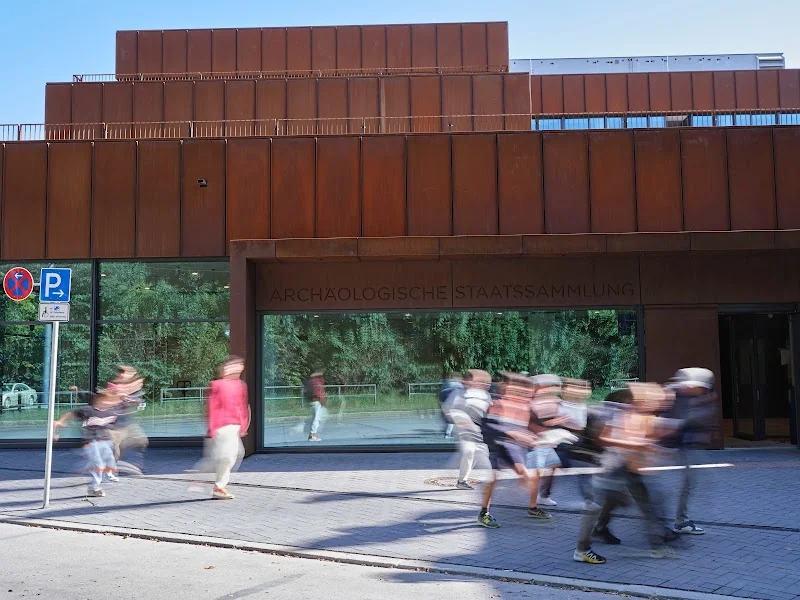
The Archaeological State Collection in Munich is much more than a classic museum with showcases and artifacts. It is the central archaeological state museum of Bavaria, a place for research, preservation, and communication, and at the same time a modern address for all who want to not only read history but experience it. After almost eight years of extensive renovation, the building reopened in 2024 and now showcases its newly designed permanent exhibition over approximately 1,200 square meters with more than 15,000 objects. Visitors will encounter architecture with a distinctive corten steel facade, interactive stations, a media guide, and a museum dramaturgy that leads from prehistory to modern times. The museum is located in Lehel, directly next to the English Garden and just a few minutes away from the Eisbach wave, making it a location that elegantly combines culture, city strolls, and relaxation. For visitors to Munich, families, school classes, and history enthusiasts, the museum is therefore an ideal point of contact for a tour that is professionally grounded, yet lively, vivid, and surprisingly varied. ([archaeologie.bayern](https://www.archaeologie.bayern/museum/))
Opening Hours, Admission, and Tickets at the Archaeological State Collection
Those who want to plan their visit well will find clear and easily understandable visitor information on the official website. The regular opening hours are Tuesday, Wednesday, Friday, and Saturday from 10 AM to 5 PM, as well as Thursday and Sunday from 10 AM to 7 PM. The museum is closed on Mondays. Additionally, the museum lists several holidays when it is also closed, including Shrove Tuesday, Good Friday, May 1, Christmas Eve, the first Christmas day, and New Year's Eve. At the same time, some holidays are explicitly mentioned as opening days, such as New Year's Day, Epiphany, Easter Sunday, and Easter Monday, Ascension Day, Whit Monday, Corpus Christi, Assumption Day, German Unity Day, All Saints' Day, and the second Christmas day. This information is helpful if the visit is planned for a weekend, during holidays, or around a holiday. Admission is family-friendly: adults pay 7 euros, reduced admission costs 5 euros, and on Sundays, prices for adults and reduced tickets are each 1 euro. Children and young people under 18 years have free admission. For frequent visitors, there is also an annual pass for 45 euros, which is valid for permanent and special exhibitions as well as Burg Grünwald. Different prices may apply for special exhibitions, and for the current exhibition on gladiators, the museum points out its own rates and online tickets. So, for those who want to experience culture as cheaply as possible while still enjoying high quality, this offers a combination of attractive prices, flexible opening hours, and a program suitable for both a short city visit and an extended museum day. ([archaeologie.bayern](https://www.archaeologie.bayern/besuchen/))
Directions, Parking, and Accessibility in Lehel
The location of the Archaeological State Collection is one of its greatest practical advantages. The museum is located at Lerchenfeldstraße 2 in the Munich district of Lehel, in a central, well-connected neighborhood on the edge of the English Garden. The official travel recommendation clearly emphasizes public transport: Take the U-Bahn line U4 or U5 to Lehel and walk about five minutes from there, or alternatively, take one more stop with tram 16 towards St. Emmeram to the stop Nationalmuseum/Haus der Kunst. Tram 16 and bus 100 also stop at this station. For drivers, it is important to note that there are only limited public parking spaces available in front of the building, including two disabled parking spaces. The museum itself clearly states that arriving by public transport is easier and more sensible. Those traveling with strollers, wheelchairs, or limited mobility will benefit from the fact that the building is accessible and understands itself as a meeting place for everyone. There is even a technical solution with a stair lift to the rooftop bar. This combination of a central downtown location, good public transport connections, short distance to the English Garden, and clear accessibility makes the visit particularly uncomplicated. Especially for travelers who want to combine several destinations in one day, this is a real plus: the museum can easily be combined with a walk to the Eisbach wave, a stroll through Lehel, or a cultural program in the neighboring museum landscape. Therefore, those planning their route should rely more on the subway, tram, or bus and consider the car only as a second option. ([archaeologie.bayern](https://www.archaeologie.bayern/besuchen/))
Gladiators – Heroes of the Colosseum as a Current Highlight
The special exhibition Gladiators – Heroes of the Colosseum is one of the strongest reasons to visit the Archaeological State Collection. It runs from November 21, 2025, to May 3, 2026, and is dedicated to one of the most popular figures of the Roman world. The focus is not only on the image of the gladiator as a fighter with maximum risk and maximum glory but also on the archaeological backgrounds that make this fascination tangible. Highlights include original Roman equipment from the gladiator school of Pompeii, as well as finds and excavation results from the Limes in Bavaria and Hesse, which show that gladiatorial combat also found an audience at the fringes of the empire. The exhibition works with lifelike reconstructions, models, media, and immersive communication levels, so that the visit does not stop at information but becomes an atmospheric experience. The project is supported by the Archaeological National Museum in Naples, Expona, and Contemporanea Progetti. This international collaboration gives the exhibition additional relevance and makes it a true highlight in the current museum program. The accompanying program is also particularly interesting, ranging from public tours to scientific lectures to live demonstrations of historical combat techniques. For families, there are workshops and special offers that address the topic in a child-friendly manner, and the film and lecture program sheds light on the Roman world from different perspectives. Thus, the exhibition is not just a brief addition to the permanent exhibition but an independent crowd puller that connects historical research, popular communication, and spectacular staging. So, for those visiting Munich in winter or spring 2026, this provides a particularly strong argument for a museum stop. ([archaeologie.bayern](https://www.archaeologie.bayern/en/experience/special-exhibition/gladiators/))
Children, Museum Education, and Media Guide for Families
The Archaeological State Collection is deliberately designed to engage children and young people well. A central component is the close collaboration with the Museum Educational Center, which has accompanied the museum for many years. The program includes kindergarten and school offerings with curriculum references, workshop programs, teacher training, as well as leisure activities such as group tours, workshop programs, and children's birthdays. This is particularly valuable for families who want to understand a museum visit not as a mandatory appointment but as an active experience. The permanent exhibition itself supports this approach with presentations, interactive stations, and a media guide that leads visitors to 25 highlights. The guide is activated via a QR code at the entrance and works with one's own smartphone and headphones; currently, the museum points out that no loan devices are available for technical reasons, but headphones can be purchased in the shop if needed. The museum also shows that families are explicitly considered in the area of special exhibitions. For the current gladiators exhibition, there are family Sundays with the MPZ for children aged 5 to 12, where workshops with mosaics, victory signs, or gladiator figures are offered after a guided tour. In addition, the accompanying program includes workshops, readings, and children's formats for various age groups, from preschoolers to teenagers. This mix of learning opportunities, play, movement, and historical imagination is particularly attractive for families because it keeps the museum visit varied while conveying real content. Therefore, those coming with children do not experience a rigid school museum but a place that consistently translates its archaeological themes into family experiences. This is precisely how the Archaeological State Collection becomes a location that imparts knowledge without being didactic. ([archaeologie.bayern](https://www.archaeologie.bayern/erleben/museumspaedagogik/))
Café, Rooftop Terrace, and Shop as Pleasant Additions to the Museum Visit
The Archaeological State Collection includes not only the exhibition but also a pleasantly developed service area that rounds off the visit. In the foyer, there is a museum shop that the museum describes as small but fine. Visitors will find in-house publications, literature, stationery, children's toys, jewelry, and gift ideas there. This is practical when looking for a thematically appropriate souvenir, a book, or a small gift after the tour. Additionally, there is the café and bar concept SOLÂ, which is located directly near the Eisbach wave and the English Garden and is understood as a place to linger, enjoy, and exchange ideas. Especially in summer, the rooftop terrace is a real highlight as it promises a relaxed evening with a view of greenery. The opening hours of the café and bar deliberately differ from those of the museum and must be checked directly with the operator, which is sensible for a combined museum and dining visit. It is also important for people with limited mobility that the rooftop terrace is accessible by stair lift. This shows that the additional offerings are not just an add-on but part of a well-thought-out visitor guidance system. Those spending an afternoon in Lehel can therefore first visit the permanent exhibition, then browse in the shop, and afterwards enjoy the view towards the English Garden in SOLÂ or on the terrace. This combination of museum, gastronomy, and urban location makes the Archaeological State Collection a place suitable for relaxed breaks and social gatherings. Especially in conjunction with the modern architecture and the open museum concept, a visit here creates a feeling that goes far beyond mere knowledge transfer. ([archaeologie.bayern](https://www.archaeologie.bayern/besuchen/))
Collection History and Permanent Exhibition of the Archaeological State Collection
The history of the Archaeological State Collection began in 1885 when the physician and anthropologist Johannes Ranke handed over his collection of prehistoric finds, which he had compiled for demonstration purposes in lectures, to the Bavarian State. King Ludwig II expressed his highest recognition for this, and the collection quickly grew through new excavations. In 1934, the local finds of the Bavarian National Museum were added, and in 1937 those of the Historical Society of Upper Bavaria. However, space constraints in the Old Academy on Neuhauser Straße remained a constant problem, so the collections were relocated in 1943 for protection against the bombs of World War II. The old building was severely damaged in an air raid in April 1944, and part of the remaining ancient stone monuments was lost. From 1949, the collection was housed in a side wing of the Bavarian National Museum until 1976 when the new museum building in Lerchenfeldstraße at the English Garden could finally be occupied. The distinctive rust-colored corten steel facade still shapes the exterior image today, and in 2000, the building was renamed from the Prehistoric State Collection to the Archaeological State Collection due to the expanded collection area. In the new permanent exhibition, this long development is not presented abstractly but very vividly. The museum works with five departments, displays more than 15,000 objects, and relies on a concept on two levels: the ground floor focuses on archaeological methods and foundations, while the upper floor addresses central themes of cultural history such as living, nutrition, values, identity, and belief. This creates an exhibition that brings together science and everyday relevance. Those walking through the rooms here not only experience Bavaria in its depth but also understand how archaeology as a discipline makes knowledge visible, preserves it, and tells stories. ([archaeologie.bayern](https://www.archaeologie.bayern/museum/sammlungsgeschichte/))
Sources:
- Archaeological State Collection - Homepage
- Archaeological State Collection - Visit, Opening Hours, Admission, Directions
- Archaeological State Collection - Collection History
- Archaeological State Collection - Permanent Exhibition
- Archaeological State Collection - Special Exhibition Gladiators
- Archaeological State Collection - Museum Education
- Archaeological State Collection - Media Guide
- SOLÂ Bar - Official Website
Show moreShow less
Archaeological State Collection | Gladiators & Opening Hours
The Archaeological State Collection in Munich is much more than a classic museum with showcases and artifacts. It is the central archaeological state museum of Bavaria, a place for research, preservation, and communication, and at the same time a modern address for all who want to not only read history but experience it. After almost eight years of extensive renovation, the building reopened in 2024 and now showcases its newly designed permanent exhibition over approximately 1,200 square meters with more than 15,000 objects. Visitors will encounter architecture with a distinctive corten steel facade, interactive stations, a media guide, and a museum dramaturgy that leads from prehistory to modern times. The museum is located in Lehel, directly next to the English Garden and just a few minutes away from the Eisbach wave, making it a location that elegantly combines culture, city strolls, and relaxation. For visitors to Munich, families, school classes, and history enthusiasts, the museum is therefore an ideal point of contact for a tour that is professionally grounded, yet lively, vivid, and surprisingly varied. ([archaeologie.bayern](https://www.archaeologie.bayern/museum/))
Opening Hours, Admission, and Tickets at the Archaeological State Collection
Those who want to plan their visit well will find clear and easily understandable visitor information on the official website. The regular opening hours are Tuesday, Wednesday, Friday, and Saturday from 10 AM to 5 PM, as well as Thursday and Sunday from 10 AM to 7 PM. The museum is closed on Mondays. Additionally, the museum lists several holidays when it is also closed, including Shrove Tuesday, Good Friday, May 1, Christmas Eve, the first Christmas day, and New Year's Eve. At the same time, some holidays are explicitly mentioned as opening days, such as New Year's Day, Epiphany, Easter Sunday, and Easter Monday, Ascension Day, Whit Monday, Corpus Christi, Assumption Day, German Unity Day, All Saints' Day, and the second Christmas day. This information is helpful if the visit is planned for a weekend, during holidays, or around a holiday. Admission is family-friendly: adults pay 7 euros, reduced admission costs 5 euros, and on Sundays, prices for adults and reduced tickets are each 1 euro. Children and young people under 18 years have free admission. For frequent visitors, there is also an annual pass for 45 euros, which is valid for permanent and special exhibitions as well as Burg Grünwald. Different prices may apply for special exhibitions, and for the current exhibition on gladiators, the museum points out its own rates and online tickets. So, for those who want to experience culture as cheaply as possible while still enjoying high quality, this offers a combination of attractive prices, flexible opening hours, and a program suitable for both a short city visit and an extended museum day. ([archaeologie.bayern](https://www.archaeologie.bayern/besuchen/))
Directions, Parking, and Accessibility in Lehel
The location of the Archaeological State Collection is one of its greatest practical advantages. The museum is located at Lerchenfeldstraße 2 in the Munich district of Lehel, in a central, well-connected neighborhood on the edge of the English Garden. The official travel recommendation clearly emphasizes public transport: Take the U-Bahn line U4 or U5 to Lehel and walk about five minutes from there, or alternatively, take one more stop with tram 16 towards St. Emmeram to the stop Nationalmuseum/Haus der Kunst. Tram 16 and bus 100 also stop at this station. For drivers, it is important to note that there are only limited public parking spaces available in front of the building, including two disabled parking spaces. The museum itself clearly states that arriving by public transport is easier and more sensible. Those traveling with strollers, wheelchairs, or limited mobility will benefit from the fact that the building is accessible and understands itself as a meeting place for everyone. There is even a technical solution with a stair lift to the rooftop bar. This combination of a central downtown location, good public transport connections, short distance to the English Garden, and clear accessibility makes the visit particularly uncomplicated. Especially for travelers who want to combine several destinations in one day, this is a real plus: the museum can easily be combined with a walk to the Eisbach wave, a stroll through Lehel, or a cultural program in the neighboring museum landscape. Therefore, those planning their route should rely more on the subway, tram, or bus and consider the car only as a second option. ([archaeologie.bayern](https://www.archaeologie.bayern/besuchen/))
Gladiators – Heroes of the Colosseum as a Current Highlight
The special exhibition Gladiators – Heroes of the Colosseum is one of the strongest reasons to visit the Archaeological State Collection. It runs from November 21, 2025, to May 3, 2026, and is dedicated to one of the most popular figures of the Roman world. The focus is not only on the image of the gladiator as a fighter with maximum risk and maximum glory but also on the archaeological backgrounds that make this fascination tangible. Highlights include original Roman equipment from the gladiator school of Pompeii, as well as finds and excavation results from the Limes in Bavaria and Hesse, which show that gladiatorial combat also found an audience at the fringes of the empire. The exhibition works with lifelike reconstructions, models, media, and immersive communication levels, so that the visit does not stop at information but becomes an atmospheric experience. The project is supported by the Archaeological National Museum in Naples, Expona, and Contemporanea Progetti. This international collaboration gives the exhibition additional relevance and makes it a true highlight in the current museum program. The accompanying program is also particularly interesting, ranging from public tours to scientific lectures to live demonstrations of historical combat techniques. For families, there are workshops and special offers that address the topic in a child-friendly manner, and the film and lecture program sheds light on the Roman world from different perspectives. Thus, the exhibition is not just a brief addition to the permanent exhibition but an independent crowd puller that connects historical research, popular communication, and spectacular staging. So, for those visiting Munich in winter or spring 2026, this provides a particularly strong argument for a museum stop. ([archaeologie.bayern](https://www.archaeologie.bayern/en/experience/special-exhibition/gladiators/))
Children, Museum Education, and Media Guide for Families
The Archaeological State Collection is deliberately designed to engage children and young people well. A central component is the close collaboration with the Museum Educational Center, which has accompanied the museum for many years. The program includes kindergarten and school offerings with curriculum references, workshop programs, teacher training, as well as leisure activities such as group tours, workshop programs, and children's birthdays. This is particularly valuable for families who want to understand a museum visit not as a mandatory appointment but as an active experience. The permanent exhibition itself supports this approach with presentations, interactive stations, and a media guide that leads visitors to 25 highlights. The guide is activated via a QR code at the entrance and works with one's own smartphone and headphones; currently, the museum points out that no loan devices are available for technical reasons, but headphones can be purchased in the shop if needed. The museum also shows that families are explicitly considered in the area of special exhibitions. For the current gladiators exhibition, there are family Sundays with the MPZ for children aged 5 to 12, where workshops with mosaics, victory signs, or gladiator figures are offered after a guided tour. In addition, the accompanying program includes workshops, readings, and children's formats for various age groups, from preschoolers to teenagers. This mix of learning opportunities, play, movement, and historical imagination is particularly attractive for families because it keeps the museum visit varied while conveying real content. Therefore, those coming with children do not experience a rigid school museum but a place that consistently translates its archaeological themes into family experiences. This is precisely how the Archaeological State Collection becomes a location that imparts knowledge without being didactic. ([archaeologie.bayern](https://www.archaeologie.bayern/erleben/museumspaedagogik/))
Café, Rooftop Terrace, and Shop as Pleasant Additions to the Museum Visit
The Archaeological State Collection includes not only the exhibition but also a pleasantly developed service area that rounds off the visit. In the foyer, there is a museum shop that the museum describes as small but fine. Visitors will find in-house publications, literature, stationery, children's toys, jewelry, and gift ideas there. This is practical when looking for a thematically appropriate souvenir, a book, or a small gift after the tour. Additionally, there is the café and bar concept SOLÂ, which is located directly near the Eisbach wave and the English Garden and is understood as a place to linger, enjoy, and exchange ideas. Especially in summer, the rooftop terrace is a real highlight as it promises a relaxed evening with a view of greenery. The opening hours of the café and bar deliberately differ from those of the museum and must be checked directly with the operator, which is sensible for a combined museum and dining visit. It is also important for people with limited mobility that the rooftop terrace is accessible by stair lift. This shows that the additional offerings are not just an add-on but part of a well-thought-out visitor guidance system. Those spending an afternoon in Lehel can therefore first visit the permanent exhibition, then browse in the shop, and afterwards enjoy the view towards the English Garden in SOLÂ or on the terrace. This combination of museum, gastronomy, and urban location makes the Archaeological State Collection a place suitable for relaxed breaks and social gatherings. Especially in conjunction with the modern architecture and the open museum concept, a visit here creates a feeling that goes far beyond mere knowledge transfer. ([archaeologie.bayern](https://www.archaeologie.bayern/besuchen/))
Collection History and Permanent Exhibition of the Archaeological State Collection
The history of the Archaeological State Collection began in 1885 when the physician and anthropologist Johannes Ranke handed over his collection of prehistoric finds, which he had compiled for demonstration purposes in lectures, to the Bavarian State. King Ludwig II expressed his highest recognition for this, and the collection quickly grew through new excavations. In 1934, the local finds of the Bavarian National Museum were added, and in 1937 those of the Historical Society of Upper Bavaria. However, space constraints in the Old Academy on Neuhauser Straße remained a constant problem, so the collections were relocated in 1943 for protection against the bombs of World War II. The old building was severely damaged in an air raid in April 1944, and part of the remaining ancient stone monuments was lost. From 1949, the collection was housed in a side wing of the Bavarian National Museum until 1976 when the new museum building in Lerchenfeldstraße at the English Garden could finally be occupied. The distinctive rust-colored corten steel facade still shapes the exterior image today, and in 2000, the building was renamed from the Prehistoric State Collection to the Archaeological State Collection due to the expanded collection area. In the new permanent exhibition, this long development is not presented abstractly but very vividly. The museum works with five departments, displays more than 15,000 objects, and relies on a concept on two levels: the ground floor focuses on archaeological methods and foundations, while the upper floor addresses central themes of cultural history such as living, nutrition, values, identity, and belief. This creates an exhibition that brings together science and everyday relevance. Those walking through the rooms here not only experience Bavaria in its depth but also understand how archaeology as a discipline makes knowledge visible, preserves it, and tells stories. ([archaeologie.bayern](https://www.archaeologie.bayern/museum/sammlungsgeschichte/))
Sources:
- Archaeological State Collection - Homepage
- Archaeological State Collection - Visit, Opening Hours, Admission, Directions
- Archaeological State Collection - Collection History
- Archaeological State Collection - Permanent Exhibition
- Archaeological State Collection - Special Exhibition Gladiators
- Archaeological State Collection - Museum Education
- Archaeological State Collection - Media Guide
- SOLÂ Bar - Official Website
Archaeological State Collection | Gladiators & Opening Hours
The Archaeological State Collection in Munich is much more than a classic museum with showcases and artifacts. It is the central archaeological state museum of Bavaria, a place for research, preservation, and communication, and at the same time a modern address for all who want to not only read history but experience it. After almost eight years of extensive renovation, the building reopened in 2024 and now showcases its newly designed permanent exhibition over approximately 1,200 square meters with more than 15,000 objects. Visitors will encounter architecture with a distinctive corten steel facade, interactive stations, a media guide, and a museum dramaturgy that leads from prehistory to modern times. The museum is located in Lehel, directly next to the English Garden and just a few minutes away from the Eisbach wave, making it a location that elegantly combines culture, city strolls, and relaxation. For visitors to Munich, families, school classes, and history enthusiasts, the museum is therefore an ideal point of contact for a tour that is professionally grounded, yet lively, vivid, and surprisingly varied. ([archaeologie.bayern](https://www.archaeologie.bayern/museum/))
Opening Hours, Admission, and Tickets at the Archaeological State Collection
Those who want to plan their visit well will find clear and easily understandable visitor information on the official website. The regular opening hours are Tuesday, Wednesday, Friday, and Saturday from 10 AM to 5 PM, as well as Thursday and Sunday from 10 AM to 7 PM. The museum is closed on Mondays. Additionally, the museum lists several holidays when it is also closed, including Shrove Tuesday, Good Friday, May 1, Christmas Eve, the first Christmas day, and New Year's Eve. At the same time, some holidays are explicitly mentioned as opening days, such as New Year's Day, Epiphany, Easter Sunday, and Easter Monday, Ascension Day, Whit Monday, Corpus Christi, Assumption Day, German Unity Day, All Saints' Day, and the second Christmas day. This information is helpful if the visit is planned for a weekend, during holidays, or around a holiday. Admission is family-friendly: adults pay 7 euros, reduced admission costs 5 euros, and on Sundays, prices for adults and reduced tickets are each 1 euro. Children and young people under 18 years have free admission. For frequent visitors, there is also an annual pass for 45 euros, which is valid for permanent and special exhibitions as well as Burg Grünwald. Different prices may apply for special exhibitions, and for the current exhibition on gladiators, the museum points out its own rates and online tickets. So, for those who want to experience culture as cheaply as possible while still enjoying high quality, this offers a combination of attractive prices, flexible opening hours, and a program suitable for both a short city visit and an extended museum day. ([archaeologie.bayern](https://www.archaeologie.bayern/besuchen/))
Directions, Parking, and Accessibility in Lehel
The location of the Archaeological State Collection is one of its greatest practical advantages. The museum is located at Lerchenfeldstraße 2 in the Munich district of Lehel, in a central, well-connected neighborhood on the edge of the English Garden. The official travel recommendation clearly emphasizes public transport: Take the U-Bahn line U4 or U5 to Lehel and walk about five minutes from there, or alternatively, take one more stop with tram 16 towards St. Emmeram to the stop Nationalmuseum/Haus der Kunst. Tram 16 and bus 100 also stop at this station. For drivers, it is important to note that there are only limited public parking spaces available in front of the building, including two disabled parking spaces. The museum itself clearly states that arriving by public transport is easier and more sensible. Those traveling with strollers, wheelchairs, or limited mobility will benefit from the fact that the building is accessible and understands itself as a meeting place for everyone. There is even a technical solution with a stair lift to the rooftop bar. This combination of a central downtown location, good public transport connections, short distance to the English Garden, and clear accessibility makes the visit particularly uncomplicated. Especially for travelers who want to combine several destinations in one day, this is a real plus: the museum can easily be combined with a walk to the Eisbach wave, a stroll through Lehel, or a cultural program in the neighboring museum landscape. Therefore, those planning their route should rely more on the subway, tram, or bus and consider the car only as a second option. ([archaeologie.bayern](https://www.archaeologie.bayern/besuchen/))
Gladiators – Heroes of the Colosseum as a Current Highlight
The special exhibition Gladiators – Heroes of the Colosseum is one of the strongest reasons to visit the Archaeological State Collection. It runs from November 21, 2025, to May 3, 2026, and is dedicated to one of the most popular figures of the Roman world. The focus is not only on the image of the gladiator as a fighter with maximum risk and maximum glory but also on the archaeological backgrounds that make this fascination tangible. Highlights include original Roman equipment from the gladiator school of Pompeii, as well as finds and excavation results from the Limes in Bavaria and Hesse, which show that gladiatorial combat also found an audience at the fringes of the empire. The exhibition works with lifelike reconstructions, models, media, and immersive communication levels, so that the visit does not stop at information but becomes an atmospheric experience. The project is supported by the Archaeological National Museum in Naples, Expona, and Contemporanea Progetti. This international collaboration gives the exhibition additional relevance and makes it a true highlight in the current museum program. The accompanying program is also particularly interesting, ranging from public tours to scientific lectures to live demonstrations of historical combat techniques. For families, there are workshops and special offers that address the topic in a child-friendly manner, and the film and lecture program sheds light on the Roman world from different perspectives. Thus, the exhibition is not just a brief addition to the permanent exhibition but an independent crowd puller that connects historical research, popular communication, and spectacular staging. So, for those visiting Munich in winter or spring 2026, this provides a particularly strong argument for a museum stop. ([archaeologie.bayern](https://www.archaeologie.bayern/en/experience/special-exhibition/gladiators/))
Children, Museum Education, and Media Guide for Families
The Archaeological State Collection is deliberately designed to engage children and young people well. A central component is the close collaboration with the Museum Educational Center, which has accompanied the museum for many years. The program includes kindergarten and school offerings with curriculum references, workshop programs, teacher training, as well as leisure activities such as group tours, workshop programs, and children's birthdays. This is particularly valuable for families who want to understand a museum visit not as a mandatory appointment but as an active experience. The permanent exhibition itself supports this approach with presentations, interactive stations, and a media guide that leads visitors to 25 highlights. The guide is activated via a QR code at the entrance and works with one's own smartphone and headphones; currently, the museum points out that no loan devices are available for technical reasons, but headphones can be purchased in the shop if needed. The museum also shows that families are explicitly considered in the area of special exhibitions. For the current gladiators exhibition, there are family Sundays with the MPZ for children aged 5 to 12, where workshops with mosaics, victory signs, or gladiator figures are offered after a guided tour. In addition, the accompanying program includes workshops, readings, and children's formats for various age groups, from preschoolers to teenagers. This mix of learning opportunities, play, movement, and historical imagination is particularly attractive for families because it keeps the museum visit varied while conveying real content. Therefore, those coming with children do not experience a rigid school museum but a place that consistently translates its archaeological themes into family experiences. This is precisely how the Archaeological State Collection becomes a location that imparts knowledge without being didactic. ([archaeologie.bayern](https://www.archaeologie.bayern/erleben/museumspaedagogik/))
Café, Rooftop Terrace, and Shop as Pleasant Additions to the Museum Visit
The Archaeological State Collection includes not only the exhibition but also a pleasantly developed service area that rounds off the visit. In the foyer, there is a museum shop that the museum describes as small but fine. Visitors will find in-house publications, literature, stationery, children's toys, jewelry, and gift ideas there. This is practical when looking for a thematically appropriate souvenir, a book, or a small gift after the tour. Additionally, there is the café and bar concept SOLÂ, which is located directly near the Eisbach wave and the English Garden and is understood as a place to linger, enjoy, and exchange ideas. Especially in summer, the rooftop terrace is a real highlight as it promises a relaxed evening with a view of greenery. The opening hours of the café and bar deliberately differ from those of the museum and must be checked directly with the operator, which is sensible for a combined museum and dining visit. It is also important for people with limited mobility that the rooftop terrace is accessible by stair lift. This shows that the additional offerings are not just an add-on but part of a well-thought-out visitor guidance system. Those spending an afternoon in Lehel can therefore first visit the permanent exhibition, then browse in the shop, and afterwards enjoy the view towards the English Garden in SOLÂ or on the terrace. This combination of museum, gastronomy, and urban location makes the Archaeological State Collection a place suitable for relaxed breaks and social gatherings. Especially in conjunction with the modern architecture and the open museum concept, a visit here creates a feeling that goes far beyond mere knowledge transfer. ([archaeologie.bayern](https://www.archaeologie.bayern/besuchen/))
Collection History and Permanent Exhibition of the Archaeological State Collection
The history of the Archaeological State Collection began in 1885 when the physician and anthropologist Johannes Ranke handed over his collection of prehistoric finds, which he had compiled for demonstration purposes in lectures, to the Bavarian State. King Ludwig II expressed his highest recognition for this, and the collection quickly grew through new excavations. In 1934, the local finds of the Bavarian National Museum were added, and in 1937 those of the Historical Society of Upper Bavaria. However, space constraints in the Old Academy on Neuhauser Straße remained a constant problem, so the collections were relocated in 1943 for protection against the bombs of World War II. The old building was severely damaged in an air raid in April 1944, and part of the remaining ancient stone monuments was lost. From 1949, the collection was housed in a side wing of the Bavarian National Museum until 1976 when the new museum building in Lerchenfeldstraße at the English Garden could finally be occupied. The distinctive rust-colored corten steel facade still shapes the exterior image today, and in 2000, the building was renamed from the Prehistoric State Collection to the Archaeological State Collection due to the expanded collection area. In the new permanent exhibition, this long development is not presented abstractly but very vividly. The museum works with five departments, displays more than 15,000 objects, and relies on a concept on two levels: the ground floor focuses on archaeological methods and foundations, while the upper floor addresses central themes of cultural history such as living, nutrition, values, identity, and belief. This creates an exhibition that brings together science and everyday relevance. Those walking through the rooms here not only experience Bavaria in its depth but also understand how archaeology as a discipline makes knowledge visible, preserves it, and tells stories. ([archaeologie.bayern](https://www.archaeologie.bayern/museum/sammlungsgeschichte/))
Sources:
- Archaeological State Collection - Homepage
- Archaeological State Collection - Visit, Opening Hours, Admission, Directions
- Archaeological State Collection - Collection History
- Archaeological State Collection - Permanent Exhibition
- Archaeological State Collection - Special Exhibition Gladiators
- Archaeological State Collection - Museum Education
- Archaeological State Collection - Media Guide
- SOLÂ Bar - Official Website
Upcoming Events
No events found
Frequently Asked Questions
Reviews
Timothy Noakes
6. November 2025
For any history/archeology/anthropology nerds out there, I can highly recommend! The museum is modern with a sleek interior. The exhibits are very well produced with opportunities to interact and get immersed in the history. It's also not too big, so the risk of "museum fatigue" is minimal. Side note: Although the main plaques on exhibits are both in German and English, the plaques on individual showcases were usually only in German. However, English descriptions were available on most via QR code. 👍
Andrew “Andy” Kamel
8. June 2025
A cool museum ))) I really enjoyed the setup and the diversity of exhibits. The room where you walk over glass with archaeological items is an amazing unique idea. The collection of jewellery, pottery, swords, and small archaeological items are all amazing. They apparently have a rooftop bar or terrace which wasn’t open when I was there. I would love to try it.
Marcin Bednarz
7. February 2026
Amazing place! From a perspective of historian very interesting exposition, also very cool for kids.
david antoun
25. November 2024
The building contains 4 floors of exhibitions. The special exhibition this year was about ice age art from Schwäbische Alp where you can really touch the figures. The other floors is a trip through time from stone age till the early christianity with items and antiquities found in different places and related to many categories. The map of the exhibition is easy and the 2 hours spent there are interesting. A lot of interactions for kids also.
Maria Yogui
28. October 2025
If you like history and archeology this is your place. They teach you how the work is done is very interesting, and you have some interactive things along the exposition, like the mask in the photo hehe.