
München
Sendlinger Str. 32, 80331 München-Altstadt-Lehel, Deutschland
Asamkirche Munich | Opening Hours & Admission
The Asamkirche Munich is one of those buildings that you see once and never forget. Many search queries revolve around very practical topics such as Asamkirche Munich, opening hours, admission, church services, concerts, photos, and images. This is no coincidence, as the small church on Sendlinger Straße embodies all that Munich represents at its best: historical substance, baroque art, vibrant use in everyday life, and a location right in the old town. Officially, it is called St. Johann Nepomuk Church; however, the term Asamkirche has prevailed in common usage because it was created by the brothers Cosmas Damian and Egid Quirin Asam and is inextricably linked to their name. It is considered one of the most significant late baroque buildings in southern Germany and remains impressive precisely because of its small size. The building measures only about 22 x 8 meters, but feels much larger inside than one would expect from the outside, as the decor, lighting, and spatial programming create an extraordinary effect. Those searching for Asamkirche Munich images will thus find not only a beautiful photo opportunity but also a piece of city history that is still in use today. The church is not a museum in the classical sense but a sacred place where art, devotion, and visitor experience coexist. This mix makes it attractive to tourists, architecture enthusiasts, believers, and spontaneous visitors to the old town. ([munich.travel](https://www.munich.travel/en/pois/urban-districts/asamkirche))
Opening Hours, Admission, and Planning Your Visit
Those wishing to visit the Asamkirche usually first search for opening hours and admission. For planning, it is important to note that visiting churches in Munich is generally free, and there is no classical ticket system like that of a museum for the Asamkirche. The official city portal explicitly points out that churches in Munich are usually accessible without admission, although donations may be possible. At the same time, one should keep in mind that church services and events can temporarily change access. The Asamkirche is still used for religious celebrations, which is why it is not just a sight but an active church space. The best time to visit is usually when there is no service or concert rehearsal taking place. Those who are spontaneously wandering in the city center can generally visit the church without much preparation, but should be considerate during ongoing celebrations. The city portal generally recommends paying attention to the daily program, occupancy, or opening hours for church visits, and this applies here as well. Especially in the high season, it may be advisable to combine the visit with a walk through the pedestrian zone or another point of interest in the old town to avoid unnecessary trips. For queries such as Asamkirche admission, Asamkirche opening hours, or Asamkirche Munich admission, the most important message is: usually freely accessible, but not to be understood as a rigidly regulated sightseeing venue. Those wishing to experience the effect of the interior undisturbed should visit outside of service times. ([muenchen.de](https://www.muenchen.de/sehenswuerdigkeiten/muenchen-bei-regen-tipps-fuer-spannende-indoor-aktivitaeten?utm_source=openai))
A look at the location on Sendlinger Straße also helps with practical orientation. The Asamkirche is located right in the pedestrian zone of the old town, in an area that is easily accessible on foot. This is an advantage for spontaneous visitors, as the church is not a remote excursion destination but part of a dense city center tour. Anyone who is already in the vicinity of Marienplatz, Sendlinger Tor, or near Stachus can easily incorporate the church into their plans. This central location is one of the reasons why it appears on many Munich lists and city guides. The city portal describes it as a hidden church gem in the pedestrian zone, while the tourism portal highlights it as a magnificent private church in Bavarian late baroque style. Practically, this means: One does not need a long journey or special preparation, but should prepare for a short, intense visit. The Asamkirche is small, concentrated, and densely staged; it is more suitable for a conscious pause than for a long stay. Those wishing to take photos should also treat the liturgical character of the place with respect, as the church is still in use today and is not merely a stage for display. ([muenchen.de](https://www.muenchen.de/sehenswuerdigkeiten/asamkirche?utm_source=openai))
History of the Asamkirche in Munich
The history of the Asamkirche is closely linked to the Asam brothers, who are among the great names of Bavarian late baroque. Cosmas Damian Asam was a painter, while Egid Quirin Asam was a sculptor and architect; together they built the church between 1733 and 1746. The tourism portal of the city of Munich describes it as a masterpiece of late baroque architecture, and this term captures the character of the building very well. Originally, the church was planned as a private chapel. It was only after the vehement urging of the public that it was opened to the public. The fact that it was created as a private building also explains why the brothers could proceed so freely in their design. They did not have to submit to a large monastery or a strict parish building logic, but could implement their artistic vision with maximum consistency. The laying of the foundation stone also fell on the feast day of St. John Nepomuk, which underscores the dedication character of the church. Nepomuk was considered an important patron saint in Catholic Bavaria and represented the secrecy of confession, which is exactly the religious sphere to which the Asamkirche is particularly related. A legend also plays a role in local tradition: A journey on the Danube towards Weltenburg is said to have put the brothers in danger, after which they asked Nepomuk for protection. Such stories are part of the church's history and show how strongly the Asamkirche was perceived not only as a building but also as a spiritual symbol. The building is thus not only art history but also a history of piety, city history, and artist history at the same time. Those using the search terms Asamkirche Munich or St. Johann Nepomuk Munich are usually looking for this mixture of biography, architectural history, and religious context. ([munich.travel](https://www.munich.travel/en/pois/urban-districts/asamkirche))
It is particularly noteworthy that the Asamkirche is still considered a place of identification for the Asam brothers. The official tourism portal emphasizes that the history of the church is inseparably linked to Egid Quirin and Cosmas Damian Asam. The name Asamkirche is ultimately an expression of this close bond. Next to the church stands the Asamhaus, the former residence of the brothers, which also remains one of the significant baroque traces on Sendlinger Straße. This creates a small ensemble that shows architecture, residential culture, and sacred space directly next to each other. For visitors to Munich, this is exactly what is interesting: The Asamkirche is not isolated but is situated in a historical context that can be easily grasped during a short tour. This also explains why search queries for Asamkirche images, Asamkirche photos, or Asamkirche Munich images are so frequent. The place offers a dense visual and historical narrative in a small space. The private origin, the rapid opening to the public, the dedication to Nepomuk, and the embedding in the baroque environment make the church one of the most striking examples of religiously motivated representative architecture of the 18th century in Munich. ([munich.travel](https://www.munich.travel/en/pois/urban-districts/asamkirche))
Architecture, Facade, and Interior
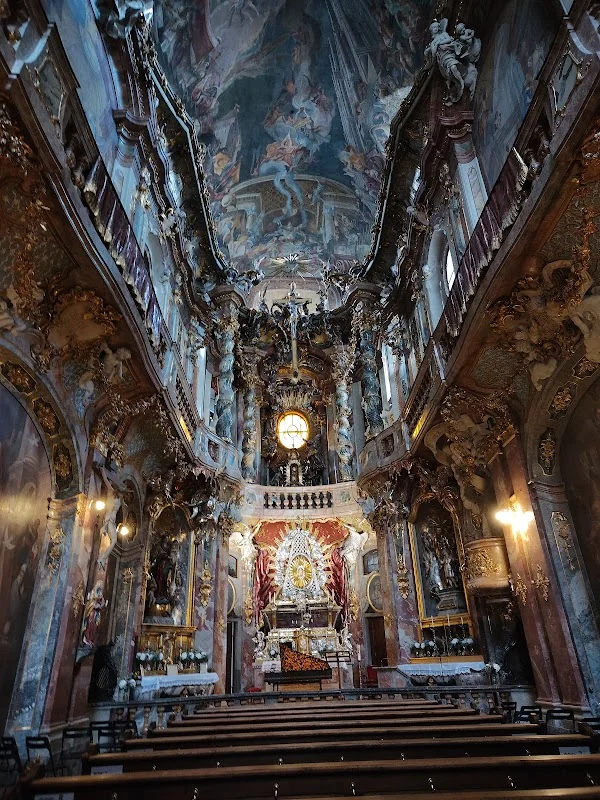
Architecturally, the Asamkirche is particularly fascinating because it creates an enormous effect despite its small size. The official city portal describes the church as only eight meters wide and 22 meters deep; the tourism portal cites precise dimensions of 8.8 by 22.2 meters. These compact proportions make it clear how extraordinary the solution of the Asam brothers was. Instead of appearing monumental in width, the church concentrates its effect in height, structure, and ornamentation. The facade is richly structured, multilayered, and adorned with plastic details that draw the eye upward. Above the portal stands the statue of St. Nepomuk, while angels, virtues, and other motifs support the facade's program. As a result, the building appears less like an ordinary city church and more like a theatrical staging of faith. In a confined space, a dense connection of architecture, sculpture, painting, and symbolic meaning unfolds. This is also evident in the interior: it is divided into three levels, each with a theological and symbolic function. The darker lower area represents the earthly and painful, the middle zone represents a stronger order and representation, while the upper, bright area opens to heaven and is associated with God and eternity. This spatial dramaturgy is typical of the baroque but is implemented particularly consistently in the Asamkirche. ([munich.travel](https://www.munich.travel/en/pois/urban-districts/asamkirche))
Additionally, the church was designed as a confession church. This is important for understanding the interior, as the architecture serves not only to astonish but also to facilitate religious practice. The space contains several confessionals, and the symbolic order explicitly refers to the secrecy of confession of St. Nepomuk. According to the tourism portal, there are seven confessionals, and the themes of death, judgment, hell, and heaven run through the program of the entrance area. This makes the church a didactic space in the best baroque sense: it aims not only to decorate but to direct attention to the process of salvation. The materiality also plays a role. Wood carvings, stucco, color, light, and gold form not just a mere abundance of ornamentation but a coordinated visual language. In many visitor reports, the Asamkirche is described as overwhelming precisely because it concentrates so much artistic energy in a small space. Those searching for Asamkirche interior wish to understand this experience. Inside, one encounters not only baroque splendor but also a precisely choreographed religious message. This explains why art historians consider the Asamkirche one of the most important late baroque testimonies in southern Germany and why it remains equally exciting for visitors interested in architecture, sacred art, and photography. ([munich.travel](https://www.munich.travel/en/pois/urban-districts/asamkirche))
Another important point is the immediate surroundings of the building. Right next to the Asamkirche is the Asamhaus, which was the brothers' residence in the 18th century. The tourism portal points out that the palace can be viewed from the outside and is itself a masterpiece of late baroque architecture. Together, the church and the residence form an extraordinary ensemble that makes the creative cosmos of the Asams visible. Particularly interesting is the tension between the outside and the inside: from the street, the church appears surprisingly narrow and almost hidden, but inside, a highly condensed, emotionally charged space opens up. This tension is one reason why the Asamkirche looks particularly good in many photos. When walking down Sendlinger Straße, one initially sees a relatively narrow front between rows of houses; only upon entry does the true wonder unfold. The facade is thus not an end in itself but a threshold. The same applies to the interior, which does not greet visitors neutrally but draws them into a spiritual dramaturgy. The fact that the brothers could rely on their training in Rome and the European baroque tradition shows the art-historical quality of the building. At the same time, the Asamkirche remains unmistakably Munich, as it is so closely tied to the old town, Sendlinger Straße, and local religious history. ([munich.travel](https://www.munich.travel/en/pois/urban-districts/asamkirche))
Services and Concerts at the Asamkirche
The Asamkirche is not only a sight but also a living church space. This is particularly important for many search queries regarding Asamkirche services, as unlike purely museum-like places, this space is actually used liturgically. The archdiocese calendar regularly lists holy masses and services at the subsidiary church Munich-St. Johann Nepomuk. Additionally, the current schedule of the Slovenian community shows that Sunday services take place at the Asamkirche. Thus, the church remains a place of devotion and community life, even while being a tourist magnet. This dual role shapes the visit. Those coming for a service experience a sacred space that has remained true to its original purpose. Those coming for a visit should respect the liturgical times and be considerate during ongoing celebrations. This is not only a matter of decency but also an understanding of the special identity of the place. The Asamkirche is not merely an exhibition space for baroque art but a spiritually effective space where masses, devotions, and community services still take place. ([erzbistum-muenchen.de](https://www.erzbistum-muenchen.de/gottesdienst/hl.-amt-2133899-28-06-2026?utm_source=openai))
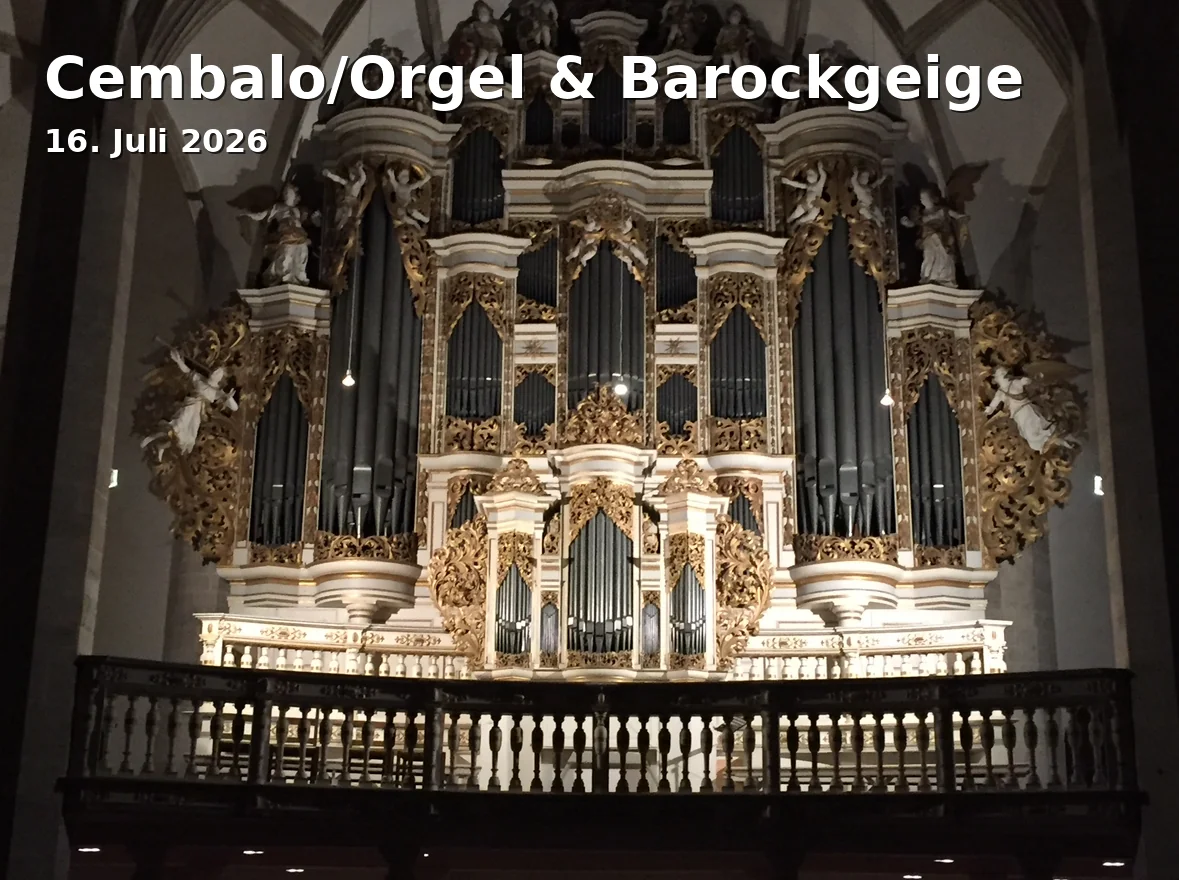
It is also attractive for music lovers. The Munich event calendar regularly lists classical programs in the church, including formats with harpsichord, organ, violin, oboe, saxophone, and cello. This fits very well with the spatial and acoustic effect of the interior, as baroque sacred spaces often create a special intimacy for smaller ensembles and spiritual or chamber music programs. Therefore, those searching for Asamkirche concert will find not only a unique backdrop but also a place with the right atmosphere for historically inspired music. The Asamkirche is not a large hall but a concentrated space where sound and architecture interact closely. This makes concerts there a special experience, especially because they do not rely on mass effects but on intimacy. The current Munich calendar shows that the use for classical music is not an exception but occurs regularly. For visitors, this means: On some days, the church can be experienced more as a concert venue, while on others more as a quiet place for devotion. This changing use is part of its character and explains why search patterns around programs, services, and concerts at the Asamkirche overlap so strongly. ([muenchen.de](https://www.muenchen.de/en/node/8751?utm_source=openai))
Those wishing to make concrete plans should always check whether a service or musical event is currently taking place. The event notices from the archdiocese and the concert lists from the city portal show that dates can change continuously. This is normal for historical churches and even a sign of vitality. The Asamkirche is not a closed monument space but an active place that is used differently throughout the year. This is precisely what distinguishes it from many other sights that operate according to fixed museum logics. The church thrives on the simultaneity of visits, prayer, and music. For SEO search queries, this means that terms like opening hours, admission, service, and concert should not be thought of separately but are interrelated. Those wanting a quick look at photos will find a strong visual experience. Those wanting to experience the place acoustically will discover a small, intense concert venue. Those with religious interests will find a truly used church space. The Asamkirche thus fulfills several expectations without losing its identity. This is exactly why it remains relevant for visitors to Munich, locals, and culture enthusiasts alike. ([erzbistum-muenchen.de](https://www.erzbistum-muenchen.de/gottesdienst/hl.-amt-2133899-28-06-2026?utm_source=openai))
Access, Location, and Surroundings on Sendlinger Straße
The location of the Asamkirche is one of its great advantages. It is located at Sendlinger Straße 32 right in the Munich old town, precisely where pedestrian zones, shopping, city history, and sightseeing overlap. The city portal explicitly describes the church as a building in the pedestrian zone, and the tourism site also emphasizes that it can be easily integrated into a tour of the old town. For access, Marienplatz and Sendlinger Tor are particularly important orientation points. Those traveling by S-Bahn or U-Bahn have a very central destination that can be easily reached on foot after arrival. This is practical for visitors, as no complicated route planning is necessary. At the same time, the location is worthwhile not only technically but also atmospherically: the Asamkirche stands on a lively street, flanked by cafés, shops, and urban movement. This contrast is precisely what makes it appealing. From the outside, it appears as a concentrated baroque artwork amidst a modern urban space, and this is also the reason why it is so often photographed. Those searching for Asamkirche access usually want to know how to reach the place as directly as possible and how to combine the visit with other destinations. The answer is: very well, as Marienplatz, Stachus, and Sendlinger Tor are all within the same inner-city visiting network. ([muenchen.de](https://www.muenchen.de/sehenswuerdigkeiten/asamkirche?utm_source=openai))
The surroundings are also worth seeing. Right next to the church is the Asamhaus, and Sendlinger Straße itself is one of the most important historical axes of the old town. The city portal points out that the Asamkirche is one of the most magnificent churches in Munich, and the street it is located on provides the perfect setting for it. Many other classic Munich destinations are also nearby, making the church a good part of a thematic route, such as along with Marienplatz, Frauenkirche, St. Michael, or a walk through the pedestrian zone. For visitors who are more spontaneous, this is ideal: one can visit the Asamkirche without much time investment and then continue on as desired. It is also suitable for those seeking a quiet moment, as the church feels surprisingly concentrated inside despite the lively surroundings. This is the great charm of the location: city outside, contemplation inside. Especially during short stays, it becomes clear why the Asamkirche has a fixed place in many Munich books and city guides. It is small enough for a detour and significant enough for a true highlight. ([muenchen.de](https://www.muenchen.de/sehenswuerdigkeiten/asamkirche?utm_source=openai))
Those interested in the search terms Asamkirche Munich images or Asamkirche photos benefit particularly from this location. The facade can be well captured in the street situation, and the proximity to other old town scenes offers many perspectives for harmonious shots. Nevertheless, the place remains a church space, so one should behave respectfully when taking photos and not disturb services or quiet moments. This is all the more true as the visit to the church is a short but very intense moment for many people. The central location also means that the Asamkirche is often part of tours that lead through the old town. Those wishing to combine several Munich sights in one day can use the church as a short but impressive building block. This is precisely what makes it so valuable for city explorers: little detour, maximum effect. The combination of historical address, good accessibility, and iconic appearance ensures that the Asamkirche remains not only on the city map but also in memory. ([muenchen.de](https://www.muenchen.de/sehenswuerdigkeiten/asamkirche?utm_source=openai))
Photos, Images, and Frequently Asked Questions about the Asamkirche
Many users specifically search for Asamkirche photos, Asamkirche images, or Asamkirche Munich images because the church is visually so extraordinary. This is understandable, as its appearance thrives on contrasts: narrow facade, rich structure, surprisingly intense interior, strong light, and symbolic abundance. The official city portal and the tourism portal offer both exterior and interior views, clearly showing why the Asamkirche is suitable for photography and architectural interest alike. Particularly noteworthy are the details: the statue of St. Nepomuk above the portal, the angels and virtues in the facade, the strongly staged lighting inside, and the clear three-part division of the space. Those searching for a photogenic church motif will thus find not only a pretty detail but a fully composed baroque image program. This makes the Asamkirche one of the most sought-after photo spots in the Munich old town. At the same time, one should keep in mind that the church is a sacred space. The best photo is therefore not only the sharpest but also the most respectful. Typically, exterior shots work particularly well in the early morning or in soft light, while interior shots mainly showcase the baroque drama of light. For image searches, the Asamkirche is thus nearly ideal, as it offers very different motifs in a small space. ([munich.travel](https://www.munich.travel/en/pois/urban-districts/asamkirche))
Among the most common questions is whether the Asamkirche is a purely tourist attraction or still an active church. The answer is clear: both. It is a significant monument and at the same time a place of worship. This explains why search intentions around admission, opening hours, services, and concerts often occur together. Those wishing to visit the church should therefore not only think of it as a sight but as a living place. Another common question concerns the size. The Asamkirche is small, but its effect is great. This discrepancy is part of its appeal. The building was created as a private church and has remained in its compact form almost an architectural manifesto against the notion that size is defined only by area. Therefore, the church appears to many visitors almost like a hidden treasure in the city center. The Asamhaus next door also reinforces this impression, as it makes the baroque environment immediately visible. Thus, those searching for Asamkirche photos are essentially looking not just for a single motif but to capture the entire baroque atmosphere of Sendlinger Straße. ([munich.travel](https://www.munich.travel/en/pois/urban-districts/asamkirche))
Content-wise, the search terms also show that many people not only want to know what the Asamkirche is but also why it is so important in Munich. The answer lies in the connection of history, art, and use. It was created by two brothers, is dedicated to a saint who represents the secrecy of confession, and is still used as a house of worship today. This creates a place that remains relevant in terms of art history, religion, and urban life. Those looking for a concise takeaway about Asamkirche Munich can formulate it this way: small in measure, great in effect, baroque in language, alive in use. This is exactly why it fits so well with the many search queries about opening hours, admission, services, concerts, photos, and images. The Asamkirche is not a building to just check off. It is one of those places you enter, pause briefly, and then leave the old town differently than you came in. ([munich.travel](https://www.munich.travel/en/pois/urban-districts/asamkirche))
Sources:
Mehr anzeigenWeniger anzeigen
Asamkirche Munich | Opening Hours & Admission
The Asamkirche Munich is one of those buildings that you see once and never forget. Many search queries revolve around very practical topics such as Asamkirche Munich, opening hours, admission, church services, concerts, photos, and images. This is no coincidence, as the small church on Sendlinger Straße embodies all that Munich represents at its best: historical substance, baroque art, vibrant use in everyday life, and a location right in the old town. Officially, it is called St. Johann Nepomuk Church; however, the term Asamkirche has prevailed in common usage because it was created by the brothers Cosmas Damian and Egid Quirin Asam and is inextricably linked to their name. It is considered one of the most significant late baroque buildings in southern Germany and remains impressive precisely because of its small size. The building measures only about 22 x 8 meters, but feels much larger inside than one would expect from the outside, as the decor, lighting, and spatial programming create an extraordinary effect. Those searching for Asamkirche Munich images will thus find not only a beautiful photo opportunity but also a piece of city history that is still in use today. The church is not a museum in the classical sense but a sacred place where art, devotion, and visitor experience coexist. This mix makes it attractive to tourists, architecture enthusiasts, believers, and spontaneous visitors to the old town. ([munich.travel](https://www.munich.travel/en/pois/urban-districts/asamkirche))
Opening Hours, Admission, and Planning Your Visit
Those wishing to visit the Asamkirche usually first search for opening hours and admission. For planning, it is important to note that visiting churches in Munich is generally free, and there is no classical ticket system like that of a museum for the Asamkirche. The official city portal explicitly points out that churches in Munich are usually accessible without admission, although donations may be possible. At the same time, one should keep in mind that church services and events can temporarily change access. The Asamkirche is still used for religious celebrations, which is why it is not just a sight but an active church space. The best time to visit is usually when there is no service or concert rehearsal taking place. Those who are spontaneously wandering in the city center can generally visit the church without much preparation, but should be considerate during ongoing celebrations. The city portal generally recommends paying attention to the daily program, occupancy, or opening hours for church visits, and this applies here as well. Especially in the high season, it may be advisable to combine the visit with a walk through the pedestrian zone or another point of interest in the old town to avoid unnecessary trips. For queries such as Asamkirche admission, Asamkirche opening hours, or Asamkirche Munich admission, the most important message is: usually freely accessible, but not to be understood as a rigidly regulated sightseeing venue. Those wishing to experience the effect of the interior undisturbed should visit outside of service times. ([muenchen.de](https://www.muenchen.de/sehenswuerdigkeiten/muenchen-bei-regen-tipps-fuer-spannende-indoor-aktivitaeten?utm_source=openai))
A look at the location on Sendlinger Straße also helps with practical orientation. The Asamkirche is located right in the pedestrian zone of the old town, in an area that is easily accessible on foot. This is an advantage for spontaneous visitors, as the church is not a remote excursion destination but part of a dense city center tour. Anyone who is already in the vicinity of Marienplatz, Sendlinger Tor, or near Stachus can easily incorporate the church into their plans. This central location is one of the reasons why it appears on many Munich lists and city guides. The city portal describes it as a hidden church gem in the pedestrian zone, while the tourism portal highlights it as a magnificent private church in Bavarian late baroque style. Practically, this means: One does not need a long journey or special preparation, but should prepare for a short, intense visit. The Asamkirche is small, concentrated, and densely staged; it is more suitable for a conscious pause than for a long stay. Those wishing to take photos should also treat the liturgical character of the place with respect, as the church is still in use today and is not merely a stage for display. ([muenchen.de](https://www.muenchen.de/sehenswuerdigkeiten/asamkirche?utm_source=openai))
History of the Asamkirche in Munich
The history of the Asamkirche is closely linked to the Asam brothers, who are among the great names of Bavarian late baroque. Cosmas Damian Asam was a painter, while Egid Quirin Asam was a sculptor and architect; together they built the church between 1733 and 1746. The tourism portal of the city of Munich describes it as a masterpiece of late baroque architecture, and this term captures the character of the building very well. Originally, the church was planned as a private chapel. It was only after the vehement urging of the public that it was opened to the public. The fact that it was created as a private building also explains why the brothers could proceed so freely in their design. They did not have to submit to a large monastery or a strict parish building logic, but could implement their artistic vision with maximum consistency. The laying of the foundation stone also fell on the feast day of St. John Nepomuk, which underscores the dedication character of the church. Nepomuk was considered an important patron saint in Catholic Bavaria and represented the secrecy of confession, which is exactly the religious sphere to which the Asamkirche is particularly related. A legend also plays a role in local tradition: A journey on the Danube towards Weltenburg is said to have put the brothers in danger, after which they asked Nepomuk for protection. Such stories are part of the church's history and show how strongly the Asamkirche was perceived not only as a building but also as a spiritual symbol. The building is thus not only art history but also a history of piety, city history, and artist history at the same time. Those using the search terms Asamkirche Munich or St. Johann Nepomuk Munich are usually looking for this mixture of biography, architectural history, and religious context. ([munich.travel](https://www.munich.travel/en/pois/urban-districts/asamkirche))
It is particularly noteworthy that the Asamkirche is still considered a place of identification for the Asam brothers. The official tourism portal emphasizes that the history of the church is inseparably linked to Egid Quirin and Cosmas Damian Asam. The name Asamkirche is ultimately an expression of this close bond. Next to the church stands the Asamhaus, the former residence of the brothers, which also remains one of the significant baroque traces on Sendlinger Straße. This creates a small ensemble that shows architecture, residential culture, and sacred space directly next to each other. For visitors to Munich, this is exactly what is interesting: The Asamkirche is not isolated but is situated in a historical context that can be easily grasped during a short tour. This also explains why search queries for Asamkirche images, Asamkirche photos, or Asamkirche Munich images are so frequent. The place offers a dense visual and historical narrative in a small space. The private origin, the rapid opening to the public, the dedication to Nepomuk, and the embedding in the baroque environment make the church one of the most striking examples of religiously motivated representative architecture of the 18th century in Munich. ([munich.travel](https://www.munich.travel/en/pois/urban-districts/asamkirche))
Architecture, Facade, and Interior
Architecturally, the Asamkirche is particularly fascinating because it creates an enormous effect despite its small size. The official city portal describes the church as only eight meters wide and 22 meters deep; the tourism portal cites precise dimensions of 8.8 by 22.2 meters. These compact proportions make it clear how extraordinary the solution of the Asam brothers was. Instead of appearing monumental in width, the church concentrates its effect in height, structure, and ornamentation. The facade is richly structured, multilayered, and adorned with plastic details that draw the eye upward. Above the portal stands the statue of St. Nepomuk, while angels, virtues, and other motifs support the facade's program. As a result, the building appears less like an ordinary city church and more like a theatrical staging of faith. In a confined space, a dense connection of architecture, sculpture, painting, and symbolic meaning unfolds. This is also evident in the interior: it is divided into three levels, each with a theological and symbolic function. The darker lower area represents the earthly and painful, the middle zone represents a stronger order and representation, while the upper, bright area opens to heaven and is associated with God and eternity. This spatial dramaturgy is typical of the baroque but is implemented particularly consistently in the Asamkirche. ([munich.travel](https://www.munich.travel/en/pois/urban-districts/asamkirche))
Additionally, the church was designed as a confession church. This is important for understanding the interior, as the architecture serves not only to astonish but also to facilitate religious practice. The space contains several confessionals, and the symbolic order explicitly refers to the secrecy of confession of St. Nepomuk. According to the tourism portal, there are seven confessionals, and the themes of death, judgment, hell, and heaven run through the program of the entrance area. This makes the church a didactic space in the best baroque sense: it aims not only to decorate but to direct attention to the process of salvation. The materiality also plays a role. Wood carvings, stucco, color, light, and gold form not just a mere abundance of ornamentation but a coordinated visual language. In many visitor reports, the Asamkirche is described as overwhelming precisely because it concentrates so much artistic energy in a small space. Those searching for Asamkirche interior wish to understand this experience. Inside, one encounters not only baroque splendor but also a precisely choreographed religious message. This explains why art historians consider the Asamkirche one of the most important late baroque testimonies in southern Germany and why it remains equally exciting for visitors interested in architecture, sacred art, and photography. ([munich.travel](https://www.munich.travel/en/pois/urban-districts/asamkirche))
Another important point is the immediate surroundings of the building. Right next to the Asamkirche is the Asamhaus, which was the brothers' residence in the 18th century. The tourism portal points out that the palace can be viewed from the outside and is itself a masterpiece of late baroque architecture. Together, the church and the residence form an extraordinary ensemble that makes the creative cosmos of the Asams visible. Particularly interesting is the tension between the outside and the inside: from the street, the church appears surprisingly narrow and almost hidden, but inside, a highly condensed, emotionally charged space opens up. This tension is one reason why the Asamkirche looks particularly good in many photos. When walking down Sendlinger Straße, one initially sees a relatively narrow front between rows of houses; only upon entry does the true wonder unfold. The facade is thus not an end in itself but a threshold. The same applies to the interior, which does not greet visitors neutrally but draws them into a spiritual dramaturgy. The fact that the brothers could rely on their training in Rome and the European baroque tradition shows the art-historical quality of the building. At the same time, the Asamkirche remains unmistakably Munich, as it is so closely tied to the old town, Sendlinger Straße, and local religious history. ([munich.travel](https://www.munich.travel/en/pois/urban-districts/asamkirche))
Services and Concerts at the Asamkirche
The Asamkirche is not only a sight but also a living church space. This is particularly important for many search queries regarding Asamkirche services, as unlike purely museum-like places, this space is actually used liturgically. The archdiocese calendar regularly lists holy masses and services at the subsidiary church Munich-St. Johann Nepomuk. Additionally, the current schedule of the Slovenian community shows that Sunday services take place at the Asamkirche. Thus, the church remains a place of devotion and community life, even while being a tourist magnet. This dual role shapes the visit. Those coming for a service experience a sacred space that has remained true to its original purpose. Those coming for a visit should respect the liturgical times and be considerate during ongoing celebrations. This is not only a matter of decency but also an understanding of the special identity of the place. The Asamkirche is not merely an exhibition space for baroque art but a spiritually effective space where masses, devotions, and community services still take place. ([erzbistum-muenchen.de](https://www.erzbistum-muenchen.de/gottesdienst/hl.-amt-2133899-28-06-2026?utm_source=openai))
It is also attractive for music lovers. The Munich event calendar regularly lists classical programs in the church, including formats with harpsichord, organ, violin, oboe, saxophone, and cello. This fits very well with the spatial and acoustic effect of the interior, as baroque sacred spaces often create a special intimacy for smaller ensembles and spiritual or chamber music programs. Therefore, those searching for Asamkirche concert will find not only a unique backdrop but also a place with the right atmosphere for historically inspired music. The Asamkirche is not a large hall but a concentrated space where sound and architecture interact closely. This makes concerts there a special experience, especially because they do not rely on mass effects but on intimacy. The current Munich calendar shows that the use for classical music is not an exception but occurs regularly. For visitors, this means: On some days, the church can be experienced more as a concert venue, while on others more as a quiet place for devotion. This changing use is part of its character and explains why search patterns around programs, services, and concerts at the Asamkirche overlap so strongly. ([muenchen.de](https://www.muenchen.de/en/node/8751?utm_source=openai))
Those wishing to make concrete plans should always check whether a service or musical event is currently taking place. The event notices from the archdiocese and the concert lists from the city portal show that dates can change continuously. This is normal for historical churches and even a sign of vitality. The Asamkirche is not a closed monument space but an active place that is used differently throughout the year. This is precisely what distinguishes it from many other sights that operate according to fixed museum logics. The church thrives on the simultaneity of visits, prayer, and music. For SEO search queries, this means that terms like opening hours, admission, service, and concert should not be thought of separately but are interrelated. Those wanting a quick look at photos will find a strong visual experience. Those wanting to experience the place acoustically will discover a small, intense concert venue. Those with religious interests will find a truly used church space. The Asamkirche thus fulfills several expectations without losing its identity. This is exactly why it remains relevant for visitors to Munich, locals, and culture enthusiasts alike. ([erzbistum-muenchen.de](https://www.erzbistum-muenchen.de/gottesdienst/hl.-amt-2133899-28-06-2026?utm_source=openai))
Access, Location, and Surroundings on Sendlinger Straße
The location of the Asamkirche is one of its great advantages. It is located at Sendlinger Straße 32 right in the Munich old town, precisely where pedestrian zones, shopping, city history, and sightseeing overlap. The city portal explicitly describes the church as a building in the pedestrian zone, and the tourism site also emphasizes that it can be easily integrated into a tour of the old town. For access, Marienplatz and Sendlinger Tor are particularly important orientation points. Those traveling by S-Bahn or U-Bahn have a very central destination that can be easily reached on foot after arrival. This is practical for visitors, as no complicated route planning is necessary. At the same time, the location is worthwhile not only technically but also atmospherically: the Asamkirche stands on a lively street, flanked by cafés, shops, and urban movement. This contrast is precisely what makes it appealing. From the outside, it appears as a concentrated baroque artwork amidst a modern urban space, and this is also the reason why it is so often photographed. Those searching for Asamkirche access usually want to know how to reach the place as directly as possible and how to combine the visit with other destinations. The answer is: very well, as Marienplatz, Stachus, and Sendlinger Tor are all within the same inner-city visiting network. ([muenchen.de](https://www.muenchen.de/sehenswuerdigkeiten/asamkirche?utm_source=openai))
The surroundings are also worth seeing. Right next to the church is the Asamhaus, and Sendlinger Straße itself is one of the most important historical axes of the old town. The city portal points out that the Asamkirche is one of the most magnificent churches in Munich, and the street it is located on provides the perfect setting for it. Many other classic Munich destinations are also nearby, making the church a good part of a thematic route, such as along with Marienplatz, Frauenkirche, St. Michael, or a walk through the pedestrian zone. For visitors who are more spontaneous, this is ideal: one can visit the Asamkirche without much time investment and then continue on as desired. It is also suitable for those seeking a quiet moment, as the church feels surprisingly concentrated inside despite the lively surroundings. This is the great charm of the location: city outside, contemplation inside. Especially during short stays, it becomes clear why the Asamkirche has a fixed place in many Munich books and city guides. It is small enough for a detour and significant enough for a true highlight. ([muenchen.de](https://www.muenchen.de/sehenswuerdigkeiten/asamkirche?utm_source=openai))
Those interested in the search terms Asamkirche Munich images or Asamkirche photos benefit particularly from this location. The facade can be well captured in the street situation, and the proximity to other old town scenes offers many perspectives for harmonious shots. Nevertheless, the place remains a church space, so one should behave respectfully when taking photos and not disturb services or quiet moments. This is all the more true as the visit to the church is a short but very intense moment for many people. The central location also means that the Asamkirche is often part of tours that lead through the old town. Those wishing to combine several Munich sights in one day can use the church as a short but impressive building block. This is precisely what makes it so valuable for city explorers: little detour, maximum effect. The combination of historical address, good accessibility, and iconic appearance ensures that the Asamkirche remains not only on the city map but also in memory. ([muenchen.de](https://www.muenchen.de/sehenswuerdigkeiten/asamkirche?utm_source=openai))
Photos, Images, and Frequently Asked Questions about the Asamkirche
Many users specifically search for Asamkirche photos, Asamkirche images, or Asamkirche Munich images because the church is visually so extraordinary. This is understandable, as its appearance thrives on contrasts: narrow facade, rich structure, surprisingly intense interior, strong light, and symbolic abundance. The official city portal and the tourism portal offer both exterior and interior views, clearly showing why the Asamkirche is suitable for photography and architectural interest alike. Particularly noteworthy are the details: the statue of St. Nepomuk above the portal, the angels and virtues in the facade, the strongly staged lighting inside, and the clear three-part division of the space. Those searching for a photogenic church motif will thus find not only a pretty detail but a fully composed baroque image program. This makes the Asamkirche one of the most sought-after photo spots in the Munich old town. At the same time, one should keep in mind that the church is a sacred space. The best photo is therefore not only the sharpest but also the most respectful. Typically, exterior shots work particularly well in the early morning or in soft light, while interior shots mainly showcase the baroque drama of light. For image searches, the Asamkirche is thus nearly ideal, as it offers very different motifs in a small space. ([munich.travel](https://www.munich.travel/en/pois/urban-districts/asamkirche))
Among the most common questions is whether the Asamkirche is a purely tourist attraction or still an active church. The answer is clear: both. It is a significant monument and at the same time a place of worship. This explains why search intentions around admission, opening hours, services, and concerts often occur together. Those wishing to visit the church should therefore not only think of it as a sight but as a living place. Another common question concerns the size. The Asamkirche is small, but its effect is great. This discrepancy is part of its appeal. The building was created as a private church and has remained in its compact form almost an architectural manifesto against the notion that size is defined only by area. Therefore, the church appears to many visitors almost like a hidden treasure in the city center. The Asamhaus next door also reinforces this impression, as it makes the baroque environment immediately visible. Thus, those searching for Asamkirche photos are essentially looking not just for a single motif but to capture the entire baroque atmosphere of Sendlinger Straße. ([munich.travel](https://www.munich.travel/en/pois/urban-districts/asamkirche))
Content-wise, the search terms also show that many people not only want to know what the Asamkirche is but also why it is so important in Munich. The answer lies in the connection of history, art, and use. It was created by two brothers, is dedicated to a saint who represents the secrecy of confession, and is still used as a house of worship today. This creates a place that remains relevant in terms of art history, religion, and urban life. Those looking for a concise takeaway about Asamkirche Munich can formulate it this way: small in measure, great in effect, baroque in language, alive in use. This is exactly why it fits so well with the many search queries about opening hours, admission, services, concerts, photos, and images. The Asamkirche is not a building to just check off. It is one of those places you enter, pause briefly, and then leave the old town differently than you came in. ([munich.travel](https://www.munich.travel/en/pois/urban-districts/asamkirche))
Sources:
Asamkirche Munich | Opening Hours & Admission
The Asamkirche Munich is one of those buildings that you see once and never forget. Many search queries revolve around very practical topics such as Asamkirche Munich, opening hours, admission, church services, concerts, photos, and images. This is no coincidence, as the small church on Sendlinger Straße embodies all that Munich represents at its best: historical substance, baroque art, vibrant use in everyday life, and a location right in the old town. Officially, it is called St. Johann Nepomuk Church; however, the term Asamkirche has prevailed in common usage because it was created by the brothers Cosmas Damian and Egid Quirin Asam and is inextricably linked to their name. It is considered one of the most significant late baroque buildings in southern Germany and remains impressive precisely because of its small size. The building measures only about 22 x 8 meters, but feels much larger inside than one would expect from the outside, as the decor, lighting, and spatial programming create an extraordinary effect. Those searching for Asamkirche Munich images will thus find not only a beautiful photo opportunity but also a piece of city history that is still in use today. The church is not a museum in the classical sense but a sacred place where art, devotion, and visitor experience coexist. This mix makes it attractive to tourists, architecture enthusiasts, believers, and spontaneous visitors to the old town. ([munich.travel](https://www.munich.travel/en/pois/urban-districts/asamkirche))
Opening Hours, Admission, and Planning Your Visit
Those wishing to visit the Asamkirche usually first search for opening hours and admission. For planning, it is important to note that visiting churches in Munich is generally free, and there is no classical ticket system like that of a museum for the Asamkirche. The official city portal explicitly points out that churches in Munich are usually accessible without admission, although donations may be possible. At the same time, one should keep in mind that church services and events can temporarily change access. The Asamkirche is still used for religious celebrations, which is why it is not just a sight but an active church space. The best time to visit is usually when there is no service or concert rehearsal taking place. Those who are spontaneously wandering in the city center can generally visit the church without much preparation, but should be considerate during ongoing celebrations. The city portal generally recommends paying attention to the daily program, occupancy, or opening hours for church visits, and this applies here as well. Especially in the high season, it may be advisable to combine the visit with a walk through the pedestrian zone or another point of interest in the old town to avoid unnecessary trips. For queries such as Asamkirche admission, Asamkirche opening hours, or Asamkirche Munich admission, the most important message is: usually freely accessible, but not to be understood as a rigidly regulated sightseeing venue. Those wishing to experience the effect of the interior undisturbed should visit outside of service times. ([muenchen.de](https://www.muenchen.de/sehenswuerdigkeiten/muenchen-bei-regen-tipps-fuer-spannende-indoor-aktivitaeten?utm_source=openai))
A look at the location on Sendlinger Straße also helps with practical orientation. The Asamkirche is located right in the pedestrian zone of the old town, in an area that is easily accessible on foot. This is an advantage for spontaneous visitors, as the church is not a remote excursion destination but part of a dense city center tour. Anyone who is already in the vicinity of Marienplatz, Sendlinger Tor, or near Stachus can easily incorporate the church into their plans. This central location is one of the reasons why it appears on many Munich lists and city guides. The city portal describes it as a hidden church gem in the pedestrian zone, while the tourism portal highlights it as a magnificent private church in Bavarian late baroque style. Practically, this means: One does not need a long journey or special preparation, but should prepare for a short, intense visit. The Asamkirche is small, concentrated, and densely staged; it is more suitable for a conscious pause than for a long stay. Those wishing to take photos should also treat the liturgical character of the place with respect, as the church is still in use today and is not merely a stage for display. ([muenchen.de](https://www.muenchen.de/sehenswuerdigkeiten/asamkirche?utm_source=openai))
History of the Asamkirche in Munich
The history of the Asamkirche is closely linked to the Asam brothers, who are among the great names of Bavarian late baroque. Cosmas Damian Asam was a painter, while Egid Quirin Asam was a sculptor and architect; together they built the church between 1733 and 1746. The tourism portal of the city of Munich describes it as a masterpiece of late baroque architecture, and this term captures the character of the building very well. Originally, the church was planned as a private chapel. It was only after the vehement urging of the public that it was opened to the public. The fact that it was created as a private building also explains why the brothers could proceed so freely in their design. They did not have to submit to a large monastery or a strict parish building logic, but could implement their artistic vision with maximum consistency. The laying of the foundation stone also fell on the feast day of St. John Nepomuk, which underscores the dedication character of the church. Nepomuk was considered an important patron saint in Catholic Bavaria and represented the secrecy of confession, which is exactly the religious sphere to which the Asamkirche is particularly related. A legend also plays a role in local tradition: A journey on the Danube towards Weltenburg is said to have put the brothers in danger, after which they asked Nepomuk for protection. Such stories are part of the church's history and show how strongly the Asamkirche was perceived not only as a building but also as a spiritual symbol. The building is thus not only art history but also a history of piety, city history, and artist history at the same time. Those using the search terms Asamkirche Munich or St. Johann Nepomuk Munich are usually looking for this mixture of biography, architectural history, and religious context. ([munich.travel](https://www.munich.travel/en/pois/urban-districts/asamkirche))
It is particularly noteworthy that the Asamkirche is still considered a place of identification for the Asam brothers. The official tourism portal emphasizes that the history of the church is inseparably linked to Egid Quirin and Cosmas Damian Asam. The name Asamkirche is ultimately an expression of this close bond. Next to the church stands the Asamhaus, the former residence of the brothers, which also remains one of the significant baroque traces on Sendlinger Straße. This creates a small ensemble that shows architecture, residential culture, and sacred space directly next to each other. For visitors to Munich, this is exactly what is interesting: The Asamkirche is not isolated but is situated in a historical context that can be easily grasped during a short tour. This also explains why search queries for Asamkirche images, Asamkirche photos, or Asamkirche Munich images are so frequent. The place offers a dense visual and historical narrative in a small space. The private origin, the rapid opening to the public, the dedication to Nepomuk, and the embedding in the baroque environment make the church one of the most striking examples of religiously motivated representative architecture of the 18th century in Munich. ([munich.travel](https://www.munich.travel/en/pois/urban-districts/asamkirche))
Architecture, Facade, and Interior
Architecturally, the Asamkirche is particularly fascinating because it creates an enormous effect despite its small size. The official city portal describes the church as only eight meters wide and 22 meters deep; the tourism portal cites precise dimensions of 8.8 by 22.2 meters. These compact proportions make it clear how extraordinary the solution of the Asam brothers was. Instead of appearing monumental in width, the church concentrates its effect in height, structure, and ornamentation. The facade is richly structured, multilayered, and adorned with plastic details that draw the eye upward. Above the portal stands the statue of St. Nepomuk, while angels, virtues, and other motifs support the facade's program. As a result, the building appears less like an ordinary city church and more like a theatrical staging of faith. In a confined space, a dense connection of architecture, sculpture, painting, and symbolic meaning unfolds. This is also evident in the interior: it is divided into three levels, each with a theological and symbolic function. The darker lower area represents the earthly and painful, the middle zone represents a stronger order and representation, while the upper, bright area opens to heaven and is associated with God and eternity. This spatial dramaturgy is typical of the baroque but is implemented particularly consistently in the Asamkirche. ([munich.travel](https://www.munich.travel/en/pois/urban-districts/asamkirche))
Additionally, the church was designed as a confession church. This is important for understanding the interior, as the architecture serves not only to astonish but also to facilitate religious practice. The space contains several confessionals, and the symbolic order explicitly refers to the secrecy of confession of St. Nepomuk. According to the tourism portal, there are seven confessionals, and the themes of death, judgment, hell, and heaven run through the program of the entrance area. This makes the church a didactic space in the best baroque sense: it aims not only to decorate but to direct attention to the process of salvation. The materiality also plays a role. Wood carvings, stucco, color, light, and gold form not just a mere abundance of ornamentation but a coordinated visual language. In many visitor reports, the Asamkirche is described as overwhelming precisely because it concentrates so much artistic energy in a small space. Those searching for Asamkirche interior wish to understand this experience. Inside, one encounters not only baroque splendor but also a precisely choreographed religious message. This explains why art historians consider the Asamkirche one of the most important late baroque testimonies in southern Germany and why it remains equally exciting for visitors interested in architecture, sacred art, and photography. ([munich.travel](https://www.munich.travel/en/pois/urban-districts/asamkirche))
Another important point is the immediate surroundings of the building. Right next to the Asamkirche is the Asamhaus, which was the brothers' residence in the 18th century. The tourism portal points out that the palace can be viewed from the outside and is itself a masterpiece of late baroque architecture. Together, the church and the residence form an extraordinary ensemble that makes the creative cosmos of the Asams visible. Particularly interesting is the tension between the outside and the inside: from the street, the church appears surprisingly narrow and almost hidden, but inside, a highly condensed, emotionally charged space opens up. This tension is one reason why the Asamkirche looks particularly good in many photos. When walking down Sendlinger Straße, one initially sees a relatively narrow front between rows of houses; only upon entry does the true wonder unfold. The facade is thus not an end in itself but a threshold. The same applies to the interior, which does not greet visitors neutrally but draws them into a spiritual dramaturgy. The fact that the brothers could rely on their training in Rome and the European baroque tradition shows the art-historical quality of the building. At the same time, the Asamkirche remains unmistakably Munich, as it is so closely tied to the old town, Sendlinger Straße, and local religious history. ([munich.travel](https://www.munich.travel/en/pois/urban-districts/asamkirche))
Services and Concerts at the Asamkirche
The Asamkirche is not only a sight but also a living church space. This is particularly important for many search queries regarding Asamkirche services, as unlike purely museum-like places, this space is actually used liturgically. The archdiocese calendar regularly lists holy masses and services at the subsidiary church Munich-St. Johann Nepomuk. Additionally, the current schedule of the Slovenian community shows that Sunday services take place at the Asamkirche. Thus, the church remains a place of devotion and community life, even while being a tourist magnet. This dual role shapes the visit. Those coming for a service experience a sacred space that has remained true to its original purpose. Those coming for a visit should respect the liturgical times and be considerate during ongoing celebrations. This is not only a matter of decency but also an understanding of the special identity of the place. The Asamkirche is not merely an exhibition space for baroque art but a spiritually effective space where masses, devotions, and community services still take place. ([erzbistum-muenchen.de](https://www.erzbistum-muenchen.de/gottesdienst/hl.-amt-2133899-28-06-2026?utm_source=openai))
It is also attractive for music lovers. The Munich event calendar regularly lists classical programs in the church, including formats with harpsichord, organ, violin, oboe, saxophone, and cello. This fits very well with the spatial and acoustic effect of the interior, as baroque sacred spaces often create a special intimacy for smaller ensembles and spiritual or chamber music programs. Therefore, those searching for Asamkirche concert will find not only a unique backdrop but also a place with the right atmosphere for historically inspired music. The Asamkirche is not a large hall but a concentrated space where sound and architecture interact closely. This makes concerts there a special experience, especially because they do not rely on mass effects but on intimacy. The current Munich calendar shows that the use for classical music is not an exception but occurs regularly. For visitors, this means: On some days, the church can be experienced more as a concert venue, while on others more as a quiet place for devotion. This changing use is part of its character and explains why search patterns around programs, services, and concerts at the Asamkirche overlap so strongly. ([muenchen.de](https://www.muenchen.de/en/node/8751?utm_source=openai))
Those wishing to make concrete plans should always check whether a service or musical event is currently taking place. The event notices from the archdiocese and the concert lists from the city portal show that dates can change continuously. This is normal for historical churches and even a sign of vitality. The Asamkirche is not a closed monument space but an active place that is used differently throughout the year. This is precisely what distinguishes it from many other sights that operate according to fixed museum logics. The church thrives on the simultaneity of visits, prayer, and music. For SEO search queries, this means that terms like opening hours, admission, service, and concert should not be thought of separately but are interrelated. Those wanting a quick look at photos will find a strong visual experience. Those wanting to experience the place acoustically will discover a small, intense concert venue. Those with religious interests will find a truly used church space. The Asamkirche thus fulfills several expectations without losing its identity. This is exactly why it remains relevant for visitors to Munich, locals, and culture enthusiasts alike. ([erzbistum-muenchen.de](https://www.erzbistum-muenchen.de/gottesdienst/hl.-amt-2133899-28-06-2026?utm_source=openai))
Access, Location, and Surroundings on Sendlinger Straße
The location of the Asamkirche is one of its great advantages. It is located at Sendlinger Straße 32 right in the Munich old town, precisely where pedestrian zones, shopping, city history, and sightseeing overlap. The city portal explicitly describes the church as a building in the pedestrian zone, and the tourism site also emphasizes that it can be easily integrated into a tour of the old town. For access, Marienplatz and Sendlinger Tor are particularly important orientation points. Those traveling by S-Bahn or U-Bahn have a very central destination that can be easily reached on foot after arrival. This is practical for visitors, as no complicated route planning is necessary. At the same time, the location is worthwhile not only technically but also atmospherically: the Asamkirche stands on a lively street, flanked by cafés, shops, and urban movement. This contrast is precisely what makes it appealing. From the outside, it appears as a concentrated baroque artwork amidst a modern urban space, and this is also the reason why it is so often photographed. Those searching for Asamkirche access usually want to know how to reach the place as directly as possible and how to combine the visit with other destinations. The answer is: very well, as Marienplatz, Stachus, and Sendlinger Tor are all within the same inner-city visiting network. ([muenchen.de](https://www.muenchen.de/sehenswuerdigkeiten/asamkirche?utm_source=openai))
The surroundings are also worth seeing. Right next to the church is the Asamhaus, and Sendlinger Straße itself is one of the most important historical axes of the old town. The city portal points out that the Asamkirche is one of the most magnificent churches in Munich, and the street it is located on provides the perfect setting for it. Many other classic Munich destinations are also nearby, making the church a good part of a thematic route, such as along with Marienplatz, Frauenkirche, St. Michael, or a walk through the pedestrian zone. For visitors who are more spontaneous, this is ideal: one can visit the Asamkirche without much time investment and then continue on as desired. It is also suitable for those seeking a quiet moment, as the church feels surprisingly concentrated inside despite the lively surroundings. This is the great charm of the location: city outside, contemplation inside. Especially during short stays, it becomes clear why the Asamkirche has a fixed place in many Munich books and city guides. It is small enough for a detour and significant enough for a true highlight. ([muenchen.de](https://www.muenchen.de/sehenswuerdigkeiten/asamkirche?utm_source=openai))
Those interested in the search terms Asamkirche Munich images or Asamkirche photos benefit particularly from this location. The facade can be well captured in the street situation, and the proximity to other old town scenes offers many perspectives for harmonious shots. Nevertheless, the place remains a church space, so one should behave respectfully when taking photos and not disturb services or quiet moments. This is all the more true as the visit to the church is a short but very intense moment for many people. The central location also means that the Asamkirche is often part of tours that lead through the old town. Those wishing to combine several Munich sights in one day can use the church as a short but impressive building block. This is precisely what makes it so valuable for city explorers: little detour, maximum effect. The combination of historical address, good accessibility, and iconic appearance ensures that the Asamkirche remains not only on the city map but also in memory. ([muenchen.de](https://www.muenchen.de/sehenswuerdigkeiten/asamkirche?utm_source=openai))
Photos, Images, and Frequently Asked Questions about the Asamkirche
Many users specifically search for Asamkirche photos, Asamkirche images, or Asamkirche Munich images because the church is visually so extraordinary. This is understandable, as its appearance thrives on contrasts: narrow facade, rich structure, surprisingly intense interior, strong light, and symbolic abundance. The official city portal and the tourism portal offer both exterior and interior views, clearly showing why the Asamkirche is suitable for photography and architectural interest alike. Particularly noteworthy are the details: the statue of St. Nepomuk above the portal, the angels and virtues in the facade, the strongly staged lighting inside, and the clear three-part division of the space. Those searching for a photogenic church motif will thus find not only a pretty detail but a fully composed baroque image program. This makes the Asamkirche one of the most sought-after photo spots in the Munich old town. At the same time, one should keep in mind that the church is a sacred space. The best photo is therefore not only the sharpest but also the most respectful. Typically, exterior shots work particularly well in the early morning or in soft light, while interior shots mainly showcase the baroque drama of light. For image searches, the Asamkirche is thus nearly ideal, as it offers very different motifs in a small space. ([munich.travel](https://www.munich.travel/en/pois/urban-districts/asamkirche))
Among the most common questions is whether the Asamkirche is a purely tourist attraction or still an active church. The answer is clear: both. It is a significant monument and at the same time a place of worship. This explains why search intentions around admission, opening hours, services, and concerts often occur together. Those wishing to visit the church should therefore not only think of it as a sight but as a living place. Another common question concerns the size. The Asamkirche is small, but its effect is great. This discrepancy is part of its appeal. The building was created as a private church and has remained in its compact form almost an architectural manifesto against the notion that size is defined only by area. Therefore, the church appears to many visitors almost like a hidden treasure in the city center. The Asamhaus next door also reinforces this impression, as it makes the baroque environment immediately visible. Thus, those searching for Asamkirche photos are essentially looking not just for a single motif but to capture the entire baroque atmosphere of Sendlinger Straße. ([munich.travel](https://www.munich.travel/en/pois/urban-districts/asamkirche))
Content-wise, the search terms also show that many people not only want to know what the Asamkirche is but also why it is so important in Munich. The answer lies in the connection of history, art, and use. It was created by two brothers, is dedicated to a saint who represents the secrecy of confession, and is still used as a house of worship today. This creates a place that remains relevant in terms of art history, religion, and urban life. Those looking for a concise takeaway about Asamkirche Munich can formulate it this way: small in measure, great in effect, baroque in language, alive in use. This is exactly why it fits so well with the many search queries about opening hours, admission, services, concerts, photos, and images. The Asamkirche is not a building to just check off. It is one of those places you enter, pause briefly, and then leave the old town differently than you came in. ([munich.travel](https://www.munich.travel/en/pois/urban-districts/asamkirche))
Sources:
Upcoming Events
Frequently Asked Questions
Reviews
No reviews found