
München
Kaulbachstraße 37, 80539 München-Maxvorstadt, Deutschland
Reptile Rescue Station Munich e.V. | Photos & Reviews
The Reptile Rescue Station, Munich e.V. is much more than a place for exotic animals: The non-profit animal welfare organization operates scientifically, takes in reptiles, amphibians, invertebrates, and also exotic mammals, provides medical care, and facilitates their adoption. The main address at Kaulbachstraße 37 is located in Maxvorstadt, in the building of the LMU Veterinary Medicine, and the station is now considered one of the largest of its kind in Europe. The official self-presentation makes it clear that animal welfare, species protection, advice, and knowledge transfer are interconnected here. This also explains why many people search for photos, reviews, directions, parking, and tours: The station is not a classic excursion destination but a highly specialized rescue and educational project with strict visiting rules. Those who get to know the reptile rescue station discover not only animals but also responsibility, expertise, and much practical help for owners, authorities, and found animal reports. With its mix of rescue, care, and education, the facility is an extraordinary part of Munich's animal welfare. ([reptilienauffangstation.de](https://www.reptilienauffangstation.de/de/ueber-uns/was-wir-machen))
Photos and Images: How the Reptile Rescue Station in Munich Appears
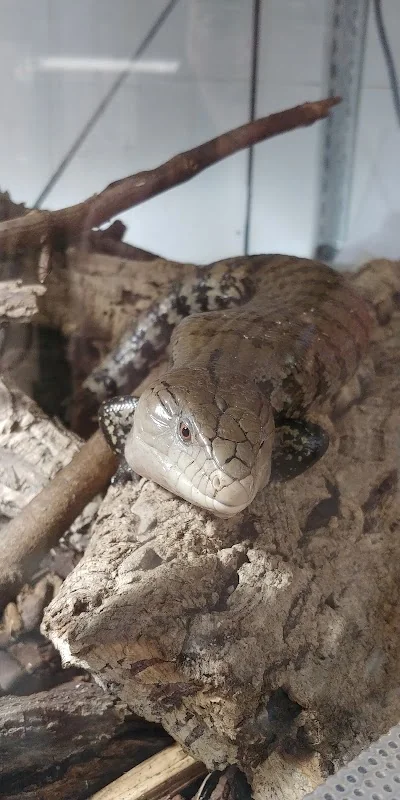
Those searching for photos or images of the rescue station often expect a classic exhibition with display cases and decorative backdrops. However, the official information shows something different: Kaulbachstraße is the heart of a working station where quarantine, treatment, and care are the focus. There are not only animals from different groups but also treatment and quarantine areas that allow for several weeks of separation and medical control after an animal's arrival. Images from this facility therefore primarily tell the story of a functional, carefully organized animal welfare operation. This is where its strength lies. Instead of spectacular staging, the question at the center is how an animal arrives safely, is examined, and later can be placed in suitable hands. This makes the imagery of the station interesting for many users: It appears credible, factual, and professional. ([reptilienauffangstation.de](https://www.reptilienauffangstation.de/de/ueber-uns/unsere-station/kaulbachstrasse?utm_source=openai))
For the search query photos of the Reptile Rescue Station Munich e.V., impressions around the various locations are particularly exciting. The station currently operates at three locations: in Kaulbachstraße, in the Exotics House in Riem, and in the Chelonia Turtle Refuge. This structure already shows that it is not about a single exhibition area but a network of specialized spaces. Those looking at pictures of the station ideally see not only reptiles but also the organizational environment behind it: space constraints, species protection, medical care, and the necessity of a planned new building. This is often surprising for searchers because the term rescue station initially sounds sober, while the actual work is far more complex. From an SEO perspective, this tension field is ideal: photos attract attention, and the content behind them provides substance. ([reptilienauffangstation.de](https://www.reptilienauffangstation.de/de/ueber-uns/unsere-station))
Reviews and Trust: Why the Station Convincingly Works
With 4.7 stars from 256 reviews, the station already signals a lot of trust in the public perception. This perception fits well with the profile of the association: The officials emphasize expertise, humanity, and a clear separation between advice, care, and visits. Those reading reviews usually look for exactly such points: Is it explained clearly? Is animal welfare taken seriously? Is communication clear? The website answers these questions indirectly very clearly, as initial contact should occur via email whenever possible; telephone remote diagnoses are explicitly not offered, and found animals are only accepted in acute cases via an emergency number. This clarity creates seriousness and likely explains why many visitors perceive the presence as competent and responsible. ([reptilienauffangstation.de](https://www.reptilienauffangstation.de/de/Kontakt))
Reviews of a reptile rescue station often differ from normal local reviews. Here, it is not about service in the restaurant sense but about trust in animal welfare, expert advice, and placement. The official guidelines mention, among other things, accommodation, daily and medical care, quarantine, expert opinions, training, and official assistance as tasks. This breadth is precisely what defines the reputation of the facility. Those planning to surrender an animal or report a found animal seek competence rather than show. Therefore, detailed information, firm rules, and a comprehensible organization are more important than beautiful words. From an SEO perspective, this is particularly valuable because searchers looking for reviews usually want a short, reliable answer: Is the station professional? The official self-presentation makes this professionalism very clear. Therefore, for online evaluation, not only sympathy counts but above all reliability and consistent animal welfare. ([reptilienauffangstation.de](https://www.reptilienauffangstation.de/de/ueber-uns/was-wir-machen/leitlinie))
Directions and Parking at Kaulbachstraße 37
The rescue station is located at Kaulbachstraße 37, 80539 Munich, right in the heart of Maxvorstadt and directly in the vicinity of the LMU Veterinary Medicine Faculty. For driving directions, it is important to know that the building is on a one-way street and can only be accessed via Veterinärstraße or Königinstraße. Additionally, parking options are fee-based and very limited. Therefore, those who spontaneously drive to the address should not expect a convenient parking spot right at the door. For many visitors, this is a crucial point because the search query for parking at this location rightly belongs. The location is urban, compact, and designed more for short arrivals than for large visitor volumes. ([reptilienauffangstation.de](https://www.reptilienauffangstation.de/))
Traveling by public transport is significantly more relaxed. The station recommends the subway station Universität, which can be reached via lines U3 and U6; from there, it is about a five-minute walk through Veterinärstraße. This short, inner-city route fits well with the location between the university district, old town, and English Garden. Therefore, those planning their arrival should rather rely on the subway and walking than on searching for parking. This is not only more practical but also precisely the kind of tip that users expect in local search queries: quick, concrete, and straightforward. Especially for guests looking for photos or a tour, public transport travel is often the easier solution. ([reptilienauffangstation.de](https://www.reptilienauffangstation.de/))
Tours, Dates, and Visiting Rules
A spontaneous visit is not possible. The station explicitly points out that visits can only take place as part of a guided tour and that one cannot simply view the animals outside of a tour for animal welfare and organizational reasons. This is important for many searchers as it corrects the expectation of a classic zoo. The reptile rescue station is not an open exhibition operation but a protection and work site. Those who book tours get real proximity to the work of the station, both in Kaulbachstraße and in the Exotics House in Riem. This way, the protection of the animals is maintained, and at the same time, a respectful access for schools, groups, and interested guests is created. The tour is therefore not an accessory but the actual format of the visit. ([reptilienauffangstation.de](https://www.reptilienauffangstation.de/))
Especially interesting is that the tours are not only an attraction for adults but are also offered for school classes, preschool groups, birthdays, or company outings. The official communication also emphasizes that one can get to know the work of the station up close. Those looking for dates or visiting opportunities should always keep an eye on the official tour section. It is also important to note the 24-hour emergency number for acute emergencies such as found animals; it is explicitly not a consulting hotline and not intended for veterinary inquiries. This clear separation between visits, advice, and emergencies is a good example of how professionally the organization operates. For the search terms tours, dates, and visit, this means: first inform, then register, then come purposefully. ([reptilienauffangstation.de](https://www.reptilienauffangstation.de/))
Taking in, surrendering, and placing reptiles
Those wishing to take in an animal will find a structured process on the website. The station asks for contact via email, provides a questionnaire, and wants to see photos of the future housing setup. Depending on the species, different requirements apply, but the basic idea is always the same: The animal should be able to lead a permanent species-appropriate life after placement. The rescue station offers species advice, care sheets, and assistance for various groups such as lizards, snakes, land turtles, water turtles, mammals, fish, invertebrates, dangerous animals, and amphibians. This is an important SEO point because many users do not only search for the station itself but also for the question of whether adoption and advice are possible there. The answer is clear: yes, but with strict rules. ([reptilienauffangstation.de](https://www.reptilienauffangstation.de/de/tiere/ich-moechte-ein-tier-aufnehmen))
The requirements for taking in an animal are deliberately serious. The station names experience in animal husbandry as desirable but not mandatory, as long as advice is possible. In special cases, expert or proof of competence may be required; additionally, all legal requirements must be met, such as those regarding protection status or potentially dangerous animals. The BMEL minimum requirements for the keeping of reptiles apply as a baseline, not as an ideal. This shows how strictly the placement is oriented towards animal welfare. Those who must surrender an animal therefore do not find a quick handover without examination but a professionally secured process. For searchers looking for reviews or experiences, this is precisely a quality feature: not as quickly as possible, but as appropriately as possible. The station does not want to simply give away animals from its stock but to promote suitable long-term placements. ([reptilienauffangstation.de](https://www.reptilienauffangstation.de/de/tiere/ich-moechte-ein-tier-aufnehmen))
Found animals also play a significant role. According to the official site, between 200 and 500 found animals are taken in each year, including true found animals, abandoned animals, injured wildlife, left-behind animals, and so-called stowaways. Often, free-roaming land or water turtles are even legally considered found objects that likely have an owner. The station therefore tries to return lost animals to their owners and regularly publishes found animals online. For people missing a reptile, this is often the first and most important point of contact in Munich. At the same time, this work shows why the station is so present in search queries around surrender, found animals, and placement: It connects emergency assistance with a clean placement process. ([reptilienauffangstation.de](https://www.reptilienauffangstation.de/de/tiere/fundtiere?utm_source=openai))
History, Size, and Species Protection Projects in Munich
The history of the rescue station begins in the 1990s in the premises of the then clinic for fish, reptiles, and amphibians at LMU Munich. From a university treatment unit, a dedicated animal welfare operation developed step by step. A decisive turning point was December 1995, when around 150 reptiles seized by authorities had to be accommodated in a short time. In 1996, more than 3,000 reptiles followed in just one day through customs authorities. These crises led to the transformation of provisional solutions into a professional rescue station. In 2001, the current association was founded, and since then, the facility has officially continued to operate independently, although still at its historical location in Kaulbachstraße. The origin story shows that this project did not arise from marketing but from real animal welfare pressure and enormous commitment. ([reptilienauffangstation.de](https://www.reptilienauffangstation.de/de/ueber-uns/unsere-station))
Today, the station is considered one of the largest of its kind in Europe and the largest association of its kind in Germany. Several thousand animals are taken in annually, medically cared for, and placed; the guidelines page also mentions around 2,100 animals in care. At the same time, the facility has expanded to three locations: Kaulbachstraße, Exotics House in Riem, and Chelonia, the turtle refuge in the north of the city. This expansion shows how strong the demand for specialized places has increased. The station works not only with reptiles but also with amphibians, invertebrates, and exotic mammals, as well as with authorities, fire departments, schools, and other specialized agencies. This makes it a kind of knowledge hub for exotic animal husbandry, species protection, and practical animal assistance. For search intentions in Munich, this combination of size and specialization is relevant. ([reptilienauffangstation.de](https://www.reptilienauffangstation.de/de/ueber-uns/was-wir-machen))
For local SEO, the project Munich Urviecher is also relevant. There, the station supports the identification of native reptiles and amphibians, cares for injured animals, and assists with reintroduction or release after care. At the same time, the project collects sightings of common toads, grass snakes, newts, sand lizards, slow worms, and other species to better protect habitats in Munich and the surrounding area. This makes it clear that the rescue station not only cares for exotic animals but also makes an important contribution to local nature conservation. In combination with the work at the three locations, a club emerges that, despite space constraints, continues to grow and broadens its tasks. This connection between exotic animal care and local species protection is an important unique selling point. ([reptilienauffangstation.de](https://www.reptilienauffangstation.de/de/Kampagnen%20und%20Projekte/M%C3%BCnchner%20Urviecher))
The planned new building underscores the long-term nature of the work. The station emphasizes that spatial limitations are the biggest bottleneck and that modern, sufficiently large accommodation is necessary to ensure animal welfare, quarantine, and placement in the future. Especially since many animals cannot be placed immediately, the organization needs additional space, separate areas, and professional processes. For searchers, this is an important context: The rescue station is not just an excursion destination but an ongoing infrastructure project of animal welfare that relies on donations, expertise, and networking. This also explains why the station is so often searched online - as an address, as a learning place, as a point of contact for emergencies, and as an example of modern, specialized animal welfare in a large city. ([reptilienauffangstation.de](https://www.reptilienauffangstation.de/de/ueber-uns/unsere-station))
Sources:
- Reptile Rescue Station, Munich e.V. - Official Website
- Reptile Rescue Station, Munich e.V. - Our Station
- Reptile Rescue Station, Munich e.V. - What We Do
- Reptile Rescue Station, Munich e.V. - Contact
- Reptile Rescue Station, Munich e.V. - Kaulbachstraße
- Reptile Rescue Station, Munich e.V. - Found Animals
- Reptile Rescue Station, Munich e.V. - Munich Urviecher
Mehr anzeigenWeniger anzeigen
Reptile Rescue Station Munich e.V. | Photos & Reviews
The Reptile Rescue Station, Munich e.V. is much more than a place for exotic animals: The non-profit animal welfare organization operates scientifically, takes in reptiles, amphibians, invertebrates, and also exotic mammals, provides medical care, and facilitates their adoption. The main address at Kaulbachstraße 37 is located in Maxvorstadt, in the building of the LMU Veterinary Medicine, and the station is now considered one of the largest of its kind in Europe. The official self-presentation makes it clear that animal welfare, species protection, advice, and knowledge transfer are interconnected here. This also explains why many people search for photos, reviews, directions, parking, and tours: The station is not a classic excursion destination but a highly specialized rescue and educational project with strict visiting rules. Those who get to know the reptile rescue station discover not only animals but also responsibility, expertise, and much practical help for owners, authorities, and found animal reports. With its mix of rescue, care, and education, the facility is an extraordinary part of Munich's animal welfare. ([reptilienauffangstation.de](https://www.reptilienauffangstation.de/de/ueber-uns/was-wir-machen))
Photos and Images: How the Reptile Rescue Station in Munich Appears
Those searching for photos or images of the rescue station often expect a classic exhibition with display cases and decorative backdrops. However, the official information shows something different: Kaulbachstraße is the heart of a working station where quarantine, treatment, and care are the focus. There are not only animals from different groups but also treatment and quarantine areas that allow for several weeks of separation and medical control after an animal's arrival. Images from this facility therefore primarily tell the story of a functional, carefully organized animal welfare operation. This is where its strength lies. Instead of spectacular staging, the question at the center is how an animal arrives safely, is examined, and later can be placed in suitable hands. This makes the imagery of the station interesting for many users: It appears credible, factual, and professional. ([reptilienauffangstation.de](https://www.reptilienauffangstation.de/de/ueber-uns/unsere-station/kaulbachstrasse?utm_source=openai))
For the search query photos of the Reptile Rescue Station Munich e.V., impressions around the various locations are particularly exciting. The station currently operates at three locations: in Kaulbachstraße, in the Exotics House in Riem, and in the Chelonia Turtle Refuge. This structure already shows that it is not about a single exhibition area but a network of specialized spaces. Those looking at pictures of the station ideally see not only reptiles but also the organizational environment behind it: space constraints, species protection, medical care, and the necessity of a planned new building. This is often surprising for searchers because the term rescue station initially sounds sober, while the actual work is far more complex. From an SEO perspective, this tension field is ideal: photos attract attention, and the content behind them provides substance. ([reptilienauffangstation.de](https://www.reptilienauffangstation.de/de/ueber-uns/unsere-station))
Reviews and Trust: Why the Station Convincingly Works
With 4.7 stars from 256 reviews, the station already signals a lot of trust in the public perception. This perception fits well with the profile of the association: The officials emphasize expertise, humanity, and a clear separation between advice, care, and visits. Those reading reviews usually look for exactly such points: Is it explained clearly? Is animal welfare taken seriously? Is communication clear? The website answers these questions indirectly very clearly, as initial contact should occur via email whenever possible; telephone remote diagnoses are explicitly not offered, and found animals are only accepted in acute cases via an emergency number. This clarity creates seriousness and likely explains why many visitors perceive the presence as competent and responsible. ([reptilienauffangstation.de](https://www.reptilienauffangstation.de/de/Kontakt))
Reviews of a reptile rescue station often differ from normal local reviews. Here, it is not about service in the restaurant sense but about trust in animal welfare, expert advice, and placement. The official guidelines mention, among other things, accommodation, daily and medical care, quarantine, expert opinions, training, and official assistance as tasks. This breadth is precisely what defines the reputation of the facility. Those planning to surrender an animal or report a found animal seek competence rather than show. Therefore, detailed information, firm rules, and a comprehensible organization are more important than beautiful words. From an SEO perspective, this is particularly valuable because searchers looking for reviews usually want a short, reliable answer: Is the station professional? The official self-presentation makes this professionalism very clear. Therefore, for online evaluation, not only sympathy counts but above all reliability and consistent animal welfare. ([reptilienauffangstation.de](https://www.reptilienauffangstation.de/de/ueber-uns/was-wir-machen/leitlinie))
Directions and Parking at Kaulbachstraße 37
The rescue station is located at Kaulbachstraße 37, 80539 Munich, right in the heart of Maxvorstadt and directly in the vicinity of the LMU Veterinary Medicine Faculty. For driving directions, it is important to know that the building is on a one-way street and can only be accessed via Veterinärstraße or Königinstraße. Additionally, parking options are fee-based and very limited. Therefore, those who spontaneously drive to the address should not expect a convenient parking spot right at the door. For many visitors, this is a crucial point because the search query for parking at this location rightly belongs. The location is urban, compact, and designed more for short arrivals than for large visitor volumes. ([reptilienauffangstation.de](https://www.reptilienauffangstation.de/))
Traveling by public transport is significantly more relaxed. The station recommends the subway station Universität, which can be reached via lines U3 and U6; from there, it is about a five-minute walk through Veterinärstraße. This short, inner-city route fits well with the location between the university district, old town, and English Garden. Therefore, those planning their arrival should rather rely on the subway and walking than on searching for parking. This is not only more practical but also precisely the kind of tip that users expect in local search queries: quick, concrete, and straightforward. Especially for guests looking for photos or a tour, public transport travel is often the easier solution. ([reptilienauffangstation.de](https://www.reptilienauffangstation.de/))
Tours, Dates, and Visiting Rules
A spontaneous visit is not possible. The station explicitly points out that visits can only take place as part of a guided tour and that one cannot simply view the animals outside of a tour for animal welfare and organizational reasons. This is important for many searchers as it corrects the expectation of a classic zoo. The reptile rescue station is not an open exhibition operation but a protection and work site. Those who book tours get real proximity to the work of the station, both in Kaulbachstraße and in the Exotics House in Riem. This way, the protection of the animals is maintained, and at the same time, a respectful access for schools, groups, and interested guests is created. The tour is therefore not an accessory but the actual format of the visit. ([reptilienauffangstation.de](https://www.reptilienauffangstation.de/))
Especially interesting is that the tours are not only an attraction for adults but are also offered for school classes, preschool groups, birthdays, or company outings. The official communication also emphasizes that one can get to know the work of the station up close. Those looking for dates or visiting opportunities should always keep an eye on the official tour section. It is also important to note the 24-hour emergency number for acute emergencies such as found animals; it is explicitly not a consulting hotline and not intended for veterinary inquiries. This clear separation between visits, advice, and emergencies is a good example of how professionally the organization operates. For the search terms tours, dates, and visit, this means: first inform, then register, then come purposefully. ([reptilienauffangstation.de](https://www.reptilienauffangstation.de/))
Taking in, surrendering, and placing reptiles
Those wishing to take in an animal will find a structured process on the website. The station asks for contact via email, provides a questionnaire, and wants to see photos of the future housing setup. Depending on the species, different requirements apply, but the basic idea is always the same: The animal should be able to lead a permanent species-appropriate life after placement. The rescue station offers species advice, care sheets, and assistance for various groups such as lizards, snakes, land turtles, water turtles, mammals, fish, invertebrates, dangerous animals, and amphibians. This is an important SEO point because many users do not only search for the station itself but also for the question of whether adoption and advice are possible there. The answer is clear: yes, but with strict rules. ([reptilienauffangstation.de](https://www.reptilienauffangstation.de/de/tiere/ich-moechte-ein-tier-aufnehmen))
The requirements for taking in an animal are deliberately serious. The station names experience in animal husbandry as desirable but not mandatory, as long as advice is possible. In special cases, expert or proof of competence may be required; additionally, all legal requirements must be met, such as those regarding protection status or potentially dangerous animals. The BMEL minimum requirements for the keeping of reptiles apply as a baseline, not as an ideal. This shows how strictly the placement is oriented towards animal welfare. Those who must surrender an animal therefore do not find a quick handover without examination but a professionally secured process. For searchers looking for reviews or experiences, this is precisely a quality feature: not as quickly as possible, but as appropriately as possible. The station does not want to simply give away animals from its stock but to promote suitable long-term placements. ([reptilienauffangstation.de](https://www.reptilienauffangstation.de/de/tiere/ich-moechte-ein-tier-aufnehmen))
Found animals also play a significant role. According to the official site, between 200 and 500 found animals are taken in each year, including true found animals, abandoned animals, injured wildlife, left-behind animals, and so-called stowaways. Often, free-roaming land or water turtles are even legally considered found objects that likely have an owner. The station therefore tries to return lost animals to their owners and regularly publishes found animals online. For people missing a reptile, this is often the first and most important point of contact in Munich. At the same time, this work shows why the station is so present in search queries around surrender, found animals, and placement: It connects emergency assistance with a clean placement process. ([reptilienauffangstation.de](https://www.reptilienauffangstation.de/de/tiere/fundtiere?utm_source=openai))
History, Size, and Species Protection Projects in Munich
The history of the rescue station begins in the 1990s in the premises of the then clinic for fish, reptiles, and amphibians at LMU Munich. From a university treatment unit, a dedicated animal welfare operation developed step by step. A decisive turning point was December 1995, when around 150 reptiles seized by authorities had to be accommodated in a short time. In 1996, more than 3,000 reptiles followed in just one day through customs authorities. These crises led to the transformation of provisional solutions into a professional rescue station. In 2001, the current association was founded, and since then, the facility has officially continued to operate independently, although still at its historical location in Kaulbachstraße. The origin story shows that this project did not arise from marketing but from real animal welfare pressure and enormous commitment. ([reptilienauffangstation.de](https://www.reptilienauffangstation.de/de/ueber-uns/unsere-station))
Today, the station is considered one of the largest of its kind in Europe and the largest association of its kind in Germany. Several thousand animals are taken in annually, medically cared for, and placed; the guidelines page also mentions around 2,100 animals in care. At the same time, the facility has expanded to three locations: Kaulbachstraße, Exotics House in Riem, and Chelonia, the turtle refuge in the north of the city. This expansion shows how strong the demand for specialized places has increased. The station works not only with reptiles but also with amphibians, invertebrates, and exotic mammals, as well as with authorities, fire departments, schools, and other specialized agencies. This makes it a kind of knowledge hub for exotic animal husbandry, species protection, and practical animal assistance. For search intentions in Munich, this combination of size and specialization is relevant. ([reptilienauffangstation.de](https://www.reptilienauffangstation.de/de/ueber-uns/was-wir-machen))
For local SEO, the project Munich Urviecher is also relevant. There, the station supports the identification of native reptiles and amphibians, cares for injured animals, and assists with reintroduction or release after care. At the same time, the project collects sightings of common toads, grass snakes, newts, sand lizards, slow worms, and other species to better protect habitats in Munich and the surrounding area. This makes it clear that the rescue station not only cares for exotic animals but also makes an important contribution to local nature conservation. In combination with the work at the three locations, a club emerges that, despite space constraints, continues to grow and broadens its tasks. This connection between exotic animal care and local species protection is an important unique selling point. ([reptilienauffangstation.de](https://www.reptilienauffangstation.de/de/Kampagnen%20und%20Projekte/M%C3%BCnchner%20Urviecher))
The planned new building underscores the long-term nature of the work. The station emphasizes that spatial limitations are the biggest bottleneck and that modern, sufficiently large accommodation is necessary to ensure animal welfare, quarantine, and placement in the future. Especially since many animals cannot be placed immediately, the organization needs additional space, separate areas, and professional processes. For searchers, this is an important context: The rescue station is not just an excursion destination but an ongoing infrastructure project of animal welfare that relies on donations, expertise, and networking. This also explains why the station is so often searched online - as an address, as a learning place, as a point of contact for emergencies, and as an example of modern, specialized animal welfare in a large city. ([reptilienauffangstation.de](https://www.reptilienauffangstation.de/de/ueber-uns/unsere-station))
Sources:
- Reptile Rescue Station, Munich e.V. - Official Website
- Reptile Rescue Station, Munich e.V. - Our Station
- Reptile Rescue Station, Munich e.V. - What We Do
- Reptile Rescue Station, Munich e.V. - Contact
- Reptile Rescue Station, Munich e.V. - Kaulbachstraße
- Reptile Rescue Station, Munich e.V. - Found Animals
- Reptile Rescue Station, Munich e.V. - Munich Urviecher
Reptile Rescue Station Munich e.V. | Photos & Reviews
The Reptile Rescue Station, Munich e.V. is much more than a place for exotic animals: The non-profit animal welfare organization operates scientifically, takes in reptiles, amphibians, invertebrates, and also exotic mammals, provides medical care, and facilitates their adoption. The main address at Kaulbachstraße 37 is located in Maxvorstadt, in the building of the LMU Veterinary Medicine, and the station is now considered one of the largest of its kind in Europe. The official self-presentation makes it clear that animal welfare, species protection, advice, and knowledge transfer are interconnected here. This also explains why many people search for photos, reviews, directions, parking, and tours: The station is not a classic excursion destination but a highly specialized rescue and educational project with strict visiting rules. Those who get to know the reptile rescue station discover not only animals but also responsibility, expertise, and much practical help for owners, authorities, and found animal reports. With its mix of rescue, care, and education, the facility is an extraordinary part of Munich's animal welfare. ([reptilienauffangstation.de](https://www.reptilienauffangstation.de/de/ueber-uns/was-wir-machen))
Photos and Images: How the Reptile Rescue Station in Munich Appears
Those searching for photos or images of the rescue station often expect a classic exhibition with display cases and decorative backdrops. However, the official information shows something different: Kaulbachstraße is the heart of a working station where quarantine, treatment, and care are the focus. There are not only animals from different groups but also treatment and quarantine areas that allow for several weeks of separation and medical control after an animal's arrival. Images from this facility therefore primarily tell the story of a functional, carefully organized animal welfare operation. This is where its strength lies. Instead of spectacular staging, the question at the center is how an animal arrives safely, is examined, and later can be placed in suitable hands. This makes the imagery of the station interesting for many users: It appears credible, factual, and professional. ([reptilienauffangstation.de](https://www.reptilienauffangstation.de/de/ueber-uns/unsere-station/kaulbachstrasse?utm_source=openai))
For the search query photos of the Reptile Rescue Station Munich e.V., impressions around the various locations are particularly exciting. The station currently operates at three locations: in Kaulbachstraße, in the Exotics House in Riem, and in the Chelonia Turtle Refuge. This structure already shows that it is not about a single exhibition area but a network of specialized spaces. Those looking at pictures of the station ideally see not only reptiles but also the organizational environment behind it: space constraints, species protection, medical care, and the necessity of a planned new building. This is often surprising for searchers because the term rescue station initially sounds sober, while the actual work is far more complex. From an SEO perspective, this tension field is ideal: photos attract attention, and the content behind them provides substance. ([reptilienauffangstation.de](https://www.reptilienauffangstation.de/de/ueber-uns/unsere-station))
Reviews and Trust: Why the Station Convincingly Works
With 4.7 stars from 256 reviews, the station already signals a lot of trust in the public perception. This perception fits well with the profile of the association: The officials emphasize expertise, humanity, and a clear separation between advice, care, and visits. Those reading reviews usually look for exactly such points: Is it explained clearly? Is animal welfare taken seriously? Is communication clear? The website answers these questions indirectly very clearly, as initial contact should occur via email whenever possible; telephone remote diagnoses are explicitly not offered, and found animals are only accepted in acute cases via an emergency number. This clarity creates seriousness and likely explains why many visitors perceive the presence as competent and responsible. ([reptilienauffangstation.de](https://www.reptilienauffangstation.de/de/Kontakt))
Reviews of a reptile rescue station often differ from normal local reviews. Here, it is not about service in the restaurant sense but about trust in animal welfare, expert advice, and placement. The official guidelines mention, among other things, accommodation, daily and medical care, quarantine, expert opinions, training, and official assistance as tasks. This breadth is precisely what defines the reputation of the facility. Those planning to surrender an animal or report a found animal seek competence rather than show. Therefore, detailed information, firm rules, and a comprehensible organization are more important than beautiful words. From an SEO perspective, this is particularly valuable because searchers looking for reviews usually want a short, reliable answer: Is the station professional? The official self-presentation makes this professionalism very clear. Therefore, for online evaluation, not only sympathy counts but above all reliability and consistent animal welfare. ([reptilienauffangstation.de](https://www.reptilienauffangstation.de/de/ueber-uns/was-wir-machen/leitlinie))
Directions and Parking at Kaulbachstraße 37
The rescue station is located at Kaulbachstraße 37, 80539 Munich, right in the heart of Maxvorstadt and directly in the vicinity of the LMU Veterinary Medicine Faculty. For driving directions, it is important to know that the building is on a one-way street and can only be accessed via Veterinärstraße or Königinstraße. Additionally, parking options are fee-based and very limited. Therefore, those who spontaneously drive to the address should not expect a convenient parking spot right at the door. For many visitors, this is a crucial point because the search query for parking at this location rightly belongs. The location is urban, compact, and designed more for short arrivals than for large visitor volumes. ([reptilienauffangstation.de](https://www.reptilienauffangstation.de/))
Traveling by public transport is significantly more relaxed. The station recommends the subway station Universität, which can be reached via lines U3 and U6; from there, it is about a five-minute walk through Veterinärstraße. This short, inner-city route fits well with the location between the university district, old town, and English Garden. Therefore, those planning their arrival should rather rely on the subway and walking than on searching for parking. This is not only more practical but also precisely the kind of tip that users expect in local search queries: quick, concrete, and straightforward. Especially for guests looking for photos or a tour, public transport travel is often the easier solution. ([reptilienauffangstation.de](https://www.reptilienauffangstation.de/))
Tours, Dates, and Visiting Rules
A spontaneous visit is not possible. The station explicitly points out that visits can only take place as part of a guided tour and that one cannot simply view the animals outside of a tour for animal welfare and organizational reasons. This is important for many searchers as it corrects the expectation of a classic zoo. The reptile rescue station is not an open exhibition operation but a protection and work site. Those who book tours get real proximity to the work of the station, both in Kaulbachstraße and in the Exotics House in Riem. This way, the protection of the animals is maintained, and at the same time, a respectful access for schools, groups, and interested guests is created. The tour is therefore not an accessory but the actual format of the visit. ([reptilienauffangstation.de](https://www.reptilienauffangstation.de/))
Especially interesting is that the tours are not only an attraction for adults but are also offered for school classes, preschool groups, birthdays, or company outings. The official communication also emphasizes that one can get to know the work of the station up close. Those looking for dates or visiting opportunities should always keep an eye on the official tour section. It is also important to note the 24-hour emergency number for acute emergencies such as found animals; it is explicitly not a consulting hotline and not intended for veterinary inquiries. This clear separation between visits, advice, and emergencies is a good example of how professionally the organization operates. For the search terms tours, dates, and visit, this means: first inform, then register, then come purposefully. ([reptilienauffangstation.de](https://www.reptilienauffangstation.de/))
Taking in, surrendering, and placing reptiles
Those wishing to take in an animal will find a structured process on the website. The station asks for contact via email, provides a questionnaire, and wants to see photos of the future housing setup. Depending on the species, different requirements apply, but the basic idea is always the same: The animal should be able to lead a permanent species-appropriate life after placement. The rescue station offers species advice, care sheets, and assistance for various groups such as lizards, snakes, land turtles, water turtles, mammals, fish, invertebrates, dangerous animals, and amphibians. This is an important SEO point because many users do not only search for the station itself but also for the question of whether adoption and advice are possible there. The answer is clear: yes, but with strict rules. ([reptilienauffangstation.de](https://www.reptilienauffangstation.de/de/tiere/ich-moechte-ein-tier-aufnehmen))
The requirements for taking in an animal are deliberately serious. The station names experience in animal husbandry as desirable but not mandatory, as long as advice is possible. In special cases, expert or proof of competence may be required; additionally, all legal requirements must be met, such as those regarding protection status or potentially dangerous animals. The BMEL minimum requirements for the keeping of reptiles apply as a baseline, not as an ideal. This shows how strictly the placement is oriented towards animal welfare. Those who must surrender an animal therefore do not find a quick handover without examination but a professionally secured process. For searchers looking for reviews or experiences, this is precisely a quality feature: not as quickly as possible, but as appropriately as possible. The station does not want to simply give away animals from its stock but to promote suitable long-term placements. ([reptilienauffangstation.de](https://www.reptilienauffangstation.de/de/tiere/ich-moechte-ein-tier-aufnehmen))
Found animals also play a significant role. According to the official site, between 200 and 500 found animals are taken in each year, including true found animals, abandoned animals, injured wildlife, left-behind animals, and so-called stowaways. Often, free-roaming land or water turtles are even legally considered found objects that likely have an owner. The station therefore tries to return lost animals to their owners and regularly publishes found animals online. For people missing a reptile, this is often the first and most important point of contact in Munich. At the same time, this work shows why the station is so present in search queries around surrender, found animals, and placement: It connects emergency assistance with a clean placement process. ([reptilienauffangstation.de](https://www.reptilienauffangstation.de/de/tiere/fundtiere?utm_source=openai))
History, Size, and Species Protection Projects in Munich
The history of the rescue station begins in the 1990s in the premises of the then clinic for fish, reptiles, and amphibians at LMU Munich. From a university treatment unit, a dedicated animal welfare operation developed step by step. A decisive turning point was December 1995, when around 150 reptiles seized by authorities had to be accommodated in a short time. In 1996, more than 3,000 reptiles followed in just one day through customs authorities. These crises led to the transformation of provisional solutions into a professional rescue station. In 2001, the current association was founded, and since then, the facility has officially continued to operate independently, although still at its historical location in Kaulbachstraße. The origin story shows that this project did not arise from marketing but from real animal welfare pressure and enormous commitment. ([reptilienauffangstation.de](https://www.reptilienauffangstation.de/de/ueber-uns/unsere-station))
Today, the station is considered one of the largest of its kind in Europe and the largest association of its kind in Germany. Several thousand animals are taken in annually, medically cared for, and placed; the guidelines page also mentions around 2,100 animals in care. At the same time, the facility has expanded to three locations: Kaulbachstraße, Exotics House in Riem, and Chelonia, the turtle refuge in the north of the city. This expansion shows how strong the demand for specialized places has increased. The station works not only with reptiles but also with amphibians, invertebrates, and exotic mammals, as well as with authorities, fire departments, schools, and other specialized agencies. This makes it a kind of knowledge hub for exotic animal husbandry, species protection, and practical animal assistance. For search intentions in Munich, this combination of size and specialization is relevant. ([reptilienauffangstation.de](https://www.reptilienauffangstation.de/de/ueber-uns/was-wir-machen))
For local SEO, the project Munich Urviecher is also relevant. There, the station supports the identification of native reptiles and amphibians, cares for injured animals, and assists with reintroduction or release after care. At the same time, the project collects sightings of common toads, grass snakes, newts, sand lizards, slow worms, and other species to better protect habitats in Munich and the surrounding area. This makes it clear that the rescue station not only cares for exotic animals but also makes an important contribution to local nature conservation. In combination with the work at the three locations, a club emerges that, despite space constraints, continues to grow and broadens its tasks. This connection between exotic animal care and local species protection is an important unique selling point. ([reptilienauffangstation.de](https://www.reptilienauffangstation.de/de/Kampagnen%20und%20Projekte/M%C3%BCnchner%20Urviecher))
The planned new building underscores the long-term nature of the work. The station emphasizes that spatial limitations are the biggest bottleneck and that modern, sufficiently large accommodation is necessary to ensure animal welfare, quarantine, and placement in the future. Especially since many animals cannot be placed immediately, the organization needs additional space, separate areas, and professional processes. For searchers, this is an important context: The rescue station is not just an excursion destination but an ongoing infrastructure project of animal welfare that relies on donations, expertise, and networking. This also explains why the station is so often searched online - as an address, as a learning place, as a point of contact for emergencies, and as an example of modern, specialized animal welfare in a large city. ([reptilienauffangstation.de](https://www.reptilienauffangstation.de/de/ueber-uns/unsere-station))
Sources:
- Reptile Rescue Station, Munich e.V. - Official Website
- Reptile Rescue Station, Munich e.V. - Our Station
- Reptile Rescue Station, Munich e.V. - What We Do
- Reptile Rescue Station, Munich e.V. - Contact
- Reptile Rescue Station, Munich e.V. - Kaulbachstraße
- Reptile Rescue Station, Munich e.V. - Found Animals
- Reptile Rescue Station, Munich e.V. - Munich Urviecher
Frequently Asked Questions
Reviews
No reviews found