
Park Babelsberg 10, Potsdam
Park Babelsberg 10, 14482 Potsdam, Germany
Babelsberg Palace | Tickets & Opening Hours
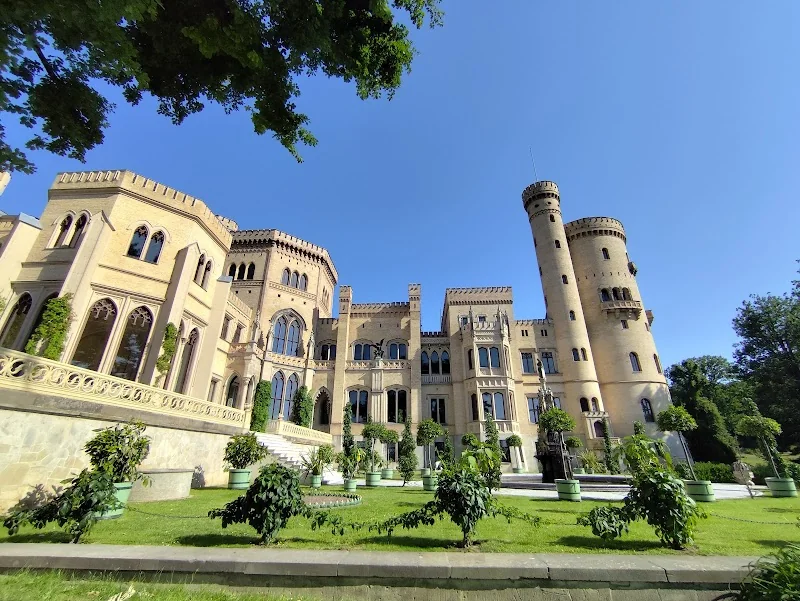
Babelsberg Palace in Potsdam combines neo-Gothic architecture, Prussian history, and one of the most impressive landscapes along the banks of the Havel. The complex was built from 1833 for Prince Wilhelm of Prussia, the later Emperor Wilhelm I, and Princess Augusta of Saxe-Weimar, and is now part of the UNESCO World Heritage Site of the Palaces and Parks of Potsdam and Berlin. The palace still appears today as a romantic counterpart to the open park landscape: above, the distinctive silhouette of neo-Gothic architecture, below, terraces, watercourses, and wide vistas over the Havel. Those searching for Babelsberg Palace tickets, opening times, history, or Park Babelsberg will find a destination that focuses more on special moments than mass tourism. The palace is currently only open during special events, while the park is freely accessible daily, making it ideal for walks, photo tours, and a quiet day trip. This mix of historical substance, ongoing restoration, and ample open space makes the place so exciting for visitors. ([spsg.de](https://www.spsg.de/schloesser-gaerten/objekt/schloss-babelsberg/))
Babelsberg Palace Tickets and Opening Hours
Those looking for Babelsberg Palace tickets should first distinguish between the palace and the park. Park Babelsberg is open all day, daily from 8 AM until dusk, and admission is free. The palace itself, on the other hand, does not regularly open to the public but only during special events. This is precisely what attracts many guests: instead of a classic museum visit, you experience the palace through guided tours, themed events, or parties with limited participants. An example is the garden festival at Babelsberg Palace, where the palace opening cost 5 euros, and garden tours 4 euros, with tickets available online or at the palace box office. Such formats also show that the admission logic can vary depending on the occasion; fixed standard tickets like those at a permanently open museum are not available here. Therefore, anyone planning a visit should always check the respective event calendar and not assume a classic daily operation. For SEO searches, terms like opening times, tickets, and special events are particularly relevant, as they best describe the actual visit process. ([spsg.de](https://www.spsg.de/schloesser-gaerten/objekt/park-babelsberg/))
Regarding weather, Babelsberg Palace is primarily understood as a park destination, as most impressions are created outdoors: on the terraces, along the paths, and at the viewpoints along the Havel. The SPSG explicitly points out that during extreme drought, trees may be damaged and branches may fall; furthermore, it is advised not to visit the parks during severe weather warnings and to stay on the paths. Practically, this means: a sunny but not hot day is ideal if you want to take photos, seek viewpoints, or quietly explore the entire park. For palace visits during special events, it is worthwhile to check the weather, start times, and possible restrictions in advance. Those traveling with children, older companions, or in a group should also plan enough time, as the complex is intended not for a quick tour but as a landscaped walk. The park is freely accessible, but especially in windy or very wet weather, the visit may be less pleasant. Thus, the keyword Babelsberg Palace weather is not just a minor aspect but an important part of smart visit planning. ([spsg.de](https://www.spsg.de/en/palaces-gardens/object/babelsberg-park))
History of Babelsberg Palace
The history of Babelsberg Palace begins in 1833 with a clear design ambition. The first palace building was designed by Karl Friedrich Schinkel and executed between 1833 and 1835 as a rather small cottage. However, just a few years later, the circumstances changed: with the appointment of Prince Wilhelm as the Prussian heir to the throne in 1840, his representative duties grew, and the palace was expanded between 1844 and 1849 by Ludwig Persius and Johann Heinrich Strack. Thus, the originally smaller estate became a representative summer residence with greater significance. Wilhelm and Augusta actively participated in the design and furnishing, making Babelsberg not just a residence but an expression of courtly self-understanding. From the 1860s to the 1880s, the place was one of the most important venues of social and political life in Prussia; with the proclamation of the Empire in 1871, this role reached its peak. Those searching for Babelsberg Palace history encounter not only architectural history but also the narrative of power, court culture, and landscape planning in the 19th century. ([spsg.de](https://www.spsg.de/schloesser-gaerten/objekt/schloss-babelsberg/))
In the 20th century, the use of the complex changed multiple times. The Prussian Palaces and Gardens Foundation describes the park since the 1960s as a historical garden monument, meaning a consciously maintained cultural monument with a long-term preservation perspective. After the fall of the Berlin Wall, the heavily damaged northern bank area was restored, marking an important chapter in the site's post-history. At the same time, it becomes clear how strongly Babelsberg was also shaped by the 20th century: the visible ensemble today is not only a place of remembrance of the 19th century but also of division, loss, and reconstruction. The recent history of restoration is also significant for the palace itself. The facade and terrace areas have shone again in their former glory since 2016 after extensive restoration, and the water features around the palace are once again experienceable from April to October. In this connection of historical substance and restored landscape lies the special appeal of the place: Babelsberg Palace not only shows the past but also the ongoing care of a World Heritage Site. ([spsg.de](https://www.spsg.de/en/palaces-gardens/object/babelsberg-park))
Architecture, Interior, and Terraces
Architecturally, Babelsberg Palace is a key work of English neo-Gothic in Prussia. The palace majestically overlooks the banks of the Havel, and its character arises from the mix of romantic form language, clear court representation, and landscape staging. Particularly defining are the five terraces around the palace, which, according to the understanding of landscape architect Hermann Prince of Pückler-Muskau, should act like palace rooms in the open air. This idea is equally important for Babelsberg Palace interior and outdoor space, as it deliberately blurs the transition between built space and garden landscape. Even before thinking about the interiors, one experiences the palace through its terraced levels, ornamental planting, and sightlines into the surroundings. The park side is never just a backdrop but part of the architectural concept. Around the neo-Gothic palace, richly decorated garden terraces, the pleasure ground with ornamental shrubs, flower gardens, and water features, as well as the open paths form a cohesive ensemble. For search queries like Babelsberg Palace photos or Babelsberg Palace interior, this intertwining is crucial: the outer form already tells a lot about the interior and about the courtly life that took place here. ([spsg.de](https://www.spsg.de/schloesser-gaerten/objekt/schloss-babelsberg/))
Even though Babelsberg Palace is currently only open during special events, there are always formats that make selected rooms accessible. The SPSG shows, among other things, a ballroom as an impression on the object page, and event pages indicate that visitors can tour the still unrenovated rooms of the palace on special occasions. This is particularly relevant for SEO searches for interior, as interested parties should not expect a permanent museum tour here but a limited, curated access to historical spaces. At the same time, individual offers are marked as not wheelchair accessible, indicating that access can vary depending on the event. The current renovation situation reinforces this character: Babelsberg Palace is not a place with standardized permanent admission but a monument in motion. This makes the experience authentic, as visitors see not only a finished showcase but also the work on the existing structure. Those who love architecture thus get the rare chance to experience neo-Gothic, restoration, and historical use in a real context. ([spsg.de](https://www.spsg.de/schloesser-gaerten/objekt/schloss-babelsberg/))
Park Babelsberg and the Best Photo Spots
Park Babelsberg is much more than a palace garden; it is a landscape-composed stage with spectacular views of the Glienicke Bridge, the Glienicke Palace Park, and the silhouette of Potsdam. The complex was created from 1833 on the orders of Prince Wilhelm and Augusta, designed by Peter Joseph Lenné and Prince Hermann of Pückler-Muskau. The official description emphasizes the location on the banks of the Havel, the numerous footpaths, and the artificial water system that supplies plants, artificial lakes, waterfalls, and streams. Herein lies the strength of Babelsberg Palace and Park: the architecture does not end at the building but continues into the landscape. The densely composed ornamental shrubs, flower beds, water features, and terraces make the park a place that one does not simply pass through but discovers at leisure. Therefore, those searching for Park Babelsberg find not only a beautiful walking path but a historical work of garden art with multiple levels, open views, and changing perspectives. Particularly appealing is that the park lies in the heart of the UNESCO World Heritage Site and has been maintained as a garden monument since the 1960s. ([spsg.de](https://www.spsg.de/en/palaces-gardens/object/babelsberg-park))
For photos, the park is particularly generous, as many prominent motifs arise in various places. The SPSG shows, among other things, views over the golden rose garden towards the palace, the view into the Gothic garden with colorful blooming flower beds and fountain, the geyser with the Glienicke Bridge in the background, the island with the inkwell in the Black Sea, as well as the view over the wide meadow towards the coach house. Additionally, there are the pleasure ground, the porcelain terrace, the golden terrace, and the large sightlines over the Havel. For Babelsberg Palace photos, this is an enormous advantage, as not only the palace itself but the entire landscape offers itself as a photographic motif. Particularly good shots are taken in the morning or late afternoon when the light highlights the terraces and water surfaces. The park is also interesting in content, as it can be understood as a landscape of remembrance between the revolutionary years of 1848/49 and the founding of the Empire in 1871. Thus, it connects beauty and historical significance in a compact space. Therefore, those who see the place only as a pretty park underestimate its significance; those who read it as a designed memory understand why it captivates so many visitors. ([spsg.de](https://www.spsg.de/en/palaces-gardens/object/babelsberg-park))
Directions, Parking, and Accessibility at Babelsberg Palace
The journey to Babelsberg Palace is straightforward but should be planned precisely. The official address is Park Babelsberg 10, 14482 Potsdam. For public transport, the SPSG mentions the stops Potsdam, Schloss Babelsberg and Potsdam, Alt Nowawes. Those arriving by car will find paid parking spaces for cars near the palace; the English information also points out that only a limited number of parking spaces are available. For visitors searching for directions to Babelsberg Palace or parking at Babelsberg Palace, these notes are crucial: the destination is easily accessible but not designed for a large event parking lot. Therefore, the combination of train or tram plus a short walk is often the more relaxing solution, especially on weekends or during event dates. Anyone visiting the palace only during a special opening should also check the meeting points for the respective event, as tours often start at the palace box office or at a specified meeting point. This saves time and avoids unnecessary paths through the park. ([spsg.de](https://www.spsg.de/schloesser-gaerten/objekt/schloss-babelsberg/))
Regarding accessibility, Babelsberg Palace and the park present a differentiated picture. According to the SPSG, the park is conditionally wheelchair accessible, meaning it is not fully accessible but can generally be used with certain limitations. Individual palace events are explicitly marked as not wheelchair accessible, which should be considered when planning. At the same time, there are official visitor information and a group service that can assist with questions about accessibility, booking, and daily planning. For visitors with mobility impairments, it is therefore advisable to check the specific event in advance rather than just looking at the place name. The topic of weather also belongs here, as the park is an outdoor facility: during storm warnings, strong winds, or extreme drought, paths and old trees can pose risks. The SPSG explicitly recommends avoiding park visits during severe weather warnings and staying on the paths. Thus, a simple travel question becomes a real visit strategy: those who consider travel, route, accessibility, and weather together experience Babelsberg Palace much more relaxed. ([spsg.de](https://www.spsg.de/schloesser-gaerten/objekt/park-babelsberg/))
Reviews, Photos, and Practical Tips for the Visit
The provided visitor reviews paint a very clear picture: Babelsberg Palace is perceived as romantic, quiet, and aesthetically convincing. The landscape design, views, architecture, and harmonious connection of elegance and historical significance are particularly praised. It is especially interesting that the positive effect does not arise from opulence alone but precisely from the balanced mix of palace, terrace, and park. This fits excellently with the search intentions behind Babelsberg Palace reviews and Babelsberg Palace photos: visitors want not only to see what the palace looks like but also to understand what feeling the place conveys. The reviews describe a day trip with a romantic atmosphere and a calm park character, which is exactly what distinguishes Babelsberg from the noisy event location. Therefore, those planning the visit should bring time and not see the place merely as a stopover. The most beautiful impressions often arise when one lets oneself drift between the palace, the banks of the Havel, and the viewpoints. ([spsg.de](https://www.spsg.de/en/palaces-gardens/object/babelsberg-park))
Practically speaking, the best visit is often a combination of history, walk, and photo tour. In the palace itself, it is especially worthwhile to look at special events, as they enable access to historical rooms. In the park, spring to autumn is particularly attractive, as the water features are experienceable again from April to October, and the vegetation appears particularly vibrant then. Those wanting to take good pictures should plan for the golden terrace, the rose garden, the view of the Glienicke Bridge, and the long sightlines along the paths. If the weather is uncertain, a quick check before the visit is worthwhile, as the SPSG points out possible risks from falling branches and advises avoiding the park during severe weather warnings for safety reasons. This mix of beauty and caution makes Babelsberg Palace a place with character: not smooth, not artificial, but historically grown and maintained. Thus, it is also an ideal destination for visitors seeking culture, nature, and quiet photographic motifs in Potsdam. ([spsg.de](https://www.spsg.de/schloesser-gaerten/objekt/schloss-babelsberg/))
Sources:
Show moreShow less
Babelsberg Palace | Tickets & Opening Hours
Babelsberg Palace in Potsdam combines neo-Gothic architecture, Prussian history, and one of the most impressive landscapes along the banks of the Havel. The complex was built from 1833 for Prince Wilhelm of Prussia, the later Emperor Wilhelm I, and Princess Augusta of Saxe-Weimar, and is now part of the UNESCO World Heritage Site of the Palaces and Parks of Potsdam and Berlin. The palace still appears today as a romantic counterpart to the open park landscape: above, the distinctive silhouette of neo-Gothic architecture, below, terraces, watercourses, and wide vistas over the Havel. Those searching for Babelsberg Palace tickets, opening times, history, or Park Babelsberg will find a destination that focuses more on special moments than mass tourism. The palace is currently only open during special events, while the park is freely accessible daily, making it ideal for walks, photo tours, and a quiet day trip. This mix of historical substance, ongoing restoration, and ample open space makes the place so exciting for visitors. ([spsg.de](https://www.spsg.de/schloesser-gaerten/objekt/schloss-babelsberg/))
Babelsberg Palace Tickets and Opening Hours
Those looking for Babelsberg Palace tickets should first distinguish between the palace and the park. Park Babelsberg is open all day, daily from 8 AM until dusk, and admission is free. The palace itself, on the other hand, does not regularly open to the public but only during special events. This is precisely what attracts many guests: instead of a classic museum visit, you experience the palace through guided tours, themed events, or parties with limited participants. An example is the garden festival at Babelsberg Palace, where the palace opening cost 5 euros, and garden tours 4 euros, with tickets available online or at the palace box office. Such formats also show that the admission logic can vary depending on the occasion; fixed standard tickets like those at a permanently open museum are not available here. Therefore, anyone planning a visit should always check the respective event calendar and not assume a classic daily operation. For SEO searches, terms like opening times, tickets, and special events are particularly relevant, as they best describe the actual visit process. ([spsg.de](https://www.spsg.de/schloesser-gaerten/objekt/park-babelsberg/))
Regarding weather, Babelsberg Palace is primarily understood as a park destination, as most impressions are created outdoors: on the terraces, along the paths, and at the viewpoints along the Havel. The SPSG explicitly points out that during extreme drought, trees may be damaged and branches may fall; furthermore, it is advised not to visit the parks during severe weather warnings and to stay on the paths. Practically, this means: a sunny but not hot day is ideal if you want to take photos, seek viewpoints, or quietly explore the entire park. For palace visits during special events, it is worthwhile to check the weather, start times, and possible restrictions in advance. Those traveling with children, older companions, or in a group should also plan enough time, as the complex is intended not for a quick tour but as a landscaped walk. The park is freely accessible, but especially in windy or very wet weather, the visit may be less pleasant. Thus, the keyword Babelsberg Palace weather is not just a minor aspect but an important part of smart visit planning. ([spsg.de](https://www.spsg.de/en/palaces-gardens/object/babelsberg-park))
History of Babelsberg Palace
The history of Babelsberg Palace begins in 1833 with a clear design ambition. The first palace building was designed by Karl Friedrich Schinkel and executed between 1833 and 1835 as a rather small cottage. However, just a few years later, the circumstances changed: with the appointment of Prince Wilhelm as the Prussian heir to the throne in 1840, his representative duties grew, and the palace was expanded between 1844 and 1849 by Ludwig Persius and Johann Heinrich Strack. Thus, the originally smaller estate became a representative summer residence with greater significance. Wilhelm and Augusta actively participated in the design and furnishing, making Babelsberg not just a residence but an expression of courtly self-understanding. From the 1860s to the 1880s, the place was one of the most important venues of social and political life in Prussia; with the proclamation of the Empire in 1871, this role reached its peak. Those searching for Babelsberg Palace history encounter not only architectural history but also the narrative of power, court culture, and landscape planning in the 19th century. ([spsg.de](https://www.spsg.de/schloesser-gaerten/objekt/schloss-babelsberg/))
In the 20th century, the use of the complex changed multiple times. The Prussian Palaces and Gardens Foundation describes the park since the 1960s as a historical garden monument, meaning a consciously maintained cultural monument with a long-term preservation perspective. After the fall of the Berlin Wall, the heavily damaged northern bank area was restored, marking an important chapter in the site's post-history. At the same time, it becomes clear how strongly Babelsberg was also shaped by the 20th century: the visible ensemble today is not only a place of remembrance of the 19th century but also of division, loss, and reconstruction. The recent history of restoration is also significant for the palace itself. The facade and terrace areas have shone again in their former glory since 2016 after extensive restoration, and the water features around the palace are once again experienceable from April to October. In this connection of historical substance and restored landscape lies the special appeal of the place: Babelsberg Palace not only shows the past but also the ongoing care of a World Heritage Site. ([spsg.de](https://www.spsg.de/en/palaces-gardens/object/babelsberg-park))
Architecture, Interior, and Terraces
Architecturally, Babelsberg Palace is a key work of English neo-Gothic in Prussia. The palace majestically overlooks the banks of the Havel, and its character arises from the mix of romantic form language, clear court representation, and landscape staging. Particularly defining are the five terraces around the palace, which, according to the understanding of landscape architect Hermann Prince of Pückler-Muskau, should act like palace rooms in the open air. This idea is equally important for Babelsberg Palace interior and outdoor space, as it deliberately blurs the transition between built space and garden landscape. Even before thinking about the interiors, one experiences the palace through its terraced levels, ornamental planting, and sightlines into the surroundings. The park side is never just a backdrop but part of the architectural concept. Around the neo-Gothic palace, richly decorated garden terraces, the pleasure ground with ornamental shrubs, flower gardens, and water features, as well as the open paths form a cohesive ensemble. For search queries like Babelsberg Palace photos or Babelsberg Palace interior, this intertwining is crucial: the outer form already tells a lot about the interior and about the courtly life that took place here. ([spsg.de](https://www.spsg.de/schloesser-gaerten/objekt/schloss-babelsberg/))
Even though Babelsberg Palace is currently only open during special events, there are always formats that make selected rooms accessible. The SPSG shows, among other things, a ballroom as an impression on the object page, and event pages indicate that visitors can tour the still unrenovated rooms of the palace on special occasions. This is particularly relevant for SEO searches for interior, as interested parties should not expect a permanent museum tour here but a limited, curated access to historical spaces. At the same time, individual offers are marked as not wheelchair accessible, indicating that access can vary depending on the event. The current renovation situation reinforces this character: Babelsberg Palace is not a place with standardized permanent admission but a monument in motion. This makes the experience authentic, as visitors see not only a finished showcase but also the work on the existing structure. Those who love architecture thus get the rare chance to experience neo-Gothic, restoration, and historical use in a real context. ([spsg.de](https://www.spsg.de/schloesser-gaerten/objekt/schloss-babelsberg/))
Park Babelsberg and the Best Photo Spots
Park Babelsberg is much more than a palace garden; it is a landscape-composed stage with spectacular views of the Glienicke Bridge, the Glienicke Palace Park, and the silhouette of Potsdam. The complex was created from 1833 on the orders of Prince Wilhelm and Augusta, designed by Peter Joseph Lenné and Prince Hermann of Pückler-Muskau. The official description emphasizes the location on the banks of the Havel, the numerous footpaths, and the artificial water system that supplies plants, artificial lakes, waterfalls, and streams. Herein lies the strength of Babelsberg Palace and Park: the architecture does not end at the building but continues into the landscape. The densely composed ornamental shrubs, flower beds, water features, and terraces make the park a place that one does not simply pass through but discovers at leisure. Therefore, those searching for Park Babelsberg find not only a beautiful walking path but a historical work of garden art with multiple levels, open views, and changing perspectives. Particularly appealing is that the park lies in the heart of the UNESCO World Heritage Site and has been maintained as a garden monument since the 1960s. ([spsg.de](https://www.spsg.de/en/palaces-gardens/object/babelsberg-park))
For photos, the park is particularly generous, as many prominent motifs arise in various places. The SPSG shows, among other things, views over the golden rose garden towards the palace, the view into the Gothic garden with colorful blooming flower beds and fountain, the geyser with the Glienicke Bridge in the background, the island with the inkwell in the Black Sea, as well as the view over the wide meadow towards the coach house. Additionally, there are the pleasure ground, the porcelain terrace, the golden terrace, and the large sightlines over the Havel. For Babelsberg Palace photos, this is an enormous advantage, as not only the palace itself but the entire landscape offers itself as a photographic motif. Particularly good shots are taken in the morning or late afternoon when the light highlights the terraces and water surfaces. The park is also interesting in content, as it can be understood as a landscape of remembrance between the revolutionary years of 1848/49 and the founding of the Empire in 1871. Thus, it connects beauty and historical significance in a compact space. Therefore, those who see the place only as a pretty park underestimate its significance; those who read it as a designed memory understand why it captivates so many visitors. ([spsg.de](https://www.spsg.de/en/palaces-gardens/object/babelsberg-park))
Directions, Parking, and Accessibility at Babelsberg Palace
The journey to Babelsberg Palace is straightforward but should be planned precisely. The official address is Park Babelsberg 10, 14482 Potsdam. For public transport, the SPSG mentions the stops Potsdam, Schloss Babelsberg and Potsdam, Alt Nowawes. Those arriving by car will find paid parking spaces for cars near the palace; the English information also points out that only a limited number of parking spaces are available. For visitors searching for directions to Babelsberg Palace or parking at Babelsberg Palace, these notes are crucial: the destination is easily accessible but not designed for a large event parking lot. Therefore, the combination of train or tram plus a short walk is often the more relaxing solution, especially on weekends or during event dates. Anyone visiting the palace only during a special opening should also check the meeting points for the respective event, as tours often start at the palace box office or at a specified meeting point. This saves time and avoids unnecessary paths through the park. ([spsg.de](https://www.spsg.de/schloesser-gaerten/objekt/schloss-babelsberg/))
Regarding accessibility, Babelsberg Palace and the park present a differentiated picture. According to the SPSG, the park is conditionally wheelchair accessible, meaning it is not fully accessible but can generally be used with certain limitations. Individual palace events are explicitly marked as not wheelchair accessible, which should be considered when planning. At the same time, there are official visitor information and a group service that can assist with questions about accessibility, booking, and daily planning. For visitors with mobility impairments, it is therefore advisable to check the specific event in advance rather than just looking at the place name. The topic of weather also belongs here, as the park is an outdoor facility: during storm warnings, strong winds, or extreme drought, paths and old trees can pose risks. The SPSG explicitly recommends avoiding park visits during severe weather warnings and staying on the paths. Thus, a simple travel question becomes a real visit strategy: those who consider travel, route, accessibility, and weather together experience Babelsberg Palace much more relaxed. ([spsg.de](https://www.spsg.de/schloesser-gaerten/objekt/park-babelsberg/))
Reviews, Photos, and Practical Tips for the Visit
The provided visitor reviews paint a very clear picture: Babelsberg Palace is perceived as romantic, quiet, and aesthetically convincing. The landscape design, views, architecture, and harmonious connection of elegance and historical significance are particularly praised. It is especially interesting that the positive effect does not arise from opulence alone but precisely from the balanced mix of palace, terrace, and park. This fits excellently with the search intentions behind Babelsberg Palace reviews and Babelsberg Palace photos: visitors want not only to see what the palace looks like but also to understand what feeling the place conveys. The reviews describe a day trip with a romantic atmosphere and a calm park character, which is exactly what distinguishes Babelsberg from the noisy event location. Therefore, those planning the visit should bring time and not see the place merely as a stopover. The most beautiful impressions often arise when one lets oneself drift between the palace, the banks of the Havel, and the viewpoints. ([spsg.de](https://www.spsg.de/en/palaces-gardens/object/babelsberg-park))
Practically speaking, the best visit is often a combination of history, walk, and photo tour. In the palace itself, it is especially worthwhile to look at special events, as they enable access to historical rooms. In the park, spring to autumn is particularly attractive, as the water features are experienceable again from April to October, and the vegetation appears particularly vibrant then. Those wanting to take good pictures should plan for the golden terrace, the rose garden, the view of the Glienicke Bridge, and the long sightlines along the paths. If the weather is uncertain, a quick check before the visit is worthwhile, as the SPSG points out possible risks from falling branches and advises avoiding the park during severe weather warnings for safety reasons. This mix of beauty and caution makes Babelsberg Palace a place with character: not smooth, not artificial, but historically grown and maintained. Thus, it is also an ideal destination for visitors seeking culture, nature, and quiet photographic motifs in Potsdam. ([spsg.de](https://www.spsg.de/schloesser-gaerten/objekt/schloss-babelsberg/))
Sources:
Babelsberg Palace | Tickets & Opening Hours
Babelsberg Palace in Potsdam combines neo-Gothic architecture, Prussian history, and one of the most impressive landscapes along the banks of the Havel. The complex was built from 1833 for Prince Wilhelm of Prussia, the later Emperor Wilhelm I, and Princess Augusta of Saxe-Weimar, and is now part of the UNESCO World Heritage Site of the Palaces and Parks of Potsdam and Berlin. The palace still appears today as a romantic counterpart to the open park landscape: above, the distinctive silhouette of neo-Gothic architecture, below, terraces, watercourses, and wide vistas over the Havel. Those searching for Babelsberg Palace tickets, opening times, history, or Park Babelsberg will find a destination that focuses more on special moments than mass tourism. The palace is currently only open during special events, while the park is freely accessible daily, making it ideal for walks, photo tours, and a quiet day trip. This mix of historical substance, ongoing restoration, and ample open space makes the place so exciting for visitors. ([spsg.de](https://www.spsg.de/schloesser-gaerten/objekt/schloss-babelsberg/))
Babelsberg Palace Tickets and Opening Hours
Those looking for Babelsberg Palace tickets should first distinguish between the palace and the park. Park Babelsberg is open all day, daily from 8 AM until dusk, and admission is free. The palace itself, on the other hand, does not regularly open to the public but only during special events. This is precisely what attracts many guests: instead of a classic museum visit, you experience the palace through guided tours, themed events, or parties with limited participants. An example is the garden festival at Babelsberg Palace, where the palace opening cost 5 euros, and garden tours 4 euros, with tickets available online or at the palace box office. Such formats also show that the admission logic can vary depending on the occasion; fixed standard tickets like those at a permanently open museum are not available here. Therefore, anyone planning a visit should always check the respective event calendar and not assume a classic daily operation. For SEO searches, terms like opening times, tickets, and special events are particularly relevant, as they best describe the actual visit process. ([spsg.de](https://www.spsg.de/schloesser-gaerten/objekt/park-babelsberg/))
Regarding weather, Babelsberg Palace is primarily understood as a park destination, as most impressions are created outdoors: on the terraces, along the paths, and at the viewpoints along the Havel. The SPSG explicitly points out that during extreme drought, trees may be damaged and branches may fall; furthermore, it is advised not to visit the parks during severe weather warnings and to stay on the paths. Practically, this means: a sunny but not hot day is ideal if you want to take photos, seek viewpoints, or quietly explore the entire park. For palace visits during special events, it is worthwhile to check the weather, start times, and possible restrictions in advance. Those traveling with children, older companions, or in a group should also plan enough time, as the complex is intended not for a quick tour but as a landscaped walk. The park is freely accessible, but especially in windy or very wet weather, the visit may be less pleasant. Thus, the keyword Babelsberg Palace weather is not just a minor aspect but an important part of smart visit planning. ([spsg.de](https://www.spsg.de/en/palaces-gardens/object/babelsberg-park))
History of Babelsberg Palace
The history of Babelsberg Palace begins in 1833 with a clear design ambition. The first palace building was designed by Karl Friedrich Schinkel and executed between 1833 and 1835 as a rather small cottage. However, just a few years later, the circumstances changed: with the appointment of Prince Wilhelm as the Prussian heir to the throne in 1840, his representative duties grew, and the palace was expanded between 1844 and 1849 by Ludwig Persius and Johann Heinrich Strack. Thus, the originally smaller estate became a representative summer residence with greater significance. Wilhelm and Augusta actively participated in the design and furnishing, making Babelsberg not just a residence but an expression of courtly self-understanding. From the 1860s to the 1880s, the place was one of the most important venues of social and political life in Prussia; with the proclamation of the Empire in 1871, this role reached its peak. Those searching for Babelsberg Palace history encounter not only architectural history but also the narrative of power, court culture, and landscape planning in the 19th century. ([spsg.de](https://www.spsg.de/schloesser-gaerten/objekt/schloss-babelsberg/))
In the 20th century, the use of the complex changed multiple times. The Prussian Palaces and Gardens Foundation describes the park since the 1960s as a historical garden monument, meaning a consciously maintained cultural monument with a long-term preservation perspective. After the fall of the Berlin Wall, the heavily damaged northern bank area was restored, marking an important chapter in the site's post-history. At the same time, it becomes clear how strongly Babelsberg was also shaped by the 20th century: the visible ensemble today is not only a place of remembrance of the 19th century but also of division, loss, and reconstruction. The recent history of restoration is also significant for the palace itself. The facade and terrace areas have shone again in their former glory since 2016 after extensive restoration, and the water features around the palace are once again experienceable from April to October. In this connection of historical substance and restored landscape lies the special appeal of the place: Babelsberg Palace not only shows the past but also the ongoing care of a World Heritage Site. ([spsg.de](https://www.spsg.de/en/palaces-gardens/object/babelsberg-park))
Architecture, Interior, and Terraces
Architecturally, Babelsberg Palace is a key work of English neo-Gothic in Prussia. The palace majestically overlooks the banks of the Havel, and its character arises from the mix of romantic form language, clear court representation, and landscape staging. Particularly defining are the five terraces around the palace, which, according to the understanding of landscape architect Hermann Prince of Pückler-Muskau, should act like palace rooms in the open air. This idea is equally important for Babelsberg Palace interior and outdoor space, as it deliberately blurs the transition between built space and garden landscape. Even before thinking about the interiors, one experiences the palace through its terraced levels, ornamental planting, and sightlines into the surroundings. The park side is never just a backdrop but part of the architectural concept. Around the neo-Gothic palace, richly decorated garden terraces, the pleasure ground with ornamental shrubs, flower gardens, and water features, as well as the open paths form a cohesive ensemble. For search queries like Babelsberg Palace photos or Babelsberg Palace interior, this intertwining is crucial: the outer form already tells a lot about the interior and about the courtly life that took place here. ([spsg.de](https://www.spsg.de/schloesser-gaerten/objekt/schloss-babelsberg/))
Even though Babelsberg Palace is currently only open during special events, there are always formats that make selected rooms accessible. The SPSG shows, among other things, a ballroom as an impression on the object page, and event pages indicate that visitors can tour the still unrenovated rooms of the palace on special occasions. This is particularly relevant for SEO searches for interior, as interested parties should not expect a permanent museum tour here but a limited, curated access to historical spaces. At the same time, individual offers are marked as not wheelchair accessible, indicating that access can vary depending on the event. The current renovation situation reinforces this character: Babelsberg Palace is not a place with standardized permanent admission but a monument in motion. This makes the experience authentic, as visitors see not only a finished showcase but also the work on the existing structure. Those who love architecture thus get the rare chance to experience neo-Gothic, restoration, and historical use in a real context. ([spsg.de](https://www.spsg.de/schloesser-gaerten/objekt/schloss-babelsberg/))
Park Babelsberg and the Best Photo Spots
Park Babelsberg is much more than a palace garden; it is a landscape-composed stage with spectacular views of the Glienicke Bridge, the Glienicke Palace Park, and the silhouette of Potsdam. The complex was created from 1833 on the orders of Prince Wilhelm and Augusta, designed by Peter Joseph Lenné and Prince Hermann of Pückler-Muskau. The official description emphasizes the location on the banks of the Havel, the numerous footpaths, and the artificial water system that supplies plants, artificial lakes, waterfalls, and streams. Herein lies the strength of Babelsberg Palace and Park: the architecture does not end at the building but continues into the landscape. The densely composed ornamental shrubs, flower beds, water features, and terraces make the park a place that one does not simply pass through but discovers at leisure. Therefore, those searching for Park Babelsberg find not only a beautiful walking path but a historical work of garden art with multiple levels, open views, and changing perspectives. Particularly appealing is that the park lies in the heart of the UNESCO World Heritage Site and has been maintained as a garden monument since the 1960s. ([spsg.de](https://www.spsg.de/en/palaces-gardens/object/babelsberg-park))
For photos, the park is particularly generous, as many prominent motifs arise in various places. The SPSG shows, among other things, views over the golden rose garden towards the palace, the view into the Gothic garden with colorful blooming flower beds and fountain, the geyser with the Glienicke Bridge in the background, the island with the inkwell in the Black Sea, as well as the view over the wide meadow towards the coach house. Additionally, there are the pleasure ground, the porcelain terrace, the golden terrace, and the large sightlines over the Havel. For Babelsberg Palace photos, this is an enormous advantage, as not only the palace itself but the entire landscape offers itself as a photographic motif. Particularly good shots are taken in the morning or late afternoon when the light highlights the terraces and water surfaces. The park is also interesting in content, as it can be understood as a landscape of remembrance between the revolutionary years of 1848/49 and the founding of the Empire in 1871. Thus, it connects beauty and historical significance in a compact space. Therefore, those who see the place only as a pretty park underestimate its significance; those who read it as a designed memory understand why it captivates so many visitors. ([spsg.de](https://www.spsg.de/en/palaces-gardens/object/babelsberg-park))
Directions, Parking, and Accessibility at Babelsberg Palace
The journey to Babelsberg Palace is straightforward but should be planned precisely. The official address is Park Babelsberg 10, 14482 Potsdam. For public transport, the SPSG mentions the stops Potsdam, Schloss Babelsberg and Potsdam, Alt Nowawes. Those arriving by car will find paid parking spaces for cars near the palace; the English information also points out that only a limited number of parking spaces are available. For visitors searching for directions to Babelsberg Palace or parking at Babelsberg Palace, these notes are crucial: the destination is easily accessible but not designed for a large event parking lot. Therefore, the combination of train or tram plus a short walk is often the more relaxing solution, especially on weekends or during event dates. Anyone visiting the palace only during a special opening should also check the meeting points for the respective event, as tours often start at the palace box office or at a specified meeting point. This saves time and avoids unnecessary paths through the park. ([spsg.de](https://www.spsg.de/schloesser-gaerten/objekt/schloss-babelsberg/))
Regarding accessibility, Babelsberg Palace and the park present a differentiated picture. According to the SPSG, the park is conditionally wheelchair accessible, meaning it is not fully accessible but can generally be used with certain limitations. Individual palace events are explicitly marked as not wheelchair accessible, which should be considered when planning. At the same time, there are official visitor information and a group service that can assist with questions about accessibility, booking, and daily planning. For visitors with mobility impairments, it is therefore advisable to check the specific event in advance rather than just looking at the place name. The topic of weather also belongs here, as the park is an outdoor facility: during storm warnings, strong winds, or extreme drought, paths and old trees can pose risks. The SPSG explicitly recommends avoiding park visits during severe weather warnings and staying on the paths. Thus, a simple travel question becomes a real visit strategy: those who consider travel, route, accessibility, and weather together experience Babelsberg Palace much more relaxed. ([spsg.de](https://www.spsg.de/schloesser-gaerten/objekt/park-babelsberg/))
Reviews, Photos, and Practical Tips for the Visit
The provided visitor reviews paint a very clear picture: Babelsberg Palace is perceived as romantic, quiet, and aesthetically convincing. The landscape design, views, architecture, and harmonious connection of elegance and historical significance are particularly praised. It is especially interesting that the positive effect does not arise from opulence alone but precisely from the balanced mix of palace, terrace, and park. This fits excellently with the search intentions behind Babelsberg Palace reviews and Babelsberg Palace photos: visitors want not only to see what the palace looks like but also to understand what feeling the place conveys. The reviews describe a day trip with a romantic atmosphere and a calm park character, which is exactly what distinguishes Babelsberg from the noisy event location. Therefore, those planning the visit should bring time and not see the place merely as a stopover. The most beautiful impressions often arise when one lets oneself drift between the palace, the banks of the Havel, and the viewpoints. ([spsg.de](https://www.spsg.de/en/palaces-gardens/object/babelsberg-park))
Practically speaking, the best visit is often a combination of history, walk, and photo tour. In the palace itself, it is especially worthwhile to look at special events, as they enable access to historical rooms. In the park, spring to autumn is particularly attractive, as the water features are experienceable again from April to October, and the vegetation appears particularly vibrant then. Those wanting to take good pictures should plan for the golden terrace, the rose garden, the view of the Glienicke Bridge, and the long sightlines along the paths. If the weather is uncertain, a quick check before the visit is worthwhile, as the SPSG points out possible risks from falling branches and advises avoiding the park during severe weather warnings for safety reasons. This mix of beauty and caution makes Babelsberg Palace a place with character: not smooth, not artificial, but historically grown and maintained. Thus, it is also an ideal destination for visitors seeking culture, nature, and quiet photographic motifs in Potsdam. ([spsg.de](https://www.spsg.de/schloesser-gaerten/objekt/schloss-babelsberg/))
Sources:
Frequently Asked Questions
Reviews
Atita Arora
7. September 2025
Cute castle with such a romantic vibe. We loved the landscaping and the views. Perfect place for a day trip :)
Katharina Vogt
22. December 2025
From the breathtaking architecture, through the lavish halls, to the peaceful park by the Havel River – everything is perfectly combined. Visiting here gives a sense of elegance and historical significance, but without excessive pomp, which I particularly appreciated.
Raghunath Banerjee
14. October 2025
Beautiful place! Must visit …
Andreas Ludwig
8. September 2020
Nice castle in a wonderful park. Not very old, but very well renovated. With view to Glieniker Brücke. Lovely garden surrounding the castle. Interior is currently not open for visitors.
Nusaibh Alamrani
4. June 2025
Wonderful place to visit in Potsdam. This is an exceptional castle for sure.