
Planegg
Kreuzwinkelstraße 100, 82152 Planegg, Deutschland
Planegg Station | Parking & Address
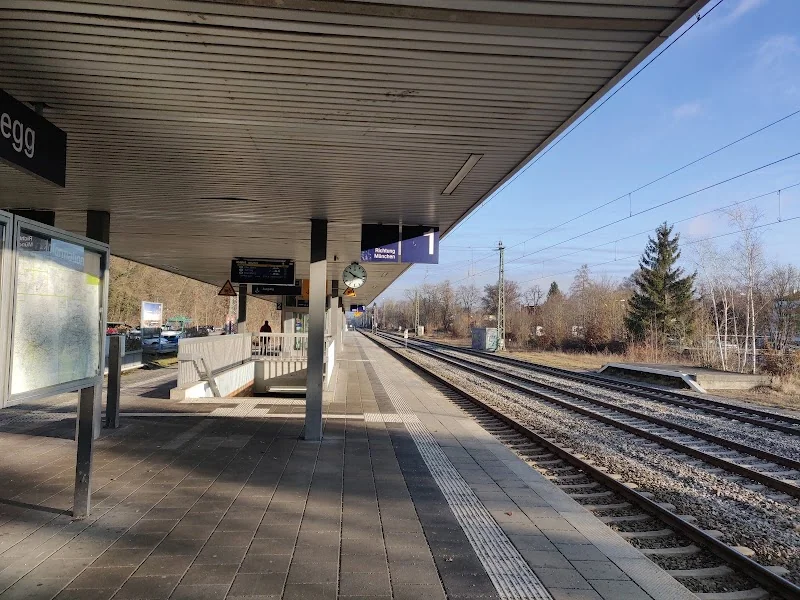
The Planegg station is a pragmatic hub for many routes in the western part of Munich: arriving, transferring, parking, continuing on. The official station information lists the stop as S-Bahn station Planegg (Krailling) with the address Bahnhofstr. 46 in 82152 Planegg and assigns it to zone M/1. On-site, there is a station kiosk, MVV ticket machines, current departure information, and barrier-free access. For visitors, commuters, and residents, this mix of clear location, short distances, and everyday services is crucial. At the same time, the station area itself is undergoing an urban transformation that the municipality of Planegg has been actively promoting since 2023. ([bahnhof.de](https://www.bahnhof.de/planegg-krailling?utm_source=openai))
Those searching for parking at Planegg station, the address of Planegg station, or S-Bahn Planegg usually want to quickly know how to use the location in practice: Where to go, where to get off, where to leave the car, and how to find the platform without detours? The official station and parking information is helpful for exactly that. It not only shows the pure address but also the structure of the surroundings with parking areas, access points, timetable information, and landmarks. Thus, Planegg station is less of an abstract stop and more of a well-documented mobility location where everyday routes can be reliably planned. ([bahnhof.de](https://www.bahnhof.de/planegg-krailling/fahrplan?utm_source=openai))
Address, Location, and Orientation at Planegg Station
Anyone looking for Planegg station should know the official station designation Planegg (Krailling), as this is how the stop appears on bahnhof.de. The address is Bahnhofstr. 46, 82152 Planegg. This is important for navigation, pickup points, and parking searches because the station pages work from different perspectives: timetable, parking, station information, and station plan. The MVV stop overview also assigns the stop to zone M/1, which is practical for classification within the Munich transport network. For passengers who just want to leave quickly, this is the most reliable starting point, as it provides both the location and the fare context at a glance. ([bahnhof.de](https://www.bahnhof.de/planegg-krailling?utm_source=openai))
For spatial orientation, the current station plan is particularly helpful. It marks the area 'Planegg s West', shows the kiosk, ticket machines, bicycle racks, parking lot, disabled parking, and a mobility point. Those looking for west or east side orientation will find the most reliable information not in a general map app but in the official MVV plan, as it makes access points, paths, and transfers visible. The plan also notes a walking time of about 6 to 8 minutes to the S-Bahn platform, making the internal paths on the site tangible and showing that the station is more than just a platform with signage. ([efa.mvv-muenchen.de](https://efa.mvv-muenchen.de/sta2/planegg.pdf))
For practical use, the address itself is also relevant because it provides the best orientation for taxi pickups, short meetings, and directions from the town center. Those entering 'taxi planegg bahnhof' primarily need a clear destination address, and this is neatly documented on the official station pages. Additionally, the linked timetable and orientation pages help ensure that the area around the station is not missed. This makes the station appear organized and close to everyday life: There are no complicated paths, but clear points where one arrives, divides, and continues. ([bahnhof.de](https://www.bahnhof.de/planegg-krailling?utm_source=openai))
Parking at Planegg Station: Park & Ride, Bahnhofweg, and Bahnhofstraße
For the keyword parking at Planegg station, the official pages provide a clear answer: There are two open P+R areas, one on Bahnhofweg with 115 parking spaces and three barrier-free spaces, and one on Bahnhofstraße with 58 parking spaces. Together, this makes 173 parking spaces. Both facilities are classified as open parking options and can be used around the clock. For commuters using the station as a transfer point, this is a significant advantage, as arrival and onward travel can be neatly separated here. Planegg station is thus not only accessible by S-Bahn but also a solid Park-and-Ride location for the daily switch between car and rail. ([bahnhof.de](https://www.bahnhof.de/planegg-krailling/parkplaetze?utm_source=openai))
The access from the parking areas to the platforms is via stairs and lifts. This is not only convenient but also an important point for families with luggage, cyclists with heavy bags, and people who do not want to walk far. The MVV page also shows a utilization forecast for Monday to Thursday, allowing better assessment of when the areas may become full during peak times. Therefore, those traveling to Planegg station during the day benefit from checking not only the address but also the parking situation in advance. Especially in commuter traffic, this transparency makes a noticeable difference as it reduces search traffic and makes arrival more predictable. ([redaktion.mvv-muenchen.de](https://redaktion.mvv-muenchen.de/plaene-bahnhoefe/bahnhofsinformation/station/planegg/index.html))
For people with disabilities, DB generally points out that parking is free for up to 24 hours in unbarriered railway parking facilities with a valid blue or orange special parking permit. In Planegg, this information is particularly relevant because Bahnhofweg has three barrier-free parking spaces, and access to the platform is possible via lift. So, if someone is planning a barrier-free transfer, they should use the combination of parking space, elevator, and step-free access. In practice, this means that parking at Planegg station is not only quantitatively well solved but also structurally designed for short distances and easy use. ([bahnhof.de](https://www.bahnhof.de/planegg-krailling/parkplaetze?utm_source=openai))
Kiosk and Ticket Machines at Planegg Station
The station kiosk is explicitly mentioned as a sales point in the official MVV information. Additionally, there is the MVV ticket machine from DB and the note that MVV monthly tickets can be purchased at the DB machine. So, if someone is traveling spontaneously, they do not necessarily have to rely on an external sales point. However, regarding the keyword question about the kiosk's opening hours, the official station information mentions the kiosk but does not publish opening hours. Therefore, Planegg station should primarily be understood as a functional everyday station, not as a location with a prominent shop offering. The main task of the kiosk is thus clearly in the quick, practical local transport operation. ([redaktion.mvv-muenchen.de](https://redaktion.mvv-muenchen.de/plaene-bahnhoefe/bahnhofsinformation/station/planegg/index.html))
This is typical for many S-Bahn stations in the MVV area: The most important services are directly on-site, while timetables, ticket purchases, and orientation are supplemented digitally or at machines. On bahnhof.de and in the MVV information, one can find current departures, station plans, and information about the surroundings. For users searching for kiosk, tickets, or opening hours, this is a good combination because the paths remain short and the information situation is transparent. Those using Planegg station in everyday life can check tickets, times, and walking routes in just a few steps instead of having to rely on separate sources. ([bahnhof.de](https://www.bahnhof.de/planegg-krailling/fahrplan?utm_source=openai))
Orientation on the platform also benefits from this structure. The MVV plan shows not only the sales points but also the paths to the tracks, the location of the kiosk, bicycle parking options, and the parking spaces. This creates a compact station image that is particularly suitable for commuters and students. Those transferring in Planegg or making a short stop can quickly supply themselves at the station kiosk while also checking the next connection. This makes the station attractive to many users precisely because it appears small and manageable while still covering the most important everyday functions. ([efa.mvv-muenchen.de](https://efa.mvv-muenchen.de/sta2/planegg.pdf))
Accessibility at Planegg Station
According to MVV, Planegg station is barrier-free. Access to the S-Bahn is step-free, and both platforms are designated with a height of 96 centimeters and a length of 211 meters. These values are not just technical details but determine comfort and safety in everyday life: Those traveling with strollers, wheelchairs, walkers, or a lot of luggage can use the stop much more relaxed. Especially at a commuter station, this is a real quality feature because fast paths are only truly fast when they function without obstacles. For many people, this point is crucial when they regularly choose or consciously avoid a station. ([redaktion.mvv-muenchen.de](https://redaktion.mvv-muenchen.de/plaene-bahnhoefe/bahnhofsinformation/station/planegg/index.html))
The surroundings also support this accessibility. The parking areas lead to the platform access via stairs and lifts, and bahnhof.de additionally points to the Mobility Service Centre, which coordinates questions about accessibility, support requests, and assistance services. Those searching in the area of Planegg station east side or west side should use the official station plan, as it reliably shows the pathways and barrier-free access points. Thus, a single stop becomes a well-utilizable mobility location that is not only technically but also practically prepared for various needs. ([redaktion.mvv-muenchen.de](https://redaktion.mvv-muenchen.de/plaene-bahnhoefe/bahnhofsinformation/station/planegg/index.html))
For passengers traveling with reduced mobility, it is also important that the information is not hidden but openly documented. The platform height, the length of the tracks, the location of the elevators, and the service contacts are immediately accessible. This significantly facilitates the preparation for a trip and makes Planegg station suitable for everyday routes as well as occasional visits. So, if someone wants to know in advance whether the transfer on-site works smoothly, they will find more than just a directional arrow on the official station pages. They get a concrete, comprehensible structure of the station with everything necessary for safe use. ([redaktion.mvv-muenchen.de](https://redaktion.mvv-muenchen.de/plaene-bahnhoefe/bahnhofsinformation/station/planegg/index.html))
Departures, Timetables, and Connections to Munich
For the search term Munich Planegg station, the timetable logic is particularly relevant. The bahnhof.de page for Planegg shows live departures and arrivals, the regular timetable, change timetables, and the next departing and arriving S-Bahn trains. Thus, the stop is not just an address but a fully digitally connected transport point where trips can be checked on short notice and planned in the long term. For commuters, this is particularly important when construction sites, deviations, or holiday timetables change. As a result, Planegg is a station where current information significantly simplifies everyday life. ([bahnhof.de](https://www.bahnhof.de/planegg-krailling/fahrplan?utm_source=openai))
The official timetable boards list connections from Planegg towards Gräfelfing and Munich Hbf (deep) as well as in the opposite direction to Stockdorf and Tutzing; additionally, Grafing station, Ebersberg, and Starnberg are also visible in the overview. This clearly shows that Planegg station does not operate in isolation but as part of a longer S-Bahn corridor in the southwestern part of Munich. For those traveling regularly to Munich, this provides a robust, clearly readable timetable structure. This is useful for leisure trips as well as for the daily commute, as departure data can be derived for different destinations without detours. ([bahnhof.de](https://www.bahnhof.de/downloads/schedule/Regeltafel_4949.pdf))
The MVV stop overview complements this with further practical points: current connections, station plan, orientation plan, posted timetable, timetable book, and departure monitor are directly linked. For the search for Planegg station or S-Bahn Planegg, this is the most important added value: The station is not only present on a map but is well documented in the entire information system. So, if someone just needs the next departure quickly, they do not have to search for long. Planegg station is thus an example of how a rather compact S-Bahn station can significantly gain in utility through good information structure. ([redaktion.mvv-muenchen.de](https://redaktion.mvv-muenchen.de/plaene-bahnhoefe/bahnhofsinformation/station/planegg/index.html))
Especially in leisure traffic, this is important because Planegg is not only a commuter station but also functions for excursions towards the center of Munich and the southwestern area. The timetable information shows a network of connections that extends far enough to cover both everyday destinations and weekend trips. Therefore, those living in or visiting the western part of Munich can see Planegg station as a well-structured starting point: out of the town, into the city, and back again, without complicated detours or unclear connection questions. ([bahnhof.de](https://www.bahnhof.de/downloads/schedule/Regeltafel_4949.pdf))
The Station Area in Planegg: Development and Future
The station area in Planegg is a topic that goes far beyond the platform. The municipality of Planegg acquired the former Heide-Volm area in March 2023, laying the foundation for a forward-looking development of the surroundings. On approximately 30,000 square meters, a space is being created that is not only being rethought in terms of transport but also in urban planning. For visitors to the station, this means: The place is not stagnant but is gradually transforming into a more modern, mixed center. This development is particularly interesting for search queries related to Planegg station west or Planegg station address, as it shows the location of the station in a larger local context. ([planegg.de](https://www.planegg.de/rathaus-and-buergerservice/bauen-planen/bauleitplanung/ortsentwicklung/gemeinde-planegg-erwirbt-heide-areal?utm_source=openai))
The current plans foresee a mobility hub directly at the S-Bahn station, including bus stops, a turning loop, and a mobility point. Residential space, local supply, gastronomy, daycare centers, and, to a lesser extent, commercial space are to be added. This mix is important because stations in suburban municipalities today need to do more than just provide access to the tracks. They should connect everyday life, work, living, and transfers. Planegg is developing precisely in this direction, making the station more relevant for the municipality and the surrounding area in the long term. So, anyone who views the station merely as a stop sees too little; in reality, a whole local building block is being reorganized here. ([planegg.de](https://www.planegg.de/aktuelles/modelle-und-plaene-zum-bahnhofsareal-im-rathaus-ausgestellt?utm_source=openai))
In May 2026, the municipality also reported that the concept award for the first construction phase had been completed. New buildings, a spacious open space area with a green terraced structure to the station forecourt, and additional areas for a grocery market, practice, services, and gastronomy are planned. At the same time, the preservation of the tree population plays a role. For Planegg station, this is a strong signal: The station is not only being managed but is actively being developed as a gateway to the municipality. This is precisely why the station often appears in search queries alongside parking, address, kiosk, and orientation, as all these topics are directly related to a changing environment. ([planegg.de](https://www.planegg.de/rathaus-and-buergerservice/bauen-planen/bauleitplanung/ortsentwicklung/gemeinde-planegg-erwirbt-heide-areal/bahnhofsareal-konzeptvergabe-fuer-ersten-bauabschnitt-ist-erfolgt?utm_source=openai))
Those using Planegg station today benefit from clearly documented information and a location that is also evolving. Parking, kiosk, accessibility, platforms, and timetables are already well organized, while the station area promises additional uses, improved quality of stay, and an upgraded forecourt in the future. This means the station is not just a transit location but becomes a reliable, well-connected center for Planegg and its immediate surroundings. This combination of present-day suitability and future orientation makes the location particularly interesting. ([redaktion.mvv-muenchen.de](https://redaktion.mvv-muenchen.de/plaene-bahnhoefe/bahnhofsinformation/station/planegg/index.html))
Sources:
Mehr anzeigenWeniger anzeigen
Planegg Station | Parking & Address
The Planegg station is a pragmatic hub for many routes in the western part of Munich: arriving, transferring, parking, continuing on. The official station information lists the stop as S-Bahn station Planegg (Krailling) with the address Bahnhofstr. 46 in 82152 Planegg and assigns it to zone M/1. On-site, there is a station kiosk, MVV ticket machines, current departure information, and barrier-free access. For visitors, commuters, and residents, this mix of clear location, short distances, and everyday services is crucial. At the same time, the station area itself is undergoing an urban transformation that the municipality of Planegg has been actively promoting since 2023. ([bahnhof.de](https://www.bahnhof.de/planegg-krailling?utm_source=openai))
Those searching for parking at Planegg station, the address of Planegg station, or S-Bahn Planegg usually want to quickly know how to use the location in practice: Where to go, where to get off, where to leave the car, and how to find the platform without detours? The official station and parking information is helpful for exactly that. It not only shows the pure address but also the structure of the surroundings with parking areas, access points, timetable information, and landmarks. Thus, Planegg station is less of an abstract stop and more of a well-documented mobility location where everyday routes can be reliably planned. ([bahnhof.de](https://www.bahnhof.de/planegg-krailling/fahrplan?utm_source=openai))
Address, Location, and Orientation at Planegg Station
Anyone looking for Planegg station should know the official station designation Planegg (Krailling), as this is how the stop appears on bahnhof.de. The address is Bahnhofstr. 46, 82152 Planegg. This is important for navigation, pickup points, and parking searches because the station pages work from different perspectives: timetable, parking, station information, and station plan. The MVV stop overview also assigns the stop to zone M/1, which is practical for classification within the Munich transport network. For passengers who just want to leave quickly, this is the most reliable starting point, as it provides both the location and the fare context at a glance. ([bahnhof.de](https://www.bahnhof.de/planegg-krailling?utm_source=openai))
For spatial orientation, the current station plan is particularly helpful. It marks the area 'Planegg s West', shows the kiosk, ticket machines, bicycle racks, parking lot, disabled parking, and a mobility point. Those looking for west or east side orientation will find the most reliable information not in a general map app but in the official MVV plan, as it makes access points, paths, and transfers visible. The plan also notes a walking time of about 6 to 8 minutes to the S-Bahn platform, making the internal paths on the site tangible and showing that the station is more than just a platform with signage. ([efa.mvv-muenchen.de](https://efa.mvv-muenchen.de/sta2/planegg.pdf))
For practical use, the address itself is also relevant because it provides the best orientation for taxi pickups, short meetings, and directions from the town center. Those entering 'taxi planegg bahnhof' primarily need a clear destination address, and this is neatly documented on the official station pages. Additionally, the linked timetable and orientation pages help ensure that the area around the station is not missed. This makes the station appear organized and close to everyday life: There are no complicated paths, but clear points where one arrives, divides, and continues. ([bahnhof.de](https://www.bahnhof.de/planegg-krailling?utm_source=openai))
Parking at Planegg Station: Park & Ride, Bahnhofweg, and Bahnhofstraße
For the keyword parking at Planegg station, the official pages provide a clear answer: There are two open P+R areas, one on Bahnhofweg with 115 parking spaces and three barrier-free spaces, and one on Bahnhofstraße with 58 parking spaces. Together, this makes 173 parking spaces. Both facilities are classified as open parking options and can be used around the clock. For commuters using the station as a transfer point, this is a significant advantage, as arrival and onward travel can be neatly separated here. Planegg station is thus not only accessible by S-Bahn but also a solid Park-and-Ride location for the daily switch between car and rail. ([bahnhof.de](https://www.bahnhof.de/planegg-krailling/parkplaetze?utm_source=openai))
The access from the parking areas to the platforms is via stairs and lifts. This is not only convenient but also an important point for families with luggage, cyclists with heavy bags, and people who do not want to walk far. The MVV page also shows a utilization forecast for Monday to Thursday, allowing better assessment of when the areas may become full during peak times. Therefore, those traveling to Planegg station during the day benefit from checking not only the address but also the parking situation in advance. Especially in commuter traffic, this transparency makes a noticeable difference as it reduces search traffic and makes arrival more predictable. ([redaktion.mvv-muenchen.de](https://redaktion.mvv-muenchen.de/plaene-bahnhoefe/bahnhofsinformation/station/planegg/index.html))
For people with disabilities, DB generally points out that parking is free for up to 24 hours in unbarriered railway parking facilities with a valid blue or orange special parking permit. In Planegg, this information is particularly relevant because Bahnhofweg has three barrier-free parking spaces, and access to the platform is possible via lift. So, if someone is planning a barrier-free transfer, they should use the combination of parking space, elevator, and step-free access. In practice, this means that parking at Planegg station is not only quantitatively well solved but also structurally designed for short distances and easy use. ([bahnhof.de](https://www.bahnhof.de/planegg-krailling/parkplaetze?utm_source=openai))
Kiosk and Ticket Machines at Planegg Station
The station kiosk is explicitly mentioned as a sales point in the official MVV information. Additionally, there is the MVV ticket machine from DB and the note that MVV monthly tickets can be purchased at the DB machine. So, if someone is traveling spontaneously, they do not necessarily have to rely on an external sales point. However, regarding the keyword question about the kiosk's opening hours, the official station information mentions the kiosk but does not publish opening hours. Therefore, Planegg station should primarily be understood as a functional everyday station, not as a location with a prominent shop offering. The main task of the kiosk is thus clearly in the quick, practical local transport operation. ([redaktion.mvv-muenchen.de](https://redaktion.mvv-muenchen.de/plaene-bahnhoefe/bahnhofsinformation/station/planegg/index.html))
This is typical for many S-Bahn stations in the MVV area: The most important services are directly on-site, while timetables, ticket purchases, and orientation are supplemented digitally or at machines. On bahnhof.de and in the MVV information, one can find current departures, station plans, and information about the surroundings. For users searching for kiosk, tickets, or opening hours, this is a good combination because the paths remain short and the information situation is transparent. Those using Planegg station in everyday life can check tickets, times, and walking routes in just a few steps instead of having to rely on separate sources. ([bahnhof.de](https://www.bahnhof.de/planegg-krailling/fahrplan?utm_source=openai))
Orientation on the platform also benefits from this structure. The MVV plan shows not only the sales points but also the paths to the tracks, the location of the kiosk, bicycle parking options, and the parking spaces. This creates a compact station image that is particularly suitable for commuters and students. Those transferring in Planegg or making a short stop can quickly supply themselves at the station kiosk while also checking the next connection. This makes the station attractive to many users precisely because it appears small and manageable while still covering the most important everyday functions. ([efa.mvv-muenchen.de](https://efa.mvv-muenchen.de/sta2/planegg.pdf))
Accessibility at Planegg Station
According to MVV, Planegg station is barrier-free. Access to the S-Bahn is step-free, and both platforms are designated with a height of 96 centimeters and a length of 211 meters. These values are not just technical details but determine comfort and safety in everyday life: Those traveling with strollers, wheelchairs, walkers, or a lot of luggage can use the stop much more relaxed. Especially at a commuter station, this is a real quality feature because fast paths are only truly fast when they function without obstacles. For many people, this point is crucial when they regularly choose or consciously avoid a station. ([redaktion.mvv-muenchen.de](https://redaktion.mvv-muenchen.de/plaene-bahnhoefe/bahnhofsinformation/station/planegg/index.html))
The surroundings also support this accessibility. The parking areas lead to the platform access via stairs and lifts, and bahnhof.de additionally points to the Mobility Service Centre, which coordinates questions about accessibility, support requests, and assistance services. Those searching in the area of Planegg station east side or west side should use the official station plan, as it reliably shows the pathways and barrier-free access points. Thus, a single stop becomes a well-utilizable mobility location that is not only technically but also practically prepared for various needs. ([redaktion.mvv-muenchen.de](https://redaktion.mvv-muenchen.de/plaene-bahnhoefe/bahnhofsinformation/station/planegg/index.html))
For passengers traveling with reduced mobility, it is also important that the information is not hidden but openly documented. The platform height, the length of the tracks, the location of the elevators, and the service contacts are immediately accessible. This significantly facilitates the preparation for a trip and makes Planegg station suitable for everyday routes as well as occasional visits. So, if someone wants to know in advance whether the transfer on-site works smoothly, they will find more than just a directional arrow on the official station pages. They get a concrete, comprehensible structure of the station with everything necessary for safe use. ([redaktion.mvv-muenchen.de](https://redaktion.mvv-muenchen.de/plaene-bahnhoefe/bahnhofsinformation/station/planegg/index.html))
Departures, Timetables, and Connections to Munich
For the search term Munich Planegg station, the timetable logic is particularly relevant. The bahnhof.de page for Planegg shows live departures and arrivals, the regular timetable, change timetables, and the next departing and arriving S-Bahn trains. Thus, the stop is not just an address but a fully digitally connected transport point where trips can be checked on short notice and planned in the long term. For commuters, this is particularly important when construction sites, deviations, or holiday timetables change. As a result, Planegg is a station where current information significantly simplifies everyday life. ([bahnhof.de](https://www.bahnhof.de/planegg-krailling/fahrplan?utm_source=openai))
The official timetable boards list connections from Planegg towards Gräfelfing and Munich Hbf (deep) as well as in the opposite direction to Stockdorf and Tutzing; additionally, Grafing station, Ebersberg, and Starnberg are also visible in the overview. This clearly shows that Planegg station does not operate in isolation but as part of a longer S-Bahn corridor in the southwestern part of Munich. For those traveling regularly to Munich, this provides a robust, clearly readable timetable structure. This is useful for leisure trips as well as for the daily commute, as departure data can be derived for different destinations without detours. ([bahnhof.de](https://www.bahnhof.de/downloads/schedule/Regeltafel_4949.pdf))
The MVV stop overview complements this with further practical points: current connections, station plan, orientation plan, posted timetable, timetable book, and departure monitor are directly linked. For the search for Planegg station or S-Bahn Planegg, this is the most important added value: The station is not only present on a map but is well documented in the entire information system. So, if someone just needs the next departure quickly, they do not have to search for long. Planegg station is thus an example of how a rather compact S-Bahn station can significantly gain in utility through good information structure. ([redaktion.mvv-muenchen.de](https://redaktion.mvv-muenchen.de/plaene-bahnhoefe/bahnhofsinformation/station/planegg/index.html))
Especially in leisure traffic, this is important because Planegg is not only a commuter station but also functions for excursions towards the center of Munich and the southwestern area. The timetable information shows a network of connections that extends far enough to cover both everyday destinations and weekend trips. Therefore, those living in or visiting the western part of Munich can see Planegg station as a well-structured starting point: out of the town, into the city, and back again, without complicated detours or unclear connection questions. ([bahnhof.de](https://www.bahnhof.de/downloads/schedule/Regeltafel_4949.pdf))
The Station Area in Planegg: Development and Future
The station area in Planegg is a topic that goes far beyond the platform. The municipality of Planegg acquired the former Heide-Volm area in March 2023, laying the foundation for a forward-looking development of the surroundings. On approximately 30,000 square meters, a space is being created that is not only being rethought in terms of transport but also in urban planning. For visitors to the station, this means: The place is not stagnant but is gradually transforming into a more modern, mixed center. This development is particularly interesting for search queries related to Planegg station west or Planegg station address, as it shows the location of the station in a larger local context. ([planegg.de](https://www.planegg.de/rathaus-and-buergerservice/bauen-planen/bauleitplanung/ortsentwicklung/gemeinde-planegg-erwirbt-heide-areal?utm_source=openai))
The current plans foresee a mobility hub directly at the S-Bahn station, including bus stops, a turning loop, and a mobility point. Residential space, local supply, gastronomy, daycare centers, and, to a lesser extent, commercial space are to be added. This mix is important because stations in suburban municipalities today need to do more than just provide access to the tracks. They should connect everyday life, work, living, and transfers. Planegg is developing precisely in this direction, making the station more relevant for the municipality and the surrounding area in the long term. So, anyone who views the station merely as a stop sees too little; in reality, a whole local building block is being reorganized here. ([planegg.de](https://www.planegg.de/aktuelles/modelle-und-plaene-zum-bahnhofsareal-im-rathaus-ausgestellt?utm_source=openai))
In May 2026, the municipality also reported that the concept award for the first construction phase had been completed. New buildings, a spacious open space area with a green terraced structure to the station forecourt, and additional areas for a grocery market, practice, services, and gastronomy are planned. At the same time, the preservation of the tree population plays a role. For Planegg station, this is a strong signal: The station is not only being managed but is actively being developed as a gateway to the municipality. This is precisely why the station often appears in search queries alongside parking, address, kiosk, and orientation, as all these topics are directly related to a changing environment. ([planegg.de](https://www.planegg.de/rathaus-and-buergerservice/bauen-planen/bauleitplanung/ortsentwicklung/gemeinde-planegg-erwirbt-heide-areal/bahnhofsareal-konzeptvergabe-fuer-ersten-bauabschnitt-ist-erfolgt?utm_source=openai))
Those using Planegg station today benefit from clearly documented information and a location that is also evolving. Parking, kiosk, accessibility, platforms, and timetables are already well organized, while the station area promises additional uses, improved quality of stay, and an upgraded forecourt in the future. This means the station is not just a transit location but becomes a reliable, well-connected center for Planegg and its immediate surroundings. This combination of present-day suitability and future orientation makes the location particularly interesting. ([redaktion.mvv-muenchen.de](https://redaktion.mvv-muenchen.de/plaene-bahnhoefe/bahnhofsinformation/station/planegg/index.html))
Sources:
Planegg Station | Parking & Address
The Planegg station is a pragmatic hub for many routes in the western part of Munich: arriving, transferring, parking, continuing on. The official station information lists the stop as S-Bahn station Planegg (Krailling) with the address Bahnhofstr. 46 in 82152 Planegg and assigns it to zone M/1. On-site, there is a station kiosk, MVV ticket machines, current departure information, and barrier-free access. For visitors, commuters, and residents, this mix of clear location, short distances, and everyday services is crucial. At the same time, the station area itself is undergoing an urban transformation that the municipality of Planegg has been actively promoting since 2023. ([bahnhof.de](https://www.bahnhof.de/planegg-krailling?utm_source=openai))
Those searching for parking at Planegg station, the address of Planegg station, or S-Bahn Planegg usually want to quickly know how to use the location in practice: Where to go, where to get off, where to leave the car, and how to find the platform without detours? The official station and parking information is helpful for exactly that. It not only shows the pure address but also the structure of the surroundings with parking areas, access points, timetable information, and landmarks. Thus, Planegg station is less of an abstract stop and more of a well-documented mobility location where everyday routes can be reliably planned. ([bahnhof.de](https://www.bahnhof.de/planegg-krailling/fahrplan?utm_source=openai))
Address, Location, and Orientation at Planegg Station
Anyone looking for Planegg station should know the official station designation Planegg (Krailling), as this is how the stop appears on bahnhof.de. The address is Bahnhofstr. 46, 82152 Planegg. This is important for navigation, pickup points, and parking searches because the station pages work from different perspectives: timetable, parking, station information, and station plan. The MVV stop overview also assigns the stop to zone M/1, which is practical for classification within the Munich transport network. For passengers who just want to leave quickly, this is the most reliable starting point, as it provides both the location and the fare context at a glance. ([bahnhof.de](https://www.bahnhof.de/planegg-krailling?utm_source=openai))
For spatial orientation, the current station plan is particularly helpful. It marks the area 'Planegg s West', shows the kiosk, ticket machines, bicycle racks, parking lot, disabled parking, and a mobility point. Those looking for west or east side orientation will find the most reliable information not in a general map app but in the official MVV plan, as it makes access points, paths, and transfers visible. The plan also notes a walking time of about 6 to 8 minutes to the S-Bahn platform, making the internal paths on the site tangible and showing that the station is more than just a platform with signage. ([efa.mvv-muenchen.de](https://efa.mvv-muenchen.de/sta2/planegg.pdf))
For practical use, the address itself is also relevant because it provides the best orientation for taxi pickups, short meetings, and directions from the town center. Those entering 'taxi planegg bahnhof' primarily need a clear destination address, and this is neatly documented on the official station pages. Additionally, the linked timetable and orientation pages help ensure that the area around the station is not missed. This makes the station appear organized and close to everyday life: There are no complicated paths, but clear points where one arrives, divides, and continues. ([bahnhof.de](https://www.bahnhof.de/planegg-krailling?utm_source=openai))
Parking at Planegg Station: Park & Ride, Bahnhofweg, and Bahnhofstraße
For the keyword parking at Planegg station, the official pages provide a clear answer: There are two open P+R areas, one on Bahnhofweg with 115 parking spaces and three barrier-free spaces, and one on Bahnhofstraße with 58 parking spaces. Together, this makes 173 parking spaces. Both facilities are classified as open parking options and can be used around the clock. For commuters using the station as a transfer point, this is a significant advantage, as arrival and onward travel can be neatly separated here. Planegg station is thus not only accessible by S-Bahn but also a solid Park-and-Ride location for the daily switch between car and rail. ([bahnhof.de](https://www.bahnhof.de/planegg-krailling/parkplaetze?utm_source=openai))
The access from the parking areas to the platforms is via stairs and lifts. This is not only convenient but also an important point for families with luggage, cyclists with heavy bags, and people who do not want to walk far. The MVV page also shows a utilization forecast for Monday to Thursday, allowing better assessment of when the areas may become full during peak times. Therefore, those traveling to Planegg station during the day benefit from checking not only the address but also the parking situation in advance. Especially in commuter traffic, this transparency makes a noticeable difference as it reduces search traffic and makes arrival more predictable. ([redaktion.mvv-muenchen.de](https://redaktion.mvv-muenchen.de/plaene-bahnhoefe/bahnhofsinformation/station/planegg/index.html))
For people with disabilities, DB generally points out that parking is free for up to 24 hours in unbarriered railway parking facilities with a valid blue or orange special parking permit. In Planegg, this information is particularly relevant because Bahnhofweg has three barrier-free parking spaces, and access to the platform is possible via lift. So, if someone is planning a barrier-free transfer, they should use the combination of parking space, elevator, and step-free access. In practice, this means that parking at Planegg station is not only quantitatively well solved but also structurally designed for short distances and easy use. ([bahnhof.de](https://www.bahnhof.de/planegg-krailling/parkplaetze?utm_source=openai))
Kiosk and Ticket Machines at Planegg Station
The station kiosk is explicitly mentioned as a sales point in the official MVV information. Additionally, there is the MVV ticket machine from DB and the note that MVV monthly tickets can be purchased at the DB machine. So, if someone is traveling spontaneously, they do not necessarily have to rely on an external sales point. However, regarding the keyword question about the kiosk's opening hours, the official station information mentions the kiosk but does not publish opening hours. Therefore, Planegg station should primarily be understood as a functional everyday station, not as a location with a prominent shop offering. The main task of the kiosk is thus clearly in the quick, practical local transport operation. ([redaktion.mvv-muenchen.de](https://redaktion.mvv-muenchen.de/plaene-bahnhoefe/bahnhofsinformation/station/planegg/index.html))
This is typical for many S-Bahn stations in the MVV area: The most important services are directly on-site, while timetables, ticket purchases, and orientation are supplemented digitally or at machines. On bahnhof.de and in the MVV information, one can find current departures, station plans, and information about the surroundings. For users searching for kiosk, tickets, or opening hours, this is a good combination because the paths remain short and the information situation is transparent. Those using Planegg station in everyday life can check tickets, times, and walking routes in just a few steps instead of having to rely on separate sources. ([bahnhof.de](https://www.bahnhof.de/planegg-krailling/fahrplan?utm_source=openai))
Orientation on the platform also benefits from this structure. The MVV plan shows not only the sales points but also the paths to the tracks, the location of the kiosk, bicycle parking options, and the parking spaces. This creates a compact station image that is particularly suitable for commuters and students. Those transferring in Planegg or making a short stop can quickly supply themselves at the station kiosk while also checking the next connection. This makes the station attractive to many users precisely because it appears small and manageable while still covering the most important everyday functions. ([efa.mvv-muenchen.de](https://efa.mvv-muenchen.de/sta2/planegg.pdf))
Accessibility at Planegg Station
According to MVV, Planegg station is barrier-free. Access to the S-Bahn is step-free, and both platforms are designated with a height of 96 centimeters and a length of 211 meters. These values are not just technical details but determine comfort and safety in everyday life: Those traveling with strollers, wheelchairs, walkers, or a lot of luggage can use the stop much more relaxed. Especially at a commuter station, this is a real quality feature because fast paths are only truly fast when they function without obstacles. For many people, this point is crucial when they regularly choose or consciously avoid a station. ([redaktion.mvv-muenchen.de](https://redaktion.mvv-muenchen.de/plaene-bahnhoefe/bahnhofsinformation/station/planegg/index.html))
The surroundings also support this accessibility. The parking areas lead to the platform access via stairs and lifts, and bahnhof.de additionally points to the Mobility Service Centre, which coordinates questions about accessibility, support requests, and assistance services. Those searching in the area of Planegg station east side or west side should use the official station plan, as it reliably shows the pathways and barrier-free access points. Thus, a single stop becomes a well-utilizable mobility location that is not only technically but also practically prepared for various needs. ([redaktion.mvv-muenchen.de](https://redaktion.mvv-muenchen.de/plaene-bahnhoefe/bahnhofsinformation/station/planegg/index.html))
For passengers traveling with reduced mobility, it is also important that the information is not hidden but openly documented. The platform height, the length of the tracks, the location of the elevators, and the service contacts are immediately accessible. This significantly facilitates the preparation for a trip and makes Planegg station suitable for everyday routes as well as occasional visits. So, if someone wants to know in advance whether the transfer on-site works smoothly, they will find more than just a directional arrow on the official station pages. They get a concrete, comprehensible structure of the station with everything necessary for safe use. ([redaktion.mvv-muenchen.de](https://redaktion.mvv-muenchen.de/plaene-bahnhoefe/bahnhofsinformation/station/planegg/index.html))
Departures, Timetables, and Connections to Munich
For the search term Munich Planegg station, the timetable logic is particularly relevant. The bahnhof.de page for Planegg shows live departures and arrivals, the regular timetable, change timetables, and the next departing and arriving S-Bahn trains. Thus, the stop is not just an address but a fully digitally connected transport point where trips can be checked on short notice and planned in the long term. For commuters, this is particularly important when construction sites, deviations, or holiday timetables change. As a result, Planegg is a station where current information significantly simplifies everyday life. ([bahnhof.de](https://www.bahnhof.de/planegg-krailling/fahrplan?utm_source=openai))
The official timetable boards list connections from Planegg towards Gräfelfing and Munich Hbf (deep) as well as in the opposite direction to Stockdorf and Tutzing; additionally, Grafing station, Ebersberg, and Starnberg are also visible in the overview. This clearly shows that Planegg station does not operate in isolation but as part of a longer S-Bahn corridor in the southwestern part of Munich. For those traveling regularly to Munich, this provides a robust, clearly readable timetable structure. This is useful for leisure trips as well as for the daily commute, as departure data can be derived for different destinations without detours. ([bahnhof.de](https://www.bahnhof.de/downloads/schedule/Regeltafel_4949.pdf))
The MVV stop overview complements this with further practical points: current connections, station plan, orientation plan, posted timetable, timetable book, and departure monitor are directly linked. For the search for Planegg station or S-Bahn Planegg, this is the most important added value: The station is not only present on a map but is well documented in the entire information system. So, if someone just needs the next departure quickly, they do not have to search for long. Planegg station is thus an example of how a rather compact S-Bahn station can significantly gain in utility through good information structure. ([redaktion.mvv-muenchen.de](https://redaktion.mvv-muenchen.de/plaene-bahnhoefe/bahnhofsinformation/station/planegg/index.html))
Especially in leisure traffic, this is important because Planegg is not only a commuter station but also functions for excursions towards the center of Munich and the southwestern area. The timetable information shows a network of connections that extends far enough to cover both everyday destinations and weekend trips. Therefore, those living in or visiting the western part of Munich can see Planegg station as a well-structured starting point: out of the town, into the city, and back again, without complicated detours or unclear connection questions. ([bahnhof.de](https://www.bahnhof.de/downloads/schedule/Regeltafel_4949.pdf))
The Station Area in Planegg: Development and Future
The station area in Planegg is a topic that goes far beyond the platform. The municipality of Planegg acquired the former Heide-Volm area in March 2023, laying the foundation for a forward-looking development of the surroundings. On approximately 30,000 square meters, a space is being created that is not only being rethought in terms of transport but also in urban planning. For visitors to the station, this means: The place is not stagnant but is gradually transforming into a more modern, mixed center. This development is particularly interesting for search queries related to Planegg station west or Planegg station address, as it shows the location of the station in a larger local context. ([planegg.de](https://www.planegg.de/rathaus-and-buergerservice/bauen-planen/bauleitplanung/ortsentwicklung/gemeinde-planegg-erwirbt-heide-areal?utm_source=openai))
The current plans foresee a mobility hub directly at the S-Bahn station, including bus stops, a turning loop, and a mobility point. Residential space, local supply, gastronomy, daycare centers, and, to a lesser extent, commercial space are to be added. This mix is important because stations in suburban municipalities today need to do more than just provide access to the tracks. They should connect everyday life, work, living, and transfers. Planegg is developing precisely in this direction, making the station more relevant for the municipality and the surrounding area in the long term. So, anyone who views the station merely as a stop sees too little; in reality, a whole local building block is being reorganized here. ([planegg.de](https://www.planegg.de/aktuelles/modelle-und-plaene-zum-bahnhofsareal-im-rathaus-ausgestellt?utm_source=openai))
In May 2026, the municipality also reported that the concept award for the first construction phase had been completed. New buildings, a spacious open space area with a green terraced structure to the station forecourt, and additional areas for a grocery market, practice, services, and gastronomy are planned. At the same time, the preservation of the tree population plays a role. For Planegg station, this is a strong signal: The station is not only being managed but is actively being developed as a gateway to the municipality. This is precisely why the station often appears in search queries alongside parking, address, kiosk, and orientation, as all these topics are directly related to a changing environment. ([planegg.de](https://www.planegg.de/rathaus-and-buergerservice/bauen-planen/bauleitplanung/ortsentwicklung/gemeinde-planegg-erwirbt-heide-areal/bahnhofsareal-konzeptvergabe-fuer-ersten-bauabschnitt-ist-erfolgt?utm_source=openai))
Those using Planegg station today benefit from clearly documented information and a location that is also evolving. Parking, kiosk, accessibility, platforms, and timetables are already well organized, while the station area promises additional uses, improved quality of stay, and an upgraded forecourt in the future. This means the station is not just a transit location but becomes a reliable, well-connected center for Planegg and its immediate surroundings. This combination of present-day suitability and future orientation makes the location particularly interesting. ([redaktion.mvv-muenchen.de](https://redaktion.mvv-muenchen.de/plaene-bahnhoefe/bahnhofsinformation/station/planegg/index.html))
Sources:
Frequently Asked Questions
Reviews
No reviews found