
München
Prinzregentenstraße 3, 80538 München, Deutschland
Bavarian National Museum | Opening Hours & Tickets
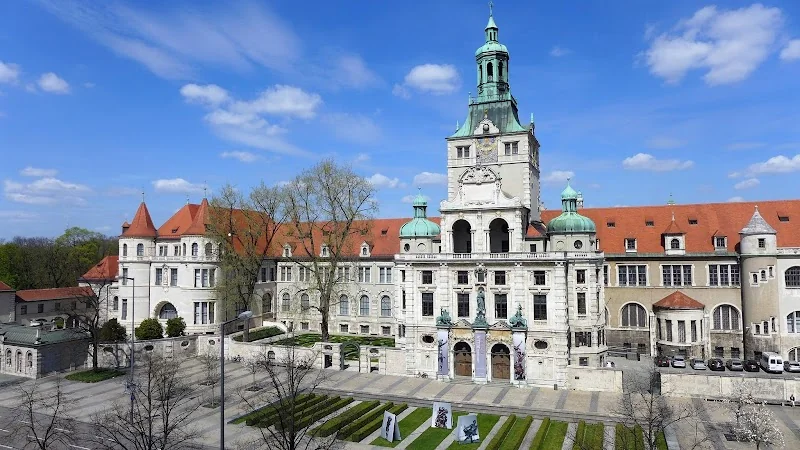
The Bavarian National Museum in Munich is one of the largest museums in Germany and is much more than a classic art house: it is a treasure trove of European cultural history from a Bavarian perspective. Those who enter the magnificent building on Prinzregentenstraße experience art from late antiquity to Art Nouveau, historical room ensembles, goldsmithing, porcelain, weapons, furniture, costumes, nativity scenes, and much more. The official museum philosophy combines preservation, research, communication, and renewal, which is why a visit today feels both traditional and contemporary. In addition to the permanent exhibition, special and studio exhibitions are regularly highlighted, currently including the exhibition Ephemeris featuring photographs by Georg Tappeiner. This makes the museum suitable for both a focused visit and a longer cultural stroll through several epochs. The mix of historical substance, ongoing modernization, and digital offerings such as the online collection is particularly strong. Those looking for opening hours, tickets, directions, guided tours, or a good plan for their visit will find a museum with clear service information and a very broad thematic spectrum. ([bayerisches-nationalmuseum.de](https://www.bayerisches-nationalmuseum.de/besuch))
Opening Hours, Admission, and Tickets
For planning a visit, the opening hours of the Bavarian National Museum are very clearly regulated: On Tuesdays and Wednesdays, the museum is open from 10 AM to 5 PM, Thursdays from 10 AM to 8 PM, and Fridays to Sundays again from 10 AM to 5 PM. The museum is closed on Mondays. On holidays, special hours apply, so it is always worth taking a quick look at the current visiting page before your visit, especially if the trip is to take place on a holiday or during a vacation week. This is particularly important because the museum also informs its visitors about structural and content-related changes. Certain collection areas may be temporarily closed due to renovation work, while highlights are presented elsewhere. This keeps the tour exciting, even if not every hall is accessible at all times. Those who want to combine the opening hours with a fixed daily program can use Thursday for a longer museum evening or plan Sunday for a compact cultural visit with reduced admission. ([bayerisches-nationalmuseum.de](https://www.bayerisches-nationalmuseum.de/besuch))
For admission, the museum relies on a transparent system: Adults pay 7 euros, reduced tickets cost 6 euros, and on Sundays only 1 euro. Children and young people under 18 have free admission. The standard ticket includes the permanent exhibition, the Bollert collection, the studio exhibition, and the current special exhibition. The multimedia guide is generally included in the admission price; only on Sundays and with free admission is there a small additional fee. For regular visitors, the annual pass is also interesting: it costs 45 euros, is valid for one year for one person, and is only available at the museum ticket office. Practically for SEO planning, it is also noteworthy that admission not only provides art but also service quality, as the museum combines large historical collections with clear visitor information, cloakroom, lockers, and barrier-free access. Additionally, current information about closed collection areas, such as in Romanesque, historicism, Art Nouveau, and pottery, makes the visit more realistic and better planned. ([bayerisches-nationalmuseum.de](https://www.bayerisches-nationalmuseum.de/besuch))
Directions, Address, and Parking
The address of the Bavarian National Museum is Prinzregentenstraße 3, 80538 Munich. Those arriving by public transport can conveniently reach the museum via the U-Bahn lines U4 and U5 to Lehel. From there, it is about a five-minute walk. Additionally, tram line 16 stops at the Nationalmuseum/Haus der Kunst station, as does bus 100 on the museum line. For visitors, this location is ideal as it places the museum in a culturally dense part of the city and connects well to Munich's infrastructure. Especially for a day trip, arriving by U-Bahn or bus is recommended, as this allows for a stress-free museum visit combined with a walk through the surrounding area. The official visitor information clearly emphasizes this accessibility and adds directions regarding barrier-free access and entry situations. Thus, getting there is not only a matter of address but also a question of the best visiting logic: those who want to arrive relaxed should plan their route via public transport and start their tour directly at the main entrance. ([bayerisches-nationalmuseum.de](https://www.bayerisches-nationalmuseum.de/besuch))
When it comes to parking, it is important to distinguish between general visitor wishes and the officially designated options. Directly to the right of the main entrance, there are two free disabled parking spaces available in the museum's own parking lot. For guests of the café and restaurant MUSEUM, there is an additional restaurant-owned parking lot accessible via Lerchenfeldstraße. Furthermore, the museum points out with its access and service information that lockers are available in the gate area and at the cloakroom in the foyer, which makes the museum stay more pleasant when jackets, bags, or suitcases are brought along. The entrance via the ramp in the courtyard also facilitates access for persons with mobility impairments. Therefore, those who want to answer the question of parking in a search engine optimized and correct manner should adopt the official line of the museum: There are clear special solutions, but no blanket statement about large visitor parking spaces directly at the main entrance. This makes the location particularly suitable for arriving by public transport and for a visit that is consciously planned without searching for parking. ([bayerisches-nationalmuseum.de](https://www.bayerisches-nationalmuseum.de/besuch))
Guided Tours, Programs, and Current Exhibitions
A central keyword surrounding the Bavarian National Museum is the program, and this is where the museum showcases its strengths. The offerings range from workshops to children's and family formats, music events, inclusivity offerings, and special actions such as children's birthdays. Those who want to not only view the museum but actively experience it will find a mix of learning, participation, and wonder in the official program. Particularly attractive are the regular public guided tours: they take place on Thursdays at 6 PM, with the format Kunstgenuss and Sundowner already at 5 PM, as well as Sundays at 11 AM. The duration is about 60 minutes, and participation is included in the admission price. Thus, the museum is not only a place for quiet contemplation but also a place for communication and dialogue. Groups can additionally book individual tours for up to 20 people per guide. German and other foreign languages are available, making the museum interesting for travel groups, circles of friends, and cultural educational trips. Booking should be made at least eight days in advance. ([bayerisches-nationalmuseum.de](https://www.bayerisches-nationalmuseum.de/besuch))
The exhibitions are also important for the content strategy because they constantly reposition the museum. According to the official exhibition page, special and studio exhibitions highlight peaks in the museum year and bridge the gap between past and present. Currently, the special exhibition Ephemeris is on display, a presentation of photographs by Georg Tappeiner with the subtitle Dolomites | Wadden Sea. Additionally, the broad spectrum of permanent collections ranges from medieval sculpture to porcelain, goldsmithing, and weapons to clothing, furniture, and everyday culture. The museum's program also includes events such as summer festivals, the Long Night of Museums, themed days, and the Carnival Ball. For SEO and visitor guidance, this is particularly valuable because search queries like program, exhibitions, and tours do not remain abstract but are filled with concrete experiences. The Bavarian National Museum is thus not a rigid institution but a dynamic place where changing themes, current research, and a lively event year mutually reinforce each other. ([bayerisches-nationalmuseum.de](https://www.bayerisches-nationalmuseum.de/besuch/ausstellungen))
Online Collection, Plan, and Orientation in the Museum
Those looking for the online collection will find a particularly strong digital offering at the Bavarian National Museum. Currently, 68,516 objects are accessible online. The platform is continuously expanded, supplemented, and updated and includes not only the works exhibited in the museum but also depot stocks and the collections of the nine branch museums. For research, a full-text search and an extended search are available, with object information taken directly from the internal research database. This is attractive for visitors, researchers, and culture enthusiasts alike, as it expands the museum's reach far beyond the physical visit. At the same time, the online collection is only available in German, which is an important, genuine note for SEO text creation. So, those who want to dive deeper into individual objects before their visit will find a solid foundation for their tour through the museum or for a later return. Especially in a museum with such a broad thematic spectrum, the digital collection serves as a kind of preliminary planning of one's own museum route. ([bayerisches-nationalmuseum.de](https://www.bayerisches-nationalmuseum.de/sammlung/sammlung-online?utm_source=openai))
The official visitor information is also helpful regarding planning and photos. The museum generally allows photography inside the building and in special exhibitions, as long as the respective artworks are not explicitly marked as non-photographable. Flash devices, additional lighting, tripods, and selfie sticks are not permitted. For orientation on-site, the accessibility information and room closure notices provide a realistic planning framework. Barrier-free access to the collection areas is guaranteed, but some rooms on the main floor are not fully barrier-free accessible, and the basement with parts of the nativity scene collection as well as other areas on the main floor may not always be visited without steps. Folding chairs are available as mobile seating options, assistance dogs are allowed with identification and proof, and lockers are located on the ground floor. Therefore, those who prepare well for their museum visit not only use the online collection but also the current accessibility information. This fulfills the theme of planning in both a literal and practical sense: inform digitally in advance, discover structured on-site, and choose the route through the museum based on the currently open rooms. ([bayerisches-nationalmuseum.de](https://www.bayerisches-nationalmuseum.de/besuch))
Café, Restaurant, and On-site Service
The café and restaurant MUSEUM is a real added value for the visit and is explicitly anchored in the visitor communication of the house. Under generous vaults, elegantly furnished rooms invite guests to take a break during their museum visit. Coffee, tea, homemade cakes, and an excellent lunch menu are offered. In the evening, a seasonal Mediterranean cuisine with a good wine list complements the offerings, making the place interesting not only for a museum visit but also for a meal for two, a meeting with friends, or a business lunch. The terrace is particularly strong: on summer days, it is considered one of the most beautiful gastronomic terraces in Munich and offers a view of the Narcissus Fountain and the cozy columned walkway. For the search intent café and restaurant, there is thus a real quality proof, as the house offers not only art but also reliable gastronomy with its own character. Those planning a longer stay can easily combine the museum tour with a culinary break. ([bayerisches-nationalmuseum.de](https://www.bayerisches-nationalmuseum.de/besuch))
The service on-site goes beyond food and drink. The museum shop is currently temporarily closed, but publications and selected postcards are available directly in the foyer at the museum ticket office or can be ordered through the website. The museum also points out the cloakroom and lockers, which is helpful for visitors with jackets, backpacks, or bags. Families, groups, and day guests particularly benefit from this, as it makes the tour more relaxed. Additionally, there are clear indications regarding pets in the house, assistance dogs, accessibility, and available seating options. These details are also relevant for SEO because they not only provide general information but also answer specific visitor questions. Therefore, those traveling to Munich to experience the Bavarian National Museum receive not only exhibitions and guided tours but a complete visitor experience with gastronomy, service, and practical solutions for their stay. This mix of culture, comfort, and good organization makes the place attractive for various target groups. ([bayerisches-nationalmuseum.de](https://www.bayerisches-nationalmuseum.de/besuch))
History and Architecture of the Bavarian National Museum
The history of the Bavarian National Museum begins in the 19th century with an idea that went far beyond a single building. Already after the death of Max I. Joseph in 1825, plans circulated for a national museum dedicated to the history and culture of the peoples ruled by the Wittelsbachs and the ruling house. King Maximilian II picked up this idea, founded the museum in 1855, and made it a monument to his dynasty. Initially, Maxburg was the domicile, but soon the space became too small. Therefore, a first independent museum building was constructed starting in 1858, before the new building on the present-day Prinzregentenstraße was decided in 1892. After the competition, Gabriel von Seidl won, the foundation stone was laid in 1894, and the new building was inaugurated by Prince Regent Luitpold on September 29, 1900. Seidl's architecture combined historical styles into a representative total work of art and gave the museum the distinctive presence that characterizes it to this day. Its location on Prinzregentenstraße, near the English Garden, early made the house an urban landmark. ([bayerisches-nationalmuseum.de](https://www.bayerisches-nationalmuseum.de/museum/geschichte-des-museums))
In the 20th and 21st centuries, the museum continuously developed further. After war destruction, reconstruction began as early as 1945, and by the centenary celebration in 1955, it was largely completed. Between 1968 and 1972, the originally daylight museum building was electrified, and later expansions created space for restoration workshops and studios. At the same time, the collection grew through significant acquisitions such as the Rudolf Kriss collection, the Oehl pottery collection, the Reuschel collection, the Ernst Schneider Meissen porcelain collection, the Williams collection, and the Bollert collection. Thematically, the house stands for an exceptionally broad collection arc: medieval art, Renaissance, Baroque, Rococo, and Art Nouveau, complemented by porcelain, costumes, furniture, weapons, musical instruments, and everyday culture. Particularly famous is the nativity scene collection, which attracts large audiences during the pre-Christmas season, as well as the global significance of online and object research, which leads the museum far into the digital present. Understanding the history allows one to read today's exhibition not just as a collection of beautiful objects but as a developed cultural narrative about Bavaria, Europe, and the role of the museum as a place of knowledge. ([bayerisches-nationalmuseum.de](https://www.bayerisches-nationalmuseum.de/museum/geschichte-des-museums))
Sources:
Show moreShow less
Bavarian National Museum | Opening Hours & Tickets
The Bavarian National Museum in Munich is one of the largest museums in Germany and is much more than a classic art house: it is a treasure trove of European cultural history from a Bavarian perspective. Those who enter the magnificent building on Prinzregentenstraße experience art from late antiquity to Art Nouveau, historical room ensembles, goldsmithing, porcelain, weapons, furniture, costumes, nativity scenes, and much more. The official museum philosophy combines preservation, research, communication, and renewal, which is why a visit today feels both traditional and contemporary. In addition to the permanent exhibition, special and studio exhibitions are regularly highlighted, currently including the exhibition Ephemeris featuring photographs by Georg Tappeiner. This makes the museum suitable for both a focused visit and a longer cultural stroll through several epochs. The mix of historical substance, ongoing modernization, and digital offerings such as the online collection is particularly strong. Those looking for opening hours, tickets, directions, guided tours, or a good plan for their visit will find a museum with clear service information and a very broad thematic spectrum. ([bayerisches-nationalmuseum.de](https://www.bayerisches-nationalmuseum.de/besuch))
Opening Hours, Admission, and Tickets
For planning a visit, the opening hours of the Bavarian National Museum are very clearly regulated: On Tuesdays and Wednesdays, the museum is open from 10 AM to 5 PM, Thursdays from 10 AM to 8 PM, and Fridays to Sundays again from 10 AM to 5 PM. The museum is closed on Mondays. On holidays, special hours apply, so it is always worth taking a quick look at the current visiting page before your visit, especially if the trip is to take place on a holiday or during a vacation week. This is particularly important because the museum also informs its visitors about structural and content-related changes. Certain collection areas may be temporarily closed due to renovation work, while highlights are presented elsewhere. This keeps the tour exciting, even if not every hall is accessible at all times. Those who want to combine the opening hours with a fixed daily program can use Thursday for a longer museum evening or plan Sunday for a compact cultural visit with reduced admission. ([bayerisches-nationalmuseum.de](https://www.bayerisches-nationalmuseum.de/besuch))
For admission, the museum relies on a transparent system: Adults pay 7 euros, reduced tickets cost 6 euros, and on Sundays only 1 euro. Children and young people under 18 have free admission. The standard ticket includes the permanent exhibition, the Bollert collection, the studio exhibition, and the current special exhibition. The multimedia guide is generally included in the admission price; only on Sundays and with free admission is there a small additional fee. For regular visitors, the annual pass is also interesting: it costs 45 euros, is valid for one year for one person, and is only available at the museum ticket office. Practically for SEO planning, it is also noteworthy that admission not only provides art but also service quality, as the museum combines large historical collections with clear visitor information, cloakroom, lockers, and barrier-free access. Additionally, current information about closed collection areas, such as in Romanesque, historicism, Art Nouveau, and pottery, makes the visit more realistic and better planned. ([bayerisches-nationalmuseum.de](https://www.bayerisches-nationalmuseum.de/besuch))
Directions, Address, and Parking
The address of the Bavarian National Museum is Prinzregentenstraße 3, 80538 Munich. Those arriving by public transport can conveniently reach the museum via the U-Bahn lines U4 and U5 to Lehel. From there, it is about a five-minute walk. Additionally, tram line 16 stops at the Nationalmuseum/Haus der Kunst station, as does bus 100 on the museum line. For visitors, this location is ideal as it places the museum in a culturally dense part of the city and connects well to Munich's infrastructure. Especially for a day trip, arriving by U-Bahn or bus is recommended, as this allows for a stress-free museum visit combined with a walk through the surrounding area. The official visitor information clearly emphasizes this accessibility and adds directions regarding barrier-free access and entry situations. Thus, getting there is not only a matter of address but also a question of the best visiting logic: those who want to arrive relaxed should plan their route via public transport and start their tour directly at the main entrance. ([bayerisches-nationalmuseum.de](https://www.bayerisches-nationalmuseum.de/besuch))
When it comes to parking, it is important to distinguish between general visitor wishes and the officially designated options. Directly to the right of the main entrance, there are two free disabled parking spaces available in the museum's own parking lot. For guests of the café and restaurant MUSEUM, there is an additional restaurant-owned parking lot accessible via Lerchenfeldstraße. Furthermore, the museum points out with its access and service information that lockers are available in the gate area and at the cloakroom in the foyer, which makes the museum stay more pleasant when jackets, bags, or suitcases are brought along. The entrance via the ramp in the courtyard also facilitates access for persons with mobility impairments. Therefore, those who want to answer the question of parking in a search engine optimized and correct manner should adopt the official line of the museum: There are clear special solutions, but no blanket statement about large visitor parking spaces directly at the main entrance. This makes the location particularly suitable for arriving by public transport and for a visit that is consciously planned without searching for parking. ([bayerisches-nationalmuseum.de](https://www.bayerisches-nationalmuseum.de/besuch))
Guided Tours, Programs, and Current Exhibitions
A central keyword surrounding the Bavarian National Museum is the program, and this is where the museum showcases its strengths. The offerings range from workshops to children's and family formats, music events, inclusivity offerings, and special actions such as children's birthdays. Those who want to not only view the museum but actively experience it will find a mix of learning, participation, and wonder in the official program. Particularly attractive are the regular public guided tours: they take place on Thursdays at 6 PM, with the format Kunstgenuss and Sundowner already at 5 PM, as well as Sundays at 11 AM. The duration is about 60 minutes, and participation is included in the admission price. Thus, the museum is not only a place for quiet contemplation but also a place for communication and dialogue. Groups can additionally book individual tours for up to 20 people per guide. German and other foreign languages are available, making the museum interesting for travel groups, circles of friends, and cultural educational trips. Booking should be made at least eight days in advance. ([bayerisches-nationalmuseum.de](https://www.bayerisches-nationalmuseum.de/besuch))
The exhibitions are also important for the content strategy because they constantly reposition the museum. According to the official exhibition page, special and studio exhibitions highlight peaks in the museum year and bridge the gap between past and present. Currently, the special exhibition Ephemeris is on display, a presentation of photographs by Georg Tappeiner with the subtitle Dolomites | Wadden Sea. Additionally, the broad spectrum of permanent collections ranges from medieval sculpture to porcelain, goldsmithing, and weapons to clothing, furniture, and everyday culture. The museum's program also includes events such as summer festivals, the Long Night of Museums, themed days, and the Carnival Ball. For SEO and visitor guidance, this is particularly valuable because search queries like program, exhibitions, and tours do not remain abstract but are filled with concrete experiences. The Bavarian National Museum is thus not a rigid institution but a dynamic place where changing themes, current research, and a lively event year mutually reinforce each other. ([bayerisches-nationalmuseum.de](https://www.bayerisches-nationalmuseum.de/besuch/ausstellungen))
Online Collection, Plan, and Orientation in the Museum
Those looking for the online collection will find a particularly strong digital offering at the Bavarian National Museum. Currently, 68,516 objects are accessible online. The platform is continuously expanded, supplemented, and updated and includes not only the works exhibited in the museum but also depot stocks and the collections of the nine branch museums. For research, a full-text search and an extended search are available, with object information taken directly from the internal research database. This is attractive for visitors, researchers, and culture enthusiasts alike, as it expands the museum's reach far beyond the physical visit. At the same time, the online collection is only available in German, which is an important, genuine note for SEO text creation. So, those who want to dive deeper into individual objects before their visit will find a solid foundation for their tour through the museum or for a later return. Especially in a museum with such a broad thematic spectrum, the digital collection serves as a kind of preliminary planning of one's own museum route. ([bayerisches-nationalmuseum.de](https://www.bayerisches-nationalmuseum.de/sammlung/sammlung-online?utm_source=openai))
The official visitor information is also helpful regarding planning and photos. The museum generally allows photography inside the building and in special exhibitions, as long as the respective artworks are not explicitly marked as non-photographable. Flash devices, additional lighting, tripods, and selfie sticks are not permitted. For orientation on-site, the accessibility information and room closure notices provide a realistic planning framework. Barrier-free access to the collection areas is guaranteed, but some rooms on the main floor are not fully barrier-free accessible, and the basement with parts of the nativity scene collection as well as other areas on the main floor may not always be visited without steps. Folding chairs are available as mobile seating options, assistance dogs are allowed with identification and proof, and lockers are located on the ground floor. Therefore, those who prepare well for their museum visit not only use the online collection but also the current accessibility information. This fulfills the theme of planning in both a literal and practical sense: inform digitally in advance, discover structured on-site, and choose the route through the museum based on the currently open rooms. ([bayerisches-nationalmuseum.de](https://www.bayerisches-nationalmuseum.de/besuch))
Café, Restaurant, and On-site Service
The café and restaurant MUSEUM is a real added value for the visit and is explicitly anchored in the visitor communication of the house. Under generous vaults, elegantly furnished rooms invite guests to take a break during their museum visit. Coffee, tea, homemade cakes, and an excellent lunch menu are offered. In the evening, a seasonal Mediterranean cuisine with a good wine list complements the offerings, making the place interesting not only for a museum visit but also for a meal for two, a meeting with friends, or a business lunch. The terrace is particularly strong: on summer days, it is considered one of the most beautiful gastronomic terraces in Munich and offers a view of the Narcissus Fountain and the cozy columned walkway. For the search intent café and restaurant, there is thus a real quality proof, as the house offers not only art but also reliable gastronomy with its own character. Those planning a longer stay can easily combine the museum tour with a culinary break. ([bayerisches-nationalmuseum.de](https://www.bayerisches-nationalmuseum.de/besuch))
The service on-site goes beyond food and drink. The museum shop is currently temporarily closed, but publications and selected postcards are available directly in the foyer at the museum ticket office or can be ordered through the website. The museum also points out the cloakroom and lockers, which is helpful for visitors with jackets, backpacks, or bags. Families, groups, and day guests particularly benefit from this, as it makes the tour more relaxed. Additionally, there are clear indications regarding pets in the house, assistance dogs, accessibility, and available seating options. These details are also relevant for SEO because they not only provide general information but also answer specific visitor questions. Therefore, those traveling to Munich to experience the Bavarian National Museum receive not only exhibitions and guided tours but a complete visitor experience with gastronomy, service, and practical solutions for their stay. This mix of culture, comfort, and good organization makes the place attractive for various target groups. ([bayerisches-nationalmuseum.de](https://www.bayerisches-nationalmuseum.de/besuch))
History and Architecture of the Bavarian National Museum
The history of the Bavarian National Museum begins in the 19th century with an idea that went far beyond a single building. Already after the death of Max I. Joseph in 1825, plans circulated for a national museum dedicated to the history and culture of the peoples ruled by the Wittelsbachs and the ruling house. King Maximilian II picked up this idea, founded the museum in 1855, and made it a monument to his dynasty. Initially, Maxburg was the domicile, but soon the space became too small. Therefore, a first independent museum building was constructed starting in 1858, before the new building on the present-day Prinzregentenstraße was decided in 1892. After the competition, Gabriel von Seidl won, the foundation stone was laid in 1894, and the new building was inaugurated by Prince Regent Luitpold on September 29, 1900. Seidl's architecture combined historical styles into a representative total work of art and gave the museum the distinctive presence that characterizes it to this day. Its location on Prinzregentenstraße, near the English Garden, early made the house an urban landmark. ([bayerisches-nationalmuseum.de](https://www.bayerisches-nationalmuseum.de/museum/geschichte-des-museums))
In the 20th and 21st centuries, the museum continuously developed further. After war destruction, reconstruction began as early as 1945, and by the centenary celebration in 1955, it was largely completed. Between 1968 and 1972, the originally daylight museum building was electrified, and later expansions created space for restoration workshops and studios. At the same time, the collection grew through significant acquisitions such as the Rudolf Kriss collection, the Oehl pottery collection, the Reuschel collection, the Ernst Schneider Meissen porcelain collection, the Williams collection, and the Bollert collection. Thematically, the house stands for an exceptionally broad collection arc: medieval art, Renaissance, Baroque, Rococo, and Art Nouveau, complemented by porcelain, costumes, furniture, weapons, musical instruments, and everyday culture. Particularly famous is the nativity scene collection, which attracts large audiences during the pre-Christmas season, as well as the global significance of online and object research, which leads the museum far into the digital present. Understanding the history allows one to read today's exhibition not just as a collection of beautiful objects but as a developed cultural narrative about Bavaria, Europe, and the role of the museum as a place of knowledge. ([bayerisches-nationalmuseum.de](https://www.bayerisches-nationalmuseum.de/museum/geschichte-des-museums))
Sources:
Bavarian National Museum | Opening Hours & Tickets
The Bavarian National Museum in Munich is one of the largest museums in Germany and is much more than a classic art house: it is a treasure trove of European cultural history from a Bavarian perspective. Those who enter the magnificent building on Prinzregentenstraße experience art from late antiquity to Art Nouveau, historical room ensembles, goldsmithing, porcelain, weapons, furniture, costumes, nativity scenes, and much more. The official museum philosophy combines preservation, research, communication, and renewal, which is why a visit today feels both traditional and contemporary. In addition to the permanent exhibition, special and studio exhibitions are regularly highlighted, currently including the exhibition Ephemeris featuring photographs by Georg Tappeiner. This makes the museum suitable for both a focused visit and a longer cultural stroll through several epochs. The mix of historical substance, ongoing modernization, and digital offerings such as the online collection is particularly strong. Those looking for opening hours, tickets, directions, guided tours, or a good plan for their visit will find a museum with clear service information and a very broad thematic spectrum. ([bayerisches-nationalmuseum.de](https://www.bayerisches-nationalmuseum.de/besuch))
Opening Hours, Admission, and Tickets
For planning a visit, the opening hours of the Bavarian National Museum are very clearly regulated: On Tuesdays and Wednesdays, the museum is open from 10 AM to 5 PM, Thursdays from 10 AM to 8 PM, and Fridays to Sundays again from 10 AM to 5 PM. The museum is closed on Mondays. On holidays, special hours apply, so it is always worth taking a quick look at the current visiting page before your visit, especially if the trip is to take place on a holiday or during a vacation week. This is particularly important because the museum also informs its visitors about structural and content-related changes. Certain collection areas may be temporarily closed due to renovation work, while highlights are presented elsewhere. This keeps the tour exciting, even if not every hall is accessible at all times. Those who want to combine the opening hours with a fixed daily program can use Thursday for a longer museum evening or plan Sunday for a compact cultural visit with reduced admission. ([bayerisches-nationalmuseum.de](https://www.bayerisches-nationalmuseum.de/besuch))
For admission, the museum relies on a transparent system: Adults pay 7 euros, reduced tickets cost 6 euros, and on Sundays only 1 euro. Children and young people under 18 have free admission. The standard ticket includes the permanent exhibition, the Bollert collection, the studio exhibition, and the current special exhibition. The multimedia guide is generally included in the admission price; only on Sundays and with free admission is there a small additional fee. For regular visitors, the annual pass is also interesting: it costs 45 euros, is valid for one year for one person, and is only available at the museum ticket office. Practically for SEO planning, it is also noteworthy that admission not only provides art but also service quality, as the museum combines large historical collections with clear visitor information, cloakroom, lockers, and barrier-free access. Additionally, current information about closed collection areas, such as in Romanesque, historicism, Art Nouveau, and pottery, makes the visit more realistic and better planned. ([bayerisches-nationalmuseum.de](https://www.bayerisches-nationalmuseum.de/besuch))
Directions, Address, and Parking
The address of the Bavarian National Museum is Prinzregentenstraße 3, 80538 Munich. Those arriving by public transport can conveniently reach the museum via the U-Bahn lines U4 and U5 to Lehel. From there, it is about a five-minute walk. Additionally, tram line 16 stops at the Nationalmuseum/Haus der Kunst station, as does bus 100 on the museum line. For visitors, this location is ideal as it places the museum in a culturally dense part of the city and connects well to Munich's infrastructure. Especially for a day trip, arriving by U-Bahn or bus is recommended, as this allows for a stress-free museum visit combined with a walk through the surrounding area. The official visitor information clearly emphasizes this accessibility and adds directions regarding barrier-free access and entry situations. Thus, getting there is not only a matter of address but also a question of the best visiting logic: those who want to arrive relaxed should plan their route via public transport and start their tour directly at the main entrance. ([bayerisches-nationalmuseum.de](https://www.bayerisches-nationalmuseum.de/besuch))
When it comes to parking, it is important to distinguish between general visitor wishes and the officially designated options. Directly to the right of the main entrance, there are two free disabled parking spaces available in the museum's own parking lot. For guests of the café and restaurant MUSEUM, there is an additional restaurant-owned parking lot accessible via Lerchenfeldstraße. Furthermore, the museum points out with its access and service information that lockers are available in the gate area and at the cloakroom in the foyer, which makes the museum stay more pleasant when jackets, bags, or suitcases are brought along. The entrance via the ramp in the courtyard also facilitates access for persons with mobility impairments. Therefore, those who want to answer the question of parking in a search engine optimized and correct manner should adopt the official line of the museum: There are clear special solutions, but no blanket statement about large visitor parking spaces directly at the main entrance. This makes the location particularly suitable for arriving by public transport and for a visit that is consciously planned without searching for parking. ([bayerisches-nationalmuseum.de](https://www.bayerisches-nationalmuseum.de/besuch))
Guided Tours, Programs, and Current Exhibitions
A central keyword surrounding the Bavarian National Museum is the program, and this is where the museum showcases its strengths. The offerings range from workshops to children's and family formats, music events, inclusivity offerings, and special actions such as children's birthdays. Those who want to not only view the museum but actively experience it will find a mix of learning, participation, and wonder in the official program. Particularly attractive are the regular public guided tours: they take place on Thursdays at 6 PM, with the format Kunstgenuss and Sundowner already at 5 PM, as well as Sundays at 11 AM. The duration is about 60 minutes, and participation is included in the admission price. Thus, the museum is not only a place for quiet contemplation but also a place for communication and dialogue. Groups can additionally book individual tours for up to 20 people per guide. German and other foreign languages are available, making the museum interesting for travel groups, circles of friends, and cultural educational trips. Booking should be made at least eight days in advance. ([bayerisches-nationalmuseum.de](https://www.bayerisches-nationalmuseum.de/besuch))
The exhibitions are also important for the content strategy because they constantly reposition the museum. According to the official exhibition page, special and studio exhibitions highlight peaks in the museum year and bridge the gap between past and present. Currently, the special exhibition Ephemeris is on display, a presentation of photographs by Georg Tappeiner with the subtitle Dolomites | Wadden Sea. Additionally, the broad spectrum of permanent collections ranges from medieval sculpture to porcelain, goldsmithing, and weapons to clothing, furniture, and everyday culture. The museum's program also includes events such as summer festivals, the Long Night of Museums, themed days, and the Carnival Ball. For SEO and visitor guidance, this is particularly valuable because search queries like program, exhibitions, and tours do not remain abstract but are filled with concrete experiences. The Bavarian National Museum is thus not a rigid institution but a dynamic place where changing themes, current research, and a lively event year mutually reinforce each other. ([bayerisches-nationalmuseum.de](https://www.bayerisches-nationalmuseum.de/besuch/ausstellungen))
Online Collection, Plan, and Orientation in the Museum
Those looking for the online collection will find a particularly strong digital offering at the Bavarian National Museum. Currently, 68,516 objects are accessible online. The platform is continuously expanded, supplemented, and updated and includes not only the works exhibited in the museum but also depot stocks and the collections of the nine branch museums. For research, a full-text search and an extended search are available, with object information taken directly from the internal research database. This is attractive for visitors, researchers, and culture enthusiasts alike, as it expands the museum's reach far beyond the physical visit. At the same time, the online collection is only available in German, which is an important, genuine note for SEO text creation. So, those who want to dive deeper into individual objects before their visit will find a solid foundation for their tour through the museum or for a later return. Especially in a museum with such a broad thematic spectrum, the digital collection serves as a kind of preliminary planning of one's own museum route. ([bayerisches-nationalmuseum.de](https://www.bayerisches-nationalmuseum.de/sammlung/sammlung-online?utm_source=openai))
The official visitor information is also helpful regarding planning and photos. The museum generally allows photography inside the building and in special exhibitions, as long as the respective artworks are not explicitly marked as non-photographable. Flash devices, additional lighting, tripods, and selfie sticks are not permitted. For orientation on-site, the accessibility information and room closure notices provide a realistic planning framework. Barrier-free access to the collection areas is guaranteed, but some rooms on the main floor are not fully barrier-free accessible, and the basement with parts of the nativity scene collection as well as other areas on the main floor may not always be visited without steps. Folding chairs are available as mobile seating options, assistance dogs are allowed with identification and proof, and lockers are located on the ground floor. Therefore, those who prepare well for their museum visit not only use the online collection but also the current accessibility information. This fulfills the theme of planning in both a literal and practical sense: inform digitally in advance, discover structured on-site, and choose the route through the museum based on the currently open rooms. ([bayerisches-nationalmuseum.de](https://www.bayerisches-nationalmuseum.de/besuch))
Café, Restaurant, and On-site Service
The café and restaurant MUSEUM is a real added value for the visit and is explicitly anchored in the visitor communication of the house. Under generous vaults, elegantly furnished rooms invite guests to take a break during their museum visit. Coffee, tea, homemade cakes, and an excellent lunch menu are offered. In the evening, a seasonal Mediterranean cuisine with a good wine list complements the offerings, making the place interesting not only for a museum visit but also for a meal for two, a meeting with friends, or a business lunch. The terrace is particularly strong: on summer days, it is considered one of the most beautiful gastronomic terraces in Munich and offers a view of the Narcissus Fountain and the cozy columned walkway. For the search intent café and restaurant, there is thus a real quality proof, as the house offers not only art but also reliable gastronomy with its own character. Those planning a longer stay can easily combine the museum tour with a culinary break. ([bayerisches-nationalmuseum.de](https://www.bayerisches-nationalmuseum.de/besuch))
The service on-site goes beyond food and drink. The museum shop is currently temporarily closed, but publications and selected postcards are available directly in the foyer at the museum ticket office or can be ordered through the website. The museum also points out the cloakroom and lockers, which is helpful for visitors with jackets, backpacks, or bags. Families, groups, and day guests particularly benefit from this, as it makes the tour more relaxed. Additionally, there are clear indications regarding pets in the house, assistance dogs, accessibility, and available seating options. These details are also relevant for SEO because they not only provide general information but also answer specific visitor questions. Therefore, those traveling to Munich to experience the Bavarian National Museum receive not only exhibitions and guided tours but a complete visitor experience with gastronomy, service, and practical solutions for their stay. This mix of culture, comfort, and good organization makes the place attractive for various target groups. ([bayerisches-nationalmuseum.de](https://www.bayerisches-nationalmuseum.de/besuch))
History and Architecture of the Bavarian National Museum
The history of the Bavarian National Museum begins in the 19th century with an idea that went far beyond a single building. Already after the death of Max I. Joseph in 1825, plans circulated for a national museum dedicated to the history and culture of the peoples ruled by the Wittelsbachs and the ruling house. King Maximilian II picked up this idea, founded the museum in 1855, and made it a monument to his dynasty. Initially, Maxburg was the domicile, but soon the space became too small. Therefore, a first independent museum building was constructed starting in 1858, before the new building on the present-day Prinzregentenstraße was decided in 1892. After the competition, Gabriel von Seidl won, the foundation stone was laid in 1894, and the new building was inaugurated by Prince Regent Luitpold on September 29, 1900. Seidl's architecture combined historical styles into a representative total work of art and gave the museum the distinctive presence that characterizes it to this day. Its location on Prinzregentenstraße, near the English Garden, early made the house an urban landmark. ([bayerisches-nationalmuseum.de](https://www.bayerisches-nationalmuseum.de/museum/geschichte-des-museums))
In the 20th and 21st centuries, the museum continuously developed further. After war destruction, reconstruction began as early as 1945, and by the centenary celebration in 1955, it was largely completed. Between 1968 and 1972, the originally daylight museum building was electrified, and later expansions created space for restoration workshops and studios. At the same time, the collection grew through significant acquisitions such as the Rudolf Kriss collection, the Oehl pottery collection, the Reuschel collection, the Ernst Schneider Meissen porcelain collection, the Williams collection, and the Bollert collection. Thematically, the house stands for an exceptionally broad collection arc: medieval art, Renaissance, Baroque, Rococo, and Art Nouveau, complemented by porcelain, costumes, furniture, weapons, musical instruments, and everyday culture. Particularly famous is the nativity scene collection, which attracts large audiences during the pre-Christmas season, as well as the global significance of online and object research, which leads the museum far into the digital present. Understanding the history allows one to read today's exhibition not just as a collection of beautiful objects but as a developed cultural narrative about Bavaria, Europe, and the role of the museum as a place of knowledge. ([bayerisches-nationalmuseum.de](https://www.bayerisches-nationalmuseum.de/museum/geschichte-des-museums))
Sources:
Upcoming Events
No events found
Frequently Asked Questions
Reviews
Caitlin Mew
6. March 2026
Quiet halls filled with incredible art and pieces from the southern German region. English speaking audio tour added much appreciated context. We had the entire floor to ourselves on Friday morning so an excellent way to relax and enjoy the history without crowds.
Lauren
14. January 2026
Was sad the art nouveau section is currently closed and it’s not announced on their website but I must say their carved ivory section was unexpectedly captivating! Beautiful collection of whimsical carvings made hundreds of years ago. This museum is also included in the 1 euro on Sundays deal :-)
Steve Turner
9. November 2025
What an absolute gem of a museum. It should be on every visitors must do list when visiting Munich but it very clearly is not. We walked around the museum for over three hours and hardly had another visitor in the same room as us. The collection is extensive. The highlights as far as I am concerned are: The carved ivory/ bone. Exquisite 17th century works. The Meissen and Nymphenburg porcelain collection. Absolutely stunning Early carved wooden religious statues. Just so many and in such great condition. Add to his a great selection of beautiful furniture and a number of complete reconstructed rooms. The final section in the basement is an extensive collection of nativity scenes. Don’t be put off it is a really interesting collection with some enormous sweeping scenes.
Osman “Ozzie” G.
6. November 2025
We visited the Bavarian National Museum on a Sunday when admission was only €1 per person, which made the experience even better. This place is truly one of the most beautifully organized museums I have ever seen in my life. Every section is perfectly curated; from medieval sculptures and baroque art to detailed furniture and folk culture exhibits. The building itself feels like part of the exhibition; elegant, peaceful, and full of history. The nativity scene collection was especially impressive, incredibly detailed and fascinating. It wasn’t crowded, so we could take our time and enjoy every detail. The staff were kind, and the overall experience was calm, informative, and inspiring. Absolutely worth visiting when you’re in Munich – especially on Sunday!
Ola Ola
18. November 2025
A magnificent museum that you really shouldn’t miss. I spent two hours just on the top floor. The collection is fascinating and features many ancient pieces. Highly recommended!