
Schäftlarn
Haus 2, 82067 Schäftlarn-Kloster, Deutschland
Benedictine Abbey Schäftlarn | Monastery & Concerts
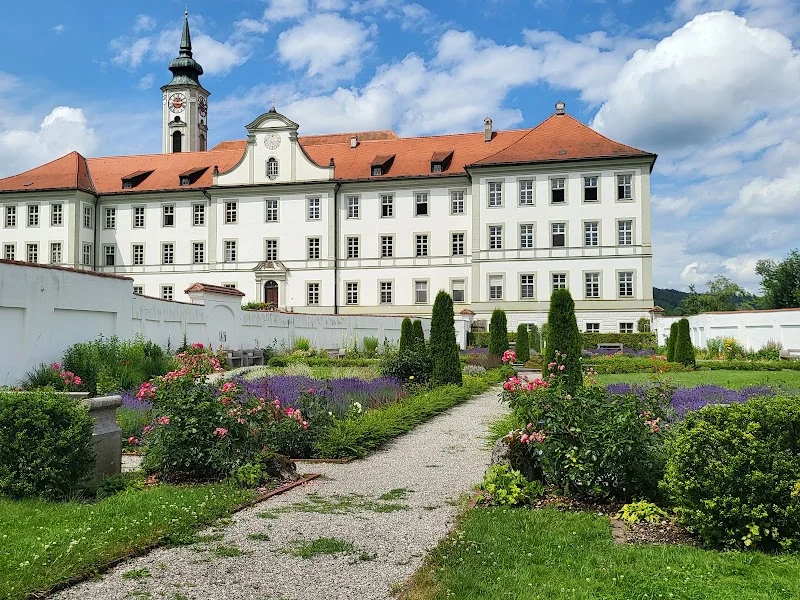
The Benedictine Abbey Schäftlarn is picturesque located in the Isar Valley south of Munich and continues to combine monastic life, school operations, and cultural offerings at a historically significant site. The abbey describes itself as a spiritual and cultural center in the southern part of Munich and as the only active monastery in the district of Munich. This very mix makes Schäftlarn so special: Those searching for the Schäftlarn Monastery find not only a traditional Benedictine abbey but a vibrant ensemble of Rococo monastery church, high school, boarding school, gardens, spiritual daily life, and classical concert culture. This is attractive for visitors because very different interests can be combined here. Pilgrims find a place on the Camino de Santiago, culture enthusiasts experience Baroque and Rococo art, music lovers discover the Schäftlarn concerts, and everyone looking for photos or practical information receives a good initial overview on the official pages. At the same time, the abbey remains a functioning monastery and school location, which is why the building cannot be freely visited like a museum. This genuine use lends credibility and atmosphere to the place. The Benedictine Abbey is not a façade but a historically grown living space where history, spirituality, and the present are still closely intertwined. ([abtei-schaeftlarn.de](https://www.abtei-schaeftlarn.de/kunst-kultur/))
History, Foundation, and Re-establishment of the Schäftlarn Monastery
The history of Schäftlarn begins very early. The official website traces the founding of the Benedictine monastery back to the year 762, when the priest Waltrich founded a monastic cell on the banks of the Isar and consecrated a church in honor of Saint Dionysius. From the 10th century, monastic life temporarily ceased before a re-establishment as a Premonstratensian monastery occurred in 1140. Thus, Schäftlarn belongs to those Bavarian original monasteries whose history is characterized by breaks, new beginnings, and adaptations. The abbey's sources also clearly document the later development: In 1598, the provostry was elevated to an abbey, from 1702 the new construction of the monastery began, and in the early 18th century, the influential four-winged structure around the inner courtyards was created under Giovanni Antonio Viscardi. For visitors, this means: Schäftlarn is not a place of just one era but a layered construction from several centuries, where early Middle Ages, Baroque, secularization, and modern school use become visible side by side. This is precisely why the abbey is interesting for everyone who is interested in the history of Schäftlarn Monastery, monastic development, or regional cultural monuments. ([abtei-schaeftlarn.de](https://www.abtei-schaeftlarn.de/kloster-orden/benediktinerabtei/geschichte/))
Particularly important for the current identity of the abbey are the cuts of the 19th and 20th centuries. In 1803, the monastery was dissolved as part of the secularization, but in 1866, King Ludwig I of Bavaria re-established Schäftlarn as an independent Benedictine priory. This re-establishment was also associated with an educational mandate, from which the current Benedictine high school Schäftlarn developed. In 1910, the priory was finally elevated to an abbey, and Sigisbert Liebert became the first abbot of the new era. The official history of the abbey makes it clear that Schäftlarn Monastery embodies not only religious continuity but also educational and cultural history. Later, extensive restorations were added, including the major interior and exterior refurbishment of the church, the completion of which coincided in 2012 with the 1250th anniversary celebration of the monastery. Thus, today, anyone visiting the Benedictine Abbey Schäftlarn is moving in a place that has repeatedly responded anew to its time over the centuries without losing its core. This is one of the reasons why the site remains both historically and practically relevant to this day. ([abtei-schaeftlarn.de](https://www.abtei-schaeftlarn.de/kloster-orden/benediktinerabtei/geschichte/))
Schäftlarn Monastery Church: Rococo, Frescoes, and 31-Register Organ
The monastery church is the architectural and artistic highlight of the abbey. The official website describes it as one of the most successful late Baroque sacred buildings in southern Germany and emphasizes the extraordinary quality of the artists involved. The current form goes back to several construction phases: After the beginning of the new construction by François de Cuvilliés the Elder, the design was later reduced by Johann Baptist Gunetzrhainer and Johann Michael Fischer and transformed into the visible form today. For the interior design, Johann Baptist Zimmermann was responsible for the frescoes and stucco, Balthasar Augustin Albrecht for the altar paintings, and Johann Baptist Straub for the altars, pulpit, choir stalls, confessionals, and organ case. This resulted in a space that is not only richly decorated but also possesses a clearly composed liturgical dramaturgy. The first service took place in 1757, and the consecration occurred in 1760. Such dates make it clear that the church is not just an arbitrarily decorated space but a precisely planned total work of art of southern German Rococo. ([abtei-schaeftlarn.de](https://www.abtei-schaeftlarn.de/kunst-kultur/klosterkirche/?utm_source=openai))
Those who examine the furnishings more closely quickly understand why the monastery church is in such high demand. The high altar depicts the Assumption of Mary, the side altars take up motifs such as the rosary and crucifixion, and the pulpit is considered one of the finest works of Straub according to the official description. The organ is particularly impressive: Since 1996, the church has had an instrument with 31 registers by Hans-Georg Vleugels, whose prospectus, combined with the Baroque spatial effect, creates a strong image. This is complemented by frescoes, stucco, and the great length of the nave, whose dome in the interior design incorporates themes such as the founding of the Premonstratensian order and the founding of Schäftlarn. For visitors looking for photos of Schäftlarn Monastery Church, Rococo church, or organ, this is a real attraction. The restorations of recent decades also show how seriously the abbey takes the preservation of its artwork: After several construction and renovation phases, the sacred furnishings have been carefully preserved and simultaneously technically adapted to the present. Thus, the church remains both a spiritual space and a cultural monument. ([abtei-schaeftlarn.de](https://www.abtei-schaeftlarn.de/kunst-kultur/klosterkirche/ausstattung/))
Schäftlarn Concerts and Services in a Spiritual Atmosphere
A second reason why many people search for Benedictine Abbey Schäftlarn, Schäftlarn Monastery, or Schäftlarn Concerts is the music program. The concert series has existed since 1968 and takes place from May to October according to the official site. The repertoire ranges from Handel to Mozart to Brahms and is described as a serenade culture in a special atmosphere. This is precisely where the charm of the place lies: The monastery church is not only a monument and service space but also a sound space where sacred architecture and classical music enhance each other. For visitors, this is a strong experience because the concerts do not seem like a foreign body in the monastery but connect to the spiritual and cultural tradition of the house. The concert page also emphasizes subscription offers with fixed seats and discounts, which shows that Schäftlarn has established itself not only as a destination but as a serious cultural venue with a loyal audience. Therefore, those searching for program, tickets, or event calendar will find not just any event location but a historically grown concert venue with its own profile. ([schaeftlarner-konzerte.de](https://www.schaeftlarner-konzerte.de/))
The liturgical daily life is also important for the profile of the abbey. On the pages of the Benedictine Abbey, services, the church year, choir prayers, and spiritual offerings are explicitly listed, making it clear that the church is there not only for guests but primarily for monastic life. For those interested in culture, this connection is particularly exciting: In Schäftlarn, concert and liturgy do not compete with each other but support the same space in two different ways. Those attending a performance experience a church that is prepared for sound and devotion. Those attending a service encounter a place whose musical and architectural quality is part of the spiritual experience. Additionally, the official art and culture pages refer to regular organ matinees, the annual nativity scene, and the special furnishings of the church. This creates a very rich picture of the location that goes far beyond mere sightseeing. For SEO searches like Schäftlarn Concerts, Services Schäftlarn Monastery, or Schäftlarn Monastery Church Photos, this connection of music, liturgy, and spatial quality is the central content. ([abtei-schaeftlarn.de](https://www.abtei-schaeftlarn.de/kloster-orden/gottesdienste/))
Directions, Parking, and S-Bahn to Schäftlarn Monastery
For many visitors, the question of how to get there is at least as important as the history. The official contact page of the Schäftlarn Concerts explains very specifically how to reach the monastery: By S-Bahn, take the S 7 to Hohenschäftlarn, from there there is a free bus transfer to the monastery and back on concert dates. By car, the route leads via the A95 with the Schäftlarn exit, via B11, or via State Road 2072. This information is particularly helpful because Schäftlarn Monastery is located south of Munich but not in the city center, rather in a quieter, scenic area. For this reason, visitors should take the official directions seriously and not just rely on navigation software. Those specifically searching for directions to Schäftlarn Monastery or S-Bahn Schäftlarn Monastery will find the most reliable basic information here. ([schaeftlarner-konzerte.de](https://www.schaeftlarner-konzerte.de/kontakt))
When parking, discipline is explicitly desired. The concert page mentions three designated areas: opposite the church, at the boarding school, and at the back of the administration building opposite the sawmill. At the same time, it is pointed out that the police regularly issue parking tickets in Klosterstraße and on the green strip towards Schäftlarn Mountain. This clear regulation is practically important because access to the monastery can quickly feel tight, and spontaneous parking attempts can lead to unnecessary trouble. For visitors, this means: Those planning concerts, services, or a monastery visit should arrive a little earlier and strictly adhere to the official parking areas. This way, the visit remains relaxed, and the paths for residents, school, and monastery operations remain clear. The fact that the abbey communicates these tips so openly is a plus for visitor friendliness. Therefore, those searching for parking Schäftlarn Monastery, directions Schäftlarn, or Schäftlarn Monastery parking will not receive vague recommendations here but concrete and current guidelines. ([schaeftlarner-konzerte.de](https://www.schaeftlarner-konzerte.de/kontakt))
Guest in the Monastery, Camino de Santiago, Monastery Garden, and Annual Nativity Scene
The Benedictine Abbey Schäftlarn sees itself not only as a monument but also as a place of hospitality. On the Guest in the Monastery page, the abbey explains that guests should be received according to the Rule of Benedict as Christ. For interested men, there is the possibility to temporarily stay as a guest in the monastery, participate in the daily routine of the monks in simple accommodation, and deepen their inner orientation towards God. Participation in the choir prayers and shared meals is particularly emphasized. The stay is described as especially meaningful during school holidays, and Abbot Petrus Höhensteiger is mentioned for contact. This makes it clear: Schäftlarn is not just a place to look at but also to linger, to become still, and to walk in the rhythm of the monastery. This form of hospitality is particularly relevant for many search queries related to Schäftlarn Monastery, guest in the monastery, or retreat. ([abtei-schaeftlarn.de](https://www.abtei-schaeftlarn.de/kloster-orden/gast-im-kloster/))
The Camino de Santiago leads additionally in a completely different but fitting direction. The abbey explains on its Camino de Santiago page that the Munich Camino was established in 2003, begins at Jakobsplatz, and also leads to Schäftlarn along the Isar. It also points out that from Schäftlarn Monastery, the cross-border Isar-Loisach-Leutascher Ache-Inn Camino can be continued. For pilgrims, this is a good orientation point, even though the abbey itself does not offer accommodation for Camino pilgrims. Those seeking peace, nature, and a religiously shaped section of the path in the vicinity of the abbey will find an interesting junction here. Additionally, the outdoor facilities: The prelate garden is described on the art and culture page as a blooming place of relaxation, and the annual nativity scene has a long tradition that likely dates back to before the re-establishment as a Benedictine monastery. Since the 1950s, it has been closely associated with the monks Br. Angelus and P. Hugo Solf; since 2013, the nativity scene has been in a new display case and invites visitors throughout the church year. Therefore, those searching for photos, garden, nativity scene, or quiet impressions will find much more in Schäftlarn than just a single sight. ([abtei-schaeftlarn.de](https://www.abtei-schaeftlarn.de/kloster-orden/jakobsweg/))
The overall picture also includes that the official pages of the abbey offer many visual and content anchors: Picture pages for the monastery church, furnishings, monastery building, prelate garden, and annual nativity scene help in preparing a visit and simultaneously explain why the complex attracts so much interest. Especially the church, the altars, the pulpit, and the organ convey a strong Rococo experience, while the garden and nativity scene set rather quiet, contemplative counterpoints. At the same time, the practical note remains important that the monastery building itself cannot be visited because it is a school. This way, the place remains not just any excursion destination but a functioning living space with clear boundaries. This is exactly what makes the Benedictine Abbey Schäftlarn credible and sympathetic for many visitors: It is publicly accessible without being stripped of its essence. Therefore, those searching for the combination of history, directions, parking, music, spirituality, photos, and reviews will find a place that brings all these search motives together in a single historical complex. ([abtei-schaeftlarn.de](https://www.abtei-schaeftlarn.de/kunst-kultur/))
Sources:
Mehr anzeigenWeniger anzeigen
Benedictine Abbey Schäftlarn | Monastery & Concerts
The Benedictine Abbey Schäftlarn is picturesque located in the Isar Valley south of Munich and continues to combine monastic life, school operations, and cultural offerings at a historically significant site. The abbey describes itself as a spiritual and cultural center in the southern part of Munich and as the only active monastery in the district of Munich. This very mix makes Schäftlarn so special: Those searching for the Schäftlarn Monastery find not only a traditional Benedictine abbey but a vibrant ensemble of Rococo monastery church, high school, boarding school, gardens, spiritual daily life, and classical concert culture. This is attractive for visitors because very different interests can be combined here. Pilgrims find a place on the Camino de Santiago, culture enthusiasts experience Baroque and Rococo art, music lovers discover the Schäftlarn concerts, and everyone looking for photos or practical information receives a good initial overview on the official pages. At the same time, the abbey remains a functioning monastery and school location, which is why the building cannot be freely visited like a museum. This genuine use lends credibility and atmosphere to the place. The Benedictine Abbey is not a façade but a historically grown living space where history, spirituality, and the present are still closely intertwined. ([abtei-schaeftlarn.de](https://www.abtei-schaeftlarn.de/kunst-kultur/))
History, Foundation, and Re-establishment of the Schäftlarn Monastery
The history of Schäftlarn begins very early. The official website traces the founding of the Benedictine monastery back to the year 762, when the priest Waltrich founded a monastic cell on the banks of the Isar and consecrated a church in honor of Saint Dionysius. From the 10th century, monastic life temporarily ceased before a re-establishment as a Premonstratensian monastery occurred in 1140. Thus, Schäftlarn belongs to those Bavarian original monasteries whose history is characterized by breaks, new beginnings, and adaptations. The abbey's sources also clearly document the later development: In 1598, the provostry was elevated to an abbey, from 1702 the new construction of the monastery began, and in the early 18th century, the influential four-winged structure around the inner courtyards was created under Giovanni Antonio Viscardi. For visitors, this means: Schäftlarn is not a place of just one era but a layered construction from several centuries, where early Middle Ages, Baroque, secularization, and modern school use become visible side by side. This is precisely why the abbey is interesting for everyone who is interested in the history of Schäftlarn Monastery, monastic development, or regional cultural monuments. ([abtei-schaeftlarn.de](https://www.abtei-schaeftlarn.de/kloster-orden/benediktinerabtei/geschichte/))
Particularly important for the current identity of the abbey are the cuts of the 19th and 20th centuries. In 1803, the monastery was dissolved as part of the secularization, but in 1866, King Ludwig I of Bavaria re-established Schäftlarn as an independent Benedictine priory. This re-establishment was also associated with an educational mandate, from which the current Benedictine high school Schäftlarn developed. In 1910, the priory was finally elevated to an abbey, and Sigisbert Liebert became the first abbot of the new era. The official history of the abbey makes it clear that Schäftlarn Monastery embodies not only religious continuity but also educational and cultural history. Later, extensive restorations were added, including the major interior and exterior refurbishment of the church, the completion of which coincided in 2012 with the 1250th anniversary celebration of the monastery. Thus, today, anyone visiting the Benedictine Abbey Schäftlarn is moving in a place that has repeatedly responded anew to its time over the centuries without losing its core. This is one of the reasons why the site remains both historically and practically relevant to this day. ([abtei-schaeftlarn.de](https://www.abtei-schaeftlarn.de/kloster-orden/benediktinerabtei/geschichte/))
Schäftlarn Monastery Church: Rococo, Frescoes, and 31-Register Organ
The monastery church is the architectural and artistic highlight of the abbey. The official website describes it as one of the most successful late Baroque sacred buildings in southern Germany and emphasizes the extraordinary quality of the artists involved. The current form goes back to several construction phases: After the beginning of the new construction by François de Cuvilliés the Elder, the design was later reduced by Johann Baptist Gunetzrhainer and Johann Michael Fischer and transformed into the visible form today. For the interior design, Johann Baptist Zimmermann was responsible for the frescoes and stucco, Balthasar Augustin Albrecht for the altar paintings, and Johann Baptist Straub for the altars, pulpit, choir stalls, confessionals, and organ case. This resulted in a space that is not only richly decorated but also possesses a clearly composed liturgical dramaturgy. The first service took place in 1757, and the consecration occurred in 1760. Such dates make it clear that the church is not just an arbitrarily decorated space but a precisely planned total work of art of southern German Rococo. ([abtei-schaeftlarn.de](https://www.abtei-schaeftlarn.de/kunst-kultur/klosterkirche/?utm_source=openai))
Those who examine the furnishings more closely quickly understand why the monastery church is in such high demand. The high altar depicts the Assumption of Mary, the side altars take up motifs such as the rosary and crucifixion, and the pulpit is considered one of the finest works of Straub according to the official description. The organ is particularly impressive: Since 1996, the church has had an instrument with 31 registers by Hans-Georg Vleugels, whose prospectus, combined with the Baroque spatial effect, creates a strong image. This is complemented by frescoes, stucco, and the great length of the nave, whose dome in the interior design incorporates themes such as the founding of the Premonstratensian order and the founding of Schäftlarn. For visitors looking for photos of Schäftlarn Monastery Church, Rococo church, or organ, this is a real attraction. The restorations of recent decades also show how seriously the abbey takes the preservation of its artwork: After several construction and renovation phases, the sacred furnishings have been carefully preserved and simultaneously technically adapted to the present. Thus, the church remains both a spiritual space and a cultural monument. ([abtei-schaeftlarn.de](https://www.abtei-schaeftlarn.de/kunst-kultur/klosterkirche/ausstattung/))
Schäftlarn Concerts and Services in a Spiritual Atmosphere
A second reason why many people search for Benedictine Abbey Schäftlarn, Schäftlarn Monastery, or Schäftlarn Concerts is the music program. The concert series has existed since 1968 and takes place from May to October according to the official site. The repertoire ranges from Handel to Mozart to Brahms and is described as a serenade culture in a special atmosphere. This is precisely where the charm of the place lies: The monastery church is not only a monument and service space but also a sound space where sacred architecture and classical music enhance each other. For visitors, this is a strong experience because the concerts do not seem like a foreign body in the monastery but connect to the spiritual and cultural tradition of the house. The concert page also emphasizes subscription offers with fixed seats and discounts, which shows that Schäftlarn has established itself not only as a destination but as a serious cultural venue with a loyal audience. Therefore, those searching for program, tickets, or event calendar will find not just any event location but a historically grown concert venue with its own profile. ([schaeftlarner-konzerte.de](https://www.schaeftlarner-konzerte.de/))
The liturgical daily life is also important for the profile of the abbey. On the pages of the Benedictine Abbey, services, the church year, choir prayers, and spiritual offerings are explicitly listed, making it clear that the church is there not only for guests but primarily for monastic life. For those interested in culture, this connection is particularly exciting: In Schäftlarn, concert and liturgy do not compete with each other but support the same space in two different ways. Those attending a performance experience a church that is prepared for sound and devotion. Those attending a service encounter a place whose musical and architectural quality is part of the spiritual experience. Additionally, the official art and culture pages refer to regular organ matinees, the annual nativity scene, and the special furnishings of the church. This creates a very rich picture of the location that goes far beyond mere sightseeing. For SEO searches like Schäftlarn Concerts, Services Schäftlarn Monastery, or Schäftlarn Monastery Church Photos, this connection of music, liturgy, and spatial quality is the central content. ([abtei-schaeftlarn.de](https://www.abtei-schaeftlarn.de/kloster-orden/gottesdienste/))
Directions, Parking, and S-Bahn to Schäftlarn Monastery
For many visitors, the question of how to get there is at least as important as the history. The official contact page of the Schäftlarn Concerts explains very specifically how to reach the monastery: By S-Bahn, take the S 7 to Hohenschäftlarn, from there there is a free bus transfer to the monastery and back on concert dates. By car, the route leads via the A95 with the Schäftlarn exit, via B11, or via State Road 2072. This information is particularly helpful because Schäftlarn Monastery is located south of Munich but not in the city center, rather in a quieter, scenic area. For this reason, visitors should take the official directions seriously and not just rely on navigation software. Those specifically searching for directions to Schäftlarn Monastery or S-Bahn Schäftlarn Monastery will find the most reliable basic information here. ([schaeftlarner-konzerte.de](https://www.schaeftlarner-konzerte.de/kontakt))
When parking, discipline is explicitly desired. The concert page mentions three designated areas: opposite the church, at the boarding school, and at the back of the administration building opposite the sawmill. At the same time, it is pointed out that the police regularly issue parking tickets in Klosterstraße and on the green strip towards Schäftlarn Mountain. This clear regulation is practically important because access to the monastery can quickly feel tight, and spontaneous parking attempts can lead to unnecessary trouble. For visitors, this means: Those planning concerts, services, or a monastery visit should arrive a little earlier and strictly adhere to the official parking areas. This way, the visit remains relaxed, and the paths for residents, school, and monastery operations remain clear. The fact that the abbey communicates these tips so openly is a plus for visitor friendliness. Therefore, those searching for parking Schäftlarn Monastery, directions Schäftlarn, or Schäftlarn Monastery parking will not receive vague recommendations here but concrete and current guidelines. ([schaeftlarner-konzerte.de](https://www.schaeftlarner-konzerte.de/kontakt))
Guest in the Monastery, Camino de Santiago, Monastery Garden, and Annual Nativity Scene
The Benedictine Abbey Schäftlarn sees itself not only as a monument but also as a place of hospitality. On the Guest in the Monastery page, the abbey explains that guests should be received according to the Rule of Benedict as Christ. For interested men, there is the possibility to temporarily stay as a guest in the monastery, participate in the daily routine of the monks in simple accommodation, and deepen their inner orientation towards God. Participation in the choir prayers and shared meals is particularly emphasized. The stay is described as especially meaningful during school holidays, and Abbot Petrus Höhensteiger is mentioned for contact. This makes it clear: Schäftlarn is not just a place to look at but also to linger, to become still, and to walk in the rhythm of the monastery. This form of hospitality is particularly relevant for many search queries related to Schäftlarn Monastery, guest in the monastery, or retreat. ([abtei-schaeftlarn.de](https://www.abtei-schaeftlarn.de/kloster-orden/gast-im-kloster/))
The Camino de Santiago leads additionally in a completely different but fitting direction. The abbey explains on its Camino de Santiago page that the Munich Camino was established in 2003, begins at Jakobsplatz, and also leads to Schäftlarn along the Isar. It also points out that from Schäftlarn Monastery, the cross-border Isar-Loisach-Leutascher Ache-Inn Camino can be continued. For pilgrims, this is a good orientation point, even though the abbey itself does not offer accommodation for Camino pilgrims. Those seeking peace, nature, and a religiously shaped section of the path in the vicinity of the abbey will find an interesting junction here. Additionally, the outdoor facilities: The prelate garden is described on the art and culture page as a blooming place of relaxation, and the annual nativity scene has a long tradition that likely dates back to before the re-establishment as a Benedictine monastery. Since the 1950s, it has been closely associated with the monks Br. Angelus and P. Hugo Solf; since 2013, the nativity scene has been in a new display case and invites visitors throughout the church year. Therefore, those searching for photos, garden, nativity scene, or quiet impressions will find much more in Schäftlarn than just a single sight. ([abtei-schaeftlarn.de](https://www.abtei-schaeftlarn.de/kloster-orden/jakobsweg/))
The overall picture also includes that the official pages of the abbey offer many visual and content anchors: Picture pages for the monastery church, furnishings, monastery building, prelate garden, and annual nativity scene help in preparing a visit and simultaneously explain why the complex attracts so much interest. Especially the church, the altars, the pulpit, and the organ convey a strong Rococo experience, while the garden and nativity scene set rather quiet, contemplative counterpoints. At the same time, the practical note remains important that the monastery building itself cannot be visited because it is a school. This way, the place remains not just any excursion destination but a functioning living space with clear boundaries. This is exactly what makes the Benedictine Abbey Schäftlarn credible and sympathetic for many visitors: It is publicly accessible without being stripped of its essence. Therefore, those searching for the combination of history, directions, parking, music, spirituality, photos, and reviews will find a place that brings all these search motives together in a single historical complex. ([abtei-schaeftlarn.de](https://www.abtei-schaeftlarn.de/kunst-kultur/))
Sources:
Benedictine Abbey Schäftlarn | Monastery & Concerts
The Benedictine Abbey Schäftlarn is picturesque located in the Isar Valley south of Munich and continues to combine monastic life, school operations, and cultural offerings at a historically significant site. The abbey describes itself as a spiritual and cultural center in the southern part of Munich and as the only active monastery in the district of Munich. This very mix makes Schäftlarn so special: Those searching for the Schäftlarn Monastery find not only a traditional Benedictine abbey but a vibrant ensemble of Rococo monastery church, high school, boarding school, gardens, spiritual daily life, and classical concert culture. This is attractive for visitors because very different interests can be combined here. Pilgrims find a place on the Camino de Santiago, culture enthusiasts experience Baroque and Rococo art, music lovers discover the Schäftlarn concerts, and everyone looking for photos or practical information receives a good initial overview on the official pages. At the same time, the abbey remains a functioning monastery and school location, which is why the building cannot be freely visited like a museum. This genuine use lends credibility and atmosphere to the place. The Benedictine Abbey is not a façade but a historically grown living space where history, spirituality, and the present are still closely intertwined. ([abtei-schaeftlarn.de](https://www.abtei-schaeftlarn.de/kunst-kultur/))
History, Foundation, and Re-establishment of the Schäftlarn Monastery
The history of Schäftlarn begins very early. The official website traces the founding of the Benedictine monastery back to the year 762, when the priest Waltrich founded a monastic cell on the banks of the Isar and consecrated a church in honor of Saint Dionysius. From the 10th century, monastic life temporarily ceased before a re-establishment as a Premonstratensian monastery occurred in 1140. Thus, Schäftlarn belongs to those Bavarian original monasteries whose history is characterized by breaks, new beginnings, and adaptations. The abbey's sources also clearly document the later development: In 1598, the provostry was elevated to an abbey, from 1702 the new construction of the monastery began, and in the early 18th century, the influential four-winged structure around the inner courtyards was created under Giovanni Antonio Viscardi. For visitors, this means: Schäftlarn is not a place of just one era but a layered construction from several centuries, where early Middle Ages, Baroque, secularization, and modern school use become visible side by side. This is precisely why the abbey is interesting for everyone who is interested in the history of Schäftlarn Monastery, monastic development, or regional cultural monuments. ([abtei-schaeftlarn.de](https://www.abtei-schaeftlarn.de/kloster-orden/benediktinerabtei/geschichte/))
Particularly important for the current identity of the abbey are the cuts of the 19th and 20th centuries. In 1803, the monastery was dissolved as part of the secularization, but in 1866, King Ludwig I of Bavaria re-established Schäftlarn as an independent Benedictine priory. This re-establishment was also associated with an educational mandate, from which the current Benedictine high school Schäftlarn developed. In 1910, the priory was finally elevated to an abbey, and Sigisbert Liebert became the first abbot of the new era. The official history of the abbey makes it clear that Schäftlarn Monastery embodies not only religious continuity but also educational and cultural history. Later, extensive restorations were added, including the major interior and exterior refurbishment of the church, the completion of which coincided in 2012 with the 1250th anniversary celebration of the monastery. Thus, today, anyone visiting the Benedictine Abbey Schäftlarn is moving in a place that has repeatedly responded anew to its time over the centuries without losing its core. This is one of the reasons why the site remains both historically and practically relevant to this day. ([abtei-schaeftlarn.de](https://www.abtei-schaeftlarn.de/kloster-orden/benediktinerabtei/geschichte/))
Schäftlarn Monastery Church: Rococo, Frescoes, and 31-Register Organ
The monastery church is the architectural and artistic highlight of the abbey. The official website describes it as one of the most successful late Baroque sacred buildings in southern Germany and emphasizes the extraordinary quality of the artists involved. The current form goes back to several construction phases: After the beginning of the new construction by François de Cuvilliés the Elder, the design was later reduced by Johann Baptist Gunetzrhainer and Johann Michael Fischer and transformed into the visible form today. For the interior design, Johann Baptist Zimmermann was responsible for the frescoes and stucco, Balthasar Augustin Albrecht for the altar paintings, and Johann Baptist Straub for the altars, pulpit, choir stalls, confessionals, and organ case. This resulted in a space that is not only richly decorated but also possesses a clearly composed liturgical dramaturgy. The first service took place in 1757, and the consecration occurred in 1760. Such dates make it clear that the church is not just an arbitrarily decorated space but a precisely planned total work of art of southern German Rococo. ([abtei-schaeftlarn.de](https://www.abtei-schaeftlarn.de/kunst-kultur/klosterkirche/?utm_source=openai))
Those who examine the furnishings more closely quickly understand why the monastery church is in such high demand. The high altar depicts the Assumption of Mary, the side altars take up motifs such as the rosary and crucifixion, and the pulpit is considered one of the finest works of Straub according to the official description. The organ is particularly impressive: Since 1996, the church has had an instrument with 31 registers by Hans-Georg Vleugels, whose prospectus, combined with the Baroque spatial effect, creates a strong image. This is complemented by frescoes, stucco, and the great length of the nave, whose dome in the interior design incorporates themes such as the founding of the Premonstratensian order and the founding of Schäftlarn. For visitors looking for photos of Schäftlarn Monastery Church, Rococo church, or organ, this is a real attraction. The restorations of recent decades also show how seriously the abbey takes the preservation of its artwork: After several construction and renovation phases, the sacred furnishings have been carefully preserved and simultaneously technically adapted to the present. Thus, the church remains both a spiritual space and a cultural monument. ([abtei-schaeftlarn.de](https://www.abtei-schaeftlarn.de/kunst-kultur/klosterkirche/ausstattung/))
Schäftlarn Concerts and Services in a Spiritual Atmosphere
A second reason why many people search for Benedictine Abbey Schäftlarn, Schäftlarn Monastery, or Schäftlarn Concerts is the music program. The concert series has existed since 1968 and takes place from May to October according to the official site. The repertoire ranges from Handel to Mozart to Brahms and is described as a serenade culture in a special atmosphere. This is precisely where the charm of the place lies: The monastery church is not only a monument and service space but also a sound space where sacred architecture and classical music enhance each other. For visitors, this is a strong experience because the concerts do not seem like a foreign body in the monastery but connect to the spiritual and cultural tradition of the house. The concert page also emphasizes subscription offers with fixed seats and discounts, which shows that Schäftlarn has established itself not only as a destination but as a serious cultural venue with a loyal audience. Therefore, those searching for program, tickets, or event calendar will find not just any event location but a historically grown concert venue with its own profile. ([schaeftlarner-konzerte.de](https://www.schaeftlarner-konzerte.de/))
The liturgical daily life is also important for the profile of the abbey. On the pages of the Benedictine Abbey, services, the church year, choir prayers, and spiritual offerings are explicitly listed, making it clear that the church is there not only for guests but primarily for monastic life. For those interested in culture, this connection is particularly exciting: In Schäftlarn, concert and liturgy do not compete with each other but support the same space in two different ways. Those attending a performance experience a church that is prepared for sound and devotion. Those attending a service encounter a place whose musical and architectural quality is part of the spiritual experience. Additionally, the official art and culture pages refer to regular organ matinees, the annual nativity scene, and the special furnishings of the church. This creates a very rich picture of the location that goes far beyond mere sightseeing. For SEO searches like Schäftlarn Concerts, Services Schäftlarn Monastery, or Schäftlarn Monastery Church Photos, this connection of music, liturgy, and spatial quality is the central content. ([abtei-schaeftlarn.de](https://www.abtei-schaeftlarn.de/kloster-orden/gottesdienste/))
Directions, Parking, and S-Bahn to Schäftlarn Monastery
For many visitors, the question of how to get there is at least as important as the history. The official contact page of the Schäftlarn Concerts explains very specifically how to reach the monastery: By S-Bahn, take the S 7 to Hohenschäftlarn, from there there is a free bus transfer to the monastery and back on concert dates. By car, the route leads via the A95 with the Schäftlarn exit, via B11, or via State Road 2072. This information is particularly helpful because Schäftlarn Monastery is located south of Munich but not in the city center, rather in a quieter, scenic area. For this reason, visitors should take the official directions seriously and not just rely on navigation software. Those specifically searching for directions to Schäftlarn Monastery or S-Bahn Schäftlarn Monastery will find the most reliable basic information here. ([schaeftlarner-konzerte.de](https://www.schaeftlarner-konzerte.de/kontakt))
When parking, discipline is explicitly desired. The concert page mentions three designated areas: opposite the church, at the boarding school, and at the back of the administration building opposite the sawmill. At the same time, it is pointed out that the police regularly issue parking tickets in Klosterstraße and on the green strip towards Schäftlarn Mountain. This clear regulation is practically important because access to the monastery can quickly feel tight, and spontaneous parking attempts can lead to unnecessary trouble. For visitors, this means: Those planning concerts, services, or a monastery visit should arrive a little earlier and strictly adhere to the official parking areas. This way, the visit remains relaxed, and the paths for residents, school, and monastery operations remain clear. The fact that the abbey communicates these tips so openly is a plus for visitor friendliness. Therefore, those searching for parking Schäftlarn Monastery, directions Schäftlarn, or Schäftlarn Monastery parking will not receive vague recommendations here but concrete and current guidelines. ([schaeftlarner-konzerte.de](https://www.schaeftlarner-konzerte.de/kontakt))
Guest in the Monastery, Camino de Santiago, Monastery Garden, and Annual Nativity Scene
The Benedictine Abbey Schäftlarn sees itself not only as a monument but also as a place of hospitality. On the Guest in the Monastery page, the abbey explains that guests should be received according to the Rule of Benedict as Christ. For interested men, there is the possibility to temporarily stay as a guest in the monastery, participate in the daily routine of the monks in simple accommodation, and deepen their inner orientation towards God. Participation in the choir prayers and shared meals is particularly emphasized. The stay is described as especially meaningful during school holidays, and Abbot Petrus Höhensteiger is mentioned for contact. This makes it clear: Schäftlarn is not just a place to look at but also to linger, to become still, and to walk in the rhythm of the monastery. This form of hospitality is particularly relevant for many search queries related to Schäftlarn Monastery, guest in the monastery, or retreat. ([abtei-schaeftlarn.de](https://www.abtei-schaeftlarn.de/kloster-orden/gast-im-kloster/))
The Camino de Santiago leads additionally in a completely different but fitting direction. The abbey explains on its Camino de Santiago page that the Munich Camino was established in 2003, begins at Jakobsplatz, and also leads to Schäftlarn along the Isar. It also points out that from Schäftlarn Monastery, the cross-border Isar-Loisach-Leutascher Ache-Inn Camino can be continued. For pilgrims, this is a good orientation point, even though the abbey itself does not offer accommodation for Camino pilgrims. Those seeking peace, nature, and a religiously shaped section of the path in the vicinity of the abbey will find an interesting junction here. Additionally, the outdoor facilities: The prelate garden is described on the art and culture page as a blooming place of relaxation, and the annual nativity scene has a long tradition that likely dates back to before the re-establishment as a Benedictine monastery. Since the 1950s, it has been closely associated with the monks Br. Angelus and P. Hugo Solf; since 2013, the nativity scene has been in a new display case and invites visitors throughout the church year. Therefore, those searching for photos, garden, nativity scene, or quiet impressions will find much more in Schäftlarn than just a single sight. ([abtei-schaeftlarn.de](https://www.abtei-schaeftlarn.de/kloster-orden/jakobsweg/))
The overall picture also includes that the official pages of the abbey offer many visual and content anchors: Picture pages for the monastery church, furnishings, monastery building, prelate garden, and annual nativity scene help in preparing a visit and simultaneously explain why the complex attracts so much interest. Especially the church, the altars, the pulpit, and the organ convey a strong Rococo experience, while the garden and nativity scene set rather quiet, contemplative counterpoints. At the same time, the practical note remains important that the monastery building itself cannot be visited because it is a school. This way, the place remains not just any excursion destination but a functioning living space with clear boundaries. This is exactly what makes the Benedictine Abbey Schäftlarn credible and sympathetic for many visitors: It is publicly accessible without being stripped of its essence. Therefore, those searching for the combination of history, directions, parking, music, spirituality, photos, and reviews will find a place that brings all these search motives together in a single historical complex. ([abtei-schaeftlarn.de](https://www.abtei-schaeftlarn.de/kunst-kultur/))
Sources:
Upcoming Events
Summer Serenade
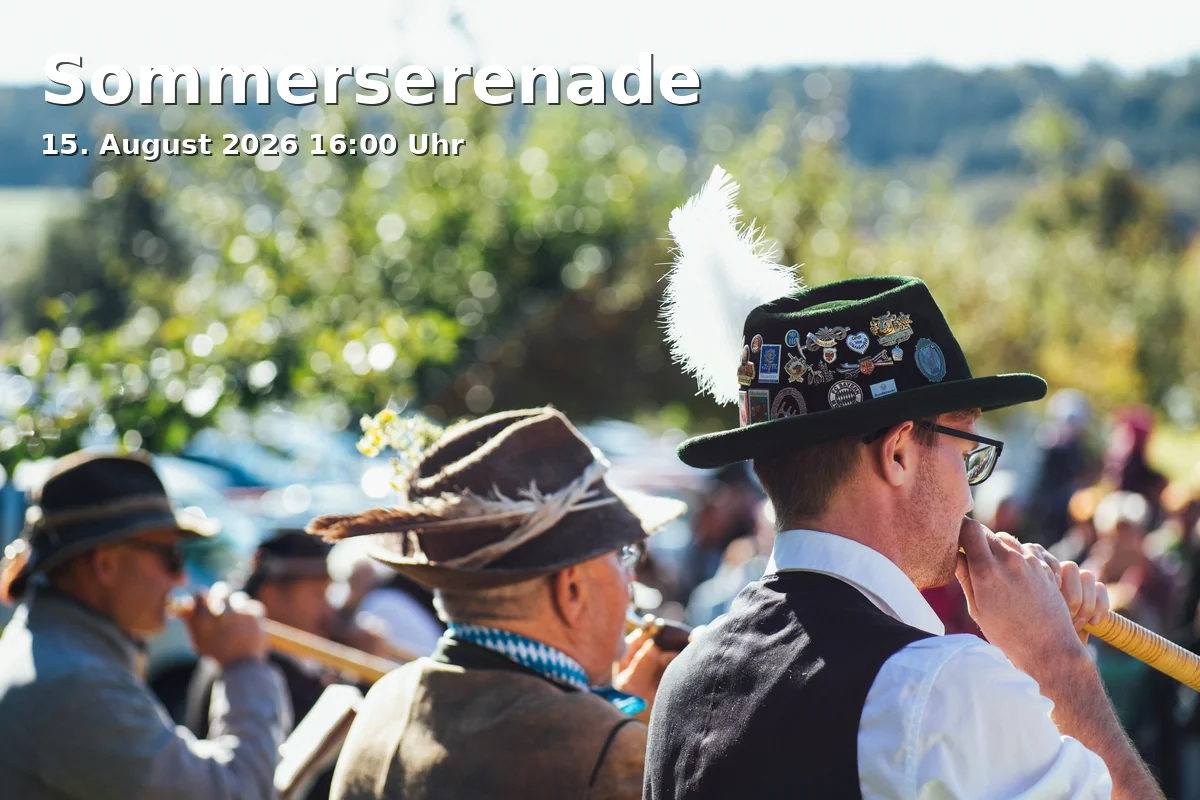
Brass music, summer air, and village charm: The Summer Serenade in Hohenschäftlarn promises a special afternoon under the open sky. Mark your calendar now! #Hohenschäftlarn
Schäftlarner Concerts 2026
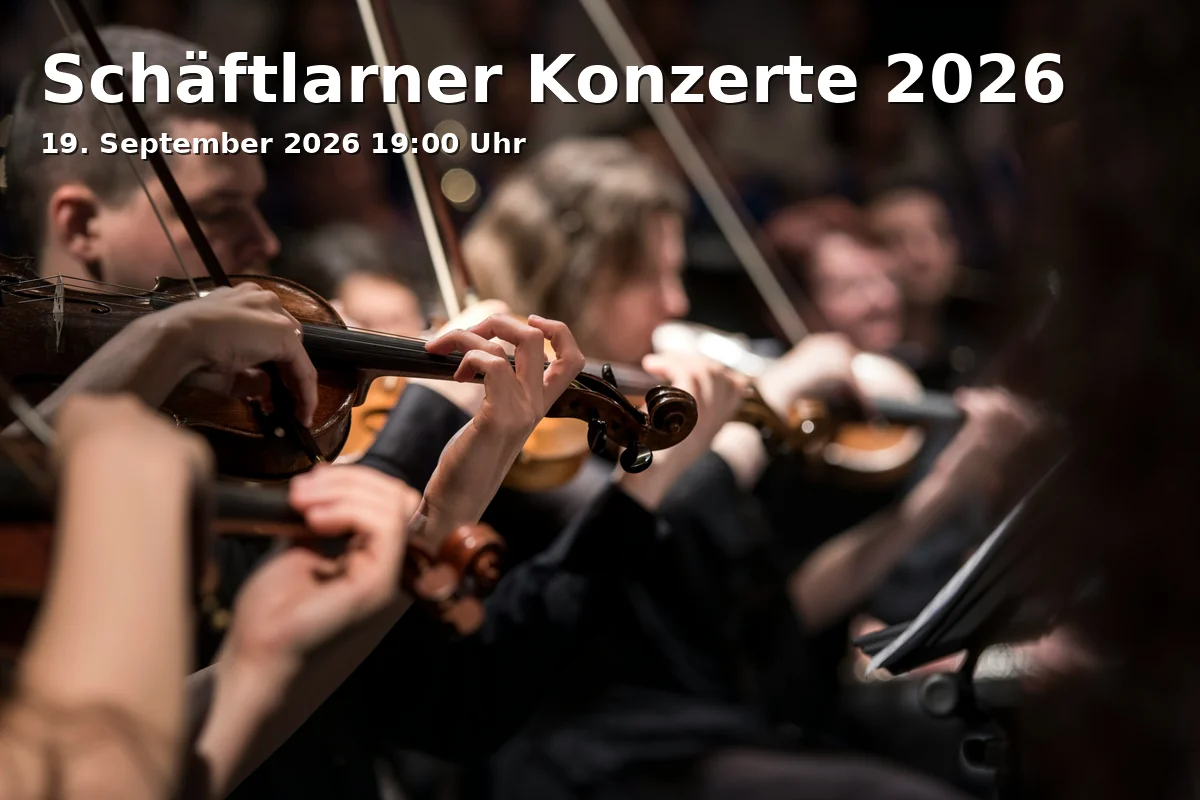
A noble classical evening in Kloster Schäftlarn: Rossini, Mozart, and Beethoven with soprano and orchestra. On 19.09.2026 from 7 PM. #ClassicalLive
Frequently Asked Questions
Reviews
No reviews found