
München
Englischer Garten 3, 80538 München, Deutschland
Beer Garden at the Chinese Tower | Opening Hours & Menu
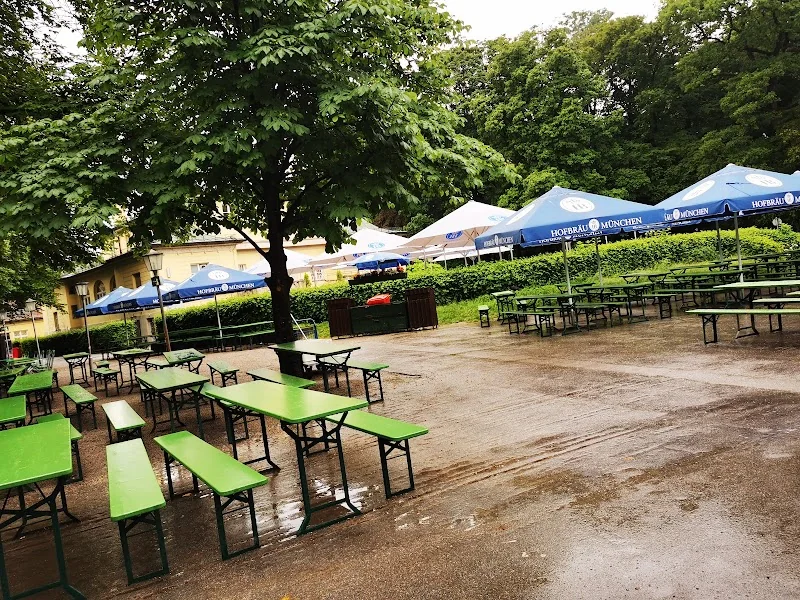
The beer garden at the Chinese Tower is one of the most famous meeting places in Munich and is located in the middle of the English Garden at the address Englischer Garten 3 in 80538 Munich. The official website describes it as one of the most beautiful beer gardens in the city and perhaps the most famous beer garden in the world; it is also emphasized that the host family Haberl has shaped the operation since 1974. With around 7,000 seats, traditional music from the tower, fresh cuisine, and seasonal festivals, this place is much more than just a classic beer garden. It combines the relaxed atmosphere under old trees with a location that is as attractive for walks, excursions, and short trips from the city center as it is for long afternoons in the green. This mix of tradition, vibrant beer garden culture, and practical accessibility makes the Chinese Tower a fixed part of Munich's leisure and enjoyment landscape. ([chinaturm.de](https://www.chinaturm.de/))
Opening Hours at the Beer Garden at the Chinese Tower
The opening hours are deliberately organized based on the weather, as the beer garden thrives on the typical Munich beer garden atmosphere outdoors. In dry and warm weather, the beer garden opens from Monday to Friday at 11 a.m., and on Saturdays and Sundays at 10 a.m. If it is too cold or uncertain, there is no regular beer garden operation; only the beer garden kiosk is open, daily from 12 p.m. This rule is not only practical but also fits the classic winter beer garden logic, which is explicitly explained on the official site: If you like to sit outside, it is open, and if it rains, it stays closed. For visitors, this means especially: A visit is particularly worthwhile on dry days, as the beer garden showcases its full strength then. Those who come spontaneously should keep an eye on the weather because the operation does not follow a rigid annual plan but is oriented to the conditions on-site. ([chinaturm.de](https://www.chinaturm.de/oeffnungszeiten/?utm_source=openai))
It is also important that reservations and group planning are also oriented to the operating conditions. The beer garden only accepts reservations for groups of 50 or more, and only from Monday to Thursday until 5 p.m. at the latest. Weekends and later start times are not intended for reservations. Here too, it applies: A reservation is only possible if the beer garden is actually open, i.e., in suitable weather. The official contact page also points out that the classic restaurant area remains closed, while the beer garden operation and the kiosk are open depending on the weather. For guests, this means: The Chinese Tower is not a place for rigid restaurant hours but for flexible beer garden moments that are oriented to sun, temperature, and weather stability. This principle makes the location so authentic and so typical for Munich. ([chinaturm.de](https://www.chinaturm.de/kontakt/))
Menu, Dishes, and Regional Cuisine at the Beer Garden
The kitchen of the beer garden focuses on freshness, regionality, and a clear beer garden identity. The official website emphasizes that all cold and warm dishes are prepared on-site by the kitchen team. The meat comes exclusively from straw pigs, from the oxen stables of the municipal estate Karlshof, and from regional farms; vegetables and fruits come from farmers and suppliers from the surrounding area. Additionally, the establishment works with selected regional partners and highlights organic quality, animal welfare, and sustainable sourcing. Thus, the menu is not just classically Bavarian but also clearly contemporary. The beer garden combines two expectations that guests often have simultaneously: familiar delicacies and traceable origins of the ingredients. The fact that this philosophy is prominently described on the website shows that the culinary claim is just as important for the operation as the location in the green. ([chinaturm.de](https://www.chinaturm.de/))
Regarding specific dishes, the offerings range from beer garden classics to vegetarian and vegan variants. Among others, ox sandwich, vegan ox sandwich, homemade Obatzda according to a Haberl recipe, potato noodle pan with market vegetables, (Swiss) sausage salad from straw pig, grilled fish, daily changing salad bowls, and hot donuts are mentioned. Also, chicken, pretzels, cakes from the bakery, and drinks like Hofbräu beer, wine, juice spritzers, and Aperol Spritz are part of the offer according to the official website. This creates a menu that combines classic beer garden delights with modern choices for different dietary styles. Particularly important for many guests is that there are not only meat dishes but also explicitly daily changing vegetarian and vegan options. This makes the Chinese Tower attractive for families, groups of friends, and also for vegetarian or vegan visitors. ([chinaturm.de](https://www.chinaturm.de/))
Parking, Access, and Location in the English Garden
The access to the beer garden at the Chinese Tower is remarkably uncomplicated, as the location is well connected to the Munich transport network. According to the official contact page, bus lines 54, 58, 68, and 154 stop directly at the Chinese Tower stop. With trams 16 and 36, visitors reach the Tivolistraße stop; from there it is about a three-minute walk to the beer garden. Those coming by subway can take U3 or U6 to Giselastraße and walk about ten minutes from there. Alternatively, you can also take bus 54 or 154 from Giselastraße and be at your destination in a few minutes. This combination of bus, tram, subway, and walking makes the location very flexible, especially for guests who want to use the English Garden as a walking destination or excursion spot. Cyclists and pedestrians are also explicitly addressed on the website, which fits well with the location in one of the city's most popular green spaces. ([chinaturm.de](https://www.chinaturm.de/kontakt/))
Those arriving by car can drive over the Tivoli Bridge and use the paid parking lot directly at the beer garden; the official site recommends entering “Tivolistraße” for navigation. The city of Munich additionally points out that the Chinese Tower is located in the middle of the English Garden and is connected by various bus and tram lines. The English Garden itself is one of Munich's largest parks and connects the Isar meadows with the old town of Munich over five and a half kilometers. The official park page names the Chinese Tower along with other destinations like the Rumfordhaus as part of a facility that is suitable for walks, excursions, and cultural experiences. For the beer garden at the Chinese Tower, this location is crucial because it does not function in isolation but is embedded in one of the most famous green landscapes in Europe. The mix of old trees, wide views, historical architecture, wide paths, and classic beer garden culture ensures that the place is well visited both in everyday life and on special occasions. For this reason, the location is also suitable for photos, family outings, and for guests seeking the typical Munich lifestyle: relaxed, open, tradition-conscious, and lively. The official self-description as perhaps the most famous beer garden in the world does not seem exaggerated in this context but fitting for a place where history, park landscape, and gastronomy are still closely intertwined. ([schloesser.bayern.de](https://www.schloesser.bayern.de/deutsch/garten/objekte/mu_engl.htm?utm_source=openai))
Seating, Reservations, and Prices at the Beer Garden
With around 7,000 seats, the beer garden at the Chinese Tower is one of the largest of its kind in Munich. The city side even calls it the second largest beer garden in the city after the Hirschgarten. This size is immediately noticeable to guests: The beer garden is not a small, hidden place but a spacious area with plenty of room for groups, families, day-trippers, and walkers who want to take a break in between. Especially on nice days, this creates a very lively yet relaxed atmosphere. The Chinese Tower is thus a typical place for spontaneous visits, as even with a high number of guests, a seat can usually be found or at least the open, sociable beer garden atmosphere can be experienced. The focus is not on a formal restaurant structure but on a large shared outdoor space that has the character of a Munich classic. ([muenchen.de](https://www.muenchen.de/sehenswuerdigkeiten/top-sehenswuerdigkeiten/chinesischer-turm?utm_source=openai))
For larger groups, there is a clear reservation system. Reservations are possible for 50 people or more, with planning for 8 people per table. Reservations can only be made from Monday to Thursday until 5 p.m. at the latest and only if the beer garden is actually open in good weather. In terms of pricing, the reservation is linked to a platter of appetizers per table; this costs 106 euros for 8 people or per table. The number of appetizer platters is based on the respective number of guests. This makes the pricing logic transparent and closely tied to the group offer. For guests looking for “prices,” “menu,” or “seats,” this is important: The beer garden does not operate with a classic evening menu or fixed table prices for everyone but with a clearly regulated group solution. This fits well with a traditional beer garden where socializing and shared meals are at the center. ([chinaturm.de](https://www.chinaturm.de/kontakt/))
Music from the Tower and Special Events
An essential part of the identity of this place is the music. On the official website, the band of Mathias Achatz plays regularly from the Chinese Tower during beer garden weather: Wednesdays from 4 p.m., Fridays from 3 p.m., Saturdays from 2 p.m., and Sundays from 12 p.m. The music is not just a nice extra here but a fixed part of the atmosphere. Traditional folk music, brass music, and the sound from the tower shape the character of the beer garden just as much as the chestnut trees, the beer tables, and the long afternoons in the green. The website explicitly links music with the overall feeling of the place and explains that the music from the Chinese Tower belongs to the beer garden just as the English Garden belongs to Munich. For visitors, this means: Those who experience the beer garden at the Chinese Tower do not just experience food and drinks but a cultural ritual that makes the stay unmistakable. ([chinaturm.de](https://www.chinaturm.de/musik/))
Also, regarding events, the Chinese Tower is a place with a high tradition. The official site mentions the Kocherlball, which takes place every year on the third Sunday in July, as well as the Christmas market during the Advent season around the tower. Additionally, the Chinese Tower is mentioned as a station of the Schäfflertanz, which stops at the tower every ten years. These festivals are more than just program points; they show how strongly the place is connected to Munich's customs. Especially the Kocherlball and the Christmas market create different atmospheres: once early summer mornings with much tradition, once wintery Advent atmosphere in the park. Together with the music, this results in an event calendar that culturally enriches the beer garden not only in summer but throughout the entire year. Those interested in photos, atmosphere, and special moments will find numerous occasions that go beyond the normal beer garden visit. ([haberl.de](https://haberl.de/portfolio-item/chinesischer-turm/?utm_source=openai))
History, Location in the English Garden, and Special Features
The Chinese Tower itself is an important monument in the English Garden and shapes the image of the entire area. The city of Munich states that it is 25 meters high, describes its first opening in 1790 as a lookout tower, and points out that it has burned down several times and was last rebuilt in 1952. The Bavarian Palace Administration adds to the historical classification: The tower was built in 1789/90 according to plans by Joseph Frey by Johann Baptist Lechner; the large pagoda in Kew Gardens in London, which in turn is based on Chinese models, served as a model. Thus, the Chinese Tower is not only a beautiful building but also a historically complex symbol of garden art from the 18th and 19th centuries. It is one of those buildings that make the English Garden a cultural memory space beyond mere green space. ([muenchen.de](https://www.muenchen.de/en/sights/chinesischer-turm-munich-landmark?utm_source=openai))
The English Garden itself is described by the Bavarian Palace Administration as one of the largest urban parks in the world and connects the Isar meadows with the old town of Munich over five and a half kilometers. The official park page names the Chinese Tower along with other destinations like the Rumfordhaus as part of a facility suitable for walks, excursions, and cultural experiences. For the beer garden at the Chinese Tower, this location is crucial because it does not function in isolation but is embedded in one of the most famous green landscapes in Europe. The mix of old trees, wide views, historical architecture, wide paths, and classic beer garden culture ensures that the place is well visited both in everyday life and on special occasions. For this reason, the location is also suitable for photos, family outings, and for guests seeking the typical Munich lifestyle: relaxed, open, tradition-conscious, and lively. The official self-description as perhaps the most famous beer garden in the world does not seem exaggerated in this context but fitting for a place where history, park landscape, and gastronomy are still closely intertwined. ([schloesser.bayern.de](https://www.schloesser.bayern.de/deutsch/garten/objekte/mu_engl.htm?utm_source=openai))
Sources:
- Beer Garden at the Chinese Tower - Official Website
- Beer Garden at the Chinese Tower - Opening Hours
- Beer Garden at the Chinese Tower - Contact and Access
- Beer Garden at the Chinese Tower - Music from the Tower
- Beer Garden at the Chinese Tower - Events
- Bavarian Palace Administration - English Garden Munich
- Bavarian Palace Administration - Chinese Tower and Reconstruction
- muenchen.de - Chinese Tower: Munich Landmark with Beer Garden
Mehr anzeigenWeniger anzeigen
Beer Garden at the Chinese Tower | Opening Hours & Menu
The beer garden at the Chinese Tower is one of the most famous meeting places in Munich and is located in the middle of the English Garden at the address Englischer Garten 3 in 80538 Munich. The official website describes it as one of the most beautiful beer gardens in the city and perhaps the most famous beer garden in the world; it is also emphasized that the host family Haberl has shaped the operation since 1974. With around 7,000 seats, traditional music from the tower, fresh cuisine, and seasonal festivals, this place is much more than just a classic beer garden. It combines the relaxed atmosphere under old trees with a location that is as attractive for walks, excursions, and short trips from the city center as it is for long afternoons in the green. This mix of tradition, vibrant beer garden culture, and practical accessibility makes the Chinese Tower a fixed part of Munich's leisure and enjoyment landscape. ([chinaturm.de](https://www.chinaturm.de/))
Opening Hours at the Beer Garden at the Chinese Tower
The opening hours are deliberately organized based on the weather, as the beer garden thrives on the typical Munich beer garden atmosphere outdoors. In dry and warm weather, the beer garden opens from Monday to Friday at 11 a.m., and on Saturdays and Sundays at 10 a.m. If it is too cold or uncertain, there is no regular beer garden operation; only the beer garden kiosk is open, daily from 12 p.m. This rule is not only practical but also fits the classic winter beer garden logic, which is explicitly explained on the official site: If you like to sit outside, it is open, and if it rains, it stays closed. For visitors, this means especially: A visit is particularly worthwhile on dry days, as the beer garden showcases its full strength then. Those who come spontaneously should keep an eye on the weather because the operation does not follow a rigid annual plan but is oriented to the conditions on-site. ([chinaturm.de](https://www.chinaturm.de/oeffnungszeiten/?utm_source=openai))
It is also important that reservations and group planning are also oriented to the operating conditions. The beer garden only accepts reservations for groups of 50 or more, and only from Monday to Thursday until 5 p.m. at the latest. Weekends and later start times are not intended for reservations. Here too, it applies: A reservation is only possible if the beer garden is actually open, i.e., in suitable weather. The official contact page also points out that the classic restaurant area remains closed, while the beer garden operation and the kiosk are open depending on the weather. For guests, this means: The Chinese Tower is not a place for rigid restaurant hours but for flexible beer garden moments that are oriented to sun, temperature, and weather stability. This principle makes the location so authentic and so typical for Munich. ([chinaturm.de](https://www.chinaturm.de/kontakt/))
Menu, Dishes, and Regional Cuisine at the Beer Garden
The kitchen of the beer garden focuses on freshness, regionality, and a clear beer garden identity. The official website emphasizes that all cold and warm dishes are prepared on-site by the kitchen team. The meat comes exclusively from straw pigs, from the oxen stables of the municipal estate Karlshof, and from regional farms; vegetables and fruits come from farmers and suppliers from the surrounding area. Additionally, the establishment works with selected regional partners and highlights organic quality, animal welfare, and sustainable sourcing. Thus, the menu is not just classically Bavarian but also clearly contemporary. The beer garden combines two expectations that guests often have simultaneously: familiar delicacies and traceable origins of the ingredients. The fact that this philosophy is prominently described on the website shows that the culinary claim is just as important for the operation as the location in the green. ([chinaturm.de](https://www.chinaturm.de/))
Regarding specific dishes, the offerings range from beer garden classics to vegetarian and vegan variants. Among others, ox sandwich, vegan ox sandwich, homemade Obatzda according to a Haberl recipe, potato noodle pan with market vegetables, (Swiss) sausage salad from straw pig, grilled fish, daily changing salad bowls, and hot donuts are mentioned. Also, chicken, pretzels, cakes from the bakery, and drinks like Hofbräu beer, wine, juice spritzers, and Aperol Spritz are part of the offer according to the official website. This creates a menu that combines classic beer garden delights with modern choices for different dietary styles. Particularly important for many guests is that there are not only meat dishes but also explicitly daily changing vegetarian and vegan options. This makes the Chinese Tower attractive for families, groups of friends, and also for vegetarian or vegan visitors. ([chinaturm.de](https://www.chinaturm.de/))
Parking, Access, and Location in the English Garden
The access to the beer garden at the Chinese Tower is remarkably uncomplicated, as the location is well connected to the Munich transport network. According to the official contact page, bus lines 54, 58, 68, and 154 stop directly at the Chinese Tower stop. With trams 16 and 36, visitors reach the Tivolistraße stop; from there it is about a three-minute walk to the beer garden. Those coming by subway can take U3 or U6 to Giselastraße and walk about ten minutes from there. Alternatively, you can also take bus 54 or 154 from Giselastraße and be at your destination in a few minutes. This combination of bus, tram, subway, and walking makes the location very flexible, especially for guests who want to use the English Garden as a walking destination or excursion spot. Cyclists and pedestrians are also explicitly addressed on the website, which fits well with the location in one of the city's most popular green spaces. ([chinaturm.de](https://www.chinaturm.de/kontakt/))
Those arriving by car can drive over the Tivoli Bridge and use the paid parking lot directly at the beer garden; the official site recommends entering “Tivolistraße” for navigation. The city of Munich additionally points out that the Chinese Tower is located in the middle of the English Garden and is connected by various bus and tram lines. The English Garden itself is one of Munich's largest parks and connects the Isar meadows with the old town of Munich over five and a half kilometers. The official park page names the Chinese Tower along with other destinations like the Rumfordhaus as part of a facility that is suitable for walks, excursions, and cultural experiences. For the beer garden at the Chinese Tower, this location is crucial because it does not function in isolation but is embedded in one of the most famous green landscapes in Europe. The mix of old trees, wide views, historical architecture, wide paths, and classic beer garden culture ensures that the place is well visited both in everyday life and on special occasions. For this reason, the location is also suitable for photos, family outings, and for guests seeking the typical Munich lifestyle: relaxed, open, tradition-conscious, and lively. The official self-description as perhaps the most famous beer garden in the world does not seem exaggerated in this context but fitting for a place where history, park landscape, and gastronomy are still closely intertwined. ([schloesser.bayern.de](https://www.schloesser.bayern.de/deutsch/garten/objekte/mu_engl.htm?utm_source=openai))
Seating, Reservations, and Prices at the Beer Garden
With around 7,000 seats, the beer garden at the Chinese Tower is one of the largest of its kind in Munich. The city side even calls it the second largest beer garden in the city after the Hirschgarten. This size is immediately noticeable to guests: The beer garden is not a small, hidden place but a spacious area with plenty of room for groups, families, day-trippers, and walkers who want to take a break in between. Especially on nice days, this creates a very lively yet relaxed atmosphere. The Chinese Tower is thus a typical place for spontaneous visits, as even with a high number of guests, a seat can usually be found or at least the open, sociable beer garden atmosphere can be experienced. The focus is not on a formal restaurant structure but on a large shared outdoor space that has the character of a Munich classic. ([muenchen.de](https://www.muenchen.de/sehenswuerdigkeiten/top-sehenswuerdigkeiten/chinesischer-turm?utm_source=openai))
For larger groups, there is a clear reservation system. Reservations are possible for 50 people or more, with planning for 8 people per table. Reservations can only be made from Monday to Thursday until 5 p.m. at the latest and only if the beer garden is actually open in good weather. In terms of pricing, the reservation is linked to a platter of appetizers per table; this costs 106 euros for 8 people or per table. The number of appetizer platters is based on the respective number of guests. This makes the pricing logic transparent and closely tied to the group offer. For guests looking for “prices,” “menu,” or “seats,” this is important: The beer garden does not operate with a classic evening menu or fixed table prices for everyone but with a clearly regulated group solution. This fits well with a traditional beer garden where socializing and shared meals are at the center. ([chinaturm.de](https://www.chinaturm.de/kontakt/))
Music from the Tower and Special Events
An essential part of the identity of this place is the music. On the official website, the band of Mathias Achatz plays regularly from the Chinese Tower during beer garden weather: Wednesdays from 4 p.m., Fridays from 3 p.m., Saturdays from 2 p.m., and Sundays from 12 p.m. The music is not just a nice extra here but a fixed part of the atmosphere. Traditional folk music, brass music, and the sound from the tower shape the character of the beer garden just as much as the chestnut trees, the beer tables, and the long afternoons in the green. The website explicitly links music with the overall feeling of the place and explains that the music from the Chinese Tower belongs to the beer garden just as the English Garden belongs to Munich. For visitors, this means: Those who experience the beer garden at the Chinese Tower do not just experience food and drinks but a cultural ritual that makes the stay unmistakable. ([chinaturm.de](https://www.chinaturm.de/musik/))
Also, regarding events, the Chinese Tower is a place with a high tradition. The official site mentions the Kocherlball, which takes place every year on the third Sunday in July, as well as the Christmas market during the Advent season around the tower. Additionally, the Chinese Tower is mentioned as a station of the Schäfflertanz, which stops at the tower every ten years. These festivals are more than just program points; they show how strongly the place is connected to Munich's customs. Especially the Kocherlball and the Christmas market create different atmospheres: once early summer mornings with much tradition, once wintery Advent atmosphere in the park. Together with the music, this results in an event calendar that culturally enriches the beer garden not only in summer but throughout the entire year. Those interested in photos, atmosphere, and special moments will find numerous occasions that go beyond the normal beer garden visit. ([haberl.de](https://haberl.de/portfolio-item/chinesischer-turm/?utm_source=openai))
History, Location in the English Garden, and Special Features
The Chinese Tower itself is an important monument in the English Garden and shapes the image of the entire area. The city of Munich states that it is 25 meters high, describes its first opening in 1790 as a lookout tower, and points out that it has burned down several times and was last rebuilt in 1952. The Bavarian Palace Administration adds to the historical classification: The tower was built in 1789/90 according to plans by Joseph Frey by Johann Baptist Lechner; the large pagoda in Kew Gardens in London, which in turn is based on Chinese models, served as a model. Thus, the Chinese Tower is not only a beautiful building but also a historically complex symbol of garden art from the 18th and 19th centuries. It is one of those buildings that make the English Garden a cultural memory space beyond mere green space. ([muenchen.de](https://www.muenchen.de/en/sights/chinesischer-turm-munich-landmark?utm_source=openai))
The English Garden itself is described by the Bavarian Palace Administration as one of the largest urban parks in the world and connects the Isar meadows with the old town of Munich over five and a half kilometers. The official park page names the Chinese Tower along with other destinations like the Rumfordhaus as part of a facility suitable for walks, excursions, and cultural experiences. For the beer garden at the Chinese Tower, this location is crucial because it does not function in isolation but is embedded in one of the most famous green landscapes in Europe. The mix of old trees, wide views, historical architecture, wide paths, and classic beer garden culture ensures that the place is well visited both in everyday life and on special occasions. For this reason, the location is also suitable for photos, family outings, and for guests seeking the typical Munich lifestyle: relaxed, open, tradition-conscious, and lively. The official self-description as perhaps the most famous beer garden in the world does not seem exaggerated in this context but fitting for a place where history, park landscape, and gastronomy are still closely intertwined. ([schloesser.bayern.de](https://www.schloesser.bayern.de/deutsch/garten/objekte/mu_engl.htm?utm_source=openai))
Sources:
- Beer Garden at the Chinese Tower - Official Website
- Beer Garden at the Chinese Tower - Opening Hours
- Beer Garden at the Chinese Tower - Contact and Access
- Beer Garden at the Chinese Tower - Music from the Tower
- Beer Garden at the Chinese Tower - Events
- Bavarian Palace Administration - English Garden Munich
- Bavarian Palace Administration - Chinese Tower and Reconstruction
- muenchen.de - Chinese Tower: Munich Landmark with Beer Garden
Beer Garden at the Chinese Tower | Opening Hours & Menu
The beer garden at the Chinese Tower is one of the most famous meeting places in Munich and is located in the middle of the English Garden at the address Englischer Garten 3 in 80538 Munich. The official website describes it as one of the most beautiful beer gardens in the city and perhaps the most famous beer garden in the world; it is also emphasized that the host family Haberl has shaped the operation since 1974. With around 7,000 seats, traditional music from the tower, fresh cuisine, and seasonal festivals, this place is much more than just a classic beer garden. It combines the relaxed atmosphere under old trees with a location that is as attractive for walks, excursions, and short trips from the city center as it is for long afternoons in the green. This mix of tradition, vibrant beer garden culture, and practical accessibility makes the Chinese Tower a fixed part of Munich's leisure and enjoyment landscape. ([chinaturm.de](https://www.chinaturm.de/))
Opening Hours at the Beer Garden at the Chinese Tower
The opening hours are deliberately organized based on the weather, as the beer garden thrives on the typical Munich beer garden atmosphere outdoors. In dry and warm weather, the beer garden opens from Monday to Friday at 11 a.m., and on Saturdays and Sundays at 10 a.m. If it is too cold or uncertain, there is no regular beer garden operation; only the beer garden kiosk is open, daily from 12 p.m. This rule is not only practical but also fits the classic winter beer garden logic, which is explicitly explained on the official site: If you like to sit outside, it is open, and if it rains, it stays closed. For visitors, this means especially: A visit is particularly worthwhile on dry days, as the beer garden showcases its full strength then. Those who come spontaneously should keep an eye on the weather because the operation does not follow a rigid annual plan but is oriented to the conditions on-site. ([chinaturm.de](https://www.chinaturm.de/oeffnungszeiten/?utm_source=openai))
It is also important that reservations and group planning are also oriented to the operating conditions. The beer garden only accepts reservations for groups of 50 or more, and only from Monday to Thursday until 5 p.m. at the latest. Weekends and later start times are not intended for reservations. Here too, it applies: A reservation is only possible if the beer garden is actually open, i.e., in suitable weather. The official contact page also points out that the classic restaurant area remains closed, while the beer garden operation and the kiosk are open depending on the weather. For guests, this means: The Chinese Tower is not a place for rigid restaurant hours but for flexible beer garden moments that are oriented to sun, temperature, and weather stability. This principle makes the location so authentic and so typical for Munich. ([chinaturm.de](https://www.chinaturm.de/kontakt/))
Menu, Dishes, and Regional Cuisine at the Beer Garden
The kitchen of the beer garden focuses on freshness, regionality, and a clear beer garden identity. The official website emphasizes that all cold and warm dishes are prepared on-site by the kitchen team. The meat comes exclusively from straw pigs, from the oxen stables of the municipal estate Karlshof, and from regional farms; vegetables and fruits come from farmers and suppliers from the surrounding area. Additionally, the establishment works with selected regional partners and highlights organic quality, animal welfare, and sustainable sourcing. Thus, the menu is not just classically Bavarian but also clearly contemporary. The beer garden combines two expectations that guests often have simultaneously: familiar delicacies and traceable origins of the ingredients. The fact that this philosophy is prominently described on the website shows that the culinary claim is just as important for the operation as the location in the green. ([chinaturm.de](https://www.chinaturm.de/))
Regarding specific dishes, the offerings range from beer garden classics to vegetarian and vegan variants. Among others, ox sandwich, vegan ox sandwich, homemade Obatzda according to a Haberl recipe, potato noodle pan with market vegetables, (Swiss) sausage salad from straw pig, grilled fish, daily changing salad bowls, and hot donuts are mentioned. Also, chicken, pretzels, cakes from the bakery, and drinks like Hofbräu beer, wine, juice spritzers, and Aperol Spritz are part of the offer according to the official website. This creates a menu that combines classic beer garden delights with modern choices for different dietary styles. Particularly important for many guests is that there are not only meat dishes but also explicitly daily changing vegetarian and vegan options. This makes the Chinese Tower attractive for families, groups of friends, and also for vegetarian or vegan visitors. ([chinaturm.de](https://www.chinaturm.de/))
Parking, Access, and Location in the English Garden
The access to the beer garden at the Chinese Tower is remarkably uncomplicated, as the location is well connected to the Munich transport network. According to the official contact page, bus lines 54, 58, 68, and 154 stop directly at the Chinese Tower stop. With trams 16 and 36, visitors reach the Tivolistraße stop; from there it is about a three-minute walk to the beer garden. Those coming by subway can take U3 or U6 to Giselastraße and walk about ten minutes from there. Alternatively, you can also take bus 54 or 154 from Giselastraße and be at your destination in a few minutes. This combination of bus, tram, subway, and walking makes the location very flexible, especially for guests who want to use the English Garden as a walking destination or excursion spot. Cyclists and pedestrians are also explicitly addressed on the website, which fits well with the location in one of the city's most popular green spaces. ([chinaturm.de](https://www.chinaturm.de/kontakt/))
Those arriving by car can drive over the Tivoli Bridge and use the paid parking lot directly at the beer garden; the official site recommends entering “Tivolistraße” for navigation. The city of Munich additionally points out that the Chinese Tower is located in the middle of the English Garden and is connected by various bus and tram lines. The English Garden itself is one of Munich's largest parks and connects the Isar meadows with the old town of Munich over five and a half kilometers. The official park page names the Chinese Tower along with other destinations like the Rumfordhaus as part of a facility that is suitable for walks, excursions, and cultural experiences. For the beer garden at the Chinese Tower, this location is crucial because it does not function in isolation but is embedded in one of the most famous green landscapes in Europe. The mix of old trees, wide views, historical architecture, wide paths, and classic beer garden culture ensures that the place is well visited both in everyday life and on special occasions. For this reason, the location is also suitable for photos, family outings, and for guests seeking the typical Munich lifestyle: relaxed, open, tradition-conscious, and lively. The official self-description as perhaps the most famous beer garden in the world does not seem exaggerated in this context but fitting for a place where history, park landscape, and gastronomy are still closely intertwined. ([schloesser.bayern.de](https://www.schloesser.bayern.de/deutsch/garten/objekte/mu_engl.htm?utm_source=openai))
Seating, Reservations, and Prices at the Beer Garden
With around 7,000 seats, the beer garden at the Chinese Tower is one of the largest of its kind in Munich. The city side even calls it the second largest beer garden in the city after the Hirschgarten. This size is immediately noticeable to guests: The beer garden is not a small, hidden place but a spacious area with plenty of room for groups, families, day-trippers, and walkers who want to take a break in between. Especially on nice days, this creates a very lively yet relaxed atmosphere. The Chinese Tower is thus a typical place for spontaneous visits, as even with a high number of guests, a seat can usually be found or at least the open, sociable beer garden atmosphere can be experienced. The focus is not on a formal restaurant structure but on a large shared outdoor space that has the character of a Munich classic. ([muenchen.de](https://www.muenchen.de/sehenswuerdigkeiten/top-sehenswuerdigkeiten/chinesischer-turm?utm_source=openai))
For larger groups, there is a clear reservation system. Reservations are possible for 50 people or more, with planning for 8 people per table. Reservations can only be made from Monday to Thursday until 5 p.m. at the latest and only if the beer garden is actually open in good weather. In terms of pricing, the reservation is linked to a platter of appetizers per table; this costs 106 euros for 8 people or per table. The number of appetizer platters is based on the respective number of guests. This makes the pricing logic transparent and closely tied to the group offer. For guests looking for “prices,” “menu,” or “seats,” this is important: The beer garden does not operate with a classic evening menu or fixed table prices for everyone but with a clearly regulated group solution. This fits well with a traditional beer garden where socializing and shared meals are at the center. ([chinaturm.de](https://www.chinaturm.de/kontakt/))
Music from the Tower and Special Events
An essential part of the identity of this place is the music. On the official website, the band of Mathias Achatz plays regularly from the Chinese Tower during beer garden weather: Wednesdays from 4 p.m., Fridays from 3 p.m., Saturdays from 2 p.m., and Sundays from 12 p.m. The music is not just a nice extra here but a fixed part of the atmosphere. Traditional folk music, brass music, and the sound from the tower shape the character of the beer garden just as much as the chestnut trees, the beer tables, and the long afternoons in the green. The website explicitly links music with the overall feeling of the place and explains that the music from the Chinese Tower belongs to the beer garden just as the English Garden belongs to Munich. For visitors, this means: Those who experience the beer garden at the Chinese Tower do not just experience food and drinks but a cultural ritual that makes the stay unmistakable. ([chinaturm.de](https://www.chinaturm.de/musik/))
Also, regarding events, the Chinese Tower is a place with a high tradition. The official site mentions the Kocherlball, which takes place every year on the third Sunday in July, as well as the Christmas market during the Advent season around the tower. Additionally, the Chinese Tower is mentioned as a station of the Schäfflertanz, which stops at the tower every ten years. These festivals are more than just program points; they show how strongly the place is connected to Munich's customs. Especially the Kocherlball and the Christmas market create different atmospheres: once early summer mornings with much tradition, once wintery Advent atmosphere in the park. Together with the music, this results in an event calendar that culturally enriches the beer garden not only in summer but throughout the entire year. Those interested in photos, atmosphere, and special moments will find numerous occasions that go beyond the normal beer garden visit. ([haberl.de](https://haberl.de/portfolio-item/chinesischer-turm/?utm_source=openai))
History, Location in the English Garden, and Special Features
The Chinese Tower itself is an important monument in the English Garden and shapes the image of the entire area. The city of Munich states that it is 25 meters high, describes its first opening in 1790 as a lookout tower, and points out that it has burned down several times and was last rebuilt in 1952. The Bavarian Palace Administration adds to the historical classification: The tower was built in 1789/90 according to plans by Joseph Frey by Johann Baptist Lechner; the large pagoda in Kew Gardens in London, which in turn is based on Chinese models, served as a model. Thus, the Chinese Tower is not only a beautiful building but also a historically complex symbol of garden art from the 18th and 19th centuries. It is one of those buildings that make the English Garden a cultural memory space beyond mere green space. ([muenchen.de](https://www.muenchen.de/en/sights/chinesischer-turm-munich-landmark?utm_source=openai))
The English Garden itself is described by the Bavarian Palace Administration as one of the largest urban parks in the world and connects the Isar meadows with the old town of Munich over five and a half kilometers. The official park page names the Chinese Tower along with other destinations like the Rumfordhaus as part of a facility suitable for walks, excursions, and cultural experiences. For the beer garden at the Chinese Tower, this location is crucial because it does not function in isolation but is embedded in one of the most famous green landscapes in Europe. The mix of old trees, wide views, historical architecture, wide paths, and classic beer garden culture ensures that the place is well visited both in everyday life and on special occasions. For this reason, the location is also suitable for photos, family outings, and for guests seeking the typical Munich lifestyle: relaxed, open, tradition-conscious, and lively. The official self-description as perhaps the most famous beer garden in the world does not seem exaggerated in this context but fitting for a place where history, park landscape, and gastronomy are still closely intertwined. ([schloesser.bayern.de](https://www.schloesser.bayern.de/deutsch/garten/objekte/mu_engl.htm?utm_source=openai))
Sources:
- Beer Garden at the Chinese Tower - Official Website
- Beer Garden at the Chinese Tower - Opening Hours
- Beer Garden at the Chinese Tower - Contact and Access
- Beer Garden at the Chinese Tower - Music from the Tower
- Beer Garden at the Chinese Tower - Events
- Bavarian Palace Administration - English Garden Munich
- Bavarian Palace Administration - Chinese Tower and Reconstruction
- muenchen.de - Chinese Tower: Munich Landmark with Beer Garden
Upcoming Events
No events found
Frequently Asked Questions
Reviews
Tanny Gill
12. October 2025
The Chinese Tower Beer Garden is a must-visit for the incredible atmosphere in the heart of the English Garden. It’s the perfect place to sit down, enjoy a genuine German beer, and quench your thirst after a long day of exploring. The setting itself is fantastic, but the experience of actually getting food is a perfect (and hilarious) example of German efficiency failing at the point of human interaction. Like Oktoberfest, ordering food is total chaos. There are no proper signs, people are queuing at the wrong ends, and you might find yourself waiting for sausage when you really wanted a pretzel. It’s a complex problem built on a simple premise, and it makes you laugh at the confusion. The food itself is quite expensive—a perfect tourist tax, perhaps—but for a first-timer, the traditional German dishes taste absolutely fine. Ultimately, come for the vibrant social scene and the excellent beer (which you can grab with ease), and be prepared for an adventure if you plan on eating!
Amy Turtle
22. September 2025
Definitely worth visiting once for the experience. The band is fun and it was lovely to see people of all ages, from grandparents to babies, some dressed in their Bavarian Sunday best outfits enjoying the sunny weather. There were lots of wasps around, which you can expect in German summer! The prices are on the higher end but the beer was cold and refreshing and the pommes were hot and crispy. The website says they serve a vegan version of their famous Ochsensemmel but I asked the staff at a couple of food stands and they said the only vegan option was potatoes. Points off for that.
David “Ormy”
4. February 2026
Amazing place right in the heart of the englishergarten, selling hofbrau and German food. Loved it here. The real Bavaria. I want to return in summer.
mjgovani
25. October 2025
The Chinese Tower Beer Garden in Munich was a fantastic experience overall. The ordering process can feel a bit chaotic at first, but once you get the hang of it, everything flows smoothly. We ordered beer, a pretzel pizza, and fries—all delicious and perfectly suited for the lively outdoor setting. The atmosphere was relaxed and lively. Isn’t it funny- there’s a Chinese tower in an English garden located in Germany!
Ben Steyn
24. September 2025
Excellent Biergarten located in the Englischer Garten! Especially if the weather is good, this place is hard to beat and you can easily spend hours here and in the surrounding garden. Plenty of tables available and the quality and variety of the food is good.