
München
Rosenheimer Str. 5, 81667 München, Deutschland
Carl-Orff-Saal (Gasteig) | Seats & Photos
The Carl-Orff-Saal in Gasteig is one of the venues in Munich that visitors particularly often search for: Where is the hall located exactly, how many seats are there, how does access work, and what is the current program? These questions show how strongly the Carl-Orff-Saal serves as a cultural venue, orientation point, and memory space. The historical location at Rosenheimer Straße 5 in Munich is currently in interim use and is being operated under the name Fat Cat Munich, while Gasteig has concentrated its main activities in HP8 in Sendling since 2021. Therefore, those searching for the Carl-Orff-Saal today are looking not only for an address but also for a piece of Munich's cultural history in a transitional phase where the past, present, and future of the venue visibly converge. For good planning, the topics of seats, access, parking, accessibility, typical event formats, and the question of photos or reviews are particularly important. ([gasteig.de](https://www.gasteig.de/standorte-anfahrt/?utm_source=openai))
Rosenheimer Straße, Access and Parking at the Carl-Orff-Saal
The most important orientation for the Carl-Orff-Saal is the address Rosenheimer Straße 5, 81667 Munich. The building is located in the Haidhausen district, in close proximity to Rosenheimer Platz, and is historically closely linked to Gasteig. For public transport access, Gasteig mentions the S-Bahn lines S1 to S8 as well as tram 25 to the stop Rosenheimer Platz. This makes the location very well connected to the Munich network and suitable for visitors who wish to arrive without a car. Those arriving by car can continue to use the parking garage at Gasteig; the entrance is via Rosenheimer Straße. The current pages of Gasteig also mention an event rate, which is billed as a 4-hour flat rate with additional hours. This is particularly helpful for evening events, as one can better calculate the parking time in advance. For many visitors, it is also important that the Carl-Orff-Saal should not be confused with Gasteig HP8: HP8 is located in Sendling, while the Carl-Orff-Saal is at the old location in Haidhausen. This distinction saves time and prevents typical navigation errors during concert and theater visits. ([gasteig.de](https://www.gasteig.de/standorte-anfahrt/?utm_source=openai))
It is particularly practical that the address Rosenheimer Straße 5 should not be viewed in isolation but in the context of the entire area. The surroundings include the old Gasteig, interim uses, the connection to Rosenheimer Platz, and other municipal facilities in the vicinity. Those who orient themselves early will find the entrance to the parking garage more easily, can better assess the paths in the building, and avoid rush before the event starts. Especially on sold-out evenings or productions with many visitors, a buffer of at least 20 to 30 minutes is worthwhile. The location is urban, densely built, and well developed, but it is not a smooth event resort with a spacious forecourt; this is part of the character of the venue. From an SEO perspective, these factors also explain the strong search signals around Rosenheimer Straße, access, parking, and address: Many people want to concretely locate the venue before their visit rather than orienting themselves on-site. The Carl-Orff-Saal benefits from its location at a well-known junction and from the fact that the parking garage remains accessible. ([gasteig.de](https://www.gasteig.de/standorte-anfahrt/?utm_source=openai))
Seats, Room Structure, and Accessibility in the Carl-Orff-Saal
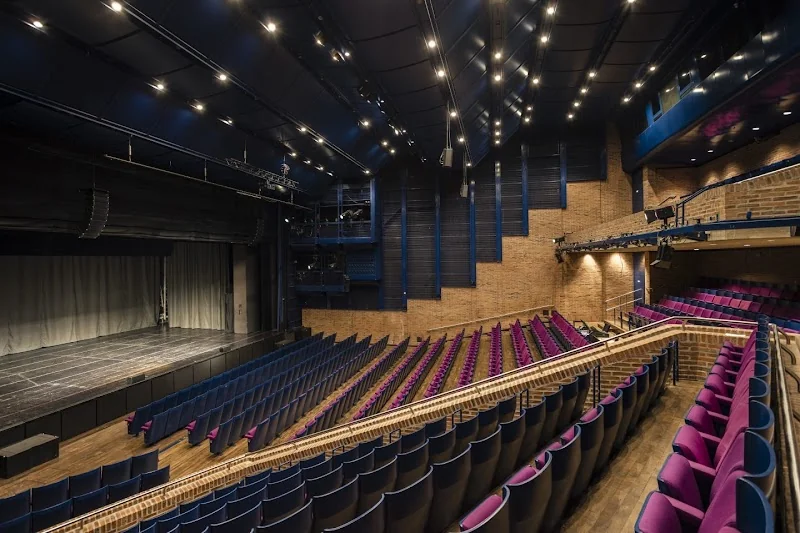
The Carl-Orff-Saal is designed as a multipurpose hall and is one of the most flexible spaces in the venue. In the official documents for Gasteig, it is described in building part PC, on the 1st floor; it comprises approximately 600 visitor seats, of which 10 are wheelchair spaces. The FAT CAT page mentions 610 seats for the interim use, also with 10 wheelchair spaces, so it is best to estimate around 600 to 610 seats for practical purposes. What matters less is the exact number than the fact that the hall is designed for various seating and usage options. The room is intended not only for classical concert formats but also for theater, dance, and readings. The official FAT CAT page additionally mentions a stage measuring 14 by 8 meters at a height of 1.2 meters. This makes the hall large enough for various productions without losing its proximity to the audience. This combination of scalability and intimacy makes the Carl-Orff-Saal interesting for organizers and audiences alike. ([fatcat-muc.de](https://fatcat-muc.de/carl-orff-saal/?utm_source=openai))
Additionally, the accessibility orientation is a crucial selection criterion for many visitors. Gasteig provides induction loops for the hearing impaired for the Carl-Orff-Saal and the connected foyer, which are active during lectures, discussions, and film events. Together with the wheelchair spaces, this creates a space that is not only flexible but also inclusively usable. For inquiries about seats or seating plans, it is also relevant that the seating arrangement may vary depending on the event. Therefore, those looking for the best seats should not rely on a single fixed seating plan but should always consider the specific format, stage position, and respective seating type. This variability is a typical feature of multipurpose halls: a ballet evening, a reading, or a chamber concert can feel spatially very different from a theater production or a festival format. Therefore, the Carl-Orff-Saal is less a rigid lecture hall than an adaptable cultural space with a clear function and simultaneously remarkable openness for different types of performances. ([gasteig.de](https://www.gasteig.de/imgs/Gasteig_Mai2021_Web.pdf?x84212=&utm_source=openai))
Events, Tickets, and Typical Formats in the Old Gasteig
The keyword list around the Carl-Orff-Saal clearly shows that visitors are not only looking for the space itself but also for specific events, dates, and tickets. This fits well with the current usage profile of the hall, as the official FAT CAT page describes it as a venue for theater performances, concerts, dance, and readings. The current event pages also feature classical formats and cross-genre productions, such as ballet evenings like The Nutcracker or Swan Lake, as well as concert evenings like Yasmin Levy. This mix explains why the Carl-Orff-Saal remains relevant for both cultural audiences and broader event interests. Those searching for specific date queries usually think of individual performances, not a permanently identical annual program. This is precisely why search patterns like "Dec 2", "Dec 8", or "Dec 17" are constantly changing and are more signals for individual productions than for a fixed performance schedule. For visitors, this is an important indication: the Carl-Orff-Saal is not a venue with an unchanging permanent program but a versatile space that accommodates different content depending on the season, organizer, and production. ([fatcat-muc.de](https://fatcat-muc.de/carl-orff-saal/?utm_source=openai))
Historically, the Carl-Orff-Saal was already an important place for performances, galas, and cultural diversity in the old Gasteig. Contributions about Gasteig recall theater performances, the DANCE festival, and film festival galas; the hall itself is also mentioned in memories as a space where Munich's cultural audience and artistic projects met. This is important because it explains today's search intent for the "old Gasteig": many people want to know not only what is currently happening but also what has shaped the hall in the past and how it might develop in the future. For ticket buyers, it is also relevant that the current FAT CAT pages list the space as a bookable venue. This means that dates and availability depend heavily on the respective production, and those planning a specific evening should always check the concrete event page. In practice, the Carl-Orff-Saal is thus a hall for special evenings, not a standard hall with interchangeable use. This mix of cultural ambition, flexibility, and central location makes it equally interesting for classical pieces, spoken-word formats, dance productions, and festival evenings. ([gasteig.de](https://www.gasteig.de/magazin/wir-fuer-den-neuen-gasteig-anton-biebl/?utm_source=openai))
Photos, Reviews, and the Impression on Site
The search queries for photos and reviews show that many people want to get an impression of the Carl-Orff-Saal before a visit. This is understandable, as the hall is not only an event venue but part of a building complex whose architecture and atmosphere are strongly connected to Munich's cultural memory. Official Gasteig materials and press photos repeatedly emphasize the exterior view of the building, the evening character of the structure, and the spatial effect of the large cultural complex at Rosenheimer Platz. Equally important is the foyer, which has historically been described as a connecting space between the Carl-Orff-Saal and the Philharmonie and appears in memory reports as a place of movement, encounter, and orientation. Therefore, those searching for photos often seek not only the hall itself but also the pathways in the building, the facade effect, and the atmosphere in the surroundings. This also explains why image searches are so dominant in this case: the Carl-Orff-Saal is visually closely linked to the old Gasteig, and the building has a high recognition value. ([gasteig.de](https://www.gasteig.de/pressefotos/gasteig-haidhausen/?utm_source=openai))
However, when it comes to reviews, one should read carefully about what exactly is being evaluated. In a multipurpose hall, perception often strongly depends on the respective event: a ballet evening, a reading format, or a festival production creates very different expectations regarding acoustics, sightlines, entry situation, and audience feeling. Therefore, a single review is never the whole truth but rather a snapshot from a specific performance situation. Nevertheless, it can be inferred from the official external presentation that the venue remains attractive to many visitors precisely because of its cultural aura, strong identity, and special location. The combination of an urban environment, cultural density, and spatial versatility is something that many classical event locations do not offer. The Carl-Orff-Saal is thus a place where photos and impressions often become part of the decision even before purchasing a ticket. Therefore, those who want to prepare should not only search for a rigid seating arrangement but also for visual material, program character, and the respective event format. This combination of information and atmosphere makes the hall so present in digital search behavior. ([gasteig.de](https://www.gasteig.de/magazin/wir-fuer-den-neuen-gasteig-anton-biebl/?utm_source=openai))
The Old Gasteig, Its History, and the Significance of the Place
The Gasteig in Haidhausen was ceremonially opened on November 10, 1985, and quickly developed into one of Munich's most important cultural venues. According to Gasteig, the historical complex covers around 80,000 square meters of building area on a plot of about 23,000 square meters; even before the official opening, several institutions moved into their spaces in 1984, including the Munich City Library, the Munich Adult Education Center, and the Richard Strauss Conservatory. Thus, Gasteig early on became a place where education, music, theater, and everyday culture came together under one roof. The official history of the house also emphasizes the origin of the name from the steep path, the "gachen Steig," which led from the banks of the Isar up to the neighborhood. This connection of topography, urban history, and cultural use continues to shape the self-understanding of the place to this day. In retrospectives, Gasteig is also described as one of the most ambitious construction projects of the state capital, which remains distinctive today with its characteristic brick facade and high glass risalit. ([gasteig.de](https://www.gasteig.de/die-geschichte-des-gasteig/?utm_source=openai))
This history is crucial for the significance of the Carl-Orff-Saal because the space has always been part of a larger cultural ecosystem. Over decades, Gasteig has been perceived as an open house where library, school, music, film, and performing arts meet. In anniversary and historical contributions, the place is described as Europe's largest cultural center, which has recorded more than 1,800 events and up to two million visitors per year for many years. This explains why search queries for the Carl-Orff-Saal are often combined with terms like "old Gasteig," "reviews," or "photos": people remember a formative cultural building and want to rediscover the spatial connection. Since the relocation of the main operations to HP8, the historical location remains present, not as a decommissioned remnant but as a place in transition. This interim phase makes the old Gasteig even more interesting for many because it is both familiar and in flux. Therefore, those visiting the Carl-Orff-Saal experience not just a hall but a piece of urban history that continues to evolve in current everyday life. ([gasteig.de](https://www.gasteig.de/en/topics/the-gasteig-turns-40/?utm_source=openai))
The Future of the Carl-Orff-Saal in the New Gasteig
The renovation plans for Gasteig show that the Carl-Orff-Saal is also expected to play a key role in the future. In the official plans, the hall is described as the new home venue of the Munich Chamber Orchestra; at the same time, it is referred to as a multifunctional space with folding parquet that will accommodate up to 800 visitors and enable a wide range of contemporary performing arts, from experimental music theater to films, choral concerts, pop, jazz, and chamber music. This perspective is particularly important for the search intent "old Gasteig" because it explains why the name is not only searched nostalgically but also with a forward-looking approach. The Carl-Orff-Saal thus remains a space between memory and renewal: today in interim use, tomorrow possibly as a modernized multifunctional venue with an expanded profile. This is precisely what makes the place so interesting for cultural audiences, organizers, and people who follow architectural development in Munich. ([gasteig.de](https://www.gasteig.de/sanierungsplaene/?utm_source=openai))
For practical planning, this means: Those currently looking to visit the Carl-Orff-Saal should pay attention to the current Fat Cat events, as real dates, tickets, and uses are published there. Those looking to the future of the venue will find the long-term vision for the renovated location at Rosenheimer Straße in Gasteig. This dual role of present and perspective makes the Carl-Orff-Saal a strong SEO topic: people are simultaneously searching for access, seats, photos, and programs as well as for the historical context of the old Gasteig. Therefore, good content must cover both levels. The Carl-Orff-Saal is today a flexible event space with urban identity, and tomorrow perhaps an even more differentiated multifunctional hall with a new profile. Those who visit it experience not only an evening in Munich but a place that visibly carries its history into the future. ([fatcat-muc.de](https://fatcat-muc.de/ueber-uns/?utm_source=openai))
Sources:
Show moreShow less
Carl-Orff-Saal (Gasteig) | Seats & Photos
The Carl-Orff-Saal in Gasteig is one of the venues in Munich that visitors particularly often search for: Where is the hall located exactly, how many seats are there, how does access work, and what is the current program? These questions show how strongly the Carl-Orff-Saal serves as a cultural venue, orientation point, and memory space. The historical location at Rosenheimer Straße 5 in Munich is currently in interim use and is being operated under the name Fat Cat Munich, while Gasteig has concentrated its main activities in HP8 in Sendling since 2021. Therefore, those searching for the Carl-Orff-Saal today are looking not only for an address but also for a piece of Munich's cultural history in a transitional phase where the past, present, and future of the venue visibly converge. For good planning, the topics of seats, access, parking, accessibility, typical event formats, and the question of photos or reviews are particularly important. ([gasteig.de](https://www.gasteig.de/standorte-anfahrt/?utm_source=openai))
Rosenheimer Straße, Access and Parking at the Carl-Orff-Saal
The most important orientation for the Carl-Orff-Saal is the address Rosenheimer Straße 5, 81667 Munich. The building is located in the Haidhausen district, in close proximity to Rosenheimer Platz, and is historically closely linked to Gasteig. For public transport access, Gasteig mentions the S-Bahn lines S1 to S8 as well as tram 25 to the stop Rosenheimer Platz. This makes the location very well connected to the Munich network and suitable for visitors who wish to arrive without a car. Those arriving by car can continue to use the parking garage at Gasteig; the entrance is via Rosenheimer Straße. The current pages of Gasteig also mention an event rate, which is billed as a 4-hour flat rate with additional hours. This is particularly helpful for evening events, as one can better calculate the parking time in advance. For many visitors, it is also important that the Carl-Orff-Saal should not be confused with Gasteig HP8: HP8 is located in Sendling, while the Carl-Orff-Saal is at the old location in Haidhausen. This distinction saves time and prevents typical navigation errors during concert and theater visits. ([gasteig.de](https://www.gasteig.de/standorte-anfahrt/?utm_source=openai))
It is particularly practical that the address Rosenheimer Straße 5 should not be viewed in isolation but in the context of the entire area. The surroundings include the old Gasteig, interim uses, the connection to Rosenheimer Platz, and other municipal facilities in the vicinity. Those who orient themselves early will find the entrance to the parking garage more easily, can better assess the paths in the building, and avoid rush before the event starts. Especially on sold-out evenings or productions with many visitors, a buffer of at least 20 to 30 minutes is worthwhile. The location is urban, densely built, and well developed, but it is not a smooth event resort with a spacious forecourt; this is part of the character of the venue. From an SEO perspective, these factors also explain the strong search signals around Rosenheimer Straße, access, parking, and address: Many people want to concretely locate the venue before their visit rather than orienting themselves on-site. The Carl-Orff-Saal benefits from its location at a well-known junction and from the fact that the parking garage remains accessible. ([gasteig.de](https://www.gasteig.de/standorte-anfahrt/?utm_source=openai))
Seats, Room Structure, and Accessibility in the Carl-Orff-Saal
The Carl-Orff-Saal is designed as a multipurpose hall and is one of the most flexible spaces in the venue. In the official documents for Gasteig, it is described in building part PC, on the 1st floor; it comprises approximately 600 visitor seats, of which 10 are wheelchair spaces. The FAT CAT page mentions 610 seats for the interim use, also with 10 wheelchair spaces, so it is best to estimate around 600 to 610 seats for practical purposes. What matters less is the exact number than the fact that the hall is designed for various seating and usage options. The room is intended not only for classical concert formats but also for theater, dance, and readings. The official FAT CAT page additionally mentions a stage measuring 14 by 8 meters at a height of 1.2 meters. This makes the hall large enough for various productions without losing its proximity to the audience. This combination of scalability and intimacy makes the Carl-Orff-Saal interesting for organizers and audiences alike. ([fatcat-muc.de](https://fatcat-muc.de/carl-orff-saal/?utm_source=openai))
Additionally, the accessibility orientation is a crucial selection criterion for many visitors. Gasteig provides induction loops for the hearing impaired for the Carl-Orff-Saal and the connected foyer, which are active during lectures, discussions, and film events. Together with the wheelchair spaces, this creates a space that is not only flexible but also inclusively usable. For inquiries about seats or seating plans, it is also relevant that the seating arrangement may vary depending on the event. Therefore, those looking for the best seats should not rely on a single fixed seating plan but should always consider the specific format, stage position, and respective seating type. This variability is a typical feature of multipurpose halls: a ballet evening, a reading, or a chamber concert can feel spatially very different from a theater production or a festival format. Therefore, the Carl-Orff-Saal is less a rigid lecture hall than an adaptable cultural space with a clear function and simultaneously remarkable openness for different types of performances. ([gasteig.de](https://www.gasteig.de/imgs/Gasteig_Mai2021_Web.pdf?x84212=&utm_source=openai))
Events, Tickets, and Typical Formats in the Old Gasteig
The keyword list around the Carl-Orff-Saal clearly shows that visitors are not only looking for the space itself but also for specific events, dates, and tickets. This fits well with the current usage profile of the hall, as the official FAT CAT page describes it as a venue for theater performances, concerts, dance, and readings. The current event pages also feature classical formats and cross-genre productions, such as ballet evenings like The Nutcracker or Swan Lake, as well as concert evenings like Yasmin Levy. This mix explains why the Carl-Orff-Saal remains relevant for both cultural audiences and broader event interests. Those searching for specific date queries usually think of individual performances, not a permanently identical annual program. This is precisely why search patterns like "Dec 2", "Dec 8", or "Dec 17" are constantly changing and are more signals for individual productions than for a fixed performance schedule. For visitors, this is an important indication: the Carl-Orff-Saal is not a venue with an unchanging permanent program but a versatile space that accommodates different content depending on the season, organizer, and production. ([fatcat-muc.de](https://fatcat-muc.de/carl-orff-saal/?utm_source=openai))
Historically, the Carl-Orff-Saal was already an important place for performances, galas, and cultural diversity in the old Gasteig. Contributions about Gasteig recall theater performances, the DANCE festival, and film festival galas; the hall itself is also mentioned in memories as a space where Munich's cultural audience and artistic projects met. This is important because it explains today's search intent for the "old Gasteig": many people want to know not only what is currently happening but also what has shaped the hall in the past and how it might develop in the future. For ticket buyers, it is also relevant that the current FAT CAT pages list the space as a bookable venue. This means that dates and availability depend heavily on the respective production, and those planning a specific evening should always check the concrete event page. In practice, the Carl-Orff-Saal is thus a hall for special evenings, not a standard hall with interchangeable use. This mix of cultural ambition, flexibility, and central location makes it equally interesting for classical pieces, spoken-word formats, dance productions, and festival evenings. ([gasteig.de](https://www.gasteig.de/magazin/wir-fuer-den-neuen-gasteig-anton-biebl/?utm_source=openai))
Photos, Reviews, and the Impression on Site
The search queries for photos and reviews show that many people want to get an impression of the Carl-Orff-Saal before a visit. This is understandable, as the hall is not only an event venue but part of a building complex whose architecture and atmosphere are strongly connected to Munich's cultural memory. Official Gasteig materials and press photos repeatedly emphasize the exterior view of the building, the evening character of the structure, and the spatial effect of the large cultural complex at Rosenheimer Platz. Equally important is the foyer, which has historically been described as a connecting space between the Carl-Orff-Saal and the Philharmonie and appears in memory reports as a place of movement, encounter, and orientation. Therefore, those searching for photos often seek not only the hall itself but also the pathways in the building, the facade effect, and the atmosphere in the surroundings. This also explains why image searches are so dominant in this case: the Carl-Orff-Saal is visually closely linked to the old Gasteig, and the building has a high recognition value. ([gasteig.de](https://www.gasteig.de/pressefotos/gasteig-haidhausen/?utm_source=openai))
However, when it comes to reviews, one should read carefully about what exactly is being evaluated. In a multipurpose hall, perception often strongly depends on the respective event: a ballet evening, a reading format, or a festival production creates very different expectations regarding acoustics, sightlines, entry situation, and audience feeling. Therefore, a single review is never the whole truth but rather a snapshot from a specific performance situation. Nevertheless, it can be inferred from the official external presentation that the venue remains attractive to many visitors precisely because of its cultural aura, strong identity, and special location. The combination of an urban environment, cultural density, and spatial versatility is something that many classical event locations do not offer. The Carl-Orff-Saal is thus a place where photos and impressions often become part of the decision even before purchasing a ticket. Therefore, those who want to prepare should not only search for a rigid seating arrangement but also for visual material, program character, and the respective event format. This combination of information and atmosphere makes the hall so present in digital search behavior. ([gasteig.de](https://www.gasteig.de/magazin/wir-fuer-den-neuen-gasteig-anton-biebl/?utm_source=openai))
The Old Gasteig, Its History, and the Significance of the Place
The Gasteig in Haidhausen was ceremonially opened on November 10, 1985, and quickly developed into one of Munich's most important cultural venues. According to Gasteig, the historical complex covers around 80,000 square meters of building area on a plot of about 23,000 square meters; even before the official opening, several institutions moved into their spaces in 1984, including the Munich City Library, the Munich Adult Education Center, and the Richard Strauss Conservatory. Thus, Gasteig early on became a place where education, music, theater, and everyday culture came together under one roof. The official history of the house also emphasizes the origin of the name from the steep path, the "gachen Steig," which led from the banks of the Isar up to the neighborhood. This connection of topography, urban history, and cultural use continues to shape the self-understanding of the place to this day. In retrospectives, Gasteig is also described as one of the most ambitious construction projects of the state capital, which remains distinctive today with its characteristic brick facade and high glass risalit. ([gasteig.de](https://www.gasteig.de/die-geschichte-des-gasteig/?utm_source=openai))
This history is crucial for the significance of the Carl-Orff-Saal because the space has always been part of a larger cultural ecosystem. Over decades, Gasteig has been perceived as an open house where library, school, music, film, and performing arts meet. In anniversary and historical contributions, the place is described as Europe's largest cultural center, which has recorded more than 1,800 events and up to two million visitors per year for many years. This explains why search queries for the Carl-Orff-Saal are often combined with terms like "old Gasteig," "reviews," or "photos": people remember a formative cultural building and want to rediscover the spatial connection. Since the relocation of the main operations to HP8, the historical location remains present, not as a decommissioned remnant but as a place in transition. This interim phase makes the old Gasteig even more interesting for many because it is both familiar and in flux. Therefore, those visiting the Carl-Orff-Saal experience not just a hall but a piece of urban history that continues to evolve in current everyday life. ([gasteig.de](https://www.gasteig.de/en/topics/the-gasteig-turns-40/?utm_source=openai))
The Future of the Carl-Orff-Saal in the New Gasteig
The renovation plans for Gasteig show that the Carl-Orff-Saal is also expected to play a key role in the future. In the official plans, the hall is described as the new home venue of the Munich Chamber Orchestra; at the same time, it is referred to as a multifunctional space with folding parquet that will accommodate up to 800 visitors and enable a wide range of contemporary performing arts, from experimental music theater to films, choral concerts, pop, jazz, and chamber music. This perspective is particularly important for the search intent "old Gasteig" because it explains why the name is not only searched nostalgically but also with a forward-looking approach. The Carl-Orff-Saal thus remains a space between memory and renewal: today in interim use, tomorrow possibly as a modernized multifunctional venue with an expanded profile. This is precisely what makes the place so interesting for cultural audiences, organizers, and people who follow architectural development in Munich. ([gasteig.de](https://www.gasteig.de/sanierungsplaene/?utm_source=openai))
For practical planning, this means: Those currently looking to visit the Carl-Orff-Saal should pay attention to the current Fat Cat events, as real dates, tickets, and uses are published there. Those looking to the future of the venue will find the long-term vision for the renovated location at Rosenheimer Straße in Gasteig. This dual role of present and perspective makes the Carl-Orff-Saal a strong SEO topic: people are simultaneously searching for access, seats, photos, and programs as well as for the historical context of the old Gasteig. Therefore, good content must cover both levels. The Carl-Orff-Saal is today a flexible event space with urban identity, and tomorrow perhaps an even more differentiated multifunctional hall with a new profile. Those who visit it experience not only an evening in Munich but a place that visibly carries its history into the future. ([fatcat-muc.de](https://fatcat-muc.de/ueber-uns/?utm_source=openai))
Sources:
Carl-Orff-Saal (Gasteig) | Seats & Photos
The Carl-Orff-Saal in Gasteig is one of the venues in Munich that visitors particularly often search for: Where is the hall located exactly, how many seats are there, how does access work, and what is the current program? These questions show how strongly the Carl-Orff-Saal serves as a cultural venue, orientation point, and memory space. The historical location at Rosenheimer Straße 5 in Munich is currently in interim use and is being operated under the name Fat Cat Munich, while Gasteig has concentrated its main activities in HP8 in Sendling since 2021. Therefore, those searching for the Carl-Orff-Saal today are looking not only for an address but also for a piece of Munich's cultural history in a transitional phase where the past, present, and future of the venue visibly converge. For good planning, the topics of seats, access, parking, accessibility, typical event formats, and the question of photos or reviews are particularly important. ([gasteig.de](https://www.gasteig.de/standorte-anfahrt/?utm_source=openai))
Rosenheimer Straße, Access and Parking at the Carl-Orff-Saal
The most important orientation for the Carl-Orff-Saal is the address Rosenheimer Straße 5, 81667 Munich. The building is located in the Haidhausen district, in close proximity to Rosenheimer Platz, and is historically closely linked to Gasteig. For public transport access, Gasteig mentions the S-Bahn lines S1 to S8 as well as tram 25 to the stop Rosenheimer Platz. This makes the location very well connected to the Munich network and suitable for visitors who wish to arrive without a car. Those arriving by car can continue to use the parking garage at Gasteig; the entrance is via Rosenheimer Straße. The current pages of Gasteig also mention an event rate, which is billed as a 4-hour flat rate with additional hours. This is particularly helpful for evening events, as one can better calculate the parking time in advance. For many visitors, it is also important that the Carl-Orff-Saal should not be confused with Gasteig HP8: HP8 is located in Sendling, while the Carl-Orff-Saal is at the old location in Haidhausen. This distinction saves time and prevents typical navigation errors during concert and theater visits. ([gasteig.de](https://www.gasteig.de/standorte-anfahrt/?utm_source=openai))
It is particularly practical that the address Rosenheimer Straße 5 should not be viewed in isolation but in the context of the entire area. The surroundings include the old Gasteig, interim uses, the connection to Rosenheimer Platz, and other municipal facilities in the vicinity. Those who orient themselves early will find the entrance to the parking garage more easily, can better assess the paths in the building, and avoid rush before the event starts. Especially on sold-out evenings or productions with many visitors, a buffer of at least 20 to 30 minutes is worthwhile. The location is urban, densely built, and well developed, but it is not a smooth event resort with a spacious forecourt; this is part of the character of the venue. From an SEO perspective, these factors also explain the strong search signals around Rosenheimer Straße, access, parking, and address: Many people want to concretely locate the venue before their visit rather than orienting themselves on-site. The Carl-Orff-Saal benefits from its location at a well-known junction and from the fact that the parking garage remains accessible. ([gasteig.de](https://www.gasteig.de/standorte-anfahrt/?utm_source=openai))
Seats, Room Structure, and Accessibility in the Carl-Orff-Saal
The Carl-Orff-Saal is designed as a multipurpose hall and is one of the most flexible spaces in the venue. In the official documents for Gasteig, it is described in building part PC, on the 1st floor; it comprises approximately 600 visitor seats, of which 10 are wheelchair spaces. The FAT CAT page mentions 610 seats for the interim use, also with 10 wheelchair spaces, so it is best to estimate around 600 to 610 seats for practical purposes. What matters less is the exact number than the fact that the hall is designed for various seating and usage options. The room is intended not only for classical concert formats but also for theater, dance, and readings. The official FAT CAT page additionally mentions a stage measuring 14 by 8 meters at a height of 1.2 meters. This makes the hall large enough for various productions without losing its proximity to the audience. This combination of scalability and intimacy makes the Carl-Orff-Saal interesting for organizers and audiences alike. ([fatcat-muc.de](https://fatcat-muc.de/carl-orff-saal/?utm_source=openai))
Additionally, the accessibility orientation is a crucial selection criterion for many visitors. Gasteig provides induction loops for the hearing impaired for the Carl-Orff-Saal and the connected foyer, which are active during lectures, discussions, and film events. Together with the wheelchair spaces, this creates a space that is not only flexible but also inclusively usable. For inquiries about seats or seating plans, it is also relevant that the seating arrangement may vary depending on the event. Therefore, those looking for the best seats should not rely on a single fixed seating plan but should always consider the specific format, stage position, and respective seating type. This variability is a typical feature of multipurpose halls: a ballet evening, a reading, or a chamber concert can feel spatially very different from a theater production or a festival format. Therefore, the Carl-Orff-Saal is less a rigid lecture hall than an adaptable cultural space with a clear function and simultaneously remarkable openness for different types of performances. ([gasteig.de](https://www.gasteig.de/imgs/Gasteig_Mai2021_Web.pdf?x84212=&utm_source=openai))
Events, Tickets, and Typical Formats in the Old Gasteig
The keyword list around the Carl-Orff-Saal clearly shows that visitors are not only looking for the space itself but also for specific events, dates, and tickets. This fits well with the current usage profile of the hall, as the official FAT CAT page describes it as a venue for theater performances, concerts, dance, and readings. The current event pages also feature classical formats and cross-genre productions, such as ballet evenings like The Nutcracker or Swan Lake, as well as concert evenings like Yasmin Levy. This mix explains why the Carl-Orff-Saal remains relevant for both cultural audiences and broader event interests. Those searching for specific date queries usually think of individual performances, not a permanently identical annual program. This is precisely why search patterns like "Dec 2", "Dec 8", or "Dec 17" are constantly changing and are more signals for individual productions than for a fixed performance schedule. For visitors, this is an important indication: the Carl-Orff-Saal is not a venue with an unchanging permanent program but a versatile space that accommodates different content depending on the season, organizer, and production. ([fatcat-muc.de](https://fatcat-muc.de/carl-orff-saal/?utm_source=openai))
Historically, the Carl-Orff-Saal was already an important place for performances, galas, and cultural diversity in the old Gasteig. Contributions about Gasteig recall theater performances, the DANCE festival, and film festival galas; the hall itself is also mentioned in memories as a space where Munich's cultural audience and artistic projects met. This is important because it explains today's search intent for the "old Gasteig": many people want to know not only what is currently happening but also what has shaped the hall in the past and how it might develop in the future. For ticket buyers, it is also relevant that the current FAT CAT pages list the space as a bookable venue. This means that dates and availability depend heavily on the respective production, and those planning a specific evening should always check the concrete event page. In practice, the Carl-Orff-Saal is thus a hall for special evenings, not a standard hall with interchangeable use. This mix of cultural ambition, flexibility, and central location makes it equally interesting for classical pieces, spoken-word formats, dance productions, and festival evenings. ([gasteig.de](https://www.gasteig.de/magazin/wir-fuer-den-neuen-gasteig-anton-biebl/?utm_source=openai))
Photos, Reviews, and the Impression on Site
The search queries for photos and reviews show that many people want to get an impression of the Carl-Orff-Saal before a visit. This is understandable, as the hall is not only an event venue but part of a building complex whose architecture and atmosphere are strongly connected to Munich's cultural memory. Official Gasteig materials and press photos repeatedly emphasize the exterior view of the building, the evening character of the structure, and the spatial effect of the large cultural complex at Rosenheimer Platz. Equally important is the foyer, which has historically been described as a connecting space between the Carl-Orff-Saal and the Philharmonie and appears in memory reports as a place of movement, encounter, and orientation. Therefore, those searching for photos often seek not only the hall itself but also the pathways in the building, the facade effect, and the atmosphere in the surroundings. This also explains why image searches are so dominant in this case: the Carl-Orff-Saal is visually closely linked to the old Gasteig, and the building has a high recognition value. ([gasteig.de](https://www.gasteig.de/pressefotos/gasteig-haidhausen/?utm_source=openai))
However, when it comes to reviews, one should read carefully about what exactly is being evaluated. In a multipurpose hall, perception often strongly depends on the respective event: a ballet evening, a reading format, or a festival production creates very different expectations regarding acoustics, sightlines, entry situation, and audience feeling. Therefore, a single review is never the whole truth but rather a snapshot from a specific performance situation. Nevertheless, it can be inferred from the official external presentation that the venue remains attractive to many visitors precisely because of its cultural aura, strong identity, and special location. The combination of an urban environment, cultural density, and spatial versatility is something that many classical event locations do not offer. The Carl-Orff-Saal is thus a place where photos and impressions often become part of the decision even before purchasing a ticket. Therefore, those who want to prepare should not only search for a rigid seating arrangement but also for visual material, program character, and the respective event format. This combination of information and atmosphere makes the hall so present in digital search behavior. ([gasteig.de](https://www.gasteig.de/magazin/wir-fuer-den-neuen-gasteig-anton-biebl/?utm_source=openai))
The Old Gasteig, Its History, and the Significance of the Place
The Gasteig in Haidhausen was ceremonially opened on November 10, 1985, and quickly developed into one of Munich's most important cultural venues. According to Gasteig, the historical complex covers around 80,000 square meters of building area on a plot of about 23,000 square meters; even before the official opening, several institutions moved into their spaces in 1984, including the Munich City Library, the Munich Adult Education Center, and the Richard Strauss Conservatory. Thus, Gasteig early on became a place where education, music, theater, and everyday culture came together under one roof. The official history of the house also emphasizes the origin of the name from the steep path, the "gachen Steig," which led from the banks of the Isar up to the neighborhood. This connection of topography, urban history, and cultural use continues to shape the self-understanding of the place to this day. In retrospectives, Gasteig is also described as one of the most ambitious construction projects of the state capital, which remains distinctive today with its characteristic brick facade and high glass risalit. ([gasteig.de](https://www.gasteig.de/die-geschichte-des-gasteig/?utm_source=openai))
This history is crucial for the significance of the Carl-Orff-Saal because the space has always been part of a larger cultural ecosystem. Over decades, Gasteig has been perceived as an open house where library, school, music, film, and performing arts meet. In anniversary and historical contributions, the place is described as Europe's largest cultural center, which has recorded more than 1,800 events and up to two million visitors per year for many years. This explains why search queries for the Carl-Orff-Saal are often combined with terms like "old Gasteig," "reviews," or "photos": people remember a formative cultural building and want to rediscover the spatial connection. Since the relocation of the main operations to HP8, the historical location remains present, not as a decommissioned remnant but as a place in transition. This interim phase makes the old Gasteig even more interesting for many because it is both familiar and in flux. Therefore, those visiting the Carl-Orff-Saal experience not just a hall but a piece of urban history that continues to evolve in current everyday life. ([gasteig.de](https://www.gasteig.de/en/topics/the-gasteig-turns-40/?utm_source=openai))
The Future of the Carl-Orff-Saal in the New Gasteig
The renovation plans for Gasteig show that the Carl-Orff-Saal is also expected to play a key role in the future. In the official plans, the hall is described as the new home venue of the Munich Chamber Orchestra; at the same time, it is referred to as a multifunctional space with folding parquet that will accommodate up to 800 visitors and enable a wide range of contemporary performing arts, from experimental music theater to films, choral concerts, pop, jazz, and chamber music. This perspective is particularly important for the search intent "old Gasteig" because it explains why the name is not only searched nostalgically but also with a forward-looking approach. The Carl-Orff-Saal thus remains a space between memory and renewal: today in interim use, tomorrow possibly as a modernized multifunctional venue with an expanded profile. This is precisely what makes the place so interesting for cultural audiences, organizers, and people who follow architectural development in Munich. ([gasteig.de](https://www.gasteig.de/sanierungsplaene/?utm_source=openai))
For practical planning, this means: Those currently looking to visit the Carl-Orff-Saal should pay attention to the current Fat Cat events, as real dates, tickets, and uses are published there. Those looking to the future of the venue will find the long-term vision for the renovated location at Rosenheimer Straße in Gasteig. This dual role of present and perspective makes the Carl-Orff-Saal a strong SEO topic: people are simultaneously searching for access, seats, photos, and programs as well as for the historical context of the old Gasteig. Therefore, good content must cover both levels. The Carl-Orff-Saal is today a flexible event space with urban identity, and tomorrow perhaps an even more differentiated multifunctional hall with a new profile. Those who visit it experience not only an evening in Munich but a place that visibly carries its history into the future. ([fatcat-muc.de](https://fatcat-muc.de/ueber-uns/?utm_source=openai))
Sources:
Upcoming Events
No events found
Frequently Asked Questions
Reviews
No reviews found