
München
Residenzstraße 1, 80333 München-Altstadt-Lehel, Deutschland
Cuvilliéstheater | Tickets & Schedule
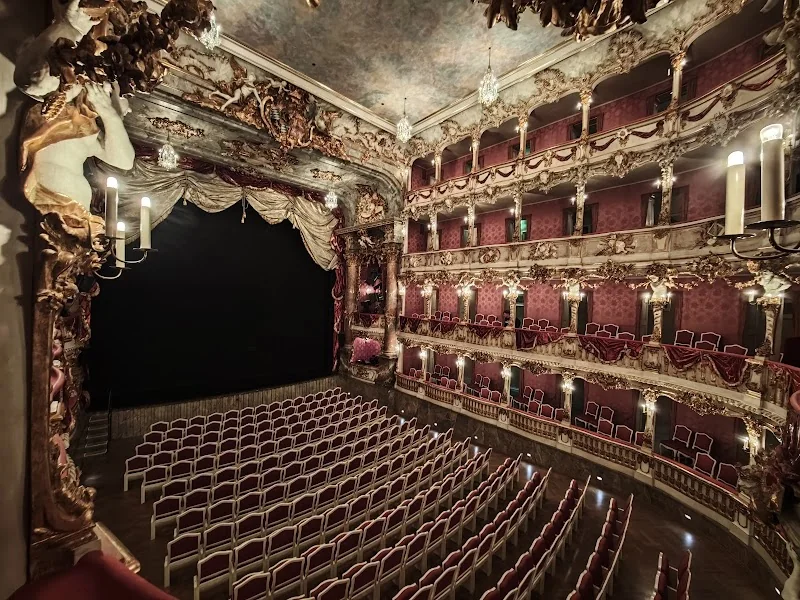
The Cuvilliéstheater in Munich is one of those venues that you don't just visit, but consciously experience. It is located in the Residenz at Residenzstraße 1 and has been considered one of the most beautiful Rococo theaters in Europe since the 18th century, as well as one of the most important Rococo theaters in Germany. Today, it serves as a venue, museum, and event location, whose white-red-gold decor, artistic boxes, and intimate size have an immediate impact. Those looking for tickets, schedule, entrance, seating plan, or photos will quickly encounter a house that unusually closely connects history, architecture, and stage life. Access is via the courtyard of the Residenz, and it is precisely this special location in the middle of the historical ensemble that adds to the charm of the place. ([muenchen.de](https://www.muenchen.de/en/events/stages/cuvilliestheater?utm_source=openai))
Tickets, Schedule, and Program at the Cuvilliéstheater
For practical planning, it is important to note that the Cuvilliéstheater does not function as an isolated event location, but as a fixed venue in the cultural fabric of the Munich Residenz. The Residenztheater explicitly lists the house as its own stage and publishes the schedule for ongoing performances there. On the official pages of the Bavarian State Opera, you can also find the seating plans for their main venues, which also include the Cuvilliéstheater. This clearly separates the paths to the program, seat selection, and ticket inquiries, but they are closely interconnected: Those wishing to attend a performance orient themselves to the official schedule of the house, the respective play pages, and the seating plans for seat selection. ([residenztheater.de](https://www.residenztheater.de/cuvillestheater?utm_source=openai))
The ticket sales are traditionally and service-oriented organized. According to official visitor information, tickets for the Cuvilliéstheater and the general ticket are available at the box office in the Cuvilliéstheater. For general ticket inquiries, the Bavarian State Opera refers to their day box office, which is open from Monday to Saturday from 10 AM to 7 PM. This is convenient for visitors, as they can clarify not only the respective performance but also suitable seating categories, discounts, and other questions directly. Those who want to inform themselves in advance can also find filters for premieres, language, theater days, and other selection options on the official schedule pages. ([residenz-muenchen.de](https://www.residenz-muenchen.de/?utm_source=openai))
Content-wise, the program of the house is precisely tailored to its special size and atmosphere. The official city page describes the Cuvilliéstheater as particularly popular for small operas, festive concerts, and plays. The Residenztheater calls it a stage for numerous other events; the Bavarian State Opera also uses it for productions and concerts. Thus, the house stands for a repertoire that ranges from classical drama to musical formats and clearly differs from the large venues in Munich that accommodate hundreds or thousands of seats. It is precisely this mix of historical backdrop and concentrated stage form that makes the schedule so attractive for culture-interested visitors. ([muenchen.de](https://www.muenchen.de/en/events/stages/cuvilliestheater?utm_source=openai))
Directions, Entrance, and Parking at Residenzstraße 1
The address is clear: Residenzstraße 1, 80333 Munich. For arrival, it is important to note that the Cuvilliéstheater is located within the complex of the Residenz and is not entered like a free-standing theater building from the street. The official Munich information page mentions access via the courtyard; it is precisely there that the entrance integrates the house into the courtyard and museum architecture of the Residenz. Therefore, those coming for the first time should plan not only the house number but especially the path through the historical ensemble. The theater is thus part of a larger cultural space, which also includes other areas of the Residenz. ([muenchen.de](https://www.muenchen.de/en/events/stages/cuvilliestheater?utm_source=openai))
For public transport, the city of Munich recommends tram 17 to the Nationaltheater stop and then a short walk. This is particularly pleasant because the location is in the city center and the area around the Residenz is very well developed. Those coming from the center usually reach the house without complicated transfers. At the same time, the Cuvilliéstheater is in an area where many visitors combine several cultural destinations, such as the Residenz, the Nationaltheater, or a walk through the old town. The central location is therefore not just a marketing point, but a real practical advantage for theater visits in the evening or museum visits in the afternoon. ([muenchen.de](https://www.muenchen.de/en/events/stages/cuvilliestheater?utm_source=openai))
When parking, some planning is advisable, as the house does not have its own parking spaces. However, the official city page mentions paid parking options, such as the underground garage of the Nationaltheater. For visitors, this means: Those arriving by car should allow enough time for arrival, parking, and the walk through the city center. Especially for evening performances, it is advisable to arrive earlier so that the walk through the courtyard remains relaxed and one does not arrive under time pressure. This is even more true because the area around the house is one of the most visited cultural zones in Munich. ([muenchen.de](https://www.muenchen.de/en/sights/museums/residence?utm_source=openai))
Seating Plan, Seats, and Capacity in the Rococo Hall
The seating plan of the Cuvilliéstheater is one of the most important information points for the visit. The Bavarian State Opera provides its own seating plans for its main venues, including the Cuvilliéstheater. These not only show the seating categories but also seats and standing places as well as wheelchair spaces and seats with restricted visibility. This is relevant because the house does not function like a modern multipurpose theater but as a historical Rococo hall with a clearly structured room layout. Therefore, those specifically looking for the best view or a certain area should not only look at the price category but also at the location in the seating plan. ([staatsoper.de](https://www.staatsoper.de/saalplaene?utm_source=openai))
According to official city information, the Cuvilliéstheater has four floors, each with 14 boxes designed in red and gold. The number of seats is officially stated as 477. Additionally, the Residenztheater page describes the seating plan such that the parquet is divided into the front rows A to D and rows 1 to 12, followed by parterre boxes, first tier, middle box, second tier, and third tier. This division clearly shows how much the house relies on proximity, sightlines, and tier structure. Those looking for the classic box theater will find a particularly dense spatial experience here. ([muenchen.de](https://www.muenchen.de/veranstaltungen/theaterbuehnen/residenztheater?utm_source=openai))
It is precisely this structure that also shapes the quality of the seats. The seats closest to the stage are in the front parquet, while the boxes and tiers each create their own visual and spatial experiences. The official seating plan page also lists price groups and sometimes special notes on sightlines. Thus, the Cuvilliéstheater is a good example of a historical house where seat selection is not only a matter of price but also a question of the desired theater experience. Those who want to experience the stage very closely plan differently than someone who wants to view the hall as a total work of art. This is where the special charm of this house lies. ([residenztheater.de](https://www.residenztheater.de/cuvillestheater?utm_source=openai))
Accessibility and Service for Your Visit
For visitors with mobility impairments, there is pleasantly concrete information. The official Munich page for the Cuvilliéstheater mentions step-free access via the courtyard as well as an accessible restroom. Additionally, two wheelchair spaces are designated in the parquet next to row 12, and an induction system is available at all seats. This shows that a historical building does not automatically have to be inaccessible, but can remain usable today with clear solutions. Those who rely on an accessible visit should check the indicated paths and seating areas in advance and, if necessary, use the service contact. ([muenchen.de](https://www.muenchen.de/en/events/stages/cuvilliestheater?utm_source=openai))
The city of Munich adds to this information with further service notes. Among other things, a 3D tactile model is mentioned in front of the main entrance of the Residenz, and special tours for wheelchair users are available upon request. This is particularly helpful for guests who not only want to attend a performance but also want to better understand the architecture of the house. Since the Cuvilliéstheater is part of a larger museum and theater complex, visitors also benefit from the infrastructure of the entire Residenz. Especially in a historical Rococo theater, it is remarkable that accessibility is not communicated as an addition but as a self-evident visitor information. ([muenchen.de](https://www.muenchen.de/en/sights/museums/residence?utm_source=openai))
History of the Cuvilliéstheater from 1751 to 1958
The history of the house begins in the mid-18th century. According to official information from the Bavarian Palace Administration, Elector Max III. Joseph had a new opera house built between 1751 and 1755, whose architect was François Cuvilliés the Elder. The theater was built in close proximity to the Residenz and was initially used exclusively for the court society. Thus, even the early years show that it was not an ordinary theater, but a representative and festive house. Many magnificent opera productions took place here, and in 1781, Mozart's Idomeneo was performed here for the first time. This connection between music history and court architecture remains a core aspect of the house's significance to this day. ([residenz-muenchen.de](https://www.muenchen.de/englisch/cuv/index.htm?utm_source=openai))
The construction and usage history is marked by losses and rescue. The theater was severely damaged or destroyed in World War II; the official page names March 18, 1944, as the date of destruction. The intricately carved and colorfully framed box decorations of the auditorium were preserved, as they had already been stored away in 1943. In 1956, these parts were transferred to the Bavarian Palace Administration and were painstakingly restored until 1958. They were then reinstalled in the so-called pharmacy stock of the Residenz. This historical rescue process makes the current house so special: it is both a reconstruction and an original, a theater space with rescued substance and a new shell. ([residenz-muenchen.de](https://www.muenchen.de/deutsch/cuv/index.htm?utm_source=openai))
The reopening took place on June 14, 1958, in the anniversary year of the city with Mozart's The Marriage of Figaro. Thus, the Cuvilliéstheater was once again part of the cultural life in Munich and not just a museum piece. The official description also emphasizes that the current theater is accessible from the courtyard of the Residenz as the Cuvilliés Theater. At the same time, it is important to note that between 1948 and 1951, the New Residenztheater was built on the site of the former theater building. Thus, there is a complex historical juxtaposition of loss, reconstruction, and ongoing use in close proximity, which can be very well understood on site. ([munich.travel](https://www.munich.travel/en/pois/arts-culture/cuvillies-theater?utm_source=openai))
The architectural significance of the house goes beyond mere theater history. The Residenz and its extensions form one of the largest museum complexes in Bavaria, and the Cuvilliéstheater is one of its cultural cornerstones. The Bavarian Palace Administration describes the room as a white-red-gold theater space from the mid-18th century with overflowing figurative and ornamental decor in the rocaille style. The official city page calls it one of the most beautiful Rococo theaters in Europe, and the Palace Administration also speaks of a total work of art of European significance. This is not just a mere compliment but a comprehensible classification of what visitors see immediately upon entering. ([residenz-muenchen.de](https://www.muenchen.de/deutsch/cuv/index.htm?utm_source=openai))
Photos, Atmosphere, and Why the House is So Special
Those looking for photos or impressions will find a wealth of strong motifs at the Cuvilliéstheater. The official pages show details such as the Elector's box, alliance coats of arms, head cartouches, rocaille, atlantean herms, and views into the tiers. It is precisely these excerpts that make it understandable why the house is visually so effective: It is not just about a stage, but about a fully designed space in which decor, architecture, and seating arrangement merge. The color scheme of white, red, and gold is as strong in the images as in the real space and is a central reason why the theater is considered a Rococo jewel. ([residenz-muenchen.de](https://www.muenchen.de/deutsch/cuv/index.htm?utm_source=openai))
The atmosphere of the house also explains why it is equally interesting for concerts, operas, and plays. The official city page emphasizes its popularity for small operas, festive concerts, and plays, while the Residenztheater refers to its use as a venue and its additional museum role. With 477 seats, clearly structured boxes, and a historical room height, a concentrated theater experience is created that feels different from large multi-genre houses. This is a justified conclusion from the official seating and spatial structure: The space is smaller, denser, and more immediate than many modern houses, making it particularly intense for visitors. ([muenchen.de](https://www.muenchen.de/veranstaltungen/theaterbuehnen/residenztheater?utm_source=openai))
Especially in combination with the location in the middle of the Residenz, a strong overall picture emerges. The Cuvilliéstheater is not just a place for performances but a cultural-historical destination where one can directly read the Munich court and theater history. Those looking for images, reviews, or a special evening in Munich often end up here: at a house that is both elegant, historical, and practically usable. The mix of central location, original Rococo aesthetics, current programming, and museum-like presence makes the Cuvilliéstheater one of the most characteristic cultural places in the city. ([muenchen.de](https://www.muenchen.de/en/events/stages/cuvilliestheater?utm_source=openai))
Sources:
Show moreShow less
Cuvilliéstheater | Tickets & Schedule
The Cuvilliéstheater in Munich is one of those venues that you don't just visit, but consciously experience. It is located in the Residenz at Residenzstraße 1 and has been considered one of the most beautiful Rococo theaters in Europe since the 18th century, as well as one of the most important Rococo theaters in Germany. Today, it serves as a venue, museum, and event location, whose white-red-gold decor, artistic boxes, and intimate size have an immediate impact. Those looking for tickets, schedule, entrance, seating plan, or photos will quickly encounter a house that unusually closely connects history, architecture, and stage life. Access is via the courtyard of the Residenz, and it is precisely this special location in the middle of the historical ensemble that adds to the charm of the place. ([muenchen.de](https://www.muenchen.de/en/events/stages/cuvilliestheater?utm_source=openai))
Tickets, Schedule, and Program at the Cuvilliéstheater
For practical planning, it is important to note that the Cuvilliéstheater does not function as an isolated event location, but as a fixed venue in the cultural fabric of the Munich Residenz. The Residenztheater explicitly lists the house as its own stage and publishes the schedule for ongoing performances there. On the official pages of the Bavarian State Opera, you can also find the seating plans for their main venues, which also include the Cuvilliéstheater. This clearly separates the paths to the program, seat selection, and ticket inquiries, but they are closely interconnected: Those wishing to attend a performance orient themselves to the official schedule of the house, the respective play pages, and the seating plans for seat selection. ([residenztheater.de](https://www.residenztheater.de/cuvillestheater?utm_source=openai))
The ticket sales are traditionally and service-oriented organized. According to official visitor information, tickets for the Cuvilliéstheater and the general ticket are available at the box office in the Cuvilliéstheater. For general ticket inquiries, the Bavarian State Opera refers to their day box office, which is open from Monday to Saturday from 10 AM to 7 PM. This is convenient for visitors, as they can clarify not only the respective performance but also suitable seating categories, discounts, and other questions directly. Those who want to inform themselves in advance can also find filters for premieres, language, theater days, and other selection options on the official schedule pages. ([residenz-muenchen.de](https://www.residenz-muenchen.de/?utm_source=openai))
Content-wise, the program of the house is precisely tailored to its special size and atmosphere. The official city page describes the Cuvilliéstheater as particularly popular for small operas, festive concerts, and plays. The Residenztheater calls it a stage for numerous other events; the Bavarian State Opera also uses it for productions and concerts. Thus, the house stands for a repertoire that ranges from classical drama to musical formats and clearly differs from the large venues in Munich that accommodate hundreds or thousands of seats. It is precisely this mix of historical backdrop and concentrated stage form that makes the schedule so attractive for culture-interested visitors. ([muenchen.de](https://www.muenchen.de/en/events/stages/cuvilliestheater?utm_source=openai))
Directions, Entrance, and Parking at Residenzstraße 1
The address is clear: Residenzstraße 1, 80333 Munich. For arrival, it is important to note that the Cuvilliéstheater is located within the complex of the Residenz and is not entered like a free-standing theater building from the street. The official Munich information page mentions access via the courtyard; it is precisely there that the entrance integrates the house into the courtyard and museum architecture of the Residenz. Therefore, those coming for the first time should plan not only the house number but especially the path through the historical ensemble. The theater is thus part of a larger cultural space, which also includes other areas of the Residenz. ([muenchen.de](https://www.muenchen.de/en/events/stages/cuvilliestheater?utm_source=openai))
For public transport, the city of Munich recommends tram 17 to the Nationaltheater stop and then a short walk. This is particularly pleasant because the location is in the city center and the area around the Residenz is very well developed. Those coming from the center usually reach the house without complicated transfers. At the same time, the Cuvilliéstheater is in an area where many visitors combine several cultural destinations, such as the Residenz, the Nationaltheater, or a walk through the old town. The central location is therefore not just a marketing point, but a real practical advantage for theater visits in the evening or museum visits in the afternoon. ([muenchen.de](https://www.muenchen.de/en/events/stages/cuvilliestheater?utm_source=openai))
When parking, some planning is advisable, as the house does not have its own parking spaces. However, the official city page mentions paid parking options, such as the underground garage of the Nationaltheater. For visitors, this means: Those arriving by car should allow enough time for arrival, parking, and the walk through the city center. Especially for evening performances, it is advisable to arrive earlier so that the walk through the courtyard remains relaxed and one does not arrive under time pressure. This is even more true because the area around the house is one of the most visited cultural zones in Munich. ([muenchen.de](https://www.muenchen.de/en/sights/museums/residence?utm_source=openai))
Seating Plan, Seats, and Capacity in the Rococo Hall
The seating plan of the Cuvilliéstheater is one of the most important information points for the visit. The Bavarian State Opera provides its own seating plans for its main venues, including the Cuvilliéstheater. These not only show the seating categories but also seats and standing places as well as wheelchair spaces and seats with restricted visibility. This is relevant because the house does not function like a modern multipurpose theater but as a historical Rococo hall with a clearly structured room layout. Therefore, those specifically looking for the best view or a certain area should not only look at the price category but also at the location in the seating plan. ([staatsoper.de](https://www.staatsoper.de/saalplaene?utm_source=openai))
According to official city information, the Cuvilliéstheater has four floors, each with 14 boxes designed in red and gold. The number of seats is officially stated as 477. Additionally, the Residenztheater page describes the seating plan such that the parquet is divided into the front rows A to D and rows 1 to 12, followed by parterre boxes, first tier, middle box, second tier, and third tier. This division clearly shows how much the house relies on proximity, sightlines, and tier structure. Those looking for the classic box theater will find a particularly dense spatial experience here. ([muenchen.de](https://www.muenchen.de/veranstaltungen/theaterbuehnen/residenztheater?utm_source=openai))
It is precisely this structure that also shapes the quality of the seats. The seats closest to the stage are in the front parquet, while the boxes and tiers each create their own visual and spatial experiences. The official seating plan page also lists price groups and sometimes special notes on sightlines. Thus, the Cuvilliéstheater is a good example of a historical house where seat selection is not only a matter of price but also a question of the desired theater experience. Those who want to experience the stage very closely plan differently than someone who wants to view the hall as a total work of art. This is where the special charm of this house lies. ([residenztheater.de](https://www.residenztheater.de/cuvillestheater?utm_source=openai))
Accessibility and Service for Your Visit
For visitors with mobility impairments, there is pleasantly concrete information. The official Munich page for the Cuvilliéstheater mentions step-free access via the courtyard as well as an accessible restroom. Additionally, two wheelchair spaces are designated in the parquet next to row 12, and an induction system is available at all seats. This shows that a historical building does not automatically have to be inaccessible, but can remain usable today with clear solutions. Those who rely on an accessible visit should check the indicated paths and seating areas in advance and, if necessary, use the service contact. ([muenchen.de](https://www.muenchen.de/en/events/stages/cuvilliestheater?utm_source=openai))
The city of Munich adds to this information with further service notes. Among other things, a 3D tactile model is mentioned in front of the main entrance of the Residenz, and special tours for wheelchair users are available upon request. This is particularly helpful for guests who not only want to attend a performance but also want to better understand the architecture of the house. Since the Cuvilliéstheater is part of a larger museum and theater complex, visitors also benefit from the infrastructure of the entire Residenz. Especially in a historical Rococo theater, it is remarkable that accessibility is not communicated as an addition but as a self-evident visitor information. ([muenchen.de](https://www.muenchen.de/en/sights/museums/residence?utm_source=openai))
History of the Cuvilliéstheater from 1751 to 1958
The history of the house begins in the mid-18th century. According to official information from the Bavarian Palace Administration, Elector Max III. Joseph had a new opera house built between 1751 and 1755, whose architect was François Cuvilliés the Elder. The theater was built in close proximity to the Residenz and was initially used exclusively for the court society. Thus, even the early years show that it was not an ordinary theater, but a representative and festive house. Many magnificent opera productions took place here, and in 1781, Mozart's Idomeneo was performed here for the first time. This connection between music history and court architecture remains a core aspect of the house's significance to this day. ([residenz-muenchen.de](https://www.muenchen.de/englisch/cuv/index.htm?utm_source=openai))
The construction and usage history is marked by losses and rescue. The theater was severely damaged or destroyed in World War II; the official page names March 18, 1944, as the date of destruction. The intricately carved and colorfully framed box decorations of the auditorium were preserved, as they had already been stored away in 1943. In 1956, these parts were transferred to the Bavarian Palace Administration and were painstakingly restored until 1958. They were then reinstalled in the so-called pharmacy stock of the Residenz. This historical rescue process makes the current house so special: it is both a reconstruction and an original, a theater space with rescued substance and a new shell. ([residenz-muenchen.de](https://www.muenchen.de/deutsch/cuv/index.htm?utm_source=openai))
The reopening took place on June 14, 1958, in the anniversary year of the city with Mozart's The Marriage of Figaro. Thus, the Cuvilliéstheater was once again part of the cultural life in Munich and not just a museum piece. The official description also emphasizes that the current theater is accessible from the courtyard of the Residenz as the Cuvilliés Theater. At the same time, it is important to note that between 1948 and 1951, the New Residenztheater was built on the site of the former theater building. Thus, there is a complex historical juxtaposition of loss, reconstruction, and ongoing use in close proximity, which can be very well understood on site. ([munich.travel](https://www.munich.travel/en/pois/arts-culture/cuvillies-theater?utm_source=openai))
The architectural significance of the house goes beyond mere theater history. The Residenz and its extensions form one of the largest museum complexes in Bavaria, and the Cuvilliéstheater is one of its cultural cornerstones. The Bavarian Palace Administration describes the room as a white-red-gold theater space from the mid-18th century with overflowing figurative and ornamental decor in the rocaille style. The official city page calls it one of the most beautiful Rococo theaters in Europe, and the Palace Administration also speaks of a total work of art of European significance. This is not just a mere compliment but a comprehensible classification of what visitors see immediately upon entering. ([residenz-muenchen.de](https://www.muenchen.de/deutsch/cuv/index.htm?utm_source=openai))
Photos, Atmosphere, and Why the House is So Special
Those looking for photos or impressions will find a wealth of strong motifs at the Cuvilliéstheater. The official pages show details such as the Elector's box, alliance coats of arms, head cartouches, rocaille, atlantean herms, and views into the tiers. It is precisely these excerpts that make it understandable why the house is visually so effective: It is not just about a stage, but about a fully designed space in which decor, architecture, and seating arrangement merge. The color scheme of white, red, and gold is as strong in the images as in the real space and is a central reason why the theater is considered a Rococo jewel. ([residenz-muenchen.de](https://www.muenchen.de/deutsch/cuv/index.htm?utm_source=openai))
The atmosphere of the house also explains why it is equally interesting for concerts, operas, and plays. The official city page emphasizes its popularity for small operas, festive concerts, and plays, while the Residenztheater refers to its use as a venue and its additional museum role. With 477 seats, clearly structured boxes, and a historical room height, a concentrated theater experience is created that feels different from large multi-genre houses. This is a justified conclusion from the official seating and spatial structure: The space is smaller, denser, and more immediate than many modern houses, making it particularly intense for visitors. ([muenchen.de](https://www.muenchen.de/veranstaltungen/theaterbuehnen/residenztheater?utm_source=openai))
Especially in combination with the location in the middle of the Residenz, a strong overall picture emerges. The Cuvilliéstheater is not just a place for performances but a cultural-historical destination where one can directly read the Munich court and theater history. Those looking for images, reviews, or a special evening in Munich often end up here: at a house that is both elegant, historical, and practically usable. The mix of central location, original Rococo aesthetics, current programming, and museum-like presence makes the Cuvilliéstheater one of the most characteristic cultural places in the city. ([muenchen.de](https://www.muenchen.de/en/events/stages/cuvilliestheater?utm_source=openai))
Sources:
Cuvilliéstheater | Tickets & Schedule
The Cuvilliéstheater in Munich is one of those venues that you don't just visit, but consciously experience. It is located in the Residenz at Residenzstraße 1 and has been considered one of the most beautiful Rococo theaters in Europe since the 18th century, as well as one of the most important Rococo theaters in Germany. Today, it serves as a venue, museum, and event location, whose white-red-gold decor, artistic boxes, and intimate size have an immediate impact. Those looking for tickets, schedule, entrance, seating plan, or photos will quickly encounter a house that unusually closely connects history, architecture, and stage life. Access is via the courtyard of the Residenz, and it is precisely this special location in the middle of the historical ensemble that adds to the charm of the place. ([muenchen.de](https://www.muenchen.de/en/events/stages/cuvilliestheater?utm_source=openai))
Tickets, Schedule, and Program at the Cuvilliéstheater
For practical planning, it is important to note that the Cuvilliéstheater does not function as an isolated event location, but as a fixed venue in the cultural fabric of the Munich Residenz. The Residenztheater explicitly lists the house as its own stage and publishes the schedule for ongoing performances there. On the official pages of the Bavarian State Opera, you can also find the seating plans for their main venues, which also include the Cuvilliéstheater. This clearly separates the paths to the program, seat selection, and ticket inquiries, but they are closely interconnected: Those wishing to attend a performance orient themselves to the official schedule of the house, the respective play pages, and the seating plans for seat selection. ([residenztheater.de](https://www.residenztheater.de/cuvillestheater?utm_source=openai))
The ticket sales are traditionally and service-oriented organized. According to official visitor information, tickets for the Cuvilliéstheater and the general ticket are available at the box office in the Cuvilliéstheater. For general ticket inquiries, the Bavarian State Opera refers to their day box office, which is open from Monday to Saturday from 10 AM to 7 PM. This is convenient for visitors, as they can clarify not only the respective performance but also suitable seating categories, discounts, and other questions directly. Those who want to inform themselves in advance can also find filters for premieres, language, theater days, and other selection options on the official schedule pages. ([residenz-muenchen.de](https://www.residenz-muenchen.de/?utm_source=openai))
Content-wise, the program of the house is precisely tailored to its special size and atmosphere. The official city page describes the Cuvilliéstheater as particularly popular for small operas, festive concerts, and plays. The Residenztheater calls it a stage for numerous other events; the Bavarian State Opera also uses it for productions and concerts. Thus, the house stands for a repertoire that ranges from classical drama to musical formats and clearly differs from the large venues in Munich that accommodate hundreds or thousands of seats. It is precisely this mix of historical backdrop and concentrated stage form that makes the schedule so attractive for culture-interested visitors. ([muenchen.de](https://www.muenchen.de/en/events/stages/cuvilliestheater?utm_source=openai))
Directions, Entrance, and Parking at Residenzstraße 1
The address is clear: Residenzstraße 1, 80333 Munich. For arrival, it is important to note that the Cuvilliéstheater is located within the complex of the Residenz and is not entered like a free-standing theater building from the street. The official Munich information page mentions access via the courtyard; it is precisely there that the entrance integrates the house into the courtyard and museum architecture of the Residenz. Therefore, those coming for the first time should plan not only the house number but especially the path through the historical ensemble. The theater is thus part of a larger cultural space, which also includes other areas of the Residenz. ([muenchen.de](https://www.muenchen.de/en/events/stages/cuvilliestheater?utm_source=openai))
For public transport, the city of Munich recommends tram 17 to the Nationaltheater stop and then a short walk. This is particularly pleasant because the location is in the city center and the area around the Residenz is very well developed. Those coming from the center usually reach the house without complicated transfers. At the same time, the Cuvilliéstheater is in an area where many visitors combine several cultural destinations, such as the Residenz, the Nationaltheater, or a walk through the old town. The central location is therefore not just a marketing point, but a real practical advantage for theater visits in the evening or museum visits in the afternoon. ([muenchen.de](https://www.muenchen.de/en/events/stages/cuvilliestheater?utm_source=openai))
When parking, some planning is advisable, as the house does not have its own parking spaces. However, the official city page mentions paid parking options, such as the underground garage of the Nationaltheater. For visitors, this means: Those arriving by car should allow enough time for arrival, parking, and the walk through the city center. Especially for evening performances, it is advisable to arrive earlier so that the walk through the courtyard remains relaxed and one does not arrive under time pressure. This is even more true because the area around the house is one of the most visited cultural zones in Munich. ([muenchen.de](https://www.muenchen.de/en/sights/museums/residence?utm_source=openai))
Seating Plan, Seats, and Capacity in the Rococo Hall
The seating plan of the Cuvilliéstheater is one of the most important information points for the visit. The Bavarian State Opera provides its own seating plans for its main venues, including the Cuvilliéstheater. These not only show the seating categories but also seats and standing places as well as wheelchair spaces and seats with restricted visibility. This is relevant because the house does not function like a modern multipurpose theater but as a historical Rococo hall with a clearly structured room layout. Therefore, those specifically looking for the best view or a certain area should not only look at the price category but also at the location in the seating plan. ([staatsoper.de](https://www.staatsoper.de/saalplaene?utm_source=openai))
According to official city information, the Cuvilliéstheater has four floors, each with 14 boxes designed in red and gold. The number of seats is officially stated as 477. Additionally, the Residenztheater page describes the seating plan such that the parquet is divided into the front rows A to D and rows 1 to 12, followed by parterre boxes, first tier, middle box, second tier, and third tier. This division clearly shows how much the house relies on proximity, sightlines, and tier structure. Those looking for the classic box theater will find a particularly dense spatial experience here. ([muenchen.de](https://www.muenchen.de/veranstaltungen/theaterbuehnen/residenztheater?utm_source=openai))
It is precisely this structure that also shapes the quality of the seats. The seats closest to the stage are in the front parquet, while the boxes and tiers each create their own visual and spatial experiences. The official seating plan page also lists price groups and sometimes special notes on sightlines. Thus, the Cuvilliéstheater is a good example of a historical house where seat selection is not only a matter of price but also a question of the desired theater experience. Those who want to experience the stage very closely plan differently than someone who wants to view the hall as a total work of art. This is where the special charm of this house lies. ([residenztheater.de](https://www.residenztheater.de/cuvillestheater?utm_source=openai))
Accessibility and Service for Your Visit
For visitors with mobility impairments, there is pleasantly concrete information. The official Munich page for the Cuvilliéstheater mentions step-free access via the courtyard as well as an accessible restroom. Additionally, two wheelchair spaces are designated in the parquet next to row 12, and an induction system is available at all seats. This shows that a historical building does not automatically have to be inaccessible, but can remain usable today with clear solutions. Those who rely on an accessible visit should check the indicated paths and seating areas in advance and, if necessary, use the service contact. ([muenchen.de](https://www.muenchen.de/en/events/stages/cuvilliestheater?utm_source=openai))
The city of Munich adds to this information with further service notes. Among other things, a 3D tactile model is mentioned in front of the main entrance of the Residenz, and special tours for wheelchair users are available upon request. This is particularly helpful for guests who not only want to attend a performance but also want to better understand the architecture of the house. Since the Cuvilliéstheater is part of a larger museum and theater complex, visitors also benefit from the infrastructure of the entire Residenz. Especially in a historical Rococo theater, it is remarkable that accessibility is not communicated as an addition but as a self-evident visitor information. ([muenchen.de](https://www.muenchen.de/en/sights/museums/residence?utm_source=openai))
History of the Cuvilliéstheater from 1751 to 1958
The history of the house begins in the mid-18th century. According to official information from the Bavarian Palace Administration, Elector Max III. Joseph had a new opera house built between 1751 and 1755, whose architect was François Cuvilliés the Elder. The theater was built in close proximity to the Residenz and was initially used exclusively for the court society. Thus, even the early years show that it was not an ordinary theater, but a representative and festive house. Many magnificent opera productions took place here, and in 1781, Mozart's Idomeneo was performed here for the first time. This connection between music history and court architecture remains a core aspect of the house's significance to this day. ([residenz-muenchen.de](https://www.muenchen.de/englisch/cuv/index.htm?utm_source=openai))
The construction and usage history is marked by losses and rescue. The theater was severely damaged or destroyed in World War II; the official page names March 18, 1944, as the date of destruction. The intricately carved and colorfully framed box decorations of the auditorium were preserved, as they had already been stored away in 1943. In 1956, these parts were transferred to the Bavarian Palace Administration and were painstakingly restored until 1958. They were then reinstalled in the so-called pharmacy stock of the Residenz. This historical rescue process makes the current house so special: it is both a reconstruction and an original, a theater space with rescued substance and a new shell. ([residenz-muenchen.de](https://www.muenchen.de/deutsch/cuv/index.htm?utm_source=openai))
The reopening took place on June 14, 1958, in the anniversary year of the city with Mozart's The Marriage of Figaro. Thus, the Cuvilliéstheater was once again part of the cultural life in Munich and not just a museum piece. The official description also emphasizes that the current theater is accessible from the courtyard of the Residenz as the Cuvilliés Theater. At the same time, it is important to note that between 1948 and 1951, the New Residenztheater was built on the site of the former theater building. Thus, there is a complex historical juxtaposition of loss, reconstruction, and ongoing use in close proximity, which can be very well understood on site. ([munich.travel](https://www.munich.travel/en/pois/arts-culture/cuvillies-theater?utm_source=openai))
The architectural significance of the house goes beyond mere theater history. The Residenz and its extensions form one of the largest museum complexes in Bavaria, and the Cuvilliéstheater is one of its cultural cornerstones. The Bavarian Palace Administration describes the room as a white-red-gold theater space from the mid-18th century with overflowing figurative and ornamental decor in the rocaille style. The official city page calls it one of the most beautiful Rococo theaters in Europe, and the Palace Administration also speaks of a total work of art of European significance. This is not just a mere compliment but a comprehensible classification of what visitors see immediately upon entering. ([residenz-muenchen.de](https://www.muenchen.de/deutsch/cuv/index.htm?utm_source=openai))
Photos, Atmosphere, and Why the House is So Special
Those looking for photos or impressions will find a wealth of strong motifs at the Cuvilliéstheater. The official pages show details such as the Elector's box, alliance coats of arms, head cartouches, rocaille, atlantean herms, and views into the tiers. It is precisely these excerpts that make it understandable why the house is visually so effective: It is not just about a stage, but about a fully designed space in which decor, architecture, and seating arrangement merge. The color scheme of white, red, and gold is as strong in the images as in the real space and is a central reason why the theater is considered a Rococo jewel. ([residenz-muenchen.de](https://www.muenchen.de/deutsch/cuv/index.htm?utm_source=openai))
The atmosphere of the house also explains why it is equally interesting for concerts, operas, and plays. The official city page emphasizes its popularity for small operas, festive concerts, and plays, while the Residenztheater refers to its use as a venue and its additional museum role. With 477 seats, clearly structured boxes, and a historical room height, a concentrated theater experience is created that feels different from large multi-genre houses. This is a justified conclusion from the official seating and spatial structure: The space is smaller, denser, and more immediate than many modern houses, making it particularly intense for visitors. ([muenchen.de](https://www.muenchen.de/veranstaltungen/theaterbuehnen/residenztheater?utm_source=openai))
Especially in combination with the location in the middle of the Residenz, a strong overall picture emerges. The Cuvilliéstheater is not just a place for performances but a cultural-historical destination where one can directly read the Munich court and theater history. Those looking for images, reviews, or a special evening in Munich often end up here: at a house that is both elegant, historical, and practically usable. The mix of central location, original Rococo aesthetics, current programming, and museum-like presence makes the Cuvilliéstheater one of the most characteristic cultural places in the city. ([muenchen.de](https://www.muenchen.de/en/events/stages/cuvilliestheater?utm_source=openai))
Sources:
Upcoming Events
No events found
Frequently Asked Questions
Reviews
Seokjin Ham
17. December 2025
This theater is a magnificent Rococo court theater, built between 1751 and 1753 and designed by François de Cuvilliés. Its richly decorated interior—featuring deep red tones, gold leaf, and intricate wooden ornamentation—combined with a classic horseshoe-shaped auditorium, makes it one of the finest surviving Rococo theatres in Europe. The theater holds an important place in music history as the site of the world premiere of Mozart’s opera Idomeneo in 1781. Today, it continues to host Baroque and Classical operas, chamber music, and historically informed performances, preserving its original function as a performance space. When no performance is scheduled, visitors can tour the interior during the day. Note: Opening hours for interior visits can change frequently, depending on rehearsal and performance schedules, so it’s best to check in advance. ※ Included in the Combination Ticket of the Munich Residence.
John Enright
26. May 2026
Here is how to enter: (see pics) 1) walk all the way to the back (southwest corner) of the Apothekenhof, that’s the large courtyard. 2) Look for a stainless steel column sign and a brown wood double door. 3) go down a long hallway. If you end up in the Brunnenhof, that’s the smaller diagonal courtyard, you’ve gone too far. The theater is well-preserved, including paintings/frescos of some of the noble women of the period. I suggest about 20 minutes here.
Joe G
1. January 2026
What a beauty. The music at Festkonzert was phenomenal. Both the theater auditorium and music get 5 stars, what a masterpiece. The only problem was the men's washrooms which smelled horrendous, so hopefully the caretakers can fix that problem so we don't have to wear oxygen masks.
Nadine ZARIFFA
3. January 2026
Finding the entrance is a nightmare, with no help from the staff. Theatre is nice, but if you’ve been to Paris Palais Garnier, Milan Scala or Napoli San Carlo, you would understand my 3 stars. This one is tiny.
Andreea Faur
27. April 2026
Beautiful, worth it if you really like theater (it is pretty small, worth seeing it if you love theater or if you buy the whole pack they offer you at the entrance, if you only buy this and expect something huge, you might be disappointed). I really loved it, it is impressive.