
Oberhaching
82041 Oberhaching, Germany
Deisenhofen Station | S-Bahn & Parking
The Deisenhofen station is located in the district of Deisenhofen in the municipality of Oberhaching, south of Munich, and is today much more than just a stop on the way to the city or the mountains. As a station in the MVV and DB system, it connects commuters, day-trippers, and local routes, offers barrier-free access, park-and-ride, bus connections, and a clear orientation plan for quick transfers. Those searching for Deisenhofen maps, Deisenhofen station, or Deisenhofen S-Bahn usually need this mix of location, schedule, parking, and easy orientation. This makes the station a small but important mobility hub in southern Munich. The historical roots reach deep into railway history, while the current infrastructure is designed to meet modern mobility needs. At the same time, the listed station building is being renovated and prepared for new use, so that function, history, and future life converge in one place. This is attractive for visitors because one not only transfers here but also gains a better understanding of the entire district. ([bahnhof.de](https://www.bahnhof.de/deisenhofen))
S-Bahn, Regional Trains, and Schedule
In the regular schedule, valid from 14.12.2025, the Deisenhofen station shows the S3 and the RB 58. The S3 operates between Mammendorf and Holzkirchen, and the schedules at the station list directions via Furth bei Deisenhofen, Munich-Giesing, and Munich East as well as towards Sauerlach and Holzkirchen. Additionally, the RB 58 runs from Monday to Friday via Munich-Solln and Munich Central Station to Holzkirchen and further towards Rosenheim; this connection is part of the BRB line Munich–Holzkirchen–Rosenheim. The official DB site also refers to live departures/arrivals, schedule PDF, change schedule, and replacement transport, which is particularly helpful during construction or short-term restrictions in southern Munich. For queries like Deisenhofen S-Bahn or Deisenhofen station, this mix is crucial: a regular S-Bahn stop with additional regional train options and an online information service that can be quickly adjusted. Those who know the route also know that Deisenhofen has always functioned as a hinge between suburban and regional traffic. This is still evident today in the daily commuter traffic, regional connections, and transfers meeting in a confined space. ([bahnhof.de](https://www.bahnhof.de/downloads/schedule/Regeltafel_1153.pdf))
Access, Parking, and MVV Zone M/1
The station is located in MVV Zone M/1, which makes fare planning easy when arriving from Munich or the surrounding municipalities. For drivers, the park-and-ride options are particularly important: There are 111 parking spaces on Sauerlacher Straße and 55 on Gleißentalstraße, totaling 166 parking spaces. At the same time, the MVV site indicates that the facility on Sauerlacher Straße is expected to be closed until November 2026; therefore, those wishing to park there should always check in advance if Gleißentalstraße is a better alternative. There is also bus access directly at the station forecourt, and during the modernization in 2004, a new bus turnaround was created. This is relevant for anyone searching for Deisenhofen access or Deisenhofen parking because the station is not just a pure train stop but a transfer point between car, bus, train, and bicycle. In the municipal context, this role is being further expanded: The Deisenhofen Ost stop at the station forecourt was developed into a mobility hub in 2023, while Deisenhofen West on Sauerlacher Straße is planned to become a bus hub in 2026. This increasingly positions the site as a connected traffic point and not just as an individual stop. ([mvv-muenchen.de](https://www.mvv-muenchen.de/plaene-bahnhoefe/bahnhofsinformation/station/deisenhofen/index.html))
Station Plan, Elevators, and Barrier-Free Access
Those searching for Deisenhofen maps can find the map button, the platform, the surroundings, the station forecourt, as well as live data on departures and arrivals on the DB site; the MVV also provides a station plan and orientation plan. This is valuable in practice because it allows one to know in advance which access, which stairs, and which elevator lead to the desired platform. The station is barrier-free: Access to the S-Bahn is step-free, and the platforms are accessible by elevator. The official MVV data states that platforms 1 and 2 are each 96 centimeters high and 216 meters long, while platforms 3 and 4 are each 96 centimeters high and 237 meters long. These specifications show that the station is not only formally recognized as barrier-free but is also technically equipped to ensure that boarding onto today's S-Bahn trains fits well. Additionally, there are covered platforms and digital destination displays, which facilitate orientation in different weather conditions, times of day, and transfers. This is a clear advantage, especially for families with strollers, travelers with luggage, elderly passengers, and people with limited mobility. Even though Deisenhofen is not a large long-distance station, the station is very well thought out in daily use: short distances, clear signage, and a layout that makes the transition between platform, forecourt, and bus area as direct as possible. ([mvv-muenchen.de](https://www.mvv-muenchen.de/plaene-bahnhoefe/bahnhofsinformation/station/deisenhofen/index.html))
History of Deisenhofen Station
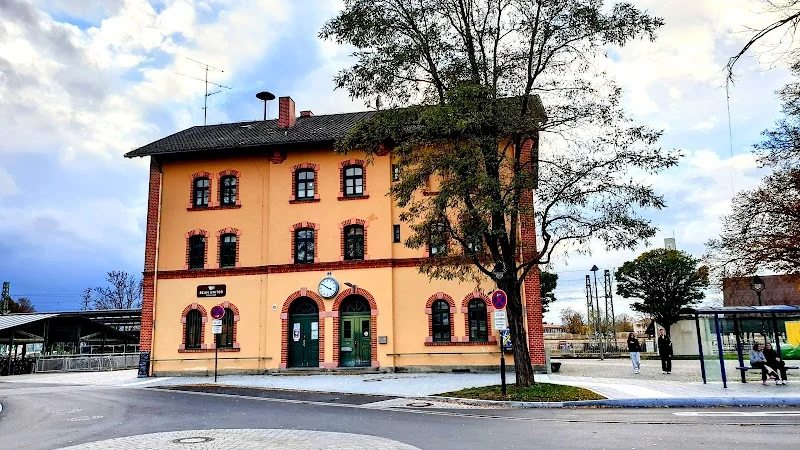
The history of the station dates back to the mid-19th century. According to available sources, Deisenhofen was opened in 1862 on the section Munich–Holzkirchen of the later railway line Munich–Lenggries; since October 10, 1898, there has also been a connection to Munich East Station. This early on made the location an important hub between the axis to the south and the later connection towards the city center. Since 1972, the station has been part of the Munich S-Bahn network. Another important step was the barrier-free expansion in 2004: platforms were raised and modernized, the station building was renovated, new park-and-ride and bicycle parking facilities were created, and the bus facility at the forecourt was renewed. However, the history of the place is not only a story of technology but also of construction. The original small station building was demolished; around 1875, the current three-story and listed station building with plaster and brick elements was built. The municipality of Oberhaching purchased the building in 2014. Therefore, when one looks at the station today, one sees several layers of time simultaneously: the early railway era, the modernization in the S-Bahn age, the municipal takeover, and the current revival. This makes the station exciting for local and transport enthusiasts. It is not an interchangeable functional building but a historical place where the development of southern Munich can be well read. ([de.wikipedia.org](https://de.wikipedia.org/wiki/Bahnhof_Deisenhofen))
Renovation of the Historical Station and New Use
Since 2025, the historical station building is being reimagined. The municipality of Oberhaching announced in January 2025 that the renovation has begun and that the building will be renovated and modernized to create space for an inclusive restaurant with a beer garden and kiosk, among other things. In April 2025, it was also stated that the renovation of the listed station building is progressing as planned. This is interesting for the public for several reasons: First, the station will not only be preserved as a transport structure but will be further developed as a social place. Second, the project combines monument protection with a use that strengthens everyday life in the district. Third, an address is being created around the station where transfers, stays, and encounters can come together. The term inclusive restaurant is more than just a label. It shows that the project is not only focused on profitability or aesthetics but on participation and community. For queries like Deisenhofen restaurant or Deisenhofen station, this means: a place is being created where travelers can not only get on and off but also linger. This is a very contemporary approach for a station with historical substance because it brings the station closer to its role as a local center. While many station buildings in smaller towns lose their function, Deisenhofen remains visibly anchored in everyday life. The combination of restoration, kiosk, gastronomy, and possible event references gives the location additional attractiveness and can redefine the station as a meeting point without giving up its transport function. ([oberhaching.de](https://www.oberhaching.de/blaetterkatalog/Kybergnachrichten_Januar_2025/20/))
Deisenhofen in the District of Oberhaching
Deisenhofen is not only a station name but also a district of Oberhaching south of Munich. This shapes the search queries around Deisenhofen residents, Deisenhofen postal code, or Deisenhofen secondary school: Many people are looking not only for the platform but for the spatial context of the entire district. The station plays a central role in this environment because it bundles the mobility of the neighborhood and connects with the bus network, park-and-ride spaces, and footpaths into the neighborhood. The municipality is further developing the surroundings: Deisenhofen Ost at the station forecourt was expanded into a mobility hub in 2023, bundling train, bus, and bicycle; Deisenhofen West on Sauerlacher Straße is planned to follow as a bus hub in 2026. This shows how strongly the station is integrated into the municipal mobility concept. The station is therefore not isolated but part of a larger system of local buses, regional transport, and everyday routes. For visitors, this means: Orientation is easier when one thinks of the district as a whole and understands the station as its core. For commuters, it becomes clear why Deisenhofen is so often searched in connection with S-Bahn, maps, and parking: because here the paths are short, the connections diverse, and the access clearly structured. Thus, Deisenhofen remains a lively, well-connected location that combines its historical identity with modern mobility. ([de.wikipedia.org](https://de.wikipedia.org/wiki/Bahnhof_Deisenhofen))
Sources:
- Deisenhofen Station at DB – Address, schedules, live departures, and maps. ([bahnhof.de](https://www.bahnhof.de/deisenhofen))
- MVV Deisenhofen Station – Zone M/1, barrier-free access, and park & ride. ([mvv-muenchen.de](https://www.mvv-muenchen.de/plaene-bahnhoefe/bahnhofsinformation/station/deisenhofen/index.html))
- Deisenhofen Station – History, location, and railway connections. ([de.wikipedia.org](https://de.wikipedia.org/wiki/Bahnhof_Deisenhofen))
- Municipality of Oberhaching – Renovation and new use of the historical station. ([oberhaching.de](https://www.oberhaching.de/blaetterkatalog/Kybergnachrichten_Januar_2025/20/))
- Municipality of Oberhaching – Mobility hub Deisenhofen Ost and planned bus hub Deisenhofen West. ([oberhaching.de](https://www.oberhaching.de/blaetterkatalog/Kybergnachrichten_August_2025/6/?utm_source=openai))
Show moreShow less
Deisenhofen Station | S-Bahn & Parking
The Deisenhofen station is located in the district of Deisenhofen in the municipality of Oberhaching, south of Munich, and is today much more than just a stop on the way to the city or the mountains. As a station in the MVV and DB system, it connects commuters, day-trippers, and local routes, offers barrier-free access, park-and-ride, bus connections, and a clear orientation plan for quick transfers. Those searching for Deisenhofen maps, Deisenhofen station, or Deisenhofen S-Bahn usually need this mix of location, schedule, parking, and easy orientation. This makes the station a small but important mobility hub in southern Munich. The historical roots reach deep into railway history, while the current infrastructure is designed to meet modern mobility needs. At the same time, the listed station building is being renovated and prepared for new use, so that function, history, and future life converge in one place. This is attractive for visitors because one not only transfers here but also gains a better understanding of the entire district. ([bahnhof.de](https://www.bahnhof.de/deisenhofen))
S-Bahn, Regional Trains, and Schedule
In the regular schedule, valid from 14.12.2025, the Deisenhofen station shows the S3 and the RB 58. The S3 operates between Mammendorf and Holzkirchen, and the schedules at the station list directions via Furth bei Deisenhofen, Munich-Giesing, and Munich East as well as towards Sauerlach and Holzkirchen. Additionally, the RB 58 runs from Monday to Friday via Munich-Solln and Munich Central Station to Holzkirchen and further towards Rosenheim; this connection is part of the BRB line Munich–Holzkirchen–Rosenheim. The official DB site also refers to live departures/arrivals, schedule PDF, change schedule, and replacement transport, which is particularly helpful during construction or short-term restrictions in southern Munich. For queries like Deisenhofen S-Bahn or Deisenhofen station, this mix is crucial: a regular S-Bahn stop with additional regional train options and an online information service that can be quickly adjusted. Those who know the route also know that Deisenhofen has always functioned as a hinge between suburban and regional traffic. This is still evident today in the daily commuter traffic, regional connections, and transfers meeting in a confined space. ([bahnhof.de](https://www.bahnhof.de/downloads/schedule/Regeltafel_1153.pdf))
Access, Parking, and MVV Zone M/1
The station is located in MVV Zone M/1, which makes fare planning easy when arriving from Munich or the surrounding municipalities. For drivers, the park-and-ride options are particularly important: There are 111 parking spaces on Sauerlacher Straße and 55 on Gleißentalstraße, totaling 166 parking spaces. At the same time, the MVV site indicates that the facility on Sauerlacher Straße is expected to be closed until November 2026; therefore, those wishing to park there should always check in advance if Gleißentalstraße is a better alternative. There is also bus access directly at the station forecourt, and during the modernization in 2004, a new bus turnaround was created. This is relevant for anyone searching for Deisenhofen access or Deisenhofen parking because the station is not just a pure train stop but a transfer point between car, bus, train, and bicycle. In the municipal context, this role is being further expanded: The Deisenhofen Ost stop at the station forecourt was developed into a mobility hub in 2023, while Deisenhofen West on Sauerlacher Straße is planned to become a bus hub in 2026. This increasingly positions the site as a connected traffic point and not just as an individual stop. ([mvv-muenchen.de](https://www.mvv-muenchen.de/plaene-bahnhoefe/bahnhofsinformation/station/deisenhofen/index.html))
Station Plan, Elevators, and Barrier-Free Access
Those searching for Deisenhofen maps can find the map button, the platform, the surroundings, the station forecourt, as well as live data on departures and arrivals on the DB site; the MVV also provides a station plan and orientation plan. This is valuable in practice because it allows one to know in advance which access, which stairs, and which elevator lead to the desired platform. The station is barrier-free: Access to the S-Bahn is step-free, and the platforms are accessible by elevator. The official MVV data states that platforms 1 and 2 are each 96 centimeters high and 216 meters long, while platforms 3 and 4 are each 96 centimeters high and 237 meters long. These specifications show that the station is not only formally recognized as barrier-free but is also technically equipped to ensure that boarding onto today's S-Bahn trains fits well. Additionally, there are covered platforms and digital destination displays, which facilitate orientation in different weather conditions, times of day, and transfers. This is a clear advantage, especially for families with strollers, travelers with luggage, elderly passengers, and people with limited mobility. Even though Deisenhofen is not a large long-distance station, the station is very well thought out in daily use: short distances, clear signage, and a layout that makes the transition between platform, forecourt, and bus area as direct as possible. ([mvv-muenchen.de](https://www.mvv-muenchen.de/plaene-bahnhoefe/bahnhofsinformation/station/deisenhofen/index.html))
History of Deisenhofen Station
The history of the station dates back to the mid-19th century. According to available sources, Deisenhofen was opened in 1862 on the section Munich–Holzkirchen of the later railway line Munich–Lenggries; since October 10, 1898, there has also been a connection to Munich East Station. This early on made the location an important hub between the axis to the south and the later connection towards the city center. Since 1972, the station has been part of the Munich S-Bahn network. Another important step was the barrier-free expansion in 2004: platforms were raised and modernized, the station building was renovated, new park-and-ride and bicycle parking facilities were created, and the bus facility at the forecourt was renewed. However, the history of the place is not only a story of technology but also of construction. The original small station building was demolished; around 1875, the current three-story and listed station building with plaster and brick elements was built. The municipality of Oberhaching purchased the building in 2014. Therefore, when one looks at the station today, one sees several layers of time simultaneously: the early railway era, the modernization in the S-Bahn age, the municipal takeover, and the current revival. This makes the station exciting for local and transport enthusiasts. It is not an interchangeable functional building but a historical place where the development of southern Munich can be well read. ([de.wikipedia.org](https://de.wikipedia.org/wiki/Bahnhof_Deisenhofen))
Renovation of the Historical Station and New Use
Since 2025, the historical station building is being reimagined. The municipality of Oberhaching announced in January 2025 that the renovation has begun and that the building will be renovated and modernized to create space for an inclusive restaurant with a beer garden and kiosk, among other things. In April 2025, it was also stated that the renovation of the listed station building is progressing as planned. This is interesting for the public for several reasons: First, the station will not only be preserved as a transport structure but will be further developed as a social place. Second, the project combines monument protection with a use that strengthens everyday life in the district. Third, an address is being created around the station where transfers, stays, and encounters can come together. The term inclusive restaurant is more than just a label. It shows that the project is not only focused on profitability or aesthetics but on participation and community. For queries like Deisenhofen restaurant or Deisenhofen station, this means: a place is being created where travelers can not only get on and off but also linger. This is a very contemporary approach for a station with historical substance because it brings the station closer to its role as a local center. While many station buildings in smaller towns lose their function, Deisenhofen remains visibly anchored in everyday life. The combination of restoration, kiosk, gastronomy, and possible event references gives the location additional attractiveness and can redefine the station as a meeting point without giving up its transport function. ([oberhaching.de](https://www.oberhaching.de/blaetterkatalog/Kybergnachrichten_Januar_2025/20/))
Deisenhofen in the District of Oberhaching
Deisenhofen is not only a station name but also a district of Oberhaching south of Munich. This shapes the search queries around Deisenhofen residents, Deisenhofen postal code, or Deisenhofen secondary school: Many people are looking not only for the platform but for the spatial context of the entire district. The station plays a central role in this environment because it bundles the mobility of the neighborhood and connects with the bus network, park-and-ride spaces, and footpaths into the neighborhood. The municipality is further developing the surroundings: Deisenhofen Ost at the station forecourt was expanded into a mobility hub in 2023, bundling train, bus, and bicycle; Deisenhofen West on Sauerlacher Straße is planned to follow as a bus hub in 2026. This shows how strongly the station is integrated into the municipal mobility concept. The station is therefore not isolated but part of a larger system of local buses, regional transport, and everyday routes. For visitors, this means: Orientation is easier when one thinks of the district as a whole and understands the station as its core. For commuters, it becomes clear why Deisenhofen is so often searched in connection with S-Bahn, maps, and parking: because here the paths are short, the connections diverse, and the access clearly structured. Thus, Deisenhofen remains a lively, well-connected location that combines its historical identity with modern mobility. ([de.wikipedia.org](https://de.wikipedia.org/wiki/Bahnhof_Deisenhofen))
Sources:
- Deisenhofen Station at DB – Address, schedules, live departures, and maps. ([bahnhof.de](https://www.bahnhof.de/deisenhofen))
- MVV Deisenhofen Station – Zone M/1, barrier-free access, and park & ride. ([mvv-muenchen.de](https://www.mvv-muenchen.de/plaene-bahnhoefe/bahnhofsinformation/station/deisenhofen/index.html))
- Deisenhofen Station – History, location, and railway connections. ([de.wikipedia.org](https://de.wikipedia.org/wiki/Bahnhof_Deisenhofen))
- Municipality of Oberhaching – Renovation and new use of the historical station. ([oberhaching.de](https://www.oberhaching.de/blaetterkatalog/Kybergnachrichten_Januar_2025/20/))
- Municipality of Oberhaching – Mobility hub Deisenhofen Ost and planned bus hub Deisenhofen West. ([oberhaching.de](https://www.oberhaching.de/blaetterkatalog/Kybergnachrichten_August_2025/6/?utm_source=openai))
Deisenhofen Station | S-Bahn & Parking
The Deisenhofen station is located in the district of Deisenhofen in the municipality of Oberhaching, south of Munich, and is today much more than just a stop on the way to the city or the mountains. As a station in the MVV and DB system, it connects commuters, day-trippers, and local routes, offers barrier-free access, park-and-ride, bus connections, and a clear orientation plan for quick transfers. Those searching for Deisenhofen maps, Deisenhofen station, or Deisenhofen S-Bahn usually need this mix of location, schedule, parking, and easy orientation. This makes the station a small but important mobility hub in southern Munich. The historical roots reach deep into railway history, while the current infrastructure is designed to meet modern mobility needs. At the same time, the listed station building is being renovated and prepared for new use, so that function, history, and future life converge in one place. This is attractive for visitors because one not only transfers here but also gains a better understanding of the entire district. ([bahnhof.de](https://www.bahnhof.de/deisenhofen))
S-Bahn, Regional Trains, and Schedule
In the regular schedule, valid from 14.12.2025, the Deisenhofen station shows the S3 and the RB 58. The S3 operates between Mammendorf and Holzkirchen, and the schedules at the station list directions via Furth bei Deisenhofen, Munich-Giesing, and Munich East as well as towards Sauerlach and Holzkirchen. Additionally, the RB 58 runs from Monday to Friday via Munich-Solln and Munich Central Station to Holzkirchen and further towards Rosenheim; this connection is part of the BRB line Munich–Holzkirchen–Rosenheim. The official DB site also refers to live departures/arrivals, schedule PDF, change schedule, and replacement transport, which is particularly helpful during construction or short-term restrictions in southern Munich. For queries like Deisenhofen S-Bahn or Deisenhofen station, this mix is crucial: a regular S-Bahn stop with additional regional train options and an online information service that can be quickly adjusted. Those who know the route also know that Deisenhofen has always functioned as a hinge between suburban and regional traffic. This is still evident today in the daily commuter traffic, regional connections, and transfers meeting in a confined space. ([bahnhof.de](https://www.bahnhof.de/downloads/schedule/Regeltafel_1153.pdf))
Access, Parking, and MVV Zone M/1
The station is located in MVV Zone M/1, which makes fare planning easy when arriving from Munich or the surrounding municipalities. For drivers, the park-and-ride options are particularly important: There are 111 parking spaces on Sauerlacher Straße and 55 on Gleißentalstraße, totaling 166 parking spaces. At the same time, the MVV site indicates that the facility on Sauerlacher Straße is expected to be closed until November 2026; therefore, those wishing to park there should always check in advance if Gleißentalstraße is a better alternative. There is also bus access directly at the station forecourt, and during the modernization in 2004, a new bus turnaround was created. This is relevant for anyone searching for Deisenhofen access or Deisenhofen parking because the station is not just a pure train stop but a transfer point between car, bus, train, and bicycle. In the municipal context, this role is being further expanded: The Deisenhofen Ost stop at the station forecourt was developed into a mobility hub in 2023, while Deisenhofen West on Sauerlacher Straße is planned to become a bus hub in 2026. This increasingly positions the site as a connected traffic point and not just as an individual stop. ([mvv-muenchen.de](https://www.mvv-muenchen.de/plaene-bahnhoefe/bahnhofsinformation/station/deisenhofen/index.html))
Station Plan, Elevators, and Barrier-Free Access
Those searching for Deisenhofen maps can find the map button, the platform, the surroundings, the station forecourt, as well as live data on departures and arrivals on the DB site; the MVV also provides a station plan and orientation plan. This is valuable in practice because it allows one to know in advance which access, which stairs, and which elevator lead to the desired platform. The station is barrier-free: Access to the S-Bahn is step-free, and the platforms are accessible by elevator. The official MVV data states that platforms 1 and 2 are each 96 centimeters high and 216 meters long, while platforms 3 and 4 are each 96 centimeters high and 237 meters long. These specifications show that the station is not only formally recognized as barrier-free but is also technically equipped to ensure that boarding onto today's S-Bahn trains fits well. Additionally, there are covered platforms and digital destination displays, which facilitate orientation in different weather conditions, times of day, and transfers. This is a clear advantage, especially for families with strollers, travelers with luggage, elderly passengers, and people with limited mobility. Even though Deisenhofen is not a large long-distance station, the station is very well thought out in daily use: short distances, clear signage, and a layout that makes the transition between platform, forecourt, and bus area as direct as possible. ([mvv-muenchen.de](https://www.mvv-muenchen.de/plaene-bahnhoefe/bahnhofsinformation/station/deisenhofen/index.html))
History of Deisenhofen Station
The history of the station dates back to the mid-19th century. According to available sources, Deisenhofen was opened in 1862 on the section Munich–Holzkirchen of the later railway line Munich–Lenggries; since October 10, 1898, there has also been a connection to Munich East Station. This early on made the location an important hub between the axis to the south and the later connection towards the city center. Since 1972, the station has been part of the Munich S-Bahn network. Another important step was the barrier-free expansion in 2004: platforms were raised and modernized, the station building was renovated, new park-and-ride and bicycle parking facilities were created, and the bus facility at the forecourt was renewed. However, the history of the place is not only a story of technology but also of construction. The original small station building was demolished; around 1875, the current three-story and listed station building with plaster and brick elements was built. The municipality of Oberhaching purchased the building in 2014. Therefore, when one looks at the station today, one sees several layers of time simultaneously: the early railway era, the modernization in the S-Bahn age, the municipal takeover, and the current revival. This makes the station exciting for local and transport enthusiasts. It is not an interchangeable functional building but a historical place where the development of southern Munich can be well read. ([de.wikipedia.org](https://de.wikipedia.org/wiki/Bahnhof_Deisenhofen))
Renovation of the Historical Station and New Use
Since 2025, the historical station building is being reimagined. The municipality of Oberhaching announced in January 2025 that the renovation has begun and that the building will be renovated and modernized to create space for an inclusive restaurant with a beer garden and kiosk, among other things. In April 2025, it was also stated that the renovation of the listed station building is progressing as planned. This is interesting for the public for several reasons: First, the station will not only be preserved as a transport structure but will be further developed as a social place. Second, the project combines monument protection with a use that strengthens everyday life in the district. Third, an address is being created around the station where transfers, stays, and encounters can come together. The term inclusive restaurant is more than just a label. It shows that the project is not only focused on profitability or aesthetics but on participation and community. For queries like Deisenhofen restaurant or Deisenhofen station, this means: a place is being created where travelers can not only get on and off but also linger. This is a very contemporary approach for a station with historical substance because it brings the station closer to its role as a local center. While many station buildings in smaller towns lose their function, Deisenhofen remains visibly anchored in everyday life. The combination of restoration, kiosk, gastronomy, and possible event references gives the location additional attractiveness and can redefine the station as a meeting point without giving up its transport function. ([oberhaching.de](https://www.oberhaching.de/blaetterkatalog/Kybergnachrichten_Januar_2025/20/))
Deisenhofen in the District of Oberhaching
Deisenhofen is not only a station name but also a district of Oberhaching south of Munich. This shapes the search queries around Deisenhofen residents, Deisenhofen postal code, or Deisenhofen secondary school: Many people are looking not only for the platform but for the spatial context of the entire district. The station plays a central role in this environment because it bundles the mobility of the neighborhood and connects with the bus network, park-and-ride spaces, and footpaths into the neighborhood. The municipality is further developing the surroundings: Deisenhofen Ost at the station forecourt was expanded into a mobility hub in 2023, bundling train, bus, and bicycle; Deisenhofen West on Sauerlacher Straße is planned to follow as a bus hub in 2026. This shows how strongly the station is integrated into the municipal mobility concept. The station is therefore not isolated but part of a larger system of local buses, regional transport, and everyday routes. For visitors, this means: Orientation is easier when one thinks of the district as a whole and understands the station as its core. For commuters, it becomes clear why Deisenhofen is so often searched in connection with S-Bahn, maps, and parking: because here the paths are short, the connections diverse, and the access clearly structured. Thus, Deisenhofen remains a lively, well-connected location that combines its historical identity with modern mobility. ([de.wikipedia.org](https://de.wikipedia.org/wiki/Bahnhof_Deisenhofen))
Sources:
- Deisenhofen Station at DB – Address, schedules, live departures, and maps. ([bahnhof.de](https://www.bahnhof.de/deisenhofen))
- MVV Deisenhofen Station – Zone M/1, barrier-free access, and park & ride. ([mvv-muenchen.de](https://www.mvv-muenchen.de/plaene-bahnhoefe/bahnhofsinformation/station/deisenhofen/index.html))
- Deisenhofen Station – History, location, and railway connections. ([de.wikipedia.org](https://de.wikipedia.org/wiki/Bahnhof_Deisenhofen))
- Municipality of Oberhaching – Renovation and new use of the historical station. ([oberhaching.de](https://www.oberhaching.de/blaetterkatalog/Kybergnachrichten_Januar_2025/20/))
- Municipality of Oberhaching – Mobility hub Deisenhofen Ost and planned bus hub Deisenhofen West. ([oberhaching.de](https://www.oberhaching.de/blaetterkatalog/Kybergnachrichten_August_2025/6/?utm_source=openai))
Upcoming Events
No events found
Frequently Asked Questions
Reviews
Ul Mi
15. December 2019
A suburban train station. A through station for express trains and the BOB (Bayerische Oberlandbahn). Opposite the station is a Greek restaurant where you can eat well. In the town of Deisenhofen, there is a savings bank and a DHL branch. A water tower stands behind the Greek restaurant; it's nice to look at.
Idc Aboutubitch
15. November 2024
My best friend and I got locked inside the S-Bahn (suburban train) with no way out. It was already dark outside, and the lights inside the train had simply been switched off. Absolutely outrageous. Our attempt to use another exit was unsuccessful. As someone who struggles with claustrophobia, my panic and stress levels quickly reached fever pitch. Luckily, a conductor soon came along, asked if he had locked us in (no, of course not, I deliberately stayed crying in the dark, locked train?!), and unlocked the door for us with a sympathetic look and a question about whether I was alright (he was probably a bit overwhelmed by the fact that I was simultaneously crying (from the aforementioned panic and stress) and laughing (from being overwhelmed)). The only thing that makes me give this two stars is that friendly gentleman. Nevertheless, the (rail replacement) services of Deutsche Bahn (German Rail) are unreliable, and this traumatic, albeit amusing, experience will always stay with me! DO. BETTER.
Benoît
15. December 2019
Exterior shots for the 1962 film "The Great Escape" were filmed here. The train and railway scenes were filmed on the Großhesselohe–Holzkirchen railway line, at Deisenhofen station, and on railway lines near Markt Schwaben. (Wikipedia)
nordica nordica
27. July 2021
Very cool train station, occasionally a few stoned people, but otherwise a very, very good train station.