
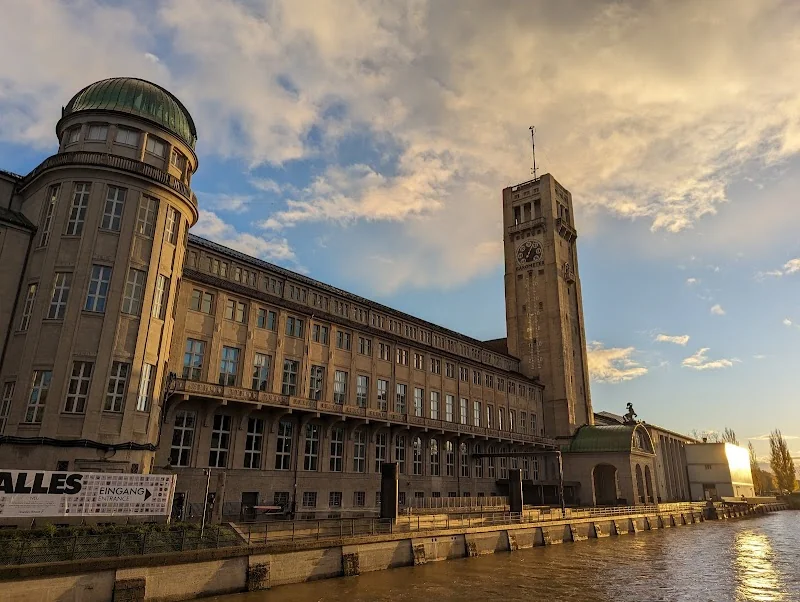
Museumsinsel 1, München
Museumsinsel 1, 80538 München, Germany
German Museum | Tickets & Opening Hours
The German Museum on the Museum Island in Munich is much more than a classic house for the history of technology. It was founded in 1903, opened on the Museum Island in 1925, and is considered one of the largest science and technology museums in the world. After the recent modernization, 19 new permanent exhibitions await on 20,000 square meters and four levels. This makes the visit interesting for both technology fans and families, school classes, and curious city visitors. In 2025, the museum reported more than 1.6 million visitors for the first time, including more than 1.07 million in the exhibition building on the Museum Island. So, for those looking for a location with real appeal, this place offers not only exhibits but a vibrant experience of history, present, and future. The museum is also closely linked with research, library, archive, and digital offerings, making a visit easily combined with education, leisure, and discovery. The following sections provide a practical overview of tickets, opening hours, directions, parking, children's offers, highlights, and services to ensure a well-planned visit. ([deutsches-museum.de](https://www.deutsches-museum.de/museum/geschichte))
Opening Hours, Tickets, and Admission Prices
For most visitors, planning begins with two questions: When is the museum open, and which ticket is best? The current answer is pleasantly clear. The German Museum on the Museum Island is open daily from 9 AM to 5 PM, with entry to the museum possible until 4:30 PM. The official site also lists eight closing days per year, including certain holidays and special dates like staff meetings. Those who want to approach the visit stress-free should not wait until the last moment but plan to enter earlier in the day. This is particularly sensible because the museum is large, and one can easily spend several hours inside. For ticket purchases, the museum explicitly recommends the online ticket shop. The regular admission for adults is 16 euros, and the family ticket is 33 euros. Reduced prices are available for children and teenagers aged 6 to 17 and other eligible groups at 9 euros. Children up to and including 5 years have free admission. This makes the museum visit calculable and planable for families. Frequent visitors might also consider an annual pass: it is valid for 365 days for the Museum Island, the Transport Center, and the Flight Museum Schleißheim and costs 50 euros regularly, 25 euros reduced. Group rates are also available, making the museum attractive for classes, clubs, and travel groups. ([deutsches-museum.de](https://www.deutsches-museum.de/museumsinsel/besuch/oeffnungszeiten))
It is also practical that the museum clearly communicates its visiting rules. Children under 12 years may only visit the German Museum when accompanied by adults, which facilitates family planning and ensures safety in the building. Those traveling with children should also allow enough time. The museum itself advises families to come preferably during the week, if organizationally possible, as Bavarian school holidays and bad weather can increase the crowds. Visitors should not just rush through but truly experience the exhibitions. For this reason, half a day is often already tight, while a whole day can be very well filled. Besides admission prices, it is also worth looking at the additional offerings: The daily program changes daily, many interactive stations and demonstrations are included in the admission, and the shop is accessible without a ticket. Those who want to utilize the museum intensively can make their visit even more individual with the free app or a rental audio guide. This way, a simple admission quickly turns into a very flexible museum day. ([deutsches-museum.de](https://www.deutsches-museum.de/museumsinsel/besuch/besuch-planen/besuch-als-familie))
Directions, Parking, and Location on the Museum Island
The location of the German Museum is central and very well suited for many routes in Munich. The address is Museum Island 1 in 80538 Munich. According to the museum's current information, the house is easily accessible by public transport, bicycle, or even by car, although arriving by car is explicitly not recommended. Those arriving by train or local transport have several good options: S-Bahn stations like Isartor and Rosenheimer Platz are within reach, tram line 17 stops directly at the German Museum, and bus lines like 132 at Cornelius Bridge and 52 and 62 at Baaderstraße. The subway stations Fraunhoferstraße with U1 and U2 are also mentioned. Bicycle parking spaces are available on the Museum Island. This makes the location pleasantly flexible, especially for guests who want to combine their visit with a city stroll or a family outing. The journey is therefore not only practical but also planable, fitting for a museum that appeals to many different target groups. ([deutsches-museum.de](https://www.deutsches-museum.de/museumsinsel/besuch/anfahrt-und-lageplan))
Parking requires a bit more preparation. The museum mentions several parking garages nearby but does not recommend direct access by car. Among others, the Isar parking garage in Baaderstraße, the Esso underground garage at Motorama, the Gasteig parking garage, and the City Hilton parking garage on Rosenheimer Straße are mentioned. For tour buses, there are public, paid bus parking spaces on Erhardtstraße in front of the German Patent Office between Ludwigsbrücke and Boschbrücke. Those relying on accessible parking options will find three disabled parking spaces at Boschbrücke and others across from the German Patent Office. The museum also points out that the use of public parking spaces may be restricted due to construction work at Ludwigsbrücke and on the Museum Island. Therefore, it is advisable to check the current situation before driving or to switch directly to public transport. This often saves time and nerves, especially for families or groups. This also fits well with the character of the house: the journey should be as relaxed as possible so that enough attention remains for exhibitions, demonstrations, and interactive offerings on site. ([deutsches-museum.de](https://www.deutsches-museum.de/museumsinsel/besuch/anfahrt-und-lageplan))
Children, Families, and the Children's Kingdom
The German Museum is one of the places in Munich that consciously considers families. On the official family page, the program for children and adults is presented as a mix of interactive exhibitions, demonstrations, and practical tips. The centerpiece for younger guests is the Children's Kingdom. It is located on level -1 under the aviation hall and is aimed at children aged three to eight years. There, children can explore scientific worlds in a very direct way with a marble run, sky tent, mirror cabinet, shadow theater, and water games. The old fire truck from the 1950s is also a real highlight. The museum's description shows that it is not just about looking but about trying things out: getting into the driver's cabin, turning on the blue light, practicing in the control center, or experimenting with the pedal helicopter. This is a clear plus for children because technology does not remain abstract but becomes physically tangible. The daily program is published daily around 9:20 AM and includes tours, science shows, and interactive offerings that are accessible for individual visitors and small groups free of charge and without registration. ([deutsches-museum.de](https://www.deutsches-museum.de/museumsinsel/besuch/besuch-planen/besuch-als-familie))
For families, there are also several digital and organizational aids. The museum recommends family and children's tours in its app that structure the visit and make it more playful. The app is a good companion when traveling with children because it consolidates content, tours, and maps on your own smartphone. Those who prefer to work with rental devices can use audio guide devices for a fee at the information desk. For many families, it is also important how long they should stay. The museum itself openly states that two hours can pass quickly, and many guests spend the whole day in the house. For families, this is a good hint, as a relaxed visit usually does not arise from speed but from smart breaks. There are suitable options for this on the Museum Island, such as the café-restaurant on the rooftop terrace. Therefore, those coming with children should not only plan for the big exhibits but also incorporate small relaxation windows. This combination makes the location attractive: a museum that imparts knowledge without turning the family visit into a mandatory program. ([deutsches-museum.de](https://www.deutsches-museum.de/museumsinsel/besuch/app))
Exhibitions, Daily Program, and Key Highlights
The strength of the German Museum lies in the combination of scope and variety. After the modernization, the house presents 19 new permanent exhibitions on 20,000 square meters and four levels. The topics range from aerospace to health, agriculture and nutrition, chemistry, classical optics, atomic physics, electronics, mathematics, robotics, energy and engines to bridges and hydraulic engineering, historical and modern aviation, as well as musical instruments. This breadth is a significant advantage because it covers very different interests: children get stuck at interactive stations, technology fans seek original objects, and culture-interested guests discover the history of science in everyday life. Especially aviation was particularly highlighted during the restart, as well as the health exhibition, tractors in agriculture and nutrition, and chemistry demonstrations. In addition, there is the museum tower with the Foucault pendulum, which attracts many visitors as a classic highlight. The museum thus shows not only objects but also processes, experiments, and demonstrations. This mixture makes a visit lively and distinguishes the house from a mere display depot. ([deutsches-museum.de](https://www.deutsches-museum.de/museumsinsel/besuch/besuch-planen))
The daily program is also an important argument for the visit. According to the museum, model trains, chemistry demonstrations, and flight simulators in action change regularly, along with tours, demonstrations, and science shows that can be experienced live. For many visitors, this is crucial because the exhibits do not seem static but come to life. Those who want to experience the museum on a day with particularly many demonstrations should check the current daily program early. This is especially worthwhile for families and first-time visitors, as it allows for better division of their own tour. The daily structure is also important in the Children's Kingdom: there are new live offerings every day, and the current program is published every morning. Additionally, the museum highlights various thematic tours in the app and on the visit pages, such as for families, for children, or as highlight tours. This allows every visit to be tailored individually. Those with only half a day can focus on a few key areas. Those with more time can take advantage of the thematic depth of the house. This planability is a significant plus point of the location. ([deutsches-museum.de](https://www.deutsches-museum.de/museumsinsel/besuch/oeffnungszeiten))
History, Collection, and Practical Services
The history of the German Museum begins with a strong idea. Founded in 1903 at the urging of Oskar von Miller, construction began in 1906, and the exhibition building on the Museum Island was opened in 1925 after war and inflation delayed construction. The name was meant to emphasize that the house is significant for all of Germany, even though objects from all over the world have always been collected and displayed. This historical dimension is important for the visit because it explains why the museum today connects not only exhibitions but also research, collection, and communication. The homepage also points out its library and archive. The library is open to all and includes one million volumes and 53,000 essays; the archive stores original documents on 4.7 shelf kilometers. It quickly becomes clear that the German Museum is not just a place to look but also a place to research. Those interested in technology, science, or cultural history will find here an exceptionally dense knowledge place that goes far beyond classic museum boundaries. ([deutsches-museum.de](https://www.deutsches-museum.de/museum/geschichte))
Practical services include some details that make the stay more pleasant. The museum offers free Wi-Fi under the name Deutsches Museum Guest. The app is available in several languages and includes tours, maps, audio descriptions, DGS content, simply explained exhibits, and tactile models; additionally, rental audio devices are available for a fee. Cloakroom and lockers are located in the entrance building on level 1; the cloakroom is free, while lockers require a 1-euro coin as a deposit. Large bags and backpacks are not allowed in the exhibitions, which should be considered when arriving. For private purposes, photography and filming are allowed, even with flash, but without tripods and selfie sticks. The museum shop is open daily and accessible without a ticket. The archive is open Monday to Friday from 9 AM to 5 PM, and prior registration is recommended. The café-restaurant Frau im Mond is located on level 2 near the exhibition on space travel and is also accessible from outside as well as outside museum opening hours. These services make the stay comfortable and show that the German Museum pays attention not only to content but also to the visitor's everyday experience. Those using the annual pass can also switch between the Museum Island, Transport Center, and Flight Museum Schleißheim; different opening hours apply for other locations such as Bonn and Nuremberg. ([deutsches-museum.de](https://www.deutsches-museum.de/museumsinsel/besuch/app))
Sources:
Show moreShow less
German Museum | Tickets & Opening Hours
The German Museum on the Museum Island in Munich is much more than a classic house for the history of technology. It was founded in 1903, opened on the Museum Island in 1925, and is considered one of the largest science and technology museums in the world. After the recent modernization, 19 new permanent exhibitions await on 20,000 square meters and four levels. This makes the visit interesting for both technology fans and families, school classes, and curious city visitors. In 2025, the museum reported more than 1.6 million visitors for the first time, including more than 1.07 million in the exhibition building on the Museum Island. So, for those looking for a location with real appeal, this place offers not only exhibits but a vibrant experience of history, present, and future. The museum is also closely linked with research, library, archive, and digital offerings, making a visit easily combined with education, leisure, and discovery. The following sections provide a practical overview of tickets, opening hours, directions, parking, children's offers, highlights, and services to ensure a well-planned visit. ([deutsches-museum.de](https://www.deutsches-museum.de/museum/geschichte))
Opening Hours, Tickets, and Admission Prices
For most visitors, planning begins with two questions: When is the museum open, and which ticket is best? The current answer is pleasantly clear. The German Museum on the Museum Island is open daily from 9 AM to 5 PM, with entry to the museum possible until 4:30 PM. The official site also lists eight closing days per year, including certain holidays and special dates like staff meetings. Those who want to approach the visit stress-free should not wait until the last moment but plan to enter earlier in the day. This is particularly sensible because the museum is large, and one can easily spend several hours inside. For ticket purchases, the museum explicitly recommends the online ticket shop. The regular admission for adults is 16 euros, and the family ticket is 33 euros. Reduced prices are available for children and teenagers aged 6 to 17 and other eligible groups at 9 euros. Children up to and including 5 years have free admission. This makes the museum visit calculable and planable for families. Frequent visitors might also consider an annual pass: it is valid for 365 days for the Museum Island, the Transport Center, and the Flight Museum Schleißheim and costs 50 euros regularly, 25 euros reduced. Group rates are also available, making the museum attractive for classes, clubs, and travel groups. ([deutsches-museum.de](https://www.deutsches-museum.de/museumsinsel/besuch/oeffnungszeiten))
It is also practical that the museum clearly communicates its visiting rules. Children under 12 years may only visit the German Museum when accompanied by adults, which facilitates family planning and ensures safety in the building. Those traveling with children should also allow enough time. The museum itself advises families to come preferably during the week, if organizationally possible, as Bavarian school holidays and bad weather can increase the crowds. Visitors should not just rush through but truly experience the exhibitions. For this reason, half a day is often already tight, while a whole day can be very well filled. Besides admission prices, it is also worth looking at the additional offerings: The daily program changes daily, many interactive stations and demonstrations are included in the admission, and the shop is accessible without a ticket. Those who want to utilize the museum intensively can make their visit even more individual with the free app or a rental audio guide. This way, a simple admission quickly turns into a very flexible museum day. ([deutsches-museum.de](https://www.deutsches-museum.de/museumsinsel/besuch/besuch-planen/besuch-als-familie))
Directions, Parking, and Location on the Museum Island
The location of the German Museum is central and very well suited for many routes in Munich. The address is Museum Island 1 in 80538 Munich. According to the museum's current information, the house is easily accessible by public transport, bicycle, or even by car, although arriving by car is explicitly not recommended. Those arriving by train or local transport have several good options: S-Bahn stations like Isartor and Rosenheimer Platz are within reach, tram line 17 stops directly at the German Museum, and bus lines like 132 at Cornelius Bridge and 52 and 62 at Baaderstraße. The subway stations Fraunhoferstraße with U1 and U2 are also mentioned. Bicycle parking spaces are available on the Museum Island. This makes the location pleasantly flexible, especially for guests who want to combine their visit with a city stroll or a family outing. The journey is therefore not only practical but also planable, fitting for a museum that appeals to many different target groups. ([deutsches-museum.de](https://www.deutsches-museum.de/museumsinsel/besuch/anfahrt-und-lageplan))
Parking requires a bit more preparation. The museum mentions several parking garages nearby but does not recommend direct access by car. Among others, the Isar parking garage in Baaderstraße, the Esso underground garage at Motorama, the Gasteig parking garage, and the City Hilton parking garage on Rosenheimer Straße are mentioned. For tour buses, there are public, paid bus parking spaces on Erhardtstraße in front of the German Patent Office between Ludwigsbrücke and Boschbrücke. Those relying on accessible parking options will find three disabled parking spaces at Boschbrücke and others across from the German Patent Office. The museum also points out that the use of public parking spaces may be restricted due to construction work at Ludwigsbrücke and on the Museum Island. Therefore, it is advisable to check the current situation before driving or to switch directly to public transport. This often saves time and nerves, especially for families or groups. This also fits well with the character of the house: the journey should be as relaxed as possible so that enough attention remains for exhibitions, demonstrations, and interactive offerings on site. ([deutsches-museum.de](https://www.deutsches-museum.de/museumsinsel/besuch/anfahrt-und-lageplan))
Children, Families, and the Children's Kingdom
The German Museum is one of the places in Munich that consciously considers families. On the official family page, the program for children and adults is presented as a mix of interactive exhibitions, demonstrations, and practical tips. The centerpiece for younger guests is the Children's Kingdom. It is located on level -1 under the aviation hall and is aimed at children aged three to eight years. There, children can explore scientific worlds in a very direct way with a marble run, sky tent, mirror cabinet, shadow theater, and water games. The old fire truck from the 1950s is also a real highlight. The museum's description shows that it is not just about looking but about trying things out: getting into the driver's cabin, turning on the blue light, practicing in the control center, or experimenting with the pedal helicopter. This is a clear plus for children because technology does not remain abstract but becomes physically tangible. The daily program is published daily around 9:20 AM and includes tours, science shows, and interactive offerings that are accessible for individual visitors and small groups free of charge and without registration. ([deutsches-museum.de](https://www.deutsches-museum.de/museumsinsel/besuch/besuch-planen/besuch-als-familie))
For families, there are also several digital and organizational aids. The museum recommends family and children's tours in its app that structure the visit and make it more playful. The app is a good companion when traveling with children because it consolidates content, tours, and maps on your own smartphone. Those who prefer to work with rental devices can use audio guide devices for a fee at the information desk. For many families, it is also important how long they should stay. The museum itself openly states that two hours can pass quickly, and many guests spend the whole day in the house. For families, this is a good hint, as a relaxed visit usually does not arise from speed but from smart breaks. There are suitable options for this on the Museum Island, such as the café-restaurant on the rooftop terrace. Therefore, those coming with children should not only plan for the big exhibits but also incorporate small relaxation windows. This combination makes the location attractive: a museum that imparts knowledge without turning the family visit into a mandatory program. ([deutsches-museum.de](https://www.deutsches-museum.de/museumsinsel/besuch/app))
Exhibitions, Daily Program, and Key Highlights
The strength of the German Museum lies in the combination of scope and variety. After the modernization, the house presents 19 new permanent exhibitions on 20,000 square meters and four levels. The topics range from aerospace to health, agriculture and nutrition, chemistry, classical optics, atomic physics, electronics, mathematics, robotics, energy and engines to bridges and hydraulic engineering, historical and modern aviation, as well as musical instruments. This breadth is a significant advantage because it covers very different interests: children get stuck at interactive stations, technology fans seek original objects, and culture-interested guests discover the history of science in everyday life. Especially aviation was particularly highlighted during the restart, as well as the health exhibition, tractors in agriculture and nutrition, and chemistry demonstrations. In addition, there is the museum tower with the Foucault pendulum, which attracts many visitors as a classic highlight. The museum thus shows not only objects but also processes, experiments, and demonstrations. This mixture makes a visit lively and distinguishes the house from a mere display depot. ([deutsches-museum.de](https://www.deutsches-museum.de/museumsinsel/besuch/besuch-planen))
The daily program is also an important argument for the visit. According to the museum, model trains, chemistry demonstrations, and flight simulators in action change regularly, along with tours, demonstrations, and science shows that can be experienced live. For many visitors, this is crucial because the exhibits do not seem static but come to life. Those who want to experience the museum on a day with particularly many demonstrations should check the current daily program early. This is especially worthwhile for families and first-time visitors, as it allows for better division of their own tour. The daily structure is also important in the Children's Kingdom: there are new live offerings every day, and the current program is published every morning. Additionally, the museum highlights various thematic tours in the app and on the visit pages, such as for families, for children, or as highlight tours. This allows every visit to be tailored individually. Those with only half a day can focus on a few key areas. Those with more time can take advantage of the thematic depth of the house. This planability is a significant plus point of the location. ([deutsches-museum.de](https://www.deutsches-museum.de/museumsinsel/besuch/oeffnungszeiten))
History, Collection, and Practical Services
The history of the German Museum begins with a strong idea. Founded in 1903 at the urging of Oskar von Miller, construction began in 1906, and the exhibition building on the Museum Island was opened in 1925 after war and inflation delayed construction. The name was meant to emphasize that the house is significant for all of Germany, even though objects from all over the world have always been collected and displayed. This historical dimension is important for the visit because it explains why the museum today connects not only exhibitions but also research, collection, and communication. The homepage also points out its library and archive. The library is open to all and includes one million volumes and 53,000 essays; the archive stores original documents on 4.7 shelf kilometers. It quickly becomes clear that the German Museum is not just a place to look but also a place to research. Those interested in technology, science, or cultural history will find here an exceptionally dense knowledge place that goes far beyond classic museum boundaries. ([deutsches-museum.de](https://www.deutsches-museum.de/museum/geschichte))
Practical services include some details that make the stay more pleasant. The museum offers free Wi-Fi under the name Deutsches Museum Guest. The app is available in several languages and includes tours, maps, audio descriptions, DGS content, simply explained exhibits, and tactile models; additionally, rental audio devices are available for a fee. Cloakroom and lockers are located in the entrance building on level 1; the cloakroom is free, while lockers require a 1-euro coin as a deposit. Large bags and backpacks are not allowed in the exhibitions, which should be considered when arriving. For private purposes, photography and filming are allowed, even with flash, but without tripods and selfie sticks. The museum shop is open daily and accessible without a ticket. The archive is open Monday to Friday from 9 AM to 5 PM, and prior registration is recommended. The café-restaurant Frau im Mond is located on level 2 near the exhibition on space travel and is also accessible from outside as well as outside museum opening hours. These services make the stay comfortable and show that the German Museum pays attention not only to content but also to the visitor's everyday experience. Those using the annual pass can also switch between the Museum Island, Transport Center, and Flight Museum Schleißheim; different opening hours apply for other locations such as Bonn and Nuremberg. ([deutsches-museum.de](https://www.deutsches-museum.de/museumsinsel/besuch/app))
Sources:
German Museum | Tickets & Opening Hours
The German Museum on the Museum Island in Munich is much more than a classic house for the history of technology. It was founded in 1903, opened on the Museum Island in 1925, and is considered one of the largest science and technology museums in the world. After the recent modernization, 19 new permanent exhibitions await on 20,000 square meters and four levels. This makes the visit interesting for both technology fans and families, school classes, and curious city visitors. In 2025, the museum reported more than 1.6 million visitors for the first time, including more than 1.07 million in the exhibition building on the Museum Island. So, for those looking for a location with real appeal, this place offers not only exhibits but a vibrant experience of history, present, and future. The museum is also closely linked with research, library, archive, and digital offerings, making a visit easily combined with education, leisure, and discovery. The following sections provide a practical overview of tickets, opening hours, directions, parking, children's offers, highlights, and services to ensure a well-planned visit. ([deutsches-museum.de](https://www.deutsches-museum.de/museum/geschichte))
Opening Hours, Tickets, and Admission Prices
For most visitors, planning begins with two questions: When is the museum open, and which ticket is best? The current answer is pleasantly clear. The German Museum on the Museum Island is open daily from 9 AM to 5 PM, with entry to the museum possible until 4:30 PM. The official site also lists eight closing days per year, including certain holidays and special dates like staff meetings. Those who want to approach the visit stress-free should not wait until the last moment but plan to enter earlier in the day. This is particularly sensible because the museum is large, and one can easily spend several hours inside. For ticket purchases, the museum explicitly recommends the online ticket shop. The regular admission for adults is 16 euros, and the family ticket is 33 euros. Reduced prices are available for children and teenagers aged 6 to 17 and other eligible groups at 9 euros. Children up to and including 5 years have free admission. This makes the museum visit calculable and planable for families. Frequent visitors might also consider an annual pass: it is valid for 365 days for the Museum Island, the Transport Center, and the Flight Museum Schleißheim and costs 50 euros regularly, 25 euros reduced. Group rates are also available, making the museum attractive for classes, clubs, and travel groups. ([deutsches-museum.de](https://www.deutsches-museum.de/museumsinsel/besuch/oeffnungszeiten))
It is also practical that the museum clearly communicates its visiting rules. Children under 12 years may only visit the German Museum when accompanied by adults, which facilitates family planning and ensures safety in the building. Those traveling with children should also allow enough time. The museum itself advises families to come preferably during the week, if organizationally possible, as Bavarian school holidays and bad weather can increase the crowds. Visitors should not just rush through but truly experience the exhibitions. For this reason, half a day is often already tight, while a whole day can be very well filled. Besides admission prices, it is also worth looking at the additional offerings: The daily program changes daily, many interactive stations and demonstrations are included in the admission, and the shop is accessible without a ticket. Those who want to utilize the museum intensively can make their visit even more individual with the free app or a rental audio guide. This way, a simple admission quickly turns into a very flexible museum day. ([deutsches-museum.de](https://www.deutsches-museum.de/museumsinsel/besuch/besuch-planen/besuch-als-familie))
Directions, Parking, and Location on the Museum Island
The location of the German Museum is central and very well suited for many routes in Munich. The address is Museum Island 1 in 80538 Munich. According to the museum's current information, the house is easily accessible by public transport, bicycle, or even by car, although arriving by car is explicitly not recommended. Those arriving by train or local transport have several good options: S-Bahn stations like Isartor and Rosenheimer Platz are within reach, tram line 17 stops directly at the German Museum, and bus lines like 132 at Cornelius Bridge and 52 and 62 at Baaderstraße. The subway stations Fraunhoferstraße with U1 and U2 are also mentioned. Bicycle parking spaces are available on the Museum Island. This makes the location pleasantly flexible, especially for guests who want to combine their visit with a city stroll or a family outing. The journey is therefore not only practical but also planable, fitting for a museum that appeals to many different target groups. ([deutsches-museum.de](https://www.deutsches-museum.de/museumsinsel/besuch/anfahrt-und-lageplan))
Parking requires a bit more preparation. The museum mentions several parking garages nearby but does not recommend direct access by car. Among others, the Isar parking garage in Baaderstraße, the Esso underground garage at Motorama, the Gasteig parking garage, and the City Hilton parking garage on Rosenheimer Straße are mentioned. For tour buses, there are public, paid bus parking spaces on Erhardtstraße in front of the German Patent Office between Ludwigsbrücke and Boschbrücke. Those relying on accessible parking options will find three disabled parking spaces at Boschbrücke and others across from the German Patent Office. The museum also points out that the use of public parking spaces may be restricted due to construction work at Ludwigsbrücke and on the Museum Island. Therefore, it is advisable to check the current situation before driving or to switch directly to public transport. This often saves time and nerves, especially for families or groups. This also fits well with the character of the house: the journey should be as relaxed as possible so that enough attention remains for exhibitions, demonstrations, and interactive offerings on site. ([deutsches-museum.de](https://www.deutsches-museum.de/museumsinsel/besuch/anfahrt-und-lageplan))
Children, Families, and the Children's Kingdom
The German Museum is one of the places in Munich that consciously considers families. On the official family page, the program for children and adults is presented as a mix of interactive exhibitions, demonstrations, and practical tips. The centerpiece for younger guests is the Children's Kingdom. It is located on level -1 under the aviation hall and is aimed at children aged three to eight years. There, children can explore scientific worlds in a very direct way with a marble run, sky tent, mirror cabinet, shadow theater, and water games. The old fire truck from the 1950s is also a real highlight. The museum's description shows that it is not just about looking but about trying things out: getting into the driver's cabin, turning on the blue light, practicing in the control center, or experimenting with the pedal helicopter. This is a clear plus for children because technology does not remain abstract but becomes physically tangible. The daily program is published daily around 9:20 AM and includes tours, science shows, and interactive offerings that are accessible for individual visitors and small groups free of charge and without registration. ([deutsches-museum.de](https://www.deutsches-museum.de/museumsinsel/besuch/besuch-planen/besuch-als-familie))
For families, there are also several digital and organizational aids. The museum recommends family and children's tours in its app that structure the visit and make it more playful. The app is a good companion when traveling with children because it consolidates content, tours, and maps on your own smartphone. Those who prefer to work with rental devices can use audio guide devices for a fee at the information desk. For many families, it is also important how long they should stay. The museum itself openly states that two hours can pass quickly, and many guests spend the whole day in the house. For families, this is a good hint, as a relaxed visit usually does not arise from speed but from smart breaks. There are suitable options for this on the Museum Island, such as the café-restaurant on the rooftop terrace. Therefore, those coming with children should not only plan for the big exhibits but also incorporate small relaxation windows. This combination makes the location attractive: a museum that imparts knowledge without turning the family visit into a mandatory program. ([deutsches-museum.de](https://www.deutsches-museum.de/museumsinsel/besuch/app))
Exhibitions, Daily Program, and Key Highlights
The strength of the German Museum lies in the combination of scope and variety. After the modernization, the house presents 19 new permanent exhibitions on 20,000 square meters and four levels. The topics range from aerospace to health, agriculture and nutrition, chemistry, classical optics, atomic physics, electronics, mathematics, robotics, energy and engines to bridges and hydraulic engineering, historical and modern aviation, as well as musical instruments. This breadth is a significant advantage because it covers very different interests: children get stuck at interactive stations, technology fans seek original objects, and culture-interested guests discover the history of science in everyday life. Especially aviation was particularly highlighted during the restart, as well as the health exhibition, tractors in agriculture and nutrition, and chemistry demonstrations. In addition, there is the museum tower with the Foucault pendulum, which attracts many visitors as a classic highlight. The museum thus shows not only objects but also processes, experiments, and demonstrations. This mixture makes a visit lively and distinguishes the house from a mere display depot. ([deutsches-museum.de](https://www.deutsches-museum.de/museumsinsel/besuch/besuch-planen))
The daily program is also an important argument for the visit. According to the museum, model trains, chemistry demonstrations, and flight simulators in action change regularly, along with tours, demonstrations, and science shows that can be experienced live. For many visitors, this is crucial because the exhibits do not seem static but come to life. Those who want to experience the museum on a day with particularly many demonstrations should check the current daily program early. This is especially worthwhile for families and first-time visitors, as it allows for better division of their own tour. The daily structure is also important in the Children's Kingdom: there are new live offerings every day, and the current program is published every morning. Additionally, the museum highlights various thematic tours in the app and on the visit pages, such as for families, for children, or as highlight tours. This allows every visit to be tailored individually. Those with only half a day can focus on a few key areas. Those with more time can take advantage of the thematic depth of the house. This planability is a significant plus point of the location. ([deutsches-museum.de](https://www.deutsches-museum.de/museumsinsel/besuch/oeffnungszeiten))
History, Collection, and Practical Services
The history of the German Museum begins with a strong idea. Founded in 1903 at the urging of Oskar von Miller, construction began in 1906, and the exhibition building on the Museum Island was opened in 1925 after war and inflation delayed construction. The name was meant to emphasize that the house is significant for all of Germany, even though objects from all over the world have always been collected and displayed. This historical dimension is important for the visit because it explains why the museum today connects not only exhibitions but also research, collection, and communication. The homepage also points out its library and archive. The library is open to all and includes one million volumes and 53,000 essays; the archive stores original documents on 4.7 shelf kilometers. It quickly becomes clear that the German Museum is not just a place to look but also a place to research. Those interested in technology, science, or cultural history will find here an exceptionally dense knowledge place that goes far beyond classic museum boundaries. ([deutsches-museum.de](https://www.deutsches-museum.de/museum/geschichte))
Practical services include some details that make the stay more pleasant. The museum offers free Wi-Fi under the name Deutsches Museum Guest. The app is available in several languages and includes tours, maps, audio descriptions, DGS content, simply explained exhibits, and tactile models; additionally, rental audio devices are available for a fee. Cloakroom and lockers are located in the entrance building on level 1; the cloakroom is free, while lockers require a 1-euro coin as a deposit. Large bags and backpacks are not allowed in the exhibitions, which should be considered when arriving. For private purposes, photography and filming are allowed, even with flash, but without tripods and selfie sticks. The museum shop is open daily and accessible without a ticket. The archive is open Monday to Friday from 9 AM to 5 PM, and prior registration is recommended. The café-restaurant Frau im Mond is located on level 2 near the exhibition on space travel and is also accessible from outside as well as outside museum opening hours. These services make the stay comfortable and show that the German Museum pays attention not only to content but also to the visitor's everyday experience. Those using the annual pass can also switch between the Museum Island, Transport Center, and Flight Museum Schleißheim; different opening hours apply for other locations such as Bonn and Nuremberg. ([deutsches-museum.de](https://www.deutsches-museum.de/museumsinsel/besuch/app))
Sources:

Frequently Asked Questions
Reviews
Ariunjargal Dashnyam (Erica)
5. March 2026
This is the most amazing and educational museum I have ever visited. It’s perfect for children over 3 years old. My 3-year-old and I had such a wonderful time exploring together. Our favorite parts were the robots, airplanes, transportation exhibits, the math section, and the educational playground on the ground floor. Everything is interactive, engaging, and thoughtfully designed for young children. We learned so much while having fun. Highly recommended for families!
Michal Kowal
23. February 2026
The amount of knowledge and information here requires a full day of your attention. From aerospace to chemistry and waste management, you have it all. Very interactive museum with fascinating facts and tidbits. I highly recommend it but prepare to come early as we didn't finish everything before they closed so we had to rush a bit.
Yuksel Horuz
22. February 2026
The Deutsches Museum is truly a wonderful museum that appeals to all ages! It's a perfect place to visit with the family. The science and technology sections are very interesting and interactive. It offers both fun and educational experiences for children. The exhibits are very well organized and easy to learn from. You can spend a long time inside the museum, so I recommend allowing plenty of time. The museum café is also ideal for relaxing. We went as a family of three on a weekday and didn't have to wait in line at all. I recommend getting a family ticket, it's more discounted. A must-see in Munich definitely.
fedebenavides
1. March 2026
Great museum and you should schedule a long time to be here. Probably 5 hours to do the whole place good. Amazing exhibitions. 10/10 would recommend for science + tech lovers. Also if you like aviation or the whole aerospace industry you can't miss this museum.
Pavel
12. February 2026
A truly outstanding place! The museum offers extensive, well-curated exhibitions packed with fascinating science and technology displays. To explore it properly, you’ll need at least two days — there’s simply too much to see in just a few hours. Parking is available about a 10-minute walk away and costs approximately €6 per day, which is quite reasonable. The on-site bistro is perfectly adequate for a quick lunch or coffee break during your visit. Everything is very well organized, and there’s something here for everyone. Absolutely worth a visit! ⭐