
München
Am Bavariapark 5, 80339 München-Schwanthalerhöhe, Deutschland
German Museum Transport Center | Tickets & Opening Hours
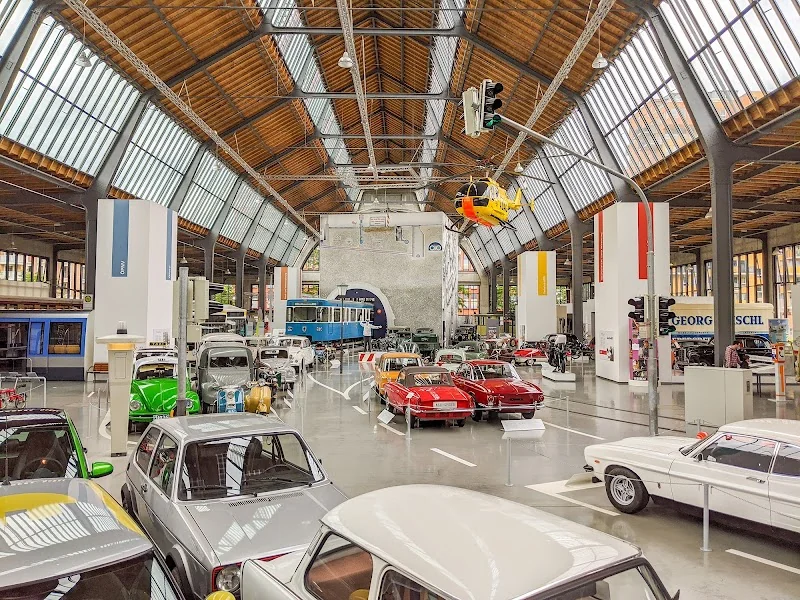
The German Museum Transport Center at Bavariapark 5 in Munich-Swanthalerhöhe is the transport museum of the German Museum for those who want to understand mobility not just by looking at it, but in context. On 12,000 square meters of exhibition space and in three historic halls, visitors encounter vehicles, technology, urban development, and transport culture from the penny-farthing to the ICE. The location near the Theresienwiese makes the museum easily accessible, and the concept combines listed architecture with lively demonstrations, family-friendly stations, and a clear thematic thread through urban transport, travel, and mobility. This creates a museum that is exciting for technology fans, families, school classes, and visitors to Munich alike. ([deutsches-museum.de](https://www.deutsches-museum.de/verkehrszentrum/besuch))
Opening Hours, Tickets, and Admission Prices
Anyone planning a visit should know the opening hours precisely, as the Transport Center is open 357 days a year, but not around the clock. Regular hours are daily from 9 AM to 5 PM. The official website also lists the closing days of the current year, including Fat Tuesday, Good Friday, Labor Day, All Saints' Day, as well as Christmas Eve, Christmas, New Year's Eve, and New Year's Day. This is ideal for practical planning, as you can coordinate your museum visit in advance with travel, lunch breaks, or family programs. Especially on weekends and holidays, it is worthwhile to check the current opening hours page to avoid standing in front of closed doors. The museum also publishes notes on special cases such as staff meetings, during which visits may be temporarily restricted. ([deutsches-museum.de](https://www.deutsches-museum.de/verkehrszentrum/besuch/oeffnungszeiten))
The museum is also transparent and family-friendly regarding tickets. The day ticket costs 9 euros, reduced 6 euros, the family ticket 19 euros, and the annual ticket 50 euros or reduced 25 euros. Children up to and including 5 years have free admission, and children under 12 may only visit the German Museum when accompanied by adults. Additionally, various discounts are available for students, seniors, and people with disabilities. Particularly practical is that the annual ticket is valid not only for the Transport Center but also for the Museum Island and the Flight Museum Schleißheim. Those who visit more often can plan not just a single museum day but several locations at once. Online tickets are explicitly recommended, making entry on-site usually more relaxed. ([deutsches-museum.de](https://www.deutsches-museum.de/verkehrszentrum/besuch/preise-und-tickets))
For those who want to buy tickets as relaxed as possible, it is best to use the online shop, as the museum repeatedly points out that online tickets are recommended. The annual ticket is also practical because it is valid not only for the Transport Center but also for the three Munich locations: Museum Island, Transport Center, and Flight Museum Schleißheim. This is particularly worthwhile for guests who spend several days in Munich or want to get to know the German Museum more intensively on a second visit. Families benefit from the family ticket, while children up to five years can enter for free. This allows for a short technical stop, a half museum day, or a complete family day to be flexibly arranged depending on budget and time. ([deutsches-museum.de](https://www.deutsches-museum.de/verkehrszentrum/besuch/preise-und-tickets))
Directions and Parking at Bavariapark
The easiest way to reach the Transport Center is by public transport. The museum itself recommends arriving by train, and the key points are clear: S-Bahn Hackerbrücke with about a 15-minute walk, U-Bahn U4 or U5 to Schwanthalerhöhe, and bus lines 53 at the Schwanthalerhöhe stop and 134 at Theresienhöhe. This places the location in the middle of the Munich transport network for many visitors and allows for convenient connections with a city center stay, a visit to Theresienwiese, or an evening program. Those arriving with children, groups, or in bad weather benefit from the short and well-planned route from the stops. The museum's website also provides navigation recommendations for Theresienhöhe. ([deutsches-museum.de](https://www.deutsches-museum.de/verkehrszentrum/besuch/anfahrt-und-lageplan))
It is also possible to arrive by car, but not directly on the museum grounds, as there are no museum parking spaces. In the vicinity, the museum mentions the Theresienwiese parking lot and the Heimeranstraße parking garage as nearby alternatives. Additionally, several disabled parking spaces in the area are mentioned, including at Theresienhöhe 14, in Schießstätterstraße 30, and in Gollierstraße 7a and 4. It is also important to note: There are no parking spaces for caravans and motorhomes in the city area. Therefore, those who want to arrive comfortably should better take the U-Bahn or S-Bahn, while drivers should plan their parking strategy in advance. For the navigation system, the website recommends the address Theresienhöhe 15, 80339 Munich. ([deutsches-museum.de](https://www.deutsches-museum.de/verkehrszentrum/besuch/anfahrt-und-lageplan))
The location near Theresienwiese is also helpful for orientation. Those who know Munich can easily combine the Transport Center with a walk through the neighborhood, a detour to the Oktoberfest grounds, or a visit to other districts. Especially because the location is situated in the middle of the inner-city transport network, arriving by U-Bahn or S-Bahn is almost always better than using one's own car. The museum makes this recommendation not by chance, but because the routes from the stops are short, planned, and manageable even with children. For guests from the surrounding area, this creates a clear process: arrive, board, walk a few minutes, and then start the museum visit without long searching. ([deutsches-museum.de](https://www.deutsches-museum.de/verkehrszentrum/besuch/anfahrt-und-lageplan))
Hall I: Urban Transport from 1900 to Today
Hall I is the heart for all who want to understand urban transport. The permanent exhibition traces the development of motorized transport from its beginnings around 1900 to the present day and stages a street landscape as a timeline that runs through the hall. On this stage are automobiles, bicycles, tricycles, trams, buses, and special vehicles such as a historic parade vehicle or a street sweeper. This makes Hall I not feel like a static collection, but like a changing cityscape. Visitors see how movement in urban areas, everyday mobility, and infrastructure influence each other. The connection between technology and social history is particularly strong, as transport is shown here not just as movement, but as part of urban life. ([deutsches-museum.de](https://www.deutsches-museum.de/verkehrszentrum/besuch))
The themes of traffic safety, traffic education, public transport, urban planning, and the impact of mobility on the environment also belong to Hall I. The museum thus conveys not only past vehicles but also explains why street space is used as it is today and what questions future cities must answer. During guided tours, there is even a glimpse of the futuristic superconductor, a technology presentation with magnetic levitation train character that makes the idea of tomorrow's mobility tangible. Those interested in Hall I, urban transport, or the development of street spaces will find one of the clearest and most illustrative accesses to the entire museum here. The exhibition is particularly suitable for those who want to see connections rather than just looking at individual vehicles. ([deutsches-museum.de](https://www.deutsches-museum.de/verkehrszentrum/programm/veranstaltungen/stadtverkehr-gestern-und-heute?utm_source=openai))
Hall II: Travel, Carriage Simulator, and S 3/6
Hall II is dedicated to travel and shows how travel culture has changed with technology. The exhibition deliberately starts far back: with the Romans, with pilgrimages, and with the long journey from carriage rides to package tours. Along the tour, historical means of travel appear, including the Swiss Alpine Post, which ran over the Furka Pass until the 20th century, the first continental horse-drawn railway Hannibal, the express steam locomotive S 3/6 with mail and dining cars, and the panoramic bus Kässbohrer Setra. Thus, the keyword travel becomes not just an abstract topic but a comprehensible story of comfort, speed, range, and wanderlust. It is particularly illustrative that the museum not only exhibits objects but also narrates movements and travel experiences. ([deutsches-museum.de](https://www.deutsches-museum.de/museum/presse/wer-wir-sind/deutsches-museum-verkehrszentrum))
Among the most popular experiences in Hall II are the carriage simulator and the demonstrations surrounding the S 3/6. The simulator conveys the feeling of a carriage ride around 1900, while the large green locomotive is shown in operation on certain dates. Thus, the hall connects the theme of travel with practical demonstration and appeals to both railway enthusiasts and families and school classes. Those who enjoy travel history will also find a view of infrastructure here, including paths, tickets, networks, and the many small elements without which travel would not work. This mixture makes Hall II one of the most content-rich areas of the Transport Center. It not only explains how people traveled in the past but also why traveling remains a cultural and technical experience to this day. ([deutsches-museum.de](https://www.deutsches-museum.de/verkehrszentrum/besuch))
Hall III: Mobility and Technology with Children's Area
Hall III bundles the theme of mobility and technology and opens the view to innovations, tools, and future ideas. The official description focuses here on the technical means by which people expand their range of movement. This includes demonstrations such as the model railway in a scale of 1:87, the Puffing Billy, the first usable steam locomotive in the world in operation, and other simulators and demonstrations in the program. Motorsport also plays a role in this area, so the hall not only explains soberly but also stages speed, construction, and enthusiasm. The whole thing is complemented by areas that particularly illustrate how technology meets everyday life. Visitors experience not only vehicles here but also the mindset behind them: How can one move loads, people, and ideas more efficiently, safely, and excitingly? ([deutsches-museum.de](https://www.deutsches-museum.de/verkehrszentrum/besuch))
For families, Hall III is additionally important because it houses the children's area. It is accessible by elevator, open daily from 9 AM to 4:30 PM, and included in the museum admission. Children and adults can play, tinker, paint, build, slide, or simply take a break there, and brought food and drinks may be consumed. In the museum itself, there is also a picnic area in Hall III, making the visit with younger children much more relaxed. Those looking for a child-friendly museum in Munich will find in the Transport Center a very practical mix of learning, movement, and short relaxation. Additionally, the hall, with its demonstrations, model railway, and interactive stations, remains varied for adults and functions not just as an addition but as a highlight of the visit. ([deutsches-museum.de](https://www.deutsches-museum.de/verkehrszentrum/ausstellungen/kinderbereich))
History of the Transport Center and Special Visitor Tips
The special nature of the Transport Center is also due to its history. The exhibition grounds opened in 1908 were planned by Wilhelm Bertsch and later restored in a monument-friendly manner after the German Museum took over responsibility in 2002. In 2003, Hall III opened as the first part of the Transport Center, followed by Hall I and Hall II three years later, and in 2011 the new entrance area with offices, a small lecture hall, visitor foyer, ticket office, and shop was added. This means for today's visit: You are not moving through an arbitrary new building but through an ensemble with its own history and atmosphere. It is precisely this mixture of historical substance and modern exhibition dramaturgy that gives the house its character and distinguishes it from many other technology museums. The halls therefore not only tell content but are themselves part of the narrative. ([deutsches-museum.de](https://www.deutsches-museum.de/museum/presse/wer-wir-sind/deutsches-museum-verkehrszentrum))
The service information is also strongly oriented towards a pleasant stay. In the Transport Center, there is an audio guide with 68 listening stations and its own children's trail, which is available at the ticket office; according to the museum, you should plan around 3.5 hours for this. Free Wi-Fi, cloakroom, and lockers with a 1 euro deposit, as well as the barrier-free accessibility of the exhibitions, further facilitate the visit. Photos and videos for private purposes are allowed, but tripods and selfie sticks are not. So, those who want to take photos can document the museum well without disturbing other guests. Together with the clear orientation over the three halls, the guided tours, and the family-friendly offerings, this creates a house that can be easily visited in an afternoon but can also accommodate a longer, leisurely enjoyed tour. ([deutsches-museum.de](https://www.deutsches-museum.de/verkehrszentrum/audioguide))
The visit is also made practical by the service offerings. The cloakroom with lockers is located in the entrance area, small bags and backpacks are allowed, and the building offers free Wi-Fi under the name Deutsches Museum Guest. Those who want to photograph can take private shots but should leave tripods and selfie sticks at home. At the same time, the house is designed for accessibility: the exhibitions are step-free accessible, elevators connect the levels, and there are accessible restrooms in the museum. Together with the audio guide, children's trail, and guided tours, this creates a visit that works both spontaneously and well-prepared. ([deutsches-museum.de](https://www.deutsches-museum.de/verkehrszentrum/besuch))
Sources:
Mehr anzeigenWeniger anzeigen
German Museum Transport Center | Tickets & Opening Hours
The German Museum Transport Center at Bavariapark 5 in Munich-Swanthalerhöhe is the transport museum of the German Museum for those who want to understand mobility not just by looking at it, but in context. On 12,000 square meters of exhibition space and in three historic halls, visitors encounter vehicles, technology, urban development, and transport culture from the penny-farthing to the ICE. The location near the Theresienwiese makes the museum easily accessible, and the concept combines listed architecture with lively demonstrations, family-friendly stations, and a clear thematic thread through urban transport, travel, and mobility. This creates a museum that is exciting for technology fans, families, school classes, and visitors to Munich alike. ([deutsches-museum.de](https://www.deutsches-museum.de/verkehrszentrum/besuch))
Opening Hours, Tickets, and Admission Prices
Anyone planning a visit should know the opening hours precisely, as the Transport Center is open 357 days a year, but not around the clock. Regular hours are daily from 9 AM to 5 PM. The official website also lists the closing days of the current year, including Fat Tuesday, Good Friday, Labor Day, All Saints' Day, as well as Christmas Eve, Christmas, New Year's Eve, and New Year's Day. This is ideal for practical planning, as you can coordinate your museum visit in advance with travel, lunch breaks, or family programs. Especially on weekends and holidays, it is worthwhile to check the current opening hours page to avoid standing in front of closed doors. The museum also publishes notes on special cases such as staff meetings, during which visits may be temporarily restricted. ([deutsches-museum.de](https://www.deutsches-museum.de/verkehrszentrum/besuch/oeffnungszeiten))
The museum is also transparent and family-friendly regarding tickets. The day ticket costs 9 euros, reduced 6 euros, the family ticket 19 euros, and the annual ticket 50 euros or reduced 25 euros. Children up to and including 5 years have free admission, and children under 12 may only visit the German Museum when accompanied by adults. Additionally, various discounts are available for students, seniors, and people with disabilities. Particularly practical is that the annual ticket is valid not only for the Transport Center but also for the Museum Island and the Flight Museum Schleißheim. Those who visit more often can plan not just a single museum day but several locations at once. Online tickets are explicitly recommended, making entry on-site usually more relaxed. ([deutsches-museum.de](https://www.deutsches-museum.de/verkehrszentrum/besuch/preise-und-tickets))
For those who want to buy tickets as relaxed as possible, it is best to use the online shop, as the museum repeatedly points out that online tickets are recommended. The annual ticket is also practical because it is valid not only for the Transport Center but also for the three Munich locations: Museum Island, Transport Center, and Flight Museum Schleißheim. This is particularly worthwhile for guests who spend several days in Munich or want to get to know the German Museum more intensively on a second visit. Families benefit from the family ticket, while children up to five years can enter for free. This allows for a short technical stop, a half museum day, or a complete family day to be flexibly arranged depending on budget and time. ([deutsches-museum.de](https://www.deutsches-museum.de/verkehrszentrum/besuch/preise-und-tickets))
Directions and Parking at Bavariapark
The easiest way to reach the Transport Center is by public transport. The museum itself recommends arriving by train, and the key points are clear: S-Bahn Hackerbrücke with about a 15-minute walk, U-Bahn U4 or U5 to Schwanthalerhöhe, and bus lines 53 at the Schwanthalerhöhe stop and 134 at Theresienhöhe. This places the location in the middle of the Munich transport network for many visitors and allows for convenient connections with a city center stay, a visit to Theresienwiese, or an evening program. Those arriving with children, groups, or in bad weather benefit from the short and well-planned route from the stops. The museum's website also provides navigation recommendations for Theresienhöhe. ([deutsches-museum.de](https://www.deutsches-museum.de/verkehrszentrum/besuch/anfahrt-und-lageplan))
It is also possible to arrive by car, but not directly on the museum grounds, as there are no museum parking spaces. In the vicinity, the museum mentions the Theresienwiese parking lot and the Heimeranstraße parking garage as nearby alternatives. Additionally, several disabled parking spaces in the area are mentioned, including at Theresienhöhe 14, in Schießstätterstraße 30, and in Gollierstraße 7a and 4. It is also important to note: There are no parking spaces for caravans and motorhomes in the city area. Therefore, those who want to arrive comfortably should better take the U-Bahn or S-Bahn, while drivers should plan their parking strategy in advance. For the navigation system, the website recommends the address Theresienhöhe 15, 80339 Munich. ([deutsches-museum.de](https://www.deutsches-museum.de/verkehrszentrum/besuch/anfahrt-und-lageplan))
The location near Theresienwiese is also helpful for orientation. Those who know Munich can easily combine the Transport Center with a walk through the neighborhood, a detour to the Oktoberfest grounds, or a visit to other districts. Especially because the location is situated in the middle of the inner-city transport network, arriving by U-Bahn or S-Bahn is almost always better than using one's own car. The museum makes this recommendation not by chance, but because the routes from the stops are short, planned, and manageable even with children. For guests from the surrounding area, this creates a clear process: arrive, board, walk a few minutes, and then start the museum visit without long searching. ([deutsches-museum.de](https://www.deutsches-museum.de/verkehrszentrum/besuch/anfahrt-und-lageplan))
Hall I: Urban Transport from 1900 to Today
Hall I is the heart for all who want to understand urban transport. The permanent exhibition traces the development of motorized transport from its beginnings around 1900 to the present day and stages a street landscape as a timeline that runs through the hall. On this stage are automobiles, bicycles, tricycles, trams, buses, and special vehicles such as a historic parade vehicle or a street sweeper. This makes Hall I not feel like a static collection, but like a changing cityscape. Visitors see how movement in urban areas, everyday mobility, and infrastructure influence each other. The connection between technology and social history is particularly strong, as transport is shown here not just as movement, but as part of urban life. ([deutsches-museum.de](https://www.deutsches-museum.de/verkehrszentrum/besuch))
The themes of traffic safety, traffic education, public transport, urban planning, and the impact of mobility on the environment also belong to Hall I. The museum thus conveys not only past vehicles but also explains why street space is used as it is today and what questions future cities must answer. During guided tours, there is even a glimpse of the futuristic superconductor, a technology presentation with magnetic levitation train character that makes the idea of tomorrow's mobility tangible. Those interested in Hall I, urban transport, or the development of street spaces will find one of the clearest and most illustrative accesses to the entire museum here. The exhibition is particularly suitable for those who want to see connections rather than just looking at individual vehicles. ([deutsches-museum.de](https://www.deutsches-museum.de/verkehrszentrum/programm/veranstaltungen/stadtverkehr-gestern-und-heute?utm_source=openai))
Hall II: Travel, Carriage Simulator, and S 3/6
Hall II is dedicated to travel and shows how travel culture has changed with technology. The exhibition deliberately starts far back: with the Romans, with pilgrimages, and with the long journey from carriage rides to package tours. Along the tour, historical means of travel appear, including the Swiss Alpine Post, which ran over the Furka Pass until the 20th century, the first continental horse-drawn railway Hannibal, the express steam locomotive S 3/6 with mail and dining cars, and the panoramic bus Kässbohrer Setra. Thus, the keyword travel becomes not just an abstract topic but a comprehensible story of comfort, speed, range, and wanderlust. It is particularly illustrative that the museum not only exhibits objects but also narrates movements and travel experiences. ([deutsches-museum.de](https://www.deutsches-museum.de/museum/presse/wer-wir-sind/deutsches-museum-verkehrszentrum))
Among the most popular experiences in Hall II are the carriage simulator and the demonstrations surrounding the S 3/6. The simulator conveys the feeling of a carriage ride around 1900, while the large green locomotive is shown in operation on certain dates. Thus, the hall connects the theme of travel with practical demonstration and appeals to both railway enthusiasts and families and school classes. Those who enjoy travel history will also find a view of infrastructure here, including paths, tickets, networks, and the many small elements without which travel would not work. This mixture makes Hall II one of the most content-rich areas of the Transport Center. It not only explains how people traveled in the past but also why traveling remains a cultural and technical experience to this day. ([deutsches-museum.de](https://www.deutsches-museum.de/verkehrszentrum/besuch))
Hall III: Mobility and Technology with Children's Area
Hall III bundles the theme of mobility and technology and opens the view to innovations, tools, and future ideas. The official description focuses here on the technical means by which people expand their range of movement. This includes demonstrations such as the model railway in a scale of 1:87, the Puffing Billy, the first usable steam locomotive in the world in operation, and other simulators and demonstrations in the program. Motorsport also plays a role in this area, so the hall not only explains soberly but also stages speed, construction, and enthusiasm. The whole thing is complemented by areas that particularly illustrate how technology meets everyday life. Visitors experience not only vehicles here but also the mindset behind them: How can one move loads, people, and ideas more efficiently, safely, and excitingly? ([deutsches-museum.de](https://www.deutsches-museum.de/verkehrszentrum/besuch))
For families, Hall III is additionally important because it houses the children's area. It is accessible by elevator, open daily from 9 AM to 4:30 PM, and included in the museum admission. Children and adults can play, tinker, paint, build, slide, or simply take a break there, and brought food and drinks may be consumed. In the museum itself, there is also a picnic area in Hall III, making the visit with younger children much more relaxed. Those looking for a child-friendly museum in Munich will find in the Transport Center a very practical mix of learning, movement, and short relaxation. Additionally, the hall, with its demonstrations, model railway, and interactive stations, remains varied for adults and functions not just as an addition but as a highlight of the visit. ([deutsches-museum.de](https://www.deutsches-museum.de/verkehrszentrum/ausstellungen/kinderbereich))
History of the Transport Center and Special Visitor Tips
The special nature of the Transport Center is also due to its history. The exhibition grounds opened in 1908 were planned by Wilhelm Bertsch and later restored in a monument-friendly manner after the German Museum took over responsibility in 2002. In 2003, Hall III opened as the first part of the Transport Center, followed by Hall I and Hall II three years later, and in 2011 the new entrance area with offices, a small lecture hall, visitor foyer, ticket office, and shop was added. This means for today's visit: You are not moving through an arbitrary new building but through an ensemble with its own history and atmosphere. It is precisely this mixture of historical substance and modern exhibition dramaturgy that gives the house its character and distinguishes it from many other technology museums. The halls therefore not only tell content but are themselves part of the narrative. ([deutsches-museum.de](https://www.deutsches-museum.de/museum/presse/wer-wir-sind/deutsches-museum-verkehrszentrum))
The service information is also strongly oriented towards a pleasant stay. In the Transport Center, there is an audio guide with 68 listening stations and its own children's trail, which is available at the ticket office; according to the museum, you should plan around 3.5 hours for this. Free Wi-Fi, cloakroom, and lockers with a 1 euro deposit, as well as the barrier-free accessibility of the exhibitions, further facilitate the visit. Photos and videos for private purposes are allowed, but tripods and selfie sticks are not. So, those who want to take photos can document the museum well without disturbing other guests. Together with the clear orientation over the three halls, the guided tours, and the family-friendly offerings, this creates a house that can be easily visited in an afternoon but can also accommodate a longer, leisurely enjoyed tour. ([deutsches-museum.de](https://www.deutsches-museum.de/verkehrszentrum/audioguide))
The visit is also made practical by the service offerings. The cloakroom with lockers is located in the entrance area, small bags and backpacks are allowed, and the building offers free Wi-Fi under the name Deutsches Museum Guest. Those who want to photograph can take private shots but should leave tripods and selfie sticks at home. At the same time, the house is designed for accessibility: the exhibitions are step-free accessible, elevators connect the levels, and there are accessible restrooms in the museum. Together with the audio guide, children's trail, and guided tours, this creates a visit that works both spontaneously and well-prepared. ([deutsches-museum.de](https://www.deutsches-museum.de/verkehrszentrum/besuch))
Sources:
German Museum Transport Center | Tickets & Opening Hours
The German Museum Transport Center at Bavariapark 5 in Munich-Swanthalerhöhe is the transport museum of the German Museum for those who want to understand mobility not just by looking at it, but in context. On 12,000 square meters of exhibition space and in three historic halls, visitors encounter vehicles, technology, urban development, and transport culture from the penny-farthing to the ICE. The location near the Theresienwiese makes the museum easily accessible, and the concept combines listed architecture with lively demonstrations, family-friendly stations, and a clear thematic thread through urban transport, travel, and mobility. This creates a museum that is exciting for technology fans, families, school classes, and visitors to Munich alike. ([deutsches-museum.de](https://www.deutsches-museum.de/verkehrszentrum/besuch))
Opening Hours, Tickets, and Admission Prices
Anyone planning a visit should know the opening hours precisely, as the Transport Center is open 357 days a year, but not around the clock. Regular hours are daily from 9 AM to 5 PM. The official website also lists the closing days of the current year, including Fat Tuesday, Good Friday, Labor Day, All Saints' Day, as well as Christmas Eve, Christmas, New Year's Eve, and New Year's Day. This is ideal for practical planning, as you can coordinate your museum visit in advance with travel, lunch breaks, or family programs. Especially on weekends and holidays, it is worthwhile to check the current opening hours page to avoid standing in front of closed doors. The museum also publishes notes on special cases such as staff meetings, during which visits may be temporarily restricted. ([deutsches-museum.de](https://www.deutsches-museum.de/verkehrszentrum/besuch/oeffnungszeiten))
The museum is also transparent and family-friendly regarding tickets. The day ticket costs 9 euros, reduced 6 euros, the family ticket 19 euros, and the annual ticket 50 euros or reduced 25 euros. Children up to and including 5 years have free admission, and children under 12 may only visit the German Museum when accompanied by adults. Additionally, various discounts are available for students, seniors, and people with disabilities. Particularly practical is that the annual ticket is valid not only for the Transport Center but also for the Museum Island and the Flight Museum Schleißheim. Those who visit more often can plan not just a single museum day but several locations at once. Online tickets are explicitly recommended, making entry on-site usually more relaxed. ([deutsches-museum.de](https://www.deutsches-museum.de/verkehrszentrum/besuch/preise-und-tickets))
For those who want to buy tickets as relaxed as possible, it is best to use the online shop, as the museum repeatedly points out that online tickets are recommended. The annual ticket is also practical because it is valid not only for the Transport Center but also for the three Munich locations: Museum Island, Transport Center, and Flight Museum Schleißheim. This is particularly worthwhile for guests who spend several days in Munich or want to get to know the German Museum more intensively on a second visit. Families benefit from the family ticket, while children up to five years can enter for free. This allows for a short technical stop, a half museum day, or a complete family day to be flexibly arranged depending on budget and time. ([deutsches-museum.de](https://www.deutsches-museum.de/verkehrszentrum/besuch/preise-und-tickets))
Directions and Parking at Bavariapark
The easiest way to reach the Transport Center is by public transport. The museum itself recommends arriving by train, and the key points are clear: S-Bahn Hackerbrücke with about a 15-minute walk, U-Bahn U4 or U5 to Schwanthalerhöhe, and bus lines 53 at the Schwanthalerhöhe stop and 134 at Theresienhöhe. This places the location in the middle of the Munich transport network for many visitors and allows for convenient connections with a city center stay, a visit to Theresienwiese, or an evening program. Those arriving with children, groups, or in bad weather benefit from the short and well-planned route from the stops. The museum's website also provides navigation recommendations for Theresienhöhe. ([deutsches-museum.de](https://www.deutsches-museum.de/verkehrszentrum/besuch/anfahrt-und-lageplan))
It is also possible to arrive by car, but not directly on the museum grounds, as there are no museum parking spaces. In the vicinity, the museum mentions the Theresienwiese parking lot and the Heimeranstraße parking garage as nearby alternatives. Additionally, several disabled parking spaces in the area are mentioned, including at Theresienhöhe 14, in Schießstätterstraße 30, and in Gollierstraße 7a and 4. It is also important to note: There are no parking spaces for caravans and motorhomes in the city area. Therefore, those who want to arrive comfortably should better take the U-Bahn or S-Bahn, while drivers should plan their parking strategy in advance. For the navigation system, the website recommends the address Theresienhöhe 15, 80339 Munich. ([deutsches-museum.de](https://www.deutsches-museum.de/verkehrszentrum/besuch/anfahrt-und-lageplan))
The location near Theresienwiese is also helpful for orientation. Those who know Munich can easily combine the Transport Center with a walk through the neighborhood, a detour to the Oktoberfest grounds, or a visit to other districts. Especially because the location is situated in the middle of the inner-city transport network, arriving by U-Bahn or S-Bahn is almost always better than using one's own car. The museum makes this recommendation not by chance, but because the routes from the stops are short, planned, and manageable even with children. For guests from the surrounding area, this creates a clear process: arrive, board, walk a few minutes, and then start the museum visit without long searching. ([deutsches-museum.de](https://www.deutsches-museum.de/verkehrszentrum/besuch/anfahrt-und-lageplan))
Hall I: Urban Transport from 1900 to Today
Hall I is the heart for all who want to understand urban transport. The permanent exhibition traces the development of motorized transport from its beginnings around 1900 to the present day and stages a street landscape as a timeline that runs through the hall. On this stage are automobiles, bicycles, tricycles, trams, buses, and special vehicles such as a historic parade vehicle or a street sweeper. This makes Hall I not feel like a static collection, but like a changing cityscape. Visitors see how movement in urban areas, everyday mobility, and infrastructure influence each other. The connection between technology and social history is particularly strong, as transport is shown here not just as movement, but as part of urban life. ([deutsches-museum.de](https://www.deutsches-museum.de/verkehrszentrum/besuch))
The themes of traffic safety, traffic education, public transport, urban planning, and the impact of mobility on the environment also belong to Hall I. The museum thus conveys not only past vehicles but also explains why street space is used as it is today and what questions future cities must answer. During guided tours, there is even a glimpse of the futuristic superconductor, a technology presentation with magnetic levitation train character that makes the idea of tomorrow's mobility tangible. Those interested in Hall I, urban transport, or the development of street spaces will find one of the clearest and most illustrative accesses to the entire museum here. The exhibition is particularly suitable for those who want to see connections rather than just looking at individual vehicles. ([deutsches-museum.de](https://www.deutsches-museum.de/verkehrszentrum/programm/veranstaltungen/stadtverkehr-gestern-und-heute?utm_source=openai))
Hall II: Travel, Carriage Simulator, and S 3/6
Hall II is dedicated to travel and shows how travel culture has changed with technology. The exhibition deliberately starts far back: with the Romans, with pilgrimages, and with the long journey from carriage rides to package tours. Along the tour, historical means of travel appear, including the Swiss Alpine Post, which ran over the Furka Pass until the 20th century, the first continental horse-drawn railway Hannibal, the express steam locomotive S 3/6 with mail and dining cars, and the panoramic bus Kässbohrer Setra. Thus, the keyword travel becomes not just an abstract topic but a comprehensible story of comfort, speed, range, and wanderlust. It is particularly illustrative that the museum not only exhibits objects but also narrates movements and travel experiences. ([deutsches-museum.de](https://www.deutsches-museum.de/museum/presse/wer-wir-sind/deutsches-museum-verkehrszentrum))
Among the most popular experiences in Hall II are the carriage simulator and the demonstrations surrounding the S 3/6. The simulator conveys the feeling of a carriage ride around 1900, while the large green locomotive is shown in operation on certain dates. Thus, the hall connects the theme of travel with practical demonstration and appeals to both railway enthusiasts and families and school classes. Those who enjoy travel history will also find a view of infrastructure here, including paths, tickets, networks, and the many small elements without which travel would not work. This mixture makes Hall II one of the most content-rich areas of the Transport Center. It not only explains how people traveled in the past but also why traveling remains a cultural and technical experience to this day. ([deutsches-museum.de](https://www.deutsches-museum.de/verkehrszentrum/besuch))
Hall III: Mobility and Technology with Children's Area
Hall III bundles the theme of mobility and technology and opens the view to innovations, tools, and future ideas. The official description focuses here on the technical means by which people expand their range of movement. This includes demonstrations such as the model railway in a scale of 1:87, the Puffing Billy, the first usable steam locomotive in the world in operation, and other simulators and demonstrations in the program. Motorsport also plays a role in this area, so the hall not only explains soberly but also stages speed, construction, and enthusiasm. The whole thing is complemented by areas that particularly illustrate how technology meets everyday life. Visitors experience not only vehicles here but also the mindset behind them: How can one move loads, people, and ideas more efficiently, safely, and excitingly? ([deutsches-museum.de](https://www.deutsches-museum.de/verkehrszentrum/besuch))
For families, Hall III is additionally important because it houses the children's area. It is accessible by elevator, open daily from 9 AM to 4:30 PM, and included in the museum admission. Children and adults can play, tinker, paint, build, slide, or simply take a break there, and brought food and drinks may be consumed. In the museum itself, there is also a picnic area in Hall III, making the visit with younger children much more relaxed. Those looking for a child-friendly museum in Munich will find in the Transport Center a very practical mix of learning, movement, and short relaxation. Additionally, the hall, with its demonstrations, model railway, and interactive stations, remains varied for adults and functions not just as an addition but as a highlight of the visit. ([deutsches-museum.de](https://www.deutsches-museum.de/verkehrszentrum/ausstellungen/kinderbereich))
History of the Transport Center and Special Visitor Tips
The special nature of the Transport Center is also due to its history. The exhibition grounds opened in 1908 were planned by Wilhelm Bertsch and later restored in a monument-friendly manner after the German Museum took over responsibility in 2002. In 2003, Hall III opened as the first part of the Transport Center, followed by Hall I and Hall II three years later, and in 2011 the new entrance area with offices, a small lecture hall, visitor foyer, ticket office, and shop was added. This means for today's visit: You are not moving through an arbitrary new building but through an ensemble with its own history and atmosphere. It is precisely this mixture of historical substance and modern exhibition dramaturgy that gives the house its character and distinguishes it from many other technology museums. The halls therefore not only tell content but are themselves part of the narrative. ([deutsches-museum.de](https://www.deutsches-museum.de/museum/presse/wer-wir-sind/deutsches-museum-verkehrszentrum))
The service information is also strongly oriented towards a pleasant stay. In the Transport Center, there is an audio guide with 68 listening stations and its own children's trail, which is available at the ticket office; according to the museum, you should plan around 3.5 hours for this. Free Wi-Fi, cloakroom, and lockers with a 1 euro deposit, as well as the barrier-free accessibility of the exhibitions, further facilitate the visit. Photos and videos for private purposes are allowed, but tripods and selfie sticks are not. So, those who want to take photos can document the museum well without disturbing other guests. Together with the clear orientation over the three halls, the guided tours, and the family-friendly offerings, this creates a house that can be easily visited in an afternoon but can also accommodate a longer, leisurely enjoyed tour. ([deutsches-museum.de](https://www.deutsches-museum.de/verkehrszentrum/audioguide))
The visit is also made practical by the service offerings. The cloakroom with lockers is located in the entrance area, small bags and backpacks are allowed, and the building offers free Wi-Fi under the name Deutsches Museum Guest. Those who want to photograph can take private shots but should leave tripods and selfie sticks at home. At the same time, the house is designed for accessibility: the exhibitions are step-free accessible, elevators connect the levels, and there are accessible restrooms in the museum. Together with the audio guide, children's trail, and guided tours, this creates a visit that works both spontaneously and well-prepared. ([deutsches-museum.de](https://www.deutsches-museum.de/verkehrszentrum/besuch))
Sources:
Upcoming Events

Frequently Asked Questions
Reviews
No reviews found