
Schwanthalerstraße 13, München-Ludwigsvorstadt-Isarvorstadt
Schwanthalerstraße 13, 80336 München, Germany
German Theater Munich | Program & Tickets
The German Theater Munich is one of those addresses where city history, great entertainment, and an astonishingly versatile event operation meet in a small space. Those who visit the house on Schwanthalerstraße experience not only a traditional theater hall but also an ensemble of stage, Silbersaal, Barocksaal, and ballroom, which has been present in the heart of Munich since 1896. The venue is within walking distance of the main train station and Stachus and has established itself as Germany's largest guest performance theater with a program that ranges from musicals and shows to dance and concerts, as well as cabaret and events for children and young people. This mixture is precisely what makes it appealing: a well-accessible cultural venue during the day, a stage for great emotions in the evening, and a magnificent ballroom with a distinctive atmosphere during carnival season. So, anyone searching for the German Theater Munich program, schedule, tickets, parking, or seating plan will find not just a place but a whole world of experiences here. ([deutsches-theater.de](https://www.deutsches-theater.de/das-theater/))
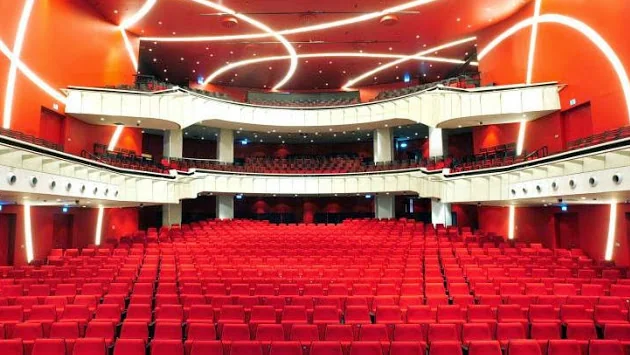
The current profile of the house is clear: international productions, changing guest performances, and a yearly refilled schedule that combines the traditional strengths of the house with modern viewing habits. The theater hall was re-staged as Lady in Red after renovation and reopening in January 2014 and appears elegant and contemporary with its light bands, distinctive foyer, and striking red color scheme. The historic Silbersaal and the Barocksaal below complement the offerings with intimate formats, smaller music productions, readings, exhibitions, and cabaret evenings. This is why the German Theater Munich works for both grand musical evenings and concentrated cultural moments in a smaller setting. Visitors particularly appreciate that access, ticket purchase, barrier-free access, and quality of stay are coordinated. The house is not a museum but a vibrant cultural site with history, present, and a lot of program energy. ([deutsches-theater.de](https://www.deutsches-theater.de/en/the-theatre/?utm_source=openai))
Program and Schedule 2026 at the German Theater Munich
When searching for the term German Theater Munich program or German Theater Munich schedule, most visitors have a central question: What is currently running, and what kind of evening suits me? The official answer is broad yet very clear. The German Theater sees itself as the musical house of the city of Munich and as Germany's largest guest performance theater. The year-round schedule features popular musicals, shows, concerts, variety, ballet, contemporary dance, and plays for children and young people. This diversity is no coincidence but part of the profile of the house, which relies on national and international productions and regularly collaborates with partners from the theater and festival scene. For visitors, this means: The schedule is not a rigid scheme but a lively mix of major audience titles, culturally strong guest performances, and formats that appeal to different target groups. Therefore, anyone looking for the program 2026 can rely on changing highlights and a high density of events. ([deutsches-theater.de](https://www.deutsches-theater.de/das-theater/))
Especially for 2026, this range can be clearly seen in specific official productions. With DRACULA – The Musical, a major musical production is scheduled in the theater hall between April 7 and 19, 2026, while This is THE GREATEST SHOW! returns on May 4 and 5, 2026, with musical show energy. Shortly thereafter, the house transforms for DOK.fest 2026 from May 6 to 10, 2026, into a large festival and cinema medium. At the same time, the ball season 2026 shows that the German Theater also plays a fixed cultural role outside of classical theater formats throughout the year. This mixture of musical, festival, show, and ball culture makes the schedule so interesting: it is not only aimed at a regular clientele but also at everyone who is excited about great stage moments, changing perspectives, and skillfully strong live experiences. The Silbersaal and Barocksaal further expand this diversity with more intimate evenings featuring music, readings, concerts, or cabaret. Therefore, those who use the program purposefully discover not only individual titles but a schedule with a very clear profile. ([deutsches-theater.de](https://www.deutsches-theater.de/en/dracula/?utm_source=openai))
Tickets, Pre-sale, and ShowCard
The ticket area of the German Theater Munich is designed for different user habits. Visitors can conveniently book tickets online in the webshop, call the ticket hotline, or use the box office at Schwanthalerstraße 13. Since January 2, 2026, the box office is open Monday to Friday from 5:00 PM to 7:00 PM and Saturday from 1:00 PM to 7:00 PM; on event days, it additionally opens one hour before the start of the performance for the evening box office. Payment is only cashless, with EC card or credit card. Those who plan early benefit from a clear structure in the pre-sale, as gift vouchers are also available online and at the box office and are valid for one year. For inquiries such as German Theater Munich tickets, evening box office, or pre-sale, this is relevant because the purchasing process is intentionally kept as uncomplicated as possible. The house signals that spontaneous visits are just as welcome as long-term planning. ([deutsches-theater.de](https://www.deutsches-theater.de/tickets))
Especially practical for regular visitors is the ShowCard, which allows discounts on many performances. The German Theater also makes it clear that comfort seats with more legroom are available in all price categories at no extra charge. Those with special needs can book barrier-free seats via the ticket hotline or directly at the box office. The FAQ section also clearly states that already purchased tickets generally cannot be returned; in exceptional cases, rebookings are only possible before the event day and depending on availability. Important for visitor-friendliness is also the note that Viagogo is not a regular pre-sale point. This positions the house transparently and protects the audience from gray ticket markets. Together, this results in a visit and booking system that works both digitally and analogously but clearly relies on official distribution channels. For SEO inquiries regarding tickets, ShowCard, evening box office, vouchers, or comfort seats, this is exactly the depth of information that users expect. ([deutsches-theater.de](https://www.deutsches-theater.de/showcard/?utm_source=openai))
Directions and Parking at Schwanthalerstraße 13
The location of the German Theater Munich is one of the biggest practical advantages of the house. The address Schwanthalerstraße 13 in 80336 Munich is so central that many guests can reach the theater on foot from the main train station or Stachus. The official directions page deliberately recommends a climate-friendly arrival on foot, by bicycle, or by public transport and shows how well the house is integrated into the Munich transport network. Coming from the north, you can reach the theater via Karlsplatz Stachus with various S-Bahn and U-Bahn lines; from the south, the route leads via Sendlinger Tor. There is also a clear route from the airport via S1 or S8 to the main train station. For visitors arriving by train, this is a real plus point, as the last leg to the house remains short and intuitive. So, anyone searching for German Theater Munich directions will find no complicated outlying location but a city center address with good accessibility. ([deutsches-theater.de](https://www.deutsches-theater.de/anfahrt/))
For drivers, there is also concrete, officially confirmed information. The German Theater refers to parking options in the Isarklinikum underground garage at Pettenkoferstraße 2a and in the Isarklinikum Postinnenhof at Sonnenstraße 24, both with theater rates and license plate recognition. From Monday to Thursday from 6:30 PM to midnight, parking costs €4.00 per hour, a maximum of €10, and from Friday 5:00 PM to Monday 9:00 AM, a rate of €5.00 applies for each started 24 hours. Additionally, the house mentions other parking options within walking distance, including Sonnenhof, Contipark at the main train station, City Parking in Senefelderstraße, and the Bavaria Parkgarage Elisenhof. It is important to note that the previous theater rate in the Contipark garage Stachus no longer exists. Those who want to combine parking and public transport can also rely on P+R offers. This makes the arrival well-planned for different travel profiles: train travelers can get in quickly, drivers have realistic options, and those who combine their theater visit with a city stroll can make their visit particularly relaxed. ([deutsches-theater.de](https://www.deutsches-theater.de/anfahrt/))
Seating Plan, Best Seats, and Barrier-Free Visit
Those searching for the German Theater Munich seating plan or best seats are usually interested in two things: How good is the view, and where is the seat worth it in relation to price and comfort? The theater hall offers a total of 1,549 seats, of which 970 are in the orchestra. Depending on the production, the orchestra pit can be used as an extension of the stage or for additional rows of seats; this can even create rows in front of the actual first row. This is important for visitors because the row designation and perspective can change depending on the production. In the orchestra, several rows are elevated, and from row 19, the seats in the balcony and tier area rise continuously. This allows for an assessment before purchase of which areas are suitable for detail-oriented theatergoers, for an overview of the stage action, or for a particularly atmospheric overall picture. The house's FAQ explicitly emphasizes that the best seats depend on personal preferences: in the front, details are better seen, while further back, one experiences the entire stage and space more impressively. This differentiated view of the seating plan makes booking so useful for visitors with clear expectations. ([deutsches-theater.de](https://www.deutsches-theater.de/en/faq/))
Practical information about sightlines and comfort seats is also relevant. The German Theater points out that there may be seats with restricted visibility at highly booked performances, but these are usually not sold regularly. Additionally, there are comfort seats with more legroom in all price categories at no extra charge, which may not always be directly visible in the webshop. Those who are tall or attending longer performances should specifically inquire about this option. For barrier-free visits, the house offers seats in rows 17 and 18 of the orchestra, and there is an elevator from the foyer to the orchestra and balcony levels. Wheelchair spaces are located in the balcony area, and an inductive hearing system is available in certain seating areas. In the Silbersaal, there is a separate access via the courtyard; there, an elevator leads via stairway IV to the corresponding levels. This combination of seating plan, comfort offerings, and barrier-free access shows that the house organizes the visit not only aesthetically but also functionally. Therefore, those looking for the best seats can choose very specifically based on visibility, legroom, and access. ([deutsches-theater.de](https://www.deutsches-theater.de/en/faq/))
Silbersaal, Barocksaal, and the Special Atmosphere
The Silbersaal is one of the most impressive reasons to perceive the German Theater Munich not only as a musical house but also as a historical cultural site. It is the only remaining room of the theater building from 1896 and preserves a piece of Munich theater history with its baroque style, opulent stucco, ceiling painting, and shimmering chandelier that survived the bombing raid of 1943. Depending on the seating arrangement, the Silbersaal accommodates around 231 people, and with a standing arrangement, even up to 399 people. These numbers are important as they show how differently the space can be used: as a concentrated place for music, dance, cabaret, readings, and smaller productions, but also for sociable formats with greater proximity between stage and audience. The special charm lies precisely in this intimacy. While the theater hall aims for a grand effect, the Silbersaal creates a closeness that makes even familiar genres feel different. ([deutsches-theater.de](https://www.deutsches-theater.de/das-haus/))
Below the Silbersaal is the Barocksaal, which is used for exhibitions and readings and meaningfully complements the house's space offerings. The official visitor information points out that the entrance to the Silbersaal and Barocksaal is via the left area in front of the archway and stairway III. Additionally, it is worth looking at the gastronomy: Since early 2025, Lorenz Stiftl and his team have been providing culinary delights, and in the house, there are now also separate bars in the main building and the Silbersaal, along with a bar in the Barocksaal. This bar is usually open one hour before the start on show days and can even be visited without a theater ticket. Such details make the difference between a mere performance visit and a rounded evening. For guests seeking atmosphere, style, and quality of stay, the German Theater Munich thus offers several levels: historical splendor, modern gastronomy, and a program that makes good use of the spaces. ([deutsches-theater.de](https://www.deutsches-theater.de/das-haus/))
History, Ballroom, and Why the House Shapes Munich
The history of the German Theater Munich is closely linked to the city's history and explains much of its current radiance. In 1896, the house opened in the Schwanthaler Passage and received its name in reference to the Berlin model. Even the New Year's Eve ball in 1896 made the theater a carnival stronghold of Munich, and to this day, it transforms every year in January and February into a magnificent ballroom. The chronicle of the house tells of breakthroughs, crises, and cultural turning points: from the early phase as a playhouse, through the showcase variety of the 1920s, to the decisive years of World War II when the theater was severely damaged in 1943. The Spaten Brewery also played a role in 1900 when it stabilized the house economically. Later, figures like Peter Kreuder as musical director and well-known names like Karl Valentin and Liesl Karlstadt shaped the stage. This historical depth is not just decoration but an essential part of the identity of the place. Today, anyone searching for the German Theater Munich history finds a cultural address that has been reinvented time and again without losing its core. ([deutsches-theater.de](https://www.deutsches-theater.de/geschichte/))
In modern operations, this continuity is also clearly visible. The current house was redesigned as Lady in Red after renovation and reopening in January 2014, combining the historical character with a contemporary appearance. According to the official representation, the Deutsches Theater Betriebs GmbH is a wholly-owned subsidiary of the state capital Munich, and the management has been with Thomas Linsmayer since February 2022. This means that the house is not only culturally but also structurally closely tied to the city. This explains why international guest performances, urban interests, and collaborations with festivals and theater partners come together so naturally here. It is precisely the connection between past and present that gives the place its appeal: the Silbersaal recalls the founding era, the theater hall offers modern production conditions, and the ballroom continues the Munich festival culture to this day. For visitors, this results in a rare overall picture, where one can experience a musical one evening, attend a concert in the Silbersaal the next month, and experience the same place as a ballroom during carnival season. The German Theater is therefore not just a venue but a cultural focal point of the city of Munich. ([deutsches-theater.de](https://www.deutsches-theater.de/das-theater/))
Sources:
Show moreShow less
German Theater Munich | Program & Tickets
The German Theater Munich is one of those addresses where city history, great entertainment, and an astonishingly versatile event operation meet in a small space. Those who visit the house on Schwanthalerstraße experience not only a traditional theater hall but also an ensemble of stage, Silbersaal, Barocksaal, and ballroom, which has been present in the heart of Munich since 1896. The venue is within walking distance of the main train station and Stachus and has established itself as Germany's largest guest performance theater with a program that ranges from musicals and shows to dance and concerts, as well as cabaret and events for children and young people. This mixture is precisely what makes it appealing: a well-accessible cultural venue during the day, a stage for great emotions in the evening, and a magnificent ballroom with a distinctive atmosphere during carnival season. So, anyone searching for the German Theater Munich program, schedule, tickets, parking, or seating plan will find not just a place but a whole world of experiences here. ([deutsches-theater.de](https://www.deutsches-theater.de/das-theater/))
The current profile of the house is clear: international productions, changing guest performances, and a yearly refilled schedule that combines the traditional strengths of the house with modern viewing habits. The theater hall was re-staged as Lady in Red after renovation and reopening in January 2014 and appears elegant and contemporary with its light bands, distinctive foyer, and striking red color scheme. The historic Silbersaal and the Barocksaal below complement the offerings with intimate formats, smaller music productions, readings, exhibitions, and cabaret evenings. This is why the German Theater Munich works for both grand musical evenings and concentrated cultural moments in a smaller setting. Visitors particularly appreciate that access, ticket purchase, barrier-free access, and quality of stay are coordinated. The house is not a museum but a vibrant cultural site with history, present, and a lot of program energy. ([deutsches-theater.de](https://www.deutsches-theater.de/en/the-theatre/?utm_source=openai))
Program and Schedule 2026 at the German Theater Munich
When searching for the term German Theater Munich program or German Theater Munich schedule, most visitors have a central question: What is currently running, and what kind of evening suits me? The official answer is broad yet very clear. The German Theater sees itself as the musical house of the city of Munich and as Germany's largest guest performance theater. The year-round schedule features popular musicals, shows, concerts, variety, ballet, contemporary dance, and plays for children and young people. This diversity is no coincidence but part of the profile of the house, which relies on national and international productions and regularly collaborates with partners from the theater and festival scene. For visitors, this means: The schedule is not a rigid scheme but a lively mix of major audience titles, culturally strong guest performances, and formats that appeal to different target groups. Therefore, anyone looking for the program 2026 can rely on changing highlights and a high density of events. ([deutsches-theater.de](https://www.deutsches-theater.de/das-theater/))
Especially for 2026, this range can be clearly seen in specific official productions. With DRACULA – The Musical, a major musical production is scheduled in the theater hall between April 7 and 19, 2026, while This is THE GREATEST SHOW! returns on May 4 and 5, 2026, with musical show energy. Shortly thereafter, the house transforms for DOK.fest 2026 from May 6 to 10, 2026, into a large festival and cinema medium. At the same time, the ball season 2026 shows that the German Theater also plays a fixed cultural role outside of classical theater formats throughout the year. This mixture of musical, festival, show, and ball culture makes the schedule so interesting: it is not only aimed at a regular clientele but also at everyone who is excited about great stage moments, changing perspectives, and skillfully strong live experiences. The Silbersaal and Barocksaal further expand this diversity with more intimate evenings featuring music, readings, concerts, or cabaret. Therefore, those who use the program purposefully discover not only individual titles but a schedule with a very clear profile. ([deutsches-theater.de](https://www.deutsches-theater.de/en/dracula/?utm_source=openai))
Tickets, Pre-sale, and ShowCard
The ticket area of the German Theater Munich is designed for different user habits. Visitors can conveniently book tickets online in the webshop, call the ticket hotline, or use the box office at Schwanthalerstraße 13. Since January 2, 2026, the box office is open Monday to Friday from 5:00 PM to 7:00 PM and Saturday from 1:00 PM to 7:00 PM; on event days, it additionally opens one hour before the start of the performance for the evening box office. Payment is only cashless, with EC card or credit card. Those who plan early benefit from a clear structure in the pre-sale, as gift vouchers are also available online and at the box office and are valid for one year. For inquiries such as German Theater Munich tickets, evening box office, or pre-sale, this is relevant because the purchasing process is intentionally kept as uncomplicated as possible. The house signals that spontaneous visits are just as welcome as long-term planning. ([deutsches-theater.de](https://www.deutsches-theater.de/tickets))
Especially practical for regular visitors is the ShowCard, which allows discounts on many performances. The German Theater also makes it clear that comfort seats with more legroom are available in all price categories at no extra charge. Those with special needs can book barrier-free seats via the ticket hotline or directly at the box office. The FAQ section also clearly states that already purchased tickets generally cannot be returned; in exceptional cases, rebookings are only possible before the event day and depending on availability. Important for visitor-friendliness is also the note that Viagogo is not a regular pre-sale point. This positions the house transparently and protects the audience from gray ticket markets. Together, this results in a visit and booking system that works both digitally and analogously but clearly relies on official distribution channels. For SEO inquiries regarding tickets, ShowCard, evening box office, vouchers, or comfort seats, this is exactly the depth of information that users expect. ([deutsches-theater.de](https://www.deutsches-theater.de/showcard/?utm_source=openai))
Directions and Parking at Schwanthalerstraße 13
The location of the German Theater Munich is one of the biggest practical advantages of the house. The address Schwanthalerstraße 13 in 80336 Munich is so central that many guests can reach the theater on foot from the main train station or Stachus. The official directions page deliberately recommends a climate-friendly arrival on foot, by bicycle, or by public transport and shows how well the house is integrated into the Munich transport network. Coming from the north, you can reach the theater via Karlsplatz Stachus with various S-Bahn and U-Bahn lines; from the south, the route leads via Sendlinger Tor. There is also a clear route from the airport via S1 or S8 to the main train station. For visitors arriving by train, this is a real plus point, as the last leg to the house remains short and intuitive. So, anyone searching for German Theater Munich directions will find no complicated outlying location but a city center address with good accessibility. ([deutsches-theater.de](https://www.deutsches-theater.de/anfahrt/))
For drivers, there is also concrete, officially confirmed information. The German Theater refers to parking options in the Isarklinikum underground garage at Pettenkoferstraße 2a and in the Isarklinikum Postinnenhof at Sonnenstraße 24, both with theater rates and license plate recognition. From Monday to Thursday from 6:30 PM to midnight, parking costs €4.00 per hour, a maximum of €10, and from Friday 5:00 PM to Monday 9:00 AM, a rate of €5.00 applies for each started 24 hours. Additionally, the house mentions other parking options within walking distance, including Sonnenhof, Contipark at the main train station, City Parking in Senefelderstraße, and the Bavaria Parkgarage Elisenhof. It is important to note that the previous theater rate in the Contipark garage Stachus no longer exists. Those who want to combine parking and public transport can also rely on P+R offers. This makes the arrival well-planned for different travel profiles: train travelers can get in quickly, drivers have realistic options, and those who combine their theater visit with a city stroll can make their visit particularly relaxed. ([deutsches-theater.de](https://www.deutsches-theater.de/anfahrt/))
Seating Plan, Best Seats, and Barrier-Free Visit
Those searching for the German Theater Munich seating plan or best seats are usually interested in two things: How good is the view, and where is the seat worth it in relation to price and comfort? The theater hall offers a total of 1,549 seats, of which 970 are in the orchestra. Depending on the production, the orchestra pit can be used as an extension of the stage or for additional rows of seats; this can even create rows in front of the actual first row. This is important for visitors because the row designation and perspective can change depending on the production. In the orchestra, several rows are elevated, and from row 19, the seats in the balcony and tier area rise continuously. This allows for an assessment before purchase of which areas are suitable for detail-oriented theatergoers, for an overview of the stage action, or for a particularly atmospheric overall picture. The house's FAQ explicitly emphasizes that the best seats depend on personal preferences: in the front, details are better seen, while further back, one experiences the entire stage and space more impressively. This differentiated view of the seating plan makes booking so useful for visitors with clear expectations. ([deutsches-theater.de](https://www.deutsches-theater.de/en/faq/))
Practical information about sightlines and comfort seats is also relevant. The German Theater points out that there may be seats with restricted visibility at highly booked performances, but these are usually not sold regularly. Additionally, there are comfort seats with more legroom in all price categories at no extra charge, which may not always be directly visible in the webshop. Those who are tall or attending longer performances should specifically inquire about this option. For barrier-free visits, the house offers seats in rows 17 and 18 of the orchestra, and there is an elevator from the foyer to the orchestra and balcony levels. Wheelchair spaces are located in the balcony area, and an inductive hearing system is available in certain seating areas. In the Silbersaal, there is a separate access via the courtyard; there, an elevator leads via stairway IV to the corresponding levels. This combination of seating plan, comfort offerings, and barrier-free access shows that the house organizes the visit not only aesthetically but also functionally. Therefore, those looking for the best seats can choose very specifically based on visibility, legroom, and access. ([deutsches-theater.de](https://www.deutsches-theater.de/en/faq/))
Silbersaal, Barocksaal, and the Special Atmosphere
The Silbersaal is one of the most impressive reasons to perceive the German Theater Munich not only as a musical house but also as a historical cultural site. It is the only remaining room of the theater building from 1896 and preserves a piece of Munich theater history with its baroque style, opulent stucco, ceiling painting, and shimmering chandelier that survived the bombing raid of 1943. Depending on the seating arrangement, the Silbersaal accommodates around 231 people, and with a standing arrangement, even up to 399 people. These numbers are important as they show how differently the space can be used: as a concentrated place for music, dance, cabaret, readings, and smaller productions, but also for sociable formats with greater proximity between stage and audience. The special charm lies precisely in this intimacy. While the theater hall aims for a grand effect, the Silbersaal creates a closeness that makes even familiar genres feel different. ([deutsches-theater.de](https://www.deutsches-theater.de/das-haus/))
Below the Silbersaal is the Barocksaal, which is used for exhibitions and readings and meaningfully complements the house's space offerings. The official visitor information points out that the entrance to the Silbersaal and Barocksaal is via the left area in front of the archway and stairway III. Additionally, it is worth looking at the gastronomy: Since early 2025, Lorenz Stiftl and his team have been providing culinary delights, and in the house, there are now also separate bars in the main building and the Silbersaal, along with a bar in the Barocksaal. This bar is usually open one hour before the start on show days and can even be visited without a theater ticket. Such details make the difference between a mere performance visit and a rounded evening. For guests seeking atmosphere, style, and quality of stay, the German Theater Munich thus offers several levels: historical splendor, modern gastronomy, and a program that makes good use of the spaces. ([deutsches-theater.de](https://www.deutsches-theater.de/das-haus/))
History, Ballroom, and Why the House Shapes Munich
The history of the German Theater Munich is closely linked to the city's history and explains much of its current radiance. In 1896, the house opened in the Schwanthaler Passage and received its name in reference to the Berlin model. Even the New Year's Eve ball in 1896 made the theater a carnival stronghold of Munich, and to this day, it transforms every year in January and February into a magnificent ballroom. The chronicle of the house tells of breakthroughs, crises, and cultural turning points: from the early phase as a playhouse, through the showcase variety of the 1920s, to the decisive years of World War II when the theater was severely damaged in 1943. The Spaten Brewery also played a role in 1900 when it stabilized the house economically. Later, figures like Peter Kreuder as musical director and well-known names like Karl Valentin and Liesl Karlstadt shaped the stage. This historical depth is not just decoration but an essential part of the identity of the place. Today, anyone searching for the German Theater Munich history finds a cultural address that has been reinvented time and again without losing its core. ([deutsches-theater.de](https://www.deutsches-theater.de/geschichte/))
In modern operations, this continuity is also clearly visible. The current house was redesigned as Lady in Red after renovation and reopening in January 2014, combining the historical character with a contemporary appearance. According to the official representation, the Deutsches Theater Betriebs GmbH is a wholly-owned subsidiary of the state capital Munich, and the management has been with Thomas Linsmayer since February 2022. This means that the house is not only culturally but also structurally closely tied to the city. This explains why international guest performances, urban interests, and collaborations with festivals and theater partners come together so naturally here. It is precisely the connection between past and present that gives the place its appeal: the Silbersaal recalls the founding era, the theater hall offers modern production conditions, and the ballroom continues the Munich festival culture to this day. For visitors, this results in a rare overall picture, where one can experience a musical one evening, attend a concert in the Silbersaal the next month, and experience the same place as a ballroom during carnival season. The German Theater is therefore not just a venue but a cultural focal point of the city of Munich. ([deutsches-theater.de](https://www.deutsches-theater.de/das-theater/))
Sources:
German Theater Munich | Program & Tickets
The German Theater Munich is one of those addresses where city history, great entertainment, and an astonishingly versatile event operation meet in a small space. Those who visit the house on Schwanthalerstraße experience not only a traditional theater hall but also an ensemble of stage, Silbersaal, Barocksaal, and ballroom, which has been present in the heart of Munich since 1896. The venue is within walking distance of the main train station and Stachus and has established itself as Germany's largest guest performance theater with a program that ranges from musicals and shows to dance and concerts, as well as cabaret and events for children and young people. This mixture is precisely what makes it appealing: a well-accessible cultural venue during the day, a stage for great emotions in the evening, and a magnificent ballroom with a distinctive atmosphere during carnival season. So, anyone searching for the German Theater Munich program, schedule, tickets, parking, or seating plan will find not just a place but a whole world of experiences here. ([deutsches-theater.de](https://www.deutsches-theater.de/das-theater/))
The current profile of the house is clear: international productions, changing guest performances, and a yearly refilled schedule that combines the traditional strengths of the house with modern viewing habits. The theater hall was re-staged as Lady in Red after renovation and reopening in January 2014 and appears elegant and contemporary with its light bands, distinctive foyer, and striking red color scheme. The historic Silbersaal and the Barocksaal below complement the offerings with intimate formats, smaller music productions, readings, exhibitions, and cabaret evenings. This is why the German Theater Munich works for both grand musical evenings and concentrated cultural moments in a smaller setting. Visitors particularly appreciate that access, ticket purchase, barrier-free access, and quality of stay are coordinated. The house is not a museum but a vibrant cultural site with history, present, and a lot of program energy. ([deutsches-theater.de](https://www.deutsches-theater.de/en/the-theatre/?utm_source=openai))
Program and Schedule 2026 at the German Theater Munich
When searching for the term German Theater Munich program or German Theater Munich schedule, most visitors have a central question: What is currently running, and what kind of evening suits me? The official answer is broad yet very clear. The German Theater sees itself as the musical house of the city of Munich and as Germany's largest guest performance theater. The year-round schedule features popular musicals, shows, concerts, variety, ballet, contemporary dance, and plays for children and young people. This diversity is no coincidence but part of the profile of the house, which relies on national and international productions and regularly collaborates with partners from the theater and festival scene. For visitors, this means: The schedule is not a rigid scheme but a lively mix of major audience titles, culturally strong guest performances, and formats that appeal to different target groups. Therefore, anyone looking for the program 2026 can rely on changing highlights and a high density of events. ([deutsches-theater.de](https://www.deutsches-theater.de/das-theater/))
Especially for 2026, this range can be clearly seen in specific official productions. With DRACULA – The Musical, a major musical production is scheduled in the theater hall between April 7 and 19, 2026, while This is THE GREATEST SHOW! returns on May 4 and 5, 2026, with musical show energy. Shortly thereafter, the house transforms for DOK.fest 2026 from May 6 to 10, 2026, into a large festival and cinema medium. At the same time, the ball season 2026 shows that the German Theater also plays a fixed cultural role outside of classical theater formats throughout the year. This mixture of musical, festival, show, and ball culture makes the schedule so interesting: it is not only aimed at a regular clientele but also at everyone who is excited about great stage moments, changing perspectives, and skillfully strong live experiences. The Silbersaal and Barocksaal further expand this diversity with more intimate evenings featuring music, readings, concerts, or cabaret. Therefore, those who use the program purposefully discover not only individual titles but a schedule with a very clear profile. ([deutsches-theater.de](https://www.deutsches-theater.de/en/dracula/?utm_source=openai))
Tickets, Pre-sale, and ShowCard
The ticket area of the German Theater Munich is designed for different user habits. Visitors can conveniently book tickets online in the webshop, call the ticket hotline, or use the box office at Schwanthalerstraße 13. Since January 2, 2026, the box office is open Monday to Friday from 5:00 PM to 7:00 PM and Saturday from 1:00 PM to 7:00 PM; on event days, it additionally opens one hour before the start of the performance for the evening box office. Payment is only cashless, with EC card or credit card. Those who plan early benefit from a clear structure in the pre-sale, as gift vouchers are also available online and at the box office and are valid for one year. For inquiries such as German Theater Munich tickets, evening box office, or pre-sale, this is relevant because the purchasing process is intentionally kept as uncomplicated as possible. The house signals that spontaneous visits are just as welcome as long-term planning. ([deutsches-theater.de](https://www.deutsches-theater.de/tickets))
Especially practical for regular visitors is the ShowCard, which allows discounts on many performances. The German Theater also makes it clear that comfort seats with more legroom are available in all price categories at no extra charge. Those with special needs can book barrier-free seats via the ticket hotline or directly at the box office. The FAQ section also clearly states that already purchased tickets generally cannot be returned; in exceptional cases, rebookings are only possible before the event day and depending on availability. Important for visitor-friendliness is also the note that Viagogo is not a regular pre-sale point. This positions the house transparently and protects the audience from gray ticket markets. Together, this results in a visit and booking system that works both digitally and analogously but clearly relies on official distribution channels. For SEO inquiries regarding tickets, ShowCard, evening box office, vouchers, or comfort seats, this is exactly the depth of information that users expect. ([deutsches-theater.de](https://www.deutsches-theater.de/showcard/?utm_source=openai))
Directions and Parking at Schwanthalerstraße 13
The location of the German Theater Munich is one of the biggest practical advantages of the house. The address Schwanthalerstraße 13 in 80336 Munich is so central that many guests can reach the theater on foot from the main train station or Stachus. The official directions page deliberately recommends a climate-friendly arrival on foot, by bicycle, or by public transport and shows how well the house is integrated into the Munich transport network. Coming from the north, you can reach the theater via Karlsplatz Stachus with various S-Bahn and U-Bahn lines; from the south, the route leads via Sendlinger Tor. There is also a clear route from the airport via S1 or S8 to the main train station. For visitors arriving by train, this is a real plus point, as the last leg to the house remains short and intuitive. So, anyone searching for German Theater Munich directions will find no complicated outlying location but a city center address with good accessibility. ([deutsches-theater.de](https://www.deutsches-theater.de/anfahrt/))
For drivers, there is also concrete, officially confirmed information. The German Theater refers to parking options in the Isarklinikum underground garage at Pettenkoferstraße 2a and in the Isarklinikum Postinnenhof at Sonnenstraße 24, both with theater rates and license plate recognition. From Monday to Thursday from 6:30 PM to midnight, parking costs €4.00 per hour, a maximum of €10, and from Friday 5:00 PM to Monday 9:00 AM, a rate of €5.00 applies for each started 24 hours. Additionally, the house mentions other parking options within walking distance, including Sonnenhof, Contipark at the main train station, City Parking in Senefelderstraße, and the Bavaria Parkgarage Elisenhof. It is important to note that the previous theater rate in the Contipark garage Stachus no longer exists. Those who want to combine parking and public transport can also rely on P+R offers. This makes the arrival well-planned for different travel profiles: train travelers can get in quickly, drivers have realistic options, and those who combine their theater visit with a city stroll can make their visit particularly relaxed. ([deutsches-theater.de](https://www.deutsches-theater.de/anfahrt/))
Seating Plan, Best Seats, and Barrier-Free Visit
Those searching for the German Theater Munich seating plan or best seats are usually interested in two things: How good is the view, and where is the seat worth it in relation to price and comfort? The theater hall offers a total of 1,549 seats, of which 970 are in the orchestra. Depending on the production, the orchestra pit can be used as an extension of the stage or for additional rows of seats; this can even create rows in front of the actual first row. This is important for visitors because the row designation and perspective can change depending on the production. In the orchestra, several rows are elevated, and from row 19, the seats in the balcony and tier area rise continuously. This allows for an assessment before purchase of which areas are suitable for detail-oriented theatergoers, for an overview of the stage action, or for a particularly atmospheric overall picture. The house's FAQ explicitly emphasizes that the best seats depend on personal preferences: in the front, details are better seen, while further back, one experiences the entire stage and space more impressively. This differentiated view of the seating plan makes booking so useful for visitors with clear expectations. ([deutsches-theater.de](https://www.deutsches-theater.de/en/faq/))
Practical information about sightlines and comfort seats is also relevant. The German Theater points out that there may be seats with restricted visibility at highly booked performances, but these are usually not sold regularly. Additionally, there are comfort seats with more legroom in all price categories at no extra charge, which may not always be directly visible in the webshop. Those who are tall or attending longer performances should specifically inquire about this option. For barrier-free visits, the house offers seats in rows 17 and 18 of the orchestra, and there is an elevator from the foyer to the orchestra and balcony levels. Wheelchair spaces are located in the balcony area, and an inductive hearing system is available in certain seating areas. In the Silbersaal, there is a separate access via the courtyard; there, an elevator leads via stairway IV to the corresponding levels. This combination of seating plan, comfort offerings, and barrier-free access shows that the house organizes the visit not only aesthetically but also functionally. Therefore, those looking for the best seats can choose very specifically based on visibility, legroom, and access. ([deutsches-theater.de](https://www.deutsches-theater.de/en/faq/))
Silbersaal, Barocksaal, and the Special Atmosphere
The Silbersaal is one of the most impressive reasons to perceive the German Theater Munich not only as a musical house but also as a historical cultural site. It is the only remaining room of the theater building from 1896 and preserves a piece of Munich theater history with its baroque style, opulent stucco, ceiling painting, and shimmering chandelier that survived the bombing raid of 1943. Depending on the seating arrangement, the Silbersaal accommodates around 231 people, and with a standing arrangement, even up to 399 people. These numbers are important as they show how differently the space can be used: as a concentrated place for music, dance, cabaret, readings, and smaller productions, but also for sociable formats with greater proximity between stage and audience. The special charm lies precisely in this intimacy. While the theater hall aims for a grand effect, the Silbersaal creates a closeness that makes even familiar genres feel different. ([deutsches-theater.de](https://www.deutsches-theater.de/das-haus/))
Below the Silbersaal is the Barocksaal, which is used for exhibitions and readings and meaningfully complements the house's space offerings. The official visitor information points out that the entrance to the Silbersaal and Barocksaal is via the left area in front of the archway and stairway III. Additionally, it is worth looking at the gastronomy: Since early 2025, Lorenz Stiftl and his team have been providing culinary delights, and in the house, there are now also separate bars in the main building and the Silbersaal, along with a bar in the Barocksaal. This bar is usually open one hour before the start on show days and can even be visited without a theater ticket. Such details make the difference between a mere performance visit and a rounded evening. For guests seeking atmosphere, style, and quality of stay, the German Theater Munich thus offers several levels: historical splendor, modern gastronomy, and a program that makes good use of the spaces. ([deutsches-theater.de](https://www.deutsches-theater.de/das-haus/))
History, Ballroom, and Why the House Shapes Munich
The history of the German Theater Munich is closely linked to the city's history and explains much of its current radiance. In 1896, the house opened in the Schwanthaler Passage and received its name in reference to the Berlin model. Even the New Year's Eve ball in 1896 made the theater a carnival stronghold of Munich, and to this day, it transforms every year in January and February into a magnificent ballroom. The chronicle of the house tells of breakthroughs, crises, and cultural turning points: from the early phase as a playhouse, through the showcase variety of the 1920s, to the decisive years of World War II when the theater was severely damaged in 1943. The Spaten Brewery also played a role in 1900 when it stabilized the house economically. Later, figures like Peter Kreuder as musical director and well-known names like Karl Valentin and Liesl Karlstadt shaped the stage. This historical depth is not just decoration but an essential part of the identity of the place. Today, anyone searching for the German Theater Munich history finds a cultural address that has been reinvented time and again without losing its core. ([deutsches-theater.de](https://www.deutsches-theater.de/geschichte/))
In modern operations, this continuity is also clearly visible. The current house was redesigned as Lady in Red after renovation and reopening in January 2014, combining the historical character with a contemporary appearance. According to the official representation, the Deutsches Theater Betriebs GmbH is a wholly-owned subsidiary of the state capital Munich, and the management has been with Thomas Linsmayer since February 2022. This means that the house is not only culturally but also structurally closely tied to the city. This explains why international guest performances, urban interests, and collaborations with festivals and theater partners come together so naturally here. It is precisely the connection between past and present that gives the place its appeal: the Silbersaal recalls the founding era, the theater hall offers modern production conditions, and the ballroom continues the Munich festival culture to this day. For visitors, this results in a rare overall picture, where one can experience a musical one evening, attend a concert in the Silbersaal the next month, and experience the same place as a ballroom during carnival season. The German Theater is therefore not just a venue but a cultural focal point of the city of Munich. ([deutsches-theater.de](https://www.deutsches-theater.de/das-theater/))
Sources:
Upcoming Events
Dorian Gray - Premiere
Oscar Wilde's Dorian Gray becomes a dense dance premiere full of style, abyss, and grace at the Deutsches Theater München. May 13, 2026, from 29.50 €. #Theater #München
SIX – The Musical
The musical "SIX" presents the wives of Henry VIII as a modern girl group. An unforgettable event at the Deutsches Theater Munich.
SIX - The Musical
Experience the fascinating story of the six wives of Henry VIII in a spectacular musical.
Fleurs d'Amour in the Silversaal
A cultural highlight in the historic Silversaal of the Deutsches Theater in Munich. An evening full of art and elegance.
Frequently Asked Questions
Reviews
Sena Yilmaz
19. February 2026
We visited Deutsches Theater for a dance festival. There are two stages, one large main stage and a smaller one called the Silbersaal. The smaller stage has kept its authentic character and feels intimate and welcoming. The main stage is much more modern and extremely large, clearly designed to meet today’s requirements. However, seating position is very important, especially on some of the balconies, as visibility of the stage can be limited from certain angles. The two stages are located in separate buildings opposite each other. Moving from one stage to the other requires leaving the building, which is not very convenient for large dance festivals in winter. Since coats are usually left in the cloakroom, this can be uncomfortable during colder weather. The number of restrooms could also be higher, as they tend to get crowded during large events.
Guenther Reischl
19. December 2025
Attention the stars are not for the theatre but for the current “Bodyguard” production: The ATG Entertainment production of "The Bodyguard" at the Deutsches Theater in Munich was a complete disappointment. The music was pre-recorded, and Rachel's voice didn't even come close to Whitney Houston's; she was completely miscast. The "Bodyguard" we saw in Stuttgart was produced by Stage Entertainment, and when Rachel sang "I Will Always Love You," it gave me goosebumps, just like in the film. Singers like Aisata Blackman (Stuttgart) have a completely different vocal range than, sorry, Sidonie Smith, who was simply out of her depth as Rachel. The sound, which came from a recording rather than a band or orchestra, was loud but of poor quality. The dancers… with my bad hip, I sometimes wished I could join in, they were so stiff and awkward. Last Saturday, I went to the Deutsches Theater to see "Pretty Woman"... both leads could really sing, and the original music by Bryan Adams was played by a fantastic band in the orchestra pit, not from a backing track… it was fantastic!! The current Bodyguard production with this cast is not recommended!!
Sophie Gördes
2. July 2025
Yesterdays evening with Gillian Anderson was very well organised and a truly amazing experience 👏🏻 A big shout out to the amazing woman who organised the event and the amazing security details that ensured Gillian’s and our safety. You did an amazing job and made this an unforgettable night. Thanks ☺️
Joanna
26. July 2023
First time here to see Hair. Great venue, not too over the top but got the pizazz a theatre needs. All in all a good solid time, nothing to complain about. My favorite is the weird little triangular bathroom on the 1st floor. The bars on the 2nd floor weren't open which made the place feel a bit empty.
Becky
26. November 2025
Went to see "Pretty Woman" musical, balcony middle, sound was not that great sadly.