
Freisinger Str. 1, Eching
Freisinger Str. 1, 85386 Eching, Germany
Echinger Lohe | Hiking & Nature Reserve
The Echinger Lohe is a place of tranquility for many people in the northern Munich area, but for naturalists, hiking enthusiasts, and those interested in the region, it is also a remarkable example of how valuable small, strictly protected forest islands can be. The area covers about 24 hectares, is located on the Munich gravel plain near Eching, and is surrounded by intensively used farmland. This contrast is what makes it appealing: there is no large amusement park here, but rather a historical forest relic that has been preserved as a nature reserve and natural forest reserve and is now part of the European Natura 2000 network. Those who visit the Echinger Lohe therefore experience not just a walk in the green, but a piece of landscape history that has remarkably survived in the midst of modern agricultural land. ([eching.de](https://www.eching.de/umwelt-klima/umwelt/naturschutz/))
Particularly defining is the silence. While many excursion destinations around Munich thrive on swimming activities, gastronomy, or large visitor flows, the Echinger Lohe consciously appears reserved and nature-focused. The municipality of Eching describes it as a remnant of a broad loess forest belt between heathland and moorland; the state forestry administration refers to long-term vegetation observations and a forest whose development has been scientifically monitored for decades. For visitors, this means: short paths, plenty of greenery, a clear focus on nature observation, and an ideal setting for those who prefer to look attentively rather than consume loudly. This is precisely where the special strength of this location lies. ([eching.de](https://www.eching.de/umwelt-klima/umwelt/naturschutz/))
Hiking in the Echinger Lohe
Those looking to hike in the Echinger Lohe will find surprisingly many options for short and longer tours. One of the most compact loops is the Echinger Nature Round listed on hey.bayern, which runs along the Echinger Lohe and Garchinger Heide, covering 3.8 kilometers and taking about 55 minutes to walk. This tour is ideal for a spontaneous outing after work, for a quiet morning stroll, or for people who want to get to know the landscape without much physical effort. At the same time, there is a significantly longer connection with the Heide Path, measuring 15.0 kilometers, which places the area in a larger landscape context and is therefore also interesting for more ambitious hikers. ([hey.bayern](https://hey.bayern/ort/eching/aktivitaeten/wandern?utm_source=openai))
The Echinger Lohe is also very well suited as part of a long-distance hike. The Swabian Alb Association describes a tour starting from the Eching S-Bahn station, first through the town, then over the A9 highway into the Lohe and further towards Garchinger Heide; the total distance is about 10 kilometers. NaturFreunde report a guided round through the Echinger Lohe and Garchinger Heide with a length of about five kilometers, with the Eching train station serving as a meeting point and the path to the protected areas being about two kilometers on foot. Additionally, there is the ADFC excursion, which starts at a parking lot at the Lohe and combines botanical content with a bike tour of about 40 kilometers. For SEO topics, this means: hiking, nature experience, short loop, long-distance hiking, and guided excursions are clearly among the central search interests surrounding the Echinger Lohe. ([muenchen.albverein.eu](https://muenchen.albverein.eu/events/zwischen-echinger-lohe-und-garchinger-heide/?utm_source=openai))
Access, Parking, and S-Bahn Eching
Access to the Echinger Lohe is pleasantly uncomplicated, even though it is not organized as a classic excursion facility with a large visitor center. In event announcements, two starting points are mentioned particularly frequently: the Echinger Lohe parking lot, partly accessible via Untere Hauptstraße, and the Baggersee parking lot at Hart on the connecting road between Eching and Dietersheim. Those arriving by car should therefore orient themselves to these names and plan the visit as a nature outing with simple, yet consciously nature-oriented access. Especially because the area is protected, this rather simple infrastructure fits well with the character of the Lohe. ([sitemaps.hey.bayern](https://sitemaps.hey.bayern/events/634770?utm_source=openai))
It is also possible to visit using public transport. Several hiking descriptions mention the Eching S-Bahn station on line S1 as a starting point, from which one walks towards the nature reserve. NaturFreunde indicate that it is about two kilometers on foot from the station to the protected areas. For visitors without a car, this is a clear advantage, as it allows for a combination of a short town crossing with a sustainable tour experience. Therefore, those looking to combine hiking, trains, and nature will find a rare good mix of accessibility and landscape tranquility here. ([muenchen.albverein.eu](https://muenchen.albverein.eu/events/zwischen-echinger-lohe-und-garchinger-heide/?utm_source=openai))
Natural Forest Reserve, Protection Status, and History
The Echinger Lohe has a protection status that clearly underscores its significance. The municipality of Eching describes it as a 24-hectare nature reserve that has been protected since 1951. NaturFreunde write that the area was additionally designated as a natural forest reserve in 1978. The state forestry administration describes the Echinger Lohe as an isolated forest island and as part of the FFH area of heathlands and loess forests north of Munich. It is clear: this is not just any city forest, but a scientifically and legally highly relevant natural space whose preservation is explicitly desired. ([eching.de](https://www.eching.de/umwelt-klima/umwelt/naturschutz/))
Historically, the Echinger Lohe is closely connected to the old loess forest landscape. According to the municipality, it was part of a broad loess forest belt between heathland and moorland; only it remained completely spared because it was state-owned. NaturFreunde add that the loess forests used to yield tanning bark, i.e., the bark of young oaks, and that the forest also has a history as a managed forest and later as a natural forest reserve. The state forestry administration classifies the stock as having been influenced by human use for decades, but also points out that direct influence decreased after it was placed under protection. This mix of historical use and modern protection makes the Echinger Lohe an exciting example of sustainable landscape development. ([eching.de](https://www.eching.de/umwelt-klima/umwelt/naturschutz/))
Oak-Hornbeam Forest, Forest Pasture, and Vegetation
From a vegetation science perspective, the Echinger Lohe is particularly interesting because older studies classified it as primary oak-hornbeam forests, while more recent investigations consider it more of a secondary oak-hornbeam forest. This simply means: the current structure is not only a natural result of location and climate but also the result of historical use by humans. Research describes forest pasture, coppicing, firewood use, and the harvesting of tanning bark as former forms of management. Over a long time, this created a special forest structure that has significantly shaped the current species composition. ([lwf.bayern.de](https://www.lwf.bayern.de/biodiversitaet/naturwaldreservate/223153/index.php))
Since the 1970s, the Echinger Lohe has been repeatedly studied for vegetation on permanent observation plots. Among other things, transects, plant sociological permanent observation areas, and representation areas of the natural forest reserve have been established; additionally, mappings from the years 1961, 1985, and 2003 are available. Research concludes that species composition, structure, and diversity will continue to change, also because the surrounding area has been influenced by agricultural nutrient input since the 1960s. The ash dieback is also mentioned as another factor. For visitors, this is not just a scientific detail but a hint that the Lohe is a living, changing forest and not a static monument. ([lwf.bayern.de](https://www.lwf.bayern.de/biodiversitaet/naturwaldreservate/157910/index.php))
Echinger Lohe, Garchinger Heide, and Heide Path
The Echinger Lohe does not stand alone in the landscape but is part of a larger protected and experiential area in northern Munich. The municipality of Eching emphasizes that not only the Lohe but also the Garchinger Heide and the Mallertshofer Holz lie within the Natura 2000 protected area. This proximity explains why many tours connect both areas: the Lohe offers the shady, quiet forest character, while the heath provides the open, light-rich counterpart. Together, they create a very varied nature experience that can be repeatedly combined in walks, bike tours, and guided excursions. ([eching.de](https://www.eching.de/umwelt-klima/umwelt/naturschutz/))
The regional tourism and event landscape regularly picks up on this connection. hey.bayern lists several nature routes for Eching, including the short nature round, the longer two-lake tour, and the Heide Path; the ADFC offers botanical tours in the Garchinger Heide and the Echinger Lohe. NaturFreunde also describe that one can walk from Eching to both areas and that the distance through the Lohe and Heide is about five kilometers long. This makes it clear that the Echinger Lohe does not function merely as an isolated protected area but as part of a network of nature paths, themed routes, and educational offerings typical for the entire northern Munich area. ([hey.bayern](https://hey.bayern/ort/eching/aktivitaeten/wandern?utm_source=openai))
Practical Tips for Visiting
Those wishing to visit the Echinger Lohe should respect the character of the area as a protected space and plan their outing more as quiet nature observation than as an event visit. The existing routes show that the area is primarily suitable for walks, short hikes, and guided nature tours. According to hey.bayern, the short nature round takes about 55 minutes, while the Heide Path takes significantly longer. This allows for a very flexible experience of the Lohe depending on time budget: once as a small break in between, another time as part of a larger day trip. This flexibility is one of the great advantages of the place. ([hey.bayern](https://hey.bayern/ort/eching/aktivitaeten/wandern?utm_source=openai))
Visits during the blooming season and in phases when guided excursions are offered are particularly rewarding. The ADFC explicitly points to the first spring blossoms in the Echinger Lohe and the Garchinger Heide, and this seasonal nature experience is a strong incentive for many visitors. Therefore, those looking to hike, stroll, or photograph in the Echinger Lohe should definitely add spring to their list. For practical planning, the combination of S-Bahn Eching, parking at Echinger Lohe or Baggersee am Hart, and one of the documented circular or long-distance routes remains the best basis. This way, the Lohe can be experienced easily, close to nature, and with great respect for the protected area. ([touren-termine.adfc.de](https://touren-termine.adfc.de/radveranstaltung/157020-exkursion-in-garchinger-heide-und-echinger-lohe?utm_source=openai))
Sources:
- Municipality of Eching - Nature Conservation
- LWF Bavaria - Vegetation Changes in the Echinger Lohe Natural Forest Reserve
- District of Freising - Protected Areas in the District of Freising
- NaturFreunde District Munich - The Echinger Lohe and the Garchinger Heide
- ADFC Event Portal - Excursion in Garchinger Heide and Echinger Lohe
- hey.bayern - Hiking in Eching
Show moreShow less
Echinger Lohe | Hiking & Nature Reserve
The Echinger Lohe is a place of tranquility for many people in the northern Munich area, but for naturalists, hiking enthusiasts, and those interested in the region, it is also a remarkable example of how valuable small, strictly protected forest islands can be. The area covers about 24 hectares, is located on the Munich gravel plain near Eching, and is surrounded by intensively used farmland. This contrast is what makes it appealing: there is no large amusement park here, but rather a historical forest relic that has been preserved as a nature reserve and natural forest reserve and is now part of the European Natura 2000 network. Those who visit the Echinger Lohe therefore experience not just a walk in the green, but a piece of landscape history that has remarkably survived in the midst of modern agricultural land. ([eching.de](https://www.eching.de/umwelt-klima/umwelt/naturschutz/))
Particularly defining is the silence. While many excursion destinations around Munich thrive on swimming activities, gastronomy, or large visitor flows, the Echinger Lohe consciously appears reserved and nature-focused. The municipality of Eching describes it as a remnant of a broad loess forest belt between heathland and moorland; the state forestry administration refers to long-term vegetation observations and a forest whose development has been scientifically monitored for decades. For visitors, this means: short paths, plenty of greenery, a clear focus on nature observation, and an ideal setting for those who prefer to look attentively rather than consume loudly. This is precisely where the special strength of this location lies. ([eching.de](https://www.eching.de/umwelt-klima/umwelt/naturschutz/))
Hiking in the Echinger Lohe
Those looking to hike in the Echinger Lohe will find surprisingly many options for short and longer tours. One of the most compact loops is the Echinger Nature Round listed on hey.bayern, which runs along the Echinger Lohe and Garchinger Heide, covering 3.8 kilometers and taking about 55 minutes to walk. This tour is ideal for a spontaneous outing after work, for a quiet morning stroll, or for people who want to get to know the landscape without much physical effort. At the same time, there is a significantly longer connection with the Heide Path, measuring 15.0 kilometers, which places the area in a larger landscape context and is therefore also interesting for more ambitious hikers. ([hey.bayern](https://hey.bayern/ort/eching/aktivitaeten/wandern?utm_source=openai))
The Echinger Lohe is also very well suited as part of a long-distance hike. The Swabian Alb Association describes a tour starting from the Eching S-Bahn station, first through the town, then over the A9 highway into the Lohe and further towards Garchinger Heide; the total distance is about 10 kilometers. NaturFreunde report a guided round through the Echinger Lohe and Garchinger Heide with a length of about five kilometers, with the Eching train station serving as a meeting point and the path to the protected areas being about two kilometers on foot. Additionally, there is the ADFC excursion, which starts at a parking lot at the Lohe and combines botanical content with a bike tour of about 40 kilometers. For SEO topics, this means: hiking, nature experience, short loop, long-distance hiking, and guided excursions are clearly among the central search interests surrounding the Echinger Lohe. ([muenchen.albverein.eu](https://muenchen.albverein.eu/events/zwischen-echinger-lohe-und-garchinger-heide/?utm_source=openai))
Access, Parking, and S-Bahn Eching
Access to the Echinger Lohe is pleasantly uncomplicated, even though it is not organized as a classic excursion facility with a large visitor center. In event announcements, two starting points are mentioned particularly frequently: the Echinger Lohe parking lot, partly accessible via Untere Hauptstraße, and the Baggersee parking lot at Hart on the connecting road between Eching and Dietersheim. Those arriving by car should therefore orient themselves to these names and plan the visit as a nature outing with simple, yet consciously nature-oriented access. Especially because the area is protected, this rather simple infrastructure fits well with the character of the Lohe. ([sitemaps.hey.bayern](https://sitemaps.hey.bayern/events/634770?utm_source=openai))
It is also possible to visit using public transport. Several hiking descriptions mention the Eching S-Bahn station on line S1 as a starting point, from which one walks towards the nature reserve. NaturFreunde indicate that it is about two kilometers on foot from the station to the protected areas. For visitors without a car, this is a clear advantage, as it allows for a combination of a short town crossing with a sustainable tour experience. Therefore, those looking to combine hiking, trains, and nature will find a rare good mix of accessibility and landscape tranquility here. ([muenchen.albverein.eu](https://muenchen.albverein.eu/events/zwischen-echinger-lohe-und-garchinger-heide/?utm_source=openai))
Natural Forest Reserve, Protection Status, and History
The Echinger Lohe has a protection status that clearly underscores its significance. The municipality of Eching describes it as a 24-hectare nature reserve that has been protected since 1951. NaturFreunde write that the area was additionally designated as a natural forest reserve in 1978. The state forestry administration describes the Echinger Lohe as an isolated forest island and as part of the FFH area of heathlands and loess forests north of Munich. It is clear: this is not just any city forest, but a scientifically and legally highly relevant natural space whose preservation is explicitly desired. ([eching.de](https://www.eching.de/umwelt-klima/umwelt/naturschutz/))
Historically, the Echinger Lohe is closely connected to the old loess forest landscape. According to the municipality, it was part of a broad loess forest belt between heathland and moorland; only it remained completely spared because it was state-owned. NaturFreunde add that the loess forests used to yield tanning bark, i.e., the bark of young oaks, and that the forest also has a history as a managed forest and later as a natural forest reserve. The state forestry administration classifies the stock as having been influenced by human use for decades, but also points out that direct influence decreased after it was placed under protection. This mix of historical use and modern protection makes the Echinger Lohe an exciting example of sustainable landscape development. ([eching.de](https://www.eching.de/umwelt-klima/umwelt/naturschutz/))
Oak-Hornbeam Forest, Forest Pasture, and Vegetation
From a vegetation science perspective, the Echinger Lohe is particularly interesting because older studies classified it as primary oak-hornbeam forests, while more recent investigations consider it more of a secondary oak-hornbeam forest. This simply means: the current structure is not only a natural result of location and climate but also the result of historical use by humans. Research describes forest pasture, coppicing, firewood use, and the harvesting of tanning bark as former forms of management. Over a long time, this created a special forest structure that has significantly shaped the current species composition. ([lwf.bayern.de](https://www.lwf.bayern.de/biodiversitaet/naturwaldreservate/223153/index.php))
Since the 1970s, the Echinger Lohe has been repeatedly studied for vegetation on permanent observation plots. Among other things, transects, plant sociological permanent observation areas, and representation areas of the natural forest reserve have been established; additionally, mappings from the years 1961, 1985, and 2003 are available. Research concludes that species composition, structure, and diversity will continue to change, also because the surrounding area has been influenced by agricultural nutrient input since the 1960s. The ash dieback is also mentioned as another factor. For visitors, this is not just a scientific detail but a hint that the Lohe is a living, changing forest and not a static monument. ([lwf.bayern.de](https://www.lwf.bayern.de/biodiversitaet/naturwaldreservate/157910/index.php))
Echinger Lohe, Garchinger Heide, and Heide Path
The Echinger Lohe does not stand alone in the landscape but is part of a larger protected and experiential area in northern Munich. The municipality of Eching emphasizes that not only the Lohe but also the Garchinger Heide and the Mallertshofer Holz lie within the Natura 2000 protected area. This proximity explains why many tours connect both areas: the Lohe offers the shady, quiet forest character, while the heath provides the open, light-rich counterpart. Together, they create a very varied nature experience that can be repeatedly combined in walks, bike tours, and guided excursions. ([eching.de](https://www.eching.de/umwelt-klima/umwelt/naturschutz/))
The regional tourism and event landscape regularly picks up on this connection. hey.bayern lists several nature routes for Eching, including the short nature round, the longer two-lake tour, and the Heide Path; the ADFC offers botanical tours in the Garchinger Heide and the Echinger Lohe. NaturFreunde also describe that one can walk from Eching to both areas and that the distance through the Lohe and Heide is about five kilometers long. This makes it clear that the Echinger Lohe does not function merely as an isolated protected area but as part of a network of nature paths, themed routes, and educational offerings typical for the entire northern Munich area. ([hey.bayern](https://hey.bayern/ort/eching/aktivitaeten/wandern?utm_source=openai))
Practical Tips for Visiting
Those wishing to visit the Echinger Lohe should respect the character of the area as a protected space and plan their outing more as quiet nature observation than as an event visit. The existing routes show that the area is primarily suitable for walks, short hikes, and guided nature tours. According to hey.bayern, the short nature round takes about 55 minutes, while the Heide Path takes significantly longer. This allows for a very flexible experience of the Lohe depending on time budget: once as a small break in between, another time as part of a larger day trip. This flexibility is one of the great advantages of the place. ([hey.bayern](https://hey.bayern/ort/eching/aktivitaeten/wandern?utm_source=openai))
Visits during the blooming season and in phases when guided excursions are offered are particularly rewarding. The ADFC explicitly points to the first spring blossoms in the Echinger Lohe and the Garchinger Heide, and this seasonal nature experience is a strong incentive for many visitors. Therefore, those looking to hike, stroll, or photograph in the Echinger Lohe should definitely add spring to their list. For practical planning, the combination of S-Bahn Eching, parking at Echinger Lohe or Baggersee am Hart, and one of the documented circular or long-distance routes remains the best basis. This way, the Lohe can be experienced easily, close to nature, and with great respect for the protected area. ([touren-termine.adfc.de](https://touren-termine.adfc.de/radveranstaltung/157020-exkursion-in-garchinger-heide-und-echinger-lohe?utm_source=openai))
Sources:
- Municipality of Eching - Nature Conservation
- LWF Bavaria - Vegetation Changes in the Echinger Lohe Natural Forest Reserve
- District of Freising - Protected Areas in the District of Freising
- NaturFreunde District Munich - The Echinger Lohe and the Garchinger Heide
- ADFC Event Portal - Excursion in Garchinger Heide and Echinger Lohe
- hey.bayern - Hiking in Eching
Echinger Lohe | Hiking & Nature Reserve
The Echinger Lohe is a place of tranquility for many people in the northern Munich area, but for naturalists, hiking enthusiasts, and those interested in the region, it is also a remarkable example of how valuable small, strictly protected forest islands can be. The area covers about 24 hectares, is located on the Munich gravel plain near Eching, and is surrounded by intensively used farmland. This contrast is what makes it appealing: there is no large amusement park here, but rather a historical forest relic that has been preserved as a nature reserve and natural forest reserve and is now part of the European Natura 2000 network. Those who visit the Echinger Lohe therefore experience not just a walk in the green, but a piece of landscape history that has remarkably survived in the midst of modern agricultural land. ([eching.de](https://www.eching.de/umwelt-klima/umwelt/naturschutz/))
Particularly defining is the silence. While many excursion destinations around Munich thrive on swimming activities, gastronomy, or large visitor flows, the Echinger Lohe consciously appears reserved and nature-focused. The municipality of Eching describes it as a remnant of a broad loess forest belt between heathland and moorland; the state forestry administration refers to long-term vegetation observations and a forest whose development has been scientifically monitored for decades. For visitors, this means: short paths, plenty of greenery, a clear focus on nature observation, and an ideal setting for those who prefer to look attentively rather than consume loudly. This is precisely where the special strength of this location lies. ([eching.de](https://www.eching.de/umwelt-klima/umwelt/naturschutz/))
Hiking in the Echinger Lohe
Those looking to hike in the Echinger Lohe will find surprisingly many options for short and longer tours. One of the most compact loops is the Echinger Nature Round listed on hey.bayern, which runs along the Echinger Lohe and Garchinger Heide, covering 3.8 kilometers and taking about 55 minutes to walk. This tour is ideal for a spontaneous outing after work, for a quiet morning stroll, or for people who want to get to know the landscape without much physical effort. At the same time, there is a significantly longer connection with the Heide Path, measuring 15.0 kilometers, which places the area in a larger landscape context and is therefore also interesting for more ambitious hikers. ([hey.bayern](https://hey.bayern/ort/eching/aktivitaeten/wandern?utm_source=openai))
The Echinger Lohe is also very well suited as part of a long-distance hike. The Swabian Alb Association describes a tour starting from the Eching S-Bahn station, first through the town, then over the A9 highway into the Lohe and further towards Garchinger Heide; the total distance is about 10 kilometers. NaturFreunde report a guided round through the Echinger Lohe and Garchinger Heide with a length of about five kilometers, with the Eching train station serving as a meeting point and the path to the protected areas being about two kilometers on foot. Additionally, there is the ADFC excursion, which starts at a parking lot at the Lohe and combines botanical content with a bike tour of about 40 kilometers. For SEO topics, this means: hiking, nature experience, short loop, long-distance hiking, and guided excursions are clearly among the central search interests surrounding the Echinger Lohe. ([muenchen.albverein.eu](https://muenchen.albverein.eu/events/zwischen-echinger-lohe-und-garchinger-heide/?utm_source=openai))
Access, Parking, and S-Bahn Eching
Access to the Echinger Lohe is pleasantly uncomplicated, even though it is not organized as a classic excursion facility with a large visitor center. In event announcements, two starting points are mentioned particularly frequently: the Echinger Lohe parking lot, partly accessible via Untere Hauptstraße, and the Baggersee parking lot at Hart on the connecting road between Eching and Dietersheim. Those arriving by car should therefore orient themselves to these names and plan the visit as a nature outing with simple, yet consciously nature-oriented access. Especially because the area is protected, this rather simple infrastructure fits well with the character of the Lohe. ([sitemaps.hey.bayern](https://sitemaps.hey.bayern/events/634770?utm_source=openai))
It is also possible to visit using public transport. Several hiking descriptions mention the Eching S-Bahn station on line S1 as a starting point, from which one walks towards the nature reserve. NaturFreunde indicate that it is about two kilometers on foot from the station to the protected areas. For visitors without a car, this is a clear advantage, as it allows for a combination of a short town crossing with a sustainable tour experience. Therefore, those looking to combine hiking, trains, and nature will find a rare good mix of accessibility and landscape tranquility here. ([muenchen.albverein.eu](https://muenchen.albverein.eu/events/zwischen-echinger-lohe-und-garchinger-heide/?utm_source=openai))
Natural Forest Reserve, Protection Status, and History
The Echinger Lohe has a protection status that clearly underscores its significance. The municipality of Eching describes it as a 24-hectare nature reserve that has been protected since 1951. NaturFreunde write that the area was additionally designated as a natural forest reserve in 1978. The state forestry administration describes the Echinger Lohe as an isolated forest island and as part of the FFH area of heathlands and loess forests north of Munich. It is clear: this is not just any city forest, but a scientifically and legally highly relevant natural space whose preservation is explicitly desired. ([eching.de](https://www.eching.de/umwelt-klima/umwelt/naturschutz/))
Historically, the Echinger Lohe is closely connected to the old loess forest landscape. According to the municipality, it was part of a broad loess forest belt between heathland and moorland; only it remained completely spared because it was state-owned. NaturFreunde add that the loess forests used to yield tanning bark, i.e., the bark of young oaks, and that the forest also has a history as a managed forest and later as a natural forest reserve. The state forestry administration classifies the stock as having been influenced by human use for decades, but also points out that direct influence decreased after it was placed under protection. This mix of historical use and modern protection makes the Echinger Lohe an exciting example of sustainable landscape development. ([eching.de](https://www.eching.de/umwelt-klima/umwelt/naturschutz/))
Oak-Hornbeam Forest, Forest Pasture, and Vegetation
From a vegetation science perspective, the Echinger Lohe is particularly interesting because older studies classified it as primary oak-hornbeam forests, while more recent investigations consider it more of a secondary oak-hornbeam forest. This simply means: the current structure is not only a natural result of location and climate but also the result of historical use by humans. Research describes forest pasture, coppicing, firewood use, and the harvesting of tanning bark as former forms of management. Over a long time, this created a special forest structure that has significantly shaped the current species composition. ([lwf.bayern.de](https://www.lwf.bayern.de/biodiversitaet/naturwaldreservate/223153/index.php))
Since the 1970s, the Echinger Lohe has been repeatedly studied for vegetation on permanent observation plots. Among other things, transects, plant sociological permanent observation areas, and representation areas of the natural forest reserve have been established; additionally, mappings from the years 1961, 1985, and 2003 are available. Research concludes that species composition, structure, and diversity will continue to change, also because the surrounding area has been influenced by agricultural nutrient input since the 1960s. The ash dieback is also mentioned as another factor. For visitors, this is not just a scientific detail but a hint that the Lohe is a living, changing forest and not a static monument. ([lwf.bayern.de](https://www.lwf.bayern.de/biodiversitaet/naturwaldreservate/157910/index.php))
Echinger Lohe, Garchinger Heide, and Heide Path
The Echinger Lohe does not stand alone in the landscape but is part of a larger protected and experiential area in northern Munich. The municipality of Eching emphasizes that not only the Lohe but also the Garchinger Heide and the Mallertshofer Holz lie within the Natura 2000 protected area. This proximity explains why many tours connect both areas: the Lohe offers the shady, quiet forest character, while the heath provides the open, light-rich counterpart. Together, they create a very varied nature experience that can be repeatedly combined in walks, bike tours, and guided excursions. ([eching.de](https://www.eching.de/umwelt-klima/umwelt/naturschutz/))
The regional tourism and event landscape regularly picks up on this connection. hey.bayern lists several nature routes for Eching, including the short nature round, the longer two-lake tour, and the Heide Path; the ADFC offers botanical tours in the Garchinger Heide and the Echinger Lohe. NaturFreunde also describe that one can walk from Eching to both areas and that the distance through the Lohe and Heide is about five kilometers long. This makes it clear that the Echinger Lohe does not function merely as an isolated protected area but as part of a network of nature paths, themed routes, and educational offerings typical for the entire northern Munich area. ([hey.bayern](https://hey.bayern/ort/eching/aktivitaeten/wandern?utm_source=openai))
Practical Tips for Visiting
Those wishing to visit the Echinger Lohe should respect the character of the area as a protected space and plan their outing more as quiet nature observation than as an event visit. The existing routes show that the area is primarily suitable for walks, short hikes, and guided nature tours. According to hey.bayern, the short nature round takes about 55 minutes, while the Heide Path takes significantly longer. This allows for a very flexible experience of the Lohe depending on time budget: once as a small break in between, another time as part of a larger day trip. This flexibility is one of the great advantages of the place. ([hey.bayern](https://hey.bayern/ort/eching/aktivitaeten/wandern?utm_source=openai))
Visits during the blooming season and in phases when guided excursions are offered are particularly rewarding. The ADFC explicitly points to the first spring blossoms in the Echinger Lohe and the Garchinger Heide, and this seasonal nature experience is a strong incentive for many visitors. Therefore, those looking to hike, stroll, or photograph in the Echinger Lohe should definitely add spring to their list. For practical planning, the combination of S-Bahn Eching, parking at Echinger Lohe or Baggersee am Hart, and one of the documented circular or long-distance routes remains the best basis. This way, the Lohe can be experienced easily, close to nature, and with great respect for the protected area. ([touren-termine.adfc.de](https://touren-termine.adfc.de/radveranstaltung/157020-exkursion-in-garchinger-heide-und-echinger-lohe?utm_source=openai))
Sources:
- Municipality of Eching - Nature Conservation
- LWF Bavaria - Vegetation Changes in the Echinger Lohe Natural Forest Reserve
- District of Freising - Protected Areas in the District of Freising
- NaturFreunde District Munich - The Echinger Lohe and the Garchinger Heide
- ADFC Event Portal - Excursion in Garchinger Heide and Echinger Lohe
- hey.bayern - Hiking in Eching
Upcoming Events
No events found
Frequently Asked Questions
Reviews
Robin Heinen
24. March 2024
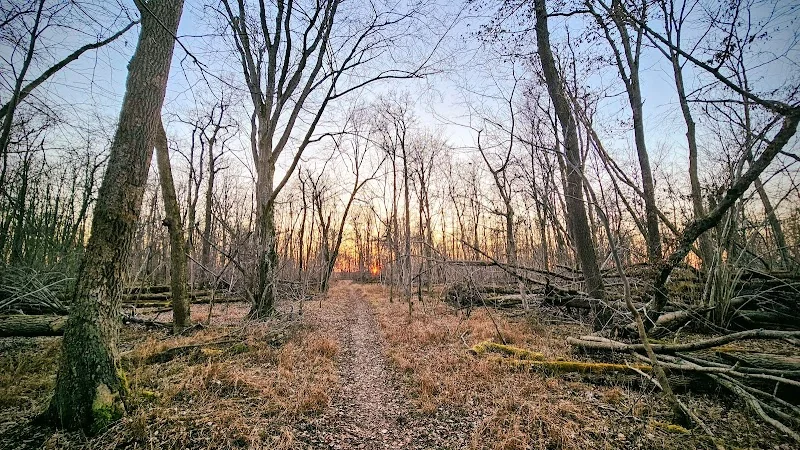
Nice nature protection area that has been largely 'untouched' for decades. Lots of storm and snow damage, leaving many fallen trees to rot. Lovely mossy and undergrowth vegetation. Also a small bird paradise.
Karsten Pätzold
22. June 2020
Dahoam 😂👍
Noémi Zsófia Csik
1. June 2021
Beautiful place to run or walk.
Simone Fürtig
28. May 2024
I enjoy the walks there with my grandson. The peace and quiet, the fields with their poppies, cornflowers, and clover, are incredibly relaxing at this time of year. You can still hear bird species that city children wouldn't normally notice. It's important to preserve these areas, but my heart truly leapt when I saw the flowering verges. It was just like my own childhood. It's wonderful that I can share these feelings and impressions.
Alfons HÖRL
1. November 2023
Beautiful for a walk. Please keep dogs on a leash for the sake of the animals.