
München
München, Deutschland
English Garden | Beer Garden & Parking
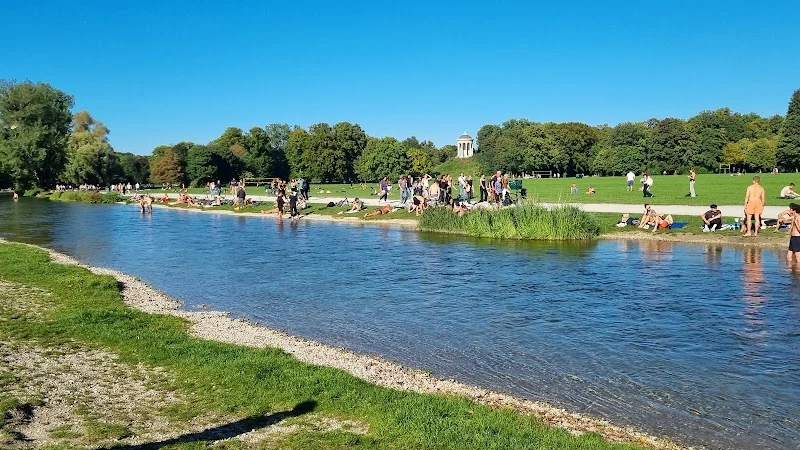
The English Garden is one of the most famous addresses in Munich, although it is not a classic event location in the strict sense, but rather a sprawling city park with cult status. This very mix makes it so strong for SEO and for real visitor inquiries: people search for beer garden, parking, access, Chinese Tower, admission, size, playground, restaurant, and rules. The park combines nature, history, leisure, gastronomy, and urban life in an area that invites not only walking but also lingering, discovering, and returning. Especially in the south, the English Garden is characterized by landmarks, water, meadows, and popular meeting points, while the north appears quieter and more spacious. Therefore, for a content page about this location, not only the pure description of the place counts, but especially the orientation: What can you see there, how do you get there, where can you stop for a bite, and what is allowed? This text is precisely aimed at that. ([schloesser.bayern.de](https://www.schloesser.bayern.de/deutsch/garten/objekte/mu_engl.htm))
Size, Location, and Admission in the English Garden
With an area of 376 hectares, the English Garden is one of the largest urban parks in the world; including Maximiliansanlagen, Hofgarten, and Finanzgarten, the palace administration cites 411 hectares. The park stretches from the area near the old town and Lehel far to the north and connects the Isar meadows with downtown Munich over a length of five and a half kilometers. This dimension is one of the strongest facts for the search intent around size, area, and location. For visitors, this means: The English Garden is not a short city park for a small walk, but a whole day space in green, where you can get very different impressions depending on your starting point. In the south, the famous sights are closer together, while in the north the paths become more open, the meadows larger, and the atmosphere noticeably quieter. ([schloesser.bayern.de](https://www.schloesser.bayern.de/deutsch/garten/objekte/mu_engl.htm))
Especially for the search terms around admission and opening hours, the location information is important, because the English Garden is not a gated event venue with ticket control, but a public park. Admission is free, and the park is open year-round. This makes it attractive for a spontaneous visit as well as for a planned afternoon with family, a walk, a picnic, or a visit to the beer garden. The official description also mentions a network of paths of 78 kilometers, including about 12 kilometers of riding paths, more than 100 bridges and walkways, and the Kleinhesseloher See as the largest body of water with about eight hectares. For users searching for "english garden munich admission" or "english garden size", these hard facts are the core of the decision. The park is free, open, and large enough to experience it anew every time. ([schloesser.bayern.de](https://www.schloesser.bayern.de/deutsch/garten/objekte/mu_engl.htm))
The use of the park is also exceptionally diverse. The palace administration mentions four restaurants, four kiosk operations, and more than five million visitors annually. This makes the English Garden visible not only as a natural space but also as an urban meeting point. For families, there are meadows, the historic children's carousel at the Chinese Tower, the Rumfordschlössl, and plenty of space for quiet breaks in the summer. At the same time, large parts of the area are flat and paved, making the visit pleasant for many people. However, the path to the Monopteros is not barrier-free and has a gradient of over six percent. So, those specifically looking for a barrier-free city park will find many well-usable paths here but should factor in some steeper areas. This very mix of openness, size, and topography strongly shapes the search intent around the English Garden. ([schloesser.bayern.de](https://www.schloesser.bayern.de/deutsch/garten/objekte/mu_engl.htm))
Parking and Access to the English Garden
When searching for "english garden parking" or "english garden access", it is almost always about which entrance or which area to target. The official palace administration mentions paid car and bus parking spaces, as well as the underground garage at Max-Joseph-Platz and Marstallplatz, where bus parking spaces are also available. Additionally, the official information material refers to the Chinese Tower as a destination for bus line 58 and tram line 16 to Tivolistraße. Those arriving by S-Bahn or U-Bahn orient themselves depending on their destination at Marienplatz, Odeonsplatz, or other central transfer points. This is an important detail, as the English Garden is very large and has no single "main entrance", but several relevant access points depending on the planned route. ([schloesser.bayern.de](https://www.schloesser.bayern.de/deutsch/garten/objekte/mu_engl.htm))
Practically, this means: For the southern part with Monopteros, Eisbach wave, Chinese Tower, and Japanese tea house, public transport is often the most convenient solution. The official brochure mentions, among other things, U4/U5 to Odeonsplatz, tram 16 to Tivolistraße, and bus 58 to the Chinese Tower. For the northern part with Aumeister, Hirschau, and quieter paths, a different approach may be advisable, as the paths in the park are long and changing in the middle of the greenery takes time. Those arriving by car should not only hope for free spaces but also determine their destination in the park beforehand. This saves walking distance, makes orientation easier, and is particularly sensible on weekends when visitor traffic is significantly higher. ([schloesser.bayern.de](https://www.schloesser.bayern.de/deutsch/service/infomat/screen-pdf/muenchen_dt.pdf))
The search intent behind "parking" is often very concrete: Where can I go stress-free if I am only planning a visit to a beer garden, a walk, or a short family outing? The English Garden is well suited for this because the connections vary greatly depending on the destination. Those heading towards the Chinese Tower or Monopteros will find proximity to the center and good public transport connections. Those who want to experience the park more as a long green axis can start at the edge areas by car and cover the rest on foot. This recommendation is a practical inference from the official traffic information and the size of the park: The larger the target area, the more important the choice of entry point becomes. For SEO and user satisfaction, therefore, not only "parking" is important, but also the contextual classification of the best access. ([schloesser.bayern.de](https://www.schloesser.bayern.de/deutsch/garten/objekte/mu_engl.htm))
Chinese Tower, Beer Garden, and Restaurants
The Chinese Tower is the strongest individual motif in the English Garden and at the same time one of the main reasons why people specifically search for "english garden beer garden" or "english garden chinese tower". In the middle of the park, the 25-meter-high tower rises above the treetops, and around it lies a beer garden with about 7,000 seats. This makes it one of the largest beer gardens in Bavaria. The tower was first opened in 1790, burned down several times, and was last rebuilt in 1952. This mix of history, iconic architecture, and Bavarian lifestyle is why the place is known far beyond Munich. For many visitors, the Chinese Tower is not just a viewpoint but the actual emotional anchor of the entire park. ([muenchen.de](https://www.muenchen.de/sehenswuerdigkeiten/top-sehenswuerdigkeiten/chinesischer-turm?utm_source=openai))
The beer garden around the tower is a perfect match for the intent of "restaurant" and "beer garden" because it offers a clear stopping point in the English Garden. The official Munich site names it as one of the most popular places to visit in the park. The offer is complemented by other gastronomic anchors such as the Seehaus, Hirschau, and Aumeister. For visitors, this means: The English Garden is not only green but also well-equipped gastronomically. You can combine a walk with snacks, coffee, cake, or a classic Bavarian beer garden visit. Especially in the southern part, gastronomy is part of the experience because you can almost seamlessly switch between nature and city. This is an important USP in local perception that should be clearly visible in content and SEO. ([schloesser.bayern.de](https://www.schloesser.bayern.de/deutsch/garten/objekte/mu_engl.htm))
Events are also firmly connected to the place around the Chinese Tower. The Munich city site mentions the Kocherlball as one of the most famous summer traditions: Every year, thousands gather for early dancing and celebrating at the tower, and a Christmas market takes place there during Advent. Additionally, there is the historic children's carousel, which operates in the warm months in good weather. These details show that the English Garden is much more than just a park; it is a culturally charged meeting point with a strong recognition value. Those looking for lively, authentic experiences in Munich will find at the Chinese Tower one of the best combinations of tradition, sociability, and iconic cityscape. ([muenchen.de](https://www.muenchen.de/en/node/47180?utm_source=openai))
Sights, Playground, and Highlights in the Park
The search query "english garden playground" often leads to family-friendly offers that are not necessarily a classic playground in the strict sense. The official city text describes the English Garden as very diverse for families: meadows, the children's carousel, boating on the Kleinhesseloher See, and the nature and culture meeting point offerings around the Rumfordschlössl are among the highlights. In addition, Eisbach wave, Monopteros, Chinese Tower, Japanese tea house, and Kleinhesseloher See are among the most well-known stops for first-time visitors. This diversity is particularly valuable for visitors because the park allows for very different types of use depending on interest: observing, strolling, sitting, marveling, exercising, or simply staying in the greenery. ([muenchen.de](https://www.muenchen.de/en/sights/attractions/english-garden?utm_source=openai))
The Monopteros is one of the most popular landmarks in the park. It stands on an artificially raised hill and offers a wide view over the English Garden and into the old town. For many Munich visitors, this view is the moment when the character of the park becomes clear: a landscape garden with staged naturalness that appears both urban and open. The Eisbach wave is also one of the most sought-after attractions because it embodies Munich's surfing culture. There are also quieter destinations like the Japanese tea house or the Kleinhesseloher See, which expand the park with cultural and landscape contrasts. So, those looking for highlights do not find a single sight in the English Garden but a whole sequence of motifs that can be meaningfully combined. ([schloesser.bayern.de](https://www.schloesser.bayern.de/deutsch/garten/objekte/mu_engl.htm))
From a content perspective, it is important that the English Garden does not only function through iconic individual places but also through movement in space. The southern part is denser, livelier, and more touristy, while the northern part with Hirschau, Aumeister, and the expansive meadows appears significantly more relaxed. In the north, there is even a wild bee educational trail with eight information stations over about three kilometers, making the park interesting for nature and educational reasons as well. This is a good approach for long-form SEO because it allows for the meaningful use of search terms like "playground", "sights", as well as "nature" and "family". Those looking for a park for half a day or longer will find a rare interplay of relaxation, learning, movement, and Munich's everyday culture. ([schloesser.bayern.de](https://www.schloesser.bayern.de/deutsch/garten/objekte/mu_engl.htm))
Rules in the English Garden: Dogs, Barbecuing, and Swimming
Inquiries like "english garden rules" usually revolve around the question of what is allowed in the park and what is not. The official city site states this very clearly: Barbecuing, open fires, and camping are prohibited. Swimming in the waters is life-threatening and not allowed. Dogs are allowed in the park but must be kept on a leash, and dog waste must be disposed of. These rules are not just formalities but protect the park area, the meadows, and the safety of visitors. The English Garden is simultaneously a landscape protection area and a garden monument; therefore, consideration is a central part of the visitor experience. Those who want to experience the park clean and intact should treat it accordingly. ([muenchen.de](https://www.muenchen.de/en/sights/attractions/english-garden?utm_source=openai))
From the user's perspective, this rule communication is particularly important because the English Garden is heavily frequented and reacts very sensitively, especially on weekends. The palace administration reports about 120 tons of waste collected and disposed of annually, a large part of which is generated by the use of the meadows on weekends. At the same time, problems arise from trampling paths, vandalism, and intensive use of the open spaces. This is exactly why the clear regulation of leash requirements, waste disposal, and the renunciation of open fires is so relevant. For an information page, it is worthwhile to formulate these hints not as restrictions but as a quality feature: The park remains attractive only if visitors use it responsibly. ([schloesser.bayern.de](https://www.schloesser.bayern.de/deutsch/garten/objekte/mu_engl.htm))
Families and dog owners also benefit from this transparency. Those coming with children can look forward to meadows, wide paths, and versatile resting places, but should keep an eye on shade, drinking breaks, and orientation on hot days. Dog owners should also know that the leash requirement in the English Garden is explicitly enforced. This is particularly relevant because misunderstandings often arise in everyday life when general Munich rules are confused with the specific regulations for the state park. A well-formulated location page therefore not only answers the question of "Am I allowed?" but also explains the "Why?": protection of the historical garden, consideration for other visitors, and preservation of the special Munich landscape space. ([stadt.muenchen.de](https://stadt.muenchen.de/infos/hundeverordnung.html?utm_source=openai))
History of the English Garden in Munich
The history of the English Garden begins in 1789 when Elector Karl Theodor ordered the establishment of an English landscape garden along the Isar. According to the palace administration, the park was to be designed as a public garden for all social classes. The work was initially led by Count Rumford, in 1797 Baron von Werneck took over, and in 1804 Friedrich Ludwig von Sckell became the defining designer. This sequence is central to the historical understanding of the facility because it shows that the English Garden did not arise by chance but from a consciously modern public garden concept. The idea of an open people's garden was remarkable for the time and explains why the park is still so strongly associated with the idea of accessibility and urban quality of life today. ([schloesser.bayern.de](https://www.schloesser.bayern.de/deutsch/garten/objekte/mu_engl.htm))
The architectural landmarks also tell this story. The Monopteros was completed in 1837 according to a design by Leo von Klenze; the Chinese Tower and the Rumfordhaus were built as early as 1790. The palace administration describes that Sckell shaped the park into a classic landscape garden with generous garden spaces, diverse sightlines, and varied planting. This very design ensures that the English Garden appears natural today, even though it is precisely staged in many details. The official description also emphasizes that the park connects the Isar meadows with the old town over a length of five and a half kilometers. The historical heritage is therefore not just a backdrop but still part of the visitor experience today. ([schloesser.bayern.de](https://www.schloesser.bayern.de/deutsch/garten/objekte/mu_engl.htm))
Those who view the English Garden only as a green area miss its cultural-historical core. The facility is one of the first large continental European parks that could be entered by everyone, and it remains a place of identity for Munich to this day. The combination of public accessibility, landscape staging, and citizen-friendly use makes it unique. That the park is visited by more than five million people annually shows how alive this historical concept has remained. For an SEO page, this means: history is not a supplementary topic here but a real search motive. People want to know why this park is so famous, how old it is, and why it is still considered a model for urban recreation. These answers are provided by the historical facts of the English Garden. ([schloesser.bayern.de](https://www.schloesser.bayern.de/deutsch/presse/archiv26/engl_garten/neuer-vorstand11-02-26_fm.htm?utm_source=openai))
Sources:
Mehr anzeigenWeniger anzeigen
English Garden | Beer Garden & Parking
The English Garden is one of the most famous addresses in Munich, although it is not a classic event location in the strict sense, but rather a sprawling city park with cult status. This very mix makes it so strong for SEO and for real visitor inquiries: people search for beer garden, parking, access, Chinese Tower, admission, size, playground, restaurant, and rules. The park combines nature, history, leisure, gastronomy, and urban life in an area that invites not only walking but also lingering, discovering, and returning. Especially in the south, the English Garden is characterized by landmarks, water, meadows, and popular meeting points, while the north appears quieter and more spacious. Therefore, for a content page about this location, not only the pure description of the place counts, but especially the orientation: What can you see there, how do you get there, where can you stop for a bite, and what is allowed? This text is precisely aimed at that. ([schloesser.bayern.de](https://www.schloesser.bayern.de/deutsch/garten/objekte/mu_engl.htm))
Size, Location, and Admission in the English Garden
With an area of 376 hectares, the English Garden is one of the largest urban parks in the world; including Maximiliansanlagen, Hofgarten, and Finanzgarten, the palace administration cites 411 hectares. The park stretches from the area near the old town and Lehel far to the north and connects the Isar meadows with downtown Munich over a length of five and a half kilometers. This dimension is one of the strongest facts for the search intent around size, area, and location. For visitors, this means: The English Garden is not a short city park for a small walk, but a whole day space in green, where you can get very different impressions depending on your starting point. In the south, the famous sights are closer together, while in the north the paths become more open, the meadows larger, and the atmosphere noticeably quieter. ([schloesser.bayern.de](https://www.schloesser.bayern.de/deutsch/garten/objekte/mu_engl.htm))
Especially for the search terms around admission and opening hours, the location information is important, because the English Garden is not a gated event venue with ticket control, but a public park. Admission is free, and the park is open year-round. This makes it attractive for a spontaneous visit as well as for a planned afternoon with family, a walk, a picnic, or a visit to the beer garden. The official description also mentions a network of paths of 78 kilometers, including about 12 kilometers of riding paths, more than 100 bridges and walkways, and the Kleinhesseloher See as the largest body of water with about eight hectares. For users searching for "english garden munich admission" or "english garden size", these hard facts are the core of the decision. The park is free, open, and large enough to experience it anew every time. ([schloesser.bayern.de](https://www.schloesser.bayern.de/deutsch/garten/objekte/mu_engl.htm))
The use of the park is also exceptionally diverse. The palace administration mentions four restaurants, four kiosk operations, and more than five million visitors annually. This makes the English Garden visible not only as a natural space but also as an urban meeting point. For families, there are meadows, the historic children's carousel at the Chinese Tower, the Rumfordschlössl, and plenty of space for quiet breaks in the summer. At the same time, large parts of the area are flat and paved, making the visit pleasant for many people. However, the path to the Monopteros is not barrier-free and has a gradient of over six percent. So, those specifically looking for a barrier-free city park will find many well-usable paths here but should factor in some steeper areas. This very mix of openness, size, and topography strongly shapes the search intent around the English Garden. ([schloesser.bayern.de](https://www.schloesser.bayern.de/deutsch/garten/objekte/mu_engl.htm))
Parking and Access to the English Garden
When searching for "english garden parking" or "english garden access", it is almost always about which entrance or which area to target. The official palace administration mentions paid car and bus parking spaces, as well as the underground garage at Max-Joseph-Platz and Marstallplatz, where bus parking spaces are also available. Additionally, the official information material refers to the Chinese Tower as a destination for bus line 58 and tram line 16 to Tivolistraße. Those arriving by S-Bahn or U-Bahn orient themselves depending on their destination at Marienplatz, Odeonsplatz, or other central transfer points. This is an important detail, as the English Garden is very large and has no single "main entrance", but several relevant access points depending on the planned route. ([schloesser.bayern.de](https://www.schloesser.bayern.de/deutsch/garten/objekte/mu_engl.htm))
Practically, this means: For the southern part with Monopteros, Eisbach wave, Chinese Tower, and Japanese tea house, public transport is often the most convenient solution. The official brochure mentions, among other things, U4/U5 to Odeonsplatz, tram 16 to Tivolistraße, and bus 58 to the Chinese Tower. For the northern part with Aumeister, Hirschau, and quieter paths, a different approach may be advisable, as the paths in the park are long and changing in the middle of the greenery takes time. Those arriving by car should not only hope for free spaces but also determine their destination in the park beforehand. This saves walking distance, makes orientation easier, and is particularly sensible on weekends when visitor traffic is significantly higher. ([schloesser.bayern.de](https://www.schloesser.bayern.de/deutsch/service/infomat/screen-pdf/muenchen_dt.pdf))
The search intent behind "parking" is often very concrete: Where can I go stress-free if I am only planning a visit to a beer garden, a walk, or a short family outing? The English Garden is well suited for this because the connections vary greatly depending on the destination. Those heading towards the Chinese Tower or Monopteros will find proximity to the center and good public transport connections. Those who want to experience the park more as a long green axis can start at the edge areas by car and cover the rest on foot. This recommendation is a practical inference from the official traffic information and the size of the park: The larger the target area, the more important the choice of entry point becomes. For SEO and user satisfaction, therefore, not only "parking" is important, but also the contextual classification of the best access. ([schloesser.bayern.de](https://www.schloesser.bayern.de/deutsch/garten/objekte/mu_engl.htm))
Chinese Tower, Beer Garden, and Restaurants
The Chinese Tower is the strongest individual motif in the English Garden and at the same time one of the main reasons why people specifically search for "english garden beer garden" or "english garden chinese tower". In the middle of the park, the 25-meter-high tower rises above the treetops, and around it lies a beer garden with about 7,000 seats. This makes it one of the largest beer gardens in Bavaria. The tower was first opened in 1790, burned down several times, and was last rebuilt in 1952. This mix of history, iconic architecture, and Bavarian lifestyle is why the place is known far beyond Munich. For many visitors, the Chinese Tower is not just a viewpoint but the actual emotional anchor of the entire park. ([muenchen.de](https://www.muenchen.de/sehenswuerdigkeiten/top-sehenswuerdigkeiten/chinesischer-turm?utm_source=openai))
The beer garden around the tower is a perfect match for the intent of "restaurant" and "beer garden" because it offers a clear stopping point in the English Garden. The official Munich site names it as one of the most popular places to visit in the park. The offer is complemented by other gastronomic anchors such as the Seehaus, Hirschau, and Aumeister. For visitors, this means: The English Garden is not only green but also well-equipped gastronomically. You can combine a walk with snacks, coffee, cake, or a classic Bavarian beer garden visit. Especially in the southern part, gastronomy is part of the experience because you can almost seamlessly switch between nature and city. This is an important USP in local perception that should be clearly visible in content and SEO. ([schloesser.bayern.de](https://www.schloesser.bayern.de/deutsch/garten/objekte/mu_engl.htm))
Events are also firmly connected to the place around the Chinese Tower. The Munich city site mentions the Kocherlball as one of the most famous summer traditions: Every year, thousands gather for early dancing and celebrating at the tower, and a Christmas market takes place there during Advent. Additionally, there is the historic children's carousel, which operates in the warm months in good weather. These details show that the English Garden is much more than just a park; it is a culturally charged meeting point with a strong recognition value. Those looking for lively, authentic experiences in Munich will find at the Chinese Tower one of the best combinations of tradition, sociability, and iconic cityscape. ([muenchen.de](https://www.muenchen.de/en/node/47180?utm_source=openai))
Sights, Playground, and Highlights in the Park
The search query "english garden playground" often leads to family-friendly offers that are not necessarily a classic playground in the strict sense. The official city text describes the English Garden as very diverse for families: meadows, the children's carousel, boating on the Kleinhesseloher See, and the nature and culture meeting point offerings around the Rumfordschlössl are among the highlights. In addition, Eisbach wave, Monopteros, Chinese Tower, Japanese tea house, and Kleinhesseloher See are among the most well-known stops for first-time visitors. This diversity is particularly valuable for visitors because the park allows for very different types of use depending on interest: observing, strolling, sitting, marveling, exercising, or simply staying in the greenery. ([muenchen.de](https://www.muenchen.de/en/sights/attractions/english-garden?utm_source=openai))
The Monopteros is one of the most popular landmarks in the park. It stands on an artificially raised hill and offers a wide view over the English Garden and into the old town. For many Munich visitors, this view is the moment when the character of the park becomes clear: a landscape garden with staged naturalness that appears both urban and open. The Eisbach wave is also one of the most sought-after attractions because it embodies Munich's surfing culture. There are also quieter destinations like the Japanese tea house or the Kleinhesseloher See, which expand the park with cultural and landscape contrasts. So, those looking for highlights do not find a single sight in the English Garden but a whole sequence of motifs that can be meaningfully combined. ([schloesser.bayern.de](https://www.schloesser.bayern.de/deutsch/garten/objekte/mu_engl.htm))
From a content perspective, it is important that the English Garden does not only function through iconic individual places but also through movement in space. The southern part is denser, livelier, and more touristy, while the northern part with Hirschau, Aumeister, and the expansive meadows appears significantly more relaxed. In the north, there is even a wild bee educational trail with eight information stations over about three kilometers, making the park interesting for nature and educational reasons as well. This is a good approach for long-form SEO because it allows for the meaningful use of search terms like "playground", "sights", as well as "nature" and "family". Those looking for a park for half a day or longer will find a rare interplay of relaxation, learning, movement, and Munich's everyday culture. ([schloesser.bayern.de](https://www.schloesser.bayern.de/deutsch/garten/objekte/mu_engl.htm))
Rules in the English Garden: Dogs, Barbecuing, and Swimming
Inquiries like "english garden rules" usually revolve around the question of what is allowed in the park and what is not. The official city site states this very clearly: Barbecuing, open fires, and camping are prohibited. Swimming in the waters is life-threatening and not allowed. Dogs are allowed in the park but must be kept on a leash, and dog waste must be disposed of. These rules are not just formalities but protect the park area, the meadows, and the safety of visitors. The English Garden is simultaneously a landscape protection area and a garden monument; therefore, consideration is a central part of the visitor experience. Those who want to experience the park clean and intact should treat it accordingly. ([muenchen.de](https://www.muenchen.de/en/sights/attractions/english-garden?utm_source=openai))
From the user's perspective, this rule communication is particularly important because the English Garden is heavily frequented and reacts very sensitively, especially on weekends. The palace administration reports about 120 tons of waste collected and disposed of annually, a large part of which is generated by the use of the meadows on weekends. At the same time, problems arise from trampling paths, vandalism, and intensive use of the open spaces. This is exactly why the clear regulation of leash requirements, waste disposal, and the renunciation of open fires is so relevant. For an information page, it is worthwhile to formulate these hints not as restrictions but as a quality feature: The park remains attractive only if visitors use it responsibly. ([schloesser.bayern.de](https://www.schloesser.bayern.de/deutsch/garten/objekte/mu_engl.htm))
Families and dog owners also benefit from this transparency. Those coming with children can look forward to meadows, wide paths, and versatile resting places, but should keep an eye on shade, drinking breaks, and orientation on hot days. Dog owners should also know that the leash requirement in the English Garden is explicitly enforced. This is particularly relevant because misunderstandings often arise in everyday life when general Munich rules are confused with the specific regulations for the state park. A well-formulated location page therefore not only answers the question of "Am I allowed?" but also explains the "Why?": protection of the historical garden, consideration for other visitors, and preservation of the special Munich landscape space. ([stadt.muenchen.de](https://stadt.muenchen.de/infos/hundeverordnung.html?utm_source=openai))
History of the English Garden in Munich
The history of the English Garden begins in 1789 when Elector Karl Theodor ordered the establishment of an English landscape garden along the Isar. According to the palace administration, the park was to be designed as a public garden for all social classes. The work was initially led by Count Rumford, in 1797 Baron von Werneck took over, and in 1804 Friedrich Ludwig von Sckell became the defining designer. This sequence is central to the historical understanding of the facility because it shows that the English Garden did not arise by chance but from a consciously modern public garden concept. The idea of an open people's garden was remarkable for the time and explains why the park is still so strongly associated with the idea of accessibility and urban quality of life today. ([schloesser.bayern.de](https://www.schloesser.bayern.de/deutsch/garten/objekte/mu_engl.htm))
The architectural landmarks also tell this story. The Monopteros was completed in 1837 according to a design by Leo von Klenze; the Chinese Tower and the Rumfordhaus were built as early as 1790. The palace administration describes that Sckell shaped the park into a classic landscape garden with generous garden spaces, diverse sightlines, and varied planting. This very design ensures that the English Garden appears natural today, even though it is precisely staged in many details. The official description also emphasizes that the park connects the Isar meadows with the old town over a length of five and a half kilometers. The historical heritage is therefore not just a backdrop but still part of the visitor experience today. ([schloesser.bayern.de](https://www.schloesser.bayern.de/deutsch/garten/objekte/mu_engl.htm))
Those who view the English Garden only as a green area miss its cultural-historical core. The facility is one of the first large continental European parks that could be entered by everyone, and it remains a place of identity for Munich to this day. The combination of public accessibility, landscape staging, and citizen-friendly use makes it unique. That the park is visited by more than five million people annually shows how alive this historical concept has remained. For an SEO page, this means: history is not a supplementary topic here but a real search motive. People want to know why this park is so famous, how old it is, and why it is still considered a model for urban recreation. These answers are provided by the historical facts of the English Garden. ([schloesser.bayern.de](https://www.schloesser.bayern.de/deutsch/presse/archiv26/engl_garten/neuer-vorstand11-02-26_fm.htm?utm_source=openai))
Sources:
English Garden | Beer Garden & Parking
The English Garden is one of the most famous addresses in Munich, although it is not a classic event location in the strict sense, but rather a sprawling city park with cult status. This very mix makes it so strong for SEO and for real visitor inquiries: people search for beer garden, parking, access, Chinese Tower, admission, size, playground, restaurant, and rules. The park combines nature, history, leisure, gastronomy, and urban life in an area that invites not only walking but also lingering, discovering, and returning. Especially in the south, the English Garden is characterized by landmarks, water, meadows, and popular meeting points, while the north appears quieter and more spacious. Therefore, for a content page about this location, not only the pure description of the place counts, but especially the orientation: What can you see there, how do you get there, where can you stop for a bite, and what is allowed? This text is precisely aimed at that. ([schloesser.bayern.de](https://www.schloesser.bayern.de/deutsch/garten/objekte/mu_engl.htm))
Size, Location, and Admission in the English Garden
With an area of 376 hectares, the English Garden is one of the largest urban parks in the world; including Maximiliansanlagen, Hofgarten, and Finanzgarten, the palace administration cites 411 hectares. The park stretches from the area near the old town and Lehel far to the north and connects the Isar meadows with downtown Munich over a length of five and a half kilometers. This dimension is one of the strongest facts for the search intent around size, area, and location. For visitors, this means: The English Garden is not a short city park for a small walk, but a whole day space in green, where you can get very different impressions depending on your starting point. In the south, the famous sights are closer together, while in the north the paths become more open, the meadows larger, and the atmosphere noticeably quieter. ([schloesser.bayern.de](https://www.schloesser.bayern.de/deutsch/garten/objekte/mu_engl.htm))
Especially for the search terms around admission and opening hours, the location information is important, because the English Garden is not a gated event venue with ticket control, but a public park. Admission is free, and the park is open year-round. This makes it attractive for a spontaneous visit as well as for a planned afternoon with family, a walk, a picnic, or a visit to the beer garden. The official description also mentions a network of paths of 78 kilometers, including about 12 kilometers of riding paths, more than 100 bridges and walkways, and the Kleinhesseloher See as the largest body of water with about eight hectares. For users searching for "english garden munich admission" or "english garden size", these hard facts are the core of the decision. The park is free, open, and large enough to experience it anew every time. ([schloesser.bayern.de](https://www.schloesser.bayern.de/deutsch/garten/objekte/mu_engl.htm))
The use of the park is also exceptionally diverse. The palace administration mentions four restaurants, four kiosk operations, and more than five million visitors annually. This makes the English Garden visible not only as a natural space but also as an urban meeting point. For families, there are meadows, the historic children's carousel at the Chinese Tower, the Rumfordschlössl, and plenty of space for quiet breaks in the summer. At the same time, large parts of the area are flat and paved, making the visit pleasant for many people. However, the path to the Monopteros is not barrier-free and has a gradient of over six percent. So, those specifically looking for a barrier-free city park will find many well-usable paths here but should factor in some steeper areas. This very mix of openness, size, and topography strongly shapes the search intent around the English Garden. ([schloesser.bayern.de](https://www.schloesser.bayern.de/deutsch/garten/objekte/mu_engl.htm))
Parking and Access to the English Garden
When searching for "english garden parking" or "english garden access", it is almost always about which entrance or which area to target. The official palace administration mentions paid car and bus parking spaces, as well as the underground garage at Max-Joseph-Platz and Marstallplatz, where bus parking spaces are also available. Additionally, the official information material refers to the Chinese Tower as a destination for bus line 58 and tram line 16 to Tivolistraße. Those arriving by S-Bahn or U-Bahn orient themselves depending on their destination at Marienplatz, Odeonsplatz, or other central transfer points. This is an important detail, as the English Garden is very large and has no single "main entrance", but several relevant access points depending on the planned route. ([schloesser.bayern.de](https://www.schloesser.bayern.de/deutsch/garten/objekte/mu_engl.htm))
Practically, this means: For the southern part with Monopteros, Eisbach wave, Chinese Tower, and Japanese tea house, public transport is often the most convenient solution. The official brochure mentions, among other things, U4/U5 to Odeonsplatz, tram 16 to Tivolistraße, and bus 58 to the Chinese Tower. For the northern part with Aumeister, Hirschau, and quieter paths, a different approach may be advisable, as the paths in the park are long and changing in the middle of the greenery takes time. Those arriving by car should not only hope for free spaces but also determine their destination in the park beforehand. This saves walking distance, makes orientation easier, and is particularly sensible on weekends when visitor traffic is significantly higher. ([schloesser.bayern.de](https://www.schloesser.bayern.de/deutsch/service/infomat/screen-pdf/muenchen_dt.pdf))
The search intent behind "parking" is often very concrete: Where can I go stress-free if I am only planning a visit to a beer garden, a walk, or a short family outing? The English Garden is well suited for this because the connections vary greatly depending on the destination. Those heading towards the Chinese Tower or Monopteros will find proximity to the center and good public transport connections. Those who want to experience the park more as a long green axis can start at the edge areas by car and cover the rest on foot. This recommendation is a practical inference from the official traffic information and the size of the park: The larger the target area, the more important the choice of entry point becomes. For SEO and user satisfaction, therefore, not only "parking" is important, but also the contextual classification of the best access. ([schloesser.bayern.de](https://www.schloesser.bayern.de/deutsch/garten/objekte/mu_engl.htm))
Chinese Tower, Beer Garden, and Restaurants
The Chinese Tower is the strongest individual motif in the English Garden and at the same time one of the main reasons why people specifically search for "english garden beer garden" or "english garden chinese tower". In the middle of the park, the 25-meter-high tower rises above the treetops, and around it lies a beer garden with about 7,000 seats. This makes it one of the largest beer gardens in Bavaria. The tower was first opened in 1790, burned down several times, and was last rebuilt in 1952. This mix of history, iconic architecture, and Bavarian lifestyle is why the place is known far beyond Munich. For many visitors, the Chinese Tower is not just a viewpoint but the actual emotional anchor of the entire park. ([muenchen.de](https://www.muenchen.de/sehenswuerdigkeiten/top-sehenswuerdigkeiten/chinesischer-turm?utm_source=openai))
The beer garden around the tower is a perfect match for the intent of "restaurant" and "beer garden" because it offers a clear stopping point in the English Garden. The official Munich site names it as one of the most popular places to visit in the park. The offer is complemented by other gastronomic anchors such as the Seehaus, Hirschau, and Aumeister. For visitors, this means: The English Garden is not only green but also well-equipped gastronomically. You can combine a walk with snacks, coffee, cake, or a classic Bavarian beer garden visit. Especially in the southern part, gastronomy is part of the experience because you can almost seamlessly switch between nature and city. This is an important USP in local perception that should be clearly visible in content and SEO. ([schloesser.bayern.de](https://www.schloesser.bayern.de/deutsch/garten/objekte/mu_engl.htm))
Events are also firmly connected to the place around the Chinese Tower. The Munich city site mentions the Kocherlball as one of the most famous summer traditions: Every year, thousands gather for early dancing and celebrating at the tower, and a Christmas market takes place there during Advent. Additionally, there is the historic children's carousel, which operates in the warm months in good weather. These details show that the English Garden is much more than just a park; it is a culturally charged meeting point with a strong recognition value. Those looking for lively, authentic experiences in Munich will find at the Chinese Tower one of the best combinations of tradition, sociability, and iconic cityscape. ([muenchen.de](https://www.muenchen.de/en/node/47180?utm_source=openai))
Sights, Playground, and Highlights in the Park
The search query "english garden playground" often leads to family-friendly offers that are not necessarily a classic playground in the strict sense. The official city text describes the English Garden as very diverse for families: meadows, the children's carousel, boating on the Kleinhesseloher See, and the nature and culture meeting point offerings around the Rumfordschlössl are among the highlights. In addition, Eisbach wave, Monopteros, Chinese Tower, Japanese tea house, and Kleinhesseloher See are among the most well-known stops for first-time visitors. This diversity is particularly valuable for visitors because the park allows for very different types of use depending on interest: observing, strolling, sitting, marveling, exercising, or simply staying in the greenery. ([muenchen.de](https://www.muenchen.de/en/sights/attractions/english-garden?utm_source=openai))
The Monopteros is one of the most popular landmarks in the park. It stands on an artificially raised hill and offers a wide view over the English Garden and into the old town. For many Munich visitors, this view is the moment when the character of the park becomes clear: a landscape garden with staged naturalness that appears both urban and open. The Eisbach wave is also one of the most sought-after attractions because it embodies Munich's surfing culture. There are also quieter destinations like the Japanese tea house or the Kleinhesseloher See, which expand the park with cultural and landscape contrasts. So, those looking for highlights do not find a single sight in the English Garden but a whole sequence of motifs that can be meaningfully combined. ([schloesser.bayern.de](https://www.schloesser.bayern.de/deutsch/garten/objekte/mu_engl.htm))
From a content perspective, it is important that the English Garden does not only function through iconic individual places but also through movement in space. The southern part is denser, livelier, and more touristy, while the northern part with Hirschau, Aumeister, and the expansive meadows appears significantly more relaxed. In the north, there is even a wild bee educational trail with eight information stations over about three kilometers, making the park interesting for nature and educational reasons as well. This is a good approach for long-form SEO because it allows for the meaningful use of search terms like "playground", "sights", as well as "nature" and "family". Those looking for a park for half a day or longer will find a rare interplay of relaxation, learning, movement, and Munich's everyday culture. ([schloesser.bayern.de](https://www.schloesser.bayern.de/deutsch/garten/objekte/mu_engl.htm))
Rules in the English Garden: Dogs, Barbecuing, and Swimming
Inquiries like "english garden rules" usually revolve around the question of what is allowed in the park and what is not. The official city site states this very clearly: Barbecuing, open fires, and camping are prohibited. Swimming in the waters is life-threatening and not allowed. Dogs are allowed in the park but must be kept on a leash, and dog waste must be disposed of. These rules are not just formalities but protect the park area, the meadows, and the safety of visitors. The English Garden is simultaneously a landscape protection area and a garden monument; therefore, consideration is a central part of the visitor experience. Those who want to experience the park clean and intact should treat it accordingly. ([muenchen.de](https://www.muenchen.de/en/sights/attractions/english-garden?utm_source=openai))
From the user's perspective, this rule communication is particularly important because the English Garden is heavily frequented and reacts very sensitively, especially on weekends. The palace administration reports about 120 tons of waste collected and disposed of annually, a large part of which is generated by the use of the meadows on weekends. At the same time, problems arise from trampling paths, vandalism, and intensive use of the open spaces. This is exactly why the clear regulation of leash requirements, waste disposal, and the renunciation of open fires is so relevant. For an information page, it is worthwhile to formulate these hints not as restrictions but as a quality feature: The park remains attractive only if visitors use it responsibly. ([schloesser.bayern.de](https://www.schloesser.bayern.de/deutsch/garten/objekte/mu_engl.htm))
Families and dog owners also benefit from this transparency. Those coming with children can look forward to meadows, wide paths, and versatile resting places, but should keep an eye on shade, drinking breaks, and orientation on hot days. Dog owners should also know that the leash requirement in the English Garden is explicitly enforced. This is particularly relevant because misunderstandings often arise in everyday life when general Munich rules are confused with the specific regulations for the state park. A well-formulated location page therefore not only answers the question of "Am I allowed?" but also explains the "Why?": protection of the historical garden, consideration for other visitors, and preservation of the special Munich landscape space. ([stadt.muenchen.de](https://stadt.muenchen.de/infos/hundeverordnung.html?utm_source=openai))
History of the English Garden in Munich
The history of the English Garden begins in 1789 when Elector Karl Theodor ordered the establishment of an English landscape garden along the Isar. According to the palace administration, the park was to be designed as a public garden for all social classes. The work was initially led by Count Rumford, in 1797 Baron von Werneck took over, and in 1804 Friedrich Ludwig von Sckell became the defining designer. This sequence is central to the historical understanding of the facility because it shows that the English Garden did not arise by chance but from a consciously modern public garden concept. The idea of an open people's garden was remarkable for the time and explains why the park is still so strongly associated with the idea of accessibility and urban quality of life today. ([schloesser.bayern.de](https://www.schloesser.bayern.de/deutsch/garten/objekte/mu_engl.htm))
The architectural landmarks also tell this story. The Monopteros was completed in 1837 according to a design by Leo von Klenze; the Chinese Tower and the Rumfordhaus were built as early as 1790. The palace administration describes that Sckell shaped the park into a classic landscape garden with generous garden spaces, diverse sightlines, and varied planting. This very design ensures that the English Garden appears natural today, even though it is precisely staged in many details. The official description also emphasizes that the park connects the Isar meadows with the old town over a length of five and a half kilometers. The historical heritage is therefore not just a backdrop but still part of the visitor experience today. ([schloesser.bayern.de](https://www.schloesser.bayern.de/deutsch/garten/objekte/mu_engl.htm))
Those who view the English Garden only as a green area miss its cultural-historical core. The facility is one of the first large continental European parks that could be entered by everyone, and it remains a place of identity for Munich to this day. The combination of public accessibility, landscape staging, and citizen-friendly use makes it unique. That the park is visited by more than five million people annually shows how alive this historical concept has remained. For an SEO page, this means: history is not a supplementary topic here but a real search motive. People want to know why this park is so famous, how old it is, and why it is still considered a model for urban recreation. These answers are provided by the historical facts of the English Garden. ([schloesser.bayern.de](https://www.schloesser.bayern.de/deutsch/presse/archiv26/engl_garten/neuer-vorstand11-02-26_fm.htm?utm_source=openai))
Sources:
Upcoming Events
No events found
Frequently Asked Questions
Reviews
bala guhan
22. February 2026
This is an awesome, spacious place with so much to do! While it wasn't ideal in the winter, I imagine it would be perfect in the summer. I still thoroughly enjoyed my time; it's a great spot for walking, running, or playing with kids. You can easily spend a few hours here, and the morning atmosphere was absolutely fantastic. It's a great place to people-watch and take in the views!
Victor Iliescu
8. December 2025
One of the biggest urban parks we've been too. Was surprised by the size of it and the amount of activities you can do here. It's perfect for a stroll, regardless the seasons. If you're into nature and bird photography, you'll feel right at home here. It's an oasis far from the hustle of bustle of the city. Though we've visited the English Garden during winter time, it's still a magical place nonetheless. Can't wait to visit again.
Richard Holder
9. December 2025
Stunning gardens and beautifully kept. We wandered around for a few hours on a summers day and enjoyed a mix of the river, the surfing, the grounds and the Chinese beer garden complete with live music. Definitely recommend.
Yuksel Horuz
22. February 2026
I believe it would be more enjoyable to go in the summer. Unfortunately, there's not much to do in winter except walk, but it was still very beautiful. It's one of the places you should visit.
Ernesto Jurado
11. December 2025
We visited the English Garden in Munich in December. Despite the cold, it was a lovely and peaceful place to stroll around. The park is quite tranquil and a great escape from the city’s hustle. During our visit, we also came across a charming Christmas market, which added a festive touch to the experience. Definitely worth a visit if you enjoy nature and a calm atmosphere, even in winter!