
München
Nibelungenstraße 51, 80639 München, Deutschland
Evang.-Luth. Parish Office Stephanuskirche | Contact & Worship
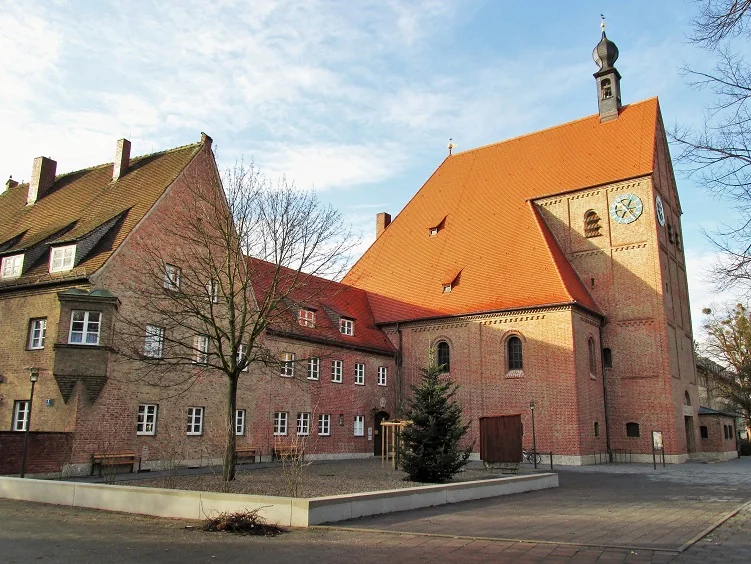
The Stephanuskirche in Munich-Nymphenburg is much more than just a church with an address and parish office. It connects historical architecture, a vibrant community, diverse worship culture, and a strong musical profile into an ensemble that has been present in western Munich for decades. Those looking for the Evang.-Luth. Parish Office Stephanuskirche will find not only the organizational center of the community at Nibelungenstraße 51 but also access to an active community life with worship services, Taizé prayers, children's and youth offerings, music groups, and meeting formats. The official website also shows how closely the church, community hall, youth house, and other facilities are interconnected. This makes the Stephanuskirche a location where pastoral care, culture, and neighborhood directly interact. Architecturally, the church has a clear identity: built in the 1930s, with a distinctive roof, visible form, and a long history of maintenance, renovation, and renewal. Therefore, anyone searching for Stephanuskirche Munich, parish office, opening hours, directions, worship, or music will encounter a community that remarkably brings together tradition and present. ([stephanuskirche.de](https://www.stephanuskirche.de/index.php/gemeinde/pfarramt))
Contact, Opening Hours, and Parish Office
The parish office of the Stephanuskirche is the first point of contact for many concerns of the community. The official page lists Sabine Strasser as the secretary; the postal address is Nibelungenstraße 51, 80639 Munich, but the entrance for the parish office is located at Pechlarner Straße 4. The parish office can be reached by phone at 089 171450-0, and a fax number is also provided. The opening hours are clearly and currently indicated: Monday from 09:00 to 15:00, Tuesday from 09:00 to 14:00, Wednesday from 09:00 to 15:00 only by phone and without public traffic, Thursday from 09:00 to 15:00, and Friday from 09:00 to 13:00. Those with personal concerns will find reliable time slots for contact and consultation. The official page also makes it clear that the parish office is not just an administrative office, but a place where questions about baptisms, confirmations, weddings, funerals, and community life converge. ([stephanuskirche.de](https://www.stephanuskirche.de/index.php/gemeinde/pfarramt))
The staff includes not only the secretary but also the parish positions and other contacts. Rolf Hartmann is mentioned as the 1st parish position with an entrance at Pechlarner Straße 4, as well as Annette and Edson Schumacher at Nibelungenstraße 49a. Additionally, Dorothee Griesbeck is listed as a preacher, Elias Kolz as cantor, and Andrija Martinovic as caretaker and janitor. This structure shows that the Stephanuskirche is organizationally well-positioned and that pastoral care, liturgy, music, and building operations are thought of together in everyday life. For visitors, this is helpful because inquiries can be directed to the appropriate contacts. Especially in a community with many events and various room offerings, this clear structure is important. Therefore, anyone searching for Stephanuskirche contact, parish office, or opening hours will find not only a phone number and address on the official pages but also a real overview of the responsibilities on site. ([stephanuskirche.de](https://www.stephanuskirche.de/index.php/gemeinde/pfarramt))
Directions by Tram, Bus, and S-Bahn
The Stephanuskirche is located in Munich-Nymphenburg and is well integrated into public transport, making it easily accessible. Current event pages of the community repeatedly mention the stops Tram 12 Hubertusstraße, Tram 17 Steubenplatz, Bus 62 Steubenplatz, and the S-Bahn stop Hirschgarten. This is an important orientation point for visitors, as the official communication primarily refers to public transport. The church, the parish office, and other community rooms are thus embedded in a developed neighborhood where paths can be sensibly connected on foot, by tram, and by S-Bahn. This is practical, especially for worship services, concerts, Taizé evenings, or children's offerings, as different groups can reach the church at various times. ([stephanuskirche.de](https://www.stephanuskirche.de/index.php/kalender/monatsansicht/icalrepeat.detail/2025/12/24/6389/-/zwergerlgottesdienst-mit-krippenspiel?utm_source=openai))
The spatial structure is also clearly described: The Stephanuskirche itself is located at Nibelungenstraße 51, while the parish office entrance can be found at Pechlarner Straße 4. Additionally, there are other buildings and offerings in the vicinity, such as the Stephanus Kindergarten at Sindoldstraße 3, the Stephanus Children's Land of the Inner Mission Munich at Engasserbogen 5, and the youth house or youth cellar, which is mentioned on several pages with access via Sindoldstraße. This creates a compact community center with several addresses that functionally caters to different age groups and activities. For practical orientation, it is important that the official website names these areas separately. Therefore, anyone searching for Stephanuskirche directions, address, or public transport will receive a clear, reliable starting point. ([stephanuskirche.de](https://www.stephanuskirche.de/kontakt))
For individual events, the community also provides accessibility-related information. For example, a current event mentions an inductive hearing system. This shows that practical participation is also considered in the use of the church. For people with hearing support, this is a relevant note and a strong signal for SEO analysis, as terms like directions, orientation, accessibility, and public transport are not just marginal topics but are directly related to visit planning. Especially for a church with a regular program, this is important: Those who want to attend the service on Sunday, an Advent concert, a Taizé prayer, or a family event need as concrete route and access information as possible. The official pages of the Stephanuskirche reliably fulfill this function. ([stephanuskirche.de](https://www.stephanuskirche.de/index.php/kalender/monatsansicht/icalrepeat.detail/2025/12/24/6389/-/zwergerlgottesdienst-mit-krippenspiel?utm_source=openai))
Worship Services, Taizé, and Community Life
The Stephanuskirche is clearly oriented towards worship and community life. On the official page for Sunday services, not only the classic Sunday services are mentioned, but also services with special church music, services for all generations, singing services, mini-maxi services for children up to six years old, family-friendly services in nature, and services with confirmands. Therefore, for the community, not only the standard Sunday is important, but a broad form of liturgy that addresses different age groups and interests. The regularity is striking: The website lists 52 Sunday services and services for all generations at 11 a.m., as well as other formats for weddings, baptisms, holidays, and special occasions in the church year. The list of worship forms also makes it clear that the Stephanuskirche is a lively, ritual-rich community where music, family, and festive forms belong together. ([stephanuskirche.de](https://www.stephanuskirche.de/index.php/gottesdienste/sonntagsgottesdienste))
Musically shaped services and prayers are particularly influential. The community refers to Taizé services or evening prayers with songs from Taizé, which have been a fixed part of community life for over 15 years. The Taizé service ensemble is explicitly mentioned for this purpose. Additionally, Stephanus Voices, the StephanusBand, the Nymphenburger Kantatenchor, and the brass players of the Stephanuskirche are presented as key musical forces. This is important for external perception because search queries like worship, taizé, music, or choir receive a very concrete answer here. The Stephanuskirche is not a church with an occasional music program, but a community where music is firmly integrated into liturgy and everyday life. Special formats such as services with songs from Taizé or musically designed celebrations for Advent, Christmas, Easter, and Harvest Thanksgiving fit into this picture. ([stephanuskirche.de](https://www.stephanuskirche.de/musik/taize-gottesdienst-ensemble?utm_source=openai))
Furthermore, the community shows a strong family and generational orientation. In the overview of worship services, there are reports of baptisms in family-friendly services, services with children from the kindergarten and children's land, ecumenical school services, and celebrations for the blessing of first graders. The number of over 70 baptisms in approximately 40 family-friendly baptism services is also mentioned. This shows that the Stephanuskirche stands not only for classic Sunday services but is also a social and family-oriented place where life transitions are consciously accompanied. Therefore, for keyword analysis, terms like worship, family, children, confirmation, baptism service, and Taizé are particularly relevant. They not only describe individual events but also the profile of a community that brings together recurring rituals and personal accompaniment. ([stephanuskirche.de](https://www.stephanuskirche.de/index.php/gottesdienste/sonntagsgottesdienste))
History, Architecture, and the Kleuker Organ
The history of the Stephanuskirche dates back to the 1930s. The official history page describes that the Protestant church in Neuhausen-Nymphenburg was to develop during that time and that the Stephanuskirche was built between 1936 and Easter 1938. German Bestelmeyer, a professor at the Technical University of Munich known for churches and public buildings, was selected as the architect. The inauguration took place on Easter Monday, April 18, 1938. Even the commemorative publication for the 70th anniversary emphasizes that the church, the parsonage, and the community center were planned as a cohesive complex. The architectural language is deliberately striking: the steep hipped roof emphasizes the church character, the onion dome rises 34 meters into the sky, and the building form was meant to be visible in the street and cityscape. These data make the Stephanuskirche interesting from an architectural historical perspective. ([stephanuskirche.de](https://www.stephanuskirche.de/images/pdfs/gemeindebriefe/festschrift2008.pdf))
The architecture of the church is not only historical but also functionally and symbolically well thought out. On the page Under Roof and Craft, the roof is described as a central element: it is meant to express protection and security and is designed as a widely visible sign of a house of God. At the same time, the community page points out that the Stephanuskirche has also survived difficult times, including the bombing nights of World War II. After the war, building components were restored, and in 2012 the exterior renovation was completed, during which historical details such as the wall crown, the tower cross, and even lost elements were reconstructed according to old plans. These renovation phases show how strongly the community works to preserve and maintain its architectural identity. For search queries like history, architecture, or special features, this is exactly relevant: the Stephanuskirche is a historically grown building that does not appear museum-like but is still actively used and maintained. ([stephanuskirche.de](https://www.stephanuskirche.de/index.php/gemeinde/die-architektur/unter-dach-und-fach))
An important element of the equipment is the organ. The original organ was from Steinmeyer but was sold in 1965 after the community decided against repair and for a new build. In 1968, the Stephanuskirche received a new organ from Detlef Kleuker in Brackwede, which includes 37 registers. The description of the organ mentions 2,658 pipes, as well as a Rückpositiv, a Hauptwerk, a Schwellwerk, and a Pedalwerk. The tonal orientation is described as baroque-oriented, but also open to romantic and modern organ works. For a church community, this is not a minor detail but a central cultural feature: the organ shapes worship services, concerts, and church music education. This makes it understandable why the Stephanuskirche is perceived both as a spiritual place and as a musical address. ([stephanuskirche.de](https://www.stephanuskirche.de/index.php/gemeinde/die-architektur/die-orgel))
Music, Children, Youth, and Encounter
The Stephanuskirche has a remarkably broad musical and community offering. The website explicitly mentions the Nymphenburger Kantatenchor, the Stephanus Voices, the StephanusBand, the Taizé service ensemble, the brass players, and the children's and youth choirs. This shows that music is understood here not as an addition but as a fundamental part of the community. The variety of formats is particularly striking: from classical church music to modern band accompaniment to Taizé songs and choral singing for different age groups. For search terms like music, choir, concert, or organ, this is a strong profile. The Stephanuskirche is a place where the musical identity of the community becomes visible and audible. Current notes on trial phases of a new hymnal also show that the community is openly developing its musical practice while remaining closely connected to church tradition. ([stephanuskirche.de](https://www.stephanuskirche.de/index.php/gottesdienste/sonntagsgottesdienste))
In the area of children and youth, the community is also very active. The Protestant Youth Neuhausen-Nymphenburg, short EJNN, describes itself as a community of around 70 young people who are engaged in the Christuskirche and Stephanuskirche. Meetings usually take place in the youth house on Sindoldstraße, and there is also the Spezi meeting in the youth cellar. The offerings range from staff circles to leisure activities to volunteer work at summer festivals, Advent events, and the St. Martin's parade. The Three Kings game in the Nymphenburg Palace Park is also organized and conducted by the youth. For SEO analysis, this information is important because terms like youth, children, leisure, youth house, and encounter describe a real usage profile of the Stephanuskirche. The church is not only a place of worship but also part of a social network in the neighborhood. ([stephanuskirche.de](https://www.stephanuskirche.de/index.php/angebote/kinder-und-jugend/289-ejnn-das-sind-wir?utm_source=openai))
The children's and youth choirs are clearly organized. The official page lists Children's Choir I, Children's Choir II, and the Youth Vocal Ensemble with rehearsal times in the community hall, and the long-standing musical work of Marina Staiger is highlighted. This mix of musical education, community, and age-appropriate rehearsal operations is a strong unique selling point. Additionally, offerings such as meditative dance, neighborhood assistance, and activities for those over 50 show that the Stephanuskirche actively addresses not only children and youth but also adults and older people. This creates a picture of a community that fills the term community life very concretely: with music, counseling, leisure, pastoral care, encounters, and practical help. Therefore, anyone searching for Stephanuskirche photos, community hall, youth, music, or events will discover a versatile institution with a clear presence in Munich-Nymphenburg. ([stephanuskirche.de](https://www.stephanuskirche.de/index.php/musik/kinder-und-jugendchor?utm_source=openai))
Sources:
- Stephanuskirche - Contact ([stephanuskirche.de](https://www.stephanuskirche.de/kontakt))
- Stephanuskirche - Parish Office ([stephanuskirche.de](https://www.stephanuskirche.de/index.php/gemeinde/pfarramt))
- Stephanuskirche - Worship Services ([stephanuskirche.de](https://www.stephanuskirche.de/index.php/gottesdienste/sonntagsgottesdienste))
- Stephanuskirche - History ([stephanuskirche.de](https://www.stephanuskirche.de/images/pdfs/gemeindebriefe/festschrift2008.pdf))
- Stephanuskirche - The Architecture ([stephanuskirche.de](https://www.stephanuskirche.de/index.php/gemeinde/die-architektur))
- Stephanuskirche - Under Roof and Craft ([stephanuskirche.de](https://www.stephanuskirche.de/index.php/gemeinde/die-architektur/unter-dach-und-fach))
- Stephanuskirche - The Organ ([stephanuskirche.de](https://www.stephanuskirche.de/index.php/gemeinde/die-architektur/die-orgel))
- Stephanuskirche - Children and Youth ([stephanuskirche.de](https://www.stephanuskirche.de/index.php/angebote/kinder-und-jugend?utm_source=openai))
Show moreShow less
Evang.-Luth. Parish Office Stephanuskirche | Contact & Worship
The Stephanuskirche in Munich-Nymphenburg is much more than just a church with an address and parish office. It connects historical architecture, a vibrant community, diverse worship culture, and a strong musical profile into an ensemble that has been present in western Munich for decades. Those looking for the Evang.-Luth. Parish Office Stephanuskirche will find not only the organizational center of the community at Nibelungenstraße 51 but also access to an active community life with worship services, Taizé prayers, children's and youth offerings, music groups, and meeting formats. The official website also shows how closely the church, community hall, youth house, and other facilities are interconnected. This makes the Stephanuskirche a location where pastoral care, culture, and neighborhood directly interact. Architecturally, the church has a clear identity: built in the 1930s, with a distinctive roof, visible form, and a long history of maintenance, renovation, and renewal. Therefore, anyone searching for Stephanuskirche Munich, parish office, opening hours, directions, worship, or music will encounter a community that remarkably brings together tradition and present. ([stephanuskirche.de](https://www.stephanuskirche.de/index.php/gemeinde/pfarramt))
Contact, Opening Hours, and Parish Office
The parish office of the Stephanuskirche is the first point of contact for many concerns of the community. The official page lists Sabine Strasser as the secretary; the postal address is Nibelungenstraße 51, 80639 Munich, but the entrance for the parish office is located at Pechlarner Straße 4. The parish office can be reached by phone at 089 171450-0, and a fax number is also provided. The opening hours are clearly and currently indicated: Monday from 09:00 to 15:00, Tuesday from 09:00 to 14:00, Wednesday from 09:00 to 15:00 only by phone and without public traffic, Thursday from 09:00 to 15:00, and Friday from 09:00 to 13:00. Those with personal concerns will find reliable time slots for contact and consultation. The official page also makes it clear that the parish office is not just an administrative office, but a place where questions about baptisms, confirmations, weddings, funerals, and community life converge. ([stephanuskirche.de](https://www.stephanuskirche.de/index.php/gemeinde/pfarramt))
The staff includes not only the secretary but also the parish positions and other contacts. Rolf Hartmann is mentioned as the 1st parish position with an entrance at Pechlarner Straße 4, as well as Annette and Edson Schumacher at Nibelungenstraße 49a. Additionally, Dorothee Griesbeck is listed as a preacher, Elias Kolz as cantor, and Andrija Martinovic as caretaker and janitor. This structure shows that the Stephanuskirche is organizationally well-positioned and that pastoral care, liturgy, music, and building operations are thought of together in everyday life. For visitors, this is helpful because inquiries can be directed to the appropriate contacts. Especially in a community with many events and various room offerings, this clear structure is important. Therefore, anyone searching for Stephanuskirche contact, parish office, or opening hours will find not only a phone number and address on the official pages but also a real overview of the responsibilities on site. ([stephanuskirche.de](https://www.stephanuskirche.de/index.php/gemeinde/pfarramt))
Directions by Tram, Bus, and S-Bahn
The Stephanuskirche is located in Munich-Nymphenburg and is well integrated into public transport, making it easily accessible. Current event pages of the community repeatedly mention the stops Tram 12 Hubertusstraße, Tram 17 Steubenplatz, Bus 62 Steubenplatz, and the S-Bahn stop Hirschgarten. This is an important orientation point for visitors, as the official communication primarily refers to public transport. The church, the parish office, and other community rooms are thus embedded in a developed neighborhood where paths can be sensibly connected on foot, by tram, and by S-Bahn. This is practical, especially for worship services, concerts, Taizé evenings, or children's offerings, as different groups can reach the church at various times. ([stephanuskirche.de](https://www.stephanuskirche.de/index.php/kalender/monatsansicht/icalrepeat.detail/2025/12/24/6389/-/zwergerlgottesdienst-mit-krippenspiel?utm_source=openai))
The spatial structure is also clearly described: The Stephanuskirche itself is located at Nibelungenstraße 51, while the parish office entrance can be found at Pechlarner Straße 4. Additionally, there are other buildings and offerings in the vicinity, such as the Stephanus Kindergarten at Sindoldstraße 3, the Stephanus Children's Land of the Inner Mission Munich at Engasserbogen 5, and the youth house or youth cellar, which is mentioned on several pages with access via Sindoldstraße. This creates a compact community center with several addresses that functionally caters to different age groups and activities. For practical orientation, it is important that the official website names these areas separately. Therefore, anyone searching for Stephanuskirche directions, address, or public transport will receive a clear, reliable starting point. ([stephanuskirche.de](https://www.stephanuskirche.de/kontakt))
For individual events, the community also provides accessibility-related information. For example, a current event mentions an inductive hearing system. This shows that practical participation is also considered in the use of the church. For people with hearing support, this is a relevant note and a strong signal for SEO analysis, as terms like directions, orientation, accessibility, and public transport are not just marginal topics but are directly related to visit planning. Especially for a church with a regular program, this is important: Those who want to attend the service on Sunday, an Advent concert, a Taizé prayer, or a family event need as concrete route and access information as possible. The official pages of the Stephanuskirche reliably fulfill this function. ([stephanuskirche.de](https://www.stephanuskirche.de/index.php/kalender/monatsansicht/icalrepeat.detail/2025/12/24/6389/-/zwergerlgottesdienst-mit-krippenspiel?utm_source=openai))
Worship Services, Taizé, and Community Life
The Stephanuskirche is clearly oriented towards worship and community life. On the official page for Sunday services, not only the classic Sunday services are mentioned, but also services with special church music, services for all generations, singing services, mini-maxi services for children up to six years old, family-friendly services in nature, and services with confirmands. Therefore, for the community, not only the standard Sunday is important, but a broad form of liturgy that addresses different age groups and interests. The regularity is striking: The website lists 52 Sunday services and services for all generations at 11 a.m., as well as other formats for weddings, baptisms, holidays, and special occasions in the church year. The list of worship forms also makes it clear that the Stephanuskirche is a lively, ritual-rich community where music, family, and festive forms belong together. ([stephanuskirche.de](https://www.stephanuskirche.de/index.php/gottesdienste/sonntagsgottesdienste))
Musically shaped services and prayers are particularly influential. The community refers to Taizé services or evening prayers with songs from Taizé, which have been a fixed part of community life for over 15 years. The Taizé service ensemble is explicitly mentioned for this purpose. Additionally, Stephanus Voices, the StephanusBand, the Nymphenburger Kantatenchor, and the brass players of the Stephanuskirche are presented as key musical forces. This is important for external perception because search queries like worship, taizé, music, or choir receive a very concrete answer here. The Stephanuskirche is not a church with an occasional music program, but a community where music is firmly integrated into liturgy and everyday life. Special formats such as services with songs from Taizé or musically designed celebrations for Advent, Christmas, Easter, and Harvest Thanksgiving fit into this picture. ([stephanuskirche.de](https://www.stephanuskirche.de/musik/taize-gottesdienst-ensemble?utm_source=openai))
Furthermore, the community shows a strong family and generational orientation. In the overview of worship services, there are reports of baptisms in family-friendly services, services with children from the kindergarten and children's land, ecumenical school services, and celebrations for the blessing of first graders. The number of over 70 baptisms in approximately 40 family-friendly baptism services is also mentioned. This shows that the Stephanuskirche stands not only for classic Sunday services but is also a social and family-oriented place where life transitions are consciously accompanied. Therefore, for keyword analysis, terms like worship, family, children, confirmation, baptism service, and Taizé are particularly relevant. They not only describe individual events but also the profile of a community that brings together recurring rituals and personal accompaniment. ([stephanuskirche.de](https://www.stephanuskirche.de/index.php/gottesdienste/sonntagsgottesdienste))
History, Architecture, and the Kleuker Organ
The history of the Stephanuskirche dates back to the 1930s. The official history page describes that the Protestant church in Neuhausen-Nymphenburg was to develop during that time and that the Stephanuskirche was built between 1936 and Easter 1938. German Bestelmeyer, a professor at the Technical University of Munich known for churches and public buildings, was selected as the architect. The inauguration took place on Easter Monday, April 18, 1938. Even the commemorative publication for the 70th anniversary emphasizes that the church, the parsonage, and the community center were planned as a cohesive complex. The architectural language is deliberately striking: the steep hipped roof emphasizes the church character, the onion dome rises 34 meters into the sky, and the building form was meant to be visible in the street and cityscape. These data make the Stephanuskirche interesting from an architectural historical perspective. ([stephanuskirche.de](https://www.stephanuskirche.de/images/pdfs/gemeindebriefe/festschrift2008.pdf))
The architecture of the church is not only historical but also functionally and symbolically well thought out. On the page Under Roof and Craft, the roof is described as a central element: it is meant to express protection and security and is designed as a widely visible sign of a house of God. At the same time, the community page points out that the Stephanuskirche has also survived difficult times, including the bombing nights of World War II. After the war, building components were restored, and in 2012 the exterior renovation was completed, during which historical details such as the wall crown, the tower cross, and even lost elements were reconstructed according to old plans. These renovation phases show how strongly the community works to preserve and maintain its architectural identity. For search queries like history, architecture, or special features, this is exactly relevant: the Stephanuskirche is a historically grown building that does not appear museum-like but is still actively used and maintained. ([stephanuskirche.de](https://www.stephanuskirche.de/index.php/gemeinde/die-architektur/unter-dach-und-fach))
An important element of the equipment is the organ. The original organ was from Steinmeyer but was sold in 1965 after the community decided against repair and for a new build. In 1968, the Stephanuskirche received a new organ from Detlef Kleuker in Brackwede, which includes 37 registers. The description of the organ mentions 2,658 pipes, as well as a Rückpositiv, a Hauptwerk, a Schwellwerk, and a Pedalwerk. The tonal orientation is described as baroque-oriented, but also open to romantic and modern organ works. For a church community, this is not a minor detail but a central cultural feature: the organ shapes worship services, concerts, and church music education. This makes it understandable why the Stephanuskirche is perceived both as a spiritual place and as a musical address. ([stephanuskirche.de](https://www.stephanuskirche.de/index.php/gemeinde/die-architektur/die-orgel))
Music, Children, Youth, and Encounter
The Stephanuskirche has a remarkably broad musical and community offering. The website explicitly mentions the Nymphenburger Kantatenchor, the Stephanus Voices, the StephanusBand, the Taizé service ensemble, the brass players, and the children's and youth choirs. This shows that music is understood here not as an addition but as a fundamental part of the community. The variety of formats is particularly striking: from classical church music to modern band accompaniment to Taizé songs and choral singing for different age groups. For search terms like music, choir, concert, or organ, this is a strong profile. The Stephanuskirche is a place where the musical identity of the community becomes visible and audible. Current notes on trial phases of a new hymnal also show that the community is openly developing its musical practice while remaining closely connected to church tradition. ([stephanuskirche.de](https://www.stephanuskirche.de/index.php/gottesdienste/sonntagsgottesdienste))
In the area of children and youth, the community is also very active. The Protestant Youth Neuhausen-Nymphenburg, short EJNN, describes itself as a community of around 70 young people who are engaged in the Christuskirche and Stephanuskirche. Meetings usually take place in the youth house on Sindoldstraße, and there is also the Spezi meeting in the youth cellar. The offerings range from staff circles to leisure activities to volunteer work at summer festivals, Advent events, and the St. Martin's parade. The Three Kings game in the Nymphenburg Palace Park is also organized and conducted by the youth. For SEO analysis, this information is important because terms like youth, children, leisure, youth house, and encounter describe a real usage profile of the Stephanuskirche. The church is not only a place of worship but also part of a social network in the neighborhood. ([stephanuskirche.de](https://www.stephanuskirche.de/index.php/angebote/kinder-und-jugend/289-ejnn-das-sind-wir?utm_source=openai))
The children's and youth choirs are clearly organized. The official page lists Children's Choir I, Children's Choir II, and the Youth Vocal Ensemble with rehearsal times in the community hall, and the long-standing musical work of Marina Staiger is highlighted. This mix of musical education, community, and age-appropriate rehearsal operations is a strong unique selling point. Additionally, offerings such as meditative dance, neighborhood assistance, and activities for those over 50 show that the Stephanuskirche actively addresses not only children and youth but also adults and older people. This creates a picture of a community that fills the term community life very concretely: with music, counseling, leisure, pastoral care, encounters, and practical help. Therefore, anyone searching for Stephanuskirche photos, community hall, youth, music, or events will discover a versatile institution with a clear presence in Munich-Nymphenburg. ([stephanuskirche.de](https://www.stephanuskirche.de/index.php/musik/kinder-und-jugendchor?utm_source=openai))
Sources:
- Stephanuskirche - Contact ([stephanuskirche.de](https://www.stephanuskirche.de/kontakt))
- Stephanuskirche - Parish Office ([stephanuskirche.de](https://www.stephanuskirche.de/index.php/gemeinde/pfarramt))
- Stephanuskirche - Worship Services ([stephanuskirche.de](https://www.stephanuskirche.de/index.php/gottesdienste/sonntagsgottesdienste))
- Stephanuskirche - History ([stephanuskirche.de](https://www.stephanuskirche.de/images/pdfs/gemeindebriefe/festschrift2008.pdf))
- Stephanuskirche - The Architecture ([stephanuskirche.de](https://www.stephanuskirche.de/index.php/gemeinde/die-architektur))
- Stephanuskirche - Under Roof and Craft ([stephanuskirche.de](https://www.stephanuskirche.de/index.php/gemeinde/die-architektur/unter-dach-und-fach))
- Stephanuskirche - The Organ ([stephanuskirche.de](https://www.stephanuskirche.de/index.php/gemeinde/die-architektur/die-orgel))
- Stephanuskirche - Children and Youth ([stephanuskirche.de](https://www.stephanuskirche.de/index.php/angebote/kinder-und-jugend?utm_source=openai))
Evang.-Luth. Parish Office Stephanuskirche | Contact & Worship
The Stephanuskirche in Munich-Nymphenburg is much more than just a church with an address and parish office. It connects historical architecture, a vibrant community, diverse worship culture, and a strong musical profile into an ensemble that has been present in western Munich for decades. Those looking for the Evang.-Luth. Parish Office Stephanuskirche will find not only the organizational center of the community at Nibelungenstraße 51 but also access to an active community life with worship services, Taizé prayers, children's and youth offerings, music groups, and meeting formats. The official website also shows how closely the church, community hall, youth house, and other facilities are interconnected. This makes the Stephanuskirche a location where pastoral care, culture, and neighborhood directly interact. Architecturally, the church has a clear identity: built in the 1930s, with a distinctive roof, visible form, and a long history of maintenance, renovation, and renewal. Therefore, anyone searching for Stephanuskirche Munich, parish office, opening hours, directions, worship, or music will encounter a community that remarkably brings together tradition and present. ([stephanuskirche.de](https://www.stephanuskirche.de/index.php/gemeinde/pfarramt))
Contact, Opening Hours, and Parish Office
The parish office of the Stephanuskirche is the first point of contact for many concerns of the community. The official page lists Sabine Strasser as the secretary; the postal address is Nibelungenstraße 51, 80639 Munich, but the entrance for the parish office is located at Pechlarner Straße 4. The parish office can be reached by phone at 089 171450-0, and a fax number is also provided. The opening hours are clearly and currently indicated: Monday from 09:00 to 15:00, Tuesday from 09:00 to 14:00, Wednesday from 09:00 to 15:00 only by phone and without public traffic, Thursday from 09:00 to 15:00, and Friday from 09:00 to 13:00. Those with personal concerns will find reliable time slots for contact and consultation. The official page also makes it clear that the parish office is not just an administrative office, but a place where questions about baptisms, confirmations, weddings, funerals, and community life converge. ([stephanuskirche.de](https://www.stephanuskirche.de/index.php/gemeinde/pfarramt))
The staff includes not only the secretary but also the parish positions and other contacts. Rolf Hartmann is mentioned as the 1st parish position with an entrance at Pechlarner Straße 4, as well as Annette and Edson Schumacher at Nibelungenstraße 49a. Additionally, Dorothee Griesbeck is listed as a preacher, Elias Kolz as cantor, and Andrija Martinovic as caretaker and janitor. This structure shows that the Stephanuskirche is organizationally well-positioned and that pastoral care, liturgy, music, and building operations are thought of together in everyday life. For visitors, this is helpful because inquiries can be directed to the appropriate contacts. Especially in a community with many events and various room offerings, this clear structure is important. Therefore, anyone searching for Stephanuskirche contact, parish office, or opening hours will find not only a phone number and address on the official pages but also a real overview of the responsibilities on site. ([stephanuskirche.de](https://www.stephanuskirche.de/index.php/gemeinde/pfarramt))
Directions by Tram, Bus, and S-Bahn
The Stephanuskirche is located in Munich-Nymphenburg and is well integrated into public transport, making it easily accessible. Current event pages of the community repeatedly mention the stops Tram 12 Hubertusstraße, Tram 17 Steubenplatz, Bus 62 Steubenplatz, and the S-Bahn stop Hirschgarten. This is an important orientation point for visitors, as the official communication primarily refers to public transport. The church, the parish office, and other community rooms are thus embedded in a developed neighborhood where paths can be sensibly connected on foot, by tram, and by S-Bahn. This is practical, especially for worship services, concerts, Taizé evenings, or children's offerings, as different groups can reach the church at various times. ([stephanuskirche.de](https://www.stephanuskirche.de/index.php/kalender/monatsansicht/icalrepeat.detail/2025/12/24/6389/-/zwergerlgottesdienst-mit-krippenspiel?utm_source=openai))
The spatial structure is also clearly described: The Stephanuskirche itself is located at Nibelungenstraße 51, while the parish office entrance can be found at Pechlarner Straße 4. Additionally, there are other buildings and offerings in the vicinity, such as the Stephanus Kindergarten at Sindoldstraße 3, the Stephanus Children's Land of the Inner Mission Munich at Engasserbogen 5, and the youth house or youth cellar, which is mentioned on several pages with access via Sindoldstraße. This creates a compact community center with several addresses that functionally caters to different age groups and activities. For practical orientation, it is important that the official website names these areas separately. Therefore, anyone searching for Stephanuskirche directions, address, or public transport will receive a clear, reliable starting point. ([stephanuskirche.de](https://www.stephanuskirche.de/kontakt))
For individual events, the community also provides accessibility-related information. For example, a current event mentions an inductive hearing system. This shows that practical participation is also considered in the use of the church. For people with hearing support, this is a relevant note and a strong signal for SEO analysis, as terms like directions, orientation, accessibility, and public transport are not just marginal topics but are directly related to visit planning. Especially for a church with a regular program, this is important: Those who want to attend the service on Sunday, an Advent concert, a Taizé prayer, or a family event need as concrete route and access information as possible. The official pages of the Stephanuskirche reliably fulfill this function. ([stephanuskirche.de](https://www.stephanuskirche.de/index.php/kalender/monatsansicht/icalrepeat.detail/2025/12/24/6389/-/zwergerlgottesdienst-mit-krippenspiel?utm_source=openai))
Worship Services, Taizé, and Community Life
The Stephanuskirche is clearly oriented towards worship and community life. On the official page for Sunday services, not only the classic Sunday services are mentioned, but also services with special church music, services for all generations, singing services, mini-maxi services for children up to six years old, family-friendly services in nature, and services with confirmands. Therefore, for the community, not only the standard Sunday is important, but a broad form of liturgy that addresses different age groups and interests. The regularity is striking: The website lists 52 Sunday services and services for all generations at 11 a.m., as well as other formats for weddings, baptisms, holidays, and special occasions in the church year. The list of worship forms also makes it clear that the Stephanuskirche is a lively, ritual-rich community where music, family, and festive forms belong together. ([stephanuskirche.de](https://www.stephanuskirche.de/index.php/gottesdienste/sonntagsgottesdienste))
Musically shaped services and prayers are particularly influential. The community refers to Taizé services or evening prayers with songs from Taizé, which have been a fixed part of community life for over 15 years. The Taizé service ensemble is explicitly mentioned for this purpose. Additionally, Stephanus Voices, the StephanusBand, the Nymphenburger Kantatenchor, and the brass players of the Stephanuskirche are presented as key musical forces. This is important for external perception because search queries like worship, taizé, music, or choir receive a very concrete answer here. The Stephanuskirche is not a church with an occasional music program, but a community where music is firmly integrated into liturgy and everyday life. Special formats such as services with songs from Taizé or musically designed celebrations for Advent, Christmas, Easter, and Harvest Thanksgiving fit into this picture. ([stephanuskirche.de](https://www.stephanuskirche.de/musik/taize-gottesdienst-ensemble?utm_source=openai))
Furthermore, the community shows a strong family and generational orientation. In the overview of worship services, there are reports of baptisms in family-friendly services, services with children from the kindergarten and children's land, ecumenical school services, and celebrations for the blessing of first graders. The number of over 70 baptisms in approximately 40 family-friendly baptism services is also mentioned. This shows that the Stephanuskirche stands not only for classic Sunday services but is also a social and family-oriented place where life transitions are consciously accompanied. Therefore, for keyword analysis, terms like worship, family, children, confirmation, baptism service, and Taizé are particularly relevant. They not only describe individual events but also the profile of a community that brings together recurring rituals and personal accompaniment. ([stephanuskirche.de](https://www.stephanuskirche.de/index.php/gottesdienste/sonntagsgottesdienste))
History, Architecture, and the Kleuker Organ
The history of the Stephanuskirche dates back to the 1930s. The official history page describes that the Protestant church in Neuhausen-Nymphenburg was to develop during that time and that the Stephanuskirche was built between 1936 and Easter 1938. German Bestelmeyer, a professor at the Technical University of Munich known for churches and public buildings, was selected as the architect. The inauguration took place on Easter Monday, April 18, 1938. Even the commemorative publication for the 70th anniversary emphasizes that the church, the parsonage, and the community center were planned as a cohesive complex. The architectural language is deliberately striking: the steep hipped roof emphasizes the church character, the onion dome rises 34 meters into the sky, and the building form was meant to be visible in the street and cityscape. These data make the Stephanuskirche interesting from an architectural historical perspective. ([stephanuskirche.de](https://www.stephanuskirche.de/images/pdfs/gemeindebriefe/festschrift2008.pdf))
The architecture of the church is not only historical but also functionally and symbolically well thought out. On the page Under Roof and Craft, the roof is described as a central element: it is meant to express protection and security and is designed as a widely visible sign of a house of God. At the same time, the community page points out that the Stephanuskirche has also survived difficult times, including the bombing nights of World War II. After the war, building components were restored, and in 2012 the exterior renovation was completed, during which historical details such as the wall crown, the tower cross, and even lost elements were reconstructed according to old plans. These renovation phases show how strongly the community works to preserve and maintain its architectural identity. For search queries like history, architecture, or special features, this is exactly relevant: the Stephanuskirche is a historically grown building that does not appear museum-like but is still actively used and maintained. ([stephanuskirche.de](https://www.stephanuskirche.de/index.php/gemeinde/die-architektur/unter-dach-und-fach))
An important element of the equipment is the organ. The original organ was from Steinmeyer but was sold in 1965 after the community decided against repair and for a new build. In 1968, the Stephanuskirche received a new organ from Detlef Kleuker in Brackwede, which includes 37 registers. The description of the organ mentions 2,658 pipes, as well as a Rückpositiv, a Hauptwerk, a Schwellwerk, and a Pedalwerk. The tonal orientation is described as baroque-oriented, but also open to romantic and modern organ works. For a church community, this is not a minor detail but a central cultural feature: the organ shapes worship services, concerts, and church music education. This makes it understandable why the Stephanuskirche is perceived both as a spiritual place and as a musical address. ([stephanuskirche.de](https://www.stephanuskirche.de/index.php/gemeinde/die-architektur/die-orgel))
Music, Children, Youth, and Encounter
The Stephanuskirche has a remarkably broad musical and community offering. The website explicitly mentions the Nymphenburger Kantatenchor, the Stephanus Voices, the StephanusBand, the Taizé service ensemble, the brass players, and the children's and youth choirs. This shows that music is understood here not as an addition but as a fundamental part of the community. The variety of formats is particularly striking: from classical church music to modern band accompaniment to Taizé songs and choral singing for different age groups. For search terms like music, choir, concert, or organ, this is a strong profile. The Stephanuskirche is a place where the musical identity of the community becomes visible and audible. Current notes on trial phases of a new hymnal also show that the community is openly developing its musical practice while remaining closely connected to church tradition. ([stephanuskirche.de](https://www.stephanuskirche.de/index.php/gottesdienste/sonntagsgottesdienste))
In the area of children and youth, the community is also very active. The Protestant Youth Neuhausen-Nymphenburg, short EJNN, describes itself as a community of around 70 young people who are engaged in the Christuskirche and Stephanuskirche. Meetings usually take place in the youth house on Sindoldstraße, and there is also the Spezi meeting in the youth cellar. The offerings range from staff circles to leisure activities to volunteer work at summer festivals, Advent events, and the St. Martin's parade. The Three Kings game in the Nymphenburg Palace Park is also organized and conducted by the youth. For SEO analysis, this information is important because terms like youth, children, leisure, youth house, and encounter describe a real usage profile of the Stephanuskirche. The church is not only a place of worship but also part of a social network in the neighborhood. ([stephanuskirche.de](https://www.stephanuskirche.de/index.php/angebote/kinder-und-jugend/289-ejnn-das-sind-wir?utm_source=openai))
The children's and youth choirs are clearly organized. The official page lists Children's Choir I, Children's Choir II, and the Youth Vocal Ensemble with rehearsal times in the community hall, and the long-standing musical work of Marina Staiger is highlighted. This mix of musical education, community, and age-appropriate rehearsal operations is a strong unique selling point. Additionally, offerings such as meditative dance, neighborhood assistance, and activities for those over 50 show that the Stephanuskirche actively addresses not only children and youth but also adults and older people. This creates a picture of a community that fills the term community life very concretely: with music, counseling, leisure, pastoral care, encounters, and practical help. Therefore, anyone searching for Stephanuskirche photos, community hall, youth, music, or events will discover a versatile institution with a clear presence in Munich-Nymphenburg. ([stephanuskirche.de](https://www.stephanuskirche.de/index.php/musik/kinder-und-jugendchor?utm_source=openai))
Sources:
- Stephanuskirche - Contact ([stephanuskirche.de](https://www.stephanuskirche.de/kontakt))
- Stephanuskirche - Parish Office ([stephanuskirche.de](https://www.stephanuskirche.de/index.php/gemeinde/pfarramt))
- Stephanuskirche - Worship Services ([stephanuskirche.de](https://www.stephanuskirche.de/index.php/gottesdienste/sonntagsgottesdienste))
- Stephanuskirche - History ([stephanuskirche.de](https://www.stephanuskirche.de/images/pdfs/gemeindebriefe/festschrift2008.pdf))
- Stephanuskirche - The Architecture ([stephanuskirche.de](https://www.stephanuskirche.de/index.php/gemeinde/die-architektur))
- Stephanuskirche - Under Roof and Craft ([stephanuskirche.de](https://www.stephanuskirche.de/index.php/gemeinde/die-architektur/unter-dach-und-fach))
- Stephanuskirche - The Organ ([stephanuskirche.de](https://www.stephanuskirche.de/index.php/gemeinde/die-architektur/die-orgel))
- Stephanuskirche - Children and Youth ([stephanuskirche.de](https://www.stephanuskirche.de/index.php/angebote/kinder-und-jugend?utm_source=openai))
Upcoming Events
No events found
Frequently Asked Questions
Reviews
H P
1. December 2025
Nice...with benches in the upper area
Sonja Janusch
29. December 2024
I watched the service on TV on December 29, 2024, and it really touched me. I'm glad I was there.
Piet Bauer
10. February 2025
Beautiful church from the 1930s with great acoustics, which is a big advantage for the many concerts. Also, a friendly pastor and parish.
Michele Erol Mayer
28. February 2023
What can you expect from the church in need? Help, compassion, attention, involvement? Not a trace, you are skillfully sent away or brushed off. You can't expect anything positive from the church except for many FAIRY TALES....
Erwin H. (EH432)
14. November 2021
The concert was great, but it felt uncomfortable sitting so close on the bench, even though the church's hygiene concept specifies a distance of 1.5m.