
München
Sankt-Jakobs-Platz 1, 80331 München-Altstadt-Lehel, Deutschland
Filmmuseum Munich | Program & Cinema
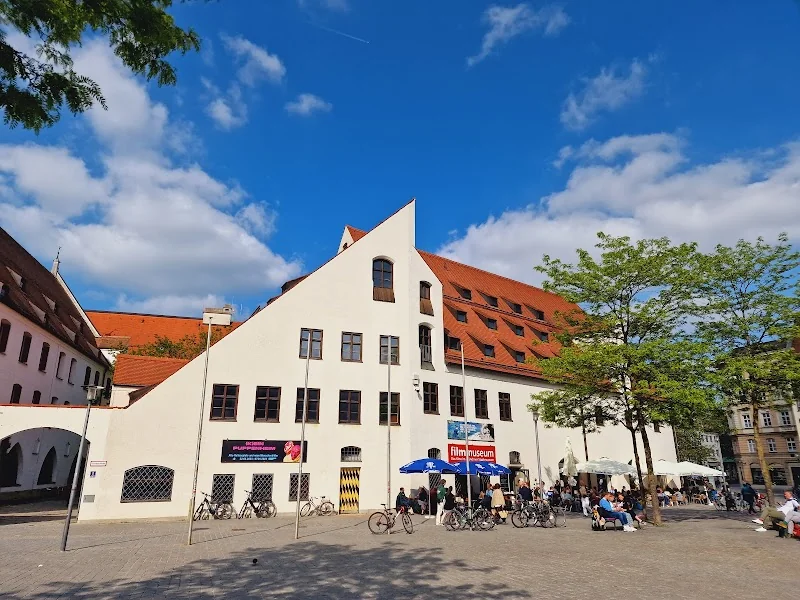
The Filmmuseum Munich at St.-Jakobs-Platz is much more than a classic cultural venue with a screen. It is a program cinema with historical depth, film archival ambition, and a clear signature that has attracted cinephiles for decades. While the Munich City Museum is mostly closed due to extensive renovations, the cinema of the Filmmuseum continues to operate and is officially scheduled to remain in operation until June 2027. So, those who come here are not visiting a temporary operation but a vibrant part of Munich's film culture, where rare classics, restored works, thematic series, and discussions about cinema have a firm place. The location is central in the old town, the journey is easy, and the combination of history, programming, and current cinema operations makes the place particularly attractive for visitors. ([muenchner-stadtmuseum.de](https://www.muenchner-stadtmuseum.de/film?utm_source=openai))
Program, Tickets, and Original Versions
The most important search interest at the Filmmuseum Munich almost always revolves around the program, and this is precisely where the house's greatest strength lies. The official site describes a daily changing offer with retrospectives, thematic film series, and selected premieres. The screenings are generally in the original version, depending on the film with German or English subtitles, and the labels on the program page help with orientation: OF stands for original version without subtitles, OmU for original version with German subtitles, OmeU for original version with English subtitles, OmfU for French subtitles, and OmÜ for a German translation. Particularly appealing is that silent films are often shown with live musical accompaniment. This does not create a neutral standard cinema but a consciously curated place where the form, language, and context of the film are taken seriously. This is a strong signal for users who are looking for film-conscious selection rather than mass programming. ([muenchner-stadtmuseum.de](https://www.muenchner-stadtmuseum.de/film?utm_source=openai))
Also, regarding tickets and visit planning, the Filmmuseum Munich is well-structured. The official site refers to the schedule, ticket functions in the shop, and a box office with reservation options. In addition, a printed program booklet with detailed information about the films is available at the Filmmuseum, and the schedule is also provided as a PDF. For calendar apps, there is even a static iCal variant and a constantly updated Webcal. This is a relevant advantage for many users because it allows appointments to be easily integrated into everyday life. Those searching online for filmmuseum munich program, filmmuseum munich tickets, or filmmuseum program usually want exactly this combination of overview, planning, and concrete bookability. The house serves this need cleanly and user-friendly without losing its curatorial identity. ([muenchner-stadtmuseum.de](https://www.muenchner-stadtmuseum.de/sammlungen/filmmuseum/informationen-programmheft?utm_source=openai))
It is also important to note the current operational situation: The cinema of the Filmmuseum remains in operation according to the official ticket site and Filmmuseum page until June 2027. For seekers, this is good news because they can continue to plan the location as an active cultural site, even though large parts of the Munich City Museum are being renovated. The online presence makes this transition transparent and clearly separates the ongoing screenings of the Filmmuseum from the other temporarily closed museum sections. This is particularly helpful in search queries related to program, cinema, and opening hours because it shows: The Filmmuseum Munich is not only accessible but currently relevant and operational. ([muenchner-stadtmuseum.de](https://www.muenchner-stadtmuseum.de/film?utm_source=openai))
History, Archive, and Film Historical Significance
The history of the Filmmuseum Munich began in 1963 when the institution was founded as a department of photography and film of the Munich City Museum. According to the official history, the Filmmuseum developed with its regular screenings into the first municipal cinema in Germany. Under its second director Enno Patalas, it also gained international renown as a film archive in the 1970s. This development is important from both an SEO and user perspective because it explains why the house is not just any screening venue but a place where research, preservation, and presentation are closely intertwined. Those searching for the history of the Filmmuseum Munich do not receive a pure museum biography but the story of an active cinema and archive project that has shaped German film culture. ([muenchner-stadtmuseum.de](https://www.muenchner-stadtmuseum.de/sammlungen/filmmuseum/geschichte?utm_source=openai))
The archive comprises around 6,000 copies according to the official representation. Among them are central titles of film history that have been reconstructed over years, such as classic silent films like The Joyless Street, Metropolis, The Golem, or The Wife of the Pharaoh, as well as fragments from the estate of Orson Welles. These examples clearly show the role the Filmmuseum plays in Munich: It not only preserves films but also makes them accessible in a scientifically grounded yet audience-friendly manner. Additionally, since 2005, films and archival treasures have been published on DVD in the edition filmmuseum. For many users searching for filmmuseum munich history, filmmuseum munich original version, or film archive, this combination of archive care and public presentation is the decisive argument. ([muenchner-stadtmuseum.de](https://www.muenchner-stadtmuseum.de/sammlungen/filmmuseum/geschichte?utm_source=openai))
The current programming practice also ties into this tradition. The official site describes the Filmmuseum as a proven venue for festivals like DOK.fest, Filmfest Munich, and Underdox. Thus, the house is not only an archive but also a platform for contemporary cinema, curatorial series, and film culture in a broader sense. This dual role makes it particularly search-strong: Users are looking both for classics and historical series, as well as for a place where current festivals and special programs take place. The Filmmuseum Munich connects both expectations and remains clearly positioned in the Munich cultural landscape. ([muenchner-stadtmuseum.de](https://www.muenchner-stadtmuseum.de/sammlungen/filmmuseum/geschichte?utm_source=openai))
Directions, Parking, and Accessible Visit
For search queries related to directions, parking, or accessibility, the official visitor information of the Filmmuseum is very specific. It is recommended to arrive by public transport: S/U-Bahn to Marienplatz, U-Bahn to Sendlinger Tor, or Bus 52/62 to St.-Jakobs-Platz. This is practical for visitors because the Filmmuseum is located in the city center, and parking space is correspondingly scarce. That is why the website explicitly points out that parking spaces in the city center are limited and that public transport should be preferred. For those who still come by car, the designated parking garage is the Parkhaus Oberanger. For users specifically searching for filmmuseum munich parking or filmmuseum munich directions, these are the crucial facts. ([muenchner-stadtmuseum.de](https://www.muenchner-stadtmuseum.de/film?utm_source=openai))
Accessibility is also well documented officially. The new entrance at St.-Jakobs-Platz offers step-free access, and the exhibition area is also level and accessible without steps. Additionally, a fixed metal ramp has been installed to bridge a step at the entrance. An accessible toilet is located in the basement of the Marstall building next to the cinema entrance, the area is reachable by elevator, and the elevator has Braille markings and acoustic signals. In the cinema hall, there is an induction loop for hearing-impaired individuals, and the official site points out that the seats at the ends of the rows provide the best reception. These details are particularly relevant for people with mobility impairments or hearing aids and make the site a valuable information source for searching for filmmuseum munich accessible. ([muenchner-stadtmuseum.de](https://www.muenchner-stadtmuseum.de/en/plan-your-visit/accessibility?utm_source=openai))
Another practical tip concerns the pathways at the site itself. The accessibility page describes the access to the Filmmuseum and the museum café very specifically and also mentions the condition of the courtyard with cobblestones. For visitors, this means: The location is central and easily accessible, but especially for wheelchairs, strollers, or individuals with limited stability, careful planning is worthwhile. The house's recommendation to use public transport whenever possible is therefore not only convenient but also realistic. This creates a visit that is well-prepared both organizationally and spatially. ([muenchner-stadtmuseum.de](https://www.muenchner-stadtmuseum.de/en/plan-your-visit/accessibility?utm_source=openai))
Opening Hours, Interim Exhibition, and Program Booklet
The current visiting hours are a central search reason for many users because they want to know when the Filmmuseum Munich is actually open. According to the official site, screenings take place on Tuesdays and Wednesdays at 6:30 PM and 9:00 PM, Thursdays at 7:00 PM, Fridays and Saturdays at 6:00 PM and 9:00 PM, and Sundays at 6:00 PM. Additionally, the website informs that the interim exhibition What the City. Perspectives of Our City in the historic Zeughaus is accessible free of charge from Tuesday to Sunday between 11:00 AM and 7:00 PM. The rest of the Munich City Museum is currently closed due to extensive renovations. For seekers looking for opening hours or a realistic visiting window for the Filmmuseum Munich, this separation is important: The cinema is running, the large exhibition situation is changing, and this is transparently communicated. ([muenchner-stadtmuseum.de](https://www.muenchner-stadtmuseum.de/film?utm_source=openai))
The program booklet is another strong unique selling point. The official site points out that the printed booklet is available at the Filmmuseum and that the schedule can be downloaded as a PDF. For calendar apps, there are also static iCal and continuously updated Webcal available. Particularly helpful for planners is the current issue 55, which covers the period from February 26 to July 26, 2026. This makes it clear that the Filmmuseum not only provides short-term individual dates but documents its programming practice in clear time frames. Those searching for filmmuseum munich program booklet or a reliable schedule will find here a professional information system that connects classic visitor needs with digital usage. ([muenchner-stadtmuseum.de](https://www.muenchner-stadtmuseum.de/sammlungen/filmmuseum/informationen-programmheft?utm_source=openai))
The newsletter is also relevant for returning visitors. The official Filmmuseum page describes an electronic newsletter that informs about the current program, spontaneously scheduled Open Scene dates, and online programs. This makes the Filmmuseum Munich visible not only as a place for a one-time visit but as a recurrently curated cultural channel. Those regularly interested in original versions, thematic series, or spontaneous special dates can use the site much more actively than just through a single search. For SEO keywords related to program, newsletter, and current information, this is a valuable topic block. ([muenchner-stadtmuseum.de](https://www.muenchner-stadtmuseum.de/en/departments/film-museum/film-newsletter?utm_source=openai))
Film Series, Open Scene, and Festivals
The Filmmuseum Munich thrives on its series culture, and this is precisely where many relevant search terms arise around program, series, and cinema culture. The official program category currently features series such as Agnès Varda, My Favourite Romance, History of Puppet Films, Marilyn Monroe at 100, Film and Psychoanalysis: Desire, Henrik Ibsen, Mel Brooks - Survival Through Laughter, and International Silent Film Days. These names show how broad the spectrum is: from author cinema to genre and thematic programs to silent film days. For visitors, this means not only variety but also a clear curatorial framework. The Filmmuseum is not a place where individual titles are shown randomly but a house that thinks and makes visible film history in series. ([muenchner-stadtmuseum.de](https://www.muenchner-stadtmuseum.de/en/departments/film-museum/current-program/bringing-up-baby-leoparden-kuesst-man-nicht-38946?utm_source=openai))
Particularly characteristic is the Open Scene, which according to the official site is often scheduled at short notice on Thursdays. Those interested in new or spontaneous program points benefit here from the combination of newsletter and flexible screening practice. Additionally, the official history reports that filmmakers often speak on stage after the screenings, in a format that provides discussion and context. This makes the place interesting for visitors who not only want to watch but also to contextualize, question, and compare. In a city like Munich, where cultural offerings are numerous, this dialogical form creates a clear recognition value. ([muenchner-stadtmuseum.de](https://www.muenchner-stadtmuseum.de/en/departments/film-museum/history?utm_source=openai))
The festival anchoring further strengthens this profile. The Filmmuseum is officially regarded as a proven venue for DOK.fest, Filmfest Munich, and Underdox. This makes it the address for premieres, special screenings, and curated focal points that go far beyond a normal cinema visit. Those searching for filmmuseum munich cinema often mean exactly this special mixed format of archive, festival venue, and program cinema. From an SEO perspective, this is an important cluster because the demand is not only aimed at tickets but at a culture-based experience with programmatic depth. ([muenchner-stadtmuseum.de](https://www.muenchner-stadtmuseum.de/sammlungen/filmmuseum/geschichte?utm_source=openai))
Visiting Tips for Schedule, Series, and Good Seats
Those who want to visit the Filmmuseum Munich meaningfully should check the schedule in advance and utilize the house's special features. The screenings are tied to fixed weekdays, the program changes regularly, and the official information on subtitles, original versions, and series helps in selecting the right film. Especially for silent films with live music, retrospectives, and thematic cycles, a close look at the program booklet is worthwhile. The advantage is that the Filmmuseum provides its information not only online but also in printed form and through calendar formats. This makes it easy to plan an individual screening or an entire evening visit. Those searching for filmmuseum munich program or filmmuseum munich program booklet will find here more than just a list of times: It is about context, selection, and good preparation. ([muenchner-stadtmuseum.de](https://www.muenchner-stadtmuseum.de/sammlungen/filmmuseum/informationen-programmheft?utm_source=openai))
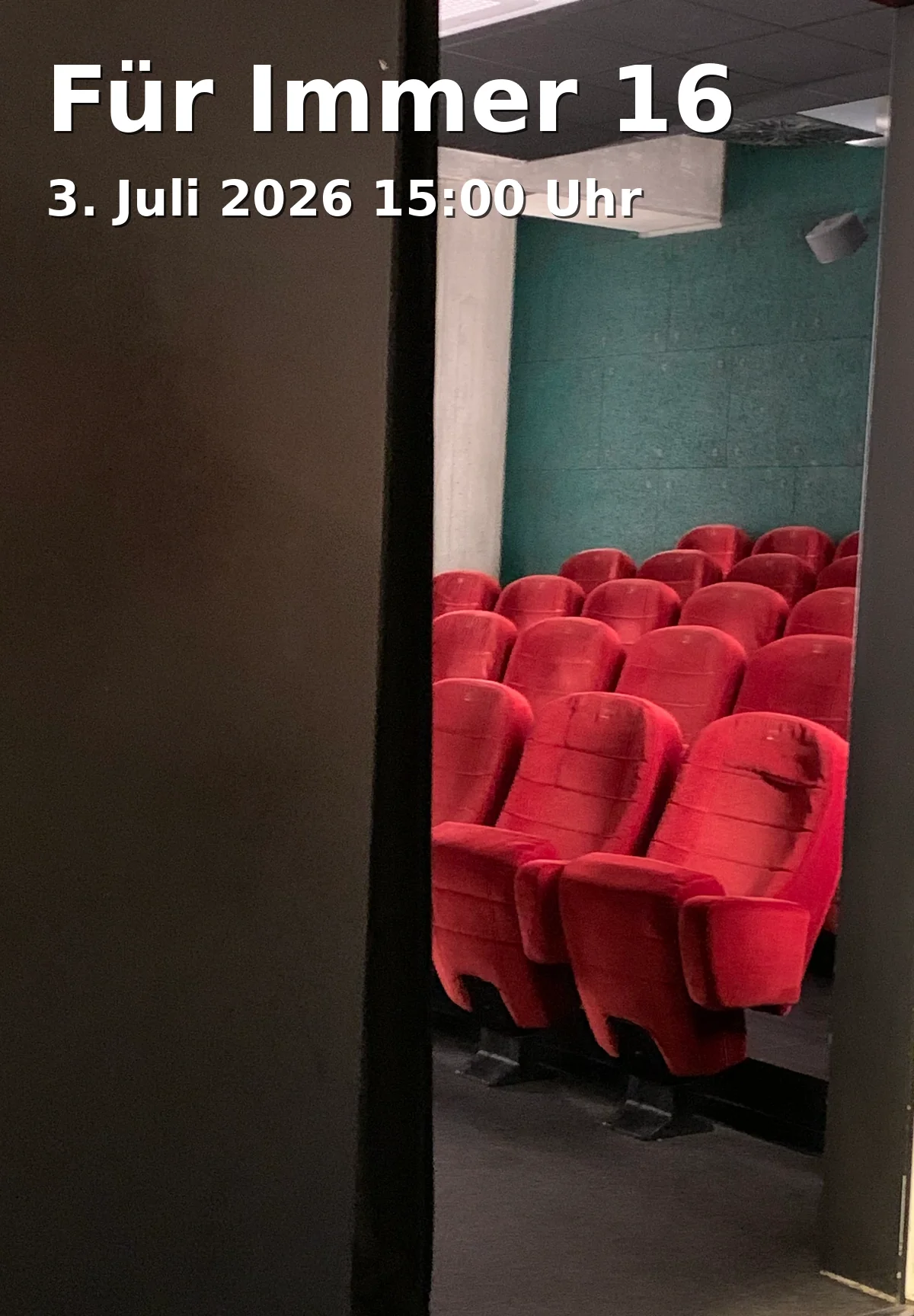
A practical tip concerns the seating in the hall. The official program page and the program booklet point out that the reception at the seats at the beginning and end of the rows is the best. Additionally, the induction loop for hearing-impaired individuals makes the hall technically well-equipped. For people seeking the clearest sound and an uncomplicated listening experience, this is valuable. Equally sensible is arriving by public transport, as the Filmmuseum is located in the city center and parking space is limited. Thus, a simple search for filmmuseum munich directions or filmmuseum munich parking becomes a visit that is more relaxed organizationally and culturally richer. ([muenchner-stadtmuseum.de](https://www.muenchner-stadtmuseum.de/sammlungen/filmmuseum/informationen-programmheft?utm_source=openai))
In the end, one thing remains: The Filmmuseum Munich is a place for people who want to not only consume cinema but understand it. The combination of original versions, historical responsibility, current series, and central location makes the site unique. Whether one comes for a single film, a retrospective, a festival screening, or the historical weight of the house, the experience remains closely tied to the identity of the Munich City Museum. This explains why search terms related to program, history, tickets, directions, accessibility, and silent films converge so strongly here. The Filmmuseum Munich not only meets these search intentions but translates them into a robust, curated cultural offering with real added value. ([muenchner-stadtmuseum.de](https://www.muenchner-stadtmuseum.de/sammlungen/filmmuseum/geschichte?utm_source=openai))
Sources:
Show moreShow less
Filmmuseum Munich | Program & Cinema
The Filmmuseum Munich at St.-Jakobs-Platz is much more than a classic cultural venue with a screen. It is a program cinema with historical depth, film archival ambition, and a clear signature that has attracted cinephiles for decades. While the Munich City Museum is mostly closed due to extensive renovations, the cinema of the Filmmuseum continues to operate and is officially scheduled to remain in operation until June 2027. So, those who come here are not visiting a temporary operation but a vibrant part of Munich's film culture, where rare classics, restored works, thematic series, and discussions about cinema have a firm place. The location is central in the old town, the journey is easy, and the combination of history, programming, and current cinema operations makes the place particularly attractive for visitors. ([muenchner-stadtmuseum.de](https://www.muenchner-stadtmuseum.de/film?utm_source=openai))
Program, Tickets, and Original Versions
The most important search interest at the Filmmuseum Munich almost always revolves around the program, and this is precisely where the house's greatest strength lies. The official site describes a daily changing offer with retrospectives, thematic film series, and selected premieres. The screenings are generally in the original version, depending on the film with German or English subtitles, and the labels on the program page help with orientation: OF stands for original version without subtitles, OmU for original version with German subtitles, OmeU for original version with English subtitles, OmfU for French subtitles, and OmÜ for a German translation. Particularly appealing is that silent films are often shown with live musical accompaniment. This does not create a neutral standard cinema but a consciously curated place where the form, language, and context of the film are taken seriously. This is a strong signal for users who are looking for film-conscious selection rather than mass programming. ([muenchner-stadtmuseum.de](https://www.muenchner-stadtmuseum.de/film?utm_source=openai))
Also, regarding tickets and visit planning, the Filmmuseum Munich is well-structured. The official site refers to the schedule, ticket functions in the shop, and a box office with reservation options. In addition, a printed program booklet with detailed information about the films is available at the Filmmuseum, and the schedule is also provided as a PDF. For calendar apps, there is even a static iCal variant and a constantly updated Webcal. This is a relevant advantage for many users because it allows appointments to be easily integrated into everyday life. Those searching online for filmmuseum munich program, filmmuseum munich tickets, or filmmuseum program usually want exactly this combination of overview, planning, and concrete bookability. The house serves this need cleanly and user-friendly without losing its curatorial identity. ([muenchner-stadtmuseum.de](https://www.muenchner-stadtmuseum.de/sammlungen/filmmuseum/informationen-programmheft?utm_source=openai))
It is also important to note the current operational situation: The cinema of the Filmmuseum remains in operation according to the official ticket site and Filmmuseum page until June 2027. For seekers, this is good news because they can continue to plan the location as an active cultural site, even though large parts of the Munich City Museum are being renovated. The online presence makes this transition transparent and clearly separates the ongoing screenings of the Filmmuseum from the other temporarily closed museum sections. This is particularly helpful in search queries related to program, cinema, and opening hours because it shows: The Filmmuseum Munich is not only accessible but currently relevant and operational. ([muenchner-stadtmuseum.de](https://www.muenchner-stadtmuseum.de/film?utm_source=openai))
History, Archive, and Film Historical Significance
The history of the Filmmuseum Munich began in 1963 when the institution was founded as a department of photography and film of the Munich City Museum. According to the official history, the Filmmuseum developed with its regular screenings into the first municipal cinema in Germany. Under its second director Enno Patalas, it also gained international renown as a film archive in the 1970s. This development is important from both an SEO and user perspective because it explains why the house is not just any screening venue but a place where research, preservation, and presentation are closely intertwined. Those searching for the history of the Filmmuseum Munich do not receive a pure museum biography but the story of an active cinema and archive project that has shaped German film culture. ([muenchner-stadtmuseum.de](https://www.muenchner-stadtmuseum.de/sammlungen/filmmuseum/geschichte?utm_source=openai))
The archive comprises around 6,000 copies according to the official representation. Among them are central titles of film history that have been reconstructed over years, such as classic silent films like The Joyless Street, Metropolis, The Golem, or The Wife of the Pharaoh, as well as fragments from the estate of Orson Welles. These examples clearly show the role the Filmmuseum plays in Munich: It not only preserves films but also makes them accessible in a scientifically grounded yet audience-friendly manner. Additionally, since 2005, films and archival treasures have been published on DVD in the edition filmmuseum. For many users searching for filmmuseum munich history, filmmuseum munich original version, or film archive, this combination of archive care and public presentation is the decisive argument. ([muenchner-stadtmuseum.de](https://www.muenchner-stadtmuseum.de/sammlungen/filmmuseum/geschichte?utm_source=openai))
The current programming practice also ties into this tradition. The official site describes the Filmmuseum as a proven venue for festivals like DOK.fest, Filmfest Munich, and Underdox. Thus, the house is not only an archive but also a platform for contemporary cinema, curatorial series, and film culture in a broader sense. This dual role makes it particularly search-strong: Users are looking both for classics and historical series, as well as for a place where current festivals and special programs take place. The Filmmuseum Munich connects both expectations and remains clearly positioned in the Munich cultural landscape. ([muenchner-stadtmuseum.de](https://www.muenchner-stadtmuseum.de/sammlungen/filmmuseum/geschichte?utm_source=openai))
Directions, Parking, and Accessible Visit
For search queries related to directions, parking, or accessibility, the official visitor information of the Filmmuseum is very specific. It is recommended to arrive by public transport: S/U-Bahn to Marienplatz, U-Bahn to Sendlinger Tor, or Bus 52/62 to St.-Jakobs-Platz. This is practical for visitors because the Filmmuseum is located in the city center, and parking space is correspondingly scarce. That is why the website explicitly points out that parking spaces in the city center are limited and that public transport should be preferred. For those who still come by car, the designated parking garage is the Parkhaus Oberanger. For users specifically searching for filmmuseum munich parking or filmmuseum munich directions, these are the crucial facts. ([muenchner-stadtmuseum.de](https://www.muenchner-stadtmuseum.de/film?utm_source=openai))
Accessibility is also well documented officially. The new entrance at St.-Jakobs-Platz offers step-free access, and the exhibition area is also level and accessible without steps. Additionally, a fixed metal ramp has been installed to bridge a step at the entrance. An accessible toilet is located in the basement of the Marstall building next to the cinema entrance, the area is reachable by elevator, and the elevator has Braille markings and acoustic signals. In the cinema hall, there is an induction loop for hearing-impaired individuals, and the official site points out that the seats at the ends of the rows provide the best reception. These details are particularly relevant for people with mobility impairments or hearing aids and make the site a valuable information source for searching for filmmuseum munich accessible. ([muenchner-stadtmuseum.de](https://www.muenchner-stadtmuseum.de/en/plan-your-visit/accessibility?utm_source=openai))
Another practical tip concerns the pathways at the site itself. The accessibility page describes the access to the Filmmuseum and the museum café very specifically and also mentions the condition of the courtyard with cobblestones. For visitors, this means: The location is central and easily accessible, but especially for wheelchairs, strollers, or individuals with limited stability, careful planning is worthwhile. The house's recommendation to use public transport whenever possible is therefore not only convenient but also realistic. This creates a visit that is well-prepared both organizationally and spatially. ([muenchner-stadtmuseum.de](https://www.muenchner-stadtmuseum.de/en/plan-your-visit/accessibility?utm_source=openai))
Opening Hours, Interim Exhibition, and Program Booklet
The current visiting hours are a central search reason for many users because they want to know when the Filmmuseum Munich is actually open. According to the official site, screenings take place on Tuesdays and Wednesdays at 6:30 PM and 9:00 PM, Thursdays at 7:00 PM, Fridays and Saturdays at 6:00 PM and 9:00 PM, and Sundays at 6:00 PM. Additionally, the website informs that the interim exhibition What the City. Perspectives of Our City in the historic Zeughaus is accessible free of charge from Tuesday to Sunday between 11:00 AM and 7:00 PM. The rest of the Munich City Museum is currently closed due to extensive renovations. For seekers looking for opening hours or a realistic visiting window for the Filmmuseum Munich, this separation is important: The cinema is running, the large exhibition situation is changing, and this is transparently communicated. ([muenchner-stadtmuseum.de](https://www.muenchner-stadtmuseum.de/film?utm_source=openai))
The program booklet is another strong unique selling point. The official site points out that the printed booklet is available at the Filmmuseum and that the schedule can be downloaded as a PDF. For calendar apps, there are also static iCal and continuously updated Webcal available. Particularly helpful for planners is the current issue 55, which covers the period from February 26 to July 26, 2026. This makes it clear that the Filmmuseum not only provides short-term individual dates but documents its programming practice in clear time frames. Those searching for filmmuseum munich program booklet or a reliable schedule will find here a professional information system that connects classic visitor needs with digital usage. ([muenchner-stadtmuseum.de](https://www.muenchner-stadtmuseum.de/sammlungen/filmmuseum/informationen-programmheft?utm_source=openai))
The newsletter is also relevant for returning visitors. The official Filmmuseum page describes an electronic newsletter that informs about the current program, spontaneously scheduled Open Scene dates, and online programs. This makes the Filmmuseum Munich visible not only as a place for a one-time visit but as a recurrently curated cultural channel. Those regularly interested in original versions, thematic series, or spontaneous special dates can use the site much more actively than just through a single search. For SEO keywords related to program, newsletter, and current information, this is a valuable topic block. ([muenchner-stadtmuseum.de](https://www.muenchner-stadtmuseum.de/en/departments/film-museum/film-newsletter?utm_source=openai))
Film Series, Open Scene, and Festivals
The Filmmuseum Munich thrives on its series culture, and this is precisely where many relevant search terms arise around program, series, and cinema culture. The official program category currently features series such as Agnès Varda, My Favourite Romance, History of Puppet Films, Marilyn Monroe at 100, Film and Psychoanalysis: Desire, Henrik Ibsen, Mel Brooks - Survival Through Laughter, and International Silent Film Days. These names show how broad the spectrum is: from author cinema to genre and thematic programs to silent film days. For visitors, this means not only variety but also a clear curatorial framework. The Filmmuseum is not a place where individual titles are shown randomly but a house that thinks and makes visible film history in series. ([muenchner-stadtmuseum.de](https://www.muenchner-stadtmuseum.de/en/departments/film-museum/current-program/bringing-up-baby-leoparden-kuesst-man-nicht-38946?utm_source=openai))
Particularly characteristic is the Open Scene, which according to the official site is often scheduled at short notice on Thursdays. Those interested in new or spontaneous program points benefit here from the combination of newsletter and flexible screening practice. Additionally, the official history reports that filmmakers often speak on stage after the screenings, in a format that provides discussion and context. This makes the place interesting for visitors who not only want to watch but also to contextualize, question, and compare. In a city like Munich, where cultural offerings are numerous, this dialogical form creates a clear recognition value. ([muenchner-stadtmuseum.de](https://www.muenchner-stadtmuseum.de/en/departments/film-museum/history?utm_source=openai))
The festival anchoring further strengthens this profile. The Filmmuseum is officially regarded as a proven venue for DOK.fest, Filmfest Munich, and Underdox. This makes it the address for premieres, special screenings, and curated focal points that go far beyond a normal cinema visit. Those searching for filmmuseum munich cinema often mean exactly this special mixed format of archive, festival venue, and program cinema. From an SEO perspective, this is an important cluster because the demand is not only aimed at tickets but at a culture-based experience with programmatic depth. ([muenchner-stadtmuseum.de](https://www.muenchner-stadtmuseum.de/sammlungen/filmmuseum/geschichte?utm_source=openai))
Visiting Tips for Schedule, Series, and Good Seats
Those who want to visit the Filmmuseum Munich meaningfully should check the schedule in advance and utilize the house's special features. The screenings are tied to fixed weekdays, the program changes regularly, and the official information on subtitles, original versions, and series helps in selecting the right film. Especially for silent films with live music, retrospectives, and thematic cycles, a close look at the program booklet is worthwhile. The advantage is that the Filmmuseum provides its information not only online but also in printed form and through calendar formats. This makes it easy to plan an individual screening or an entire evening visit. Those searching for filmmuseum munich program or filmmuseum munich program booklet will find here more than just a list of times: It is about context, selection, and good preparation. ([muenchner-stadtmuseum.de](https://www.muenchner-stadtmuseum.de/sammlungen/filmmuseum/informationen-programmheft?utm_source=openai))
A practical tip concerns the seating in the hall. The official program page and the program booklet point out that the reception at the seats at the beginning and end of the rows is the best. Additionally, the induction loop for hearing-impaired individuals makes the hall technically well-equipped. For people seeking the clearest sound and an uncomplicated listening experience, this is valuable. Equally sensible is arriving by public transport, as the Filmmuseum is located in the city center and parking space is limited. Thus, a simple search for filmmuseum munich directions or filmmuseum munich parking becomes a visit that is more relaxed organizationally and culturally richer. ([muenchner-stadtmuseum.de](https://www.muenchner-stadtmuseum.de/sammlungen/filmmuseum/informationen-programmheft?utm_source=openai))
In the end, one thing remains: The Filmmuseum Munich is a place for people who want to not only consume cinema but understand it. The combination of original versions, historical responsibility, current series, and central location makes the site unique. Whether one comes for a single film, a retrospective, a festival screening, or the historical weight of the house, the experience remains closely tied to the identity of the Munich City Museum. This explains why search terms related to program, history, tickets, directions, accessibility, and silent films converge so strongly here. The Filmmuseum Munich not only meets these search intentions but translates them into a robust, curated cultural offering with real added value. ([muenchner-stadtmuseum.de](https://www.muenchner-stadtmuseum.de/sammlungen/filmmuseum/geschichte?utm_source=openai))
Sources:
Filmmuseum Munich | Program & Cinema
The Filmmuseum Munich at St.-Jakobs-Platz is much more than a classic cultural venue with a screen. It is a program cinema with historical depth, film archival ambition, and a clear signature that has attracted cinephiles for decades. While the Munich City Museum is mostly closed due to extensive renovations, the cinema of the Filmmuseum continues to operate and is officially scheduled to remain in operation until June 2027. So, those who come here are not visiting a temporary operation but a vibrant part of Munich's film culture, where rare classics, restored works, thematic series, and discussions about cinema have a firm place. The location is central in the old town, the journey is easy, and the combination of history, programming, and current cinema operations makes the place particularly attractive for visitors. ([muenchner-stadtmuseum.de](https://www.muenchner-stadtmuseum.de/film?utm_source=openai))
Program, Tickets, and Original Versions
The most important search interest at the Filmmuseum Munich almost always revolves around the program, and this is precisely where the house's greatest strength lies. The official site describes a daily changing offer with retrospectives, thematic film series, and selected premieres. The screenings are generally in the original version, depending on the film with German or English subtitles, and the labels on the program page help with orientation: OF stands for original version without subtitles, OmU for original version with German subtitles, OmeU for original version with English subtitles, OmfU for French subtitles, and OmÜ for a German translation. Particularly appealing is that silent films are often shown with live musical accompaniment. This does not create a neutral standard cinema but a consciously curated place where the form, language, and context of the film are taken seriously. This is a strong signal for users who are looking for film-conscious selection rather than mass programming. ([muenchner-stadtmuseum.de](https://www.muenchner-stadtmuseum.de/film?utm_source=openai))
Also, regarding tickets and visit planning, the Filmmuseum Munich is well-structured. The official site refers to the schedule, ticket functions in the shop, and a box office with reservation options. In addition, a printed program booklet with detailed information about the films is available at the Filmmuseum, and the schedule is also provided as a PDF. For calendar apps, there is even a static iCal variant and a constantly updated Webcal. This is a relevant advantage for many users because it allows appointments to be easily integrated into everyday life. Those searching online for filmmuseum munich program, filmmuseum munich tickets, or filmmuseum program usually want exactly this combination of overview, planning, and concrete bookability. The house serves this need cleanly and user-friendly without losing its curatorial identity. ([muenchner-stadtmuseum.de](https://www.muenchner-stadtmuseum.de/sammlungen/filmmuseum/informationen-programmheft?utm_source=openai))
It is also important to note the current operational situation: The cinema of the Filmmuseum remains in operation according to the official ticket site and Filmmuseum page until June 2027. For seekers, this is good news because they can continue to plan the location as an active cultural site, even though large parts of the Munich City Museum are being renovated. The online presence makes this transition transparent and clearly separates the ongoing screenings of the Filmmuseum from the other temporarily closed museum sections. This is particularly helpful in search queries related to program, cinema, and opening hours because it shows: The Filmmuseum Munich is not only accessible but currently relevant and operational. ([muenchner-stadtmuseum.de](https://www.muenchner-stadtmuseum.de/film?utm_source=openai))
History, Archive, and Film Historical Significance
The history of the Filmmuseum Munich began in 1963 when the institution was founded as a department of photography and film of the Munich City Museum. According to the official history, the Filmmuseum developed with its regular screenings into the first municipal cinema in Germany. Under its second director Enno Patalas, it also gained international renown as a film archive in the 1970s. This development is important from both an SEO and user perspective because it explains why the house is not just any screening venue but a place where research, preservation, and presentation are closely intertwined. Those searching for the history of the Filmmuseum Munich do not receive a pure museum biography but the story of an active cinema and archive project that has shaped German film culture. ([muenchner-stadtmuseum.de](https://www.muenchner-stadtmuseum.de/sammlungen/filmmuseum/geschichte?utm_source=openai))
The archive comprises around 6,000 copies according to the official representation. Among them are central titles of film history that have been reconstructed over years, such as classic silent films like The Joyless Street, Metropolis, The Golem, or The Wife of the Pharaoh, as well as fragments from the estate of Orson Welles. These examples clearly show the role the Filmmuseum plays in Munich: It not only preserves films but also makes them accessible in a scientifically grounded yet audience-friendly manner. Additionally, since 2005, films and archival treasures have been published on DVD in the edition filmmuseum. For many users searching for filmmuseum munich history, filmmuseum munich original version, or film archive, this combination of archive care and public presentation is the decisive argument. ([muenchner-stadtmuseum.de](https://www.muenchner-stadtmuseum.de/sammlungen/filmmuseum/geschichte?utm_source=openai))
The current programming practice also ties into this tradition. The official site describes the Filmmuseum as a proven venue for festivals like DOK.fest, Filmfest Munich, and Underdox. Thus, the house is not only an archive but also a platform for contemporary cinema, curatorial series, and film culture in a broader sense. This dual role makes it particularly search-strong: Users are looking both for classics and historical series, as well as for a place where current festivals and special programs take place. The Filmmuseum Munich connects both expectations and remains clearly positioned in the Munich cultural landscape. ([muenchner-stadtmuseum.de](https://www.muenchner-stadtmuseum.de/sammlungen/filmmuseum/geschichte?utm_source=openai))
Directions, Parking, and Accessible Visit
For search queries related to directions, parking, or accessibility, the official visitor information of the Filmmuseum is very specific. It is recommended to arrive by public transport: S/U-Bahn to Marienplatz, U-Bahn to Sendlinger Tor, or Bus 52/62 to St.-Jakobs-Platz. This is practical for visitors because the Filmmuseum is located in the city center, and parking space is correspondingly scarce. That is why the website explicitly points out that parking spaces in the city center are limited and that public transport should be preferred. For those who still come by car, the designated parking garage is the Parkhaus Oberanger. For users specifically searching for filmmuseum munich parking or filmmuseum munich directions, these are the crucial facts. ([muenchner-stadtmuseum.de](https://www.muenchner-stadtmuseum.de/film?utm_source=openai))
Accessibility is also well documented officially. The new entrance at St.-Jakobs-Platz offers step-free access, and the exhibition area is also level and accessible without steps. Additionally, a fixed metal ramp has been installed to bridge a step at the entrance. An accessible toilet is located in the basement of the Marstall building next to the cinema entrance, the area is reachable by elevator, and the elevator has Braille markings and acoustic signals. In the cinema hall, there is an induction loop for hearing-impaired individuals, and the official site points out that the seats at the ends of the rows provide the best reception. These details are particularly relevant for people with mobility impairments or hearing aids and make the site a valuable information source for searching for filmmuseum munich accessible. ([muenchner-stadtmuseum.de](https://www.muenchner-stadtmuseum.de/en/plan-your-visit/accessibility?utm_source=openai))
Another practical tip concerns the pathways at the site itself. The accessibility page describes the access to the Filmmuseum and the museum café very specifically and also mentions the condition of the courtyard with cobblestones. For visitors, this means: The location is central and easily accessible, but especially for wheelchairs, strollers, or individuals with limited stability, careful planning is worthwhile. The house's recommendation to use public transport whenever possible is therefore not only convenient but also realistic. This creates a visit that is well-prepared both organizationally and spatially. ([muenchner-stadtmuseum.de](https://www.muenchner-stadtmuseum.de/en/plan-your-visit/accessibility?utm_source=openai))
Opening Hours, Interim Exhibition, and Program Booklet
The current visiting hours are a central search reason for many users because they want to know when the Filmmuseum Munich is actually open. According to the official site, screenings take place on Tuesdays and Wednesdays at 6:30 PM and 9:00 PM, Thursdays at 7:00 PM, Fridays and Saturdays at 6:00 PM and 9:00 PM, and Sundays at 6:00 PM. Additionally, the website informs that the interim exhibition What the City. Perspectives of Our City in the historic Zeughaus is accessible free of charge from Tuesday to Sunday between 11:00 AM and 7:00 PM. The rest of the Munich City Museum is currently closed due to extensive renovations. For seekers looking for opening hours or a realistic visiting window for the Filmmuseum Munich, this separation is important: The cinema is running, the large exhibition situation is changing, and this is transparently communicated. ([muenchner-stadtmuseum.de](https://www.muenchner-stadtmuseum.de/film?utm_source=openai))
The program booklet is another strong unique selling point. The official site points out that the printed booklet is available at the Filmmuseum and that the schedule can be downloaded as a PDF. For calendar apps, there are also static iCal and continuously updated Webcal available. Particularly helpful for planners is the current issue 55, which covers the period from February 26 to July 26, 2026. This makes it clear that the Filmmuseum not only provides short-term individual dates but documents its programming practice in clear time frames. Those searching for filmmuseum munich program booklet or a reliable schedule will find here a professional information system that connects classic visitor needs with digital usage. ([muenchner-stadtmuseum.de](https://www.muenchner-stadtmuseum.de/sammlungen/filmmuseum/informationen-programmheft?utm_source=openai))
The newsletter is also relevant for returning visitors. The official Filmmuseum page describes an electronic newsletter that informs about the current program, spontaneously scheduled Open Scene dates, and online programs. This makes the Filmmuseum Munich visible not only as a place for a one-time visit but as a recurrently curated cultural channel. Those regularly interested in original versions, thematic series, or spontaneous special dates can use the site much more actively than just through a single search. For SEO keywords related to program, newsletter, and current information, this is a valuable topic block. ([muenchner-stadtmuseum.de](https://www.muenchner-stadtmuseum.de/en/departments/film-museum/film-newsletter?utm_source=openai))
Film Series, Open Scene, and Festivals
The Filmmuseum Munich thrives on its series culture, and this is precisely where many relevant search terms arise around program, series, and cinema culture. The official program category currently features series such as Agnès Varda, My Favourite Romance, History of Puppet Films, Marilyn Monroe at 100, Film and Psychoanalysis: Desire, Henrik Ibsen, Mel Brooks - Survival Through Laughter, and International Silent Film Days. These names show how broad the spectrum is: from author cinema to genre and thematic programs to silent film days. For visitors, this means not only variety but also a clear curatorial framework. The Filmmuseum is not a place where individual titles are shown randomly but a house that thinks and makes visible film history in series. ([muenchner-stadtmuseum.de](https://www.muenchner-stadtmuseum.de/en/departments/film-museum/current-program/bringing-up-baby-leoparden-kuesst-man-nicht-38946?utm_source=openai))
Particularly characteristic is the Open Scene, which according to the official site is often scheduled at short notice on Thursdays. Those interested in new or spontaneous program points benefit here from the combination of newsletter and flexible screening practice. Additionally, the official history reports that filmmakers often speak on stage after the screenings, in a format that provides discussion and context. This makes the place interesting for visitors who not only want to watch but also to contextualize, question, and compare. In a city like Munich, where cultural offerings are numerous, this dialogical form creates a clear recognition value. ([muenchner-stadtmuseum.de](https://www.muenchner-stadtmuseum.de/en/departments/film-museum/history?utm_source=openai))
The festival anchoring further strengthens this profile. The Filmmuseum is officially regarded as a proven venue for DOK.fest, Filmfest Munich, and Underdox. This makes it the address for premieres, special screenings, and curated focal points that go far beyond a normal cinema visit. Those searching for filmmuseum munich cinema often mean exactly this special mixed format of archive, festival venue, and program cinema. From an SEO perspective, this is an important cluster because the demand is not only aimed at tickets but at a culture-based experience with programmatic depth. ([muenchner-stadtmuseum.de](https://www.muenchner-stadtmuseum.de/sammlungen/filmmuseum/geschichte?utm_source=openai))
Visiting Tips for Schedule, Series, and Good Seats
Those who want to visit the Filmmuseum Munich meaningfully should check the schedule in advance and utilize the house's special features. The screenings are tied to fixed weekdays, the program changes regularly, and the official information on subtitles, original versions, and series helps in selecting the right film. Especially for silent films with live music, retrospectives, and thematic cycles, a close look at the program booklet is worthwhile. The advantage is that the Filmmuseum provides its information not only online but also in printed form and through calendar formats. This makes it easy to plan an individual screening or an entire evening visit. Those searching for filmmuseum munich program or filmmuseum munich program booklet will find here more than just a list of times: It is about context, selection, and good preparation. ([muenchner-stadtmuseum.de](https://www.muenchner-stadtmuseum.de/sammlungen/filmmuseum/informationen-programmheft?utm_source=openai))
A practical tip concerns the seating in the hall. The official program page and the program booklet point out that the reception at the seats at the beginning and end of the rows is the best. Additionally, the induction loop for hearing-impaired individuals makes the hall technically well-equipped. For people seeking the clearest sound and an uncomplicated listening experience, this is valuable. Equally sensible is arriving by public transport, as the Filmmuseum is located in the city center and parking space is limited. Thus, a simple search for filmmuseum munich directions or filmmuseum munich parking becomes a visit that is more relaxed organizationally and culturally richer. ([muenchner-stadtmuseum.de](https://www.muenchner-stadtmuseum.de/sammlungen/filmmuseum/informationen-programmheft?utm_source=openai))
In the end, one thing remains: The Filmmuseum Munich is a place for people who want to not only consume cinema but understand it. The combination of original versions, historical responsibility, current series, and central location makes the site unique. Whether one comes for a single film, a retrospective, a festival screening, or the historical weight of the house, the experience remains closely tied to the identity of the Munich City Museum. This explains why search terms related to program, history, tickets, directions, accessibility, and silent films converge so strongly here. The Filmmuseum Munich not only meets these search intentions but translates them into a robust, curated cultural offering with real added value. ([muenchner-stadtmuseum.de](https://www.muenchner-stadtmuseum.de/sammlungen/filmmuseum/geschichte?utm_source=openai))
Sources:
Frequently Asked Questions
Reviews
No reviews found