
München
Frauenplatz 1, 80331 München, Deutschland
Church of Our Lady Munich | Opening Hours & Devil's Footprint
The Church of Our Lady Munich, officially Cathedral of Our Dear Lady, is much more than a famous photo motif of the old town. It is the cathedral of the Archbishop of Munich and Freising, a parish church, a place of liturgy, and at the same time one of the strongest landmarks of the city. Those who visit the Church of Our Lady experience a building that connects history, faith, architecture, and city identity. Even from the outside, the two towers with their onion domes shape the silhouette of Munich's city center. Inside, one encounters a bright, spacious area, artworks from various centuries, the bishop's crypt, the famous Devil's Footprint, and a vibrant cathedral music. Thus, the Church of Our Lady is not just a museum, but an actively used church space with a steady rhythm of services, tours, musical offerings, and tourist visits. This mix is what makes it appealing: it is a spiritual place, a historical monument, and an iconic sight at the same time. The official website of the cathedral also points to regular tours, the South Tower as a visitor destination, and digital live broadcasts of services, which particularly highlights the connection between tradition and the present. ([muenchner-dom.de](https://www.muenchner-dom.de/die-kathedrale/bedeutung/dom-und-frauenkirche/))
Opening Hours, Visits, and Tours at the Church of Our Lady Munich
For visiting the Church of Our Lady, the opening hours are particularly important, as the cathedral is not a place with continuous free round tours, but a living sacred space. According to the official website, the cathedral is open daily from 8:00 AM to 8:00 PM. At the same time, it applies: during services and entry times, visits are not possible. Therefore, those who want to experience the interior in peace should keep an eye on the daily schedule and not spontaneously plan to visit during a service. This is crucial for a responsible visit, as tourist interest and liturgical use come together directly here. The Church of Our Lady thus remains authentic; it does not appear staged, but inhabited, used, and respectfully maintained. For many visitors, this is a plus point, as the space remains not only historically significant but also spiritually alive. ([muenchner-dom.de](https://www.muenchner-dom.de/?lang=de))
Regular tours are also a strong argument for interested visitors. On weekdays from Monday to Saturday, excluding public holidays, church tours take place at 11:30 AM according to the website. Registration is done at the cathedral shop, and the meeting point is the North Tower Chapel. These tours are valuable because they explain the Church of Our Lady not just as a postcard motif, but as a developed church space with symbolism, art, and architectural history. Those who want to dive deeper have additional opportunities on-site: the cathedral shop is not only a sales point but also a contact point for information, tickets, and orientation in the building. Additionally, there are special formats such as cathedral tours by the Munich Educational Institute, which explore the choir area or, upon request, other exclusive areas. This creates a visit offer that ranges from a quick glance into the cathedral to in-depth discovery. Practically, it is also important that tickets for the tower visit are available at fixed times in the cathedral and that online tickets can be obtained through a city partner. The Church of Our Lady thus combines classic sightseeing with modern visitor management. ([muenchner-dom.de](https://www.muenchner-dom.de/?lang=de))
Another practical advantage is the barrier-related visitor information. The official site points out that the Munich Cathedral has been certified according to the system Travel for All. This shows that the visit is designed to be as well-planned and accessible as possible for different needs. Especially in such a heavily frequented city center location, this is an important quality factor. The South Tower also has clear rules: the last ascent is at 4:30 PM, and in the narrow area of the spiral staircase, there is an explicit warning about claustrophobia. Therefore, those planning a visit benefit from checking the official information in advance rather than relying on general opening hours. This is particularly sensible because the Church of Our Lady is not only a sight but also a house of worship. The best experience is made by those who plan their stay with some time, consideration, and a clear view of the times of day. ([muenchner-dom.de](https://www.muenchner-dom.de/?lang=de))
History of the Church of Our Lady Munich: From Late Gothic Church to Cathedral
The history of the Church of Our Lady is closely linked to the development of Munich. The official site on the construction history describes that a new church was built in the area of the women's parish in the 13th century and that the Church of Our Lady took on a new role in response to the growing city. Particularly important is the late Gothic new construction: in 1468, under the direction of Jörg von Halspach, the foundation stone was laid, and the church was completed in just about 20 years. This is remarkably fast for such a large building. The church was consecrated in 1494. Even these key dates show that the Church of Our Lady is not just a single monument, but a project that has shaped Munich's cityscape and self-understanding over generations. The form as a three-nave late Gothic hall church, the massive brick construction, and the clear, coordinated geometry are still expressions of this building idea today. The Church of Our Lady thus became a visible sign of urban power, religious significance, and craftsmanship. ([muenchner-dom.de](https://www.muenchner-dom.de/die-kathedrale/geschichte/baugeschichte/))
Later, the function of the building changed fundamentally once again. In the early 19th century, the Church of Our Lady was elevated to a cathedral when the Archdiocese of Munich and Freising was reorganized. The official website explains that the parish and collegiate church consecrated in 1494 was chosen for this purpose. This gave the building a new representative task: it became the seat of the archbishop and the main church of the diocese. This elevation continues to shape today's perception, as the name Cathedral of Our Dear Lady is not only traditional but also canonically and historically correct. In the 19th century, there followed a regothicization and further modifications, later the severe damage of World War II, and finally the renovation starting in 1990. According to the official interior site, the Church of Our Lady was closed since Easter Monday 1990 and underwent fundamental renovations for three and a half years. During this time, the floor, walls, and ceiling were revised, the ribbed vaults were renewed, and numerous artworks were returned to their original places. This explains why the cathedral today appears historically old, but at the same time friendly, bright, and clearly structured. It is a building with a deep past and visible present. ([muenchner-dom.de](https://www.muenchner-dom.de/die-kathedrale/bedeutung/dom-und-frauenkirche/))
The war and post-war period is particularly important for today's appearance. The official interior site describes that the original vault was destroyed by bomb attacks in World War II. In the course of later redesign, efforts were made to make the cathedral appear more beautiful, friendlier, and more inviting without losing its historical depth. Valuable artworks, altars, and epitaphs from the Freising Diocesan Museum returned to their place. Particularly noteworthy are the twelve relief representations from the life of the Mother of God, created by Ignaz Günther in 1774 for the old choir stalls. This combination of destruction, restoration, and artistic continuity makes the Church of Our Lady historically extraordinary. It is not only a Gothic original but a space that has been repeatedly reinterpreted, damaged, restored, and yet preserved over centuries. Precisely for this reason, every tour through the cathedral also tells a piece of Munich's city history. ([muenchner-dom.de](https://www.muenchner-dom.de/die-kathedrale/rundgang/das-innere-des-doms/))
Towers, South Tower, and Panorama over Munich
The towers are the most distinctive feature of the Church of Our Lady. On the city information page, they are described as an unmistakable landmark of Munich. The two towers are almost the same height but not exactly identical: the South Tower measures 98.45 meters, while the North Tower is 98.57 meters. Thus, the North Tower is 12 centimeters taller. This small difference is a nice detail for visitors, as it shows how precisely the building is perceived even today. The towers are also not only architectural signs but also function carriers: seven large bells hang in the South Tower, three bells in the North Tower, and there is also the medieval treadwheel from the construction period. The iconic domes were only added 36 years after the completion of the church and have since shaped the silhouette of the city. Thus, a sacred building has become a visual symbol that is recognized from almost everywhere in Munich. ([muenchen.de](https://www.muenchen.de/sehenswuerdigkeiten/top-sehenswuerdigkeiten/frauenkirche?utm_source=openai))
Particularly popular is the South Tower as a viewpoint. The official website reports that visitors can climb the 86 steps of a narrow spiral staircase and then take the elevator to the tower room at a height of 80 meters. From there, a view opens over the city and surrounding area, and the city tourism site speaks of a panorama over Munich and the Alps. This makes the tower one of the most exciting viewpoints in the old town. The tower visit is not a casual extra but a reason for many guests to come. Especially because the ascent offers a mix of narrow staircase, elevator, and high view, the visit remains intense and memorable. Standing up there, one understands why the Church of Our Lady is much more than a church building: it is a point of orientation in the urban space and a symbol of Munich's historical center. The fact that the tower is accessible again after a long renovation phase has further increased its attractiveness. The website also points to clear ticket prices, opening hours, and the possibility of advance sales, making the visit planable. ([muenchner-dom.de](https://www.muenchner-dom.de/?lang=de))
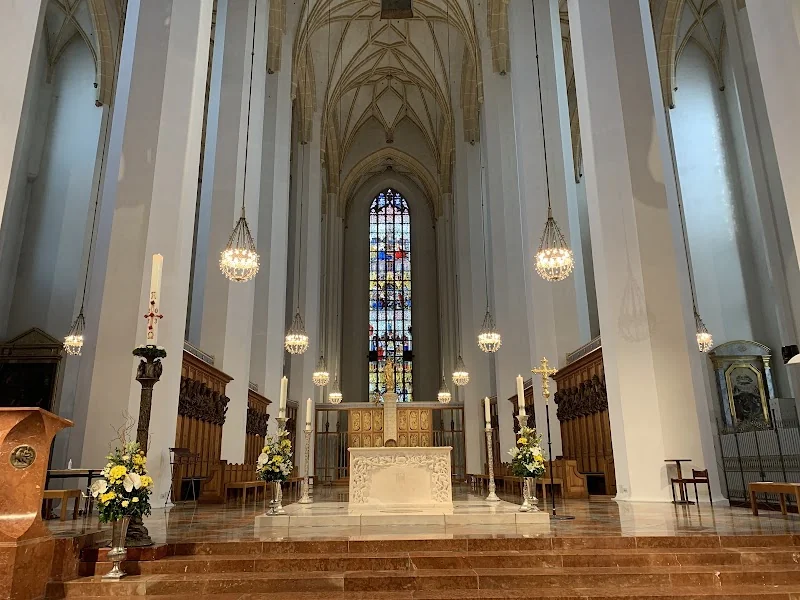
The architecture itself also contributes to the effect. The Church of Our Lady is a late Gothic, three-nave hall church. The city information page states that the nave has a length of 109 meters, a width of 40 meters, a height of 37 meters, and space for 2,000 people. These numbers make it understandable why the interior appears both monumental and yet clearly readable. The white pillars, the colored stained glass windows, and the high spatial effect create a mix of openness and concentration. Therefore, those who perceive the towers only as a photo motif miss the architectural quality of the entire building. Especially in the interplay of height, length, material, and spatial feeling, it becomes clear why the Church of Our Lady has been regarded as Munich's main landmark for centuries. The view from the outside and the impression from the inside are inseparably linked here. The towers direct the gaze upwards, while the interior ties it back to history, liturgy, and art. ([muenchen.de](https://www.muenchen.de/sehenswuerdigkeiten/top-sehenswuerdigkeiten/frauenkirche?utm_source=openai))
Devil's Footprint, Artworks, and Interior of the Church of Our Lady Munich
One of the most famous features of the Church of Our Lady is the Devil's Footprint. The official tour page explains that there is a stone-carved footprint with a spore print in the floor of the entrance area under the choir. From this spot, one cannot see any side windows against the high altar. This is where the legend develops: the master builder bet with the devil that no windows would be visible in the church. When the devil looked at the building, he indeed saw no windows from his position and triumphantly stomped on the ground. Only when he walked further did he notice the windows and realized he had been deceived. This mix of architecture, perspective, and legend makes the Devil's Footprint one of the most sought-after motifs of the Church of Our Lady. It is not a decorative detail but a piece of narrative city identity. Those who seek it experience the church with a different perspective: not only on beauty but on the stories that a place collects over centuries. ([muenchner-dom.de](https://www.muenchner-dom.de/die-kathedrale/rundgang/der-teufelstritt/))
However, the interior of the Church of Our Lady offers much more than a well-known legend. The official interior site emphasizes that light and color shape the overall effect. Particularly the vaults, the white pillars, and the colored stained glass windows define the space. After the destruction of the original vault in World War II, efforts were made during the renovation to consciously combine historical possibilities with an inviting design. As a result, the cathedral today appears bright, calm, and dignified. Significant areas also include the altar area, the high altar painting, the sacrament chapel, the bishop's crypt, the main choir chapel, and the St. Benno Chapel. The website explicitly mentions the return of many valuable artworks, altars, and epitaphs, including the reliefs by Ignaz Günther. This is complemented by the cathedral organ: during the restoration until 1994, the main organ was rebuilt, and today the cathedral has four organs from the workshop of Georg Jann. This shows that the Church of Our Lady is not only historically significant but also a musically vibrant space. Art, liturgy, and sound closely intertwine here. ([muenchner-dom.de](https://www.muenchner-dom.de/die-kathedrale/rundgang/das-innere-des-doms/))
For visitors, the connection between space and memory is particularly interesting. The Church of Our Lady is a place of tombs and remembrance of the dead, but at the same time a space for prayer and presence. The official tour refers to the bishop's crypt and the various chapels that divide the church space. This mix of sacred function, dynastic memory, and artistic decoration makes the cathedral so fascinating. Those who reduce the Church of Our Lady to the Devil's Footprint see only a small part of the whole. The footprint is indeed iconic, but it stands within a much larger narrative of architecture, religious history, art, and Bavarian memory culture. It also fits that the cathedral is still used as a place for church tours, services, and organ concerts. It is thus a vibrant cultural space, not a static monument. This is precisely where its special quality lies in Munich. ([muenchner-dom.de](https://www.muenchner-dom.de/die-kathedrale/rundgang/das-innere-des-doms/))
Directions, Parking, and Practical Tips for the Visit
The Church of Our Lady is located in the heart of Munich's old town, at Frauenplatz 1. Accordingly, arriving by public transport is quite simple. The official English city site specifically mentions the S-Bahn lines S1 to S8 to Marienplatz as well as the U-Bahn lines U3 and U6 to Marienplatz; from there, it is just a short walk to the church. This is the most practical and least stressful solution for many visitors, as the old town is heavily frequented and many pedestrian paths, shopping areas, and tourist destinations cluster around the cathedral. Those who want to explore Marienplatz, Viktualienmarkt, or the old town can easily integrate the Church of Our Lady into a walking route. The location makes the cathedral an ideal focal point for city walks. At the same time, due to the historical city center structure, visiting is often more convenient on foot than by car. ([muenchen.de](https://www.muenchen.de/en/sights/cathedral-church-our-lady-all-about-frauenkirche-munich?utm_source=openai))
When it comes to parking, one should realistically assess the special city center location. The state capital Munich designates a pick-up and drop-off zone for tour buses in Frauenstraße. There, buses can let guests on and off, but parking is not possible due to space constraints. This is an important practical note for group trips and tour operators. For individual drivers, the usual inner-city conditions apply in the old town: parking options are scarce, parking garages are usually located further out, and it is advisable to check the current parking situation in advance. The city's parking information and the well-known old town garages are the right contact points for this. Especially when visiting with a subsequent city tour, it is often more sensible to park the car outside and continue by train or subway. This saves time, nerves, and the search for a free parking space. ([stadt.muenchen.de](https://stadt.muenchen.de/service/info/an-und-abfahrtszone-fur-busse/10228688/?utm_source=openai))
Another practical point is the combination of sightseeing and tower ascent. Those who want to visit the South Tower should pay attention to the separate opening hours. Tickets are available on-site at the cathedral shop, and online tickets can be booked through a city partner. At the same time, it applies to the tower that the ascent leads up a narrow spiral staircase, so those with claustrophobia should carefully consider the visit. The Church of Our Lady is also certified according to the system Travel for All, indicating structured visitor information. Those who plan their visit well can thus get a lot out of their stay: first experiencing the quiet interior, then climbing the tower, and finally enjoying the view of Marienplatz and the old town. This combination makes the Church of Our Lady such a popular destination for visitors to Munich. ([muenchner-dom.de](https://www.muenchner-dom.de/?lang=de))
Services, Cathedral Music, and Special Experiences at the Cathedral of Our Dear Lady
The Church of Our Lady is not just a sight but an active place of worship. The official website explicitly points to regular live broadcasts of Eucharistic celebrations: on Sundays and public holidays at 10:00 AM and Mondays to Fridays at 6:00 PM. This underscores the character of the cathedral as a spiritual center of the city and not just as a tourist meeting point. For visitors, this also means that the daily schedule of the house is shaped by liturgical times. Precisely for this reason, visiting times and service times must be clearly separated. Those who wish to experience the space respectfully should plan their visit outside of service times and take advantage of the opportunities for quiet visits or a tour. The cathedral is thus a place where the presence of faith and the expectations of visitors are brought into a meaningful balance. This makes it credible and lively at the same time. ([muenchner-dom.de](https://www.muenchner-dom.de/?lang=de))
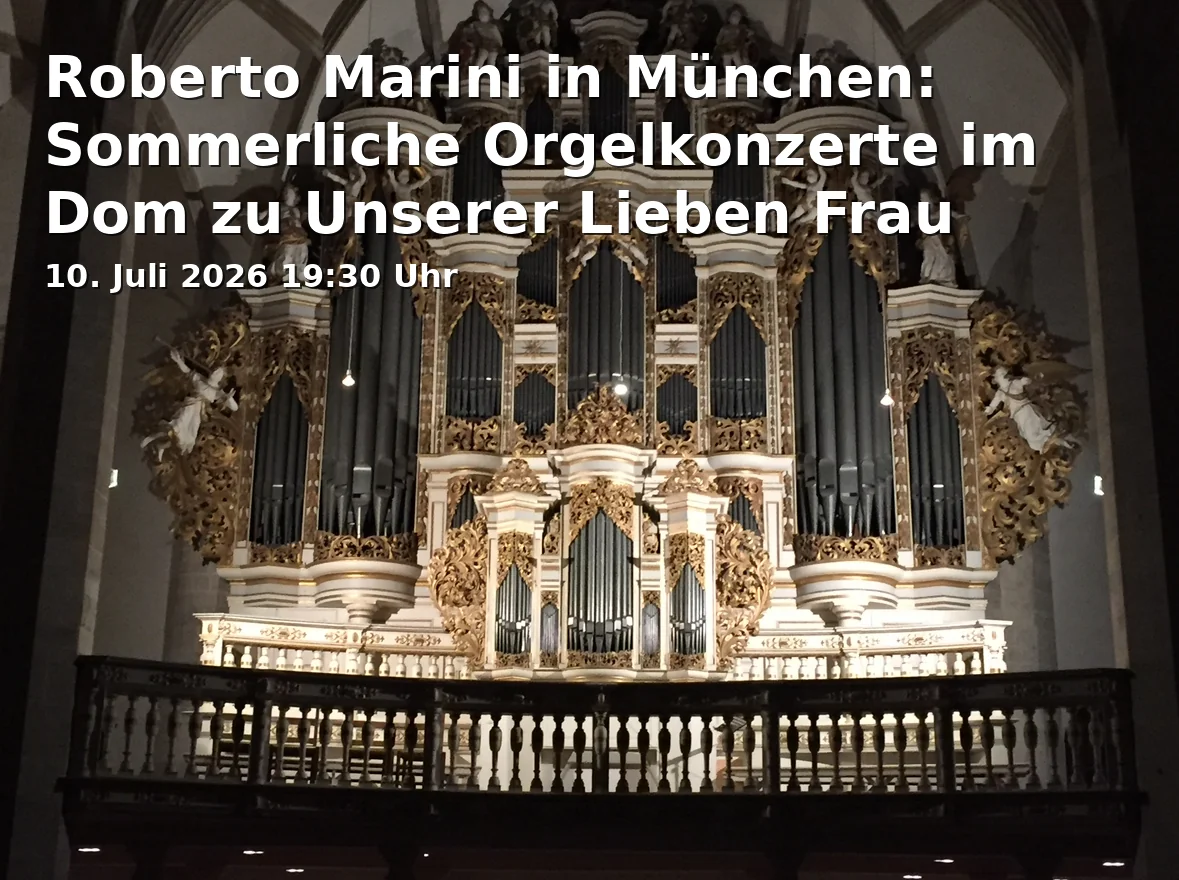
The Church of Our Lady is also exceptional musically. The official organ page explains that the cathedral now has four organs from the workshop of Georg Jann, including the main organ with 95 registers and the choir organ in the southern side aisle. The website also shows current summer organ concerts and refers to ticket sales at the cathedral shop and through MünchenTicket. This shows how strongly the cathedral music shapes the place. For many visitors, a concert is one of the most impressive experiences in the cathedral because acoustics, architecture, and spiritual atmosphere come together. The Church of Our Lady is thus not only a destination for short city visits but also for people who consciously seek music, silence, and sacred spaces. Additionally, there are references to cathedral tours by the Munich Educational Institute, which delve deeper into history and art and explore the cathedral as a cultural experience. This creates a versatile program around the Church of Our Lady that ranges from tourist curiosity to religious and musical interest. ([muenchner-dom.de](https://www.muenchner-dom.de/die-kathedrale/rundgang/die-orgel/))
The cathedral is particularly strong where it makes several levels visible at once. The building is the cathedral of the archbishop, the parish church of the city center, a place of famous legends, a musical stage, a destination for tours, and a viewpoint over Munich. The official website describes it as an invitation for all people and refers to a barrier-related certification, which further emphasizes this openness. In a city like Munich, where historical buildings are often just a backdrop, the Church of Our Lady remains a genuine functional place. This is precisely why a visit is worthwhile more than once: in the morning for the quiet interior, at noon for the tour, in the afternoon for the tower, and in the evening perhaps for a service or a concert. The Church of Our Lady Munich is thus not only a must-see on every list of sights but a place where the city itself shows itself in concentrated form. Those who understand it also understand a piece of Munich. ([muenchner-dom.de](https://www.muenchner-dom.de/?lang=de))
Sources:
- The Munich Cathedral - Official Website
- The Munich Cathedral - Cathedral and Church of Our Lady
- The Munich Cathedral - Construction History
- The Munich Cathedral - The Interior of the Cathedral
- The Munich Cathedral - The Devil's Footprint
- The Munich Cathedral - The Organ
- The Munich Cathedral - Opening Hours
- muenchen.de - Church of Our Lady Munich: Info about Towers, Visits, and History
- muenchen.de - Church of Our Lady Munich: Info about Towers, Tour, and History
- State Capital Munich - Pick-up and Drop-off Zone for Buses
Mehr anzeigenWeniger anzeigen
Church of Our Lady Munich | Opening Hours & Devil's Footprint
The Church of Our Lady Munich, officially Cathedral of Our Dear Lady, is much more than a famous photo motif of the old town. It is the cathedral of the Archbishop of Munich and Freising, a parish church, a place of liturgy, and at the same time one of the strongest landmarks of the city. Those who visit the Church of Our Lady experience a building that connects history, faith, architecture, and city identity. Even from the outside, the two towers with their onion domes shape the silhouette of Munich's city center. Inside, one encounters a bright, spacious area, artworks from various centuries, the bishop's crypt, the famous Devil's Footprint, and a vibrant cathedral music. Thus, the Church of Our Lady is not just a museum, but an actively used church space with a steady rhythm of services, tours, musical offerings, and tourist visits. This mix is what makes it appealing: it is a spiritual place, a historical monument, and an iconic sight at the same time. The official website of the cathedral also points to regular tours, the South Tower as a visitor destination, and digital live broadcasts of services, which particularly highlights the connection between tradition and the present. ([muenchner-dom.de](https://www.muenchner-dom.de/die-kathedrale/bedeutung/dom-und-frauenkirche/))
Opening Hours, Visits, and Tours at the Church of Our Lady Munich
For visiting the Church of Our Lady, the opening hours are particularly important, as the cathedral is not a place with continuous free round tours, but a living sacred space. According to the official website, the cathedral is open daily from 8:00 AM to 8:00 PM. At the same time, it applies: during services and entry times, visits are not possible. Therefore, those who want to experience the interior in peace should keep an eye on the daily schedule and not spontaneously plan to visit during a service. This is crucial for a responsible visit, as tourist interest and liturgical use come together directly here. The Church of Our Lady thus remains authentic; it does not appear staged, but inhabited, used, and respectfully maintained. For many visitors, this is a plus point, as the space remains not only historically significant but also spiritually alive. ([muenchner-dom.de](https://www.muenchner-dom.de/?lang=de))
Regular tours are also a strong argument for interested visitors. On weekdays from Monday to Saturday, excluding public holidays, church tours take place at 11:30 AM according to the website. Registration is done at the cathedral shop, and the meeting point is the North Tower Chapel. These tours are valuable because they explain the Church of Our Lady not just as a postcard motif, but as a developed church space with symbolism, art, and architectural history. Those who want to dive deeper have additional opportunities on-site: the cathedral shop is not only a sales point but also a contact point for information, tickets, and orientation in the building. Additionally, there are special formats such as cathedral tours by the Munich Educational Institute, which explore the choir area or, upon request, other exclusive areas. This creates a visit offer that ranges from a quick glance into the cathedral to in-depth discovery. Practically, it is also important that tickets for the tower visit are available at fixed times in the cathedral and that online tickets can be obtained through a city partner. The Church of Our Lady thus combines classic sightseeing with modern visitor management. ([muenchner-dom.de](https://www.muenchner-dom.de/?lang=de))
Another practical advantage is the barrier-related visitor information. The official site points out that the Munich Cathedral has been certified according to the system Travel for All. This shows that the visit is designed to be as well-planned and accessible as possible for different needs. Especially in such a heavily frequented city center location, this is an important quality factor. The South Tower also has clear rules: the last ascent is at 4:30 PM, and in the narrow area of the spiral staircase, there is an explicit warning about claustrophobia. Therefore, those planning a visit benefit from checking the official information in advance rather than relying on general opening hours. This is particularly sensible because the Church of Our Lady is not only a sight but also a house of worship. The best experience is made by those who plan their stay with some time, consideration, and a clear view of the times of day. ([muenchner-dom.de](https://www.muenchner-dom.de/?lang=de))
History of the Church of Our Lady Munich: From Late Gothic Church to Cathedral
The history of the Church of Our Lady is closely linked to the development of Munich. The official site on the construction history describes that a new church was built in the area of the women's parish in the 13th century and that the Church of Our Lady took on a new role in response to the growing city. Particularly important is the late Gothic new construction: in 1468, under the direction of Jörg von Halspach, the foundation stone was laid, and the church was completed in just about 20 years. This is remarkably fast for such a large building. The church was consecrated in 1494. Even these key dates show that the Church of Our Lady is not just a single monument, but a project that has shaped Munich's cityscape and self-understanding over generations. The form as a three-nave late Gothic hall church, the massive brick construction, and the clear, coordinated geometry are still expressions of this building idea today. The Church of Our Lady thus became a visible sign of urban power, religious significance, and craftsmanship. ([muenchner-dom.de](https://www.muenchner-dom.de/die-kathedrale/geschichte/baugeschichte/))
Later, the function of the building changed fundamentally once again. In the early 19th century, the Church of Our Lady was elevated to a cathedral when the Archdiocese of Munich and Freising was reorganized. The official website explains that the parish and collegiate church consecrated in 1494 was chosen for this purpose. This gave the building a new representative task: it became the seat of the archbishop and the main church of the diocese. This elevation continues to shape today's perception, as the name Cathedral of Our Dear Lady is not only traditional but also canonically and historically correct. In the 19th century, there followed a regothicization and further modifications, later the severe damage of World War II, and finally the renovation starting in 1990. According to the official interior site, the Church of Our Lady was closed since Easter Monday 1990 and underwent fundamental renovations for three and a half years. During this time, the floor, walls, and ceiling were revised, the ribbed vaults were renewed, and numerous artworks were returned to their original places. This explains why the cathedral today appears historically old, but at the same time friendly, bright, and clearly structured. It is a building with a deep past and visible present. ([muenchner-dom.de](https://www.muenchner-dom.de/die-kathedrale/bedeutung/dom-und-frauenkirche/))
The war and post-war period is particularly important for today's appearance. The official interior site describes that the original vault was destroyed by bomb attacks in World War II. In the course of later redesign, efforts were made to make the cathedral appear more beautiful, friendlier, and more inviting without losing its historical depth. Valuable artworks, altars, and epitaphs from the Freising Diocesan Museum returned to their place. Particularly noteworthy are the twelve relief representations from the life of the Mother of God, created by Ignaz Günther in 1774 for the old choir stalls. This combination of destruction, restoration, and artistic continuity makes the Church of Our Lady historically extraordinary. It is not only a Gothic original but a space that has been repeatedly reinterpreted, damaged, restored, and yet preserved over centuries. Precisely for this reason, every tour through the cathedral also tells a piece of Munich's city history. ([muenchner-dom.de](https://www.muenchner-dom.de/die-kathedrale/rundgang/das-innere-des-doms/))
Towers, South Tower, and Panorama over Munich
The towers are the most distinctive feature of the Church of Our Lady. On the city information page, they are described as an unmistakable landmark of Munich. The two towers are almost the same height but not exactly identical: the South Tower measures 98.45 meters, while the North Tower is 98.57 meters. Thus, the North Tower is 12 centimeters taller. This small difference is a nice detail for visitors, as it shows how precisely the building is perceived even today. The towers are also not only architectural signs but also function carriers: seven large bells hang in the South Tower, three bells in the North Tower, and there is also the medieval treadwheel from the construction period. The iconic domes were only added 36 years after the completion of the church and have since shaped the silhouette of the city. Thus, a sacred building has become a visual symbol that is recognized from almost everywhere in Munich. ([muenchen.de](https://www.muenchen.de/sehenswuerdigkeiten/top-sehenswuerdigkeiten/frauenkirche?utm_source=openai))
Particularly popular is the South Tower as a viewpoint. The official website reports that visitors can climb the 86 steps of a narrow spiral staircase and then take the elevator to the tower room at a height of 80 meters. From there, a view opens over the city and surrounding area, and the city tourism site speaks of a panorama over Munich and the Alps. This makes the tower one of the most exciting viewpoints in the old town. The tower visit is not a casual extra but a reason for many guests to come. Especially because the ascent offers a mix of narrow staircase, elevator, and high view, the visit remains intense and memorable. Standing up there, one understands why the Church of Our Lady is much more than a church building: it is a point of orientation in the urban space and a symbol of Munich's historical center. The fact that the tower is accessible again after a long renovation phase has further increased its attractiveness. The website also points to clear ticket prices, opening hours, and the possibility of advance sales, making the visit planable. ([muenchner-dom.de](https://www.muenchner-dom.de/?lang=de))
The architecture itself also contributes to the effect. The Church of Our Lady is a late Gothic, three-nave hall church. The city information page states that the nave has a length of 109 meters, a width of 40 meters, a height of 37 meters, and space for 2,000 people. These numbers make it understandable why the interior appears both monumental and yet clearly readable. The white pillars, the colored stained glass windows, and the high spatial effect create a mix of openness and concentration. Therefore, those who perceive the towers only as a photo motif miss the architectural quality of the entire building. Especially in the interplay of height, length, material, and spatial feeling, it becomes clear why the Church of Our Lady has been regarded as Munich's main landmark for centuries. The view from the outside and the impression from the inside are inseparably linked here. The towers direct the gaze upwards, while the interior ties it back to history, liturgy, and art. ([muenchen.de](https://www.muenchen.de/sehenswuerdigkeiten/top-sehenswuerdigkeiten/frauenkirche?utm_source=openai))
Devil's Footprint, Artworks, and Interior of the Church of Our Lady Munich
One of the most famous features of the Church of Our Lady is the Devil's Footprint. The official tour page explains that there is a stone-carved footprint with a spore print in the floor of the entrance area under the choir. From this spot, one cannot see any side windows against the high altar. This is where the legend develops: the master builder bet with the devil that no windows would be visible in the church. When the devil looked at the building, he indeed saw no windows from his position and triumphantly stomped on the ground. Only when he walked further did he notice the windows and realized he had been deceived. This mix of architecture, perspective, and legend makes the Devil's Footprint one of the most sought-after motifs of the Church of Our Lady. It is not a decorative detail but a piece of narrative city identity. Those who seek it experience the church with a different perspective: not only on beauty but on the stories that a place collects over centuries. ([muenchner-dom.de](https://www.muenchner-dom.de/die-kathedrale/rundgang/der-teufelstritt/))
However, the interior of the Church of Our Lady offers much more than a well-known legend. The official interior site emphasizes that light and color shape the overall effect. Particularly the vaults, the white pillars, and the colored stained glass windows define the space. After the destruction of the original vault in World War II, efforts were made during the renovation to consciously combine historical possibilities with an inviting design. As a result, the cathedral today appears bright, calm, and dignified. Significant areas also include the altar area, the high altar painting, the sacrament chapel, the bishop's crypt, the main choir chapel, and the St. Benno Chapel. The website explicitly mentions the return of many valuable artworks, altars, and epitaphs, including the reliefs by Ignaz Günther. This is complemented by the cathedral organ: during the restoration until 1994, the main organ was rebuilt, and today the cathedral has four organs from the workshop of Georg Jann. This shows that the Church of Our Lady is not only historically significant but also a musically vibrant space. Art, liturgy, and sound closely intertwine here. ([muenchner-dom.de](https://www.muenchner-dom.de/die-kathedrale/rundgang/das-innere-des-doms/))
For visitors, the connection between space and memory is particularly interesting. The Church of Our Lady is a place of tombs and remembrance of the dead, but at the same time a space for prayer and presence. The official tour refers to the bishop's crypt and the various chapels that divide the church space. This mix of sacred function, dynastic memory, and artistic decoration makes the cathedral so fascinating. Those who reduce the Church of Our Lady to the Devil's Footprint see only a small part of the whole. The footprint is indeed iconic, but it stands within a much larger narrative of architecture, religious history, art, and Bavarian memory culture. It also fits that the cathedral is still used as a place for church tours, services, and organ concerts. It is thus a vibrant cultural space, not a static monument. This is precisely where its special quality lies in Munich. ([muenchner-dom.de](https://www.muenchner-dom.de/die-kathedrale/rundgang/das-innere-des-doms/))
Directions, Parking, and Practical Tips for the Visit
The Church of Our Lady is located in the heart of Munich's old town, at Frauenplatz 1. Accordingly, arriving by public transport is quite simple. The official English city site specifically mentions the S-Bahn lines S1 to S8 to Marienplatz as well as the U-Bahn lines U3 and U6 to Marienplatz; from there, it is just a short walk to the church. This is the most practical and least stressful solution for many visitors, as the old town is heavily frequented and many pedestrian paths, shopping areas, and tourist destinations cluster around the cathedral. Those who want to explore Marienplatz, Viktualienmarkt, or the old town can easily integrate the Church of Our Lady into a walking route. The location makes the cathedral an ideal focal point for city walks. At the same time, due to the historical city center structure, visiting is often more convenient on foot than by car. ([muenchen.de](https://www.muenchen.de/en/sights/cathedral-church-our-lady-all-about-frauenkirche-munich?utm_source=openai))
When it comes to parking, one should realistically assess the special city center location. The state capital Munich designates a pick-up and drop-off zone for tour buses in Frauenstraße. There, buses can let guests on and off, but parking is not possible due to space constraints. This is an important practical note for group trips and tour operators. For individual drivers, the usual inner-city conditions apply in the old town: parking options are scarce, parking garages are usually located further out, and it is advisable to check the current parking situation in advance. The city's parking information and the well-known old town garages are the right contact points for this. Especially when visiting with a subsequent city tour, it is often more sensible to park the car outside and continue by train or subway. This saves time, nerves, and the search for a free parking space. ([stadt.muenchen.de](https://stadt.muenchen.de/service/info/an-und-abfahrtszone-fur-busse/10228688/?utm_source=openai))
Another practical point is the combination of sightseeing and tower ascent. Those who want to visit the South Tower should pay attention to the separate opening hours. Tickets are available on-site at the cathedral shop, and online tickets can be booked through a city partner. At the same time, it applies to the tower that the ascent leads up a narrow spiral staircase, so those with claustrophobia should carefully consider the visit. The Church of Our Lady is also certified according to the system Travel for All, indicating structured visitor information. Those who plan their visit well can thus get a lot out of their stay: first experiencing the quiet interior, then climbing the tower, and finally enjoying the view of Marienplatz and the old town. This combination makes the Church of Our Lady such a popular destination for visitors to Munich. ([muenchner-dom.de](https://www.muenchner-dom.de/?lang=de))
Services, Cathedral Music, and Special Experiences at the Cathedral of Our Dear Lady
The Church of Our Lady is not just a sight but an active place of worship. The official website explicitly points to regular live broadcasts of Eucharistic celebrations: on Sundays and public holidays at 10:00 AM and Mondays to Fridays at 6:00 PM. This underscores the character of the cathedral as a spiritual center of the city and not just as a tourist meeting point. For visitors, this also means that the daily schedule of the house is shaped by liturgical times. Precisely for this reason, visiting times and service times must be clearly separated. Those who wish to experience the space respectfully should plan their visit outside of service times and take advantage of the opportunities for quiet visits or a tour. The cathedral is thus a place where the presence of faith and the expectations of visitors are brought into a meaningful balance. This makes it credible and lively at the same time. ([muenchner-dom.de](https://www.muenchner-dom.de/?lang=de))
The Church of Our Lady is also exceptional musically. The official organ page explains that the cathedral now has four organs from the workshop of Georg Jann, including the main organ with 95 registers and the choir organ in the southern side aisle. The website also shows current summer organ concerts and refers to ticket sales at the cathedral shop and through MünchenTicket. This shows how strongly the cathedral music shapes the place. For many visitors, a concert is one of the most impressive experiences in the cathedral because acoustics, architecture, and spiritual atmosphere come together. The Church of Our Lady is thus not only a destination for short city visits but also for people who consciously seek music, silence, and sacred spaces. Additionally, there are references to cathedral tours by the Munich Educational Institute, which delve deeper into history and art and explore the cathedral as a cultural experience. This creates a versatile program around the Church of Our Lady that ranges from tourist curiosity to religious and musical interest. ([muenchner-dom.de](https://www.muenchner-dom.de/die-kathedrale/rundgang/die-orgel/))
The cathedral is particularly strong where it makes several levels visible at once. The building is the cathedral of the archbishop, the parish church of the city center, a place of famous legends, a musical stage, a destination for tours, and a viewpoint over Munich. The official website describes it as an invitation for all people and refers to a barrier-related certification, which further emphasizes this openness. In a city like Munich, where historical buildings are often just a backdrop, the Church of Our Lady remains a genuine functional place. This is precisely why a visit is worthwhile more than once: in the morning for the quiet interior, at noon for the tour, in the afternoon for the tower, and in the evening perhaps for a service or a concert. The Church of Our Lady Munich is thus not only a must-see on every list of sights but a place where the city itself shows itself in concentrated form. Those who understand it also understand a piece of Munich. ([muenchner-dom.de](https://www.muenchner-dom.de/?lang=de))
Sources:
- The Munich Cathedral - Official Website
- The Munich Cathedral - Cathedral and Church of Our Lady
- The Munich Cathedral - Construction History
- The Munich Cathedral - The Interior of the Cathedral
- The Munich Cathedral - The Devil's Footprint
- The Munich Cathedral - The Organ
- The Munich Cathedral - Opening Hours
- muenchen.de - Church of Our Lady Munich: Info about Towers, Visits, and History
- muenchen.de - Church of Our Lady Munich: Info about Towers, Tour, and History
- State Capital Munich - Pick-up and Drop-off Zone for Buses
Church of Our Lady Munich | Opening Hours & Devil's Footprint
The Church of Our Lady Munich, officially Cathedral of Our Dear Lady, is much more than a famous photo motif of the old town. It is the cathedral of the Archbishop of Munich and Freising, a parish church, a place of liturgy, and at the same time one of the strongest landmarks of the city. Those who visit the Church of Our Lady experience a building that connects history, faith, architecture, and city identity. Even from the outside, the two towers with their onion domes shape the silhouette of Munich's city center. Inside, one encounters a bright, spacious area, artworks from various centuries, the bishop's crypt, the famous Devil's Footprint, and a vibrant cathedral music. Thus, the Church of Our Lady is not just a museum, but an actively used church space with a steady rhythm of services, tours, musical offerings, and tourist visits. This mix is what makes it appealing: it is a spiritual place, a historical monument, and an iconic sight at the same time. The official website of the cathedral also points to regular tours, the South Tower as a visitor destination, and digital live broadcasts of services, which particularly highlights the connection between tradition and the present. ([muenchner-dom.de](https://www.muenchner-dom.de/die-kathedrale/bedeutung/dom-und-frauenkirche/))
Opening Hours, Visits, and Tours at the Church of Our Lady Munich
For visiting the Church of Our Lady, the opening hours are particularly important, as the cathedral is not a place with continuous free round tours, but a living sacred space. According to the official website, the cathedral is open daily from 8:00 AM to 8:00 PM. At the same time, it applies: during services and entry times, visits are not possible. Therefore, those who want to experience the interior in peace should keep an eye on the daily schedule and not spontaneously plan to visit during a service. This is crucial for a responsible visit, as tourist interest and liturgical use come together directly here. The Church of Our Lady thus remains authentic; it does not appear staged, but inhabited, used, and respectfully maintained. For many visitors, this is a plus point, as the space remains not only historically significant but also spiritually alive. ([muenchner-dom.de](https://www.muenchner-dom.de/?lang=de))
Regular tours are also a strong argument for interested visitors. On weekdays from Monday to Saturday, excluding public holidays, church tours take place at 11:30 AM according to the website. Registration is done at the cathedral shop, and the meeting point is the North Tower Chapel. These tours are valuable because they explain the Church of Our Lady not just as a postcard motif, but as a developed church space with symbolism, art, and architectural history. Those who want to dive deeper have additional opportunities on-site: the cathedral shop is not only a sales point but also a contact point for information, tickets, and orientation in the building. Additionally, there are special formats such as cathedral tours by the Munich Educational Institute, which explore the choir area or, upon request, other exclusive areas. This creates a visit offer that ranges from a quick glance into the cathedral to in-depth discovery. Practically, it is also important that tickets for the tower visit are available at fixed times in the cathedral and that online tickets can be obtained through a city partner. The Church of Our Lady thus combines classic sightseeing with modern visitor management. ([muenchner-dom.de](https://www.muenchner-dom.de/?lang=de))
Another practical advantage is the barrier-related visitor information. The official site points out that the Munich Cathedral has been certified according to the system Travel for All. This shows that the visit is designed to be as well-planned and accessible as possible for different needs. Especially in such a heavily frequented city center location, this is an important quality factor. The South Tower also has clear rules: the last ascent is at 4:30 PM, and in the narrow area of the spiral staircase, there is an explicit warning about claustrophobia. Therefore, those planning a visit benefit from checking the official information in advance rather than relying on general opening hours. This is particularly sensible because the Church of Our Lady is not only a sight but also a house of worship. The best experience is made by those who plan their stay with some time, consideration, and a clear view of the times of day. ([muenchner-dom.de](https://www.muenchner-dom.de/?lang=de))
History of the Church of Our Lady Munich: From Late Gothic Church to Cathedral
The history of the Church of Our Lady is closely linked to the development of Munich. The official site on the construction history describes that a new church was built in the area of the women's parish in the 13th century and that the Church of Our Lady took on a new role in response to the growing city. Particularly important is the late Gothic new construction: in 1468, under the direction of Jörg von Halspach, the foundation stone was laid, and the church was completed in just about 20 years. This is remarkably fast for such a large building. The church was consecrated in 1494. Even these key dates show that the Church of Our Lady is not just a single monument, but a project that has shaped Munich's cityscape and self-understanding over generations. The form as a three-nave late Gothic hall church, the massive brick construction, and the clear, coordinated geometry are still expressions of this building idea today. The Church of Our Lady thus became a visible sign of urban power, religious significance, and craftsmanship. ([muenchner-dom.de](https://www.muenchner-dom.de/die-kathedrale/geschichte/baugeschichte/))
Later, the function of the building changed fundamentally once again. In the early 19th century, the Church of Our Lady was elevated to a cathedral when the Archdiocese of Munich and Freising was reorganized. The official website explains that the parish and collegiate church consecrated in 1494 was chosen for this purpose. This gave the building a new representative task: it became the seat of the archbishop and the main church of the diocese. This elevation continues to shape today's perception, as the name Cathedral of Our Dear Lady is not only traditional but also canonically and historically correct. In the 19th century, there followed a regothicization and further modifications, later the severe damage of World War II, and finally the renovation starting in 1990. According to the official interior site, the Church of Our Lady was closed since Easter Monday 1990 and underwent fundamental renovations for three and a half years. During this time, the floor, walls, and ceiling were revised, the ribbed vaults were renewed, and numerous artworks were returned to their original places. This explains why the cathedral today appears historically old, but at the same time friendly, bright, and clearly structured. It is a building with a deep past and visible present. ([muenchner-dom.de](https://www.muenchner-dom.de/die-kathedrale/bedeutung/dom-und-frauenkirche/))
The war and post-war period is particularly important for today's appearance. The official interior site describes that the original vault was destroyed by bomb attacks in World War II. In the course of later redesign, efforts were made to make the cathedral appear more beautiful, friendlier, and more inviting without losing its historical depth. Valuable artworks, altars, and epitaphs from the Freising Diocesan Museum returned to their place. Particularly noteworthy are the twelve relief representations from the life of the Mother of God, created by Ignaz Günther in 1774 for the old choir stalls. This combination of destruction, restoration, and artistic continuity makes the Church of Our Lady historically extraordinary. It is not only a Gothic original but a space that has been repeatedly reinterpreted, damaged, restored, and yet preserved over centuries. Precisely for this reason, every tour through the cathedral also tells a piece of Munich's city history. ([muenchner-dom.de](https://www.muenchner-dom.de/die-kathedrale/rundgang/das-innere-des-doms/))
Towers, South Tower, and Panorama over Munich
The towers are the most distinctive feature of the Church of Our Lady. On the city information page, they are described as an unmistakable landmark of Munich. The two towers are almost the same height but not exactly identical: the South Tower measures 98.45 meters, while the North Tower is 98.57 meters. Thus, the North Tower is 12 centimeters taller. This small difference is a nice detail for visitors, as it shows how precisely the building is perceived even today. The towers are also not only architectural signs but also function carriers: seven large bells hang in the South Tower, three bells in the North Tower, and there is also the medieval treadwheel from the construction period. The iconic domes were only added 36 years after the completion of the church and have since shaped the silhouette of the city. Thus, a sacred building has become a visual symbol that is recognized from almost everywhere in Munich. ([muenchen.de](https://www.muenchen.de/sehenswuerdigkeiten/top-sehenswuerdigkeiten/frauenkirche?utm_source=openai))
Particularly popular is the South Tower as a viewpoint. The official website reports that visitors can climb the 86 steps of a narrow spiral staircase and then take the elevator to the tower room at a height of 80 meters. From there, a view opens over the city and surrounding area, and the city tourism site speaks of a panorama over Munich and the Alps. This makes the tower one of the most exciting viewpoints in the old town. The tower visit is not a casual extra but a reason for many guests to come. Especially because the ascent offers a mix of narrow staircase, elevator, and high view, the visit remains intense and memorable. Standing up there, one understands why the Church of Our Lady is much more than a church building: it is a point of orientation in the urban space and a symbol of Munich's historical center. The fact that the tower is accessible again after a long renovation phase has further increased its attractiveness. The website also points to clear ticket prices, opening hours, and the possibility of advance sales, making the visit planable. ([muenchner-dom.de](https://www.muenchner-dom.de/?lang=de))
The architecture itself also contributes to the effect. The Church of Our Lady is a late Gothic, three-nave hall church. The city information page states that the nave has a length of 109 meters, a width of 40 meters, a height of 37 meters, and space for 2,000 people. These numbers make it understandable why the interior appears both monumental and yet clearly readable. The white pillars, the colored stained glass windows, and the high spatial effect create a mix of openness and concentration. Therefore, those who perceive the towers only as a photo motif miss the architectural quality of the entire building. Especially in the interplay of height, length, material, and spatial feeling, it becomes clear why the Church of Our Lady has been regarded as Munich's main landmark for centuries. The view from the outside and the impression from the inside are inseparably linked here. The towers direct the gaze upwards, while the interior ties it back to history, liturgy, and art. ([muenchen.de](https://www.muenchen.de/sehenswuerdigkeiten/top-sehenswuerdigkeiten/frauenkirche?utm_source=openai))
Devil's Footprint, Artworks, and Interior of the Church of Our Lady Munich
One of the most famous features of the Church of Our Lady is the Devil's Footprint. The official tour page explains that there is a stone-carved footprint with a spore print in the floor of the entrance area under the choir. From this spot, one cannot see any side windows against the high altar. This is where the legend develops: the master builder bet with the devil that no windows would be visible in the church. When the devil looked at the building, he indeed saw no windows from his position and triumphantly stomped on the ground. Only when he walked further did he notice the windows and realized he had been deceived. This mix of architecture, perspective, and legend makes the Devil's Footprint one of the most sought-after motifs of the Church of Our Lady. It is not a decorative detail but a piece of narrative city identity. Those who seek it experience the church with a different perspective: not only on beauty but on the stories that a place collects over centuries. ([muenchner-dom.de](https://www.muenchner-dom.de/die-kathedrale/rundgang/der-teufelstritt/))
However, the interior of the Church of Our Lady offers much more than a well-known legend. The official interior site emphasizes that light and color shape the overall effect. Particularly the vaults, the white pillars, and the colored stained glass windows define the space. After the destruction of the original vault in World War II, efforts were made during the renovation to consciously combine historical possibilities with an inviting design. As a result, the cathedral today appears bright, calm, and dignified. Significant areas also include the altar area, the high altar painting, the sacrament chapel, the bishop's crypt, the main choir chapel, and the St. Benno Chapel. The website explicitly mentions the return of many valuable artworks, altars, and epitaphs, including the reliefs by Ignaz Günther. This is complemented by the cathedral organ: during the restoration until 1994, the main organ was rebuilt, and today the cathedral has four organs from the workshop of Georg Jann. This shows that the Church of Our Lady is not only historically significant but also a musically vibrant space. Art, liturgy, and sound closely intertwine here. ([muenchner-dom.de](https://www.muenchner-dom.de/die-kathedrale/rundgang/das-innere-des-doms/))
For visitors, the connection between space and memory is particularly interesting. The Church of Our Lady is a place of tombs and remembrance of the dead, but at the same time a space for prayer and presence. The official tour refers to the bishop's crypt and the various chapels that divide the church space. This mix of sacred function, dynastic memory, and artistic decoration makes the cathedral so fascinating. Those who reduce the Church of Our Lady to the Devil's Footprint see only a small part of the whole. The footprint is indeed iconic, but it stands within a much larger narrative of architecture, religious history, art, and Bavarian memory culture. It also fits that the cathedral is still used as a place for church tours, services, and organ concerts. It is thus a vibrant cultural space, not a static monument. This is precisely where its special quality lies in Munich. ([muenchner-dom.de](https://www.muenchner-dom.de/die-kathedrale/rundgang/das-innere-des-doms/))
Directions, Parking, and Practical Tips for the Visit
The Church of Our Lady is located in the heart of Munich's old town, at Frauenplatz 1. Accordingly, arriving by public transport is quite simple. The official English city site specifically mentions the S-Bahn lines S1 to S8 to Marienplatz as well as the U-Bahn lines U3 and U6 to Marienplatz; from there, it is just a short walk to the church. This is the most practical and least stressful solution for many visitors, as the old town is heavily frequented and many pedestrian paths, shopping areas, and tourist destinations cluster around the cathedral. Those who want to explore Marienplatz, Viktualienmarkt, or the old town can easily integrate the Church of Our Lady into a walking route. The location makes the cathedral an ideal focal point for city walks. At the same time, due to the historical city center structure, visiting is often more convenient on foot than by car. ([muenchen.de](https://www.muenchen.de/en/sights/cathedral-church-our-lady-all-about-frauenkirche-munich?utm_source=openai))
When it comes to parking, one should realistically assess the special city center location. The state capital Munich designates a pick-up and drop-off zone for tour buses in Frauenstraße. There, buses can let guests on and off, but parking is not possible due to space constraints. This is an important practical note for group trips and tour operators. For individual drivers, the usual inner-city conditions apply in the old town: parking options are scarce, parking garages are usually located further out, and it is advisable to check the current parking situation in advance. The city's parking information and the well-known old town garages are the right contact points for this. Especially when visiting with a subsequent city tour, it is often more sensible to park the car outside and continue by train or subway. This saves time, nerves, and the search for a free parking space. ([stadt.muenchen.de](https://stadt.muenchen.de/service/info/an-und-abfahrtszone-fur-busse/10228688/?utm_source=openai))
Another practical point is the combination of sightseeing and tower ascent. Those who want to visit the South Tower should pay attention to the separate opening hours. Tickets are available on-site at the cathedral shop, and online tickets can be booked through a city partner. At the same time, it applies to the tower that the ascent leads up a narrow spiral staircase, so those with claustrophobia should carefully consider the visit. The Church of Our Lady is also certified according to the system Travel for All, indicating structured visitor information. Those who plan their visit well can thus get a lot out of their stay: first experiencing the quiet interior, then climbing the tower, and finally enjoying the view of Marienplatz and the old town. This combination makes the Church of Our Lady such a popular destination for visitors to Munich. ([muenchner-dom.de](https://www.muenchner-dom.de/?lang=de))
Services, Cathedral Music, and Special Experiences at the Cathedral of Our Dear Lady
The Church of Our Lady is not just a sight but an active place of worship. The official website explicitly points to regular live broadcasts of Eucharistic celebrations: on Sundays and public holidays at 10:00 AM and Mondays to Fridays at 6:00 PM. This underscores the character of the cathedral as a spiritual center of the city and not just as a tourist meeting point. For visitors, this also means that the daily schedule of the house is shaped by liturgical times. Precisely for this reason, visiting times and service times must be clearly separated. Those who wish to experience the space respectfully should plan their visit outside of service times and take advantage of the opportunities for quiet visits or a tour. The cathedral is thus a place where the presence of faith and the expectations of visitors are brought into a meaningful balance. This makes it credible and lively at the same time. ([muenchner-dom.de](https://www.muenchner-dom.de/?lang=de))
The Church of Our Lady is also exceptional musically. The official organ page explains that the cathedral now has four organs from the workshop of Georg Jann, including the main organ with 95 registers and the choir organ in the southern side aisle. The website also shows current summer organ concerts and refers to ticket sales at the cathedral shop and through MünchenTicket. This shows how strongly the cathedral music shapes the place. For many visitors, a concert is one of the most impressive experiences in the cathedral because acoustics, architecture, and spiritual atmosphere come together. The Church of Our Lady is thus not only a destination for short city visits but also for people who consciously seek music, silence, and sacred spaces. Additionally, there are references to cathedral tours by the Munich Educational Institute, which delve deeper into history and art and explore the cathedral as a cultural experience. This creates a versatile program around the Church of Our Lady that ranges from tourist curiosity to religious and musical interest. ([muenchner-dom.de](https://www.muenchner-dom.de/die-kathedrale/rundgang/die-orgel/))
The cathedral is particularly strong where it makes several levels visible at once. The building is the cathedral of the archbishop, the parish church of the city center, a place of famous legends, a musical stage, a destination for tours, and a viewpoint over Munich. The official website describes it as an invitation for all people and refers to a barrier-related certification, which further emphasizes this openness. In a city like Munich, where historical buildings are often just a backdrop, the Church of Our Lady remains a genuine functional place. This is precisely why a visit is worthwhile more than once: in the morning for the quiet interior, at noon for the tour, in the afternoon for the tower, and in the evening perhaps for a service or a concert. The Church of Our Lady Munich is thus not only a must-see on every list of sights but a place where the city itself shows itself in concentrated form. Those who understand it also understand a piece of Munich. ([muenchner-dom.de](https://www.muenchner-dom.de/?lang=de))
Sources:
- The Munich Cathedral - Official Website
- The Munich Cathedral - Cathedral and Church of Our Lady
- The Munich Cathedral - Construction History
- The Munich Cathedral - The Interior of the Cathedral
- The Munich Cathedral - The Devil's Footprint
- The Munich Cathedral - The Organ
- The Munich Cathedral - Opening Hours
- muenchen.de - Church of Our Lady Munich: Info about Towers, Visits, and History
- muenchen.de - Church of Our Lady Munich: Info about Towers, Tour, and History
- State Capital Munich - Pick-up and Drop-off Zone for Buses
Frequently Asked Questions
Reviews
No reviews found