
Großweil
An d. Glentleiten 4, 82439 Großweil, Deutschland
Open-Air Museum Glentleiten | Tickets & Program
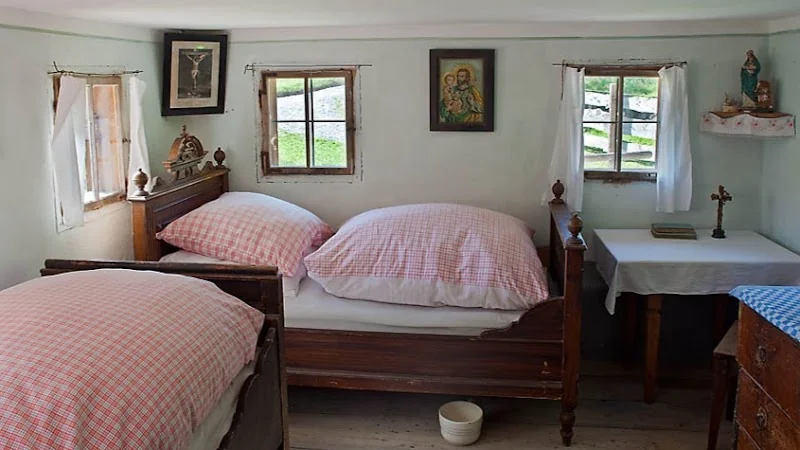
The Open-Air Museum Glentleiten of the District of Upper Bavaria is not a museum that you visit briefly and then forget. It is an extensive cultural landscape above Lake Kochel, where historical farms, barns, workshops, gardens, meadows, and pastures together create a very vivid picture of rural Upper Bavaria. Since the 1970s, the area has been growing step by step, and today Glentleiten showcases almost 70 historical buildings on around 40 hectares. Those looking for tickets, programs, directions, parking, or photos will find not just an address here, but a whole day trip filled with history, craftsmanship, views, and events. This very mix makes the location so appealing for families, groups, culture enthusiasts, and anyone who wants to experience Upper Bavaria with all their senses. ([bezirk-oberbayern.de](https://www.bezirk-oberbayern.de/Heimat/Museen/Freilichtmuseum-Glentleiten/))
Tickets, Opening Hours & Admission Prices
For a visit to Glentleiten, planning the season is important, as the museum is not open year-round. For 2026, the period is indicated from March 19 to November 8. In March, April, May, October, and November, it is open from Tuesday to Sunday from 10 AM to 5 PM, and from June to September daily from 9 AM to 6 PM. The museum is only open on selected Mondays, namely on Easter, Pentecost, and Kirchweih. Therefore, those planning their trip carefully can perfectly combine nice weather, holidays, or a specific event date with a museum visit. This is particularly helpful for families and day visitors, as it makes it much easier to combine the visit with travel, dining, and a program point. ([glentleiten.de](https://www.glentleiten.de/christkindlmarkt/))
The museum is also transparently organized regarding admission. The current prices are 11 euros for adults and 2 euros for children and teenagers aged 6 to 18 years inclusive. There are family tickets, discounts for students, trainees, volunteers, and other groups, as well as free admission for certain visitor groups. Additionally, there are seasonal tickets and evening admission one hour before closing. Particularly practical: Glentleiten recommends purchasing tickets, event tickets, and course participation online to make access quicker and more manageable. This is useful for visitors looking for a clear process and fits very well with the frequently searched terms related to tickets and programs. ([glentleiten.de](https://www.glentleiten.de/eintrittspreise/?utm_source=openai))
The opening hours and prices already clearly indicate that Glentleiten functions strongly as a destination for excursions and not just as a classic bad-weather museum. In the warm months, the longer opening hours provide ample space for extensive walks, breaks, and family activities, while the shorter hours in spring and autumn invite more concentrated visits. Additionally, the museum also comes alive on holidays and special occasions, rather than just being quietly open. For search intentions related to opening hours, admission, and tickets, this is crucial: here you get a clearly structured but very versatile visiting offer. If you combine the route, time, and ticket purchase neatly, you can plan your day at Glentleiten very relaxed. ([glentleiten.de](https://www.glentleiten.de/oeffnungszeiten/?utm_source=openai))
Directions, Parking & Location on the Slope Above Lake Kochel
The address is An der Glentleiten 4, 82439 Großweil. The museum is located at about 750 meters above sea level on the slope above Lake Kochel, and this location shapes both the view and the character of the area. By car, you can reach Glentleiten via the A95 Munich to Garmisch-Partenkirchen, exit Murnau/Kochel. Alternatively, the B11 leads over Kochel and Schlehdorf, as well as the B2 over Murnau or before Ohlstadt to Großweil. On-site, follow the signage in Großweil. Those using public transport can take the train to Murnau or Kochel and transfer to the regional bus depending on the season. ([glentleiten.de](https://www.glentleiten.de/wp-content/uploads/2025/03/barrierefreies-pdf.pdf))
For the journey, it is particularly pleasant that free parking is available at the museum, including for buses. Additionally, there are sufficient disabled parking spaces near the entrance. The museum entrance is downhill from the parking lot and bus stop; you can reach the entrance building with cash register, elevator, (disabled) toilet, and museum shop via stairs or a step-free path. For many visitors, this is a real plus, as it makes organizing an outing with strollers, elderly relatives, or groups easier. Especially in a location with a sloped terrain, these practical details are crucial, and Glentleiten provides very clear information here. ([glentleiten.de](https://www.glentleiten.de/wp-content/uploads/2025/03/barrierefreies-pdf.pdf))
The location also has not only organizational but also atmospheric effects. The open-air museum is situated on a slope between 708 and 765 meters in height, which means steep paths and nature-friendly, gravelled or stony paths are part of the picture. The area is thus intentionally designed to be historical and scenic, not sterile or completely sealed. In summer, animals graze in the meadows, and there are signs and assistance for people with limited mobility on-site. So, those looking for directions, parking, and location not only get a guide but a clear picture: Glentleiten is easily accessible, but at the same time, it is a museum for people who appreciate a real walk through history and landscape. ([glentleiten.de](https://www.glentleiten.de/wp-content/uploads/2025/03/barrierefreies-pdf.pdf))
Program, Craft Demonstrations & Holiday Offers
The program is one of the strongest reasons why Glentleiten goes far beyond a normal museum visit. On the official program page, dates can be searched chronologically or via calendar view, and filters help in selecting by time frame, category, and target group. Particularly important for search intentions around the program and craft demonstrations: According to the museum, at least two craft demonstrations usually take place every day. These demonstrations are a core part of the visitor experience because they not only show old knowledge but make it immediately tangible. This is exactly how Glentleiten becomes a place where historical everyday culture is not explained abstractly but vividly demonstrated. ([glentleiten.de](https://www.glentleiten.de/programm/))
The museum also offers a lot for families and holiday guests. On the date pages and in the holiday offers, participatory formats such as painting with clay, fabric and paper printing, stenciling, baking bread in the historical bakery, blacksmithing, lace-making, drawing on porcelain, or open wood workshops appear. The offers change but always remain close to craftsmanship, tradition, and practical experimentation. Especially in summer, the area thus becomes both a playground and a learning place. Those coming with children benefit doubly: there is engagement, but without a purely event character, rather with a real museum connection. This fits very well with the frequently searched topics holiday program and summer holiday program Glentleiten. ([glentleiten.de](https://www.glentleiten.de/endlich-ferien/?utm_source=openai))
The annual program is additionally complemented by special exhibitions and thematic guided tours. On the homepage, exhibitions such as TimeSpaces, EverydayTreasures, and differently viewed are mentioned. At the same time, there are regular guided tours, courses for adults, and event formats for children, families, and interested parties from various target groups. Additionally, there are current dates such as holiday offers, thematic tours, or exhibitions in Benediktbeuern. So, if you stay a little longer or plan a return visit, you will experience Glentleiten differently each time. For an SEO-oriented location page, this is exactly what is important: the museum is not just a place with buildings, but a place with ongoing programs, changing focuses, and seasonal participatory character. ([glentleiten.de](https://www.glentleiten.de/))
Glentleitner Kirchweih & Christkindlmarkt Throughout the Year
Among the strongest crowd pullers are the big festivals throughout the year, foremost the Glentleitner Christkindlmarkt. According to the official page, it always takes place on the first Advent weekend and is scheduled for 2026 with Friday, November 27, Saturday, November 28, and Sunday, November 29. The atmosphere is the real star: paths are created between historical houses through handmade products from the region, culinary delights, winter lighting, and contemplative music. Children meet St. Nicholas, do crafts, or listen to stories, and this mix of market, museum, and Advent atmosphere makes the Christkindlmarkt a special search topic. Glentleiten does not only address market visitors here but also people looking for an authentic winter experience in Upper Bavaria. ([glentleiten.de](https://www.glentleiten.de/christkindlmarkt/))
The journey to this market is also specially organized. The museum points out that there are only limited parking spaces available at the site, and a parking fee may apply during the Christkindlmarkt. Therefore, it is explicitly recommended to park for free at the main and state stud farm Schwaiganger and use the shuttle buses to Glentleiten. For visitors with train connections, there is a connection via Murnau or Kochel and the bus to Großweil, Schule. This solution is very sensible for a heavily visited Advent weekend, as it alleviates traffic jams and parking searches. Those planning to visit the Christkindlmarkt should definitely keep an eye on not only tickets but also the journey in advance. ([glentleiten.de](https://www.glentleiten.de/christkindlmarkt/))
The Glentleitner Kirchweih complements the annual picture in autumn. For 2026, it is scheduled for Monday, October 19, from 10 AM to 5 PM. The museum describes it as a traditional day with music, Kirtahutschn, Auszognen, duck roasting, bowling, and various craft demonstrations such as blacksmithing, spinning, and turning on the mechanically operated potter's wheel in the pottery. The fact that even on a Monday there is a celebration shows beautifully how strongly Glentleiten relies on vibrant cultural traditions. For search queries like Glentleitner Kirchweih or autumn program, this mix of tradition, culinary delights, and participatory offers is crucial. ([glentleiten.de](https://www.glentleiten.de/en/termine/glentleitner-kirchweih-2/))
History, Building Groups & Historical Buildings
The history of Glentleiten begins with a clear idea: The District of Upper Bavaria wanted to create a central open-air museum to make the rural past of Upper Bavaria visible. In 1972, a 15-hectare area above Lake Kochel in Großweil was acquired, the first groundbreaking took place in 1973, and on October 15, 1976, the public could visit 13 farms and barns along with the Thürlmühle as the entrance building. Even this early phase shows how quickly a cultural idea became a real museum. At the same time, it becomes clear why Glentleiten is still perceived as an authentic place: the historical building substance was not decoratively reconstructed but was painstakingly relocated, rebuilt, and embedded in a suitable cultural landscape. ([glentleiten.de](https://www.glentleiten.de/geschichte/))
In the following decades, the museum continued to grow steadily. In 1982, the previously association-operated Amerang Farm Museum came under the district's sponsorship and was incorporated into Glentleiten. In 1986, the Kerschlacher was shown for the first time as a complete farm complex, and in 1988, a self-service restaurant and the building group alpine farming were added. Later, a new depot, a modern entrance building, energy improvements, and finally the addition of the Tracht - Gwand - Mode collection in Benediktbeuern followed. This development makes it clear that Glentleiten has not stood still but continuously invests in collection building, mediation, and infrastructure. ([glentleiten.de](https://www.glentleiten.de/geschichte/))
Today, according to the official representation, the Open-Air Museum Glentleiten consists of almost 70 historical buildings on around 40 hectares, spread across the districts of Garmisch-Partenkirchen and Bad Tölz-Wolfratshausen. The area is complemented by animals, gardens, meadows, fields, and a historically maintained cultural landscape. The museum also employs around 80 people in areas such as craftsmanship and construction, science with restoration, cultural landscape maintenance, museum education, event organization, communication, visitor service, and administration. This is important for visitors as it shows how strongly the house functions as a living institution. Glentleiten is therefore not just a showcase into the past but an active museum landscape with ongoing research, maintenance, and mediation. ([glentleiten.de](https://www.glentleiten.de/geschichte/))
Photos, Accessibility, WLAN & Dining in the Museum
Those looking for photos will find particularly many motifs at Glentleiten: historical buildings, a sloped area with views, gardens, meadows, pastures, and in the right light, a very atmospheric ensemble. The museum allows photography and filming for private purposes and even encourages sharing images on Instagram or Facebook with #Glentleiten. Additionally, there are ten active WLAN hotspots on the museum grounds, so the visit can also be comfortably accompanied digitally. Dogs are welcome but must be kept on a short leash, and there are free disposal bags for cleaning up small messes. Smoking is not permitted throughout the entire area due to fire hazards, except in the beer gardens. These regulations show well how a historical open-air museum can be combined with modern visitor needs. ([glentleiten.de](https://www.glentleiten.de/))
Regarding accessibility, Glentleiten also provides very concrete information. The museum emphasizes that it will never be fully accessible but is constantly working to reduce and eliminate barriers. In the entrance building, there is an elevator and a (disabled) toilet, as well as information for visitors with limited vision. For people with severe disabilities, a reduced admission fee is provided, and the supervisory team assists on-site. Especially in a sloped area with natural paths, this openness is important because it creates realistic expectations while still inviting as many visitors as possible. This results in a visit experience that remains historical but is still very service-oriented. ([glentleiten.de](https://www.glentleiten.de/wp-content/uploads/2025/03/barrierefreies-pdf.pdf))
Glentleiten also includes dining and shopping options that round off the day trip. On the grounds, there is an inn with a show brewery, offering typical Bavarian dishes and specialties, as well as the Kramerladen in the style of a rural corner shop and a beer garden at the Salettl. The museum also highlights the Glentleitner Brewery. Particularly practical for those who want to combine the visit with other destinations: the Tracht - Gwand - Mode collection is located in the Meierhof of Benediktbeuern Monastery and complements the main museum sensibly. So, if you want to combine photos, atmosphere, dining, and additional exhibition points, you will find many components for a long and varied day at Glentleiten. ([glentleiten.de](https://www.glentleiten.de/))
Sources:
Mehr anzeigenWeniger anzeigen
Open-Air Museum Glentleiten | Tickets & Program
The Open-Air Museum Glentleiten of the District of Upper Bavaria is not a museum that you visit briefly and then forget. It is an extensive cultural landscape above Lake Kochel, where historical farms, barns, workshops, gardens, meadows, and pastures together create a very vivid picture of rural Upper Bavaria. Since the 1970s, the area has been growing step by step, and today Glentleiten showcases almost 70 historical buildings on around 40 hectares. Those looking for tickets, programs, directions, parking, or photos will find not just an address here, but a whole day trip filled with history, craftsmanship, views, and events. This very mix makes the location so appealing for families, groups, culture enthusiasts, and anyone who wants to experience Upper Bavaria with all their senses. ([bezirk-oberbayern.de](https://www.bezirk-oberbayern.de/Heimat/Museen/Freilichtmuseum-Glentleiten/))
Tickets, Opening Hours & Admission Prices
For a visit to Glentleiten, planning the season is important, as the museum is not open year-round. For 2026, the period is indicated from March 19 to November 8. In March, April, May, October, and November, it is open from Tuesday to Sunday from 10 AM to 5 PM, and from June to September daily from 9 AM to 6 PM. The museum is only open on selected Mondays, namely on Easter, Pentecost, and Kirchweih. Therefore, those planning their trip carefully can perfectly combine nice weather, holidays, or a specific event date with a museum visit. This is particularly helpful for families and day visitors, as it makes it much easier to combine the visit with travel, dining, and a program point. ([glentleiten.de](https://www.glentleiten.de/christkindlmarkt/))
The museum is also transparently organized regarding admission. The current prices are 11 euros for adults and 2 euros for children and teenagers aged 6 to 18 years inclusive. There are family tickets, discounts for students, trainees, volunteers, and other groups, as well as free admission for certain visitor groups. Additionally, there are seasonal tickets and evening admission one hour before closing. Particularly practical: Glentleiten recommends purchasing tickets, event tickets, and course participation online to make access quicker and more manageable. This is useful for visitors looking for a clear process and fits very well with the frequently searched terms related to tickets and programs. ([glentleiten.de](https://www.glentleiten.de/eintrittspreise/?utm_source=openai))
The opening hours and prices already clearly indicate that Glentleiten functions strongly as a destination for excursions and not just as a classic bad-weather museum. In the warm months, the longer opening hours provide ample space for extensive walks, breaks, and family activities, while the shorter hours in spring and autumn invite more concentrated visits. Additionally, the museum also comes alive on holidays and special occasions, rather than just being quietly open. For search intentions related to opening hours, admission, and tickets, this is crucial: here you get a clearly structured but very versatile visiting offer. If you combine the route, time, and ticket purchase neatly, you can plan your day at Glentleiten very relaxed. ([glentleiten.de](https://www.glentleiten.de/oeffnungszeiten/?utm_source=openai))
Directions, Parking & Location on the Slope Above Lake Kochel
The address is An der Glentleiten 4, 82439 Großweil. The museum is located at about 750 meters above sea level on the slope above Lake Kochel, and this location shapes both the view and the character of the area. By car, you can reach Glentleiten via the A95 Munich to Garmisch-Partenkirchen, exit Murnau/Kochel. Alternatively, the B11 leads over Kochel and Schlehdorf, as well as the B2 over Murnau or before Ohlstadt to Großweil. On-site, follow the signage in Großweil. Those using public transport can take the train to Murnau or Kochel and transfer to the regional bus depending on the season. ([glentleiten.de](https://www.glentleiten.de/wp-content/uploads/2025/03/barrierefreies-pdf.pdf))
For the journey, it is particularly pleasant that free parking is available at the museum, including for buses. Additionally, there are sufficient disabled parking spaces near the entrance. The museum entrance is downhill from the parking lot and bus stop; you can reach the entrance building with cash register, elevator, (disabled) toilet, and museum shop via stairs or a step-free path. For many visitors, this is a real plus, as it makes organizing an outing with strollers, elderly relatives, or groups easier. Especially in a location with a sloped terrain, these practical details are crucial, and Glentleiten provides very clear information here. ([glentleiten.de](https://www.glentleiten.de/wp-content/uploads/2025/03/barrierefreies-pdf.pdf))
The location also has not only organizational but also atmospheric effects. The open-air museum is situated on a slope between 708 and 765 meters in height, which means steep paths and nature-friendly, gravelled or stony paths are part of the picture. The area is thus intentionally designed to be historical and scenic, not sterile or completely sealed. In summer, animals graze in the meadows, and there are signs and assistance for people with limited mobility on-site. So, those looking for directions, parking, and location not only get a guide but a clear picture: Glentleiten is easily accessible, but at the same time, it is a museum for people who appreciate a real walk through history and landscape. ([glentleiten.de](https://www.glentleiten.de/wp-content/uploads/2025/03/barrierefreies-pdf.pdf))
Program, Craft Demonstrations & Holiday Offers
The program is one of the strongest reasons why Glentleiten goes far beyond a normal museum visit. On the official program page, dates can be searched chronologically or via calendar view, and filters help in selecting by time frame, category, and target group. Particularly important for search intentions around the program and craft demonstrations: According to the museum, at least two craft demonstrations usually take place every day. These demonstrations are a core part of the visitor experience because they not only show old knowledge but make it immediately tangible. This is exactly how Glentleiten becomes a place where historical everyday culture is not explained abstractly but vividly demonstrated. ([glentleiten.de](https://www.glentleiten.de/programm/))
The museum also offers a lot for families and holiday guests. On the date pages and in the holiday offers, participatory formats such as painting with clay, fabric and paper printing, stenciling, baking bread in the historical bakery, blacksmithing, lace-making, drawing on porcelain, or open wood workshops appear. The offers change but always remain close to craftsmanship, tradition, and practical experimentation. Especially in summer, the area thus becomes both a playground and a learning place. Those coming with children benefit doubly: there is engagement, but without a purely event character, rather with a real museum connection. This fits very well with the frequently searched topics holiday program and summer holiday program Glentleiten. ([glentleiten.de](https://www.glentleiten.de/endlich-ferien/?utm_source=openai))
The annual program is additionally complemented by special exhibitions and thematic guided tours. On the homepage, exhibitions such as TimeSpaces, EverydayTreasures, and differently viewed are mentioned. At the same time, there are regular guided tours, courses for adults, and event formats for children, families, and interested parties from various target groups. Additionally, there are current dates such as holiday offers, thematic tours, or exhibitions in Benediktbeuern. So, if you stay a little longer or plan a return visit, you will experience Glentleiten differently each time. For an SEO-oriented location page, this is exactly what is important: the museum is not just a place with buildings, but a place with ongoing programs, changing focuses, and seasonal participatory character. ([glentleiten.de](https://www.glentleiten.de/))
Glentleitner Kirchweih & Christkindlmarkt Throughout the Year
Among the strongest crowd pullers are the big festivals throughout the year, foremost the Glentleitner Christkindlmarkt. According to the official page, it always takes place on the first Advent weekend and is scheduled for 2026 with Friday, November 27, Saturday, November 28, and Sunday, November 29. The atmosphere is the real star: paths are created between historical houses through handmade products from the region, culinary delights, winter lighting, and contemplative music. Children meet St. Nicholas, do crafts, or listen to stories, and this mix of market, museum, and Advent atmosphere makes the Christkindlmarkt a special search topic. Glentleiten does not only address market visitors here but also people looking for an authentic winter experience in Upper Bavaria. ([glentleiten.de](https://www.glentleiten.de/christkindlmarkt/))
The journey to this market is also specially organized. The museum points out that there are only limited parking spaces available at the site, and a parking fee may apply during the Christkindlmarkt. Therefore, it is explicitly recommended to park for free at the main and state stud farm Schwaiganger and use the shuttle buses to Glentleiten. For visitors with train connections, there is a connection via Murnau or Kochel and the bus to Großweil, Schule. This solution is very sensible for a heavily visited Advent weekend, as it alleviates traffic jams and parking searches. Those planning to visit the Christkindlmarkt should definitely keep an eye on not only tickets but also the journey in advance. ([glentleiten.de](https://www.glentleiten.de/christkindlmarkt/))
The Glentleitner Kirchweih complements the annual picture in autumn. For 2026, it is scheduled for Monday, October 19, from 10 AM to 5 PM. The museum describes it as a traditional day with music, Kirtahutschn, Auszognen, duck roasting, bowling, and various craft demonstrations such as blacksmithing, spinning, and turning on the mechanically operated potter's wheel in the pottery. The fact that even on a Monday there is a celebration shows beautifully how strongly Glentleiten relies on vibrant cultural traditions. For search queries like Glentleitner Kirchweih or autumn program, this mix of tradition, culinary delights, and participatory offers is crucial. ([glentleiten.de](https://www.glentleiten.de/en/termine/glentleitner-kirchweih-2/))
History, Building Groups & Historical Buildings
The history of Glentleiten begins with a clear idea: The District of Upper Bavaria wanted to create a central open-air museum to make the rural past of Upper Bavaria visible. In 1972, a 15-hectare area above Lake Kochel in Großweil was acquired, the first groundbreaking took place in 1973, and on October 15, 1976, the public could visit 13 farms and barns along with the Thürlmühle as the entrance building. Even this early phase shows how quickly a cultural idea became a real museum. At the same time, it becomes clear why Glentleiten is still perceived as an authentic place: the historical building substance was not decoratively reconstructed but was painstakingly relocated, rebuilt, and embedded in a suitable cultural landscape. ([glentleiten.de](https://www.glentleiten.de/geschichte/))
In the following decades, the museum continued to grow steadily. In 1982, the previously association-operated Amerang Farm Museum came under the district's sponsorship and was incorporated into Glentleiten. In 1986, the Kerschlacher was shown for the first time as a complete farm complex, and in 1988, a self-service restaurant and the building group alpine farming were added. Later, a new depot, a modern entrance building, energy improvements, and finally the addition of the Tracht - Gwand - Mode collection in Benediktbeuern followed. This development makes it clear that Glentleiten has not stood still but continuously invests in collection building, mediation, and infrastructure. ([glentleiten.de](https://www.glentleiten.de/geschichte/))
Today, according to the official representation, the Open-Air Museum Glentleiten consists of almost 70 historical buildings on around 40 hectares, spread across the districts of Garmisch-Partenkirchen and Bad Tölz-Wolfratshausen. The area is complemented by animals, gardens, meadows, fields, and a historically maintained cultural landscape. The museum also employs around 80 people in areas such as craftsmanship and construction, science with restoration, cultural landscape maintenance, museum education, event organization, communication, visitor service, and administration. This is important for visitors as it shows how strongly the house functions as a living institution. Glentleiten is therefore not just a showcase into the past but an active museum landscape with ongoing research, maintenance, and mediation. ([glentleiten.de](https://www.glentleiten.de/geschichte/))
Photos, Accessibility, WLAN & Dining in the Museum
Those looking for photos will find particularly many motifs at Glentleiten: historical buildings, a sloped area with views, gardens, meadows, pastures, and in the right light, a very atmospheric ensemble. The museum allows photography and filming for private purposes and even encourages sharing images on Instagram or Facebook with #Glentleiten. Additionally, there are ten active WLAN hotspots on the museum grounds, so the visit can also be comfortably accompanied digitally. Dogs are welcome but must be kept on a short leash, and there are free disposal bags for cleaning up small messes. Smoking is not permitted throughout the entire area due to fire hazards, except in the beer gardens. These regulations show well how a historical open-air museum can be combined with modern visitor needs. ([glentleiten.de](https://www.glentleiten.de/))
Regarding accessibility, Glentleiten also provides very concrete information. The museum emphasizes that it will never be fully accessible but is constantly working to reduce and eliminate barriers. In the entrance building, there is an elevator and a (disabled) toilet, as well as information for visitors with limited vision. For people with severe disabilities, a reduced admission fee is provided, and the supervisory team assists on-site. Especially in a sloped area with natural paths, this openness is important because it creates realistic expectations while still inviting as many visitors as possible. This results in a visit experience that remains historical but is still very service-oriented. ([glentleiten.de](https://www.glentleiten.de/wp-content/uploads/2025/03/barrierefreies-pdf.pdf))
Glentleiten also includes dining and shopping options that round off the day trip. On the grounds, there is an inn with a show brewery, offering typical Bavarian dishes and specialties, as well as the Kramerladen in the style of a rural corner shop and a beer garden at the Salettl. The museum also highlights the Glentleitner Brewery. Particularly practical for those who want to combine the visit with other destinations: the Tracht - Gwand - Mode collection is located in the Meierhof of Benediktbeuern Monastery and complements the main museum sensibly. So, if you want to combine photos, atmosphere, dining, and additional exhibition points, you will find many components for a long and varied day at Glentleiten. ([glentleiten.de](https://www.glentleiten.de/))
Sources:
Open-Air Museum Glentleiten | Tickets & Program
The Open-Air Museum Glentleiten of the District of Upper Bavaria is not a museum that you visit briefly and then forget. It is an extensive cultural landscape above Lake Kochel, where historical farms, barns, workshops, gardens, meadows, and pastures together create a very vivid picture of rural Upper Bavaria. Since the 1970s, the area has been growing step by step, and today Glentleiten showcases almost 70 historical buildings on around 40 hectares. Those looking for tickets, programs, directions, parking, or photos will find not just an address here, but a whole day trip filled with history, craftsmanship, views, and events. This very mix makes the location so appealing for families, groups, culture enthusiasts, and anyone who wants to experience Upper Bavaria with all their senses. ([bezirk-oberbayern.de](https://www.bezirk-oberbayern.de/Heimat/Museen/Freilichtmuseum-Glentleiten/))
Tickets, Opening Hours & Admission Prices
For a visit to Glentleiten, planning the season is important, as the museum is not open year-round. For 2026, the period is indicated from March 19 to November 8. In March, April, May, October, and November, it is open from Tuesday to Sunday from 10 AM to 5 PM, and from June to September daily from 9 AM to 6 PM. The museum is only open on selected Mondays, namely on Easter, Pentecost, and Kirchweih. Therefore, those planning their trip carefully can perfectly combine nice weather, holidays, or a specific event date with a museum visit. This is particularly helpful for families and day visitors, as it makes it much easier to combine the visit with travel, dining, and a program point. ([glentleiten.de](https://www.glentleiten.de/christkindlmarkt/))
The museum is also transparently organized regarding admission. The current prices are 11 euros for adults and 2 euros for children and teenagers aged 6 to 18 years inclusive. There are family tickets, discounts for students, trainees, volunteers, and other groups, as well as free admission for certain visitor groups. Additionally, there are seasonal tickets and evening admission one hour before closing. Particularly practical: Glentleiten recommends purchasing tickets, event tickets, and course participation online to make access quicker and more manageable. This is useful for visitors looking for a clear process and fits very well with the frequently searched terms related to tickets and programs. ([glentleiten.de](https://www.glentleiten.de/eintrittspreise/?utm_source=openai))
The opening hours and prices already clearly indicate that Glentleiten functions strongly as a destination for excursions and not just as a classic bad-weather museum. In the warm months, the longer opening hours provide ample space for extensive walks, breaks, and family activities, while the shorter hours in spring and autumn invite more concentrated visits. Additionally, the museum also comes alive on holidays and special occasions, rather than just being quietly open. For search intentions related to opening hours, admission, and tickets, this is crucial: here you get a clearly structured but very versatile visiting offer. If you combine the route, time, and ticket purchase neatly, you can plan your day at Glentleiten very relaxed. ([glentleiten.de](https://www.glentleiten.de/oeffnungszeiten/?utm_source=openai))
Directions, Parking & Location on the Slope Above Lake Kochel
The address is An der Glentleiten 4, 82439 Großweil. The museum is located at about 750 meters above sea level on the slope above Lake Kochel, and this location shapes both the view and the character of the area. By car, you can reach Glentleiten via the A95 Munich to Garmisch-Partenkirchen, exit Murnau/Kochel. Alternatively, the B11 leads over Kochel and Schlehdorf, as well as the B2 over Murnau or before Ohlstadt to Großweil. On-site, follow the signage in Großweil. Those using public transport can take the train to Murnau or Kochel and transfer to the regional bus depending on the season. ([glentleiten.de](https://www.glentleiten.de/wp-content/uploads/2025/03/barrierefreies-pdf.pdf))
For the journey, it is particularly pleasant that free parking is available at the museum, including for buses. Additionally, there are sufficient disabled parking spaces near the entrance. The museum entrance is downhill from the parking lot and bus stop; you can reach the entrance building with cash register, elevator, (disabled) toilet, and museum shop via stairs or a step-free path. For many visitors, this is a real plus, as it makes organizing an outing with strollers, elderly relatives, or groups easier. Especially in a location with a sloped terrain, these practical details are crucial, and Glentleiten provides very clear information here. ([glentleiten.de](https://www.glentleiten.de/wp-content/uploads/2025/03/barrierefreies-pdf.pdf))
The location also has not only organizational but also atmospheric effects. The open-air museum is situated on a slope between 708 and 765 meters in height, which means steep paths and nature-friendly, gravelled or stony paths are part of the picture. The area is thus intentionally designed to be historical and scenic, not sterile or completely sealed. In summer, animals graze in the meadows, and there are signs and assistance for people with limited mobility on-site. So, those looking for directions, parking, and location not only get a guide but a clear picture: Glentleiten is easily accessible, but at the same time, it is a museum for people who appreciate a real walk through history and landscape. ([glentleiten.de](https://www.glentleiten.de/wp-content/uploads/2025/03/barrierefreies-pdf.pdf))
Program, Craft Demonstrations & Holiday Offers
The program is one of the strongest reasons why Glentleiten goes far beyond a normal museum visit. On the official program page, dates can be searched chronologically or via calendar view, and filters help in selecting by time frame, category, and target group. Particularly important for search intentions around the program and craft demonstrations: According to the museum, at least two craft demonstrations usually take place every day. These demonstrations are a core part of the visitor experience because they not only show old knowledge but make it immediately tangible. This is exactly how Glentleiten becomes a place where historical everyday culture is not explained abstractly but vividly demonstrated. ([glentleiten.de](https://www.glentleiten.de/programm/))
The museum also offers a lot for families and holiday guests. On the date pages and in the holiday offers, participatory formats such as painting with clay, fabric and paper printing, stenciling, baking bread in the historical bakery, blacksmithing, lace-making, drawing on porcelain, or open wood workshops appear. The offers change but always remain close to craftsmanship, tradition, and practical experimentation. Especially in summer, the area thus becomes both a playground and a learning place. Those coming with children benefit doubly: there is engagement, but without a purely event character, rather with a real museum connection. This fits very well with the frequently searched topics holiday program and summer holiday program Glentleiten. ([glentleiten.de](https://www.glentleiten.de/endlich-ferien/?utm_source=openai))
The annual program is additionally complemented by special exhibitions and thematic guided tours. On the homepage, exhibitions such as TimeSpaces, EverydayTreasures, and differently viewed are mentioned. At the same time, there are regular guided tours, courses for adults, and event formats for children, families, and interested parties from various target groups. Additionally, there are current dates such as holiday offers, thematic tours, or exhibitions in Benediktbeuern. So, if you stay a little longer or plan a return visit, you will experience Glentleiten differently each time. For an SEO-oriented location page, this is exactly what is important: the museum is not just a place with buildings, but a place with ongoing programs, changing focuses, and seasonal participatory character. ([glentleiten.de](https://www.glentleiten.de/))
Glentleitner Kirchweih & Christkindlmarkt Throughout the Year
Among the strongest crowd pullers are the big festivals throughout the year, foremost the Glentleitner Christkindlmarkt. According to the official page, it always takes place on the first Advent weekend and is scheduled for 2026 with Friday, November 27, Saturday, November 28, and Sunday, November 29. The atmosphere is the real star: paths are created between historical houses through handmade products from the region, culinary delights, winter lighting, and contemplative music. Children meet St. Nicholas, do crafts, or listen to stories, and this mix of market, museum, and Advent atmosphere makes the Christkindlmarkt a special search topic. Glentleiten does not only address market visitors here but also people looking for an authentic winter experience in Upper Bavaria. ([glentleiten.de](https://www.glentleiten.de/christkindlmarkt/))
The journey to this market is also specially organized. The museum points out that there are only limited parking spaces available at the site, and a parking fee may apply during the Christkindlmarkt. Therefore, it is explicitly recommended to park for free at the main and state stud farm Schwaiganger and use the shuttle buses to Glentleiten. For visitors with train connections, there is a connection via Murnau or Kochel and the bus to Großweil, Schule. This solution is very sensible for a heavily visited Advent weekend, as it alleviates traffic jams and parking searches. Those planning to visit the Christkindlmarkt should definitely keep an eye on not only tickets but also the journey in advance. ([glentleiten.de](https://www.glentleiten.de/christkindlmarkt/))
The Glentleitner Kirchweih complements the annual picture in autumn. For 2026, it is scheduled for Monday, October 19, from 10 AM to 5 PM. The museum describes it as a traditional day with music, Kirtahutschn, Auszognen, duck roasting, bowling, and various craft demonstrations such as blacksmithing, spinning, and turning on the mechanically operated potter's wheel in the pottery. The fact that even on a Monday there is a celebration shows beautifully how strongly Glentleiten relies on vibrant cultural traditions. For search queries like Glentleitner Kirchweih or autumn program, this mix of tradition, culinary delights, and participatory offers is crucial. ([glentleiten.de](https://www.glentleiten.de/en/termine/glentleitner-kirchweih-2/))
History, Building Groups & Historical Buildings
The history of Glentleiten begins with a clear idea: The District of Upper Bavaria wanted to create a central open-air museum to make the rural past of Upper Bavaria visible. In 1972, a 15-hectare area above Lake Kochel in Großweil was acquired, the first groundbreaking took place in 1973, and on October 15, 1976, the public could visit 13 farms and barns along with the Thürlmühle as the entrance building. Even this early phase shows how quickly a cultural idea became a real museum. At the same time, it becomes clear why Glentleiten is still perceived as an authentic place: the historical building substance was not decoratively reconstructed but was painstakingly relocated, rebuilt, and embedded in a suitable cultural landscape. ([glentleiten.de](https://www.glentleiten.de/geschichte/))
In the following decades, the museum continued to grow steadily. In 1982, the previously association-operated Amerang Farm Museum came under the district's sponsorship and was incorporated into Glentleiten. In 1986, the Kerschlacher was shown for the first time as a complete farm complex, and in 1988, a self-service restaurant and the building group alpine farming were added. Later, a new depot, a modern entrance building, energy improvements, and finally the addition of the Tracht - Gwand - Mode collection in Benediktbeuern followed. This development makes it clear that Glentleiten has not stood still but continuously invests in collection building, mediation, and infrastructure. ([glentleiten.de](https://www.glentleiten.de/geschichte/))
Today, according to the official representation, the Open-Air Museum Glentleiten consists of almost 70 historical buildings on around 40 hectares, spread across the districts of Garmisch-Partenkirchen and Bad Tölz-Wolfratshausen. The area is complemented by animals, gardens, meadows, fields, and a historically maintained cultural landscape. The museum also employs around 80 people in areas such as craftsmanship and construction, science with restoration, cultural landscape maintenance, museum education, event organization, communication, visitor service, and administration. This is important for visitors as it shows how strongly the house functions as a living institution. Glentleiten is therefore not just a showcase into the past but an active museum landscape with ongoing research, maintenance, and mediation. ([glentleiten.de](https://www.glentleiten.de/geschichte/))
Photos, Accessibility, WLAN & Dining in the Museum
Those looking for photos will find particularly many motifs at Glentleiten: historical buildings, a sloped area with views, gardens, meadows, pastures, and in the right light, a very atmospheric ensemble. The museum allows photography and filming for private purposes and even encourages sharing images on Instagram or Facebook with #Glentleiten. Additionally, there are ten active WLAN hotspots on the museum grounds, so the visit can also be comfortably accompanied digitally. Dogs are welcome but must be kept on a short leash, and there are free disposal bags for cleaning up small messes. Smoking is not permitted throughout the entire area due to fire hazards, except in the beer gardens. These regulations show well how a historical open-air museum can be combined with modern visitor needs. ([glentleiten.de](https://www.glentleiten.de/))
Regarding accessibility, Glentleiten also provides very concrete information. The museum emphasizes that it will never be fully accessible but is constantly working to reduce and eliminate barriers. In the entrance building, there is an elevator and a (disabled) toilet, as well as information for visitors with limited vision. For people with severe disabilities, a reduced admission fee is provided, and the supervisory team assists on-site. Especially in a sloped area with natural paths, this openness is important because it creates realistic expectations while still inviting as many visitors as possible. This results in a visit experience that remains historical but is still very service-oriented. ([glentleiten.de](https://www.glentleiten.de/wp-content/uploads/2025/03/barrierefreies-pdf.pdf))
Glentleiten also includes dining and shopping options that round off the day trip. On the grounds, there is an inn with a show brewery, offering typical Bavarian dishes and specialties, as well as the Kramerladen in the style of a rural corner shop and a beer garden at the Salettl. The museum also highlights the Glentleitner Brewery. Particularly practical for those who want to combine the visit with other destinations: the Tracht - Gwand - Mode collection is located in the Meierhof of Benediktbeuern Monastery and complements the main museum sensibly. So, if you want to combine photos, atmosphere, dining, and additional exhibition points, you will find many components for a long and varied day at Glentleiten. ([glentleiten.de](https://www.glentleiten.de/))
Sources:
Frequently Asked Questions
Reviews
No reviews found