
München
Prinzregentenstraße 14, 80538 München, Deutschland
Gallery District Upper Bavaria | Opening Hours & Call for Applications
The Gallery District Upper Bavaria in Munich is a barrier-free exhibition space for contemporary visual arts, established since 1998 in the foyer of the district administration at Prinzregentenstraße 14, opposite the Haus der Kunst. It combines a clear cultural policy mandate with an open, audience-friendly profile: artists from Upper Bavaria are supported, exhibitions are developed through calls for applications, and the concept of Art Inclusive! ensures that participation is not just a buzzword but becomes visible and tangible in the daily life of the gallery. The gallery presents two double exhibitions annually, supports the exhibitors with catalogs, and complements each exhibition with an inclusive educational program featuring tactile tours, workshops, artist talks, and formats in easy language. Admission is free, the location in the center of Munich is excellent, and the space in the district administration building makes the gallery a place where art, accessibility, and encounters naturally come together. This blend of quality, openness, and barrier-free ambition makes the Gallery District Upper Bavaria a special address for visitors, art enthusiasts, and anyone who wants to experience contemporary art not just visually but with all their senses. ([bezirk-oberbayern.de](https://www.bezirk-oberbayern.de/Kultur/Galerie-Bezirk-Oberbayern/Zur-Galerie-/?utm_source=openai))
Opening Hours, Admission, and Access
Those wishing to visit the Gallery District Upper Bavaria benefit from clear and well-planned opening hours. The gallery is open Monday to Friday from 10 AM to 7 PM; it is closed on public holidays. Admission to the exhibition and all events is free, making the visit particularly low-threshold and facilitating spontaneous art visits as well as planned appointments with family, friends, or school groups. The gallery is located in the foyer of the district administration, and access is possible through the entrance at Prinzregentenstraße 14. This places the venue right in the heart of Munich and in close proximity to one of the city's most well-known cultural sites. This combination of a central address, free access, and a clearly defined time window makes the gallery attractive for many target groups: for passersby as well as for art audiences who specifically want to visit an exhibition. The official visitor information describes the gallery not as a closed specialized institution but as an openly accessible place where uncomplicated entry is explicitly part of the concept. ([bezirk-oberbayern.de](https://www.bezirk-oberbayern.de/Kultur/Galerie-Bezirk-Oberbayern/Ihr-barrierefreier-Besuch/%C3%96ffnungszeiten-und-Anfahrt/?utm_source=openai))
The access is also well described for visitors. The gallery can be reached by public transport via U4 and U5 to Lehel, by city bus 100 to Königinstraße, as well as by tram 16 to Nationalmuseum or Haus der Kunst and by tram 19 to Maxmonument. The main entrance is designed to be barrier-free, and there is also a clear route for access by car: On the Altstadtring heading north, that is, on the Franz-Josef-Strauß-Ring, you turn right into Prinzregentenstraße and from there continue right into Seitzstraße. Additionally, visitor parking is provided, including spaces for people with disabilities. This combination of public transport access, barrier-free entry, and clear visitor logistics is particularly valuable for an inner-city gallery, as it makes both spontaneous individual visits and group visits well-planned. Those familiar with Munich will immediately place the location: The area between Lehel, Haus der Kunst, and Prinzregentenstraße is among the most culturally significant zones of the city. ([bezirk-oberbayern.de](https://www.bezirk-oberbayern.de/Kultur/Galerie-Bezirk-Oberbayern/Ihr-barrierefreier-Besuch/%C3%96ffnungszeiten-und-Anfahrt/?utm_source=openai))
Call for Applications and Application for Exhibitions
A central feature of the Gallery District Upper Bavaria is its call for applications principle. Visual artists residing in Upper Bavaria can apply for exhibitions through calls for applications. This makes the gallery not only an exhibition space but also a platform where regional art production becomes visible and enters a professionally curated context. For the period from 2026 to 2028, the gallery has announced a new exhibition series under the umbrella of Art Inclusive!: Five double exhibitions with a total of ten selected artists have been curated from 143 applications by a jury of curators, district council members, and art professionals. The selection criteria emphasize artistic quality, material diversity, innovative forms of expression, and a clearly recognizable inclusive ambition. The fact that such a large number of applications meets a comparatively curated format shows the significance of the gallery in the Upper Bavarian art scene. It is open to new positions but also careful in its selection. This creates a blend of transparency, quality, and regional support that appeals to many applicants. ([bezirk-oberbayern.de](https://www.bezirk-oberbayern.de/Der-Bezirk-Oberbayern/Aktuelles-Presse/Digitale-Pressemappe/Ausschreibungen.php?FID=2378.3571.1&ModID=255&NavID=2378.757&kat=2378.1799&object=tx%2C2378.41.1&utm_source=openai))
For visitors, this application model is also exciting because it explains the gallery's programmatic signature. The gallery does not simply want to fill changing walls but to make art and culture experienceable for all and at the same time create artistic representation regardless of origin, age, or disability. The District Upper Bavaria also supports the exhibitors by funding the catalogs, which is an important quality factor for a gallery of this kind. A catalog here is not just accompanying material but part of the mediation and documentation. Together with the inclusive framework program, a model emerges that connects artistic work, the public, and memory. For inquiries regarding the Gallery District Upper Bavaria call for applications, not only the application logic is relevant but also the question of what content and values stand behind the format. The answer is clear: regional openness, professional curation, inclusion, and a consistent promotion of contemporary positions from Upper Bavaria. ([bezirk-oberbayern.de](https://www.bezirk-oberbayern.de/Ausstellungen/?utm_source=openai))
Photos, Impressions, and Changing Exhibitions
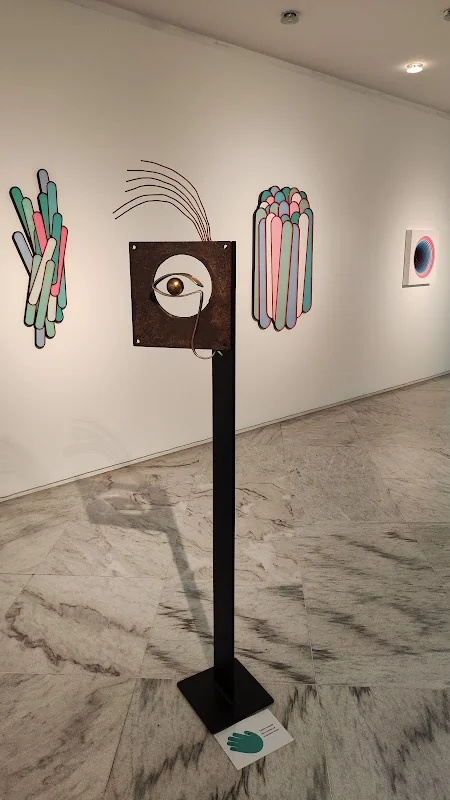
Those looking for photos of the Gallery District Upper Bavaria will find an impressions gallery on the official site with six images that document the exhibition space and the gallery's appearance. This is particularly helpful for many users as the space becomes visually experienceable even before the visit. The photos convey an impression of how the gallery works in practice: open, bright, clearly structured, and tailored to the respective exhibition. At the same time, the official program pages show that it is not a static place but a space for changing presentations. The gallery works with double exhibitions and documents its projects with retrospectives, press releases, and image material. In recent program phases, exhibitions such as Sampling or Path and Transformation have been presented, which work with different artistic media, materials, and perspectives. This creates a vibrant profile that moves between installations, sculpture, drawing, painting, photography, and participatory forms. This diversity is characteristic of the gallery as it is not limited to a single medium or aesthetic. ([bezirk-oberbayern.de](https://www.bezirk-oberbayern.de/Kultur/Galerie-Bezirk-Oberbayern/Zur-Galerie-/?utm_source=openai))
The gallery describes itself as a recognized address for contemporary art of all kinds. This is not just an image promise but can be traced in the program structure. In current and past exhibitions, light and color spaces, interactive offerings, sculptures, objects, images, and thread drawings have been shown. In other projects, installations and photographic art were the focus. The gallery thus serves as a place where different artistic languages coexist and connect with the space, architecture, and audience. For the search intent Gallery District Upper Bavaria Photos, this means: The official impressions are just an entry point, as the actual visual experience arises from the interplay of space, work, and mediation. Those visiting the gallery will not find a museum-like standstill but a regular succession of new exhibition images. This is precisely why it is worthwhile to look at the program retrospective alongside the photos: it shows how adaptable and simultaneously content-wise clear the gallery operates. ([bezirk-oberbayern.de](https://www.bezirk-oberbayern.de/Kultur/Galerie-Bezirk-Oberbayern/Zur-Galerie-/?utm_source=openai))
Art Inclusive! and the Inclusive Mediation Concept
The defining motto of the Gallery District Upper Bavaria is Art Inclusive!. Since 2012, the gallery has been implementing this concept and has developed standards for inclusive exhibitions with artists with and without disabilities as well as for inclusive art education. The official self-presentation makes it clear that the gallery is not only concerned with the exhibition operation but with the right to active participation and contribution to art, culture, and education for all people. This understanding is far more than a social add-on: it is the core of the house. The gallery is certified for accessibility, and the guiding principle explicitly emphasizes that support is intended to be independent of disability, age, educational background, and social origin. This creates a clear institutional stance that is reflected in program design, the language of mediation, and the physical accessibility of the place. For visitors, this means: art is not only exhibited but mediated through different access points so that as many people as possible can find their own way into the exhibition. ([bezirk-oberbayern.de](https://www.bezirk-oberbayern.de/Kultur/Galerie-Bezirk-Oberbayern/Kunst-inklusive-/?utm_source=openai))
In everyday life, this concept is reflected in a whole range of concrete offerings. The barrier-free standards include exhibition videos in German sign language, tactile objects in every exhibition, barrier-free advertising, easily readable and high-contrast signage, as well as inclusive framework programs with tactile tours, workshops, artist talks, and tours in easy-to-understand language. The gallery also provides barrier-free exhibition texts in easy language and in Braille. For certain events and tours, mobile hearing loops and FM systems are available. There are also offerings for people with visual impairments and blind individuals that go beyond classic image descriptions and enable tactile access. This is particularly significant in an art gallery because aesthetic experience here is not reduced to mere seeing but is conceived as multi-sensory perception. Thus, a visit to the exhibition becomes a space where different needs are not added later but are considered from the outset. ([bezirk-oberbayern.de](https://www.bezirk-oberbayern.de/Kultur/Galerie-Bezirk-Oberbayern/Ihr-barrierefreier-Besuch/?utm_source=openai))
Another important point is the attitude towards artistic collaboration. In the described exhibitions, artists with and without disabilities work together, and the gallery explicitly emphasizes inclusive art mediation. This is also evident in formats such as tactile tours, where selected original works are made available for touch, or in programs where content is conveyed in writing, in sign language, and in easy language. In this way, the gallery pursues a cultural understanding that sees accessibility not as an exception but as a quality feature. For many users, this is precisely the difference between an ordinary exhibition and a truly inclusive place: here, not only is entry facilitated, but perception itself is expanded. ([bezirk-oberbayern.de](https://www.bezirk-oberbayern.de/Kultur/Galerie-Bezirk-Oberbayern/Kunst-inklusive-/?utm_source=openai))
Accessibility and Barrier-Free Visit
The Gallery District Upper Bavaria is designed to be barrier-free in several dimensions. For people with mobility impairments and wheelchair users, two parking spaces for people with disabilities are available, and the bus stop Königinstraße is located 80 meters away. All spaces and facilities available for guests are accessible without steps or at ground level or via an elevator. Doors and passages are at least 90 centimeters wide, the counter in the foyer is 75 centimeters high, and seating is available. Additionally, there is a public restroom for people with disabilities that is accessible from both sides, and the grab bars in the restroom are foldable. The gallery also offers tours for people with mobility impairments and wheelchair users. These details show that accessibility is not superficially communicated here but is implemented as a concretely verifiable visitor offering. For a central Munich gallery, this is a strong signal because it links physical accessibility with cultural aspirations. ([bezirk-oberbayern.de](https://www.bezirk-oberbayern.de/Kultur/Galerie-Bezirk-Oberbayern/Ihr-barrierefreier-Besuch/?utm_source=openai))
There are also extensive offerings for people with hearing impairments, visual impairments, and cognitive disabilities. A mobile hearing loop, information in sign language, and exhibition videos in German sign language are available; for hearing-impaired individuals, tours with FM systems are also possible. For people with visual impairments, the signage is designed to be high-contrast, the areas are brightly and glare-free lit, and there are tactile information as well as a tactile plan with Braille. Assistance dogs are welcome. For people with cognitive disabilities, information is also conveyed in easy language, and the paths are designed so that destinations are easily recognizable. This multitude of measures makes the gallery a model example of how contemporary art can be inclusively mediated in practice. Last but not least, the gallery is a member of the network Museums Inclusive! and has been awarded the nationwide valid label Travel for All. ([bezirk-oberbayern.de](https://www.bezirk-oberbayern.de/Kultur/Galerie-Bezirk-Oberbayern/Ihr-barrierefreier-Besuch/?utm_source=openai))
For visitors, this accessibility has an immediate added value: it not only facilitates access to the building but also understanding the art. This is particularly important because the gallery regularly works with sensory, tactile, and participatory formats. A tactile tour here is not just a supplementary event but part of the concept. Additionally, there are inclusive exhibition texts, video formats, and a clear information structure on the website. Those who inform themselves before the visit can thus assess well which access points are available and how the visit can be individually prepared. Especially in downtown Munich, where many places are culturally significant but not always easily accessible, the Gallery District Upper Bavaria represents a particularly well-thought-out counter-model. ([bezirk-oberbayern.de](https://www.bezirk-oberbayern.de/Kultur/Galerie-Bezirk-Oberbayern/Ihr-barrierefreier-Besuch/?utm_source=openai))
History, Location, and Significance Since 1998
The Gallery District Upper Bavaria has existed since 1998 and has established itself as a fixed entity in Munich's art scene during this time. Its location in the foyer of the district administration at Prinzregentenstraße 14 is not coincidentally chosen but makes the gallery both publicly and institutionally visible. The addition opposite the Haus der Kunst places it directly in one of the city's most important art areas. This is crucial for the perception of the gallery: it is not on the edge but in the center of a cultural environment that connects international and local perspectives. At the same time, it remains clearly rooted in the region as an institution of the District Upper Bavaria. This connection of municipal sponsorship, central location, and regional focus shapes the profile of the house to this day. Since its founding, the gallery has been regarded as a recognized address for contemporary art of all kinds. This shows that over the years, it has built a reputation that extends far beyond individual exhibitions. ([bezirk-oberbayern.de](https://www.bezirk-oberbayern.de/Kultur/Galerie-Bezirk-Oberbayern/Zur-Galerie-/?utm_source=openai))
Particularly noteworthy is how consistently the gallery has built its programmatic identity. The concept of Art Inclusive! was not introduced recently but has been implemented since 2012 and has been continuously developed in the years since. The connection of exhibition practice, inclusion, mediation, and publication has become a characteristic trademark. For search queries like Gallery District Upper Bavaria Munich or Gallery District Upper Bavaria Program, not only the place itself is relevant but also the content promise behind it: contemporary art is not shown in isolation here but in dialogue with the public, accessibility, and social participation. This makes the gallery relevant for both art enthusiasts and those interested in inclusive cultural offerings. This dual role makes it a special institution in Munich: it is an exhibition space, a support platform, a mediation place, and a publicly accessible space at the same time. ([bezirk-oberbayern.de](https://www.bezirk-oberbayern.de/Kultur/Galerie-Bezirk-Oberbayern/Kunst-inklusive-/?utm_source=openai))
Sources:
Show moreShow less
Gallery District Upper Bavaria | Opening Hours & Call for Applications
The Gallery District Upper Bavaria in Munich is a barrier-free exhibition space for contemporary visual arts, established since 1998 in the foyer of the district administration at Prinzregentenstraße 14, opposite the Haus der Kunst. It combines a clear cultural policy mandate with an open, audience-friendly profile: artists from Upper Bavaria are supported, exhibitions are developed through calls for applications, and the concept of Art Inclusive! ensures that participation is not just a buzzword but becomes visible and tangible in the daily life of the gallery. The gallery presents two double exhibitions annually, supports the exhibitors with catalogs, and complements each exhibition with an inclusive educational program featuring tactile tours, workshops, artist talks, and formats in easy language. Admission is free, the location in the center of Munich is excellent, and the space in the district administration building makes the gallery a place where art, accessibility, and encounters naturally come together. This blend of quality, openness, and barrier-free ambition makes the Gallery District Upper Bavaria a special address for visitors, art enthusiasts, and anyone who wants to experience contemporary art not just visually but with all their senses. ([bezirk-oberbayern.de](https://www.bezirk-oberbayern.de/Kultur/Galerie-Bezirk-Oberbayern/Zur-Galerie-/?utm_source=openai))
Opening Hours, Admission, and Access
Those wishing to visit the Gallery District Upper Bavaria benefit from clear and well-planned opening hours. The gallery is open Monday to Friday from 10 AM to 7 PM; it is closed on public holidays. Admission to the exhibition and all events is free, making the visit particularly low-threshold and facilitating spontaneous art visits as well as planned appointments with family, friends, or school groups. The gallery is located in the foyer of the district administration, and access is possible through the entrance at Prinzregentenstraße 14. This places the venue right in the heart of Munich and in close proximity to one of the city's most well-known cultural sites. This combination of a central address, free access, and a clearly defined time window makes the gallery attractive for many target groups: for passersby as well as for art audiences who specifically want to visit an exhibition. The official visitor information describes the gallery not as a closed specialized institution but as an openly accessible place where uncomplicated entry is explicitly part of the concept. ([bezirk-oberbayern.de](https://www.bezirk-oberbayern.de/Kultur/Galerie-Bezirk-Oberbayern/Ihr-barrierefreier-Besuch/%C3%96ffnungszeiten-und-Anfahrt/?utm_source=openai))
The access is also well described for visitors. The gallery can be reached by public transport via U4 and U5 to Lehel, by city bus 100 to Königinstraße, as well as by tram 16 to Nationalmuseum or Haus der Kunst and by tram 19 to Maxmonument. The main entrance is designed to be barrier-free, and there is also a clear route for access by car: On the Altstadtring heading north, that is, on the Franz-Josef-Strauß-Ring, you turn right into Prinzregentenstraße and from there continue right into Seitzstraße. Additionally, visitor parking is provided, including spaces for people with disabilities. This combination of public transport access, barrier-free entry, and clear visitor logistics is particularly valuable for an inner-city gallery, as it makes both spontaneous individual visits and group visits well-planned. Those familiar with Munich will immediately place the location: The area between Lehel, Haus der Kunst, and Prinzregentenstraße is among the most culturally significant zones of the city. ([bezirk-oberbayern.de](https://www.bezirk-oberbayern.de/Kultur/Galerie-Bezirk-Oberbayern/Ihr-barrierefreier-Besuch/%C3%96ffnungszeiten-und-Anfahrt/?utm_source=openai))
Call for Applications and Application for Exhibitions
A central feature of the Gallery District Upper Bavaria is its call for applications principle. Visual artists residing in Upper Bavaria can apply for exhibitions through calls for applications. This makes the gallery not only an exhibition space but also a platform where regional art production becomes visible and enters a professionally curated context. For the period from 2026 to 2028, the gallery has announced a new exhibition series under the umbrella of Art Inclusive!: Five double exhibitions with a total of ten selected artists have been curated from 143 applications by a jury of curators, district council members, and art professionals. The selection criteria emphasize artistic quality, material diversity, innovative forms of expression, and a clearly recognizable inclusive ambition. The fact that such a large number of applications meets a comparatively curated format shows the significance of the gallery in the Upper Bavarian art scene. It is open to new positions but also careful in its selection. This creates a blend of transparency, quality, and regional support that appeals to many applicants. ([bezirk-oberbayern.de](https://www.bezirk-oberbayern.de/Der-Bezirk-Oberbayern/Aktuelles-Presse/Digitale-Pressemappe/Ausschreibungen.php?FID=2378.3571.1&ModID=255&NavID=2378.757&kat=2378.1799&object=tx%2C2378.41.1&utm_source=openai))
For visitors, this application model is also exciting because it explains the gallery's programmatic signature. The gallery does not simply want to fill changing walls but to make art and culture experienceable for all and at the same time create artistic representation regardless of origin, age, or disability. The District Upper Bavaria also supports the exhibitors by funding the catalogs, which is an important quality factor for a gallery of this kind. A catalog here is not just accompanying material but part of the mediation and documentation. Together with the inclusive framework program, a model emerges that connects artistic work, the public, and memory. For inquiries regarding the Gallery District Upper Bavaria call for applications, not only the application logic is relevant but also the question of what content and values stand behind the format. The answer is clear: regional openness, professional curation, inclusion, and a consistent promotion of contemporary positions from Upper Bavaria. ([bezirk-oberbayern.de](https://www.bezirk-oberbayern.de/Ausstellungen/?utm_source=openai))
Photos, Impressions, and Changing Exhibitions
Those looking for photos of the Gallery District Upper Bavaria will find an impressions gallery on the official site with six images that document the exhibition space and the gallery's appearance. This is particularly helpful for many users as the space becomes visually experienceable even before the visit. The photos convey an impression of how the gallery works in practice: open, bright, clearly structured, and tailored to the respective exhibition. At the same time, the official program pages show that it is not a static place but a space for changing presentations. The gallery works with double exhibitions and documents its projects with retrospectives, press releases, and image material. In recent program phases, exhibitions such as Sampling or Path and Transformation have been presented, which work with different artistic media, materials, and perspectives. This creates a vibrant profile that moves between installations, sculpture, drawing, painting, photography, and participatory forms. This diversity is characteristic of the gallery as it is not limited to a single medium or aesthetic. ([bezirk-oberbayern.de](https://www.bezirk-oberbayern.de/Kultur/Galerie-Bezirk-Oberbayern/Zur-Galerie-/?utm_source=openai))
The gallery describes itself as a recognized address for contemporary art of all kinds. This is not just an image promise but can be traced in the program structure. In current and past exhibitions, light and color spaces, interactive offerings, sculptures, objects, images, and thread drawings have been shown. In other projects, installations and photographic art were the focus. The gallery thus serves as a place where different artistic languages coexist and connect with the space, architecture, and audience. For the search intent Gallery District Upper Bavaria Photos, this means: The official impressions are just an entry point, as the actual visual experience arises from the interplay of space, work, and mediation. Those visiting the gallery will not find a museum-like standstill but a regular succession of new exhibition images. This is precisely why it is worthwhile to look at the program retrospective alongside the photos: it shows how adaptable and simultaneously content-wise clear the gallery operates. ([bezirk-oberbayern.de](https://www.bezirk-oberbayern.de/Kultur/Galerie-Bezirk-Oberbayern/Zur-Galerie-/?utm_source=openai))
Art Inclusive! and the Inclusive Mediation Concept
The defining motto of the Gallery District Upper Bavaria is Art Inclusive!. Since 2012, the gallery has been implementing this concept and has developed standards for inclusive exhibitions with artists with and without disabilities as well as for inclusive art education. The official self-presentation makes it clear that the gallery is not only concerned with the exhibition operation but with the right to active participation and contribution to art, culture, and education for all people. This understanding is far more than a social add-on: it is the core of the house. The gallery is certified for accessibility, and the guiding principle explicitly emphasizes that support is intended to be independent of disability, age, educational background, and social origin. This creates a clear institutional stance that is reflected in program design, the language of mediation, and the physical accessibility of the place. For visitors, this means: art is not only exhibited but mediated through different access points so that as many people as possible can find their own way into the exhibition. ([bezirk-oberbayern.de](https://www.bezirk-oberbayern.de/Kultur/Galerie-Bezirk-Oberbayern/Kunst-inklusive-/?utm_source=openai))
In everyday life, this concept is reflected in a whole range of concrete offerings. The barrier-free standards include exhibition videos in German sign language, tactile objects in every exhibition, barrier-free advertising, easily readable and high-contrast signage, as well as inclusive framework programs with tactile tours, workshops, artist talks, and tours in easy-to-understand language. The gallery also provides barrier-free exhibition texts in easy language and in Braille. For certain events and tours, mobile hearing loops and FM systems are available. There are also offerings for people with visual impairments and blind individuals that go beyond classic image descriptions and enable tactile access. This is particularly significant in an art gallery because aesthetic experience here is not reduced to mere seeing but is conceived as multi-sensory perception. Thus, a visit to the exhibition becomes a space where different needs are not added later but are considered from the outset. ([bezirk-oberbayern.de](https://www.bezirk-oberbayern.de/Kultur/Galerie-Bezirk-Oberbayern/Ihr-barrierefreier-Besuch/?utm_source=openai))
Another important point is the attitude towards artistic collaboration. In the described exhibitions, artists with and without disabilities work together, and the gallery explicitly emphasizes inclusive art mediation. This is also evident in formats such as tactile tours, where selected original works are made available for touch, or in programs where content is conveyed in writing, in sign language, and in easy language. In this way, the gallery pursues a cultural understanding that sees accessibility not as an exception but as a quality feature. For many users, this is precisely the difference between an ordinary exhibition and a truly inclusive place: here, not only is entry facilitated, but perception itself is expanded. ([bezirk-oberbayern.de](https://www.bezirk-oberbayern.de/Kultur/Galerie-Bezirk-Oberbayern/Kunst-inklusive-/?utm_source=openai))
Accessibility and Barrier-Free Visit
The Gallery District Upper Bavaria is designed to be barrier-free in several dimensions. For people with mobility impairments and wheelchair users, two parking spaces for people with disabilities are available, and the bus stop Königinstraße is located 80 meters away. All spaces and facilities available for guests are accessible without steps or at ground level or via an elevator. Doors and passages are at least 90 centimeters wide, the counter in the foyer is 75 centimeters high, and seating is available. Additionally, there is a public restroom for people with disabilities that is accessible from both sides, and the grab bars in the restroom are foldable. The gallery also offers tours for people with mobility impairments and wheelchair users. These details show that accessibility is not superficially communicated here but is implemented as a concretely verifiable visitor offering. For a central Munich gallery, this is a strong signal because it links physical accessibility with cultural aspirations. ([bezirk-oberbayern.de](https://www.bezirk-oberbayern.de/Kultur/Galerie-Bezirk-Oberbayern/Ihr-barrierefreier-Besuch/?utm_source=openai))
There are also extensive offerings for people with hearing impairments, visual impairments, and cognitive disabilities. A mobile hearing loop, information in sign language, and exhibition videos in German sign language are available; for hearing-impaired individuals, tours with FM systems are also possible. For people with visual impairments, the signage is designed to be high-contrast, the areas are brightly and glare-free lit, and there are tactile information as well as a tactile plan with Braille. Assistance dogs are welcome. For people with cognitive disabilities, information is also conveyed in easy language, and the paths are designed so that destinations are easily recognizable. This multitude of measures makes the gallery a model example of how contemporary art can be inclusively mediated in practice. Last but not least, the gallery is a member of the network Museums Inclusive! and has been awarded the nationwide valid label Travel for All. ([bezirk-oberbayern.de](https://www.bezirk-oberbayern.de/Kultur/Galerie-Bezirk-Oberbayern/Ihr-barrierefreier-Besuch/?utm_source=openai))
For visitors, this accessibility has an immediate added value: it not only facilitates access to the building but also understanding the art. This is particularly important because the gallery regularly works with sensory, tactile, and participatory formats. A tactile tour here is not just a supplementary event but part of the concept. Additionally, there are inclusive exhibition texts, video formats, and a clear information structure on the website. Those who inform themselves before the visit can thus assess well which access points are available and how the visit can be individually prepared. Especially in downtown Munich, where many places are culturally significant but not always easily accessible, the Gallery District Upper Bavaria represents a particularly well-thought-out counter-model. ([bezirk-oberbayern.de](https://www.bezirk-oberbayern.de/Kultur/Galerie-Bezirk-Oberbayern/Ihr-barrierefreier-Besuch/?utm_source=openai))
History, Location, and Significance Since 1998
The Gallery District Upper Bavaria has existed since 1998 and has established itself as a fixed entity in Munich's art scene during this time. Its location in the foyer of the district administration at Prinzregentenstraße 14 is not coincidentally chosen but makes the gallery both publicly and institutionally visible. The addition opposite the Haus der Kunst places it directly in one of the city's most important art areas. This is crucial for the perception of the gallery: it is not on the edge but in the center of a cultural environment that connects international and local perspectives. At the same time, it remains clearly rooted in the region as an institution of the District Upper Bavaria. This connection of municipal sponsorship, central location, and regional focus shapes the profile of the house to this day. Since its founding, the gallery has been regarded as a recognized address for contemporary art of all kinds. This shows that over the years, it has built a reputation that extends far beyond individual exhibitions. ([bezirk-oberbayern.de](https://www.bezirk-oberbayern.de/Kultur/Galerie-Bezirk-Oberbayern/Zur-Galerie-/?utm_source=openai))
Particularly noteworthy is how consistently the gallery has built its programmatic identity. The concept of Art Inclusive! was not introduced recently but has been implemented since 2012 and has been continuously developed in the years since. The connection of exhibition practice, inclusion, mediation, and publication has become a characteristic trademark. For search queries like Gallery District Upper Bavaria Munich or Gallery District Upper Bavaria Program, not only the place itself is relevant but also the content promise behind it: contemporary art is not shown in isolation here but in dialogue with the public, accessibility, and social participation. This makes the gallery relevant for both art enthusiasts and those interested in inclusive cultural offerings. This dual role makes it a special institution in Munich: it is an exhibition space, a support platform, a mediation place, and a publicly accessible space at the same time. ([bezirk-oberbayern.de](https://www.bezirk-oberbayern.de/Kultur/Galerie-Bezirk-Oberbayern/Kunst-inklusive-/?utm_source=openai))
Sources:
Gallery District Upper Bavaria | Opening Hours & Call for Applications
The Gallery District Upper Bavaria in Munich is a barrier-free exhibition space for contemporary visual arts, established since 1998 in the foyer of the district administration at Prinzregentenstraße 14, opposite the Haus der Kunst. It combines a clear cultural policy mandate with an open, audience-friendly profile: artists from Upper Bavaria are supported, exhibitions are developed through calls for applications, and the concept of Art Inclusive! ensures that participation is not just a buzzword but becomes visible and tangible in the daily life of the gallery. The gallery presents two double exhibitions annually, supports the exhibitors with catalogs, and complements each exhibition with an inclusive educational program featuring tactile tours, workshops, artist talks, and formats in easy language. Admission is free, the location in the center of Munich is excellent, and the space in the district administration building makes the gallery a place where art, accessibility, and encounters naturally come together. This blend of quality, openness, and barrier-free ambition makes the Gallery District Upper Bavaria a special address for visitors, art enthusiasts, and anyone who wants to experience contemporary art not just visually but with all their senses. ([bezirk-oberbayern.de](https://www.bezirk-oberbayern.de/Kultur/Galerie-Bezirk-Oberbayern/Zur-Galerie-/?utm_source=openai))
Opening Hours, Admission, and Access
Those wishing to visit the Gallery District Upper Bavaria benefit from clear and well-planned opening hours. The gallery is open Monday to Friday from 10 AM to 7 PM; it is closed on public holidays. Admission to the exhibition and all events is free, making the visit particularly low-threshold and facilitating spontaneous art visits as well as planned appointments with family, friends, or school groups. The gallery is located in the foyer of the district administration, and access is possible through the entrance at Prinzregentenstraße 14. This places the venue right in the heart of Munich and in close proximity to one of the city's most well-known cultural sites. This combination of a central address, free access, and a clearly defined time window makes the gallery attractive for many target groups: for passersby as well as for art audiences who specifically want to visit an exhibition. The official visitor information describes the gallery not as a closed specialized institution but as an openly accessible place where uncomplicated entry is explicitly part of the concept. ([bezirk-oberbayern.de](https://www.bezirk-oberbayern.de/Kultur/Galerie-Bezirk-Oberbayern/Ihr-barrierefreier-Besuch/%C3%96ffnungszeiten-und-Anfahrt/?utm_source=openai))
The access is also well described for visitors. The gallery can be reached by public transport via U4 and U5 to Lehel, by city bus 100 to Königinstraße, as well as by tram 16 to Nationalmuseum or Haus der Kunst and by tram 19 to Maxmonument. The main entrance is designed to be barrier-free, and there is also a clear route for access by car: On the Altstadtring heading north, that is, on the Franz-Josef-Strauß-Ring, you turn right into Prinzregentenstraße and from there continue right into Seitzstraße. Additionally, visitor parking is provided, including spaces for people with disabilities. This combination of public transport access, barrier-free entry, and clear visitor logistics is particularly valuable for an inner-city gallery, as it makes both spontaneous individual visits and group visits well-planned. Those familiar with Munich will immediately place the location: The area between Lehel, Haus der Kunst, and Prinzregentenstraße is among the most culturally significant zones of the city. ([bezirk-oberbayern.de](https://www.bezirk-oberbayern.de/Kultur/Galerie-Bezirk-Oberbayern/Ihr-barrierefreier-Besuch/%C3%96ffnungszeiten-und-Anfahrt/?utm_source=openai))
Call for Applications and Application for Exhibitions
A central feature of the Gallery District Upper Bavaria is its call for applications principle. Visual artists residing in Upper Bavaria can apply for exhibitions through calls for applications. This makes the gallery not only an exhibition space but also a platform where regional art production becomes visible and enters a professionally curated context. For the period from 2026 to 2028, the gallery has announced a new exhibition series under the umbrella of Art Inclusive!: Five double exhibitions with a total of ten selected artists have been curated from 143 applications by a jury of curators, district council members, and art professionals. The selection criteria emphasize artistic quality, material diversity, innovative forms of expression, and a clearly recognizable inclusive ambition. The fact that such a large number of applications meets a comparatively curated format shows the significance of the gallery in the Upper Bavarian art scene. It is open to new positions but also careful in its selection. This creates a blend of transparency, quality, and regional support that appeals to many applicants. ([bezirk-oberbayern.de](https://www.bezirk-oberbayern.de/Der-Bezirk-Oberbayern/Aktuelles-Presse/Digitale-Pressemappe/Ausschreibungen.php?FID=2378.3571.1&ModID=255&NavID=2378.757&kat=2378.1799&object=tx%2C2378.41.1&utm_source=openai))
For visitors, this application model is also exciting because it explains the gallery's programmatic signature. The gallery does not simply want to fill changing walls but to make art and culture experienceable for all and at the same time create artistic representation regardless of origin, age, or disability. The District Upper Bavaria also supports the exhibitors by funding the catalogs, which is an important quality factor for a gallery of this kind. A catalog here is not just accompanying material but part of the mediation and documentation. Together with the inclusive framework program, a model emerges that connects artistic work, the public, and memory. For inquiries regarding the Gallery District Upper Bavaria call for applications, not only the application logic is relevant but also the question of what content and values stand behind the format. The answer is clear: regional openness, professional curation, inclusion, and a consistent promotion of contemporary positions from Upper Bavaria. ([bezirk-oberbayern.de](https://www.bezirk-oberbayern.de/Ausstellungen/?utm_source=openai))
Photos, Impressions, and Changing Exhibitions
Those looking for photos of the Gallery District Upper Bavaria will find an impressions gallery on the official site with six images that document the exhibition space and the gallery's appearance. This is particularly helpful for many users as the space becomes visually experienceable even before the visit. The photos convey an impression of how the gallery works in practice: open, bright, clearly structured, and tailored to the respective exhibition. At the same time, the official program pages show that it is not a static place but a space for changing presentations. The gallery works with double exhibitions and documents its projects with retrospectives, press releases, and image material. In recent program phases, exhibitions such as Sampling or Path and Transformation have been presented, which work with different artistic media, materials, and perspectives. This creates a vibrant profile that moves between installations, sculpture, drawing, painting, photography, and participatory forms. This diversity is characteristic of the gallery as it is not limited to a single medium or aesthetic. ([bezirk-oberbayern.de](https://www.bezirk-oberbayern.de/Kultur/Galerie-Bezirk-Oberbayern/Zur-Galerie-/?utm_source=openai))
The gallery describes itself as a recognized address for contemporary art of all kinds. This is not just an image promise but can be traced in the program structure. In current and past exhibitions, light and color spaces, interactive offerings, sculptures, objects, images, and thread drawings have been shown. In other projects, installations and photographic art were the focus. The gallery thus serves as a place where different artistic languages coexist and connect with the space, architecture, and audience. For the search intent Gallery District Upper Bavaria Photos, this means: The official impressions are just an entry point, as the actual visual experience arises from the interplay of space, work, and mediation. Those visiting the gallery will not find a museum-like standstill but a regular succession of new exhibition images. This is precisely why it is worthwhile to look at the program retrospective alongside the photos: it shows how adaptable and simultaneously content-wise clear the gallery operates. ([bezirk-oberbayern.de](https://www.bezirk-oberbayern.de/Kultur/Galerie-Bezirk-Oberbayern/Zur-Galerie-/?utm_source=openai))
Art Inclusive! and the Inclusive Mediation Concept
The defining motto of the Gallery District Upper Bavaria is Art Inclusive!. Since 2012, the gallery has been implementing this concept and has developed standards for inclusive exhibitions with artists with and without disabilities as well as for inclusive art education. The official self-presentation makes it clear that the gallery is not only concerned with the exhibition operation but with the right to active participation and contribution to art, culture, and education for all people. This understanding is far more than a social add-on: it is the core of the house. The gallery is certified for accessibility, and the guiding principle explicitly emphasizes that support is intended to be independent of disability, age, educational background, and social origin. This creates a clear institutional stance that is reflected in program design, the language of mediation, and the physical accessibility of the place. For visitors, this means: art is not only exhibited but mediated through different access points so that as many people as possible can find their own way into the exhibition. ([bezirk-oberbayern.de](https://www.bezirk-oberbayern.de/Kultur/Galerie-Bezirk-Oberbayern/Kunst-inklusive-/?utm_source=openai))
In everyday life, this concept is reflected in a whole range of concrete offerings. The barrier-free standards include exhibition videos in German sign language, tactile objects in every exhibition, barrier-free advertising, easily readable and high-contrast signage, as well as inclusive framework programs with tactile tours, workshops, artist talks, and tours in easy-to-understand language. The gallery also provides barrier-free exhibition texts in easy language and in Braille. For certain events and tours, mobile hearing loops and FM systems are available. There are also offerings for people with visual impairments and blind individuals that go beyond classic image descriptions and enable tactile access. This is particularly significant in an art gallery because aesthetic experience here is not reduced to mere seeing but is conceived as multi-sensory perception. Thus, a visit to the exhibition becomes a space where different needs are not added later but are considered from the outset. ([bezirk-oberbayern.de](https://www.bezirk-oberbayern.de/Kultur/Galerie-Bezirk-Oberbayern/Ihr-barrierefreier-Besuch/?utm_source=openai))
Another important point is the attitude towards artistic collaboration. In the described exhibitions, artists with and without disabilities work together, and the gallery explicitly emphasizes inclusive art mediation. This is also evident in formats such as tactile tours, where selected original works are made available for touch, or in programs where content is conveyed in writing, in sign language, and in easy language. In this way, the gallery pursues a cultural understanding that sees accessibility not as an exception but as a quality feature. For many users, this is precisely the difference between an ordinary exhibition and a truly inclusive place: here, not only is entry facilitated, but perception itself is expanded. ([bezirk-oberbayern.de](https://www.bezirk-oberbayern.de/Kultur/Galerie-Bezirk-Oberbayern/Kunst-inklusive-/?utm_source=openai))
Accessibility and Barrier-Free Visit
The Gallery District Upper Bavaria is designed to be barrier-free in several dimensions. For people with mobility impairments and wheelchair users, two parking spaces for people with disabilities are available, and the bus stop Königinstraße is located 80 meters away. All spaces and facilities available for guests are accessible without steps or at ground level or via an elevator. Doors and passages are at least 90 centimeters wide, the counter in the foyer is 75 centimeters high, and seating is available. Additionally, there is a public restroom for people with disabilities that is accessible from both sides, and the grab bars in the restroom are foldable. The gallery also offers tours for people with mobility impairments and wheelchair users. These details show that accessibility is not superficially communicated here but is implemented as a concretely verifiable visitor offering. For a central Munich gallery, this is a strong signal because it links physical accessibility with cultural aspirations. ([bezirk-oberbayern.de](https://www.bezirk-oberbayern.de/Kultur/Galerie-Bezirk-Oberbayern/Ihr-barrierefreier-Besuch/?utm_source=openai))
There are also extensive offerings for people with hearing impairments, visual impairments, and cognitive disabilities. A mobile hearing loop, information in sign language, and exhibition videos in German sign language are available; for hearing-impaired individuals, tours with FM systems are also possible. For people with visual impairments, the signage is designed to be high-contrast, the areas are brightly and glare-free lit, and there are tactile information as well as a tactile plan with Braille. Assistance dogs are welcome. For people with cognitive disabilities, information is also conveyed in easy language, and the paths are designed so that destinations are easily recognizable. This multitude of measures makes the gallery a model example of how contemporary art can be inclusively mediated in practice. Last but not least, the gallery is a member of the network Museums Inclusive! and has been awarded the nationwide valid label Travel for All. ([bezirk-oberbayern.de](https://www.bezirk-oberbayern.de/Kultur/Galerie-Bezirk-Oberbayern/Ihr-barrierefreier-Besuch/?utm_source=openai))
For visitors, this accessibility has an immediate added value: it not only facilitates access to the building but also understanding the art. This is particularly important because the gallery regularly works with sensory, tactile, and participatory formats. A tactile tour here is not just a supplementary event but part of the concept. Additionally, there are inclusive exhibition texts, video formats, and a clear information structure on the website. Those who inform themselves before the visit can thus assess well which access points are available and how the visit can be individually prepared. Especially in downtown Munich, where many places are culturally significant but not always easily accessible, the Gallery District Upper Bavaria represents a particularly well-thought-out counter-model. ([bezirk-oberbayern.de](https://www.bezirk-oberbayern.de/Kultur/Galerie-Bezirk-Oberbayern/Ihr-barrierefreier-Besuch/?utm_source=openai))
History, Location, and Significance Since 1998
The Gallery District Upper Bavaria has existed since 1998 and has established itself as a fixed entity in Munich's art scene during this time. Its location in the foyer of the district administration at Prinzregentenstraße 14 is not coincidentally chosen but makes the gallery both publicly and institutionally visible. The addition opposite the Haus der Kunst places it directly in one of the city's most important art areas. This is crucial for the perception of the gallery: it is not on the edge but in the center of a cultural environment that connects international and local perspectives. At the same time, it remains clearly rooted in the region as an institution of the District Upper Bavaria. This connection of municipal sponsorship, central location, and regional focus shapes the profile of the house to this day. Since its founding, the gallery has been regarded as a recognized address for contemporary art of all kinds. This shows that over the years, it has built a reputation that extends far beyond individual exhibitions. ([bezirk-oberbayern.de](https://www.bezirk-oberbayern.de/Kultur/Galerie-Bezirk-Oberbayern/Zur-Galerie-/?utm_source=openai))
Particularly noteworthy is how consistently the gallery has built its programmatic identity. The concept of Art Inclusive! was not introduced recently but has been implemented since 2012 and has been continuously developed in the years since. The connection of exhibition practice, inclusion, mediation, and publication has become a characteristic trademark. For search queries like Gallery District Upper Bavaria Munich or Gallery District Upper Bavaria Program, not only the place itself is relevant but also the content promise behind it: contemporary art is not shown in isolation here but in dialogue with the public, accessibility, and social participation. This makes the gallery relevant for both art enthusiasts and those interested in inclusive cultural offerings. This dual role makes it a special institution in Munich: it is an exhibition space, a support platform, a mediation place, and a publicly accessible space at the same time. ([bezirk-oberbayern.de](https://www.bezirk-oberbayern.de/Kultur/Galerie-Bezirk-Oberbayern/Kunst-inklusive-/?utm_source=openai))
Sources:
Upcoming Events
No events found
Frequently Asked Questions
Reviews
No reviews found