
München
Hans-Preißinger-Straße 8, 81379 München, Deutschland
Gasteig HP8 | Program today & Parking
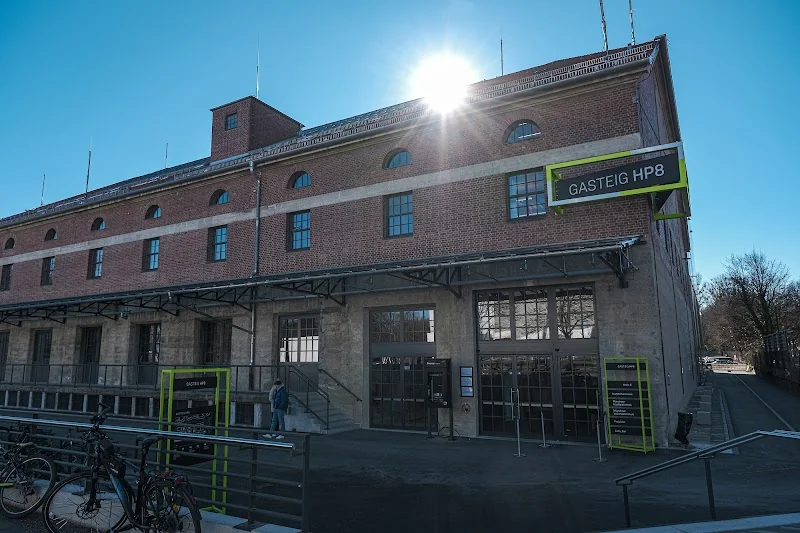
The Gasteig HP8 is Munich's cultural site in transition: a vibrant district in Sendling, where the Isarphilharmonie, Hall E, Hall X, and other spaces come together to create a versatile place for music, education, film, dance, and encounters. Since autumn 2021, the area at Hans-Preißinger-Straße 8 has been the headquarters of Gasteig, while the traditional site in Haidhausen is being renovated. The new location is intentionally more than just a temporary venue. It combines industrial charm, modern architecture, strong acoustics, open gastronomy, and short distances on the premises. This is exactly why so many people search for terms like Gasteig HP8 program, today, parking, directions, hall plan, and seating plan: The location is just as interesting for concert visits as it is for readings, workshops, children's formats, festivals, or dance evenings. On site, the Munich City Library, the University of Music, cultural organizers, and a curious audience meet, appreciating the mix of culture and everyday life. The official website describes the area as open, inclusive, and versatile. Particularly striking is the connection between the listed Hall E and the new Isarphilharmonie, which together form the heart of the area. Those who visit Gasteig HP8 therefore experience not just an event, but an entire cultural quarter with its own atmosphere. ([gasteig.de](https://www.gasteig.de/en/locations-directions/))
Program today and current events at Gasteig HP8
When it comes to Gasteig HP8 program, many visitors are not only looking for a single concert but for the entire range of the house. This is where one of the greatest strengths of the location lies: The official event offerings are broad, continuously updated, and range from classical music in the Isarphilharmonie to jazz, pop, and film, as well as readings, language cafés, workshops, and dance formats. On the official event page, the program can be filtered by location, such as Gasteig HP8, Isarphilharmonie, Hall E, Hall X, or Projector. This makes it quickly visible what is happening today or in the coming days. Gasteig itself emphasizes that up to 2,000 events take place annually on the HP8 grounds, many of which are free. This explains why search queries for program today, today, events, or plan appear so frequently. For those wanting to experience something spontaneously, there are not only large concerts but also low-threshold formats with a meeting character. Particularly exciting is that Gasteig HP8 not only caters to classical culture but also makes open, popular, and participatory content visible. Thus, dance evenings, family formats, film series, and community events are firmly part of the profile. The location is therefore not a sober hall operation but a house that sounds, looks, and is used differently every day. ([gasteig.de](https://www.gasteig.de/en/events/?locations=gasteig-hp8&utm_source=openai))
For SEO research, the terms gasteig hp8 program today, gasteig hp8 today, gasteig hp8 salsa, and gasteig hp8 photos are particularly valuable because they show what visitors are really looking for in everyday life. Gasteig HP8 meets these needs with a program that mediates between high culture and pop culture. The Isarphilharmonie is the grand stage for orchestras, guest performances, and larger concert productions, while Hall E and Hall X are flexibly used for dance, discussions, film, education, and community formats. Examples from the official offerings illustrate this diversity: The website features current events such as communal singing, language cafés, festivals, and dance events, as well as special salsa evenings and free cultural formats. This is important for visitors because the search intent behind today is often very specific: They want to know whether a spontaneous visit is worthwhile, whether there are still tickets available, and which room is being used. The official event search is ideal for this purpose. It shows that Gasteig HP8 is a place where learning takes place during the day, listening, dancing, and celebrating in the evening. Those searching for the program are not only looking for dates but for a cultural experience with planning freedom and a surprise effect. ([gasteig.de](https://www.gasteig.de/en/events/?locations=gasteig-hp8&utm_source=openai))
Parking and directions to Gasteig HP8 in Munich
The keyword Gasteig HP8 parking is one of the most important search queries because the location in Sendling is well connected, but the immediate surroundings are not designed for mass traffic with cars. The official recommendation is clear: There are no regular visitor parking spaces directly on the premises. Those arriving by car are advised to use the parking garage at the Blumengroßmarkt for events in the Isarphilharmonie and take the free shuttle taxi from there. The parking garage offers 200 spaces starting two hours before events and is usable until 1 AM. The rate begins with a flat fee for 4 hours, after which additional costs are incurred per started hour. This solution is practical because it keeps the influx away from the premises and shortens the walking distance. For travelers needing accessibility, there are also designated disabled parking spaces directly at HP8. It is also regulated how buses can access the site: Tour buses may drop off and pick up at Hans-Preißinger-Straße near Hall X but do not have a regular bus parking space directly on the premises. This makes it clear that Gasteig HP8 is not a classic parking arena but a well-organized cultural area with clear mobility rules. Knowing these in advance avoids stress upon arrival and allows for a more relaxed experience at the event. ([gasteig.de](https://www.gasteig.de/en/locations-directions/))
Access by public transport is also a central part of the search for Gasteig HP8 directions. Gasteig refers to the U3 to Brudermühlstraße and the U1 to Candidplatz, as well as bus lines 54, X30, and X204, which stop at the Schäftlarnstraße/Gasteig HP8 station. According to the official directions, it is only a few minutes on foot from the U3, and the buses stop directly in front of or across from the premises. Additionally, the website recommends cycling along the Isar. There are 200 bike parking spaces available outside Hall E. This is not only environmentally sensible but also fits the character of the place, which integrates into a developed neighborhood and does not want to be an isolated event island. For visitors who need to pay attention to current schedule changes, Gasteig refers to MVV information, which is particularly practical when there are construction sites or detours in city traffic. Important for orientation is also that the central address of Gasteig HP8 is Hans-Preißinger-Straße 8 in Munich-Sendling. Those who know this data will find the area much faster and also understand why Google search queries related to parking, directions, and plans are so strongly associated with the location. ([gasteig.de](https://www.gasteig.de/en/locations-directions/))
Hall plan, seating, and capacity of the Isarphilharmonie
The Isarphilharmonie is the major crowd puller of Gasteig HP8 and a main reason why so many users search for hall plan, seating plan, and seating. According to the official website, the concert hall can accommodate up to 1,956 visitors and was built by NÜSSLI according to plans by the architectural firm gmp. The building is designed as a steel structure with an interior volume of nearly 60,000 cubic meters, and the hall itself consists of prefabricated solid wood elements. This construction method is not only aesthetically pleasing but also acoustically ambitious. Since its opening in October 2021, the Isarphilharmonie has gained a reputation for its special atmosphere and excellent sound. The website explicitly emphasizes that the hall can manage classical music without amplification and has a modern sound system for amplified formats. This makes the hall attractive for a variety of uses: symphony concerts, chamber music, jazz, pop, film formats, and large guest performances. For visitors, the topic of seating plan is therefore more than a technical detail. Understanding the seating arrangement allows for better planning of the concert visit, as sightlines, access points, and balcony areas vary depending on the event. The official website provides plans and notes that directly show how the hall is set up and where the important pathways are. ([gasteig.de](https://www.gasteig.de/en/rooms/isarphilharmonie/))
A particularly important SEO topic is Gasteig HP8 Isarphilharmonie seating plan because visitors primarily seek the combination of good visibility, accessible entrances, and suitable rows. Gasteig lists precisely which seating areas are fully accessible and which can only be reached via a few steps on its ticket and information page. This includes, for example, parquet rows and selected balcony seats, while other tier seats are less suitable for people with mobility issues. This note is practical because it provides clear guidance not only for wheelchair users but also for visitors with limited mobility. For event practice, the official setup plans are also relevant, which note the permissible number of visitors and other hall details. The Isarphilharmonie is thus not an anonymous space but a precisely documented concert hall designed for maximum usability. The fact that the audience can also familiarize themselves with the venue is demonstrated by the possibility of a virtual tour and the detailed description of the architecture. Those searching for the seating plan ultimately want to know: Where do I sit well, how do I get in, and how does the hall feel live? Gasteig HP8 answers these questions with transparent information and clear structure. ([gasteig.de](https://www.gasteig.de/infos-tickets/))
Hall X, Hall E, and the rooms in Gasteig HP8
Gasteig HP8 consists not only of the Isarphilharmonie. The combination of Hall E, Hall X, and other modular buildings makes the area so versatile and explains why users search for terms like gasteig hp8 hall x or gasteig hp8 plan. Hall E is a listed brick building and the former transformer hall from the 1920s. It was built for the South Heating Plant, is architecturally significant, and today serves as the foyer of the Isarphilharmonie as well as the location of the Projector Hall. The ground floor also houses GAiA Deli & News, the GAiA Bar, and the information and ticket counter. This makes Hall E not just a transit space but a social hub where the audience, library, and cultural operations mix. Visitors experience a bright, open atmosphere with a glass roof, red brick, and preserved industrial elements like the old crane. This character makes Hall E very popular for events, breaks, and encounters. The house demonstrates very well how historical substance and new use can go together without losing the identity of the place. ([gasteig.de](https://www.gasteig.de/en/rooms/hall-e/))
Hall X is the second major search magnet on the premises because it represents a different event experience than the Isarphilharmonie. According to the official description, it is a separate modular building directly next to Hall E with space for up to 380 guests. In row seating, 248 people can be accommodated, including three wheelchair spaces. Large windows provide daylight when needed, and a bar operation can be integrated into the auditorium. This makes Hall X suitable for readings, workshops, lectures, concerts, film screenings, dance, and theater. Therefore, those searching for Gasteig HP8 Hall X are actually looking for a flexible multifunctional space, not just a classic hall. Additionally, a new accessible backstage area was created in 2025, including a vocal room and accessible sanitary facilities built sustainably from wood. This modernization shows that Gasteig HP8 is continuously being developed and is not just a static transitional location. The proximity of Hall X to Hall E and the Isarphilharmonie creates a compact event venue with short distances, good orientation, and versatile formats. For visitors, this is a great advantage because an evening here can feel completely different than in a standard cultural house: sometimes intimate, sometimes festive, sometimes participatory, sometimes loud and danceable. This mix is a decisive reason for the strong demand for this location. ([gasteig.de](https://www.gasteig.de/en/gasteig-hp8/))
Photos, architecture, and the special atmosphere on site
The keyword gasteig hp8 photos shows that many people want to visually get to know the place before their visit. For this, Gasteig HP8 is well positioned, as the official website offers extensive photo series of the Isarphilharmonie, Hall E, the outdoor area, and other rooms. The photos not only show empty halls or architectural details but often also people in operation: audiences, dancers, concerts, readings, and open situations in the foyer or on the premises. This is important because the atmosphere of Gasteig HP8 is difficult to convey through pure facts. The place thrives on contrasts. The Isarphilharmonie appears dark, precise, and acoustically focused, while Hall E with its glass roof, brick, and industrial elements appears open and inviting. The press photos particularly illustrate how the architecture interacts with the audience: open galleries above, a lively foyer below, and an urban area outside with space and movement. Therefore, those searching for photos not only receive impression images but also a sense of how differently the rooms function in everyday life. This makes Gasteig HP8 photographically interesting and explains why it is often associated with images, impressions, and press photos in search results. ([gasteig.de](https://www.gasteig.de/en/press-photos/isarphilharmonie/?utm_source=openai))
Architecturally, the location is also remarkable because it not only looks beautiful but has created a new type of cultural address in Munich. Gasteig describes itself as a place where a grown neighborhood, culture, and everyday life meet. The Isarphilharmonie is designed as a modern concert building focused on sound and function, Hall E preserves the charm of historical industrial architecture, and the outdoor areas are repeatedly used for festivals, dance, and community formats. Additionally, the institutions of the house: Munich City Library, University of Music and Theater, Munich Philharmonic, Munich Chamber Orchestra, and the Adult Education Center shape the profile of the place. This mix explains why the area is described as inclusive, lively, and urban. Visitors come not only for a single occasion but often also because of the atmosphere, the path concept, and the interplay of culture and gastronomy. This is exactly where the difference lies compared to many other locations: Gasteig HP8 is not just a hall with a program but a cultural ecosystem. Those who inform themselves in advance about photos, plans, seating plans, and directions experience upon arrival a location that already conveys a very clear character online and has an even stronger impact on site. ([gasteig.de](https://www.gasteig.de/en/about-us/))
Sources:
- Gasteig Munich – Locations & Directions ([gasteig.de](https://www.gasteig.de/en/locations-directions/))
- Gasteig Munich – Isarphilharmonie / Concert Hall ([gasteig.de](https://www.gasteig.de/en/rooms/isarphilharmonie/))
- Gasteig Munich – Hall E ([gasteig.de](https://www.gasteig.de/en/rooms/hall-e/))
- Gasteig Munich – Hall X ([gasteig.de](https://www.gasteig.de/raeume/saal-x/?utm_source=openai))
- Gasteig Munich – Munich City Library at HP8 ([gasteig.de](https://www.gasteig.de/institutes/muenchner-stadtbibliothek/))
- Gasteig Munich – Events / Gasteig HP8 ([gasteig.de](https://www.gasteig.de/en/events/?locations=gasteig-hp8&utm_source=openai))
- Gasteig Munich – Press Photos Isarphilharmonie and Outdoor Area ([gasteig.de](https://www.gasteig.de/en/press-photos/isarphilharmonie/?utm_source=openai))
Show moreShow less
Gasteig HP8 | Program today & Parking
The Gasteig HP8 is Munich's cultural site in transition: a vibrant district in Sendling, where the Isarphilharmonie, Hall E, Hall X, and other spaces come together to create a versatile place for music, education, film, dance, and encounters. Since autumn 2021, the area at Hans-Preißinger-Straße 8 has been the headquarters of Gasteig, while the traditional site in Haidhausen is being renovated. The new location is intentionally more than just a temporary venue. It combines industrial charm, modern architecture, strong acoustics, open gastronomy, and short distances on the premises. This is exactly why so many people search for terms like Gasteig HP8 program, today, parking, directions, hall plan, and seating plan: The location is just as interesting for concert visits as it is for readings, workshops, children's formats, festivals, or dance evenings. On site, the Munich City Library, the University of Music, cultural organizers, and a curious audience meet, appreciating the mix of culture and everyday life. The official website describes the area as open, inclusive, and versatile. Particularly striking is the connection between the listed Hall E and the new Isarphilharmonie, which together form the heart of the area. Those who visit Gasteig HP8 therefore experience not just an event, but an entire cultural quarter with its own atmosphere. ([gasteig.de](https://www.gasteig.de/en/locations-directions/))
Program today and current events at Gasteig HP8
When it comes to Gasteig HP8 program, many visitors are not only looking for a single concert but for the entire range of the house. This is where one of the greatest strengths of the location lies: The official event offerings are broad, continuously updated, and range from classical music in the Isarphilharmonie to jazz, pop, and film, as well as readings, language cafés, workshops, and dance formats. On the official event page, the program can be filtered by location, such as Gasteig HP8, Isarphilharmonie, Hall E, Hall X, or Projector. This makes it quickly visible what is happening today or in the coming days. Gasteig itself emphasizes that up to 2,000 events take place annually on the HP8 grounds, many of which are free. This explains why search queries for program today, today, events, or plan appear so frequently. For those wanting to experience something spontaneously, there are not only large concerts but also low-threshold formats with a meeting character. Particularly exciting is that Gasteig HP8 not only caters to classical culture but also makes open, popular, and participatory content visible. Thus, dance evenings, family formats, film series, and community events are firmly part of the profile. The location is therefore not a sober hall operation but a house that sounds, looks, and is used differently every day. ([gasteig.de](https://www.gasteig.de/en/events/?locations=gasteig-hp8&utm_source=openai))
For SEO research, the terms gasteig hp8 program today, gasteig hp8 today, gasteig hp8 salsa, and gasteig hp8 photos are particularly valuable because they show what visitors are really looking for in everyday life. Gasteig HP8 meets these needs with a program that mediates between high culture and pop culture. The Isarphilharmonie is the grand stage for orchestras, guest performances, and larger concert productions, while Hall E and Hall X are flexibly used for dance, discussions, film, education, and community formats. Examples from the official offerings illustrate this diversity: The website features current events such as communal singing, language cafés, festivals, and dance events, as well as special salsa evenings and free cultural formats. This is important for visitors because the search intent behind today is often very specific: They want to know whether a spontaneous visit is worthwhile, whether there are still tickets available, and which room is being used. The official event search is ideal for this purpose. It shows that Gasteig HP8 is a place where learning takes place during the day, listening, dancing, and celebrating in the evening. Those searching for the program are not only looking for dates but for a cultural experience with planning freedom and a surprise effect. ([gasteig.de](https://www.gasteig.de/en/events/?locations=gasteig-hp8&utm_source=openai))
Parking and directions to Gasteig HP8 in Munich
The keyword Gasteig HP8 parking is one of the most important search queries because the location in Sendling is well connected, but the immediate surroundings are not designed for mass traffic with cars. The official recommendation is clear: There are no regular visitor parking spaces directly on the premises. Those arriving by car are advised to use the parking garage at the Blumengroßmarkt for events in the Isarphilharmonie and take the free shuttle taxi from there. The parking garage offers 200 spaces starting two hours before events and is usable until 1 AM. The rate begins with a flat fee for 4 hours, after which additional costs are incurred per started hour. This solution is practical because it keeps the influx away from the premises and shortens the walking distance. For travelers needing accessibility, there are also designated disabled parking spaces directly at HP8. It is also regulated how buses can access the site: Tour buses may drop off and pick up at Hans-Preißinger-Straße near Hall X but do not have a regular bus parking space directly on the premises. This makes it clear that Gasteig HP8 is not a classic parking arena but a well-organized cultural area with clear mobility rules. Knowing these in advance avoids stress upon arrival and allows for a more relaxed experience at the event. ([gasteig.de](https://www.gasteig.de/en/locations-directions/))
Access by public transport is also a central part of the search for Gasteig HP8 directions. Gasteig refers to the U3 to Brudermühlstraße and the U1 to Candidplatz, as well as bus lines 54, X30, and X204, which stop at the Schäftlarnstraße/Gasteig HP8 station. According to the official directions, it is only a few minutes on foot from the U3, and the buses stop directly in front of or across from the premises. Additionally, the website recommends cycling along the Isar. There are 200 bike parking spaces available outside Hall E. This is not only environmentally sensible but also fits the character of the place, which integrates into a developed neighborhood and does not want to be an isolated event island. For visitors who need to pay attention to current schedule changes, Gasteig refers to MVV information, which is particularly practical when there are construction sites or detours in city traffic. Important for orientation is also that the central address of Gasteig HP8 is Hans-Preißinger-Straße 8 in Munich-Sendling. Those who know this data will find the area much faster and also understand why Google search queries related to parking, directions, and plans are so strongly associated with the location. ([gasteig.de](https://www.gasteig.de/en/locations-directions/))
Hall plan, seating, and capacity of the Isarphilharmonie
The Isarphilharmonie is the major crowd puller of Gasteig HP8 and a main reason why so many users search for hall plan, seating plan, and seating. According to the official website, the concert hall can accommodate up to 1,956 visitors and was built by NÜSSLI according to plans by the architectural firm gmp. The building is designed as a steel structure with an interior volume of nearly 60,000 cubic meters, and the hall itself consists of prefabricated solid wood elements. This construction method is not only aesthetically pleasing but also acoustically ambitious. Since its opening in October 2021, the Isarphilharmonie has gained a reputation for its special atmosphere and excellent sound. The website explicitly emphasizes that the hall can manage classical music without amplification and has a modern sound system for amplified formats. This makes the hall attractive for a variety of uses: symphony concerts, chamber music, jazz, pop, film formats, and large guest performances. For visitors, the topic of seating plan is therefore more than a technical detail. Understanding the seating arrangement allows for better planning of the concert visit, as sightlines, access points, and balcony areas vary depending on the event. The official website provides plans and notes that directly show how the hall is set up and where the important pathways are. ([gasteig.de](https://www.gasteig.de/en/rooms/isarphilharmonie/))
A particularly important SEO topic is Gasteig HP8 Isarphilharmonie seating plan because visitors primarily seek the combination of good visibility, accessible entrances, and suitable rows. Gasteig lists precisely which seating areas are fully accessible and which can only be reached via a few steps on its ticket and information page. This includes, for example, parquet rows and selected balcony seats, while other tier seats are less suitable for people with mobility issues. This note is practical because it provides clear guidance not only for wheelchair users but also for visitors with limited mobility. For event practice, the official setup plans are also relevant, which note the permissible number of visitors and other hall details. The Isarphilharmonie is thus not an anonymous space but a precisely documented concert hall designed for maximum usability. The fact that the audience can also familiarize themselves with the venue is demonstrated by the possibility of a virtual tour and the detailed description of the architecture. Those searching for the seating plan ultimately want to know: Where do I sit well, how do I get in, and how does the hall feel live? Gasteig HP8 answers these questions with transparent information and clear structure. ([gasteig.de](https://www.gasteig.de/infos-tickets/))
Hall X, Hall E, and the rooms in Gasteig HP8
Gasteig HP8 consists not only of the Isarphilharmonie. The combination of Hall E, Hall X, and other modular buildings makes the area so versatile and explains why users search for terms like gasteig hp8 hall x or gasteig hp8 plan. Hall E is a listed brick building and the former transformer hall from the 1920s. It was built for the South Heating Plant, is architecturally significant, and today serves as the foyer of the Isarphilharmonie as well as the location of the Projector Hall. The ground floor also houses GAiA Deli & News, the GAiA Bar, and the information and ticket counter. This makes Hall E not just a transit space but a social hub where the audience, library, and cultural operations mix. Visitors experience a bright, open atmosphere with a glass roof, red brick, and preserved industrial elements like the old crane. This character makes Hall E very popular for events, breaks, and encounters. The house demonstrates very well how historical substance and new use can go together without losing the identity of the place. ([gasteig.de](https://www.gasteig.de/en/rooms/hall-e/))
Hall X is the second major search magnet on the premises because it represents a different event experience than the Isarphilharmonie. According to the official description, it is a separate modular building directly next to Hall E with space for up to 380 guests. In row seating, 248 people can be accommodated, including three wheelchair spaces. Large windows provide daylight when needed, and a bar operation can be integrated into the auditorium. This makes Hall X suitable for readings, workshops, lectures, concerts, film screenings, dance, and theater. Therefore, those searching for Gasteig HP8 Hall X are actually looking for a flexible multifunctional space, not just a classic hall. Additionally, a new accessible backstage area was created in 2025, including a vocal room and accessible sanitary facilities built sustainably from wood. This modernization shows that Gasteig HP8 is continuously being developed and is not just a static transitional location. The proximity of Hall X to Hall E and the Isarphilharmonie creates a compact event venue with short distances, good orientation, and versatile formats. For visitors, this is a great advantage because an evening here can feel completely different than in a standard cultural house: sometimes intimate, sometimes festive, sometimes participatory, sometimes loud and danceable. This mix is a decisive reason for the strong demand for this location. ([gasteig.de](https://www.gasteig.de/en/gasteig-hp8/))
Photos, architecture, and the special atmosphere on site
The keyword gasteig hp8 photos shows that many people want to visually get to know the place before their visit. For this, Gasteig HP8 is well positioned, as the official website offers extensive photo series of the Isarphilharmonie, Hall E, the outdoor area, and other rooms. The photos not only show empty halls or architectural details but often also people in operation: audiences, dancers, concerts, readings, and open situations in the foyer or on the premises. This is important because the atmosphere of Gasteig HP8 is difficult to convey through pure facts. The place thrives on contrasts. The Isarphilharmonie appears dark, precise, and acoustically focused, while Hall E with its glass roof, brick, and industrial elements appears open and inviting. The press photos particularly illustrate how the architecture interacts with the audience: open galleries above, a lively foyer below, and an urban area outside with space and movement. Therefore, those searching for photos not only receive impression images but also a sense of how differently the rooms function in everyday life. This makes Gasteig HP8 photographically interesting and explains why it is often associated with images, impressions, and press photos in search results. ([gasteig.de](https://www.gasteig.de/en/press-photos/isarphilharmonie/?utm_source=openai))
Architecturally, the location is also remarkable because it not only looks beautiful but has created a new type of cultural address in Munich. Gasteig describes itself as a place where a grown neighborhood, culture, and everyday life meet. The Isarphilharmonie is designed as a modern concert building focused on sound and function, Hall E preserves the charm of historical industrial architecture, and the outdoor areas are repeatedly used for festivals, dance, and community formats. Additionally, the institutions of the house: Munich City Library, University of Music and Theater, Munich Philharmonic, Munich Chamber Orchestra, and the Adult Education Center shape the profile of the place. This mix explains why the area is described as inclusive, lively, and urban. Visitors come not only for a single occasion but often also because of the atmosphere, the path concept, and the interplay of culture and gastronomy. This is exactly where the difference lies compared to many other locations: Gasteig HP8 is not just a hall with a program but a cultural ecosystem. Those who inform themselves in advance about photos, plans, seating plans, and directions experience upon arrival a location that already conveys a very clear character online and has an even stronger impact on site. ([gasteig.de](https://www.gasteig.de/en/about-us/))
Sources:
- Gasteig Munich – Locations & Directions ([gasteig.de](https://www.gasteig.de/en/locations-directions/))
- Gasteig Munich – Isarphilharmonie / Concert Hall ([gasteig.de](https://www.gasteig.de/en/rooms/isarphilharmonie/))
- Gasteig Munich – Hall E ([gasteig.de](https://www.gasteig.de/en/rooms/hall-e/))
- Gasteig Munich – Hall X ([gasteig.de](https://www.gasteig.de/raeume/saal-x/?utm_source=openai))
- Gasteig Munich – Munich City Library at HP8 ([gasteig.de](https://www.gasteig.de/institutes/muenchner-stadtbibliothek/))
- Gasteig Munich – Events / Gasteig HP8 ([gasteig.de](https://www.gasteig.de/en/events/?locations=gasteig-hp8&utm_source=openai))
- Gasteig Munich – Press Photos Isarphilharmonie and Outdoor Area ([gasteig.de](https://www.gasteig.de/en/press-photos/isarphilharmonie/?utm_source=openai))
Gasteig HP8 | Program today & Parking
The Gasteig HP8 is Munich's cultural site in transition: a vibrant district in Sendling, where the Isarphilharmonie, Hall E, Hall X, and other spaces come together to create a versatile place for music, education, film, dance, and encounters. Since autumn 2021, the area at Hans-Preißinger-Straße 8 has been the headquarters of Gasteig, while the traditional site in Haidhausen is being renovated. The new location is intentionally more than just a temporary venue. It combines industrial charm, modern architecture, strong acoustics, open gastronomy, and short distances on the premises. This is exactly why so many people search for terms like Gasteig HP8 program, today, parking, directions, hall plan, and seating plan: The location is just as interesting for concert visits as it is for readings, workshops, children's formats, festivals, or dance evenings. On site, the Munich City Library, the University of Music, cultural organizers, and a curious audience meet, appreciating the mix of culture and everyday life. The official website describes the area as open, inclusive, and versatile. Particularly striking is the connection between the listed Hall E and the new Isarphilharmonie, which together form the heart of the area. Those who visit Gasteig HP8 therefore experience not just an event, but an entire cultural quarter with its own atmosphere. ([gasteig.de](https://www.gasteig.de/en/locations-directions/))
Program today and current events at Gasteig HP8
When it comes to Gasteig HP8 program, many visitors are not only looking for a single concert but for the entire range of the house. This is where one of the greatest strengths of the location lies: The official event offerings are broad, continuously updated, and range from classical music in the Isarphilharmonie to jazz, pop, and film, as well as readings, language cafés, workshops, and dance formats. On the official event page, the program can be filtered by location, such as Gasteig HP8, Isarphilharmonie, Hall E, Hall X, or Projector. This makes it quickly visible what is happening today or in the coming days. Gasteig itself emphasizes that up to 2,000 events take place annually on the HP8 grounds, many of which are free. This explains why search queries for program today, today, events, or plan appear so frequently. For those wanting to experience something spontaneously, there are not only large concerts but also low-threshold formats with a meeting character. Particularly exciting is that Gasteig HP8 not only caters to classical culture but also makes open, popular, and participatory content visible. Thus, dance evenings, family formats, film series, and community events are firmly part of the profile. The location is therefore not a sober hall operation but a house that sounds, looks, and is used differently every day. ([gasteig.de](https://www.gasteig.de/en/events/?locations=gasteig-hp8&utm_source=openai))
For SEO research, the terms gasteig hp8 program today, gasteig hp8 today, gasteig hp8 salsa, and gasteig hp8 photos are particularly valuable because they show what visitors are really looking for in everyday life. Gasteig HP8 meets these needs with a program that mediates between high culture and pop culture. The Isarphilharmonie is the grand stage for orchestras, guest performances, and larger concert productions, while Hall E and Hall X are flexibly used for dance, discussions, film, education, and community formats. Examples from the official offerings illustrate this diversity: The website features current events such as communal singing, language cafés, festivals, and dance events, as well as special salsa evenings and free cultural formats. This is important for visitors because the search intent behind today is often very specific: They want to know whether a spontaneous visit is worthwhile, whether there are still tickets available, and which room is being used. The official event search is ideal for this purpose. It shows that Gasteig HP8 is a place where learning takes place during the day, listening, dancing, and celebrating in the evening. Those searching for the program are not only looking for dates but for a cultural experience with planning freedom and a surprise effect. ([gasteig.de](https://www.gasteig.de/en/events/?locations=gasteig-hp8&utm_source=openai))
Parking and directions to Gasteig HP8 in Munich
The keyword Gasteig HP8 parking is one of the most important search queries because the location in Sendling is well connected, but the immediate surroundings are not designed for mass traffic with cars. The official recommendation is clear: There are no regular visitor parking spaces directly on the premises. Those arriving by car are advised to use the parking garage at the Blumengroßmarkt for events in the Isarphilharmonie and take the free shuttle taxi from there. The parking garage offers 200 spaces starting two hours before events and is usable until 1 AM. The rate begins with a flat fee for 4 hours, after which additional costs are incurred per started hour. This solution is practical because it keeps the influx away from the premises and shortens the walking distance. For travelers needing accessibility, there are also designated disabled parking spaces directly at HP8. It is also regulated how buses can access the site: Tour buses may drop off and pick up at Hans-Preißinger-Straße near Hall X but do not have a regular bus parking space directly on the premises. This makes it clear that Gasteig HP8 is not a classic parking arena but a well-organized cultural area with clear mobility rules. Knowing these in advance avoids stress upon arrival and allows for a more relaxed experience at the event. ([gasteig.de](https://www.gasteig.de/en/locations-directions/))
Access by public transport is also a central part of the search for Gasteig HP8 directions. Gasteig refers to the U3 to Brudermühlstraße and the U1 to Candidplatz, as well as bus lines 54, X30, and X204, which stop at the Schäftlarnstraße/Gasteig HP8 station. According to the official directions, it is only a few minutes on foot from the U3, and the buses stop directly in front of or across from the premises. Additionally, the website recommends cycling along the Isar. There are 200 bike parking spaces available outside Hall E. This is not only environmentally sensible but also fits the character of the place, which integrates into a developed neighborhood and does not want to be an isolated event island. For visitors who need to pay attention to current schedule changes, Gasteig refers to MVV information, which is particularly practical when there are construction sites or detours in city traffic. Important for orientation is also that the central address of Gasteig HP8 is Hans-Preißinger-Straße 8 in Munich-Sendling. Those who know this data will find the area much faster and also understand why Google search queries related to parking, directions, and plans are so strongly associated with the location. ([gasteig.de](https://www.gasteig.de/en/locations-directions/))
Hall plan, seating, and capacity of the Isarphilharmonie
The Isarphilharmonie is the major crowd puller of Gasteig HP8 and a main reason why so many users search for hall plan, seating plan, and seating. According to the official website, the concert hall can accommodate up to 1,956 visitors and was built by NÜSSLI according to plans by the architectural firm gmp. The building is designed as a steel structure with an interior volume of nearly 60,000 cubic meters, and the hall itself consists of prefabricated solid wood elements. This construction method is not only aesthetically pleasing but also acoustically ambitious. Since its opening in October 2021, the Isarphilharmonie has gained a reputation for its special atmosphere and excellent sound. The website explicitly emphasizes that the hall can manage classical music without amplification and has a modern sound system for amplified formats. This makes the hall attractive for a variety of uses: symphony concerts, chamber music, jazz, pop, film formats, and large guest performances. For visitors, the topic of seating plan is therefore more than a technical detail. Understanding the seating arrangement allows for better planning of the concert visit, as sightlines, access points, and balcony areas vary depending on the event. The official website provides plans and notes that directly show how the hall is set up and where the important pathways are. ([gasteig.de](https://www.gasteig.de/en/rooms/isarphilharmonie/))
A particularly important SEO topic is Gasteig HP8 Isarphilharmonie seating plan because visitors primarily seek the combination of good visibility, accessible entrances, and suitable rows. Gasteig lists precisely which seating areas are fully accessible and which can only be reached via a few steps on its ticket and information page. This includes, for example, parquet rows and selected balcony seats, while other tier seats are less suitable for people with mobility issues. This note is practical because it provides clear guidance not only for wheelchair users but also for visitors with limited mobility. For event practice, the official setup plans are also relevant, which note the permissible number of visitors and other hall details. The Isarphilharmonie is thus not an anonymous space but a precisely documented concert hall designed for maximum usability. The fact that the audience can also familiarize themselves with the venue is demonstrated by the possibility of a virtual tour and the detailed description of the architecture. Those searching for the seating plan ultimately want to know: Where do I sit well, how do I get in, and how does the hall feel live? Gasteig HP8 answers these questions with transparent information and clear structure. ([gasteig.de](https://www.gasteig.de/infos-tickets/))
Hall X, Hall E, and the rooms in Gasteig HP8
Gasteig HP8 consists not only of the Isarphilharmonie. The combination of Hall E, Hall X, and other modular buildings makes the area so versatile and explains why users search for terms like gasteig hp8 hall x or gasteig hp8 plan. Hall E is a listed brick building and the former transformer hall from the 1920s. It was built for the South Heating Plant, is architecturally significant, and today serves as the foyer of the Isarphilharmonie as well as the location of the Projector Hall. The ground floor also houses GAiA Deli & News, the GAiA Bar, and the information and ticket counter. This makes Hall E not just a transit space but a social hub where the audience, library, and cultural operations mix. Visitors experience a bright, open atmosphere with a glass roof, red brick, and preserved industrial elements like the old crane. This character makes Hall E very popular for events, breaks, and encounters. The house demonstrates very well how historical substance and new use can go together without losing the identity of the place. ([gasteig.de](https://www.gasteig.de/en/rooms/hall-e/))
Hall X is the second major search magnet on the premises because it represents a different event experience than the Isarphilharmonie. According to the official description, it is a separate modular building directly next to Hall E with space for up to 380 guests. In row seating, 248 people can be accommodated, including three wheelchair spaces. Large windows provide daylight when needed, and a bar operation can be integrated into the auditorium. This makes Hall X suitable for readings, workshops, lectures, concerts, film screenings, dance, and theater. Therefore, those searching for Gasteig HP8 Hall X are actually looking for a flexible multifunctional space, not just a classic hall. Additionally, a new accessible backstage area was created in 2025, including a vocal room and accessible sanitary facilities built sustainably from wood. This modernization shows that Gasteig HP8 is continuously being developed and is not just a static transitional location. The proximity of Hall X to Hall E and the Isarphilharmonie creates a compact event venue with short distances, good orientation, and versatile formats. For visitors, this is a great advantage because an evening here can feel completely different than in a standard cultural house: sometimes intimate, sometimes festive, sometimes participatory, sometimes loud and danceable. This mix is a decisive reason for the strong demand for this location. ([gasteig.de](https://www.gasteig.de/en/gasteig-hp8/))
Photos, architecture, and the special atmosphere on site
The keyword gasteig hp8 photos shows that many people want to visually get to know the place before their visit. For this, Gasteig HP8 is well positioned, as the official website offers extensive photo series of the Isarphilharmonie, Hall E, the outdoor area, and other rooms. The photos not only show empty halls or architectural details but often also people in operation: audiences, dancers, concerts, readings, and open situations in the foyer or on the premises. This is important because the atmosphere of Gasteig HP8 is difficult to convey through pure facts. The place thrives on contrasts. The Isarphilharmonie appears dark, precise, and acoustically focused, while Hall E with its glass roof, brick, and industrial elements appears open and inviting. The press photos particularly illustrate how the architecture interacts with the audience: open galleries above, a lively foyer below, and an urban area outside with space and movement. Therefore, those searching for photos not only receive impression images but also a sense of how differently the rooms function in everyday life. This makes Gasteig HP8 photographically interesting and explains why it is often associated with images, impressions, and press photos in search results. ([gasteig.de](https://www.gasteig.de/en/press-photos/isarphilharmonie/?utm_source=openai))
Architecturally, the location is also remarkable because it not only looks beautiful but has created a new type of cultural address in Munich. Gasteig describes itself as a place where a grown neighborhood, culture, and everyday life meet. The Isarphilharmonie is designed as a modern concert building focused on sound and function, Hall E preserves the charm of historical industrial architecture, and the outdoor areas are repeatedly used for festivals, dance, and community formats. Additionally, the institutions of the house: Munich City Library, University of Music and Theater, Munich Philharmonic, Munich Chamber Orchestra, and the Adult Education Center shape the profile of the place. This mix explains why the area is described as inclusive, lively, and urban. Visitors come not only for a single occasion but often also because of the atmosphere, the path concept, and the interplay of culture and gastronomy. This is exactly where the difference lies compared to many other locations: Gasteig HP8 is not just a hall with a program but a cultural ecosystem. Those who inform themselves in advance about photos, plans, seating plans, and directions experience upon arrival a location that already conveys a very clear character online and has an even stronger impact on site. ([gasteig.de](https://www.gasteig.de/en/about-us/))
Sources:
- Gasteig Munich – Locations & Directions ([gasteig.de](https://www.gasteig.de/en/locations-directions/))
- Gasteig Munich – Isarphilharmonie / Concert Hall ([gasteig.de](https://www.gasteig.de/en/rooms/isarphilharmonie/))
- Gasteig Munich – Hall E ([gasteig.de](https://www.gasteig.de/en/rooms/hall-e/))
- Gasteig Munich – Hall X ([gasteig.de](https://www.gasteig.de/raeume/saal-x/?utm_source=openai))
- Gasteig Munich – Munich City Library at HP8 ([gasteig.de](https://www.gasteig.de/institutes/muenchner-stadtbibliothek/))
- Gasteig Munich – Events / Gasteig HP8 ([gasteig.de](https://www.gasteig.de/en/events/?locations=gasteig-hp8&utm_source=openai))
- Gasteig Munich – Press Photos Isarphilharmonie and Outdoor Area ([gasteig.de](https://www.gasteig.de/en/press-photos/isarphilharmonie/?utm_source=openai))
Frequently Asked Questions
Reviews
flâneuse
5. November 2025
Today I visited the city library to work, and it was fantastic, both in terms of location and atmosphere. The building itself is impressive and could catch anyone’s attention. In the courtyard, there’s a special artwork celebrating Gasteig’s 40th anniversary. I’ve always really liked this place, and with this huge disco ball, it looks amazing!
Rod Cruz
11. February 2026
I went to an Ukulele concert last night. The acoustics were fantastic and the lighting was spot on. It’s super easy to reach via public transport, though finding a parking spot in the area is complicated.
Lancelot
4. March 2026
Great Track 'n Field concert, including the fantastic Laura Baird.
Kai Lenz
13. March 2025
The concert room is very nice, you can have a good view from everywhere. The only negative side is the fence on the upper levels. The lobby is simply very ugly and crowded. The wardrobe is ridiculously expensive, with bad and rude staff charging you 2.80€ per jacket, when it should be for free!
slaivory
10. March 2024
I saw Swedish orchestra team, and they played famous Mozart's one. It is always nice to hear grand music coming out of numerous instruments. The place was nice. Appearance outside looks a bit like a factory, but it is neat and cozy inside. Enjoyable wine and books are everywhere. The net wire is set up in upper and side seats for safety, and it intervenes with our sight a little. But it does not matter for listening to music.