
München
Admiralbogen 77, 80939 München, Deutschland
HeideHaus Munich | Opening Hours & Directions
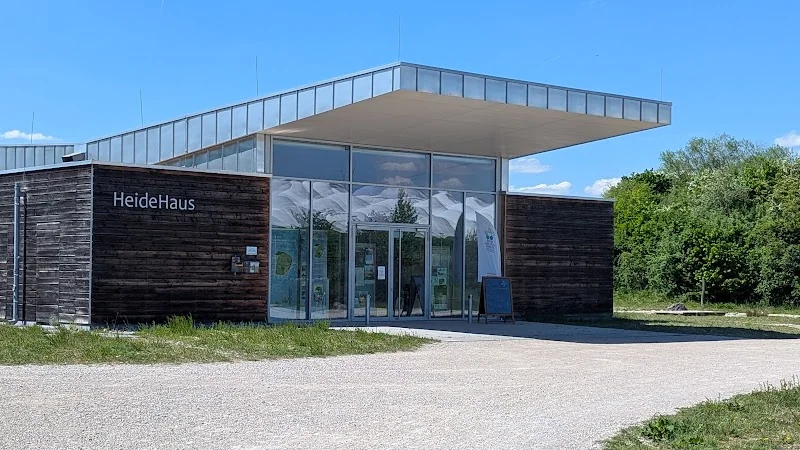
The HeideHaus in Munich-Freimann is much more than a point on the map: It is the central contact point for the heath landscape in northern Munich, located directly at the Fröttmaninger Heide and immediately at the west exit of the Fröttmaning subway station. Those who come here encounter an information and environmental education center that brings together nature, landscape protection, and recreation in a compact space. The large outdoor area, information boards, nature experience elements, and demonstration beds make the peculiarities of the heath tangible, while guided tours, seminars, and group offerings turn the place into a lively learning environment. Especially for visitors who want to experience Munich beyond the well-known city center, the HeideHaus is an unusually quiet, green, and very accessible starting point. ([heideflaechenverein.de](https://heideflaechenverein.de/service/termine2026/HFV-Programm-Fr%C3%BChjahr-Sommer-2026.pdf))
Opening Hours and Visitor Information at HeideHaus
The visiting hours are clearly regulated, making planning easy. From April to October, the HeideHaus is open on Tuesdays and Thursdays from 2 PM to 4 PM, and on Sundays from 1 PM to 5 PM. From November to March, it is accessible on Tuesdays, Thursdays, and Sundays from 2 PM to 4 PM. The house remains closed on public holidays, as well as in summer from August 1 to 31 and in winter from December 24 to January 6. The outdoor area with the educational and nature experience paths is accessible at any time, making a visit worthwhile even outside of opening hours. This combination of fixed house hours and freely accessible outdoor space is particularly attractive to many guests, as it allows for spontaneous nature outings while still providing structured information and contacts on site. ([heideflaechenverein.de](https://heideflaechenverein.de/service/termine2026/HFV-Programm-Fr%C3%BChjahr-Sommer-2026.pdf))
The HeideHaus is particularly strong in its role as a state-recognized environmental station. Visitors receive not only information about the heath but also an introduction to topics such as biodiversity, habitats, and sustainable interaction with nature. The location is aimed at families, school classes, nature enthusiasts, and groups seeking a compact, well-organized nature experience. The Heideflächenverein describes the house as a central contact point for the heath areas and forests in northern Munich and emphasizes its educational mission for the environment and sustainable development. Those wishing to make contact in advance will find a reliable point of contact at Admiralbogen 77, with phone and email available to clarify questions about programs, tours, or group offerings directly. ([heideflaechenverein.de](https://heideflaechenverein.de/freizeit/heidehaus/dokumente/HFV-Flyer-HeideHaus.pdf))
Directions to HeideHaus: U6 Fröttmaning instead of Parking Search
The directions are among the most important practical topics surrounding the HeideHaus, and here the clear message is unambiguous: The best connection is the subway. The house is located in Munich-Freimann directly at the west exit of the Fröttmaning subway station, i.e., on the U6 line. It is officially recommended to arrive by public transport, by bicycle, or on foot, as there is no direct access to the building and no parking spaces are available at the HeideHaus. This makes the location pleasant for many visitors: You do not enter a typical urban parking chaos but get off at a major transportation station and are already at the heath after just a few steps. Those who plan their visit cleverly can easily combine the journey with a walk into nature. ([heideflaechenverein.de](https://heideflaechenverein.de/freizeit/heidehaus/dokumente/HFV-Flyer-HeideHaus.pdf))
The connection from the region is also well documented. The Heideflächenverein mentions in its informational materials connections from Garching, Neufahrn, Eching, Unterschleißheim, and Oberschleißheim via bus and subway; access by car is described via the A9 with exits at Fröttmaning or Freimann, with the actual access then being on foot. For cyclists, there is also a described route parallel to the subway. In practice, this means: The HeideHaus is close to the city but consciously follows a nature-friendly, low-car accessibility concept. This orientation fits well with the character of the environmental station, as it conveys to visitors on the way there that consideration for landscapes, animals, and areas takes priority here. ([heideflaechenverein.de](https://www.heideflaechenverein.de/service/termine2023/2023_Flyer-NET.pdf))
Discover Outdoor Area, HeideRundweg, and Demonstration Beds
A large part of the appeal lies outside. On the approximately six-hectare outdoor area of the environmental station, visitors get an overview of how the heath has developed and why it is such an important habitat. Information boards, nature experience elements, and demonstration beds explain the landscape structure and show how nature and use have influenced each other over centuries. The area is designed so that the peculiarities of the heath landscape can be experienced not only through reading but also through seeing, walking, and sensing. This makes the visit exciting for children as well, as the information does not remain abstract but becomes visible through paths, plant images, and interactive stations. At the same time, the outdoor area shows that biodiversity is not just a buzzword but can be observed directly on site. ([heideflaechenverein.de](https://heideflaechenverein.de/service/termine2026/HFV-Programm-Fr%C3%BChjahr-Sommer-2026.pdf))
Particularly illustrative is the HeideRundweg on the environmental education grounds. The nature trail includes over 20 information boards, interactive stations, and experience elements, and it is accessible at any time, regardless of the house opening hours. Various demonstration beds are described on the grounds, including heath in the home garden, wild herbs for the kitchen, traditional use of wild herbs, medicinal and aromatic plants, seasons in the heath, multiculturalism in the heath, an experimental garden, and a scent field. This variety illustrates very well how broad the educational concept is: from botany and ecology to nutrition, everyday knowledge, and perception. The HeideHaus is thus not only an information center but also a small learning park that invites many visitors to a longer, more relaxed stay. ([heideflaechenverein.de](https://heideflaechenverein.de/freizeit/heidehaus/dokumente/HFV-Flyer-HeideHaus.pdf))
Events, Tours, and Group Offers
The program of the HeideHaus is deliberately diverse. The Heideflächenverein mentions natural history tours for young and old, nature experience days, creative and action offerings, as well as school class and holiday programs for children. The current program materials for spring and summer 2026 also make it clear that excursions, hikes, and bike tours to the heath areas in northern Munich are included, and that the HeideHaus is used as an event space for seminars and lectures. The educational approach is particularly important: The offerings should not only convey knowledge but also enable nature experiences with all senses and strengthen the connection between environment, health, and sustainable action. This creates a program that does not resemble a classic event house but rather a place where leisure and environmental education complement each other meaningfully. ([heideflaechenverein.de](https://heideflaechenverein.de/freizeit/heidehaus/dokumente/HFV-Flyer-HeideHaus.pdf))
The current public event landscape also shows how lively the location is. For 2026, formats such as Discover the Microworld, What Happens in the Evening in the Heath?, and the Heath Action Day - Guest in the Living Room of Nature are announced. This means the spectrum ranges from child-friendly microscopy and discovery offerings to evening walks and action days with multiple stations in the area. From the published dates, it can be inferred that the HeideHaus offers both spontaneous nature experiences and planable events; depending on the format, registration may or may not be required. This is particularly interesting for families, nature enthusiasts, and educational institutions, as the offerings are sometimes playful, sometimes factual, and sometimes activating. This mix makes the house a strong hit and excursion destination. ([in-muenchen.de](https://www.in-muenchen.de/events/entdecke-die-mikrowelt-heidehaus-heidehaus.html?utm_source=openai))
History of the HeideHaus and Nature Conservation in Northern Munich
To understand the significance of the HeideHaus, one must see the landscape before it. Just 200 years ago, a contiguous heath area characterized the north of Munich; today, only a few areas remain as relics of this original cultural landscape. The Heideflächenverein describes the region as an exceptionally structurally rich landscape mosaic of calcareous dry grasslands, open pine forests, gravelly soils with small water bodies, and deciduous forests, thus as a habitat that, despite its proximity to the metropolis, carries a remarkable biological diversity. In this context, the Heideflächenverein Münchener Norden e.V. was founded in 1990 to preserve valuable habitats, secure rare animal and plant species, and connect nature conservation with public relations and environmental education. The HeideHaus is thus not just any building but a visible part of a long-term protection strategy. ([heideflaechenverein.de](https://heideflaechenverein.de/service/termine2026/HFV-Programm-Fr%C3%BChjahr-Sommer-2026.pdf))
The house itself was created with funding from the Economic Stimulus Program II; at the same time, the former military training area was renovated and ecologically upgraded. This is an important aspect because the location exemplarily shows how a militarily used area can become an educational and natural space. In the association's documents, it is also stated that the area management was established in 2018 and has since been based at the HeideHaus. The project area includes parts of the Natura 2000 area of heathlands and deciduous forests north of Munich, including the Fröttmaninger Heide, Garchinger Heide, Mallertshofer Holz, and other protected areas. So, when you stand in the HeideHaus, you are not just at an excursion spot but in the midst of a regional nature conservation network. ([heideflaechenverein.de](https://heideflaechenverein.de/freizeit/heidehaus/dokumente/HFV-Flyer-HeideHaus.pdf))
Accessibility, Rules, and Practical Planning for the Visit
Practically speaking, the HeideHaus is well usable for many target groups. Access to the building and display areas is designed to be barrier-free, and the paths are described as roughly gravelled. This is especially important for visitors arriving with strollers, wheelchairs, or limited mobility. Additionally, the outdoor area is accessible at any time, allowing for flexible integration of the visit into a walk, a lesson, or a short nature stop. Those coming with a course, family, or small group also benefit from the clear structure of the area and the fact that the house does not feel like a large event arena but rather like a manageable, well-explained learning place. In connection with the proximity to the subway, planning becomes surprisingly easy. ([heideflaechenverein.de](https://heideflaechenverein.de/freizeit/heidehaus/dokumente/HFV-Flyer-HeideHaus.pdf))
To protect the facility, clear usage rules apply on the HeideHaus grounds. Camping, overnight stays, fires and barbecues, free-running dogs, cycling outside the main paths, drug use, fireworks, model flying or driving, and littering are prohibited. These rules may seem strict but are logical considering that a sensitive nature and educational space is being protected here. Additionally, there are direct contact routes for groups via phone and email, and the Heideflächenverein offers individual heath experiences as a supplement to the public program. This allows for a visit to be well planned in advance without losing flexibility. The HeideHaus thus functions simultaneously as an excursion destination, learning place, meeting point for environmental education, and as a gateway to one of the most exciting natural landscapes in northern Munich. ([heideflaechenverein.de](https://heideflaechenverein.de/freizeit/heidehaus/dokumente/HFV-Flyer-HeideHaus.pdf))
Sources:
Show moreShow less
HeideHaus Munich | Opening Hours & Directions
The HeideHaus in Munich-Freimann is much more than a point on the map: It is the central contact point for the heath landscape in northern Munich, located directly at the Fröttmaninger Heide and immediately at the west exit of the Fröttmaning subway station. Those who come here encounter an information and environmental education center that brings together nature, landscape protection, and recreation in a compact space. The large outdoor area, information boards, nature experience elements, and demonstration beds make the peculiarities of the heath tangible, while guided tours, seminars, and group offerings turn the place into a lively learning environment. Especially for visitors who want to experience Munich beyond the well-known city center, the HeideHaus is an unusually quiet, green, and very accessible starting point. ([heideflaechenverein.de](https://heideflaechenverein.de/service/termine2026/HFV-Programm-Fr%C3%BChjahr-Sommer-2026.pdf))
Opening Hours and Visitor Information at HeideHaus
The visiting hours are clearly regulated, making planning easy. From April to October, the HeideHaus is open on Tuesdays and Thursdays from 2 PM to 4 PM, and on Sundays from 1 PM to 5 PM. From November to March, it is accessible on Tuesdays, Thursdays, and Sundays from 2 PM to 4 PM. The house remains closed on public holidays, as well as in summer from August 1 to 31 and in winter from December 24 to January 6. The outdoor area with the educational and nature experience paths is accessible at any time, making a visit worthwhile even outside of opening hours. This combination of fixed house hours and freely accessible outdoor space is particularly attractive to many guests, as it allows for spontaneous nature outings while still providing structured information and contacts on site. ([heideflaechenverein.de](https://heideflaechenverein.de/service/termine2026/HFV-Programm-Fr%C3%BChjahr-Sommer-2026.pdf))
The HeideHaus is particularly strong in its role as a state-recognized environmental station. Visitors receive not only information about the heath but also an introduction to topics such as biodiversity, habitats, and sustainable interaction with nature. The location is aimed at families, school classes, nature enthusiasts, and groups seeking a compact, well-organized nature experience. The Heideflächenverein describes the house as a central contact point for the heath areas and forests in northern Munich and emphasizes its educational mission for the environment and sustainable development. Those wishing to make contact in advance will find a reliable point of contact at Admiralbogen 77, with phone and email available to clarify questions about programs, tours, or group offerings directly. ([heideflaechenverein.de](https://heideflaechenverein.de/freizeit/heidehaus/dokumente/HFV-Flyer-HeideHaus.pdf))
Directions to HeideHaus: U6 Fröttmaning instead of Parking Search
The directions are among the most important practical topics surrounding the HeideHaus, and here the clear message is unambiguous: The best connection is the subway. The house is located in Munich-Freimann directly at the west exit of the Fröttmaning subway station, i.e., on the U6 line. It is officially recommended to arrive by public transport, by bicycle, or on foot, as there is no direct access to the building and no parking spaces are available at the HeideHaus. This makes the location pleasant for many visitors: You do not enter a typical urban parking chaos but get off at a major transportation station and are already at the heath after just a few steps. Those who plan their visit cleverly can easily combine the journey with a walk into nature. ([heideflaechenverein.de](https://heideflaechenverein.de/freizeit/heidehaus/dokumente/HFV-Flyer-HeideHaus.pdf))
The connection from the region is also well documented. The Heideflächenverein mentions in its informational materials connections from Garching, Neufahrn, Eching, Unterschleißheim, and Oberschleißheim via bus and subway; access by car is described via the A9 with exits at Fröttmaning or Freimann, with the actual access then being on foot. For cyclists, there is also a described route parallel to the subway. In practice, this means: The HeideHaus is close to the city but consciously follows a nature-friendly, low-car accessibility concept. This orientation fits well with the character of the environmental station, as it conveys to visitors on the way there that consideration for landscapes, animals, and areas takes priority here. ([heideflaechenverein.de](https://www.heideflaechenverein.de/service/termine2023/2023_Flyer-NET.pdf))
Discover Outdoor Area, HeideRundweg, and Demonstration Beds
A large part of the appeal lies outside. On the approximately six-hectare outdoor area of the environmental station, visitors get an overview of how the heath has developed and why it is such an important habitat. Information boards, nature experience elements, and demonstration beds explain the landscape structure and show how nature and use have influenced each other over centuries. The area is designed so that the peculiarities of the heath landscape can be experienced not only through reading but also through seeing, walking, and sensing. This makes the visit exciting for children as well, as the information does not remain abstract but becomes visible through paths, plant images, and interactive stations. At the same time, the outdoor area shows that biodiversity is not just a buzzword but can be observed directly on site. ([heideflaechenverein.de](https://heideflaechenverein.de/service/termine2026/HFV-Programm-Fr%C3%BChjahr-Sommer-2026.pdf))
Particularly illustrative is the HeideRundweg on the environmental education grounds. The nature trail includes over 20 information boards, interactive stations, and experience elements, and it is accessible at any time, regardless of the house opening hours. Various demonstration beds are described on the grounds, including heath in the home garden, wild herbs for the kitchen, traditional use of wild herbs, medicinal and aromatic plants, seasons in the heath, multiculturalism in the heath, an experimental garden, and a scent field. This variety illustrates very well how broad the educational concept is: from botany and ecology to nutrition, everyday knowledge, and perception. The HeideHaus is thus not only an information center but also a small learning park that invites many visitors to a longer, more relaxed stay. ([heideflaechenverein.de](https://heideflaechenverein.de/freizeit/heidehaus/dokumente/HFV-Flyer-HeideHaus.pdf))
Events, Tours, and Group Offers
The program of the HeideHaus is deliberately diverse. The Heideflächenverein mentions natural history tours for young and old, nature experience days, creative and action offerings, as well as school class and holiday programs for children. The current program materials for spring and summer 2026 also make it clear that excursions, hikes, and bike tours to the heath areas in northern Munich are included, and that the HeideHaus is used as an event space for seminars and lectures. The educational approach is particularly important: The offerings should not only convey knowledge but also enable nature experiences with all senses and strengthen the connection between environment, health, and sustainable action. This creates a program that does not resemble a classic event house but rather a place where leisure and environmental education complement each other meaningfully. ([heideflaechenverein.de](https://heideflaechenverein.de/freizeit/heidehaus/dokumente/HFV-Flyer-HeideHaus.pdf))
The current public event landscape also shows how lively the location is. For 2026, formats such as Discover the Microworld, What Happens in the Evening in the Heath?, and the Heath Action Day - Guest in the Living Room of Nature are announced. This means the spectrum ranges from child-friendly microscopy and discovery offerings to evening walks and action days with multiple stations in the area. From the published dates, it can be inferred that the HeideHaus offers both spontaneous nature experiences and planable events; depending on the format, registration may or may not be required. This is particularly interesting for families, nature enthusiasts, and educational institutions, as the offerings are sometimes playful, sometimes factual, and sometimes activating. This mix makes the house a strong hit and excursion destination. ([in-muenchen.de](https://www.in-muenchen.de/events/entdecke-die-mikrowelt-heidehaus-heidehaus.html?utm_source=openai))
History of the HeideHaus and Nature Conservation in Northern Munich
To understand the significance of the HeideHaus, one must see the landscape before it. Just 200 years ago, a contiguous heath area characterized the north of Munich; today, only a few areas remain as relics of this original cultural landscape. The Heideflächenverein describes the region as an exceptionally structurally rich landscape mosaic of calcareous dry grasslands, open pine forests, gravelly soils with small water bodies, and deciduous forests, thus as a habitat that, despite its proximity to the metropolis, carries a remarkable biological diversity. In this context, the Heideflächenverein Münchener Norden e.V. was founded in 1990 to preserve valuable habitats, secure rare animal and plant species, and connect nature conservation with public relations and environmental education. The HeideHaus is thus not just any building but a visible part of a long-term protection strategy. ([heideflaechenverein.de](https://heideflaechenverein.de/service/termine2026/HFV-Programm-Fr%C3%BChjahr-Sommer-2026.pdf))
The house itself was created with funding from the Economic Stimulus Program II; at the same time, the former military training area was renovated and ecologically upgraded. This is an important aspect because the location exemplarily shows how a militarily used area can become an educational and natural space. In the association's documents, it is also stated that the area management was established in 2018 and has since been based at the HeideHaus. The project area includes parts of the Natura 2000 area of heathlands and deciduous forests north of Munich, including the Fröttmaninger Heide, Garchinger Heide, Mallertshofer Holz, and other protected areas. So, when you stand in the HeideHaus, you are not just at an excursion spot but in the midst of a regional nature conservation network. ([heideflaechenverein.de](https://heideflaechenverein.de/freizeit/heidehaus/dokumente/HFV-Flyer-HeideHaus.pdf))
Accessibility, Rules, and Practical Planning for the Visit
Practically speaking, the HeideHaus is well usable for many target groups. Access to the building and display areas is designed to be barrier-free, and the paths are described as roughly gravelled. This is especially important for visitors arriving with strollers, wheelchairs, or limited mobility. Additionally, the outdoor area is accessible at any time, allowing for flexible integration of the visit into a walk, a lesson, or a short nature stop. Those coming with a course, family, or small group also benefit from the clear structure of the area and the fact that the house does not feel like a large event arena but rather like a manageable, well-explained learning place. In connection with the proximity to the subway, planning becomes surprisingly easy. ([heideflaechenverein.de](https://heideflaechenverein.de/freizeit/heidehaus/dokumente/HFV-Flyer-HeideHaus.pdf))
To protect the facility, clear usage rules apply on the HeideHaus grounds. Camping, overnight stays, fires and barbecues, free-running dogs, cycling outside the main paths, drug use, fireworks, model flying or driving, and littering are prohibited. These rules may seem strict but are logical considering that a sensitive nature and educational space is being protected here. Additionally, there are direct contact routes for groups via phone and email, and the Heideflächenverein offers individual heath experiences as a supplement to the public program. This allows for a visit to be well planned in advance without losing flexibility. The HeideHaus thus functions simultaneously as an excursion destination, learning place, meeting point for environmental education, and as a gateway to one of the most exciting natural landscapes in northern Munich. ([heideflaechenverein.de](https://heideflaechenverein.de/freizeit/heidehaus/dokumente/HFV-Flyer-HeideHaus.pdf))
Sources:
HeideHaus Munich | Opening Hours & Directions
The HeideHaus in Munich-Freimann is much more than a point on the map: It is the central contact point for the heath landscape in northern Munich, located directly at the Fröttmaninger Heide and immediately at the west exit of the Fröttmaning subway station. Those who come here encounter an information and environmental education center that brings together nature, landscape protection, and recreation in a compact space. The large outdoor area, information boards, nature experience elements, and demonstration beds make the peculiarities of the heath tangible, while guided tours, seminars, and group offerings turn the place into a lively learning environment. Especially for visitors who want to experience Munich beyond the well-known city center, the HeideHaus is an unusually quiet, green, and very accessible starting point. ([heideflaechenverein.de](https://heideflaechenverein.de/service/termine2026/HFV-Programm-Fr%C3%BChjahr-Sommer-2026.pdf))
Opening Hours and Visitor Information at HeideHaus
The visiting hours are clearly regulated, making planning easy. From April to October, the HeideHaus is open on Tuesdays and Thursdays from 2 PM to 4 PM, and on Sundays from 1 PM to 5 PM. From November to March, it is accessible on Tuesdays, Thursdays, and Sundays from 2 PM to 4 PM. The house remains closed on public holidays, as well as in summer from August 1 to 31 and in winter from December 24 to January 6. The outdoor area with the educational and nature experience paths is accessible at any time, making a visit worthwhile even outside of opening hours. This combination of fixed house hours and freely accessible outdoor space is particularly attractive to many guests, as it allows for spontaneous nature outings while still providing structured information and contacts on site. ([heideflaechenverein.de](https://heideflaechenverein.de/service/termine2026/HFV-Programm-Fr%C3%BChjahr-Sommer-2026.pdf))
The HeideHaus is particularly strong in its role as a state-recognized environmental station. Visitors receive not only information about the heath but also an introduction to topics such as biodiversity, habitats, and sustainable interaction with nature. The location is aimed at families, school classes, nature enthusiasts, and groups seeking a compact, well-organized nature experience. The Heideflächenverein describes the house as a central contact point for the heath areas and forests in northern Munich and emphasizes its educational mission for the environment and sustainable development. Those wishing to make contact in advance will find a reliable point of contact at Admiralbogen 77, with phone and email available to clarify questions about programs, tours, or group offerings directly. ([heideflaechenverein.de](https://heideflaechenverein.de/freizeit/heidehaus/dokumente/HFV-Flyer-HeideHaus.pdf))
Directions to HeideHaus: U6 Fröttmaning instead of Parking Search
The directions are among the most important practical topics surrounding the HeideHaus, and here the clear message is unambiguous: The best connection is the subway. The house is located in Munich-Freimann directly at the west exit of the Fröttmaning subway station, i.e., on the U6 line. It is officially recommended to arrive by public transport, by bicycle, or on foot, as there is no direct access to the building and no parking spaces are available at the HeideHaus. This makes the location pleasant for many visitors: You do not enter a typical urban parking chaos but get off at a major transportation station and are already at the heath after just a few steps. Those who plan their visit cleverly can easily combine the journey with a walk into nature. ([heideflaechenverein.de](https://heideflaechenverein.de/freizeit/heidehaus/dokumente/HFV-Flyer-HeideHaus.pdf))
The connection from the region is also well documented. The Heideflächenverein mentions in its informational materials connections from Garching, Neufahrn, Eching, Unterschleißheim, and Oberschleißheim via bus and subway; access by car is described via the A9 with exits at Fröttmaning or Freimann, with the actual access then being on foot. For cyclists, there is also a described route parallel to the subway. In practice, this means: The HeideHaus is close to the city but consciously follows a nature-friendly, low-car accessibility concept. This orientation fits well with the character of the environmental station, as it conveys to visitors on the way there that consideration for landscapes, animals, and areas takes priority here. ([heideflaechenverein.de](https://www.heideflaechenverein.de/service/termine2023/2023_Flyer-NET.pdf))
Discover Outdoor Area, HeideRundweg, and Demonstration Beds
A large part of the appeal lies outside. On the approximately six-hectare outdoor area of the environmental station, visitors get an overview of how the heath has developed and why it is such an important habitat. Information boards, nature experience elements, and demonstration beds explain the landscape structure and show how nature and use have influenced each other over centuries. The area is designed so that the peculiarities of the heath landscape can be experienced not only through reading but also through seeing, walking, and sensing. This makes the visit exciting for children as well, as the information does not remain abstract but becomes visible through paths, plant images, and interactive stations. At the same time, the outdoor area shows that biodiversity is not just a buzzword but can be observed directly on site. ([heideflaechenverein.de](https://heideflaechenverein.de/service/termine2026/HFV-Programm-Fr%C3%BChjahr-Sommer-2026.pdf))
Particularly illustrative is the HeideRundweg on the environmental education grounds. The nature trail includes over 20 information boards, interactive stations, and experience elements, and it is accessible at any time, regardless of the house opening hours. Various demonstration beds are described on the grounds, including heath in the home garden, wild herbs for the kitchen, traditional use of wild herbs, medicinal and aromatic plants, seasons in the heath, multiculturalism in the heath, an experimental garden, and a scent field. This variety illustrates very well how broad the educational concept is: from botany and ecology to nutrition, everyday knowledge, and perception. The HeideHaus is thus not only an information center but also a small learning park that invites many visitors to a longer, more relaxed stay. ([heideflaechenverein.de](https://heideflaechenverein.de/freizeit/heidehaus/dokumente/HFV-Flyer-HeideHaus.pdf))
Events, Tours, and Group Offers
The program of the HeideHaus is deliberately diverse. The Heideflächenverein mentions natural history tours for young and old, nature experience days, creative and action offerings, as well as school class and holiday programs for children. The current program materials for spring and summer 2026 also make it clear that excursions, hikes, and bike tours to the heath areas in northern Munich are included, and that the HeideHaus is used as an event space for seminars and lectures. The educational approach is particularly important: The offerings should not only convey knowledge but also enable nature experiences with all senses and strengthen the connection between environment, health, and sustainable action. This creates a program that does not resemble a classic event house but rather a place where leisure and environmental education complement each other meaningfully. ([heideflaechenverein.de](https://heideflaechenverein.de/freizeit/heidehaus/dokumente/HFV-Flyer-HeideHaus.pdf))
The current public event landscape also shows how lively the location is. For 2026, formats such as Discover the Microworld, What Happens in the Evening in the Heath?, and the Heath Action Day - Guest in the Living Room of Nature are announced. This means the spectrum ranges from child-friendly microscopy and discovery offerings to evening walks and action days with multiple stations in the area. From the published dates, it can be inferred that the HeideHaus offers both spontaneous nature experiences and planable events; depending on the format, registration may or may not be required. This is particularly interesting for families, nature enthusiasts, and educational institutions, as the offerings are sometimes playful, sometimes factual, and sometimes activating. This mix makes the house a strong hit and excursion destination. ([in-muenchen.de](https://www.in-muenchen.de/events/entdecke-die-mikrowelt-heidehaus-heidehaus.html?utm_source=openai))
History of the HeideHaus and Nature Conservation in Northern Munich
To understand the significance of the HeideHaus, one must see the landscape before it. Just 200 years ago, a contiguous heath area characterized the north of Munich; today, only a few areas remain as relics of this original cultural landscape. The Heideflächenverein describes the region as an exceptionally structurally rich landscape mosaic of calcareous dry grasslands, open pine forests, gravelly soils with small water bodies, and deciduous forests, thus as a habitat that, despite its proximity to the metropolis, carries a remarkable biological diversity. In this context, the Heideflächenverein Münchener Norden e.V. was founded in 1990 to preserve valuable habitats, secure rare animal and plant species, and connect nature conservation with public relations and environmental education. The HeideHaus is thus not just any building but a visible part of a long-term protection strategy. ([heideflaechenverein.de](https://heideflaechenverein.de/service/termine2026/HFV-Programm-Fr%C3%BChjahr-Sommer-2026.pdf))
The house itself was created with funding from the Economic Stimulus Program II; at the same time, the former military training area was renovated and ecologically upgraded. This is an important aspect because the location exemplarily shows how a militarily used area can become an educational and natural space. In the association's documents, it is also stated that the area management was established in 2018 and has since been based at the HeideHaus. The project area includes parts of the Natura 2000 area of heathlands and deciduous forests north of Munich, including the Fröttmaninger Heide, Garchinger Heide, Mallertshofer Holz, and other protected areas. So, when you stand in the HeideHaus, you are not just at an excursion spot but in the midst of a regional nature conservation network. ([heideflaechenverein.de](https://heideflaechenverein.de/freizeit/heidehaus/dokumente/HFV-Flyer-HeideHaus.pdf))
Accessibility, Rules, and Practical Planning for the Visit
Practically speaking, the HeideHaus is well usable for many target groups. Access to the building and display areas is designed to be barrier-free, and the paths are described as roughly gravelled. This is especially important for visitors arriving with strollers, wheelchairs, or limited mobility. Additionally, the outdoor area is accessible at any time, allowing for flexible integration of the visit into a walk, a lesson, or a short nature stop. Those coming with a course, family, or small group also benefit from the clear structure of the area and the fact that the house does not feel like a large event arena but rather like a manageable, well-explained learning place. In connection with the proximity to the subway, planning becomes surprisingly easy. ([heideflaechenverein.de](https://heideflaechenverein.de/freizeit/heidehaus/dokumente/HFV-Flyer-HeideHaus.pdf))
To protect the facility, clear usage rules apply on the HeideHaus grounds. Camping, overnight stays, fires and barbecues, free-running dogs, cycling outside the main paths, drug use, fireworks, model flying or driving, and littering are prohibited. These rules may seem strict but are logical considering that a sensitive nature and educational space is being protected here. Additionally, there are direct contact routes for groups via phone and email, and the Heideflächenverein offers individual heath experiences as a supplement to the public program. This allows for a visit to be well planned in advance without losing flexibility. The HeideHaus thus functions simultaneously as an excursion destination, learning place, meeting point for environmental education, and as a gateway to one of the most exciting natural landscapes in northern Munich. ([heideflaechenverein.de](https://heideflaechenverein.de/freizeit/heidehaus/dokumente/HFV-Flyer-HeideHaus.pdf))
Sources:
Upcoming Events
Open the Garden Door to Nature - Information Day with Lectures and Consultation
Nature-friendly gardens, heath knowledge, and live consultation at Heath House Munich-Fröttmaning: the information day on July 5, 2026, inspires sustainably. #Munich #Nature

Exploring the Meadow with Children and Discovering Biodiversity
Experience meadows, flowering areas, and biodiversity up close: The training at the HeideHaus Munich inspires pedagogical practice with nature knowledge and learning fun. #NatureEducation
Frequently Asked Questions
Reviews
Tilde White
13. July 2024
I also care about preserving our beautiful Bavarian nature and cultural landscape. This includes the Südfröttmanninger Heide. Unfortunately, the nature park ranger from the north there is only mediocre in expertise but very eager. Besides the saffron yellow sapling and the spotted stick insect, there should also be the "Homo Sapiens" in the Munich area, claiming living and recreational space. The management should step in here, "keep the church in the village," and train the staff accordingly. (The author is also active in nature conservation)
Michael Riess
2. March 2018
As a nature lover, visiting the Fröttmaninger Heide is a must. Unique in the Munich area, you can find numerous, even rare plants and insects here, including many, some rare butterflies. There are amphibians, bat species, and a breathtaking landscape. Dear dog owners: Please do not let your dogs into the ponds!!! They destroy the habitat of the amphibians!! The Heide can be reached on foot, by S-Bahn, by bike, or by car.
Thomas Gloetzl
28. August 2021
Southern Fröttmaninger Heide. A nature reserve on the northern outskirts of Munich. One of the largest grass heaths in Central Europe. Perfect for families. Beautifully designed circular hiking trails!!!
Chris A.
3. February 2024
A must for all nature lovers and worth a trip for those who want to give their children something valuable! Very informative and great offerings for kids... Highly recommended, there are always interesting brochures available!!
A B
18. June 2017
Very successful architecture. Diverse educational offerings. Ammunition remnants found in the Heide are on display in a showcase.