
München
Prälat-Miller-Weg 1, 80331 München-Altstadt-Lehel, Deutschland
Holy Spirit Munich | History & Concerts
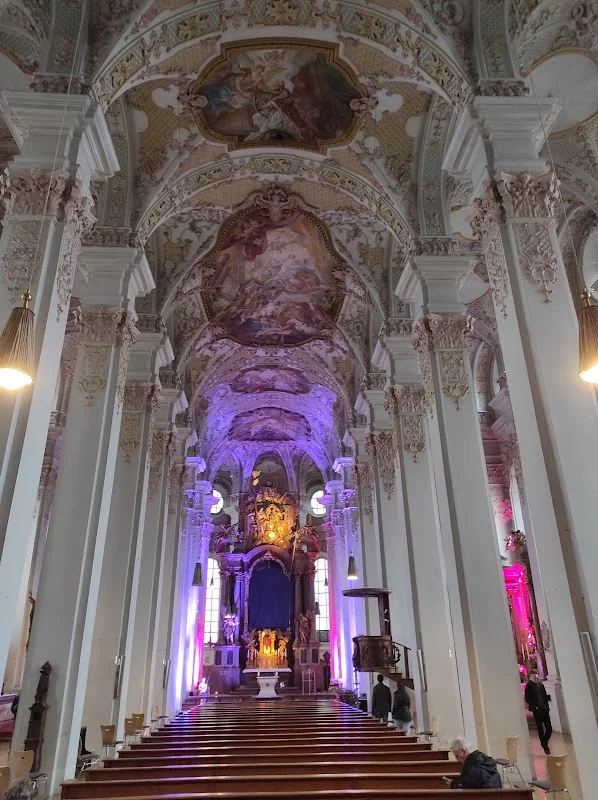
Holy Spirit in Munich is much more than a quiet place between Viktualienmarkt and the old town alleys. The church connects early city history, baroque art, lived spirituality, and a vibrant event life in a small space. Today, those who stroll through the city center experience an unusual contrast: outside, markets, movement, and Munich's everyday life; inside, a space with centuries-old continuity, an impressive high altar, Asam frescoes, and an atmosphere suitable for both reflection and cultural visits. The parish sees itself as a place of encounter, prayer, and community; at the same time, the church attracts many visitors with concerts, services, and its location at the western edge of Viktualienmarkt. This mix makes Holy Spirit an address that one should know not only for its history but also for its current role in the center of Munich. ([heilig-geist-muenchen.de](https://heilig-geist-muenchen.de/))
History of the Holy Spirit Church in Munich
The history of Holy Spirit begins in the early 13th century and is closely linked to the social welfare of the city. According to the parish, a hospital was established around 1208 in front of the Talburg Gate near an already existing St. Catherine's chapel. Such Holy Spirit hospitals were not a marginal note in medieval city life but central institutions for the sick, poor, elderly, strangers, and homeless. In 1271, the chapel became the third parish in Munich dedicated to the Holy Spirit; thus, it gained its ecclesiastical and civic rank. Behind this foundation lies not only architecture but also the idea of connecting faith and concrete help for those in need. This connection shapes the place to this day and explains why Holy Spirit holds such a firm place in Munich's collective memory. ([heilig-geist-muenchen.de](https://heilig-geist-muenchen.de/pfarrei/geschichte/))
The building itself has been marked by destruction and reconstruction multiple times. The city fire of 1327 destroyed the hospital and church; the new construction as a late Gothic hall church extended until 1392. In the 18th century, the building was baroque, with the brothers Asam and Johann Georg Ettenhofer leaving decisive marks. During this time, the church received an embellishment that today is one of its strongest attractions: rich decor, frescoes, and altars that charge the space far beyond its original function. In World War II, the church was again severely damaged, and from 1953 to 1957, reconstruction followed under Prelate Konrad Miller and the overall management of Erwin Schleich. The fact that the current state, according to the parish, reflects almost the pre-war condition is not only an architectural piece of information but an important part of Munich's post-war history. Therefore, those who visit Holy Spirit see not a museum relic but a monument that has been reborn under pressure multiple times. ([heilig-geist-muenchen.de](https://heilig-geist-muenchen.de/pfarrei/geschichte/))
Opening Hours, Directions, and Parking at Holy Spirit Church
Visiting Holy Spirit is pleasantly uncomplicated because the church is located in the city center and is very well connected to public transport. According to the parish, the church is open Monday to Friday from 9:00 AM to 8:00 PM, and on Saturdays, Sundays, and holidays from 8:30 AM to 8:00 PM. The official route leads via Marienplatz: S-Bahn and U3/U6 to Marienplatz, as well as bus lines 52, 62, and 132 to Viktualienmarkt Hl. Geist. This makes the place particularly attractive for those who want to combine a visit to the old town, a market stroll, or a cultural detour with little planning effort. Especially in Munich, this central location is an advantage because many sights are within walking distance, and the visit can be flexibly integrated into a city stroll. ([heilig-geist-muenchen.de](https://heilig-geist-muenchen.de/service/pfarrbuero/))
Regarding parking, the location is somewhat typical for Munich's old town: Marienplatz is in the pedestrian zone, and there are no direct parking spaces available. For Holy Spirit, this means that the most convenient solution is usually to arrive by train, subway, or bus. However, for those who still come by car, there are parking garages nearby, such as the underground garage at Marienplatz and the Rieger-City parking garage at Isartor. From there, it is just a few minutes' walk to Viktualienmarkt and thus also to the church. It is important to keep an eye on the city parking regulations, as the old town is heavily frequented and parking space can be scarce. For visitors, the combination of public transport and a short walk is usually the least stressful way. This also fits the surroundings: Holy Spirit is so centrally located that the last meters are best walked, making the journey through the historic urban space part of the experience. ([muenchen.de](https://www.muenchen.de/sehenswuerdigkeiten/top-sehenswuerdigkeiten/marienplatz?utm_source=openai))
Concerts, Services, and Current Events at Holy Spirit
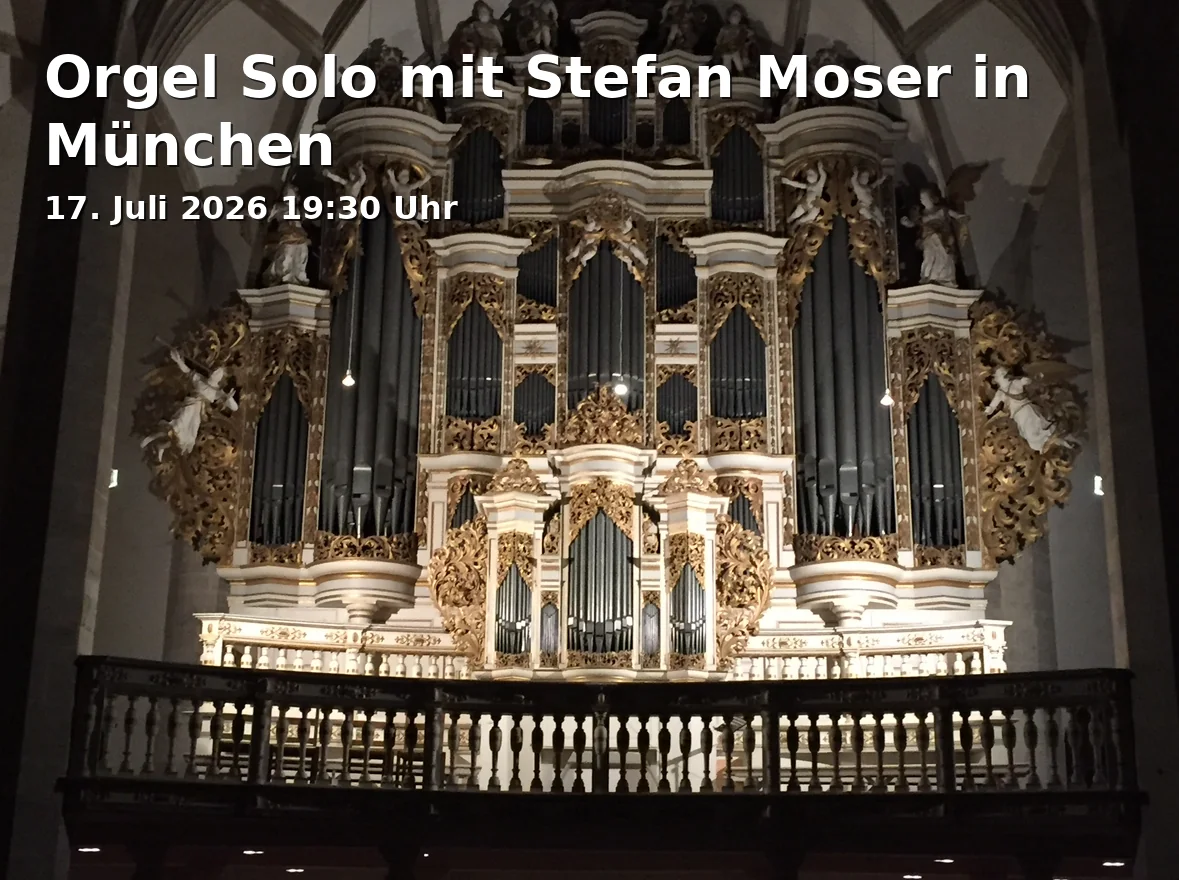
Holy Spirit is not only a monument but a lively church and event venue. On the official homepage of the parish, daily service offerings as well as community formats, prayer times, and church groups can be found. The current summer program is particularly visible: the parish announces summer concerts from July 17 to September 6, 2026, and Munich Ticket lists several specific dates with organ solo, organ and trumpet, as well as organ and two trumpets. This is particularly fitting for the church because its acoustics and baroque interior design carry classical sacred music very effectively. Therefore, those searching for holy spirit munich in combination with concerts or programs do not accidentally land at a place where liturgy and music have traditionally been closely linked. ([heilig-geist-muenchen.de](https://heilig-geist-muenchen.de/))
Even outside of concerts, the parish shows itself as an active place with a dense calendar. The homepage mentions, among other things, Eucharistic adoration, Holy Mass, praise evenings, Sacred Heart events, family offerings, a church café, a senior circle, the Holy Spirit Brotherhood, and other groups. Thus, Holy Spirit covers a wide range of needs: quiet personal prayer times, regular services, community life, and events for different age groups. This breadth is an important keyword signal because users often search not only for the church itself but also for programs, dates, community, and spiritual offerings. Therefore, for content planning, it is crucial: Holy Spirit Munich stands not only for historical substance but also for ongoing use. The church is accessible during the day, is used liturgically, and at the same time offers a stage for cultural formats that go beyond the classic church visit. This makes the location significantly more versatile in content than a mere sight. ([heilig-geist-muenchen.de](https://heilig-geist-muenchen.de/))
High Altar, Asam Frescoes, and Artworks in Holy Spirit
The art historical quality of Holy Spirit is one of the strongest reasons to visit. Particularly noteworthy is the high altar from the years 1728 to 1730, which impressively summarizes the baroque claim of the space with its altar painting of the outpouring of the Holy Spirit and the works of Nikolaus Gottfried Stuber, Antonio Matteo, and Johann Georg Greiff. In addition, there are the frescoes in the nave, originally by Cosmas Damian Asam, which were reconstructed after the war damage. This combination of altar, painting, and spatial effect makes Holy Spirit a place where art is not only viewed but experienced in architectural context. The impression is not that of an isolated collection but of a developed total work of art, whose parts reinforce each other. ([heilig-geist-muenchen.de](https://heilig-geist-muenchen.de/pfarrei/gemaelde-kunstwerke-in-heilig-geist/))
The parish names further significant artworks that make the visit additionally worthwhile: the Marian altar with the Hammerthal Madonna, the Trinity altar, the Sacred Heart altar, the altar of the Immaculate Conception, and the Joseph altar. Additionally, the seven paintings along the side aisles depict the gifts of the Holy Spirit and are by Peter Jakob Horemans. The motif of the pretzel rider is also part of the imagery and connects religious symbolism with Munich's urban culture. Remarkable is also the role of the ceiling frescoes, in which the outpouring of the Holy Spirit, the heavenly hosts, and the founding of the hospital are visually unfolded. Therefore, those interested in art history, baroque, or sacred art will find a dense canon of motifs here that goes far beyond the first impression. For SEO, the themes of high altar, frescoes, artworks, and baroque furnishings are particularly relevant because these terms best represent the content depth of the place. ([heilig-geist-muenchen.de](https://heilig-geist-muenchen.de/pfarrei/gemaelde-kunstwerke-in-heilig-geist/))
Viktualienmarkt, Old Town, and the Visitor Experience around Holy Spirit
The location of Holy Spirit is a central part of its effect. The church stands at the edge of Viktualienmarkt and in immediate proximity to the old town, where Munich becomes particularly urban, historical, and touristy. The city describes Holy Spirit as a church right at Viktualienmarkt, and the market itself is only a few steps from Marienplatz, the Old Peter, and the Town Hall. This makes the church an ideal point for visitors who want to combine several destinations in one tour: market, old town, church, and perhaps a café or a short break. At the same time, the place offers exactly what many visitors seek when they search for holy spirit munich, viktualienmarkt, or old town: a quiet but central counterpoint to the hustle and bustle of the city center. The parish itself emphasizes the character as a place of encounter, exchange, and prayer, which charges the location not only geographically but also atmospherically. ([muenchen.de](https://www.muenchen.de/sehenswuerdigkeiten/top-sehenswuerdigkeiten/viktualienmarkt?utm_source=openai))
For the visit, it is also worthwhile to look at the surroundings because the historic urban space extends the church visit. From Marienplatz, one can reach Viktualienmarkt on foot, and from there, Holy Spirit is just a short walk away. Those who know the city center know that these few minutes are often the most beautiful: market stalls, facades, sight lines, street music, or simply focusing on the path itself. The location is therefore suitable not only for believers or art enthusiasts but also for anyone who wants to experience Munich in its historically grown density. Especially when researching parking or directions, it is advisable to leave the car rather outside the tighter old town core and to combine the visit with public transport. This leaves more room for the actual purpose of the visit: to perceive the church as a quiet, artistic, and very urban place. Holy Spirit is thus a classic example of a place that explains itself from its history and derives its current radiance from its location. ([muenchen.de](https://www.muenchen.de/sehenswuerdigkeiten/top-sehenswuerdigkeiten/marienplatz?utm_source=openai))
Sources:
Mehr anzeigenWeniger anzeigen
Holy Spirit Munich | History & Concerts
Holy Spirit in Munich is much more than a quiet place between Viktualienmarkt and the old town alleys. The church connects early city history, baroque art, lived spirituality, and a vibrant event life in a small space. Today, those who stroll through the city center experience an unusual contrast: outside, markets, movement, and Munich's everyday life; inside, a space with centuries-old continuity, an impressive high altar, Asam frescoes, and an atmosphere suitable for both reflection and cultural visits. The parish sees itself as a place of encounter, prayer, and community; at the same time, the church attracts many visitors with concerts, services, and its location at the western edge of Viktualienmarkt. This mix makes Holy Spirit an address that one should know not only for its history but also for its current role in the center of Munich. ([heilig-geist-muenchen.de](https://heilig-geist-muenchen.de/))
History of the Holy Spirit Church in Munich
The history of Holy Spirit begins in the early 13th century and is closely linked to the social welfare of the city. According to the parish, a hospital was established around 1208 in front of the Talburg Gate near an already existing St. Catherine's chapel. Such Holy Spirit hospitals were not a marginal note in medieval city life but central institutions for the sick, poor, elderly, strangers, and homeless. In 1271, the chapel became the third parish in Munich dedicated to the Holy Spirit; thus, it gained its ecclesiastical and civic rank. Behind this foundation lies not only architecture but also the idea of connecting faith and concrete help for those in need. This connection shapes the place to this day and explains why Holy Spirit holds such a firm place in Munich's collective memory. ([heilig-geist-muenchen.de](https://heilig-geist-muenchen.de/pfarrei/geschichte/))
The building itself has been marked by destruction and reconstruction multiple times. The city fire of 1327 destroyed the hospital and church; the new construction as a late Gothic hall church extended until 1392. In the 18th century, the building was baroque, with the brothers Asam and Johann Georg Ettenhofer leaving decisive marks. During this time, the church received an embellishment that today is one of its strongest attractions: rich decor, frescoes, and altars that charge the space far beyond its original function. In World War II, the church was again severely damaged, and from 1953 to 1957, reconstruction followed under Prelate Konrad Miller and the overall management of Erwin Schleich. The fact that the current state, according to the parish, reflects almost the pre-war condition is not only an architectural piece of information but an important part of Munich's post-war history. Therefore, those who visit Holy Spirit see not a museum relic but a monument that has been reborn under pressure multiple times. ([heilig-geist-muenchen.de](https://heilig-geist-muenchen.de/pfarrei/geschichte/))
Opening Hours, Directions, and Parking at Holy Spirit Church
Visiting Holy Spirit is pleasantly uncomplicated because the church is located in the city center and is very well connected to public transport. According to the parish, the church is open Monday to Friday from 9:00 AM to 8:00 PM, and on Saturdays, Sundays, and holidays from 8:30 AM to 8:00 PM. The official route leads via Marienplatz: S-Bahn and U3/U6 to Marienplatz, as well as bus lines 52, 62, and 132 to Viktualienmarkt Hl. Geist. This makes the place particularly attractive for those who want to combine a visit to the old town, a market stroll, or a cultural detour with little planning effort. Especially in Munich, this central location is an advantage because many sights are within walking distance, and the visit can be flexibly integrated into a city stroll. ([heilig-geist-muenchen.de](https://heilig-geist-muenchen.de/service/pfarrbuero/))
Regarding parking, the location is somewhat typical for Munich's old town: Marienplatz is in the pedestrian zone, and there are no direct parking spaces available. For Holy Spirit, this means that the most convenient solution is usually to arrive by train, subway, or bus. However, for those who still come by car, there are parking garages nearby, such as the underground garage at Marienplatz and the Rieger-City parking garage at Isartor. From there, it is just a few minutes' walk to Viktualienmarkt and thus also to the church. It is important to keep an eye on the city parking regulations, as the old town is heavily frequented and parking space can be scarce. For visitors, the combination of public transport and a short walk is usually the least stressful way. This also fits the surroundings: Holy Spirit is so centrally located that the last meters are best walked, making the journey through the historic urban space part of the experience. ([muenchen.de](https://www.muenchen.de/sehenswuerdigkeiten/top-sehenswuerdigkeiten/marienplatz?utm_source=openai))
Concerts, Services, and Current Events at Holy Spirit
Holy Spirit is not only a monument but a lively church and event venue. On the official homepage of the parish, daily service offerings as well as community formats, prayer times, and church groups can be found. The current summer program is particularly visible: the parish announces summer concerts from July 17 to September 6, 2026, and Munich Ticket lists several specific dates with organ solo, organ and trumpet, as well as organ and two trumpets. This is particularly fitting for the church because its acoustics and baroque interior design carry classical sacred music very effectively. Therefore, those searching for holy spirit munich in combination with concerts or programs do not accidentally land at a place where liturgy and music have traditionally been closely linked. ([heilig-geist-muenchen.de](https://heilig-geist-muenchen.de/))
Even outside of concerts, the parish shows itself as an active place with a dense calendar. The homepage mentions, among other things, Eucharistic adoration, Holy Mass, praise evenings, Sacred Heart events, family offerings, a church café, a senior circle, the Holy Spirit Brotherhood, and other groups. Thus, Holy Spirit covers a wide range of needs: quiet personal prayer times, regular services, community life, and events for different age groups. This breadth is an important keyword signal because users often search not only for the church itself but also for programs, dates, community, and spiritual offerings. Therefore, for content planning, it is crucial: Holy Spirit Munich stands not only for historical substance but also for ongoing use. The church is accessible during the day, is used liturgically, and at the same time offers a stage for cultural formats that go beyond the classic church visit. This makes the location significantly more versatile in content than a mere sight. ([heilig-geist-muenchen.de](https://heilig-geist-muenchen.de/))
High Altar, Asam Frescoes, and Artworks in Holy Spirit
The art historical quality of Holy Spirit is one of the strongest reasons to visit. Particularly noteworthy is the high altar from the years 1728 to 1730, which impressively summarizes the baroque claim of the space with its altar painting of the outpouring of the Holy Spirit and the works of Nikolaus Gottfried Stuber, Antonio Matteo, and Johann Georg Greiff. In addition, there are the frescoes in the nave, originally by Cosmas Damian Asam, which were reconstructed after the war damage. This combination of altar, painting, and spatial effect makes Holy Spirit a place where art is not only viewed but experienced in architectural context. The impression is not that of an isolated collection but of a developed total work of art, whose parts reinforce each other. ([heilig-geist-muenchen.de](https://heilig-geist-muenchen.de/pfarrei/gemaelde-kunstwerke-in-heilig-geist/))
The parish names further significant artworks that make the visit additionally worthwhile: the Marian altar with the Hammerthal Madonna, the Trinity altar, the Sacred Heart altar, the altar of the Immaculate Conception, and the Joseph altar. Additionally, the seven paintings along the side aisles depict the gifts of the Holy Spirit and are by Peter Jakob Horemans. The motif of the pretzel rider is also part of the imagery and connects religious symbolism with Munich's urban culture. Remarkable is also the role of the ceiling frescoes, in which the outpouring of the Holy Spirit, the heavenly hosts, and the founding of the hospital are visually unfolded. Therefore, those interested in art history, baroque, or sacred art will find a dense canon of motifs here that goes far beyond the first impression. For SEO, the themes of high altar, frescoes, artworks, and baroque furnishings are particularly relevant because these terms best represent the content depth of the place. ([heilig-geist-muenchen.de](https://heilig-geist-muenchen.de/pfarrei/gemaelde-kunstwerke-in-heilig-geist/))
Viktualienmarkt, Old Town, and the Visitor Experience around Holy Spirit
The location of Holy Spirit is a central part of its effect. The church stands at the edge of Viktualienmarkt and in immediate proximity to the old town, where Munich becomes particularly urban, historical, and touristy. The city describes Holy Spirit as a church right at Viktualienmarkt, and the market itself is only a few steps from Marienplatz, the Old Peter, and the Town Hall. This makes the church an ideal point for visitors who want to combine several destinations in one tour: market, old town, church, and perhaps a café or a short break. At the same time, the place offers exactly what many visitors seek when they search for holy spirit munich, viktualienmarkt, or old town: a quiet but central counterpoint to the hustle and bustle of the city center. The parish itself emphasizes the character as a place of encounter, exchange, and prayer, which charges the location not only geographically but also atmospherically. ([muenchen.de](https://www.muenchen.de/sehenswuerdigkeiten/top-sehenswuerdigkeiten/viktualienmarkt?utm_source=openai))
For the visit, it is also worthwhile to look at the surroundings because the historic urban space extends the church visit. From Marienplatz, one can reach Viktualienmarkt on foot, and from there, Holy Spirit is just a short walk away. Those who know the city center know that these few minutes are often the most beautiful: market stalls, facades, sight lines, street music, or simply focusing on the path itself. The location is therefore suitable not only for believers or art enthusiasts but also for anyone who wants to experience Munich in its historically grown density. Especially when researching parking or directions, it is advisable to leave the car rather outside the tighter old town core and to combine the visit with public transport. This leaves more room for the actual purpose of the visit: to perceive the church as a quiet, artistic, and very urban place. Holy Spirit is thus a classic example of a place that explains itself from its history and derives its current radiance from its location. ([muenchen.de](https://www.muenchen.de/sehenswuerdigkeiten/top-sehenswuerdigkeiten/marienplatz?utm_source=openai))
Sources:
Holy Spirit Munich | History & Concerts
Holy Spirit in Munich is much more than a quiet place between Viktualienmarkt and the old town alleys. The church connects early city history, baroque art, lived spirituality, and a vibrant event life in a small space. Today, those who stroll through the city center experience an unusual contrast: outside, markets, movement, and Munich's everyday life; inside, a space with centuries-old continuity, an impressive high altar, Asam frescoes, and an atmosphere suitable for both reflection and cultural visits. The parish sees itself as a place of encounter, prayer, and community; at the same time, the church attracts many visitors with concerts, services, and its location at the western edge of Viktualienmarkt. This mix makes Holy Spirit an address that one should know not only for its history but also for its current role in the center of Munich. ([heilig-geist-muenchen.de](https://heilig-geist-muenchen.de/))
History of the Holy Spirit Church in Munich
The history of Holy Spirit begins in the early 13th century and is closely linked to the social welfare of the city. According to the parish, a hospital was established around 1208 in front of the Talburg Gate near an already existing St. Catherine's chapel. Such Holy Spirit hospitals were not a marginal note in medieval city life but central institutions for the sick, poor, elderly, strangers, and homeless. In 1271, the chapel became the third parish in Munich dedicated to the Holy Spirit; thus, it gained its ecclesiastical and civic rank. Behind this foundation lies not only architecture but also the idea of connecting faith and concrete help for those in need. This connection shapes the place to this day and explains why Holy Spirit holds such a firm place in Munich's collective memory. ([heilig-geist-muenchen.de](https://heilig-geist-muenchen.de/pfarrei/geschichte/))
The building itself has been marked by destruction and reconstruction multiple times. The city fire of 1327 destroyed the hospital and church; the new construction as a late Gothic hall church extended until 1392. In the 18th century, the building was baroque, with the brothers Asam and Johann Georg Ettenhofer leaving decisive marks. During this time, the church received an embellishment that today is one of its strongest attractions: rich decor, frescoes, and altars that charge the space far beyond its original function. In World War II, the church was again severely damaged, and from 1953 to 1957, reconstruction followed under Prelate Konrad Miller and the overall management of Erwin Schleich. The fact that the current state, according to the parish, reflects almost the pre-war condition is not only an architectural piece of information but an important part of Munich's post-war history. Therefore, those who visit Holy Spirit see not a museum relic but a monument that has been reborn under pressure multiple times. ([heilig-geist-muenchen.de](https://heilig-geist-muenchen.de/pfarrei/geschichte/))
Opening Hours, Directions, and Parking at Holy Spirit Church
Visiting Holy Spirit is pleasantly uncomplicated because the church is located in the city center and is very well connected to public transport. According to the parish, the church is open Monday to Friday from 9:00 AM to 8:00 PM, and on Saturdays, Sundays, and holidays from 8:30 AM to 8:00 PM. The official route leads via Marienplatz: S-Bahn and U3/U6 to Marienplatz, as well as bus lines 52, 62, and 132 to Viktualienmarkt Hl. Geist. This makes the place particularly attractive for those who want to combine a visit to the old town, a market stroll, or a cultural detour with little planning effort. Especially in Munich, this central location is an advantage because many sights are within walking distance, and the visit can be flexibly integrated into a city stroll. ([heilig-geist-muenchen.de](https://heilig-geist-muenchen.de/service/pfarrbuero/))
Regarding parking, the location is somewhat typical for Munich's old town: Marienplatz is in the pedestrian zone, and there are no direct parking spaces available. For Holy Spirit, this means that the most convenient solution is usually to arrive by train, subway, or bus. However, for those who still come by car, there are parking garages nearby, such as the underground garage at Marienplatz and the Rieger-City parking garage at Isartor. From there, it is just a few minutes' walk to Viktualienmarkt and thus also to the church. It is important to keep an eye on the city parking regulations, as the old town is heavily frequented and parking space can be scarce. For visitors, the combination of public transport and a short walk is usually the least stressful way. This also fits the surroundings: Holy Spirit is so centrally located that the last meters are best walked, making the journey through the historic urban space part of the experience. ([muenchen.de](https://www.muenchen.de/sehenswuerdigkeiten/top-sehenswuerdigkeiten/marienplatz?utm_source=openai))
Concerts, Services, and Current Events at Holy Spirit
Holy Spirit is not only a monument but a lively church and event venue. On the official homepage of the parish, daily service offerings as well as community formats, prayer times, and church groups can be found. The current summer program is particularly visible: the parish announces summer concerts from July 17 to September 6, 2026, and Munich Ticket lists several specific dates with organ solo, organ and trumpet, as well as organ and two trumpets. This is particularly fitting for the church because its acoustics and baroque interior design carry classical sacred music very effectively. Therefore, those searching for holy spirit munich in combination with concerts or programs do not accidentally land at a place where liturgy and music have traditionally been closely linked. ([heilig-geist-muenchen.de](https://heilig-geist-muenchen.de/))
Even outside of concerts, the parish shows itself as an active place with a dense calendar. The homepage mentions, among other things, Eucharistic adoration, Holy Mass, praise evenings, Sacred Heart events, family offerings, a church café, a senior circle, the Holy Spirit Brotherhood, and other groups. Thus, Holy Spirit covers a wide range of needs: quiet personal prayer times, regular services, community life, and events for different age groups. This breadth is an important keyword signal because users often search not only for the church itself but also for programs, dates, community, and spiritual offerings. Therefore, for content planning, it is crucial: Holy Spirit Munich stands not only for historical substance but also for ongoing use. The church is accessible during the day, is used liturgically, and at the same time offers a stage for cultural formats that go beyond the classic church visit. This makes the location significantly more versatile in content than a mere sight. ([heilig-geist-muenchen.de](https://heilig-geist-muenchen.de/))
High Altar, Asam Frescoes, and Artworks in Holy Spirit
The art historical quality of Holy Spirit is one of the strongest reasons to visit. Particularly noteworthy is the high altar from the years 1728 to 1730, which impressively summarizes the baroque claim of the space with its altar painting of the outpouring of the Holy Spirit and the works of Nikolaus Gottfried Stuber, Antonio Matteo, and Johann Georg Greiff. In addition, there are the frescoes in the nave, originally by Cosmas Damian Asam, which were reconstructed after the war damage. This combination of altar, painting, and spatial effect makes Holy Spirit a place where art is not only viewed but experienced in architectural context. The impression is not that of an isolated collection but of a developed total work of art, whose parts reinforce each other. ([heilig-geist-muenchen.de](https://heilig-geist-muenchen.de/pfarrei/gemaelde-kunstwerke-in-heilig-geist/))
The parish names further significant artworks that make the visit additionally worthwhile: the Marian altar with the Hammerthal Madonna, the Trinity altar, the Sacred Heart altar, the altar of the Immaculate Conception, and the Joseph altar. Additionally, the seven paintings along the side aisles depict the gifts of the Holy Spirit and are by Peter Jakob Horemans. The motif of the pretzel rider is also part of the imagery and connects religious symbolism with Munich's urban culture. Remarkable is also the role of the ceiling frescoes, in which the outpouring of the Holy Spirit, the heavenly hosts, and the founding of the hospital are visually unfolded. Therefore, those interested in art history, baroque, or sacred art will find a dense canon of motifs here that goes far beyond the first impression. For SEO, the themes of high altar, frescoes, artworks, and baroque furnishings are particularly relevant because these terms best represent the content depth of the place. ([heilig-geist-muenchen.de](https://heilig-geist-muenchen.de/pfarrei/gemaelde-kunstwerke-in-heilig-geist/))
Viktualienmarkt, Old Town, and the Visitor Experience around Holy Spirit
The location of Holy Spirit is a central part of its effect. The church stands at the edge of Viktualienmarkt and in immediate proximity to the old town, where Munich becomes particularly urban, historical, and touristy. The city describes Holy Spirit as a church right at Viktualienmarkt, and the market itself is only a few steps from Marienplatz, the Old Peter, and the Town Hall. This makes the church an ideal point for visitors who want to combine several destinations in one tour: market, old town, church, and perhaps a café or a short break. At the same time, the place offers exactly what many visitors seek when they search for holy spirit munich, viktualienmarkt, or old town: a quiet but central counterpoint to the hustle and bustle of the city center. The parish itself emphasizes the character as a place of encounter, exchange, and prayer, which charges the location not only geographically but also atmospherically. ([muenchen.de](https://www.muenchen.de/sehenswuerdigkeiten/top-sehenswuerdigkeiten/viktualienmarkt?utm_source=openai))
For the visit, it is also worthwhile to look at the surroundings because the historic urban space extends the church visit. From Marienplatz, one can reach Viktualienmarkt on foot, and from there, Holy Spirit is just a short walk away. Those who know the city center know that these few minutes are often the most beautiful: market stalls, facades, sight lines, street music, or simply focusing on the path itself. The location is therefore suitable not only for believers or art enthusiasts but also for anyone who wants to experience Munich in its historically grown density. Especially when researching parking or directions, it is advisable to leave the car rather outside the tighter old town core and to combine the visit with public transport. This leaves more room for the actual purpose of the visit: to perceive the church as a quiet, artistic, and very urban place. Holy Spirit is thus a classic example of a place that explains itself from its history and derives its current radiance from its location. ([muenchen.de](https://www.muenchen.de/sehenswuerdigkeiten/top-sehenswuerdigkeiten/marienplatz?utm_source=openai))
Sources:
Frequently Asked Questions
Reviews
No reviews found