
Eremitagestraße 2, Bayreuth
Eremitagestraße 2, 95448 Bayreuth, Germany
Hermitage New Palace | Opening Hours & Directions
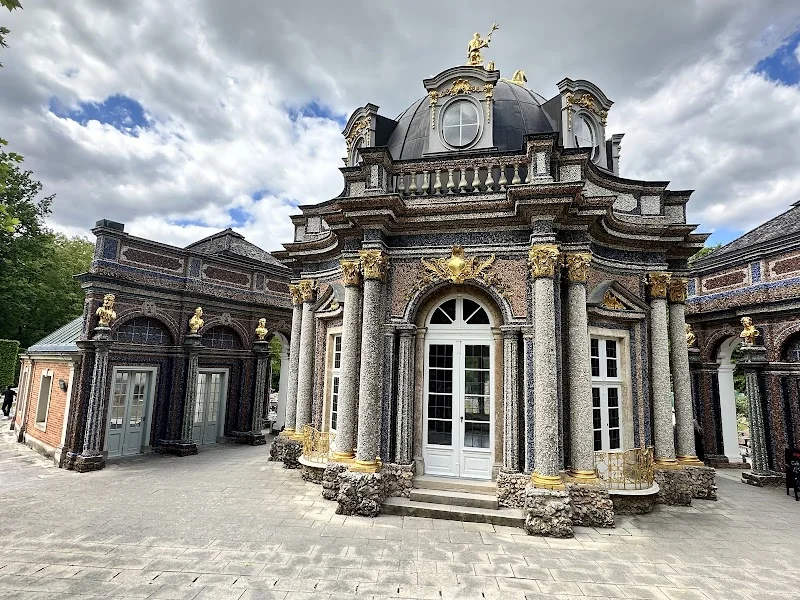
The Hermitage New Palace in Bayreuth is not an ordinary castle, but part of a historically evolved landscape of garden and architecture that still exudes unusual lightness, symbolism, and atmosphere. Those who come here do not simply visit a building, but an ensemble of architecture, park, water features, and courtly history. The New Palace of the Hermitage was constructed around 1750 as a striking park architecture with a sun temple, wing buildings, glass streams, and rock crystals. Today, it houses event rooms and a café, while the court garden of the Hermitage is accessible year-round and can be entered freely. This combination of historical idea, generous landscape, and modern use makes the place particularly interesting for visitors looking for a special excursion destination in Bayreuth. ([bayreuth-wilhelmine.de](https://bayreuth-wilhelmine.de/deutsch/eremitag/n_schloss.htm))
Opening Hours, Admission, and Tours in the Hermitage Ensemble
Anyone planning to visit the Hermitage New Palace should first understand the differences between the building, park, and neighboring historical areas. According to the official castle administration, the court garden of the Hermitage is open year-round and admission is free. This makes the area particularly attractive for a spontaneous walk, for quiet photo opportunities, and for a visit without time pressure. In contrast, the historical visit to the Old Palace in the Hermitage has seasonal hours: From April to September, it is open from 9 AM to 6 PM, from October 1 to 18 from 10 AM to 4 PM, and closed from October 19 to March. It is generally closed on Mondays, with the mentioned holiday exceptions. Therefore, anyone wanting to experience history indoors should plan their visit intentionally and not just come by chance. ([schloesser.bayern.de](https://www.schloesser.bayern.de/deutsch/garten/objekte/bay_as.htm))
The logic for tours and tickets is also clearly regulated and particularly important for those searching for information about tickets and tours. The Old Palace of the Hermitage can only be visited with a guided tour; tours take place daily every 45 minutes and last about 45 minutes. In the summer season, they start at 9 AM, in October at 10 AM. For 2026, the castle administration lists admission prices of 6 euros regular and 5 euros reduced; children and teenagers up to 18 years receive free admission. Those wishing to combine several Bayreuth attractions will also find combination tickets. The Hermitage New Palace itself is primarily characterized today by event rooms and the café; thus, the grand historical narrative of the site does not lie in a classic museum tour, but in the interplay of park, building, and cultural use. ([schloesser.bayern.de](https://www.schloesser.bayern.de/deutsch/garten/objekte/bay_as.htm))
For visitors, this structure is even an advantage: The outdoor area can be explored freely and without a ticket, while indoor visits take place specifically with a guided tour. This keeps the Hermitage interesting for both a short outing and a longer cultural appointment. Families, day visitors, and photography enthusiasts benefit from the fact that the park does not start at a complicated ticket barrier. Therefore, those searching for opening hours for the Hermitage Bayreuth should always distinguish between the freely accessible court garden and the regulated visiting hours of the Old Palace. This clear separation helps avoid disappointments and allows for realistic planning of the visit. ([schloesser.bayern.de](https://www.schloesser.bayern.de/deutsch/garten/objekte/bay_as.htm))
Directions, Parking, and Accessibility
The Hermitage is located on the eastern edge of Bayreuth and is well connected to the road network. The official directions mention accessibility via the A 9 Munich-Berlin, the A 70 Bayreuth-Schweinfurt, as well as the federal roads B 2, B 22, and B 85. For orientation on-site, it is important to note that the New Palace and the Margravial Opera House are located in the city center, while the Hermitage is clearly described as its own site on the outskirts. This makes the visit pleasant: The site feels secluded and quiet, even though it remains easily accessible by car or public transport. For practical planning, it is also helpful that the official site centralizes the routes to the Bayreuth attractions. ([bayreuth-wilhelmine.de](https://www.bayreuth-wilhelmine.de/deutsch/tourist/anfahrt.htm))
When it comes to parking, the official recommendation is also specific: For the Hermitage, there are car and bus parking spaces at the entrance to the park. Additionally, the castle administration mentions bus connections to the Hermitage or Ochsenhut. Those traveling with larger groups can use this information directly and do not need to search for suitable parking spaces in the city center first. This is a real advantage, especially for bus trips, family outings, or visits with multiple program points. The note about the location at the park entrance is also important because it promises short distances and easy arrival. The Hermitage is thus a destination suitable for both spontaneous outings and carefully planned cultural trips. ([schloesser.bayern.de](https://www.schloesser.bayern.de/deutsch/garten/objekte/bay_as.htm))
Regarding accessibility, the castle administration refers to its own detailed information on bayreuth-wilhelmine.de. This is sensible because the Hermitage, as a historical park with established paths, water features, and monuments, presents special requirements. Anyone planning a visit with limited mobility should therefore check the current information in advance and allow enough time for the paths. However, the official framework already shows: The park is generally accessible, there is a clearly designated access and parking situation, and the administration provides further information on services. For SEO searches related to accessibility, parking, and directions, this combination of historical setting and practical visitor guidance is crucial. ([schloesser.bayern.de](https://www.schloesser.bayern.de/deutsch/garten/objekte/bay_as.htm))
Sun Temple, Event Rooms, and Café
A special strength of the Hermitage New Palace is its current use. According to the official description, the New Palace Hermitage houses event rooms and a café. This means: The place thrives not only on its history but also on contemporary, smaller cultural and meeting formats. The sun temple within the ensemble is explicitly suitable for smaller concerts, exhibitions, and readings; in addition, civil weddings and free weddings are possible. The official maximum occupancy is 30 people. These figures clearly show that this is not an anonymous large hall, but rather an intimate, atmospheric setting at the center. This is exactly what attracts guests looking for a special location with historical character. ([bayreuth-wilhelmine.de](https://bayreuth-wilhelmine.de/deutsch/eremitag/n_schloss.htm))
For organizers and visitors, this is an important message: The Hermitage New Palace is not a classic castle museum where one wanders through endless opulent rooms, but a place where the historical substance has been transformed into a vibrant present. Those searching for event rooms in Bayreuth will find here a location with high symbolic power, small format, and strong recognizability. The fact that the sun temple is suitable for cultural formats and weddings makes it a flexible address for people who do not want to celebrate a special occasion in a neutral standard environment. From the perspective of search intent, this is a valuable point, as many users want to know not only what is there but also what the place can actually be used for today. ([schloesser.bayern.de](https://www.schloesser.bayern.de/deutsch/raeume/objekte/bay_er_so.htm))
The café is also part of the experience because it combines the historical setting with contemporary quality of stay. A visit can thus be planned as a walk, a short break, a cultural appointment, or a small outing followed by coffee. This is particularly relevant for Google searches related to location, café, and events, as it increases the practicality of the place. Those who see Bayreuth not only as a city of great stages and famous operas will discover here a finer, quieter, and simultaneously very characterful address. The combination of event use, café, and historical aura makes the Hermitage New Palace a place suitable for private experiences as well as official appointments. ([bayreuth-wilhelmine.de](https://bayreuth-wilhelmine.de/deutsch/eremitag/n_schloss.htm))
Architecture, Symbolism, and Strong Photo Motifs
The architectural idea behind the Hermitage New Palace is exceptionally strong in its symbolism. The official description explains that Wilhelmine had a fascinating park architecture built around 1750 instead of a hedge maze. The focal point of the oval layout is the sun temple, to which two arcaded wings in semi-circular form are connected. These parts were intended as a winter house for exotic plants, complemented by birdhouses and partially reconstructed garden trellises. The design refers to a cosmic, almost theatrical worldview: The sun temple represents the palace of Apollo located in the sky, the water basin represents the sea, the aviaries represent the air, and the plants represent the earth. This is not mere decoration, but deliberately applied meaning. ([bayreuth-wilhelmine.de](https://bayreuth-wilhelmine.de/deutsch/eremitag/n_schloss.htm))
Particularly impressive are the materials and colors that give the building its fairy-tale appearance. Red, blue, and yellow glass streams, as well as rock crystals, make the sun temple and the wing buildings appear as if they were built from light. Additionally, the building has models in the stage designs of the Galli-Bibiena tradition, which means it has a strongly theatrical form language that had a great impact in the 18th century. This mixture of stage, mythology, and park architecture explains why the place is so appealing for photos. Those searching for Hermitage New Palace photos expect not a sober monument shot, but images with shine, reflections, water, and a very distinctive silhouette. The effect arises precisely from the tension between orderly geometry and poetic elevation. ([bayreuth-wilhelmine.de](https://bayreuth-wilhelmine.de/deutsch/eremitag/n_schloss.htm))
At the same time, the garden layout itself contributes to the fascination. The castle administration describes the Hermitage as a site without the continuous main axis typical of many high baroque gardens. Instead, the individual parts appear more independent and freer. In the court garden of the Hermitage, the New Palace with the upper grotto, the lower grotto, the Hermitage of the Margrave, the ruin theater, and other small architectures continue to shape the image today. Additionally, there are the subsequently restored park parts and the altered landscape effect. For visitors, this means: Here one finds not just a single photo motif, but a whole series of sight axes, surfaces, and historical layers. This variety explains why the place works so well in social media, on travel portals, and in classic visitor photos. ([schloesser.bayern.de](https://www.schloesser.bayern.de/deutsch/garten/objekte/bay_as.htm))
An important historical turning point should not be overlooked: Unfortunately, nothing remains of the unusual furnishings of the rooms after a bomb hit during World War II. This is a painful loss, but it also shifts the focus to what is truly visible and experienceable: architecture, facade idea, park structure, and landscape staging. Especially because not everything has been preserved, the outer form gains even greater significance. The Hermitage New Palace is therefore not only beautiful but also an example of how historical heritage, loss, and contemporary use come together in a single place. For a location page, this honest mix of beauty and rupture is important because it remains credible and respectful. ([bayreuth-wilhelmine.de](https://bayreuth-wilhelmine.de/deutsch/eremitag/n_schloss.htm))
History of the Hermitage and its Water Features
The history of the Hermitage does not begin with the New Palace, but with a long development of courtly forms of layout. Margrave Georg Wilhelm had the Old Palace Hermitage built in 1715 on the grounds of his game park as the center of a courtly hermitage. In 1735, Margravine Wilhelmine gifted the site and immediately began with expansions. Between 1743 and 1745, the ruin theater and the lower grotto were created, and between 1749 and 1753, the New Palace with the upper grotto was built. This transformed a courtly retreat into an extensive, symbolically charged garden artwork. This development explains why the Hermitage is still more than just a park today: it is a historical concept that has grown over decades. ([schloesser.bayern.de](https://www.schloesser.bayern.de/deutsch/garten/objekte/bay_as.htm))
Particularly exciting is that while Wilhelmine drew on traditional baroque elements such as hedge quarters, arcades, and water features for the expansion, she did not create a typical baroque garden. The Hermitage occupies a special position among the garden layouts of the 18th century. This is still evident today in the combination of stricter sections and freer, more landscaped areas. The castle administration specifies concrete times for the water features: From May to mid-October, the water features run hourly, at the Great Basin from 10 AM to 5 PM and at the lower grotto from 10:15 AM to 5:15 PM. This information is important because it enhances the visit temporally and brings the park to life, especially on warm days. Therefore, those visiting the Hermitage in summer experience not only history but also a precisely staged water experience. ([schloesser.bayern.de](https://www.schloesser.bayern.de/deutsch/garten/objekte/bay_as.htm))
From a tourist perspective, it is precisely this connection of architecture, water, and landscape that gives the place its special charm. The Hermitage New Palace should not be viewed in isolation but as part of a larger narrative in which courtly representation, connection to nature, and theatrical aesthetics converge. Those walking here move between reconstructed and preserved parts, between light and shadow, between geometry and soft green. The official description even emphasizes that the court garden was landscaped in the late 18th century and that later park parts have been partially restored. This results in a very authentic impression of a place that has not stood still but has historically evolved. For visitors, this is an advantage because one experiences history not only through reading but through paths, sight axes, and watercourses. ([schloesser.bayern.de](https://www.schloesser.bayern.de/deutsch/garten/objekte/bay_as.htm))
Therefore, anyone looking for a place in Bayreuth that is not only beautiful but also meaningful will find in the Hermitage New Palace an extraordinary meeting point of garden art, court history, and modern use. The site is suitable for quiet walks, cultural interests, wedding and event inquiries, as well as photography with character. Precisely because the place is both accessible, seasonally organized, and historically rich, it remains exciting for different visitor groups. This is why the Hermitage continues to function not merely as a backdrop but as a vibrant space of memory and experience. ([bayreuth-wilhelmine.de](https://bayreuth-wilhelmine.de/deutsch/eremitag/n_schloss.htm))
Sources:
- Bavarian Palace Administration – Hermitage Bayreuth New Palace
- Bavarian Palace Administration – Hermitage Bayreuth with Court Garden
- Bavarian Palace Administration – Visitor Information Opening Hours
- Bavarian Palace Administration – Visitor Information Directions
- Bavarian Palace Administration – Event Room Sun Temple
- Bavarian Palace Administration – Service for People with Disabilities
Show moreShow less
Hermitage New Palace | Opening Hours & Directions
The Hermitage New Palace in Bayreuth is not an ordinary castle, but part of a historically evolved landscape of garden and architecture that still exudes unusual lightness, symbolism, and atmosphere. Those who come here do not simply visit a building, but an ensemble of architecture, park, water features, and courtly history. The New Palace of the Hermitage was constructed around 1750 as a striking park architecture with a sun temple, wing buildings, glass streams, and rock crystals. Today, it houses event rooms and a café, while the court garden of the Hermitage is accessible year-round and can be entered freely. This combination of historical idea, generous landscape, and modern use makes the place particularly interesting for visitors looking for a special excursion destination in Bayreuth. ([bayreuth-wilhelmine.de](https://bayreuth-wilhelmine.de/deutsch/eremitag/n_schloss.htm))
Opening Hours, Admission, and Tours in the Hermitage Ensemble
Anyone planning to visit the Hermitage New Palace should first understand the differences between the building, park, and neighboring historical areas. According to the official castle administration, the court garden of the Hermitage is open year-round and admission is free. This makes the area particularly attractive for a spontaneous walk, for quiet photo opportunities, and for a visit without time pressure. In contrast, the historical visit to the Old Palace in the Hermitage has seasonal hours: From April to September, it is open from 9 AM to 6 PM, from October 1 to 18 from 10 AM to 4 PM, and closed from October 19 to March. It is generally closed on Mondays, with the mentioned holiday exceptions. Therefore, anyone wanting to experience history indoors should plan their visit intentionally and not just come by chance. ([schloesser.bayern.de](https://www.schloesser.bayern.de/deutsch/garten/objekte/bay_as.htm))
The logic for tours and tickets is also clearly regulated and particularly important for those searching for information about tickets and tours. The Old Palace of the Hermitage can only be visited with a guided tour; tours take place daily every 45 minutes and last about 45 minutes. In the summer season, they start at 9 AM, in October at 10 AM. For 2026, the castle administration lists admission prices of 6 euros regular and 5 euros reduced; children and teenagers up to 18 years receive free admission. Those wishing to combine several Bayreuth attractions will also find combination tickets. The Hermitage New Palace itself is primarily characterized today by event rooms and the café; thus, the grand historical narrative of the site does not lie in a classic museum tour, but in the interplay of park, building, and cultural use. ([schloesser.bayern.de](https://www.schloesser.bayern.de/deutsch/garten/objekte/bay_as.htm))
For visitors, this structure is even an advantage: The outdoor area can be explored freely and without a ticket, while indoor visits take place specifically with a guided tour. This keeps the Hermitage interesting for both a short outing and a longer cultural appointment. Families, day visitors, and photography enthusiasts benefit from the fact that the park does not start at a complicated ticket barrier. Therefore, those searching for opening hours for the Hermitage Bayreuth should always distinguish between the freely accessible court garden and the regulated visiting hours of the Old Palace. This clear separation helps avoid disappointments and allows for realistic planning of the visit. ([schloesser.bayern.de](https://www.schloesser.bayern.de/deutsch/garten/objekte/bay_as.htm))
Directions, Parking, and Accessibility
The Hermitage is located on the eastern edge of Bayreuth and is well connected to the road network. The official directions mention accessibility via the A 9 Munich-Berlin, the A 70 Bayreuth-Schweinfurt, as well as the federal roads B 2, B 22, and B 85. For orientation on-site, it is important to note that the New Palace and the Margravial Opera House are located in the city center, while the Hermitage is clearly described as its own site on the outskirts. This makes the visit pleasant: The site feels secluded and quiet, even though it remains easily accessible by car or public transport. For practical planning, it is also helpful that the official site centralizes the routes to the Bayreuth attractions. ([bayreuth-wilhelmine.de](https://www.bayreuth-wilhelmine.de/deutsch/tourist/anfahrt.htm))
When it comes to parking, the official recommendation is also specific: For the Hermitage, there are car and bus parking spaces at the entrance to the park. Additionally, the castle administration mentions bus connections to the Hermitage or Ochsenhut. Those traveling with larger groups can use this information directly and do not need to search for suitable parking spaces in the city center first. This is a real advantage, especially for bus trips, family outings, or visits with multiple program points. The note about the location at the park entrance is also important because it promises short distances and easy arrival. The Hermitage is thus a destination suitable for both spontaneous outings and carefully planned cultural trips. ([schloesser.bayern.de](https://www.schloesser.bayern.de/deutsch/garten/objekte/bay_as.htm))
Regarding accessibility, the castle administration refers to its own detailed information on bayreuth-wilhelmine.de. This is sensible because the Hermitage, as a historical park with established paths, water features, and monuments, presents special requirements. Anyone planning a visit with limited mobility should therefore check the current information in advance and allow enough time for the paths. However, the official framework already shows: The park is generally accessible, there is a clearly designated access and parking situation, and the administration provides further information on services. For SEO searches related to accessibility, parking, and directions, this combination of historical setting and practical visitor guidance is crucial. ([schloesser.bayern.de](https://www.schloesser.bayern.de/deutsch/garten/objekte/bay_as.htm))
Sun Temple, Event Rooms, and Café
A special strength of the Hermitage New Palace is its current use. According to the official description, the New Palace Hermitage houses event rooms and a café. This means: The place thrives not only on its history but also on contemporary, smaller cultural and meeting formats. The sun temple within the ensemble is explicitly suitable for smaller concerts, exhibitions, and readings; in addition, civil weddings and free weddings are possible. The official maximum occupancy is 30 people. These figures clearly show that this is not an anonymous large hall, but rather an intimate, atmospheric setting at the center. This is exactly what attracts guests looking for a special location with historical character. ([bayreuth-wilhelmine.de](https://bayreuth-wilhelmine.de/deutsch/eremitag/n_schloss.htm))
For organizers and visitors, this is an important message: The Hermitage New Palace is not a classic castle museum where one wanders through endless opulent rooms, but a place where the historical substance has been transformed into a vibrant present. Those searching for event rooms in Bayreuth will find here a location with high symbolic power, small format, and strong recognizability. The fact that the sun temple is suitable for cultural formats and weddings makes it a flexible address for people who do not want to celebrate a special occasion in a neutral standard environment. From the perspective of search intent, this is a valuable point, as many users want to know not only what is there but also what the place can actually be used for today. ([schloesser.bayern.de](https://www.schloesser.bayern.de/deutsch/raeume/objekte/bay_er_so.htm))
The café is also part of the experience because it combines the historical setting with contemporary quality of stay. A visit can thus be planned as a walk, a short break, a cultural appointment, or a small outing followed by coffee. This is particularly relevant for Google searches related to location, café, and events, as it increases the practicality of the place. Those who see Bayreuth not only as a city of great stages and famous operas will discover here a finer, quieter, and simultaneously very characterful address. The combination of event use, café, and historical aura makes the Hermitage New Palace a place suitable for private experiences as well as official appointments. ([bayreuth-wilhelmine.de](https://bayreuth-wilhelmine.de/deutsch/eremitag/n_schloss.htm))
Architecture, Symbolism, and Strong Photo Motifs
The architectural idea behind the Hermitage New Palace is exceptionally strong in its symbolism. The official description explains that Wilhelmine had a fascinating park architecture built around 1750 instead of a hedge maze. The focal point of the oval layout is the sun temple, to which two arcaded wings in semi-circular form are connected. These parts were intended as a winter house for exotic plants, complemented by birdhouses and partially reconstructed garden trellises. The design refers to a cosmic, almost theatrical worldview: The sun temple represents the palace of Apollo located in the sky, the water basin represents the sea, the aviaries represent the air, and the plants represent the earth. This is not mere decoration, but deliberately applied meaning. ([bayreuth-wilhelmine.de](https://bayreuth-wilhelmine.de/deutsch/eremitag/n_schloss.htm))
Particularly impressive are the materials and colors that give the building its fairy-tale appearance. Red, blue, and yellow glass streams, as well as rock crystals, make the sun temple and the wing buildings appear as if they were built from light. Additionally, the building has models in the stage designs of the Galli-Bibiena tradition, which means it has a strongly theatrical form language that had a great impact in the 18th century. This mixture of stage, mythology, and park architecture explains why the place is so appealing for photos. Those searching for Hermitage New Palace photos expect not a sober monument shot, but images with shine, reflections, water, and a very distinctive silhouette. The effect arises precisely from the tension between orderly geometry and poetic elevation. ([bayreuth-wilhelmine.de](https://bayreuth-wilhelmine.de/deutsch/eremitag/n_schloss.htm))
At the same time, the garden layout itself contributes to the fascination. The castle administration describes the Hermitage as a site without the continuous main axis typical of many high baroque gardens. Instead, the individual parts appear more independent and freer. In the court garden of the Hermitage, the New Palace with the upper grotto, the lower grotto, the Hermitage of the Margrave, the ruin theater, and other small architectures continue to shape the image today. Additionally, there are the subsequently restored park parts and the altered landscape effect. For visitors, this means: Here one finds not just a single photo motif, but a whole series of sight axes, surfaces, and historical layers. This variety explains why the place works so well in social media, on travel portals, and in classic visitor photos. ([schloesser.bayern.de](https://www.schloesser.bayern.de/deutsch/garten/objekte/bay_as.htm))
An important historical turning point should not be overlooked: Unfortunately, nothing remains of the unusual furnishings of the rooms after a bomb hit during World War II. This is a painful loss, but it also shifts the focus to what is truly visible and experienceable: architecture, facade idea, park structure, and landscape staging. Especially because not everything has been preserved, the outer form gains even greater significance. The Hermitage New Palace is therefore not only beautiful but also an example of how historical heritage, loss, and contemporary use come together in a single place. For a location page, this honest mix of beauty and rupture is important because it remains credible and respectful. ([bayreuth-wilhelmine.de](https://bayreuth-wilhelmine.de/deutsch/eremitag/n_schloss.htm))
History of the Hermitage and its Water Features
The history of the Hermitage does not begin with the New Palace, but with a long development of courtly forms of layout. Margrave Georg Wilhelm had the Old Palace Hermitage built in 1715 on the grounds of his game park as the center of a courtly hermitage. In 1735, Margravine Wilhelmine gifted the site and immediately began with expansions. Between 1743 and 1745, the ruin theater and the lower grotto were created, and between 1749 and 1753, the New Palace with the upper grotto was built. This transformed a courtly retreat into an extensive, symbolically charged garden artwork. This development explains why the Hermitage is still more than just a park today: it is a historical concept that has grown over decades. ([schloesser.bayern.de](https://www.schloesser.bayern.de/deutsch/garten/objekte/bay_as.htm))
Particularly exciting is that while Wilhelmine drew on traditional baroque elements such as hedge quarters, arcades, and water features for the expansion, she did not create a typical baroque garden. The Hermitage occupies a special position among the garden layouts of the 18th century. This is still evident today in the combination of stricter sections and freer, more landscaped areas. The castle administration specifies concrete times for the water features: From May to mid-October, the water features run hourly, at the Great Basin from 10 AM to 5 PM and at the lower grotto from 10:15 AM to 5:15 PM. This information is important because it enhances the visit temporally and brings the park to life, especially on warm days. Therefore, those visiting the Hermitage in summer experience not only history but also a precisely staged water experience. ([schloesser.bayern.de](https://www.schloesser.bayern.de/deutsch/garten/objekte/bay_as.htm))
From a tourist perspective, it is precisely this connection of architecture, water, and landscape that gives the place its special charm. The Hermitage New Palace should not be viewed in isolation but as part of a larger narrative in which courtly representation, connection to nature, and theatrical aesthetics converge. Those walking here move between reconstructed and preserved parts, between light and shadow, between geometry and soft green. The official description even emphasizes that the court garden was landscaped in the late 18th century and that later park parts have been partially restored. This results in a very authentic impression of a place that has not stood still but has historically evolved. For visitors, this is an advantage because one experiences history not only through reading but through paths, sight axes, and watercourses. ([schloesser.bayern.de](https://www.schloesser.bayern.de/deutsch/garten/objekte/bay_as.htm))
Therefore, anyone looking for a place in Bayreuth that is not only beautiful but also meaningful will find in the Hermitage New Palace an extraordinary meeting point of garden art, court history, and modern use. The site is suitable for quiet walks, cultural interests, wedding and event inquiries, as well as photography with character. Precisely because the place is both accessible, seasonally organized, and historically rich, it remains exciting for different visitor groups. This is why the Hermitage continues to function not merely as a backdrop but as a vibrant space of memory and experience. ([bayreuth-wilhelmine.de](https://bayreuth-wilhelmine.de/deutsch/eremitag/n_schloss.htm))
Sources:
- Bavarian Palace Administration – Hermitage Bayreuth New Palace
- Bavarian Palace Administration – Hermitage Bayreuth with Court Garden
- Bavarian Palace Administration – Visitor Information Opening Hours
- Bavarian Palace Administration – Visitor Information Directions
- Bavarian Palace Administration – Event Room Sun Temple
- Bavarian Palace Administration – Service for People with Disabilities
Hermitage New Palace | Opening Hours & Directions
The Hermitage New Palace in Bayreuth is not an ordinary castle, but part of a historically evolved landscape of garden and architecture that still exudes unusual lightness, symbolism, and atmosphere. Those who come here do not simply visit a building, but an ensemble of architecture, park, water features, and courtly history. The New Palace of the Hermitage was constructed around 1750 as a striking park architecture with a sun temple, wing buildings, glass streams, and rock crystals. Today, it houses event rooms and a café, while the court garden of the Hermitage is accessible year-round and can be entered freely. This combination of historical idea, generous landscape, and modern use makes the place particularly interesting for visitors looking for a special excursion destination in Bayreuth. ([bayreuth-wilhelmine.de](https://bayreuth-wilhelmine.de/deutsch/eremitag/n_schloss.htm))
Opening Hours, Admission, and Tours in the Hermitage Ensemble
Anyone planning to visit the Hermitage New Palace should first understand the differences between the building, park, and neighboring historical areas. According to the official castle administration, the court garden of the Hermitage is open year-round and admission is free. This makes the area particularly attractive for a spontaneous walk, for quiet photo opportunities, and for a visit without time pressure. In contrast, the historical visit to the Old Palace in the Hermitage has seasonal hours: From April to September, it is open from 9 AM to 6 PM, from October 1 to 18 from 10 AM to 4 PM, and closed from October 19 to March. It is generally closed on Mondays, with the mentioned holiday exceptions. Therefore, anyone wanting to experience history indoors should plan their visit intentionally and not just come by chance. ([schloesser.bayern.de](https://www.schloesser.bayern.de/deutsch/garten/objekte/bay_as.htm))
The logic for tours and tickets is also clearly regulated and particularly important for those searching for information about tickets and tours. The Old Palace of the Hermitage can only be visited with a guided tour; tours take place daily every 45 minutes and last about 45 minutes. In the summer season, they start at 9 AM, in October at 10 AM. For 2026, the castle administration lists admission prices of 6 euros regular and 5 euros reduced; children and teenagers up to 18 years receive free admission. Those wishing to combine several Bayreuth attractions will also find combination tickets. The Hermitage New Palace itself is primarily characterized today by event rooms and the café; thus, the grand historical narrative of the site does not lie in a classic museum tour, but in the interplay of park, building, and cultural use. ([schloesser.bayern.de](https://www.schloesser.bayern.de/deutsch/garten/objekte/bay_as.htm))
For visitors, this structure is even an advantage: The outdoor area can be explored freely and without a ticket, while indoor visits take place specifically with a guided tour. This keeps the Hermitage interesting for both a short outing and a longer cultural appointment. Families, day visitors, and photography enthusiasts benefit from the fact that the park does not start at a complicated ticket barrier. Therefore, those searching for opening hours for the Hermitage Bayreuth should always distinguish between the freely accessible court garden and the regulated visiting hours of the Old Palace. This clear separation helps avoid disappointments and allows for realistic planning of the visit. ([schloesser.bayern.de](https://www.schloesser.bayern.de/deutsch/garten/objekte/bay_as.htm))
Directions, Parking, and Accessibility
The Hermitage is located on the eastern edge of Bayreuth and is well connected to the road network. The official directions mention accessibility via the A 9 Munich-Berlin, the A 70 Bayreuth-Schweinfurt, as well as the federal roads B 2, B 22, and B 85. For orientation on-site, it is important to note that the New Palace and the Margravial Opera House are located in the city center, while the Hermitage is clearly described as its own site on the outskirts. This makes the visit pleasant: The site feels secluded and quiet, even though it remains easily accessible by car or public transport. For practical planning, it is also helpful that the official site centralizes the routes to the Bayreuth attractions. ([bayreuth-wilhelmine.de](https://www.bayreuth-wilhelmine.de/deutsch/tourist/anfahrt.htm))
When it comes to parking, the official recommendation is also specific: For the Hermitage, there are car and bus parking spaces at the entrance to the park. Additionally, the castle administration mentions bus connections to the Hermitage or Ochsenhut. Those traveling with larger groups can use this information directly and do not need to search for suitable parking spaces in the city center first. This is a real advantage, especially for bus trips, family outings, or visits with multiple program points. The note about the location at the park entrance is also important because it promises short distances and easy arrival. The Hermitage is thus a destination suitable for both spontaneous outings and carefully planned cultural trips. ([schloesser.bayern.de](https://www.schloesser.bayern.de/deutsch/garten/objekte/bay_as.htm))
Regarding accessibility, the castle administration refers to its own detailed information on bayreuth-wilhelmine.de. This is sensible because the Hermitage, as a historical park with established paths, water features, and monuments, presents special requirements. Anyone planning a visit with limited mobility should therefore check the current information in advance and allow enough time for the paths. However, the official framework already shows: The park is generally accessible, there is a clearly designated access and parking situation, and the administration provides further information on services. For SEO searches related to accessibility, parking, and directions, this combination of historical setting and practical visitor guidance is crucial. ([schloesser.bayern.de](https://www.schloesser.bayern.de/deutsch/garten/objekte/bay_as.htm))
Sun Temple, Event Rooms, and Café
A special strength of the Hermitage New Palace is its current use. According to the official description, the New Palace Hermitage houses event rooms and a café. This means: The place thrives not only on its history but also on contemporary, smaller cultural and meeting formats. The sun temple within the ensemble is explicitly suitable for smaller concerts, exhibitions, and readings; in addition, civil weddings and free weddings are possible. The official maximum occupancy is 30 people. These figures clearly show that this is not an anonymous large hall, but rather an intimate, atmospheric setting at the center. This is exactly what attracts guests looking for a special location with historical character. ([bayreuth-wilhelmine.de](https://bayreuth-wilhelmine.de/deutsch/eremitag/n_schloss.htm))
For organizers and visitors, this is an important message: The Hermitage New Palace is not a classic castle museum where one wanders through endless opulent rooms, but a place where the historical substance has been transformed into a vibrant present. Those searching for event rooms in Bayreuth will find here a location with high symbolic power, small format, and strong recognizability. The fact that the sun temple is suitable for cultural formats and weddings makes it a flexible address for people who do not want to celebrate a special occasion in a neutral standard environment. From the perspective of search intent, this is a valuable point, as many users want to know not only what is there but also what the place can actually be used for today. ([schloesser.bayern.de](https://www.schloesser.bayern.de/deutsch/raeume/objekte/bay_er_so.htm))
The café is also part of the experience because it combines the historical setting with contemporary quality of stay. A visit can thus be planned as a walk, a short break, a cultural appointment, or a small outing followed by coffee. This is particularly relevant for Google searches related to location, café, and events, as it increases the practicality of the place. Those who see Bayreuth not only as a city of great stages and famous operas will discover here a finer, quieter, and simultaneously very characterful address. The combination of event use, café, and historical aura makes the Hermitage New Palace a place suitable for private experiences as well as official appointments. ([bayreuth-wilhelmine.de](https://bayreuth-wilhelmine.de/deutsch/eremitag/n_schloss.htm))
Architecture, Symbolism, and Strong Photo Motifs
The architectural idea behind the Hermitage New Palace is exceptionally strong in its symbolism. The official description explains that Wilhelmine had a fascinating park architecture built around 1750 instead of a hedge maze. The focal point of the oval layout is the sun temple, to which two arcaded wings in semi-circular form are connected. These parts were intended as a winter house for exotic plants, complemented by birdhouses and partially reconstructed garden trellises. The design refers to a cosmic, almost theatrical worldview: The sun temple represents the palace of Apollo located in the sky, the water basin represents the sea, the aviaries represent the air, and the plants represent the earth. This is not mere decoration, but deliberately applied meaning. ([bayreuth-wilhelmine.de](https://bayreuth-wilhelmine.de/deutsch/eremitag/n_schloss.htm))
Particularly impressive are the materials and colors that give the building its fairy-tale appearance. Red, blue, and yellow glass streams, as well as rock crystals, make the sun temple and the wing buildings appear as if they were built from light. Additionally, the building has models in the stage designs of the Galli-Bibiena tradition, which means it has a strongly theatrical form language that had a great impact in the 18th century. This mixture of stage, mythology, and park architecture explains why the place is so appealing for photos. Those searching for Hermitage New Palace photos expect not a sober monument shot, but images with shine, reflections, water, and a very distinctive silhouette. The effect arises precisely from the tension between orderly geometry and poetic elevation. ([bayreuth-wilhelmine.de](https://bayreuth-wilhelmine.de/deutsch/eremitag/n_schloss.htm))
At the same time, the garden layout itself contributes to the fascination. The castle administration describes the Hermitage as a site without the continuous main axis typical of many high baroque gardens. Instead, the individual parts appear more independent and freer. In the court garden of the Hermitage, the New Palace with the upper grotto, the lower grotto, the Hermitage of the Margrave, the ruin theater, and other small architectures continue to shape the image today. Additionally, there are the subsequently restored park parts and the altered landscape effect. For visitors, this means: Here one finds not just a single photo motif, but a whole series of sight axes, surfaces, and historical layers. This variety explains why the place works so well in social media, on travel portals, and in classic visitor photos. ([schloesser.bayern.de](https://www.schloesser.bayern.de/deutsch/garten/objekte/bay_as.htm))
An important historical turning point should not be overlooked: Unfortunately, nothing remains of the unusual furnishings of the rooms after a bomb hit during World War II. This is a painful loss, but it also shifts the focus to what is truly visible and experienceable: architecture, facade idea, park structure, and landscape staging. Especially because not everything has been preserved, the outer form gains even greater significance. The Hermitage New Palace is therefore not only beautiful but also an example of how historical heritage, loss, and contemporary use come together in a single place. For a location page, this honest mix of beauty and rupture is important because it remains credible and respectful. ([bayreuth-wilhelmine.de](https://bayreuth-wilhelmine.de/deutsch/eremitag/n_schloss.htm))
History of the Hermitage and its Water Features
The history of the Hermitage does not begin with the New Palace, but with a long development of courtly forms of layout. Margrave Georg Wilhelm had the Old Palace Hermitage built in 1715 on the grounds of his game park as the center of a courtly hermitage. In 1735, Margravine Wilhelmine gifted the site and immediately began with expansions. Between 1743 and 1745, the ruin theater and the lower grotto were created, and between 1749 and 1753, the New Palace with the upper grotto was built. This transformed a courtly retreat into an extensive, symbolically charged garden artwork. This development explains why the Hermitage is still more than just a park today: it is a historical concept that has grown over decades. ([schloesser.bayern.de](https://www.schloesser.bayern.de/deutsch/garten/objekte/bay_as.htm))
Particularly exciting is that while Wilhelmine drew on traditional baroque elements such as hedge quarters, arcades, and water features for the expansion, she did not create a typical baroque garden. The Hermitage occupies a special position among the garden layouts of the 18th century. This is still evident today in the combination of stricter sections and freer, more landscaped areas. The castle administration specifies concrete times for the water features: From May to mid-October, the water features run hourly, at the Great Basin from 10 AM to 5 PM and at the lower grotto from 10:15 AM to 5:15 PM. This information is important because it enhances the visit temporally and brings the park to life, especially on warm days. Therefore, those visiting the Hermitage in summer experience not only history but also a precisely staged water experience. ([schloesser.bayern.de](https://www.schloesser.bayern.de/deutsch/garten/objekte/bay_as.htm))
From a tourist perspective, it is precisely this connection of architecture, water, and landscape that gives the place its special charm. The Hermitage New Palace should not be viewed in isolation but as part of a larger narrative in which courtly representation, connection to nature, and theatrical aesthetics converge. Those walking here move between reconstructed and preserved parts, between light and shadow, between geometry and soft green. The official description even emphasizes that the court garden was landscaped in the late 18th century and that later park parts have been partially restored. This results in a very authentic impression of a place that has not stood still but has historically evolved. For visitors, this is an advantage because one experiences history not only through reading but through paths, sight axes, and watercourses. ([schloesser.bayern.de](https://www.schloesser.bayern.de/deutsch/garten/objekte/bay_as.htm))
Therefore, anyone looking for a place in Bayreuth that is not only beautiful but also meaningful will find in the Hermitage New Palace an extraordinary meeting point of garden art, court history, and modern use. The site is suitable for quiet walks, cultural interests, wedding and event inquiries, as well as photography with character. Precisely because the place is both accessible, seasonally organized, and historically rich, it remains exciting for different visitor groups. This is why the Hermitage continues to function not merely as a backdrop but as a vibrant space of memory and experience. ([bayreuth-wilhelmine.de](https://bayreuth-wilhelmine.de/deutsch/eremitag/n_schloss.htm))
Sources:
- Bavarian Palace Administration – Hermitage Bayreuth New Palace
- Bavarian Palace Administration – Hermitage Bayreuth with Court Garden
- Bavarian Palace Administration – Visitor Information Opening Hours
- Bavarian Palace Administration – Visitor Information Directions
- Bavarian Palace Administration – Event Room Sun Temple
- Bavarian Palace Administration – Service for People with Disabilities
Upcoming Events
No events found
Frequently Asked Questions
Reviews
Tony B
30. October 2025
Crazy holiday castle at the center of an extensive park and with walls entirely covered by tiny shells. Impressive and eerie! We were there late autumn and thus could not visit the interior. We’ll be back!
Maciej Polakowski
20. June 2025
The most impressive building in the whole complex. Beautiful architecture, decorated with colorful stones and golden busts. There is also quite a big fountain with beautiful stone sculptures, unfortunately it wasn't working when we were there.
etr
31. August 2025
Highly recommended attraction. The clean and manicured gardens are simply breathtaking.
david antoun
9. October 2024
Built in the middle of the 18th century as a summer residence for the Margrave couple. In the form of a half circle with golden figures and statues. Decorated with precious stones and facing a huge fountain, activities for families take place here but it's not actually a museum or a castle to visit. It's like a gate to the gardens and the old castle. Cafés, restrooms, and game rooms are now here.
Enlyl's Realm
26. September 2024
Amazing palace full of surprises! The interior can only be visited on a tour and it’s really worth it!