
München
Arcisstraße 12, 80333 München, Deutschland
University of Music and Performing Arts Munich | Programs & Concerts
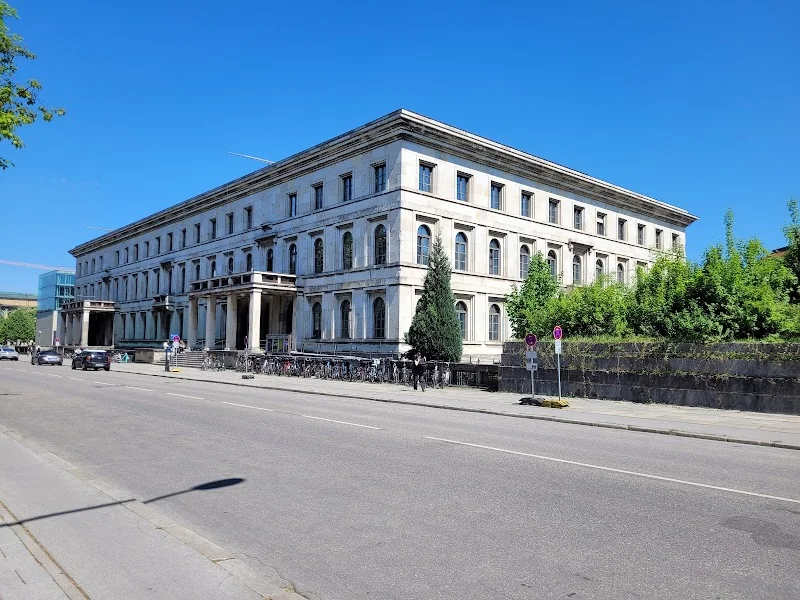
The University of Music and Performing Arts Munich is considered one of the most significant and diverse training institutions for music, dance, and theater in Europe, according to its own mission statement. At the Arcisstraße campus and other locations in Munich, the HMTM combines artistic education, research, cultural management, and cultural practice. The main building at Arcisstraße 12 has been located since 1957 in the former Führerbau at Königsplatz in the heart of Munich's art district; overall, the university operates at five locations and trains around 1,300 students. For visitors, the HMTM is not only a university but also a vibrant concert and cultural address with daily rehearsal, teaching, and stage operations. ([hmtm.de](https://hmtm.de/unsere-werte/leitbild/?utm_source=openai))
Events, Concerts, and Current Program
Those looking for university-specific events will find a wide and very regular program at the HMTM. The university informs its audience through a printed event calendar that is published twice a year; class and examination concerts are additionally published online. Paid events can be booked in advance through Munich Ticket or at the box office, and since the summer semester of 2023, also with print@home. This makes the HMTM interesting for spontaneous concert visits as well as for planning visitors who are specifically looking for programs, tickets, or current performance dates. ([hmtm.de](https://hmtm.de/en/information-for-our-audiences/))
The current content of the website shows how versatile the program actually is: The homepage brings together concerts, competitions, lecture series, and news from university life, along with numerous images from productions and events. For 2026, formats such as Piano Festival, GesangsArt, Chamberfest, Piano Days Munich, and other artistic series are visible. This mix of academic work and public concert operations makes the HMTM a place where education and stage cannot be separated. Especially at the festivals, it becomes clear that the university not only trains its students but also provides them with real performance experience in front of an audience. Many events are freely accessible, while others require admission, but in both cases, the immediate listening experience is at the center. ([hmtm.de](https://hmtm.de/?utm_source=openai))
Large Concert Hall, Small Concert Hall, and Other Performance Venues
Most events of the HMTM take place in the main building at Arcisstraße 12. There, the university lists the Large Concert Hall, the Small Concert Hall, the Opera School, the Fireplace Room, and the Organ Hall as regular concert and event spaces. Additional performance venues include the Reaktorhalle and the Carl Orff Auditorium at Luisenstraße 37a, as well as halls in Gasteig HP8. This is practical for visitors because many different formats can be experienced at clearly named locations: large student festivals, intimate chamber music evenings, opera projects, lectures, or examination and graduation concerts. ([hmtm.de](https://hmtm.de/en/information-for-our-audiences/))
The technical equipment is also geared towards concert operations. In the university's sound studio, recording systems are installed in several halls, including the Large Concert Hall and Small Concert Hall at the Arcisstraße location, as well as in the Reaktorhalle and the Carl Orff Auditorium at Luisenstraße. The HMTM also points out that the Small Concert Hall is described in strategic documents as a workshop with nearly 200 seats. This shows that the university focuses not only on representative performances but also on spaces that are closely adapted to daily educational work. This mix of practical relevance and technical infrastructure is an important part of the profile, especially for chamber music, examination concerts, and smaller ensemble music. ([hmtm.de](https://hmtm.de/tonstudio/?utm_source=openai))
Entrance Examination, Application Portal, and Study Programs
Simply registering is not enough for studying at the HMTM. The university emphasizes that suitability tests or suitability procedures are required for all degree programs. Applications are submitted exclusively through the online application portal; written applications are not accepted. Depending on the degree program, there may be a video pre-selection, followed by an in-person examination on-site in Munich. For the artistic and artistic-pedagogical degree programs as well as the teaching degree programs, the HMTM specifies the suitability tests from June 13 to June 23, 2026. Those seeking information will find the current requirements, deadlines, and contacts on the respective program pages. ([hmtm.de](https://hmtm.de/bewerben/?utm_source=openai))
The study programs are structured in a highly differentiated manner. On the pages of the individual subjects, documents such as requirements for the suitability test, sample exams, or study plans appear; this is visible, for example, in singing and piano. Additionally, the HMTM organizes its training in twelve institutes and academies, including instrumental degree programs, singing and theater training, music education, school music, church music, jazz, historical performance practice, new music, cultural management, and media, as well as the HMTM Young Academy. For many later career paths, there is also the Career Center, which supports students and alumni in their transition to professional life. This means that the university not only covers classical artistic education but also guides its students towards professional practice, self-management, and the music market. ([hmtm.de](https://hmtm.de/studiengaenge/gesang-bm-ps/?utm_source=openai))
Library of the HMTM: Collections, Research, and Opening Hours
The library of the HMTM is much more than just a lending location. It sees itself as a central institution of the university and organizes the entire literature and media collection for all university members. The collection includes more than 100,000 media units, including around 80,000 scores, about 10,000 CDs, DVDs, and LPs, as well as around 20,000 books. The collection covers a wide range from early to contemporary music, music theater, jazz, and folk music. Thus, the library is a central knowledge and working place for artistic, pedagogical, and scientific work at the HMTM. Additionally, it offers internal access to databases, streaming services, online books, and journals. ([hmtm.de](https://hmtm.de/bibliothek/portraet-der-bibliothek/))
Especially important for students and researchers are the digital and service-oriented offerings. The library provides a webOPAC for research, has a digital collection with open access to digital and digitized research content, and supports the artistic sector with ensemble supplies, i.e., rental materials as well as parts, scores, and piano reductions for concerts and opera performances. Its opening hours are clearly structured: The lending desk and reading room are open Monday to Thursday from 9:30 AM to 4:00 PM and Friday from 9:30 AM to 1:00 PM; during the teaching period, there are additional reading room hours in the afternoon. The library is also located at Arcisstraße 12 and is thus closely connected to the daily life of the campus. ([hmtm.de](https://hmtm.de/bibliothek/))
Opera School, Professors, and Artistic Education
A hallmark of the HMTM is its artistic singing and theater education. There, students in directing, Bachelor singing, Master concert singing, song composition, and music theater receive practical training with a strong stage focus. Particularly influential is the Opera School: In the Bachelor program, the singing classes work every year on a major opera project under realistic theater conditions and present the results in the series Music Theater in the Reaktor. Additionally, there is the Opera Bus, which brings operas in shortened form to schools, daycare centers, homes, or clinics. In the Master Music Theater/Opera Singing, the HMTM collaborates with the Theater Academy August Everding, which further links the training with professional theater practice. ([hmtm.de](https://hmtm.de/kuenstlerische-gesangs-und-theaterausbildung/?utm_source=openai))
The university works with a broad team of professors and lecturers. On the personnel page, the staff are listed by institutes, subject groups, and functions; this makes the breadth of the university visible, from artistic subjects to administration and service. Especially in singing and theater education, the combination of individual support, scenically musical work, and close contact with experienced teachers is a central quality feature. The mission statement also emphasizes the university's rich history, individual support, and the commitment to high artistic, scientific, and pedagogical quality. Therefore, those interested in professors, instructors, or the structure of individual subjects will find not only names but also biographies and responsibilities on the website. ([hmtm.de](https://hmtm.de/personen/ks-prof-christiane-iven/?utm_source=openai))
Building, History, Access, and Remembrance Culture
The main building of the HMTM at Arcisstraße 12 is not only a university building but also a historically charged location. The university uses the former Führerbau, a representative building of National Socialism, and therefore emphasizes its special historical responsibility. On the page about remembrance culture, the HMTM makes it clear that it understands the engagement with the Nazi past as part of its democratic mandate. At the same time, the university refers to research on musicians persecuted by the Nazis and on Jewish musical life in southern Germany. In a recent press release, it is also stated that the main building has been dilapidated and in disrepair for years, and therefore campus development is being advanced. This connects the HMTM's architectural future planning with historical reappraisal. ([hmtm.de](https://hmtm.de/erinnerungskultur/))
For access, the central location at Königsplatz is a clear advantage. The HMTM is spread across several locations in downtown Munich, including Arcisstraße, Luisenstraße, Wilhelmstraße, Gasteig HP8, and Frankenthaler Straße. The official guide indicates that the distance from Arcisstraße to Luisenstraße is only a five-minute walk through the park at the Glyptothek; other connections run via subway, tram, and bus. This makes the university very well connected in everyday life and relatively easy to access for visitors. Those needing additional orientation will find information on opening hours, barrier-free access, and the individual university buildings on the location pages. Thus, despite its many buildings, the HMTM remains experienceable as a single campus. ([hmtm.de](https://hmtm.de/en/locations/?utm_source=openai))
Sources:
- HMTM – Information for Our Audience ([hmtm.de](https://hmtm.de/en/information-for-our-audiences/))
- HMTM – Application for a Study Place ([hmtm.de](https://hmtm.de/bewerben/?utm_source=openai))
- HMTM – Library: Portrait of the Library ([hmtm.de](https://hmtm.de/bibliothek/portraet-der-bibliothek/))
- HMTM – Artistic Singing and Theater Education ([hmtm.de](https://hmtm.de/kuenstlerische-gesangs-und-theaterausbildung/?utm_source=openai))
- HMTM – Remembrance Culture ([hmtm.de](https://hmtm.de/erinnerungskultur/))
- HMTM – Locations & Opening Hours ([hmtm.de](https://hmtm.de/en/locations/?utm_source=openai))
- HMTM – Campus Development Arcisstraße: Planning Assignment Granted ([hmtm.de](https://hmtm.de/campusentwicklung-arcisstrasse-planungsauftrag-erteilt/?utm_source=openai))
Show moreShow less
University of Music and Performing Arts Munich | Programs & Concerts
The University of Music and Performing Arts Munich is considered one of the most significant and diverse training institutions for music, dance, and theater in Europe, according to its own mission statement. At the Arcisstraße campus and other locations in Munich, the HMTM combines artistic education, research, cultural management, and cultural practice. The main building at Arcisstraße 12 has been located since 1957 in the former Führerbau at Königsplatz in the heart of Munich's art district; overall, the university operates at five locations and trains around 1,300 students. For visitors, the HMTM is not only a university but also a vibrant concert and cultural address with daily rehearsal, teaching, and stage operations. ([hmtm.de](https://hmtm.de/unsere-werte/leitbild/?utm_source=openai))
Events, Concerts, and Current Program
Those looking for university-specific events will find a wide and very regular program at the HMTM. The university informs its audience through a printed event calendar that is published twice a year; class and examination concerts are additionally published online. Paid events can be booked in advance through Munich Ticket or at the box office, and since the summer semester of 2023, also with print@home. This makes the HMTM interesting for spontaneous concert visits as well as for planning visitors who are specifically looking for programs, tickets, or current performance dates. ([hmtm.de](https://hmtm.de/en/information-for-our-audiences/))
The current content of the website shows how versatile the program actually is: The homepage brings together concerts, competitions, lecture series, and news from university life, along with numerous images from productions and events. For 2026, formats such as Piano Festival, GesangsArt, Chamberfest, Piano Days Munich, and other artistic series are visible. This mix of academic work and public concert operations makes the HMTM a place where education and stage cannot be separated. Especially at the festivals, it becomes clear that the university not only trains its students but also provides them with real performance experience in front of an audience. Many events are freely accessible, while others require admission, but in both cases, the immediate listening experience is at the center. ([hmtm.de](https://hmtm.de/?utm_source=openai))
Large Concert Hall, Small Concert Hall, and Other Performance Venues
Most events of the HMTM take place in the main building at Arcisstraße 12. There, the university lists the Large Concert Hall, the Small Concert Hall, the Opera School, the Fireplace Room, and the Organ Hall as regular concert and event spaces. Additional performance venues include the Reaktorhalle and the Carl Orff Auditorium at Luisenstraße 37a, as well as halls in Gasteig HP8. This is practical for visitors because many different formats can be experienced at clearly named locations: large student festivals, intimate chamber music evenings, opera projects, lectures, or examination and graduation concerts. ([hmtm.de](https://hmtm.de/en/information-for-our-audiences/))
The technical equipment is also geared towards concert operations. In the university's sound studio, recording systems are installed in several halls, including the Large Concert Hall and Small Concert Hall at the Arcisstraße location, as well as in the Reaktorhalle and the Carl Orff Auditorium at Luisenstraße. The HMTM also points out that the Small Concert Hall is described in strategic documents as a workshop with nearly 200 seats. This shows that the university focuses not only on representative performances but also on spaces that are closely adapted to daily educational work. This mix of practical relevance and technical infrastructure is an important part of the profile, especially for chamber music, examination concerts, and smaller ensemble music. ([hmtm.de](https://hmtm.de/tonstudio/?utm_source=openai))
Entrance Examination, Application Portal, and Study Programs
Simply registering is not enough for studying at the HMTM. The university emphasizes that suitability tests or suitability procedures are required for all degree programs. Applications are submitted exclusively through the online application portal; written applications are not accepted. Depending on the degree program, there may be a video pre-selection, followed by an in-person examination on-site in Munich. For the artistic and artistic-pedagogical degree programs as well as the teaching degree programs, the HMTM specifies the suitability tests from June 13 to June 23, 2026. Those seeking information will find the current requirements, deadlines, and contacts on the respective program pages. ([hmtm.de](https://hmtm.de/bewerben/?utm_source=openai))
The study programs are structured in a highly differentiated manner. On the pages of the individual subjects, documents such as requirements for the suitability test, sample exams, or study plans appear; this is visible, for example, in singing and piano. Additionally, the HMTM organizes its training in twelve institutes and academies, including instrumental degree programs, singing and theater training, music education, school music, church music, jazz, historical performance practice, new music, cultural management, and media, as well as the HMTM Young Academy. For many later career paths, there is also the Career Center, which supports students and alumni in their transition to professional life. This means that the university not only covers classical artistic education but also guides its students towards professional practice, self-management, and the music market. ([hmtm.de](https://hmtm.de/studiengaenge/gesang-bm-ps/?utm_source=openai))
Library of the HMTM: Collections, Research, and Opening Hours
The library of the HMTM is much more than just a lending location. It sees itself as a central institution of the university and organizes the entire literature and media collection for all university members. The collection includes more than 100,000 media units, including around 80,000 scores, about 10,000 CDs, DVDs, and LPs, as well as around 20,000 books. The collection covers a wide range from early to contemporary music, music theater, jazz, and folk music. Thus, the library is a central knowledge and working place for artistic, pedagogical, and scientific work at the HMTM. Additionally, it offers internal access to databases, streaming services, online books, and journals. ([hmtm.de](https://hmtm.de/bibliothek/portraet-der-bibliothek/))
Especially important for students and researchers are the digital and service-oriented offerings. The library provides a webOPAC for research, has a digital collection with open access to digital and digitized research content, and supports the artistic sector with ensemble supplies, i.e., rental materials as well as parts, scores, and piano reductions for concerts and opera performances. Its opening hours are clearly structured: The lending desk and reading room are open Monday to Thursday from 9:30 AM to 4:00 PM and Friday from 9:30 AM to 1:00 PM; during the teaching period, there are additional reading room hours in the afternoon. The library is also located at Arcisstraße 12 and is thus closely connected to the daily life of the campus. ([hmtm.de](https://hmtm.de/bibliothek/))
Opera School, Professors, and Artistic Education
A hallmark of the HMTM is its artistic singing and theater education. There, students in directing, Bachelor singing, Master concert singing, song composition, and music theater receive practical training with a strong stage focus. Particularly influential is the Opera School: In the Bachelor program, the singing classes work every year on a major opera project under realistic theater conditions and present the results in the series Music Theater in the Reaktor. Additionally, there is the Opera Bus, which brings operas in shortened form to schools, daycare centers, homes, or clinics. In the Master Music Theater/Opera Singing, the HMTM collaborates with the Theater Academy August Everding, which further links the training with professional theater practice. ([hmtm.de](https://hmtm.de/kuenstlerische-gesangs-und-theaterausbildung/?utm_source=openai))
The university works with a broad team of professors and lecturers. On the personnel page, the staff are listed by institutes, subject groups, and functions; this makes the breadth of the university visible, from artistic subjects to administration and service. Especially in singing and theater education, the combination of individual support, scenically musical work, and close contact with experienced teachers is a central quality feature. The mission statement also emphasizes the university's rich history, individual support, and the commitment to high artistic, scientific, and pedagogical quality. Therefore, those interested in professors, instructors, or the structure of individual subjects will find not only names but also biographies and responsibilities on the website. ([hmtm.de](https://hmtm.de/personen/ks-prof-christiane-iven/?utm_source=openai))
Building, History, Access, and Remembrance Culture
The main building of the HMTM at Arcisstraße 12 is not only a university building but also a historically charged location. The university uses the former Führerbau, a representative building of National Socialism, and therefore emphasizes its special historical responsibility. On the page about remembrance culture, the HMTM makes it clear that it understands the engagement with the Nazi past as part of its democratic mandate. At the same time, the university refers to research on musicians persecuted by the Nazis and on Jewish musical life in southern Germany. In a recent press release, it is also stated that the main building has been dilapidated and in disrepair for years, and therefore campus development is being advanced. This connects the HMTM's architectural future planning with historical reappraisal. ([hmtm.de](https://hmtm.de/erinnerungskultur/))
For access, the central location at Königsplatz is a clear advantage. The HMTM is spread across several locations in downtown Munich, including Arcisstraße, Luisenstraße, Wilhelmstraße, Gasteig HP8, and Frankenthaler Straße. The official guide indicates that the distance from Arcisstraße to Luisenstraße is only a five-minute walk through the park at the Glyptothek; other connections run via subway, tram, and bus. This makes the university very well connected in everyday life and relatively easy to access for visitors. Those needing additional orientation will find information on opening hours, barrier-free access, and the individual university buildings on the location pages. Thus, despite its many buildings, the HMTM remains experienceable as a single campus. ([hmtm.de](https://hmtm.de/en/locations/?utm_source=openai))
Sources:
- HMTM – Information for Our Audience ([hmtm.de](https://hmtm.de/en/information-for-our-audiences/))
- HMTM – Application for a Study Place ([hmtm.de](https://hmtm.de/bewerben/?utm_source=openai))
- HMTM – Library: Portrait of the Library ([hmtm.de](https://hmtm.de/bibliothek/portraet-der-bibliothek/))
- HMTM – Artistic Singing and Theater Education ([hmtm.de](https://hmtm.de/kuenstlerische-gesangs-und-theaterausbildung/?utm_source=openai))
- HMTM – Remembrance Culture ([hmtm.de](https://hmtm.de/erinnerungskultur/))
- HMTM – Locations & Opening Hours ([hmtm.de](https://hmtm.de/en/locations/?utm_source=openai))
- HMTM – Campus Development Arcisstraße: Planning Assignment Granted ([hmtm.de](https://hmtm.de/campusentwicklung-arcisstrasse-planungsauftrag-erteilt/?utm_source=openai))
University of Music and Performing Arts Munich | Programs & Concerts
The University of Music and Performing Arts Munich is considered one of the most significant and diverse training institutions for music, dance, and theater in Europe, according to its own mission statement. At the Arcisstraße campus and other locations in Munich, the HMTM combines artistic education, research, cultural management, and cultural practice. The main building at Arcisstraße 12 has been located since 1957 in the former Führerbau at Königsplatz in the heart of Munich's art district; overall, the university operates at five locations and trains around 1,300 students. For visitors, the HMTM is not only a university but also a vibrant concert and cultural address with daily rehearsal, teaching, and stage operations. ([hmtm.de](https://hmtm.de/unsere-werte/leitbild/?utm_source=openai))
Events, Concerts, and Current Program
Those looking for university-specific events will find a wide and very regular program at the HMTM. The university informs its audience through a printed event calendar that is published twice a year; class and examination concerts are additionally published online. Paid events can be booked in advance through Munich Ticket or at the box office, and since the summer semester of 2023, also with print@home. This makes the HMTM interesting for spontaneous concert visits as well as for planning visitors who are specifically looking for programs, tickets, or current performance dates. ([hmtm.de](https://hmtm.de/en/information-for-our-audiences/))
The current content of the website shows how versatile the program actually is: The homepage brings together concerts, competitions, lecture series, and news from university life, along with numerous images from productions and events. For 2026, formats such as Piano Festival, GesangsArt, Chamberfest, Piano Days Munich, and other artistic series are visible. This mix of academic work and public concert operations makes the HMTM a place where education and stage cannot be separated. Especially at the festivals, it becomes clear that the university not only trains its students but also provides them with real performance experience in front of an audience. Many events are freely accessible, while others require admission, but in both cases, the immediate listening experience is at the center. ([hmtm.de](https://hmtm.de/?utm_source=openai))
Large Concert Hall, Small Concert Hall, and Other Performance Venues
Most events of the HMTM take place in the main building at Arcisstraße 12. There, the university lists the Large Concert Hall, the Small Concert Hall, the Opera School, the Fireplace Room, and the Organ Hall as regular concert and event spaces. Additional performance venues include the Reaktorhalle and the Carl Orff Auditorium at Luisenstraße 37a, as well as halls in Gasteig HP8. This is practical for visitors because many different formats can be experienced at clearly named locations: large student festivals, intimate chamber music evenings, opera projects, lectures, or examination and graduation concerts. ([hmtm.de](https://hmtm.de/en/information-for-our-audiences/))
The technical equipment is also geared towards concert operations. In the university's sound studio, recording systems are installed in several halls, including the Large Concert Hall and Small Concert Hall at the Arcisstraße location, as well as in the Reaktorhalle and the Carl Orff Auditorium at Luisenstraße. The HMTM also points out that the Small Concert Hall is described in strategic documents as a workshop with nearly 200 seats. This shows that the university focuses not only on representative performances but also on spaces that are closely adapted to daily educational work. This mix of practical relevance and technical infrastructure is an important part of the profile, especially for chamber music, examination concerts, and smaller ensemble music. ([hmtm.de](https://hmtm.de/tonstudio/?utm_source=openai))
Entrance Examination, Application Portal, and Study Programs
Simply registering is not enough for studying at the HMTM. The university emphasizes that suitability tests or suitability procedures are required for all degree programs. Applications are submitted exclusively through the online application portal; written applications are not accepted. Depending on the degree program, there may be a video pre-selection, followed by an in-person examination on-site in Munich. For the artistic and artistic-pedagogical degree programs as well as the teaching degree programs, the HMTM specifies the suitability tests from June 13 to June 23, 2026. Those seeking information will find the current requirements, deadlines, and contacts on the respective program pages. ([hmtm.de](https://hmtm.de/bewerben/?utm_source=openai))
The study programs are structured in a highly differentiated manner. On the pages of the individual subjects, documents such as requirements for the suitability test, sample exams, or study plans appear; this is visible, for example, in singing and piano. Additionally, the HMTM organizes its training in twelve institutes and academies, including instrumental degree programs, singing and theater training, music education, school music, church music, jazz, historical performance practice, new music, cultural management, and media, as well as the HMTM Young Academy. For many later career paths, there is also the Career Center, which supports students and alumni in their transition to professional life. This means that the university not only covers classical artistic education but also guides its students towards professional practice, self-management, and the music market. ([hmtm.de](https://hmtm.de/studiengaenge/gesang-bm-ps/?utm_source=openai))
Library of the HMTM: Collections, Research, and Opening Hours
The library of the HMTM is much more than just a lending location. It sees itself as a central institution of the university and organizes the entire literature and media collection for all university members. The collection includes more than 100,000 media units, including around 80,000 scores, about 10,000 CDs, DVDs, and LPs, as well as around 20,000 books. The collection covers a wide range from early to contemporary music, music theater, jazz, and folk music. Thus, the library is a central knowledge and working place for artistic, pedagogical, and scientific work at the HMTM. Additionally, it offers internal access to databases, streaming services, online books, and journals. ([hmtm.de](https://hmtm.de/bibliothek/portraet-der-bibliothek/))
Especially important for students and researchers are the digital and service-oriented offerings. The library provides a webOPAC for research, has a digital collection with open access to digital and digitized research content, and supports the artistic sector with ensemble supplies, i.e., rental materials as well as parts, scores, and piano reductions for concerts and opera performances. Its opening hours are clearly structured: The lending desk and reading room are open Monday to Thursday from 9:30 AM to 4:00 PM and Friday from 9:30 AM to 1:00 PM; during the teaching period, there are additional reading room hours in the afternoon. The library is also located at Arcisstraße 12 and is thus closely connected to the daily life of the campus. ([hmtm.de](https://hmtm.de/bibliothek/))
Opera School, Professors, and Artistic Education
A hallmark of the HMTM is its artistic singing and theater education. There, students in directing, Bachelor singing, Master concert singing, song composition, and music theater receive practical training with a strong stage focus. Particularly influential is the Opera School: In the Bachelor program, the singing classes work every year on a major opera project under realistic theater conditions and present the results in the series Music Theater in the Reaktor. Additionally, there is the Opera Bus, which brings operas in shortened form to schools, daycare centers, homes, or clinics. In the Master Music Theater/Opera Singing, the HMTM collaborates with the Theater Academy August Everding, which further links the training with professional theater practice. ([hmtm.de](https://hmtm.de/kuenstlerische-gesangs-und-theaterausbildung/?utm_source=openai))
The university works with a broad team of professors and lecturers. On the personnel page, the staff are listed by institutes, subject groups, and functions; this makes the breadth of the university visible, from artistic subjects to administration and service. Especially in singing and theater education, the combination of individual support, scenically musical work, and close contact with experienced teachers is a central quality feature. The mission statement also emphasizes the university's rich history, individual support, and the commitment to high artistic, scientific, and pedagogical quality. Therefore, those interested in professors, instructors, or the structure of individual subjects will find not only names but also biographies and responsibilities on the website. ([hmtm.de](https://hmtm.de/personen/ks-prof-christiane-iven/?utm_source=openai))
Building, History, Access, and Remembrance Culture
The main building of the HMTM at Arcisstraße 12 is not only a university building but also a historically charged location. The university uses the former Führerbau, a representative building of National Socialism, and therefore emphasizes its special historical responsibility. On the page about remembrance culture, the HMTM makes it clear that it understands the engagement with the Nazi past as part of its democratic mandate. At the same time, the university refers to research on musicians persecuted by the Nazis and on Jewish musical life in southern Germany. In a recent press release, it is also stated that the main building has been dilapidated and in disrepair for years, and therefore campus development is being advanced. This connects the HMTM's architectural future planning with historical reappraisal. ([hmtm.de](https://hmtm.de/erinnerungskultur/))
For access, the central location at Königsplatz is a clear advantage. The HMTM is spread across several locations in downtown Munich, including Arcisstraße, Luisenstraße, Wilhelmstraße, Gasteig HP8, and Frankenthaler Straße. The official guide indicates that the distance from Arcisstraße to Luisenstraße is only a five-minute walk through the park at the Glyptothek; other connections run via subway, tram, and bus. This makes the university very well connected in everyday life and relatively easy to access for visitors. Those needing additional orientation will find information on opening hours, barrier-free access, and the individual university buildings on the location pages. Thus, despite its many buildings, the HMTM remains experienceable as a single campus. ([hmtm.de](https://hmtm.de/en/locations/?utm_source=openai))
Sources:
- HMTM – Information for Our Audience ([hmtm.de](https://hmtm.de/en/information-for-our-audiences/))
- HMTM – Application for a Study Place ([hmtm.de](https://hmtm.de/bewerben/?utm_source=openai))
- HMTM – Library: Portrait of the Library ([hmtm.de](https://hmtm.de/bibliothek/portraet-der-bibliothek/))
- HMTM – Artistic Singing and Theater Education ([hmtm.de](https://hmtm.de/kuenstlerische-gesangs-und-theaterausbildung/?utm_source=openai))
- HMTM – Remembrance Culture ([hmtm.de](https://hmtm.de/erinnerungskultur/))
- HMTM – Locations & Opening Hours ([hmtm.de](https://hmtm.de/en/locations/?utm_source=openai))
- HMTM – Campus Development Arcisstraße: Planning Assignment Granted ([hmtm.de](https://hmtm.de/campusentwicklung-arcisstrasse-planungsauftrag-erteilt/?utm_source=openai))
Upcoming Events
No events found
Frequently Asked Questions
Reviews
Junepig
11. June 2024
This is one of the most historic buildings in Munich, but not many tourists know or care to visit this place. The concrete facade of the building is old but still looks imposing and sturdy (though I never feel good about the historical context this place has). Note that the building is now a music academy that you can't just enter as a tourist. However, you might want to visit the museum right next to the building that explains everything about the place.
UK Photo Journey
6. August 2023
Even though the building is quite old as it’s part of history, it has a nice atmosphere. Staff was really good, location is pretty awesome with a lot of museums, art galleries, etc. around. Even this place is very good for classical music concerts. I visited this place because this building has an office where the 1938 agreement over the annexation of Czechoslovakia was signed.
Tarik Dreca
23. March 2025
It's a prime example of totalitarian style architecture which was popular at that time also in Mussolini's Italy or Stalin's USSR, for me as an architect especially interesting - of course not missing its historical significance.
WandernLust
25. January 2023
Appreciate their concerts ❤ Thank you for such an opportunity to listen to classical music!!!
Pieter-Jan Elias
23. April 2024
Historical building! They would not let me in but they did let me take a picture of the foyer!