
München
Residenzstraße 1, 80333 München, Deutschland
Court Chapel of the Munich Residence | Concerts & Entrance
The Court Chapel of the Munich Residence is one of the most impressive historical spaces in the Residence Museum and is a key location for many visitors, bridging architecture, piety, and music. The Munich Residence was the residence and seat of government of the Bavarian rulers from 1508 to 1918; since 1920, it has been open as a museum and is now considered one of the most significant palace museums in Europe. Therefore, those searching for Court Chapel, entrance, photos, or concerts are not referring to just any hall, but to a place where early Baroque architecture and vibrant concert practice come together to this day. ([residenz-muenchen.de](https://residenz-muenchen.de/englisch/residenc/?utm_source=openai))
Entrance and Location of the Court Chapel in the Munich Residence
The Court Chapel is listed in the Residence Museum as rooms 89 and 96, and only the gallery is accessible to visitors. This is important because many inquiries sound like they are looking for a separate entrance, but the chapel is actually part of the museum tour. Practically, the visit begins at the Residence and not at a separate chapel door. Those needing the address can find the administration of the Munich Residence at Residenzstraße 1, 80333 Munich. From there, the central location is a real advantage: The Residence is centrally located and easily accessible by public transport. Nearby stops include Marienplatz and Odeonsplatz, and there is also the tram at the National Theatre. For drivers, it is important to note that the Residence does not have its own visitor parking; paid spaces are available in the underground garage of the National Theatre at Max-Joseph-Platz. ([residenz-muenchen.de](https://www.residenz-muenchen.de/englisch/museum/hofkapel.htm?utm_source=openai))
Those wishing to visit the museum can purchase tickets at the museum box office or online. The Residence Museum has seasonal opening hours, and those arriving with an online ticket can report directly at the entrance. An additional advantage is that the Residence is not only easy to plan for art lovers but also for concert visitors: At the box office in the Cuvilliés Theatre, tickets for the theatre and the overall ticket are available, and the official visitor information lists a clear opening structure with daily times and few closing days. For the Court Chapel itself, this means: It is easiest to experience as part of a museum visit or a concert evening. ([residenz-muenchen.de](https://www.residenz-muenchen.de/deutsch/tourist/eintritt.htm?utm_source=openai))
Residence Serenades and Classical Concerts in the Court Chapel
The strongest music-related inquiries revolve around the Court Chapel for good reason: In the current event announcements of the Munich Residence, it appears as the Old Court Chapel - Concert with the series Residence Serenades. The official list currently runs the series from January 1, 2024, to December 19, 2026, each at 6:30 PM. One-hour concerts featuring classical music for beginners and enthusiasts are described, performed by the Residence soloists, including members of the Munich Philharmonic. The program includes works from Bach to Vivaldi, Handel, Albinoni, Haydn, Mozart, and Rossini. This makes it clear: Those searching for concerts at the Court Chapel of the Munich Residence will find an established, regularly maintained concert series in the historical space. ([residenz-muenchen.de](https://www.residenz-muenchen.de/deutsch/aktuell/veranst_erg.asp?PN=1&optArt=4&optMonat=10&optOrt=18&optRaum=999999&optSuchfeld=))
The concert organizer itself also describes the Court Chapel as a place with a special historical atmosphere. Bavaria Klassik points out that W. A. Mozart already performed in the Court Chapel of the Residence and that the concert series presents classical masterpieces in a rotating program. The current presentation also states that the series takes place on Saturdays and, starting in September, will also be offered on Fridays at 6:30 PM. A practical tip from the organizer's pages is as simple as it is useful: The Court Chapel remains cool even in warm weather, so warm clothing is advisable. This combination of music, room climate, and historical setting makes the Residence Serenades a particularly sought-after topic for visitors who want not just a concert but an ambient experience. ([bavaria-klassik.de](https://www.bavaria-klassik.de/konzertsaele/hofkapelle-der-residenz?utm_source=openai))
History, Architecture, and Religious Significance of the Court Chapel
The history of the Court Chapel begins early in the 17th century when Maximilian I had a new two-story Court Chapel built to replace older devotional spaces in the New Fortress. The semi-circular choir was added only in 1630. This construction history explains why the chapel is not just a single devotional space but an architecturally and functionally complex structure. Below, the court gathered for mass, while the ruling family followed the liturgy from the galleries, which were directly accessible from their chambers. Thus, the Court Chapel vividly illustrates how closely religion, court ceremonial, and spatial hierarchy were interconnected in the Residence. ([residenz-muenchen.de](https://www.residenz-muenchen.de/englisch/museum/hofkapel.htm?utm_source=openai))
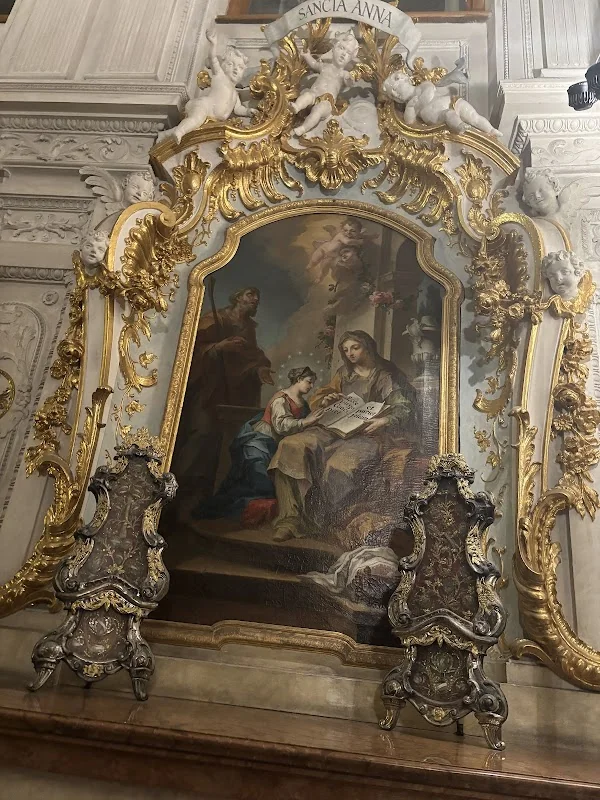
The spiritual dedication is also significant: The Court Chapel is dedicated to the Immaculate Conception of Mary. The choice of this patronage likely goes back to Maximilian I himself, who made the Mother of God the patroness of the House of Wittelsbach and the Land of Bavaria. At the center is the large central image of the high altar by Hans Werl from 1600, depicting Mary in glory under the Trinity. In the mid-18th century, Johann Baptist and Franz Zimmermann added the two side altars at the choir. Thus, the Court Chapel unites early Baroque piety, court representation, and Rococo extensions in a single historical space. Therefore, those visiting the chapel not only see a beautiful interior but also a concentrated piece of Bavarian history of power and religion. ([residenz-muenchen.de](https://www.residenz-muenchen.de/deutsch/museum/hofkapel.htm?utm_source=openai))
Photos, Images, and the View of the Court Chapel in the Tour
Those searching for photos or images of the Court Chapel of the Munich Residence will find the best official image source on the official museum page. There, several views of the choir and the high altar are embedded, which document the space very well. Especially in a space that visitors can only experience from the gallery, these official images are helpful as they make the proportions, depth effect, and liturgical orientation of the space visible. For SEO searches, this is a clear indication that image inquiries primarily target the Residence Museum page and the motifs published there. ([residenz-muenchen.de](https://www.residenz-muenchen.de/deutsch/museum/hofkapel.htm?utm_source=openai))
The Court Chapel is also just one component in a much larger tour. The official museum material describes the Residence as a place where a unique mix of Renaissance, Baroque, Rococo, Classicism, and Historicism has been preserved over the centuries. Since 1920, the Munich Residence has been publicly accessible; it is now considered one of the most significant palace museums in Europe. For this reason, a visit is worthwhile even if one primarily comes for the Court Chapel: The chapel is integrated into a complex that ranges from representative halls to private chambers and impressively traces the development of courtly spatial art. For visitors interested in history or photography, this is a strong added value. ([residenz-muenchen.de](https://www.residenz-muenchen.de/deutsch/museum/?utm_source=openai))
Tickets, Opening Hours, and Directions to the Munich Residence
Practical planning at the Court Chapel is closely linked to the Munich Residence itself. The Residence is open daily and only closed on a few days: January 1, Shrove Tuesday, and December 24, 25, and 31. The Residence Museum and the Treasury have seasonal opening hours, from March 28 to October 19 daily from 9 AM to 6 PM and from October 20 to March 27 daily from 10 AM to 5 PM. Additionally, the official site provides a free audio guide for the Residence Museum and the Treasury in several languages. Therefore, those connecting their inquiry with opening hours, tickets, or admission will find clear, current visitor data on the official pages. ([residenz-muenchen.de](https://www.residenz-muenchen.de/englisch/tourist/opening.htm?utm_source=openai))
When it comes to ticket purchases, the situation is also clear: Admission tickets for the Munich Residence are available at the museum box office or online in the ticket shop. At the box office in the Cuvilliés Theatre, tickets for the theatre and the overall ticket are available; payment can be made in cash or by card. For concert visitors, it is important to note that the Residence Serenades are listed as a concert series of the organizer Bavaria Klassik. Therefore, those planning a concert evening should check the concert pages of the organizer and the current event announcements of the Residence. This way, the museum visit can be well combined with a concert visit without underestimating the routes across the city center. ([residenz-muenchen.de](https://www.residenz-muenchen.de/?utm_source=openai))
The journey is also uncomplicated: The Residence is centrally located in the city center and is easily accessible by S-Bahn, U-Bahn, bus, and tram. Its proximity to Marienplatz and Odeonsplatz makes it very accessible for visitors from other districts as well. By car, the situation remains rather classic for a city center location: there are no dedicated visitor parking spaces, but the underground garage of the National Theatre at Max-Joseph-Platz offers paid parking spaces. This information is particularly valuable for concert evenings, as the historical character of the place may seem romantic, but the logistics remain modern and clearly planable. This contrast between old architecture and urban practicality makes the Court Chapel of the Munich Residence so attractive. ([residenz-muenchen.de](https://www.residenz-muenchen.de/englisch/tourist/howtoget.htm?utm_source=openai))
Another useful point for concert visitors: On the current organizer pages, the Court Chapel is described as a cool space, even in summer. This may sound trivial, but it is important for relaxed planning, especially for the Residence Serenades in the evening. Those who want to experience the Court Chapel not just as a photo motif but as a living place should therefore plan museum-appropriate clothing and something warmer for the concert visit. These small hints show that the Court Chapel is not just a historical monument but a space that continues to function in practice today. ([bavaria-klassik.de](https://www.bavaria-klassik.de/konzertsaele/hofkapelle-der-residenz?utm_source=openai))
Sources:
- Bavarian Palace Administration - Munich Residence - Court Chapel
- Bavarian Palace Administration - Munich Residence - Opening Hours
- Bavarian Palace Administration - Munich Residence - Directions
- Bavarian Palace Administration - Munich Residence - Admission Prices
- Bavaria Klassik - Old Court Chapel of the Residence
The Court Chapel of the Munich Residence is therefore much more than a single room on the museum map. It connects the early history of the Wittelsbach Residence with an actively used concert venue to this day, is accessible via the gallery, and remains a quiet, concentrated place within one of the most significant palace museums in Europe. Those who visit it experience a rare mix of power history, Marian devotion, craftsmanship, and music that comes together in no other place in Munich in this form. ([residenz-muenchen.de](https://www.residenz-muenchen.de/deutsch/museum/?utm_source=openai))
Show moreShow less
Court Chapel of the Munich Residence | Concerts & Entrance
The Court Chapel of the Munich Residence is one of the most impressive historical spaces in the Residence Museum and is a key location for many visitors, bridging architecture, piety, and music. The Munich Residence was the residence and seat of government of the Bavarian rulers from 1508 to 1918; since 1920, it has been open as a museum and is now considered one of the most significant palace museums in Europe. Therefore, those searching for Court Chapel, entrance, photos, or concerts are not referring to just any hall, but to a place where early Baroque architecture and vibrant concert practice come together to this day. ([residenz-muenchen.de](https://residenz-muenchen.de/englisch/residenc/?utm_source=openai))
Entrance and Location of the Court Chapel in the Munich Residence
The Court Chapel is listed in the Residence Museum as rooms 89 and 96, and only the gallery is accessible to visitors. This is important because many inquiries sound like they are looking for a separate entrance, but the chapel is actually part of the museum tour. Practically, the visit begins at the Residence and not at a separate chapel door. Those needing the address can find the administration of the Munich Residence at Residenzstraße 1, 80333 Munich. From there, the central location is a real advantage: The Residence is centrally located and easily accessible by public transport. Nearby stops include Marienplatz and Odeonsplatz, and there is also the tram at the National Theatre. For drivers, it is important to note that the Residence does not have its own visitor parking; paid spaces are available in the underground garage of the National Theatre at Max-Joseph-Platz. ([residenz-muenchen.de](https://www.residenz-muenchen.de/englisch/museum/hofkapel.htm?utm_source=openai))
Those wishing to visit the museum can purchase tickets at the museum box office or online. The Residence Museum has seasonal opening hours, and those arriving with an online ticket can report directly at the entrance. An additional advantage is that the Residence is not only easy to plan for art lovers but also for concert visitors: At the box office in the Cuvilliés Theatre, tickets for the theatre and the overall ticket are available, and the official visitor information lists a clear opening structure with daily times and few closing days. For the Court Chapel itself, this means: It is easiest to experience as part of a museum visit or a concert evening. ([residenz-muenchen.de](https://www.residenz-muenchen.de/deutsch/tourist/eintritt.htm?utm_source=openai))
Residence Serenades and Classical Concerts in the Court Chapel
The strongest music-related inquiries revolve around the Court Chapel for good reason: In the current event announcements of the Munich Residence, it appears as the Old Court Chapel - Concert with the series Residence Serenades. The official list currently runs the series from January 1, 2024, to December 19, 2026, each at 6:30 PM. One-hour concerts featuring classical music for beginners and enthusiasts are described, performed by the Residence soloists, including members of the Munich Philharmonic. The program includes works from Bach to Vivaldi, Handel, Albinoni, Haydn, Mozart, and Rossini. This makes it clear: Those searching for concerts at the Court Chapel of the Munich Residence will find an established, regularly maintained concert series in the historical space. ([residenz-muenchen.de](https://www.residenz-muenchen.de/deutsch/aktuell/veranst_erg.asp?PN=1&optArt=4&optMonat=10&optOrt=18&optRaum=999999&optSuchfeld=))
The concert organizer itself also describes the Court Chapel as a place with a special historical atmosphere. Bavaria Klassik points out that W. A. Mozart already performed in the Court Chapel of the Residence and that the concert series presents classical masterpieces in a rotating program. The current presentation also states that the series takes place on Saturdays and, starting in September, will also be offered on Fridays at 6:30 PM. A practical tip from the organizer's pages is as simple as it is useful: The Court Chapel remains cool even in warm weather, so warm clothing is advisable. This combination of music, room climate, and historical setting makes the Residence Serenades a particularly sought-after topic for visitors who want not just a concert but an ambient experience. ([bavaria-klassik.de](https://www.bavaria-klassik.de/konzertsaele/hofkapelle-der-residenz?utm_source=openai))
History, Architecture, and Religious Significance of the Court Chapel
The history of the Court Chapel begins early in the 17th century when Maximilian I had a new two-story Court Chapel built to replace older devotional spaces in the New Fortress. The semi-circular choir was added only in 1630. This construction history explains why the chapel is not just a single devotional space but an architecturally and functionally complex structure. Below, the court gathered for mass, while the ruling family followed the liturgy from the galleries, which were directly accessible from their chambers. Thus, the Court Chapel vividly illustrates how closely religion, court ceremonial, and spatial hierarchy were interconnected in the Residence. ([residenz-muenchen.de](https://www.residenz-muenchen.de/englisch/museum/hofkapel.htm?utm_source=openai))
The spiritual dedication is also significant: The Court Chapel is dedicated to the Immaculate Conception of Mary. The choice of this patronage likely goes back to Maximilian I himself, who made the Mother of God the patroness of the House of Wittelsbach and the Land of Bavaria. At the center is the large central image of the high altar by Hans Werl from 1600, depicting Mary in glory under the Trinity. In the mid-18th century, Johann Baptist and Franz Zimmermann added the two side altars at the choir. Thus, the Court Chapel unites early Baroque piety, court representation, and Rococo extensions in a single historical space. Therefore, those visiting the chapel not only see a beautiful interior but also a concentrated piece of Bavarian history of power and religion. ([residenz-muenchen.de](https://www.residenz-muenchen.de/deutsch/museum/hofkapel.htm?utm_source=openai))
Photos, Images, and the View of the Court Chapel in the Tour
Those searching for photos or images of the Court Chapel of the Munich Residence will find the best official image source on the official museum page. There, several views of the choir and the high altar are embedded, which document the space very well. Especially in a space that visitors can only experience from the gallery, these official images are helpful as they make the proportions, depth effect, and liturgical orientation of the space visible. For SEO searches, this is a clear indication that image inquiries primarily target the Residence Museum page and the motifs published there. ([residenz-muenchen.de](https://www.residenz-muenchen.de/deutsch/museum/hofkapel.htm?utm_source=openai))
The Court Chapel is also just one component in a much larger tour. The official museum material describes the Residence as a place where a unique mix of Renaissance, Baroque, Rococo, Classicism, and Historicism has been preserved over the centuries. Since 1920, the Munich Residence has been publicly accessible; it is now considered one of the most significant palace museums in Europe. For this reason, a visit is worthwhile even if one primarily comes for the Court Chapel: The chapel is integrated into a complex that ranges from representative halls to private chambers and impressively traces the development of courtly spatial art. For visitors interested in history or photography, this is a strong added value. ([residenz-muenchen.de](https://www.residenz-muenchen.de/deutsch/museum/?utm_source=openai))
Tickets, Opening Hours, and Directions to the Munich Residence
Practical planning at the Court Chapel is closely linked to the Munich Residence itself. The Residence is open daily and only closed on a few days: January 1, Shrove Tuesday, and December 24, 25, and 31. The Residence Museum and the Treasury have seasonal opening hours, from March 28 to October 19 daily from 9 AM to 6 PM and from October 20 to March 27 daily from 10 AM to 5 PM. Additionally, the official site provides a free audio guide for the Residence Museum and the Treasury in several languages. Therefore, those connecting their inquiry with opening hours, tickets, or admission will find clear, current visitor data on the official pages. ([residenz-muenchen.de](https://www.residenz-muenchen.de/englisch/tourist/opening.htm?utm_source=openai))
When it comes to ticket purchases, the situation is also clear: Admission tickets for the Munich Residence are available at the museum box office or online in the ticket shop. At the box office in the Cuvilliés Theatre, tickets for the theatre and the overall ticket are available; payment can be made in cash or by card. For concert visitors, it is important to note that the Residence Serenades are listed as a concert series of the organizer Bavaria Klassik. Therefore, those planning a concert evening should check the concert pages of the organizer and the current event announcements of the Residence. This way, the museum visit can be well combined with a concert visit without underestimating the routes across the city center. ([residenz-muenchen.de](https://www.residenz-muenchen.de/?utm_source=openai))
The journey is also uncomplicated: The Residence is centrally located in the city center and is easily accessible by S-Bahn, U-Bahn, bus, and tram. Its proximity to Marienplatz and Odeonsplatz makes it very accessible for visitors from other districts as well. By car, the situation remains rather classic for a city center location: there are no dedicated visitor parking spaces, but the underground garage of the National Theatre at Max-Joseph-Platz offers paid parking spaces. This information is particularly valuable for concert evenings, as the historical character of the place may seem romantic, but the logistics remain modern and clearly planable. This contrast between old architecture and urban practicality makes the Court Chapel of the Munich Residence so attractive. ([residenz-muenchen.de](https://www.residenz-muenchen.de/englisch/tourist/howtoget.htm?utm_source=openai))
Another useful point for concert visitors: On the current organizer pages, the Court Chapel is described as a cool space, even in summer. This may sound trivial, but it is important for relaxed planning, especially for the Residence Serenades in the evening. Those who want to experience the Court Chapel not just as a photo motif but as a living place should therefore plan museum-appropriate clothing and something warmer for the concert visit. These small hints show that the Court Chapel is not just a historical monument but a space that continues to function in practice today. ([bavaria-klassik.de](https://www.bavaria-klassik.de/konzertsaele/hofkapelle-der-residenz?utm_source=openai))
Sources:
- Bavarian Palace Administration - Munich Residence - Court Chapel
- Bavarian Palace Administration - Munich Residence - Opening Hours
- Bavarian Palace Administration - Munich Residence - Directions
- Bavarian Palace Administration - Munich Residence - Admission Prices
- Bavaria Klassik - Old Court Chapel of the Residence
The Court Chapel of the Munich Residence is therefore much more than a single room on the museum map. It connects the early history of the Wittelsbach Residence with an actively used concert venue to this day, is accessible via the gallery, and remains a quiet, concentrated place within one of the most significant palace museums in Europe. Those who visit it experience a rare mix of power history, Marian devotion, craftsmanship, and music that comes together in no other place in Munich in this form. ([residenz-muenchen.de](https://www.residenz-muenchen.de/deutsch/museum/?utm_source=openai))
Court Chapel of the Munich Residence | Concerts & Entrance
The Court Chapel of the Munich Residence is one of the most impressive historical spaces in the Residence Museum and is a key location for many visitors, bridging architecture, piety, and music. The Munich Residence was the residence and seat of government of the Bavarian rulers from 1508 to 1918; since 1920, it has been open as a museum and is now considered one of the most significant palace museums in Europe. Therefore, those searching for Court Chapel, entrance, photos, or concerts are not referring to just any hall, but to a place where early Baroque architecture and vibrant concert practice come together to this day. ([residenz-muenchen.de](https://residenz-muenchen.de/englisch/residenc/?utm_source=openai))
Entrance and Location of the Court Chapel in the Munich Residence
The Court Chapel is listed in the Residence Museum as rooms 89 and 96, and only the gallery is accessible to visitors. This is important because many inquiries sound like they are looking for a separate entrance, but the chapel is actually part of the museum tour. Practically, the visit begins at the Residence and not at a separate chapel door. Those needing the address can find the administration of the Munich Residence at Residenzstraße 1, 80333 Munich. From there, the central location is a real advantage: The Residence is centrally located and easily accessible by public transport. Nearby stops include Marienplatz and Odeonsplatz, and there is also the tram at the National Theatre. For drivers, it is important to note that the Residence does not have its own visitor parking; paid spaces are available in the underground garage of the National Theatre at Max-Joseph-Platz. ([residenz-muenchen.de](https://www.residenz-muenchen.de/englisch/museum/hofkapel.htm?utm_source=openai))
Those wishing to visit the museum can purchase tickets at the museum box office or online. The Residence Museum has seasonal opening hours, and those arriving with an online ticket can report directly at the entrance. An additional advantage is that the Residence is not only easy to plan for art lovers but also for concert visitors: At the box office in the Cuvilliés Theatre, tickets for the theatre and the overall ticket are available, and the official visitor information lists a clear opening structure with daily times and few closing days. For the Court Chapel itself, this means: It is easiest to experience as part of a museum visit or a concert evening. ([residenz-muenchen.de](https://www.residenz-muenchen.de/deutsch/tourist/eintritt.htm?utm_source=openai))
Residence Serenades and Classical Concerts in the Court Chapel
The strongest music-related inquiries revolve around the Court Chapel for good reason: In the current event announcements of the Munich Residence, it appears as the Old Court Chapel - Concert with the series Residence Serenades. The official list currently runs the series from January 1, 2024, to December 19, 2026, each at 6:30 PM. One-hour concerts featuring classical music for beginners and enthusiasts are described, performed by the Residence soloists, including members of the Munich Philharmonic. The program includes works from Bach to Vivaldi, Handel, Albinoni, Haydn, Mozart, and Rossini. This makes it clear: Those searching for concerts at the Court Chapel of the Munich Residence will find an established, regularly maintained concert series in the historical space. ([residenz-muenchen.de](https://www.residenz-muenchen.de/deutsch/aktuell/veranst_erg.asp?PN=1&optArt=4&optMonat=10&optOrt=18&optRaum=999999&optSuchfeld=))
The concert organizer itself also describes the Court Chapel as a place with a special historical atmosphere. Bavaria Klassik points out that W. A. Mozart already performed in the Court Chapel of the Residence and that the concert series presents classical masterpieces in a rotating program. The current presentation also states that the series takes place on Saturdays and, starting in September, will also be offered on Fridays at 6:30 PM. A practical tip from the organizer's pages is as simple as it is useful: The Court Chapel remains cool even in warm weather, so warm clothing is advisable. This combination of music, room climate, and historical setting makes the Residence Serenades a particularly sought-after topic for visitors who want not just a concert but an ambient experience. ([bavaria-klassik.de](https://www.bavaria-klassik.de/konzertsaele/hofkapelle-der-residenz?utm_source=openai))
History, Architecture, and Religious Significance of the Court Chapel
The history of the Court Chapel begins early in the 17th century when Maximilian I had a new two-story Court Chapel built to replace older devotional spaces in the New Fortress. The semi-circular choir was added only in 1630. This construction history explains why the chapel is not just a single devotional space but an architecturally and functionally complex structure. Below, the court gathered for mass, while the ruling family followed the liturgy from the galleries, which were directly accessible from their chambers. Thus, the Court Chapel vividly illustrates how closely religion, court ceremonial, and spatial hierarchy were interconnected in the Residence. ([residenz-muenchen.de](https://www.residenz-muenchen.de/englisch/museum/hofkapel.htm?utm_source=openai))
The spiritual dedication is also significant: The Court Chapel is dedicated to the Immaculate Conception of Mary. The choice of this patronage likely goes back to Maximilian I himself, who made the Mother of God the patroness of the House of Wittelsbach and the Land of Bavaria. At the center is the large central image of the high altar by Hans Werl from 1600, depicting Mary in glory under the Trinity. In the mid-18th century, Johann Baptist and Franz Zimmermann added the two side altars at the choir. Thus, the Court Chapel unites early Baroque piety, court representation, and Rococo extensions in a single historical space. Therefore, those visiting the chapel not only see a beautiful interior but also a concentrated piece of Bavarian history of power and religion. ([residenz-muenchen.de](https://www.residenz-muenchen.de/deutsch/museum/hofkapel.htm?utm_source=openai))
Photos, Images, and the View of the Court Chapel in the Tour
Those searching for photos or images of the Court Chapel of the Munich Residence will find the best official image source on the official museum page. There, several views of the choir and the high altar are embedded, which document the space very well. Especially in a space that visitors can only experience from the gallery, these official images are helpful as they make the proportions, depth effect, and liturgical orientation of the space visible. For SEO searches, this is a clear indication that image inquiries primarily target the Residence Museum page and the motifs published there. ([residenz-muenchen.de](https://www.residenz-muenchen.de/deutsch/museum/hofkapel.htm?utm_source=openai))
The Court Chapel is also just one component in a much larger tour. The official museum material describes the Residence as a place where a unique mix of Renaissance, Baroque, Rococo, Classicism, and Historicism has been preserved over the centuries. Since 1920, the Munich Residence has been publicly accessible; it is now considered one of the most significant palace museums in Europe. For this reason, a visit is worthwhile even if one primarily comes for the Court Chapel: The chapel is integrated into a complex that ranges from representative halls to private chambers and impressively traces the development of courtly spatial art. For visitors interested in history or photography, this is a strong added value. ([residenz-muenchen.de](https://www.residenz-muenchen.de/deutsch/museum/?utm_source=openai))
Tickets, Opening Hours, and Directions to the Munich Residence
Practical planning at the Court Chapel is closely linked to the Munich Residence itself. The Residence is open daily and only closed on a few days: January 1, Shrove Tuesday, and December 24, 25, and 31. The Residence Museum and the Treasury have seasonal opening hours, from March 28 to October 19 daily from 9 AM to 6 PM and from October 20 to March 27 daily from 10 AM to 5 PM. Additionally, the official site provides a free audio guide for the Residence Museum and the Treasury in several languages. Therefore, those connecting their inquiry with opening hours, tickets, or admission will find clear, current visitor data on the official pages. ([residenz-muenchen.de](https://www.residenz-muenchen.de/englisch/tourist/opening.htm?utm_source=openai))
When it comes to ticket purchases, the situation is also clear: Admission tickets for the Munich Residence are available at the museum box office or online in the ticket shop. At the box office in the Cuvilliés Theatre, tickets for the theatre and the overall ticket are available; payment can be made in cash or by card. For concert visitors, it is important to note that the Residence Serenades are listed as a concert series of the organizer Bavaria Klassik. Therefore, those planning a concert evening should check the concert pages of the organizer and the current event announcements of the Residence. This way, the museum visit can be well combined with a concert visit without underestimating the routes across the city center. ([residenz-muenchen.de](https://www.residenz-muenchen.de/?utm_source=openai))
The journey is also uncomplicated: The Residence is centrally located in the city center and is easily accessible by S-Bahn, U-Bahn, bus, and tram. Its proximity to Marienplatz and Odeonsplatz makes it very accessible for visitors from other districts as well. By car, the situation remains rather classic for a city center location: there are no dedicated visitor parking spaces, but the underground garage of the National Theatre at Max-Joseph-Platz offers paid parking spaces. This information is particularly valuable for concert evenings, as the historical character of the place may seem romantic, but the logistics remain modern and clearly planable. This contrast between old architecture and urban practicality makes the Court Chapel of the Munich Residence so attractive. ([residenz-muenchen.de](https://www.residenz-muenchen.de/englisch/tourist/howtoget.htm?utm_source=openai))
Another useful point for concert visitors: On the current organizer pages, the Court Chapel is described as a cool space, even in summer. This may sound trivial, but it is important for relaxed planning, especially for the Residence Serenades in the evening. Those who want to experience the Court Chapel not just as a photo motif but as a living place should therefore plan museum-appropriate clothing and something warmer for the concert visit. These small hints show that the Court Chapel is not just a historical monument but a space that continues to function in practice today. ([bavaria-klassik.de](https://www.bavaria-klassik.de/konzertsaele/hofkapelle-der-residenz?utm_source=openai))
Sources:
- Bavarian Palace Administration - Munich Residence - Court Chapel
- Bavarian Palace Administration - Munich Residence - Opening Hours
- Bavarian Palace Administration - Munich Residence - Directions
- Bavarian Palace Administration - Munich Residence - Admission Prices
- Bavaria Klassik - Old Court Chapel of the Residence
The Court Chapel of the Munich Residence is therefore much more than a single room on the museum map. It connects the early history of the Wittelsbach Residence with an actively used concert venue to this day, is accessible via the gallery, and remains a quiet, concentrated place within one of the most significant palace museums in Europe. Those who visit it experience a rare mix of power history, Marian devotion, craftsmanship, and music that comes together in no other place in Munich in this form. ([residenz-muenchen.de](https://www.residenz-muenchen.de/deutsch/museum/?utm_source=openai))
Upcoming Events
No events found
Frequently Asked Questions
Reviews
No reviews found