
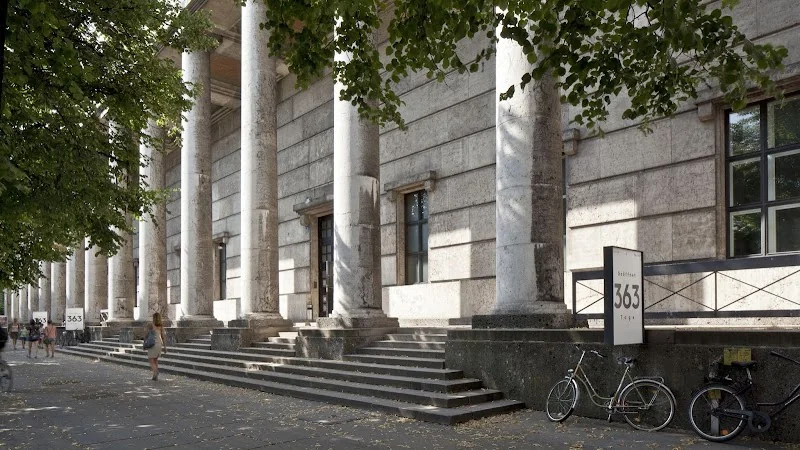
Prinzregentenstraße 1, München-Altstadt-Lehel
Prinzregentenstraße 1, 80538 München, Germany
House of Art Munich | Exhibitions & Tickets
The House of Art Munich is one of the most distinctive venues for contemporary art in the city: a museum without its own collection, but with changing exhibitions, performances, discussions, sound formats, and educational offerings. The building consciously utilizes its historical architecture as part of the program and has been placing artists at the center for years who respond with new perspectives on the present, history, and visual culture. Currently, artists include Sandra Vásquez de la Horra. Soy Energía, For Children. Art Stories since 1968, KOO JEONG A. HOUSE OF THE MAGNET, Ei Arakawa-Nash. Mega Please Draw Freely, and the Exhibition of Exhibitions as part of the program. This mix of art, discourse, experimentation, and historical reflection makes the visit so special. Those looking for exhibitions in Munich will find here not only a classic museum experience but a place that constantly reinvents itself while remaining anchored at a very specific address in the heart of the city. ([hausderkunst.de](https://www.hausderkunst.de/))
Exhibitions and Program at the House of Art Munich
The House of Art sees itself as a global center for contemporary art without its own collection. This attitude clearly shapes the program design: It is not about managing collections, but about continually bringing together content, positions, and formats. Exhibitions are designed here as spaces for thought and experience, often connected with film, performance, music, discourse, publication projects, and participatory formats. This creates a program that not only relies on quick stimuli but builds connections, raises questions, and actively engages visitors in the discourse. Particularly striking is the transdisciplinary, transnational, and transgenerational orientation, which is repeatedly emphasized in the official program texts. The House works with living artists who address current social issues, digital developments, questions of the body, memory culture, and new narrative forms. ([hausderkunst.de](https://www.hausderkunst.de/uploads/newsroom/Ausstellungen-und-Veranstaltungen/2025/00_Preview/HDK_Annual-Preview-2025_EN_press.pdf))
For search intentions related to programs, events, and current exhibitions, it is important to note: The content at the House of Art changes regularly, so a visit at different times of the year can always be different. In addition to the exhibitions, there are talks, concerts, sound events, discussions, workshops, and publication formats such as the independent art book fair Super BOOKS, which brings together artists, designers, publishers, and institutions. There are also educational and participatory offerings, for families, children, youth, schools, or groups. The House sees itself as a meeting place where art is not only viewed but discussed, heard, experimented with, and experienced together. Therefore, those planning their visit should not only look at a single exhibition but also at accompanying events, educational formats, and the House's calendar. This is precisely where one of the greatest advantages lies for visitors looking for a culturally diverse place in Munich where they can easily spend several hours. ([hausderkunst.de](https://www.hausderkunst.de/uploads/newsroom/Ausstellungen-und-Veranstaltungen/2025/00_Preview/HDK_Annual-Preview-2025_EN_press.pdf))
The connection between curatorial handwriting and public accessibility is particularly strong. The House of Art relies on formats that appeal to different age groups, interests, and prior knowledge. For example, guided tours, workshops, and open studio formats are offered to facilitate and deepen access to the exhibitions. The approach of connecting current artistic practices with a reflective engagement with history and architecture is also part of the program. This creates a profile that distinguishes it from classical art museums: It is less about a linear collection history and more about a lively, growing network of positions, conversations, and experiences. For search terms related to programs and events, this means: The House of Art is not only a place to look but also a place to think along and participate. ([hausderkunst.de](https://www.hausderkunst.de/uploads/newsroom/Ausstellungen-und-Veranstaltungen/2025/00_Preview/HDK_Annual-Preview-2025_EN_press.pdf))
Tickets, Opening Hours, and Free Admission
When it comes to tickets, the House of Art is very clearly structured. According to the official visitor information, there are Large House Tickets, Small House Tickets, reduced categories, youth and child tickets, as well as annual passes. Tickets are available online and at the box office on-site, making planning for spontaneous visits as well as for a fixed outing easier. For selected exhibitions, a time slot ticket may be required to better manage entry and avoid waiting times. This is especially relevant when highly demanded exhibitions are running or when the visit falls into a very popular time slot. For SEO search queries related to tickets, it is particularly important that the House of Art offers both digital booking and traditional purchase on-site. ([hausderkunst.de](https://www.hausderkunst.de/en/plan-your-visit/faq?utm_source=openai))
The official prices are also transparent: The Large House Ticket is regularly priced at 15 euros, the Small House Ticket at 10 euros; there are also reduced variants, youth tickets for 5 euros, and free tickets for children. In addition, there are annual passes, including 365 Live and House of Art 365. For many visitors, the note on free contingents and reductions is also important, such as for students, pupils, or other eligible groups. This makes the visit planable and offers various entry levels depending on interest and budget. Those specifically looking for tickets should also note the last Friday opening: Every last Friday of the month, entry is free from 4 PM to 10 PM, making the House of Art a very attractive cultural destination for locals and visitors alike. ([hausderkunst.de](https://www.hausderkunst.de/ihr-besuch?utm_source=openai))
The opening hours are also central to visitor planning. According to the current pages, the House of Art is open from Wednesday to Monday from 10 AM to 8 PM, and closed on Tuesdays. The exhibitions close 15 minutes before the official end, so arriving early is worthwhile. Therefore, if someone is planning only a short visit, they should allow enough time for ticket purchase, orientation, and a leisurely tour. It is particularly pleasant that the free admission on the last Friday of the month can be combined with an evening visit, allowing working people and spontaneous art fans to benefit. Overall, the ticket and opening hour structure is designed to enable a modern museum visit experience without complicating orientation. This is important for people searching for the terms tickets, opening hours, and free admission, who expect reliable, practical information. ([hausderkunst.de](https://www.hausderkunst.de/))
Directions, Parking, and the Best Way to Reach the Museum
The House of Art is located at Prinzregentenstraße 1 in Munich-Altstadt-Lehel and is very well accessible by public transport. Officially, the arrival is described via several routes: Take the U4 or U5 to Lehel and transfer to tram 16 towards Effnerplatz; alternatively, take the U3 or U6 to Odeonsplatz and take bus 100 to the Königinstraße stop. The S-Bahn is also practical: Go to Isartor and then take tram 16 towards Effnerplatz to Nationalmuseum / House of Art. If arriving by bus, you can take line 100 and get off at Königinstraße. This is particularly helpful for visitors because the journey can be flexibly planned depending on the starting point in Munich. ([hausderkunst.de](https://www.hausderkunst.de/en/plan-your-visit))
Driving is also possible, but the House of Art itself recommends using the large paid parking lot behind the building. Especially on busy days, it is advisable to plan the journey using public transport to avoid searching for parking. For people with limited mobility, there are two disabled parking spaces behind the House of Art; the access is located between the Eisbach and the building. The ramp to the entrance is also about 100 meters from the bus stop Königinstraße. This makes the location not only practical but also surprisingly accessible, even though the building appears very monumental architecturally. ([hausderkunst.de](https://www.hausderkunst.de/en/plan-your-visit))
The surrounding area also plays an important role for the journey and the visit. The House of Art is located at one of the most prominent points in Munich and, due to its location between the city center, English Garden, and Isar axis, is a worthwhile destination for a cultural walk. Visitors can therefore easily combine their museum visit with a stroll in the neighborhood, a stay in the English Garden, or a break at the Golden Bar. Those searching for parking, directions, and location often want to know not only how to get there but also how the stay can be meaningfully integrated spatially. This combination of good accessibility, clear public transport indications, and urban surroundings makes the House of Art a comparatively easy destination for day trips in Munich. ([hausderkunst.de](https://www.hausderkunst.de/en/plan-your-visit))
History and Architecture of the House
The history of the House of Art is closely linked to German contemporary history and is one of the main reasons why the place receives attention far beyond Munich. The building was opened in 1937 as the House of German Art and was one of the early architectural representation projects of the Nazi regime. It was a central place for art politics and propaganda. After World War II, the American army initially used the building as an officers' mess before the first art exhibitions began in 1946, which sustainably changed the profile of the House. Since then, the House of Art has developed from an ideologically burdened representative building to an international center for modern and contemporary art. This transformation is not only historically remarkable but continues to determine how art is presented and discussed here today. ([hausderkunst.de](https://www.hausderkunst.de/en/about-us/history))
The architecture itself remains part of this critical engagement. The House of Art today does not see itself as a neutral white cube but as a building with history, whose form, materiality, and symbolism must be considered. For visitors, this means: The spaces are not just a backdrop but part of the substantive experience. The building creates a special tension between monumentality and contemporary use, between representation and critique. This tension makes the place so distinctive and interesting for all who are interested in architecture, art history, and memory culture. Additionally, parts of the House, such as the Golden Bar or the large north terrace, visibly retain historical layers of the building while also transitioning into contemporary use. ([hausderkunst.de](https://www.hausderkunst.de/en/about-us/history))
The historical dimension is therefore not a side aspect but shapes the entire visitor experience. When entering the House of Art, one experiences a museum that does not erase its past but makes it the starting point for a critical view of the present. Especially in a city like Munich, where many cultural places have a rather linear or representative identity, the House of Art offers a different, more multifaceted reading of museum architecture. The historical burden of the building, its post-war use, today's curatorial concepts, and the visible presence of the House in the urban space intertwine here. This is an important reason why search queries related to history and architecture are so often associated with the House of Art: The place is not only beautiful or well-known but is significantly more complex in its significance than an ordinary exhibition house. ([hausderkunst.de](https://www.hausderkunst.de/en/about-us/history))
Golden Bar, Bookshop, and Terrace
Part of the special visitor experience at the House of Art also includes the Golden Bar and the bookshop. The Golden Bar was renovated in 2010 and reopened with a new leasing concept. Today, it is known as a daytime café with a changing offer and extended opening hours. Historically, it goes back to the gastronomy of the House from 1937. For visitors, this means: Those who wish to stay after the exhibition tour will find a place to arrive, reflect, and exchange ideas. The bar is thus not just an ancillary offering but part of the atmosphere of the House. It connects historical spaces with a vibrant present and is particularly attractive for people who want to combine cultural visits with a stay in a relaxed environment. ([hausderkunst.de](https://www.hausderkunst.de/ihr-besuch/goldene-bar?utm_source=openai))
The bookshop is also a relevant component of the House. The Walther König bookshop complements the offering with art books, catalogs, architecture, photography, and design publications, as well as a selection of editions and gift items. This is particularly important for culture-interested guests, as a museum visit can also translate into in-depth reading or collecting interests. The shop is thus not only a place of sale but part of the knowledge culture of the House. Those searching for House of Art Bookshop or Museum Shop will find a high-quality and thematically appropriate addition to the exhibition visit. The bookstore underscores the curatorial ambition of the House and makes it clear that mediation does not end at the exhibition wall. ([hausderkunst.de](https://www.hausderkunst.de/en/plan-your-visit/museum-shop?utm_source=openai))
Also impressive is the large north terrace, which extends across the entire width of the House and is about 800 square meters in size. From there, the view opens up to the English Garden and the Eisbach. The terrace can be rented along with an event space, which also shows how versatile the House is used as a cultural and event location. For visitors, the terrace is an ideal place to combine the museum visit with a break outdoors. In combination with the Golden Bar and bookshop, a coherent overall picture emerges: viewing art, discovering literature, sitting outside, and experiencing the city in close proximity. This mix makes the House of Art particularly attractive for search queries related to highlights, special atmosphere, and unique spaces. ([hausderkunst.de](https://www.hausderkunst.de/en/service/rent-a-space/terrace?utm_source=openai))
Accessibility, Tours, and Practical Visitor Tips
Accessibility is not only a formal issue at the House of Art but a clearly stated goal. The entrance on Prinzregentenstraße is accessible via a ramp, an elevator leads to all floors, and wheelchair-accessible restrooms are located on the ground floor. At the museum, wheelchairs and portable stools can be borrowed free of charge at the box office. Additionally, there are two disabled parking spaces behind the House. The museum also points out that the museum shop and the Golden Bar are on the same level as the entrance hall. For people with visual impairments, it is important to note that there is no guiding system; however, guide dogs are allowed. For visitors with learning difficulties, texts in easy language are available. These offerings show that the House of Art aims to keep access as low-threshold and diverse as possible. ([hausderkunst.de](https://www.hausderkunst.de/ihr-besuch/barrierefreiheit))
The mediation is also broadly established. According to the official program information, there are guided tours, workshops, family offerings, programs for schools and young groups, as well as formats for seniors or people with dementia. Particularly noteworthy is Open House: Every last Friday of the month, the House of Art opens from 4 PM to 10 PM for free and offers a changing, transgenerational program with tours, activations of artworks, and workshops in the Open Studio. For visitors, this means a very good opportunity to get to know the House without a regular ticket and in a particularly open atmosphere. Those looking for programs, free admission, and a cultural evening format should definitely keep this date in mind. ([hausderkunst.de](https://www.hausderkunst.de/uploads/newsroom/Ausstellungen-und-Veranstaltungen/2025/00_Preview/HDK_Annual-Preview-2025_EN_press.pdf))
It is also practical to take a look at the current occupancy and possible time slot tickets when an exhibition is particularly in demand. The official notes recommend booking tickets online if you want to avoid waiting times. If traveling with children, you should keep an eye on the age and discount rules, as there are different rates for various age groups. For a relaxed visit, it is advisable to allow some buffer time for arrival, ticket control, orientation in the building, and a possible detour to the Golden Bar or the bookshop. This way, the museum visit quickly becomes a whole cultural moment that encompasses not only the exhibitions but also architecture, gastronomy, mediation, and urban experience. This is the strength of the House of Art: It is not a place for a quick obligatory visit but a multifaceted cultural destination that is particularly worthwhile with preparation. ([hausderkunst.de](https://www.hausderkunst.de/ihr-besuch?utm_source=openai))
Sources:
Show moreShow less
House of Art Munich | Exhibitions & Tickets
The House of Art Munich is one of the most distinctive venues for contemporary art in the city: a museum without its own collection, but with changing exhibitions, performances, discussions, sound formats, and educational offerings. The building consciously utilizes its historical architecture as part of the program and has been placing artists at the center for years who respond with new perspectives on the present, history, and visual culture. Currently, artists include Sandra Vásquez de la Horra. Soy Energía, For Children. Art Stories since 1968, KOO JEONG A. HOUSE OF THE MAGNET, Ei Arakawa-Nash. Mega Please Draw Freely, and the Exhibition of Exhibitions as part of the program. This mix of art, discourse, experimentation, and historical reflection makes the visit so special. Those looking for exhibitions in Munich will find here not only a classic museum experience but a place that constantly reinvents itself while remaining anchored at a very specific address in the heart of the city. ([hausderkunst.de](https://www.hausderkunst.de/))
Exhibitions and Program at the House of Art Munich
The House of Art sees itself as a global center for contemporary art without its own collection. This attitude clearly shapes the program design: It is not about managing collections, but about continually bringing together content, positions, and formats. Exhibitions are designed here as spaces for thought and experience, often connected with film, performance, music, discourse, publication projects, and participatory formats. This creates a program that not only relies on quick stimuli but builds connections, raises questions, and actively engages visitors in the discourse. Particularly striking is the transdisciplinary, transnational, and transgenerational orientation, which is repeatedly emphasized in the official program texts. The House works with living artists who address current social issues, digital developments, questions of the body, memory culture, and new narrative forms. ([hausderkunst.de](https://www.hausderkunst.de/uploads/newsroom/Ausstellungen-und-Veranstaltungen/2025/00_Preview/HDK_Annual-Preview-2025_EN_press.pdf))
For search intentions related to programs, events, and current exhibitions, it is important to note: The content at the House of Art changes regularly, so a visit at different times of the year can always be different. In addition to the exhibitions, there are talks, concerts, sound events, discussions, workshops, and publication formats such as the independent art book fair Super BOOKS, which brings together artists, designers, publishers, and institutions. There are also educational and participatory offerings, for families, children, youth, schools, or groups. The House sees itself as a meeting place where art is not only viewed but discussed, heard, experimented with, and experienced together. Therefore, those planning their visit should not only look at a single exhibition but also at accompanying events, educational formats, and the House's calendar. This is precisely where one of the greatest advantages lies for visitors looking for a culturally diverse place in Munich where they can easily spend several hours. ([hausderkunst.de](https://www.hausderkunst.de/uploads/newsroom/Ausstellungen-und-Veranstaltungen/2025/00_Preview/HDK_Annual-Preview-2025_EN_press.pdf))
The connection between curatorial handwriting and public accessibility is particularly strong. The House of Art relies on formats that appeal to different age groups, interests, and prior knowledge. For example, guided tours, workshops, and open studio formats are offered to facilitate and deepen access to the exhibitions. The approach of connecting current artistic practices with a reflective engagement with history and architecture is also part of the program. This creates a profile that distinguishes it from classical art museums: It is less about a linear collection history and more about a lively, growing network of positions, conversations, and experiences. For search terms related to programs and events, this means: The House of Art is not only a place to look but also a place to think along and participate. ([hausderkunst.de](https://www.hausderkunst.de/uploads/newsroom/Ausstellungen-und-Veranstaltungen/2025/00_Preview/HDK_Annual-Preview-2025_EN_press.pdf))
Tickets, Opening Hours, and Free Admission
When it comes to tickets, the House of Art is very clearly structured. According to the official visitor information, there are Large House Tickets, Small House Tickets, reduced categories, youth and child tickets, as well as annual passes. Tickets are available online and at the box office on-site, making planning for spontaneous visits as well as for a fixed outing easier. For selected exhibitions, a time slot ticket may be required to better manage entry and avoid waiting times. This is especially relevant when highly demanded exhibitions are running or when the visit falls into a very popular time slot. For SEO search queries related to tickets, it is particularly important that the House of Art offers both digital booking and traditional purchase on-site. ([hausderkunst.de](https://www.hausderkunst.de/en/plan-your-visit/faq?utm_source=openai))
The official prices are also transparent: The Large House Ticket is regularly priced at 15 euros, the Small House Ticket at 10 euros; there are also reduced variants, youth tickets for 5 euros, and free tickets for children. In addition, there are annual passes, including 365 Live and House of Art 365. For many visitors, the note on free contingents and reductions is also important, such as for students, pupils, or other eligible groups. This makes the visit planable and offers various entry levels depending on interest and budget. Those specifically looking for tickets should also note the last Friday opening: Every last Friday of the month, entry is free from 4 PM to 10 PM, making the House of Art a very attractive cultural destination for locals and visitors alike. ([hausderkunst.de](https://www.hausderkunst.de/ihr-besuch?utm_source=openai))
The opening hours are also central to visitor planning. According to the current pages, the House of Art is open from Wednesday to Monday from 10 AM to 8 PM, and closed on Tuesdays. The exhibitions close 15 minutes before the official end, so arriving early is worthwhile. Therefore, if someone is planning only a short visit, they should allow enough time for ticket purchase, orientation, and a leisurely tour. It is particularly pleasant that the free admission on the last Friday of the month can be combined with an evening visit, allowing working people and spontaneous art fans to benefit. Overall, the ticket and opening hour structure is designed to enable a modern museum visit experience without complicating orientation. This is important for people searching for the terms tickets, opening hours, and free admission, who expect reliable, practical information. ([hausderkunst.de](https://www.hausderkunst.de/))
Directions, Parking, and the Best Way to Reach the Museum
The House of Art is located at Prinzregentenstraße 1 in Munich-Altstadt-Lehel and is very well accessible by public transport. Officially, the arrival is described via several routes: Take the U4 or U5 to Lehel and transfer to tram 16 towards Effnerplatz; alternatively, take the U3 or U6 to Odeonsplatz and take bus 100 to the Königinstraße stop. The S-Bahn is also practical: Go to Isartor and then take tram 16 towards Effnerplatz to Nationalmuseum / House of Art. If arriving by bus, you can take line 100 and get off at Königinstraße. This is particularly helpful for visitors because the journey can be flexibly planned depending on the starting point in Munich. ([hausderkunst.de](https://www.hausderkunst.de/en/plan-your-visit))
Driving is also possible, but the House of Art itself recommends using the large paid parking lot behind the building. Especially on busy days, it is advisable to plan the journey using public transport to avoid searching for parking. For people with limited mobility, there are two disabled parking spaces behind the House of Art; the access is located between the Eisbach and the building. The ramp to the entrance is also about 100 meters from the bus stop Königinstraße. This makes the location not only practical but also surprisingly accessible, even though the building appears very monumental architecturally. ([hausderkunst.de](https://www.hausderkunst.de/en/plan-your-visit))
The surrounding area also plays an important role for the journey and the visit. The House of Art is located at one of the most prominent points in Munich and, due to its location between the city center, English Garden, and Isar axis, is a worthwhile destination for a cultural walk. Visitors can therefore easily combine their museum visit with a stroll in the neighborhood, a stay in the English Garden, or a break at the Golden Bar. Those searching for parking, directions, and location often want to know not only how to get there but also how the stay can be meaningfully integrated spatially. This combination of good accessibility, clear public transport indications, and urban surroundings makes the House of Art a comparatively easy destination for day trips in Munich. ([hausderkunst.de](https://www.hausderkunst.de/en/plan-your-visit))
History and Architecture of the House
The history of the House of Art is closely linked to German contemporary history and is one of the main reasons why the place receives attention far beyond Munich. The building was opened in 1937 as the House of German Art and was one of the early architectural representation projects of the Nazi regime. It was a central place for art politics and propaganda. After World War II, the American army initially used the building as an officers' mess before the first art exhibitions began in 1946, which sustainably changed the profile of the House. Since then, the House of Art has developed from an ideologically burdened representative building to an international center for modern and contemporary art. This transformation is not only historically remarkable but continues to determine how art is presented and discussed here today. ([hausderkunst.de](https://www.hausderkunst.de/en/about-us/history))
The architecture itself remains part of this critical engagement. The House of Art today does not see itself as a neutral white cube but as a building with history, whose form, materiality, and symbolism must be considered. For visitors, this means: The spaces are not just a backdrop but part of the substantive experience. The building creates a special tension between monumentality and contemporary use, between representation and critique. This tension makes the place so distinctive and interesting for all who are interested in architecture, art history, and memory culture. Additionally, parts of the House, such as the Golden Bar or the large north terrace, visibly retain historical layers of the building while also transitioning into contemporary use. ([hausderkunst.de](https://www.hausderkunst.de/en/about-us/history))
The historical dimension is therefore not a side aspect but shapes the entire visitor experience. When entering the House of Art, one experiences a museum that does not erase its past but makes it the starting point for a critical view of the present. Especially in a city like Munich, where many cultural places have a rather linear or representative identity, the House of Art offers a different, more multifaceted reading of museum architecture. The historical burden of the building, its post-war use, today's curatorial concepts, and the visible presence of the House in the urban space intertwine here. This is an important reason why search queries related to history and architecture are so often associated with the House of Art: The place is not only beautiful or well-known but is significantly more complex in its significance than an ordinary exhibition house. ([hausderkunst.de](https://www.hausderkunst.de/en/about-us/history))
Golden Bar, Bookshop, and Terrace
Part of the special visitor experience at the House of Art also includes the Golden Bar and the bookshop. The Golden Bar was renovated in 2010 and reopened with a new leasing concept. Today, it is known as a daytime café with a changing offer and extended opening hours. Historically, it goes back to the gastronomy of the House from 1937. For visitors, this means: Those who wish to stay after the exhibition tour will find a place to arrive, reflect, and exchange ideas. The bar is thus not just an ancillary offering but part of the atmosphere of the House. It connects historical spaces with a vibrant present and is particularly attractive for people who want to combine cultural visits with a stay in a relaxed environment. ([hausderkunst.de](https://www.hausderkunst.de/ihr-besuch/goldene-bar?utm_source=openai))
The bookshop is also a relevant component of the House. The Walther König bookshop complements the offering with art books, catalogs, architecture, photography, and design publications, as well as a selection of editions and gift items. This is particularly important for culture-interested guests, as a museum visit can also translate into in-depth reading or collecting interests. The shop is thus not only a place of sale but part of the knowledge culture of the House. Those searching for House of Art Bookshop or Museum Shop will find a high-quality and thematically appropriate addition to the exhibition visit. The bookstore underscores the curatorial ambition of the House and makes it clear that mediation does not end at the exhibition wall. ([hausderkunst.de](https://www.hausderkunst.de/en/plan-your-visit/museum-shop?utm_source=openai))
Also impressive is the large north terrace, which extends across the entire width of the House and is about 800 square meters in size. From there, the view opens up to the English Garden and the Eisbach. The terrace can be rented along with an event space, which also shows how versatile the House is used as a cultural and event location. For visitors, the terrace is an ideal place to combine the museum visit with a break outdoors. In combination with the Golden Bar and bookshop, a coherent overall picture emerges: viewing art, discovering literature, sitting outside, and experiencing the city in close proximity. This mix makes the House of Art particularly attractive for search queries related to highlights, special atmosphere, and unique spaces. ([hausderkunst.de](https://www.hausderkunst.de/en/service/rent-a-space/terrace?utm_source=openai))
Accessibility, Tours, and Practical Visitor Tips
Accessibility is not only a formal issue at the House of Art but a clearly stated goal. The entrance on Prinzregentenstraße is accessible via a ramp, an elevator leads to all floors, and wheelchair-accessible restrooms are located on the ground floor. At the museum, wheelchairs and portable stools can be borrowed free of charge at the box office. Additionally, there are two disabled parking spaces behind the House. The museum also points out that the museum shop and the Golden Bar are on the same level as the entrance hall. For people with visual impairments, it is important to note that there is no guiding system; however, guide dogs are allowed. For visitors with learning difficulties, texts in easy language are available. These offerings show that the House of Art aims to keep access as low-threshold and diverse as possible. ([hausderkunst.de](https://www.hausderkunst.de/ihr-besuch/barrierefreiheit))
The mediation is also broadly established. According to the official program information, there are guided tours, workshops, family offerings, programs for schools and young groups, as well as formats for seniors or people with dementia. Particularly noteworthy is Open House: Every last Friday of the month, the House of Art opens from 4 PM to 10 PM for free and offers a changing, transgenerational program with tours, activations of artworks, and workshops in the Open Studio. For visitors, this means a very good opportunity to get to know the House without a regular ticket and in a particularly open atmosphere. Those looking for programs, free admission, and a cultural evening format should definitely keep this date in mind. ([hausderkunst.de](https://www.hausderkunst.de/uploads/newsroom/Ausstellungen-und-Veranstaltungen/2025/00_Preview/HDK_Annual-Preview-2025_EN_press.pdf))
It is also practical to take a look at the current occupancy and possible time slot tickets when an exhibition is particularly in demand. The official notes recommend booking tickets online if you want to avoid waiting times. If traveling with children, you should keep an eye on the age and discount rules, as there are different rates for various age groups. For a relaxed visit, it is advisable to allow some buffer time for arrival, ticket control, orientation in the building, and a possible detour to the Golden Bar or the bookshop. This way, the museum visit quickly becomes a whole cultural moment that encompasses not only the exhibitions but also architecture, gastronomy, mediation, and urban experience. This is the strength of the House of Art: It is not a place for a quick obligatory visit but a multifaceted cultural destination that is particularly worthwhile with preparation. ([hausderkunst.de](https://www.hausderkunst.de/ihr-besuch?utm_source=openai))
Sources:
House of Art Munich | Exhibitions & Tickets
The House of Art Munich is one of the most distinctive venues for contemporary art in the city: a museum without its own collection, but with changing exhibitions, performances, discussions, sound formats, and educational offerings. The building consciously utilizes its historical architecture as part of the program and has been placing artists at the center for years who respond with new perspectives on the present, history, and visual culture. Currently, artists include Sandra Vásquez de la Horra. Soy Energía, For Children. Art Stories since 1968, KOO JEONG A. HOUSE OF THE MAGNET, Ei Arakawa-Nash. Mega Please Draw Freely, and the Exhibition of Exhibitions as part of the program. This mix of art, discourse, experimentation, and historical reflection makes the visit so special. Those looking for exhibitions in Munich will find here not only a classic museum experience but a place that constantly reinvents itself while remaining anchored at a very specific address in the heart of the city. ([hausderkunst.de](https://www.hausderkunst.de/))
Exhibitions and Program at the House of Art Munich
The House of Art sees itself as a global center for contemporary art without its own collection. This attitude clearly shapes the program design: It is not about managing collections, but about continually bringing together content, positions, and formats. Exhibitions are designed here as spaces for thought and experience, often connected with film, performance, music, discourse, publication projects, and participatory formats. This creates a program that not only relies on quick stimuli but builds connections, raises questions, and actively engages visitors in the discourse. Particularly striking is the transdisciplinary, transnational, and transgenerational orientation, which is repeatedly emphasized in the official program texts. The House works with living artists who address current social issues, digital developments, questions of the body, memory culture, and new narrative forms. ([hausderkunst.de](https://www.hausderkunst.de/uploads/newsroom/Ausstellungen-und-Veranstaltungen/2025/00_Preview/HDK_Annual-Preview-2025_EN_press.pdf))
For search intentions related to programs, events, and current exhibitions, it is important to note: The content at the House of Art changes regularly, so a visit at different times of the year can always be different. In addition to the exhibitions, there are talks, concerts, sound events, discussions, workshops, and publication formats such as the independent art book fair Super BOOKS, which brings together artists, designers, publishers, and institutions. There are also educational and participatory offerings, for families, children, youth, schools, or groups. The House sees itself as a meeting place where art is not only viewed but discussed, heard, experimented with, and experienced together. Therefore, those planning their visit should not only look at a single exhibition but also at accompanying events, educational formats, and the House's calendar. This is precisely where one of the greatest advantages lies for visitors looking for a culturally diverse place in Munich where they can easily spend several hours. ([hausderkunst.de](https://www.hausderkunst.de/uploads/newsroom/Ausstellungen-und-Veranstaltungen/2025/00_Preview/HDK_Annual-Preview-2025_EN_press.pdf))
The connection between curatorial handwriting and public accessibility is particularly strong. The House of Art relies on formats that appeal to different age groups, interests, and prior knowledge. For example, guided tours, workshops, and open studio formats are offered to facilitate and deepen access to the exhibitions. The approach of connecting current artistic practices with a reflective engagement with history and architecture is also part of the program. This creates a profile that distinguishes it from classical art museums: It is less about a linear collection history and more about a lively, growing network of positions, conversations, and experiences. For search terms related to programs and events, this means: The House of Art is not only a place to look but also a place to think along and participate. ([hausderkunst.de](https://www.hausderkunst.de/uploads/newsroom/Ausstellungen-und-Veranstaltungen/2025/00_Preview/HDK_Annual-Preview-2025_EN_press.pdf))
Tickets, Opening Hours, and Free Admission
When it comes to tickets, the House of Art is very clearly structured. According to the official visitor information, there are Large House Tickets, Small House Tickets, reduced categories, youth and child tickets, as well as annual passes. Tickets are available online and at the box office on-site, making planning for spontaneous visits as well as for a fixed outing easier. For selected exhibitions, a time slot ticket may be required to better manage entry and avoid waiting times. This is especially relevant when highly demanded exhibitions are running or when the visit falls into a very popular time slot. For SEO search queries related to tickets, it is particularly important that the House of Art offers both digital booking and traditional purchase on-site. ([hausderkunst.de](https://www.hausderkunst.de/en/plan-your-visit/faq?utm_source=openai))
The official prices are also transparent: The Large House Ticket is regularly priced at 15 euros, the Small House Ticket at 10 euros; there are also reduced variants, youth tickets for 5 euros, and free tickets for children. In addition, there are annual passes, including 365 Live and House of Art 365. For many visitors, the note on free contingents and reductions is also important, such as for students, pupils, or other eligible groups. This makes the visit planable and offers various entry levels depending on interest and budget. Those specifically looking for tickets should also note the last Friday opening: Every last Friday of the month, entry is free from 4 PM to 10 PM, making the House of Art a very attractive cultural destination for locals and visitors alike. ([hausderkunst.de](https://www.hausderkunst.de/ihr-besuch?utm_source=openai))
The opening hours are also central to visitor planning. According to the current pages, the House of Art is open from Wednesday to Monday from 10 AM to 8 PM, and closed on Tuesdays. The exhibitions close 15 minutes before the official end, so arriving early is worthwhile. Therefore, if someone is planning only a short visit, they should allow enough time for ticket purchase, orientation, and a leisurely tour. It is particularly pleasant that the free admission on the last Friday of the month can be combined with an evening visit, allowing working people and spontaneous art fans to benefit. Overall, the ticket and opening hour structure is designed to enable a modern museum visit experience without complicating orientation. This is important for people searching for the terms tickets, opening hours, and free admission, who expect reliable, practical information. ([hausderkunst.de](https://www.hausderkunst.de/))
Directions, Parking, and the Best Way to Reach the Museum
The House of Art is located at Prinzregentenstraße 1 in Munich-Altstadt-Lehel and is very well accessible by public transport. Officially, the arrival is described via several routes: Take the U4 or U5 to Lehel and transfer to tram 16 towards Effnerplatz; alternatively, take the U3 or U6 to Odeonsplatz and take bus 100 to the Königinstraße stop. The S-Bahn is also practical: Go to Isartor and then take tram 16 towards Effnerplatz to Nationalmuseum / House of Art. If arriving by bus, you can take line 100 and get off at Königinstraße. This is particularly helpful for visitors because the journey can be flexibly planned depending on the starting point in Munich. ([hausderkunst.de](https://www.hausderkunst.de/en/plan-your-visit))
Driving is also possible, but the House of Art itself recommends using the large paid parking lot behind the building. Especially on busy days, it is advisable to plan the journey using public transport to avoid searching for parking. For people with limited mobility, there are two disabled parking spaces behind the House of Art; the access is located between the Eisbach and the building. The ramp to the entrance is also about 100 meters from the bus stop Königinstraße. This makes the location not only practical but also surprisingly accessible, even though the building appears very monumental architecturally. ([hausderkunst.de](https://www.hausderkunst.de/en/plan-your-visit))
The surrounding area also plays an important role for the journey and the visit. The House of Art is located at one of the most prominent points in Munich and, due to its location between the city center, English Garden, and Isar axis, is a worthwhile destination for a cultural walk. Visitors can therefore easily combine their museum visit with a stroll in the neighborhood, a stay in the English Garden, or a break at the Golden Bar. Those searching for parking, directions, and location often want to know not only how to get there but also how the stay can be meaningfully integrated spatially. This combination of good accessibility, clear public transport indications, and urban surroundings makes the House of Art a comparatively easy destination for day trips in Munich. ([hausderkunst.de](https://www.hausderkunst.de/en/plan-your-visit))
History and Architecture of the House
The history of the House of Art is closely linked to German contemporary history and is one of the main reasons why the place receives attention far beyond Munich. The building was opened in 1937 as the House of German Art and was one of the early architectural representation projects of the Nazi regime. It was a central place for art politics and propaganda. After World War II, the American army initially used the building as an officers' mess before the first art exhibitions began in 1946, which sustainably changed the profile of the House. Since then, the House of Art has developed from an ideologically burdened representative building to an international center for modern and contemporary art. This transformation is not only historically remarkable but continues to determine how art is presented and discussed here today. ([hausderkunst.de](https://www.hausderkunst.de/en/about-us/history))
The architecture itself remains part of this critical engagement. The House of Art today does not see itself as a neutral white cube but as a building with history, whose form, materiality, and symbolism must be considered. For visitors, this means: The spaces are not just a backdrop but part of the substantive experience. The building creates a special tension between monumentality and contemporary use, between representation and critique. This tension makes the place so distinctive and interesting for all who are interested in architecture, art history, and memory culture. Additionally, parts of the House, such as the Golden Bar or the large north terrace, visibly retain historical layers of the building while also transitioning into contemporary use. ([hausderkunst.de](https://www.hausderkunst.de/en/about-us/history))
The historical dimension is therefore not a side aspect but shapes the entire visitor experience. When entering the House of Art, one experiences a museum that does not erase its past but makes it the starting point for a critical view of the present. Especially in a city like Munich, where many cultural places have a rather linear or representative identity, the House of Art offers a different, more multifaceted reading of museum architecture. The historical burden of the building, its post-war use, today's curatorial concepts, and the visible presence of the House in the urban space intertwine here. This is an important reason why search queries related to history and architecture are so often associated with the House of Art: The place is not only beautiful or well-known but is significantly more complex in its significance than an ordinary exhibition house. ([hausderkunst.de](https://www.hausderkunst.de/en/about-us/history))
Golden Bar, Bookshop, and Terrace
Part of the special visitor experience at the House of Art also includes the Golden Bar and the bookshop. The Golden Bar was renovated in 2010 and reopened with a new leasing concept. Today, it is known as a daytime café with a changing offer and extended opening hours. Historically, it goes back to the gastronomy of the House from 1937. For visitors, this means: Those who wish to stay after the exhibition tour will find a place to arrive, reflect, and exchange ideas. The bar is thus not just an ancillary offering but part of the atmosphere of the House. It connects historical spaces with a vibrant present and is particularly attractive for people who want to combine cultural visits with a stay in a relaxed environment. ([hausderkunst.de](https://www.hausderkunst.de/ihr-besuch/goldene-bar?utm_source=openai))
The bookshop is also a relevant component of the House. The Walther König bookshop complements the offering with art books, catalogs, architecture, photography, and design publications, as well as a selection of editions and gift items. This is particularly important for culture-interested guests, as a museum visit can also translate into in-depth reading or collecting interests. The shop is thus not only a place of sale but part of the knowledge culture of the House. Those searching for House of Art Bookshop or Museum Shop will find a high-quality and thematically appropriate addition to the exhibition visit. The bookstore underscores the curatorial ambition of the House and makes it clear that mediation does not end at the exhibition wall. ([hausderkunst.de](https://www.hausderkunst.de/en/plan-your-visit/museum-shop?utm_source=openai))
Also impressive is the large north terrace, which extends across the entire width of the House and is about 800 square meters in size. From there, the view opens up to the English Garden and the Eisbach. The terrace can be rented along with an event space, which also shows how versatile the House is used as a cultural and event location. For visitors, the terrace is an ideal place to combine the museum visit with a break outdoors. In combination with the Golden Bar and bookshop, a coherent overall picture emerges: viewing art, discovering literature, sitting outside, and experiencing the city in close proximity. This mix makes the House of Art particularly attractive for search queries related to highlights, special atmosphere, and unique spaces. ([hausderkunst.de](https://www.hausderkunst.de/en/service/rent-a-space/terrace?utm_source=openai))
Accessibility, Tours, and Practical Visitor Tips
Accessibility is not only a formal issue at the House of Art but a clearly stated goal. The entrance on Prinzregentenstraße is accessible via a ramp, an elevator leads to all floors, and wheelchair-accessible restrooms are located on the ground floor. At the museum, wheelchairs and portable stools can be borrowed free of charge at the box office. Additionally, there are two disabled parking spaces behind the House. The museum also points out that the museum shop and the Golden Bar are on the same level as the entrance hall. For people with visual impairments, it is important to note that there is no guiding system; however, guide dogs are allowed. For visitors with learning difficulties, texts in easy language are available. These offerings show that the House of Art aims to keep access as low-threshold and diverse as possible. ([hausderkunst.de](https://www.hausderkunst.de/ihr-besuch/barrierefreiheit))
The mediation is also broadly established. According to the official program information, there are guided tours, workshops, family offerings, programs for schools and young groups, as well as formats for seniors or people with dementia. Particularly noteworthy is Open House: Every last Friday of the month, the House of Art opens from 4 PM to 10 PM for free and offers a changing, transgenerational program with tours, activations of artworks, and workshops in the Open Studio. For visitors, this means a very good opportunity to get to know the House without a regular ticket and in a particularly open atmosphere. Those looking for programs, free admission, and a cultural evening format should definitely keep this date in mind. ([hausderkunst.de](https://www.hausderkunst.de/uploads/newsroom/Ausstellungen-und-Veranstaltungen/2025/00_Preview/HDK_Annual-Preview-2025_EN_press.pdf))
It is also practical to take a look at the current occupancy and possible time slot tickets when an exhibition is particularly in demand. The official notes recommend booking tickets online if you want to avoid waiting times. If traveling with children, you should keep an eye on the age and discount rules, as there are different rates for various age groups. For a relaxed visit, it is advisable to allow some buffer time for arrival, ticket control, orientation in the building, and a possible detour to the Golden Bar or the bookshop. This way, the museum visit quickly becomes a whole cultural moment that encompasses not only the exhibitions but also architecture, gastronomy, mediation, and urban experience. This is the strength of the House of Art: It is not a place for a quick obligatory visit but a multifaceted cultural destination that is particularly worthwhile with preparation. ([hausderkunst.de](https://www.hausderkunst.de/ihr-besuch?utm_source=openai))
Sources:
Upcoming Events
No events found
Frequently Asked Questions
Reviews
david antoun
26. December 2025
I visited on the last Friday of the month. Free admission. The main hall is open as a kids' playground and the other rooms feature a series of modern art with different subjects. A 3D movie screen is also available.
Omkar Shivam
21. August 2025
It was an okay visit overall — I’ve been to other art museums that offered a better-curated experience. The layout and user experience could definitely be improved to make it more engaging and easier to navigate. That said, it still had some interesting exhibits and is worth a visit if you’re nearby. Tip: if you’re a student, don’t forget to bring your ID — the entry fee is only €5 with a valid student card, which is a nice bonus.
León
29. November 2025
The exhibitions were modern and thought-provoking, the ticket price was fairly high. Worth a visit if you’re into contemporary art, but not a must-see for everyone.
Nanita
14. June 2025
Haus der Kunst is a museum in Munich. While its history alone is interesting, the art inside is spectacular. Large installations often made specifically for the space are often powerful, poetic, and moving. The recent exhibit by Philippe Parreno - Voices was no exception. The best part about the visit to Haus der Kunst was the guided tour. Our tour guide was extremely knowledgeable and provided insights that enriched the overall experience. Check the website for available tours (some are even in English). One of the city’s most renowned bars/restaurants - die Goldene Bar - is also located there. Excellent drinks and quality food await guests who can dine indoors or outside on a terrace overlooking the Isar River. Highly recommend a visit to Haus der Kunst… take your time and enjoy.
Eric Han
30. October 2025
The golden bar - interesting to see the history behind the place, but in terms of food & drinks, it's mediocre. Perhaps a nice pit stop if visiting the museum, but if looking for a café, there are other recommended places to visit.