
München
Königsplatz, 80333 München-Maxvorstadt, Deutschland
Königsplatz Munich | Concerts & Directions
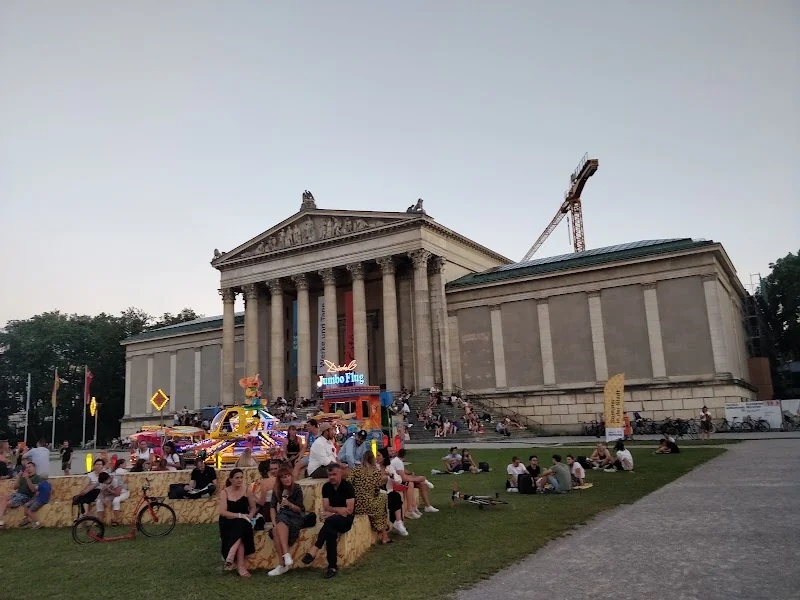
The Königsplatz Munich is much more than a well-known address on the city map. It is a classicist urban space in the Maxvorstadt, a prominent meeting point in the art area, and a place where architecture, history, culture, and public space come together in a special way. Those searching for Königsplatz Munich often think of concerts, quick access via the subway, museums, or a stroll between the large stone surfaces and the famous buildings. This very mix makes the square so attractive: during the day as an urban place to arrive, stroll, and linger, and in the evening as an impressive stage for cultural events. The official city description and the MVV transport information show that Königsplatz is now firmly integrated into the Munich museum and transport network while remaining a historically sensitive ensemble. This also explains why the square is relevant for many inquiries regarding access, parking, events, and history alike. ([stadt.muenchen.de](https://stadt.muenchen.de/service/info/maxvorstadt/10313856/))
Concert Dates and Events at Königsplatz Munich
The strongest search impulse around Königsplatz is often not just the place itself but the question of events, concerts, and specific dates. This is understandable, as the square is one of the few large urban open spaces in Munich that are generally considered for open-air formats. The state capital Munich sets clear rules for this: at Königsplatz, not just any events are possible, but only certain types of events. These include, among others, cultural events for Munich youth, selected sports events, open-air cinema, and concert events within a specified framework. For concerts, up to three weekends per year are usually planned; in years when the IAA Mobility does not take place, there are even up to four concert weekends with up to two event days each. For 2026, the city explicitly points out this special situation. It becomes clear: when people search for “Königsplatz Munich Concerts 2026,” it is not just about any event list, but about the official approval of a central open-air location. The square is therefore not an unregulated open space but a sensitively managed event venue. This is important for organizers because the historical concerns of the square and the adjacent areas must be explicitly taken into account. For visitors, this explains why the program, setup, pathways, noise regulations, and time slots are more structured than at many other open-air spaces. This order also makes Königsplatz reliable: anyone attending a concert there can expect a clear framework, a special atmosphere, and a place that is not interchangeable but is strongly charged urbanistically and culturally. In practice, this means: concerts at Königsplatz are special events, not everyday mass formats, and it is precisely this that creates their appeal. ([stadt.muenchen.de](https://stadt.muenchen.de/infos/veranstaltungen-koenigsplatz2026.html))
The regulations also show that Königsplatz does not simply function as an event space without character but as a place with history, significance, and boundaries. The city explicitly refers to the special historical concerns of the square and the adjacent area. This is more than a formal phrase: it means that use is always in the tension between public accessibility, cultural activation, and monument or memory awareness. Precisely for this reason, event planning here is closely linked to the city administration. Those searching for a specific “Program 2026” usually want to know whether there will even be concerts, on which weekends they can take place, and whether there are still capacities for new applications. From an SEO perspective, the topic is therefore closely related to terms like “events,” “concerts,” “program,” and “tickets.” However, it should be clearly distinguished in content: Königsplatz is not a classic ticket operation with a season ticket structure but a public square that only becomes an event space on selected dates and within the framework of permits. This makes the place attractive for large live moments but also uniquely difficult to plan. It is precisely this uniqueness that many users seek when they inform themselves in advance because they want to know whether a show takes place in this setting and how much the square can be used as a stage. For Munich, this is an important balance, as Königsplatz should remain an urban space to experience while retaining its historical dignity. This dual role shapes the entire search and information needs surrounding the location. ([stadt.muenchen.de](https://stadt.muenchen.de/infos/veranstaltungen-koenigsplatz2026.html))
Access via U2, Tram, and Bus
Access to Königsplatz Munich is one of the most frequently searched topics, and for good reason: the square is located in the city center and is very well connected by public transport. The most important access point is the U-Bahn line U2 with the stop Königsplatz. The MVV describes the station as direct access to the Munich art area and emphasizes that this place opens up an impressive density of galleries and museums in a small space. This is particularly convenient for visitors, as they can quickly reach several cultural destinations from the station without needing to take a long walk through side streets. In addition, official Munich sites mention tram lines 27 and 28 to Karolinenplatz as well as bus lines 58, 68, and 100 in the vicinity of the art area. For many excursions, this is crucial, as Königsplatz is not an isolated point but part of a densely networked urban structure. Those coming from outside can conveniently travel via the U2 and then explore the surroundings on foot. This is also a significant advantage for concert visits, as the return journey after an event is much easier by subway than searching for a parking garage in the city center. The station is located in Zone M, which makes it easier to classify within the urban fare system. Anyone wanting to understand the location of the square should also know that Königsplatz is spatially closely connected to the art area. The stop itself thus acts like an entry point into a cultural landscape where pathways between public space and exhibition houses flow into each other. This is precisely what makes searches for “access,” “U2,” “Karolinenplatz,” and “maps” so relevant: they lead directly to a place that is as quickly accessible in everyday life as it is remarkable in the urban experience. ([redaktion.mvv-muenchen.de](https://redaktion.mvv-muenchen.de/plaene-bahnhoefe/bahnhofsinformation/station/koenigsplatz/index.html))
For orientation on-site, the transfer between U-Bahn, tram, and footpath is pleasantly clear. The official surrounding map of the subway station shows how close Königsplatz is to other well-known points such as Karolinenplatz, Brienner Straße, Luisenstraße, Maxvorstadt, and the museum quarter. This means: those who choose the right exit point are not just at a station but in a whole network of pathways. This is particularly useful for visitor groups, families, and cultural travelers who want to connect several stations of the art area on the same day. Even at events, arriving by public transport is usually the more relaxing option, as one does not have to worry about access restrictions or parking searches. Additionally, many facilities in the vicinity do not have their own parking spaces. Therefore, Königsplatz is a good example of an inner-city destination where mobility works on the principle of “arrive, get out, continue.” Those arriving from the main train station area or from other parts of the city can use the U2 as a clear axis and quickly reach the art area. This is not only practical but also SEO-relevant: the search intent behind “Königsplatz access” or “Königsplatz U2” is usually an immediate desire to visit, not a purely theoretical interest. Precisely these users need a concrete, reliable, and easily understandable classification. Königsplatz meets this need because it is centrally located, well connected, and benefits more from public transport than from car-heavy access. ([mvg.de](https://www.mvg.de/aushangfahrplan/P8_H_KN_0.pdf))
Parking around Königsplatz
The topic of parking is one of the most important practical inquiries at Königsplatz Munich, as the location is in a city center area where parking space is naturally limited. Official information from the surrounding area shows that several facilities around the square do not offer their own parking spaces. Instead, they refer to parking options in the vicinity, central parking garages, or the good public transport connections. This is precisely the core of the user question: those arriving by car want to know whether the trip is worth it, where they can stop, and how close they can get to the square. For Königsplatz, the honest answer is: parking is possible but usually not as convenient as arriving by U2, tram, or bus. The city of Munich generally informs about parking spaces, underground garages, park-and-ride offers, and parking zones, which clearly describes the framework for an inner-city arrival. This means in practice: if you visit Königsplatz, you should not rely on a fixed parking space directly at the square but rather plan for a parking garage in the vicinity or a more distant P+R solution. This is especially true for events and concerts when demand in the center increases and access points are more heavily utilized. For guests of museums or cultural sites in the vicinity, this can even be an advantage, as a short walk from the parking garage to Königsplatz can be well combined with a tour through the art area. Those traveling with people with limited mobility should check the individual institutions in advance, as the information on barrier-free access and parking spaces varies depending on the building. Overall, however, the message is clear: Königsplatz is not a car destination with a large front parking area but an urban place that is better visited like an inner-city ensemble with public access. Precisely for this reason, the keyword “parking” appears so frequently. It describes less the desire for convenience than the necessity to make good decisions for access in a dense urban area. ([muenchen.de](https://www.muenchen.de/sehenswuerdigkeiten/museen/zentralinstitut-fuer-kunstgeschichte?utm_source=openai))
Especially around Königsplatz, it becomes clear how strongly the mobility question affects the visitor experience. Those using the square as a starting point for museum visits, concerts, or a city stroll are usually faster and more relaxed with public transport than by car. This is not only due to the inner-city location but also because many destinations in the art area are consciously connected on foot. A parked car does not automatically provide an advantage at this location, as the actual quality of the visit lies in walking, looking, and switching between cultural stations. The official pages of nearby institutions such as the Glyptothek or the Lenbachhaus therefore sometimes refer to parking spaces in the vicinity or a few parking garages nearby instead of large in-house parking areas. For the search intent behind “Königsplatz parking,” this is an important hint: there is not one Königsplatz garage but rather an inner-city mosaic of parking spaces, parking garages, and a strong public transport alternative. From an SEO perspective, this circumstance should be clearly stated so that users do not arrive with false expectations. Another practical aspect is the time factor: those searching for a space spontaneously during an event or on a sunny visiting day quickly lose time. Therefore, planning with a parking garage or better yet with public transport is the more sensible solution. This way, the visit can be made more pleasant, and one can approach the historic open space without stress instead of driving in circles. For Königsplatz, it particularly applies: those who plan ahead visit more relaxed. ([muenchen.de](https://www.muenchen.de/sehenswuerdigkeiten/top-sehenswuerdigkeiten/glyptothek?utm_source=openai))
History and Architecture of Königsplatz
The historical depth of Königsplatz is one of the reasons why this place is still perceived so strongly today. The official Munich representation describes that the square was planned at the beginning of the 19th century on behalf of King Ludwig I by the architect Karl von Fischer as a magnificent square at the western end of Brienner Straße. Thus, it did not create an accidental open space but a consciously composed classicist urban space. In the Maxvorstadt, the surroundings were mostly developed under Ludwig I in the classicist style, and Königsplatz is one of the most prominent architectural destinations. Particularly defining are the Propyläen, the Glyptothek, and the State Collections of Antiquities, which together form an ensemble that is often described as the main work of Ludovizian Munich. These buildings not only tell of art and architectural history but also of the enthusiasm for Greece in the 19th century, which is reflected in the symbolic and formal design of the square. From an urban planning perspective, Königsplatz is therefore more than a “square” in the everyday sense; it is a designed idea of city, culture, and representation. This is precisely what makes it so important for architecture enthusiasts, historians, and all those who want to understand Munich through its buildings. The square connects strict classicism with public openness: large areas, clear sight axes, monumental structures, and a calm, almost museum-like atmosphere. Anyone entering Königsplatz today still feels that this place was not simply built but staged. This is a key reason why searches for “Königsplatz history” and “Königsplatz architecture” come up so frequently. People want to know why this place feels different from other city squares and why it is so prominent in Munich's cultural memory. The answer lies precisely in this planned monumentality that has remained visible to this day. ([stadt.muenchen.de](https://stadt.muenchen.de/service/info/maxvorstadt/10313856/))
However, the history of Königsplatz also includes the difficult, burdened side of the 20th century. Official Munich pages remind us that the area around the square was significantly reshaped during the National Socialist era and that nearby buildings such as the Führerbau on Arcisstraße played a central role. Today, this building houses the University of Music and Performing Arts Munich, which visibly demonstrates the repurposing of the site after the war. At the same time, the NS Documentation Center Munich at the edge of Königsplatz is a place of learning and remembrance that addresses the history of National Socialism at this historically burdened site. This means: Königsplatz is not only a place of classical beauty but also a place of historical tension and critical remembrance. It is precisely this layering that makes it so significant. The square itself was reshaped after the war into a form that connects to its former shape, and the surroundings were partially reinterpreted. This created an urban space that carries both the classicist idea of the 19th century and the culture of remembrance of the 20th and 21st centuries. For visitors, this is palpable when they switch between the aesthetically clear structures and the information sites about history. For seekers, this is particularly interesting because “Königsplatz Munich” is not just a geographical designation but a multifaceted space of remembrance. Those moving here navigate between art, power architecture, the consequences of war, new beginnings, and contemporary culture. This depth is one reason why the square is still so intensely researched today. ([muenchen.de](https://www.muenchen.de/sehenswuerdigkeiten/sehenswerte-plaetze/koenigsplatz?utm_source=openai))
Art Area, Museums, and Attractions within Walking Distance
Königsplatz is the gateway to one of the densest cultural districts in Munich. The MVV explicitly describes the Königsplatz station as access to the art area, which boasts an impressive density of galleries and museums in a small space. This is precisely what makes the location so strong for visitors who want to experience not just a single place but an entire cultural route. Directly at the square are the Glyptothek and the State Collections of Antiquities; nearby are also the Lenbachhaus, the Pinakothek der Moderne, the Central Institute for Art History, and the NS Documentation Center. This is a remarkable mix, as here antiquity, classicism, modernity, research, and culture of remembrance come together in direct proximity. Königsplatz thus functions as a starting point for multiple perspectives on Munich: art lovers see the museum landscape, those interested in history see urban development, and strollers see a generous open urban space. Particularly noteworthy is also the Kunstbau in the Lenbachhaus, which is located directly above the U-Bahn station Königsplatz, thus literally making the connection between transport, urban space, and art visible. This means for planning a visit: one can arrive at Königsplatz, then walk on foot, combine several houses, and experience very different cultural offerings in a very short distance. This spatial density is a key reason why terms like “Königsplatz art area” or “Königsplatz maps” are searched. Users want to not only find a point but understand what they can do in their surroundings. Königsplatz is ideal for this because it is centrally located and simultaneously has a clear thematic focus. Those spending a day in the district get not only architecture but also museum experiences, urban history, and urban atmosphere. Munich clearly shows how a square can become a cultural hub when transport access, public spaces, and museum neighborhoods fit together. ([redaktion.mvv-muenchen.de](https://redaktion.mvv-muenchen.de/plaene-bahnhoefe/bahnhofsinformation/station/koenigsplatz/index.html))
The immediate attractions also make Königsplatz a worthwhile destination. The Glyptothek is one of the oldest public museums in Munich and was built in the style of an ancient temple; official pages emphasize that the collection and the building go back to King Ludwig I. The Propyläen, in turn, form the representative entrance to the square and enhance the impression of a consciously composed classicist landscape. In combination with the Lenbachhaus and the Pinakothek der Moderne, a route is created that can easily be experienced in one day without having to cover long distances. For many guests, this is precisely the appeal: Königsplatz is not just a single photo point but the center of an entire cultural walk. Those interested in Munich as an art city find here a particularly dense excerpt of the offerings. At the same time, the proximity to the NS Documentation Center is important because it shows that the place is not only aesthetically but also historically and politically readable. This multilayeredness distinguishes Königsplatz from many other city squares. It is a backdrop, a memorial site, a museum neighborhood, and a transport space at the same time. In search engines, this bundle becomes visible: some want to know how to get there, others are interested in the history, and yet others search for events or parking. The good news is that all these intentions converge here. Königsplatz thus almost fulfills the role of an urban key point where one can experience Munich in a very condensed way in a short time. ([muenchen.de](https://www.muenchen.de/sehenswuerdigkeiten/top-sehenswuerdigkeiten/glyptothek?utm_source=openai))
Practical Tips for Visiting, Orientation, and Event Planning
Those visiting Königsplatz Munich benefit from a simple basic rule: to plan the place not as a closed hall but as an open urban space. This has practical advantages. Firstly, the square is weather-dependent, as it unfolds its effect particularly well in sunlight, clear visibility, and in the evening hours. Secondly, it is very well suited for combinations, such as with a museum visit, a walk through Maxvorstadt, or a concert evening. The Munich city information even describes the square as a place where many people relax, read, or enjoy the sun. This fits well with today’s use: Königsplatz is a space that can appear calm during the day and becomes very lively at special events. For event visits, this means that one should arrive on time, as the location in the city center is central but also correspondingly frequented. For museum visits, it is sensible to bundle the destinations in direct proximity rather than viewing the square as an isolated stop. Those traveling with children, elderly people, or in groups benefit from the clear orientation: U2, Karolinenplatz, the surrounding streets, and the museum addresses can be easily combined. Barrier-free access is also documented at several houses in the vicinity, which facilitates planning. It is also important to treat the place with respect: Königsplatz is not just a beautiful backdrop but a historically sensitive urban space. This special quality also shapes the event rules that the city has established for concerts and other uses. So, those searching for “Königsplatz event,” “Königsplatz program,” or “Königsplatz concerts 2026” are not just looking for entertainment but a place with urban, cultural, and historical responsibility. This is precisely why it is worthwhile to plan the visit consciously and to consider the history of the square. Königsplatz rewards this attention with an atmosphere that is unique in Munich: open, monumental, rich in culture, and surprisingly versatile. ([muenchen.de](https://www.muenchen.de/sehenswuerdigkeiten/sehenswerte-plaetze/koenigsplatz?utm_source=openai))
For concrete planning, it helps to connect the search intent behind the place with a small daily plan. Those coming for a concert should prefer public transport connections and check the return journey in advance. Those coming for the museums can use the Königsplatz station as the center of a tour and orient the day according to interest in antiquity, modernity, or culture of remembrance. Those simply wanting to experience the square itself often have the most pleasant mix of light, calm, and views of the classicist architecture in the morning and late afternoon. In nice weather, the generous spaces of the square appear particularly impressive, as the buildings stand freely and the urban space does not seem cramped. This also makes it interesting for photographs, as long as the historical significance of the place is respected. The actual strength of Königsplatz lies in the fact that it is used both touristically and locally: it is not an artificially isolated visitor place but part of daily Munich city life. This makes it appear authentic and simultaneously representative. For SEO content, this is important because users searching for access, parking, history, or events each have different goals but ultimately want to visit the same place. This versatility should be made visible in every text about Königsplatz. After all, the square is not a single event but a condensed piece of Munich. Those who visit it with some time and a clear plan not only get a sight but a whole city history in the space. ([stadt.muenchen.de](https://stadt.muenchen.de/service/info/maxvorstadt/10313856/))
Sources:
- State Capital Munich – Events at Königsplatz 2026
- MVV – Königsplatz Station
- State Capital Munich – Cultural History Path Maxvorstadt
- muenchen.de – Königsplatz in Munich: Attractions and History
- muenchen.de – Glyptothek in Munich: All Information
- muenchen.de – Lenbachhaus and Kunstbau: Discover Artworks and Paintings
- muenchen.de – NS Documentation Center Munich: Learning and Remembrance
Show moreShow less
Königsplatz Munich | Concerts & Directions
The Königsplatz Munich is much more than a well-known address on the city map. It is a classicist urban space in the Maxvorstadt, a prominent meeting point in the art area, and a place where architecture, history, culture, and public space come together in a special way. Those searching for Königsplatz Munich often think of concerts, quick access via the subway, museums, or a stroll between the large stone surfaces and the famous buildings. This very mix makes the square so attractive: during the day as an urban place to arrive, stroll, and linger, and in the evening as an impressive stage for cultural events. The official city description and the MVV transport information show that Königsplatz is now firmly integrated into the Munich museum and transport network while remaining a historically sensitive ensemble. This also explains why the square is relevant for many inquiries regarding access, parking, events, and history alike. ([stadt.muenchen.de](https://stadt.muenchen.de/service/info/maxvorstadt/10313856/))
Concert Dates and Events at Königsplatz Munich
The strongest search impulse around Königsplatz is often not just the place itself but the question of events, concerts, and specific dates. This is understandable, as the square is one of the few large urban open spaces in Munich that are generally considered for open-air formats. The state capital Munich sets clear rules for this: at Königsplatz, not just any events are possible, but only certain types of events. These include, among others, cultural events for Munich youth, selected sports events, open-air cinema, and concert events within a specified framework. For concerts, up to three weekends per year are usually planned; in years when the IAA Mobility does not take place, there are even up to four concert weekends with up to two event days each. For 2026, the city explicitly points out this special situation. It becomes clear: when people search for “Königsplatz Munich Concerts 2026,” it is not just about any event list, but about the official approval of a central open-air location. The square is therefore not an unregulated open space but a sensitively managed event venue. This is important for organizers because the historical concerns of the square and the adjacent areas must be explicitly taken into account. For visitors, this explains why the program, setup, pathways, noise regulations, and time slots are more structured than at many other open-air spaces. This order also makes Königsplatz reliable: anyone attending a concert there can expect a clear framework, a special atmosphere, and a place that is not interchangeable but is strongly charged urbanistically and culturally. In practice, this means: concerts at Königsplatz are special events, not everyday mass formats, and it is precisely this that creates their appeal. ([stadt.muenchen.de](https://stadt.muenchen.de/infos/veranstaltungen-koenigsplatz2026.html))
The regulations also show that Königsplatz does not simply function as an event space without character but as a place with history, significance, and boundaries. The city explicitly refers to the special historical concerns of the square and the adjacent area. This is more than a formal phrase: it means that use is always in the tension between public accessibility, cultural activation, and monument or memory awareness. Precisely for this reason, event planning here is closely linked to the city administration. Those searching for a specific “Program 2026” usually want to know whether there will even be concerts, on which weekends they can take place, and whether there are still capacities for new applications. From an SEO perspective, the topic is therefore closely related to terms like “events,” “concerts,” “program,” and “tickets.” However, it should be clearly distinguished in content: Königsplatz is not a classic ticket operation with a season ticket structure but a public square that only becomes an event space on selected dates and within the framework of permits. This makes the place attractive for large live moments but also uniquely difficult to plan. It is precisely this uniqueness that many users seek when they inform themselves in advance because they want to know whether a show takes place in this setting and how much the square can be used as a stage. For Munich, this is an important balance, as Königsplatz should remain an urban space to experience while retaining its historical dignity. This dual role shapes the entire search and information needs surrounding the location. ([stadt.muenchen.de](https://stadt.muenchen.de/infos/veranstaltungen-koenigsplatz2026.html))
Access via U2, Tram, and Bus
Access to Königsplatz Munich is one of the most frequently searched topics, and for good reason: the square is located in the city center and is very well connected by public transport. The most important access point is the U-Bahn line U2 with the stop Königsplatz. The MVV describes the station as direct access to the Munich art area and emphasizes that this place opens up an impressive density of galleries and museums in a small space. This is particularly convenient for visitors, as they can quickly reach several cultural destinations from the station without needing to take a long walk through side streets. In addition, official Munich sites mention tram lines 27 and 28 to Karolinenplatz as well as bus lines 58, 68, and 100 in the vicinity of the art area. For many excursions, this is crucial, as Königsplatz is not an isolated point but part of a densely networked urban structure. Those coming from outside can conveniently travel via the U2 and then explore the surroundings on foot. This is also a significant advantage for concert visits, as the return journey after an event is much easier by subway than searching for a parking garage in the city center. The station is located in Zone M, which makes it easier to classify within the urban fare system. Anyone wanting to understand the location of the square should also know that Königsplatz is spatially closely connected to the art area. The stop itself thus acts like an entry point into a cultural landscape where pathways between public space and exhibition houses flow into each other. This is precisely what makes searches for “access,” “U2,” “Karolinenplatz,” and “maps” so relevant: they lead directly to a place that is as quickly accessible in everyday life as it is remarkable in the urban experience. ([redaktion.mvv-muenchen.de](https://redaktion.mvv-muenchen.de/plaene-bahnhoefe/bahnhofsinformation/station/koenigsplatz/index.html))
For orientation on-site, the transfer between U-Bahn, tram, and footpath is pleasantly clear. The official surrounding map of the subway station shows how close Königsplatz is to other well-known points such as Karolinenplatz, Brienner Straße, Luisenstraße, Maxvorstadt, and the museum quarter. This means: those who choose the right exit point are not just at a station but in a whole network of pathways. This is particularly useful for visitor groups, families, and cultural travelers who want to connect several stations of the art area on the same day. Even at events, arriving by public transport is usually the more relaxing option, as one does not have to worry about access restrictions or parking searches. Additionally, many facilities in the vicinity do not have their own parking spaces. Therefore, Königsplatz is a good example of an inner-city destination where mobility works on the principle of “arrive, get out, continue.” Those arriving from the main train station area or from other parts of the city can use the U2 as a clear axis and quickly reach the art area. This is not only practical but also SEO-relevant: the search intent behind “Königsplatz access” or “Königsplatz U2” is usually an immediate desire to visit, not a purely theoretical interest. Precisely these users need a concrete, reliable, and easily understandable classification. Königsplatz meets this need because it is centrally located, well connected, and benefits more from public transport than from car-heavy access. ([mvg.de](https://www.mvg.de/aushangfahrplan/P8_H_KN_0.pdf))
Parking around Königsplatz
The topic of parking is one of the most important practical inquiries at Königsplatz Munich, as the location is in a city center area where parking space is naturally limited. Official information from the surrounding area shows that several facilities around the square do not offer their own parking spaces. Instead, they refer to parking options in the vicinity, central parking garages, or the good public transport connections. This is precisely the core of the user question: those arriving by car want to know whether the trip is worth it, where they can stop, and how close they can get to the square. For Königsplatz, the honest answer is: parking is possible but usually not as convenient as arriving by U2, tram, or bus. The city of Munich generally informs about parking spaces, underground garages, park-and-ride offers, and parking zones, which clearly describes the framework for an inner-city arrival. This means in practice: if you visit Königsplatz, you should not rely on a fixed parking space directly at the square but rather plan for a parking garage in the vicinity or a more distant P+R solution. This is especially true for events and concerts when demand in the center increases and access points are more heavily utilized. For guests of museums or cultural sites in the vicinity, this can even be an advantage, as a short walk from the parking garage to Königsplatz can be well combined with a tour through the art area. Those traveling with people with limited mobility should check the individual institutions in advance, as the information on barrier-free access and parking spaces varies depending on the building. Overall, however, the message is clear: Königsplatz is not a car destination with a large front parking area but an urban place that is better visited like an inner-city ensemble with public access. Precisely for this reason, the keyword “parking” appears so frequently. It describes less the desire for convenience than the necessity to make good decisions for access in a dense urban area. ([muenchen.de](https://www.muenchen.de/sehenswuerdigkeiten/museen/zentralinstitut-fuer-kunstgeschichte?utm_source=openai))
Especially around Königsplatz, it becomes clear how strongly the mobility question affects the visitor experience. Those using the square as a starting point for museum visits, concerts, or a city stroll are usually faster and more relaxed with public transport than by car. This is not only due to the inner-city location but also because many destinations in the art area are consciously connected on foot. A parked car does not automatically provide an advantage at this location, as the actual quality of the visit lies in walking, looking, and switching between cultural stations. The official pages of nearby institutions such as the Glyptothek or the Lenbachhaus therefore sometimes refer to parking spaces in the vicinity or a few parking garages nearby instead of large in-house parking areas. For the search intent behind “Königsplatz parking,” this is an important hint: there is not one Königsplatz garage but rather an inner-city mosaic of parking spaces, parking garages, and a strong public transport alternative. From an SEO perspective, this circumstance should be clearly stated so that users do not arrive with false expectations. Another practical aspect is the time factor: those searching for a space spontaneously during an event or on a sunny visiting day quickly lose time. Therefore, planning with a parking garage or better yet with public transport is the more sensible solution. This way, the visit can be made more pleasant, and one can approach the historic open space without stress instead of driving in circles. For Königsplatz, it particularly applies: those who plan ahead visit more relaxed. ([muenchen.de](https://www.muenchen.de/sehenswuerdigkeiten/top-sehenswuerdigkeiten/glyptothek?utm_source=openai))
History and Architecture of Königsplatz
The historical depth of Königsplatz is one of the reasons why this place is still perceived so strongly today. The official Munich representation describes that the square was planned at the beginning of the 19th century on behalf of King Ludwig I by the architect Karl von Fischer as a magnificent square at the western end of Brienner Straße. Thus, it did not create an accidental open space but a consciously composed classicist urban space. In the Maxvorstadt, the surroundings were mostly developed under Ludwig I in the classicist style, and Königsplatz is one of the most prominent architectural destinations. Particularly defining are the Propyläen, the Glyptothek, and the State Collections of Antiquities, which together form an ensemble that is often described as the main work of Ludovizian Munich. These buildings not only tell of art and architectural history but also of the enthusiasm for Greece in the 19th century, which is reflected in the symbolic and formal design of the square. From an urban planning perspective, Königsplatz is therefore more than a “square” in the everyday sense; it is a designed idea of city, culture, and representation. This is precisely what makes it so important for architecture enthusiasts, historians, and all those who want to understand Munich through its buildings. The square connects strict classicism with public openness: large areas, clear sight axes, monumental structures, and a calm, almost museum-like atmosphere. Anyone entering Königsplatz today still feels that this place was not simply built but staged. This is a key reason why searches for “Königsplatz history” and “Königsplatz architecture” come up so frequently. People want to know why this place feels different from other city squares and why it is so prominent in Munich's cultural memory. The answer lies precisely in this planned monumentality that has remained visible to this day. ([stadt.muenchen.de](https://stadt.muenchen.de/service/info/maxvorstadt/10313856/))
However, the history of Königsplatz also includes the difficult, burdened side of the 20th century. Official Munich pages remind us that the area around the square was significantly reshaped during the National Socialist era and that nearby buildings such as the Führerbau on Arcisstraße played a central role. Today, this building houses the University of Music and Performing Arts Munich, which visibly demonstrates the repurposing of the site after the war. At the same time, the NS Documentation Center Munich at the edge of Königsplatz is a place of learning and remembrance that addresses the history of National Socialism at this historically burdened site. This means: Königsplatz is not only a place of classical beauty but also a place of historical tension and critical remembrance. It is precisely this layering that makes it so significant. The square itself was reshaped after the war into a form that connects to its former shape, and the surroundings were partially reinterpreted. This created an urban space that carries both the classicist idea of the 19th century and the culture of remembrance of the 20th and 21st centuries. For visitors, this is palpable when they switch between the aesthetically clear structures and the information sites about history. For seekers, this is particularly interesting because “Königsplatz Munich” is not just a geographical designation but a multifaceted space of remembrance. Those moving here navigate between art, power architecture, the consequences of war, new beginnings, and contemporary culture. This depth is one reason why the square is still so intensely researched today. ([muenchen.de](https://www.muenchen.de/sehenswuerdigkeiten/sehenswerte-plaetze/koenigsplatz?utm_source=openai))
Art Area, Museums, and Attractions within Walking Distance
Königsplatz is the gateway to one of the densest cultural districts in Munich. The MVV explicitly describes the Königsplatz station as access to the art area, which boasts an impressive density of galleries and museums in a small space. This is precisely what makes the location so strong for visitors who want to experience not just a single place but an entire cultural route. Directly at the square are the Glyptothek and the State Collections of Antiquities; nearby are also the Lenbachhaus, the Pinakothek der Moderne, the Central Institute for Art History, and the NS Documentation Center. This is a remarkable mix, as here antiquity, classicism, modernity, research, and culture of remembrance come together in direct proximity. Königsplatz thus functions as a starting point for multiple perspectives on Munich: art lovers see the museum landscape, those interested in history see urban development, and strollers see a generous open urban space. Particularly noteworthy is also the Kunstbau in the Lenbachhaus, which is located directly above the U-Bahn station Königsplatz, thus literally making the connection between transport, urban space, and art visible. This means for planning a visit: one can arrive at Königsplatz, then walk on foot, combine several houses, and experience very different cultural offerings in a very short distance. This spatial density is a key reason why terms like “Königsplatz art area” or “Königsplatz maps” are searched. Users want to not only find a point but understand what they can do in their surroundings. Königsplatz is ideal for this because it is centrally located and simultaneously has a clear thematic focus. Those spending a day in the district get not only architecture but also museum experiences, urban history, and urban atmosphere. Munich clearly shows how a square can become a cultural hub when transport access, public spaces, and museum neighborhoods fit together. ([redaktion.mvv-muenchen.de](https://redaktion.mvv-muenchen.de/plaene-bahnhoefe/bahnhofsinformation/station/koenigsplatz/index.html))
The immediate attractions also make Königsplatz a worthwhile destination. The Glyptothek is one of the oldest public museums in Munich and was built in the style of an ancient temple; official pages emphasize that the collection and the building go back to King Ludwig I. The Propyläen, in turn, form the representative entrance to the square and enhance the impression of a consciously composed classicist landscape. In combination with the Lenbachhaus and the Pinakothek der Moderne, a route is created that can easily be experienced in one day without having to cover long distances. For many guests, this is precisely the appeal: Königsplatz is not just a single photo point but the center of an entire cultural walk. Those interested in Munich as an art city find here a particularly dense excerpt of the offerings. At the same time, the proximity to the NS Documentation Center is important because it shows that the place is not only aesthetically but also historically and politically readable. This multilayeredness distinguishes Königsplatz from many other city squares. It is a backdrop, a memorial site, a museum neighborhood, and a transport space at the same time. In search engines, this bundle becomes visible: some want to know how to get there, others are interested in the history, and yet others search for events or parking. The good news is that all these intentions converge here. Königsplatz thus almost fulfills the role of an urban key point where one can experience Munich in a very condensed way in a short time. ([muenchen.de](https://www.muenchen.de/sehenswuerdigkeiten/top-sehenswuerdigkeiten/glyptothek?utm_source=openai))
Practical Tips for Visiting, Orientation, and Event Planning
Those visiting Königsplatz Munich benefit from a simple basic rule: to plan the place not as a closed hall but as an open urban space. This has practical advantages. Firstly, the square is weather-dependent, as it unfolds its effect particularly well in sunlight, clear visibility, and in the evening hours. Secondly, it is very well suited for combinations, such as with a museum visit, a walk through Maxvorstadt, or a concert evening. The Munich city information even describes the square as a place where many people relax, read, or enjoy the sun. This fits well with today’s use: Königsplatz is a space that can appear calm during the day and becomes very lively at special events. For event visits, this means that one should arrive on time, as the location in the city center is central but also correspondingly frequented. For museum visits, it is sensible to bundle the destinations in direct proximity rather than viewing the square as an isolated stop. Those traveling with children, elderly people, or in groups benefit from the clear orientation: U2, Karolinenplatz, the surrounding streets, and the museum addresses can be easily combined. Barrier-free access is also documented at several houses in the vicinity, which facilitates planning. It is also important to treat the place with respect: Königsplatz is not just a beautiful backdrop but a historically sensitive urban space. This special quality also shapes the event rules that the city has established for concerts and other uses. So, those searching for “Königsplatz event,” “Königsplatz program,” or “Königsplatz concerts 2026” are not just looking for entertainment but a place with urban, cultural, and historical responsibility. This is precisely why it is worthwhile to plan the visit consciously and to consider the history of the square. Königsplatz rewards this attention with an atmosphere that is unique in Munich: open, monumental, rich in culture, and surprisingly versatile. ([muenchen.de](https://www.muenchen.de/sehenswuerdigkeiten/sehenswerte-plaetze/koenigsplatz?utm_source=openai))
For concrete planning, it helps to connect the search intent behind the place with a small daily plan. Those coming for a concert should prefer public transport connections and check the return journey in advance. Those coming for the museums can use the Königsplatz station as the center of a tour and orient the day according to interest in antiquity, modernity, or culture of remembrance. Those simply wanting to experience the square itself often have the most pleasant mix of light, calm, and views of the classicist architecture in the morning and late afternoon. In nice weather, the generous spaces of the square appear particularly impressive, as the buildings stand freely and the urban space does not seem cramped. This also makes it interesting for photographs, as long as the historical significance of the place is respected. The actual strength of Königsplatz lies in the fact that it is used both touristically and locally: it is not an artificially isolated visitor place but part of daily Munich city life. This makes it appear authentic and simultaneously representative. For SEO content, this is important because users searching for access, parking, history, or events each have different goals but ultimately want to visit the same place. This versatility should be made visible in every text about Königsplatz. After all, the square is not a single event but a condensed piece of Munich. Those who visit it with some time and a clear plan not only get a sight but a whole city history in the space. ([stadt.muenchen.de](https://stadt.muenchen.de/service/info/maxvorstadt/10313856/))
Sources:
- State Capital Munich – Events at Königsplatz 2026
- MVV – Königsplatz Station
- State Capital Munich – Cultural History Path Maxvorstadt
- muenchen.de – Königsplatz in Munich: Attractions and History
- muenchen.de – Glyptothek in Munich: All Information
- muenchen.de – Lenbachhaus and Kunstbau: Discover Artworks and Paintings
- muenchen.de – NS Documentation Center Munich: Learning and Remembrance
Königsplatz Munich | Concerts & Directions
The Königsplatz Munich is much more than a well-known address on the city map. It is a classicist urban space in the Maxvorstadt, a prominent meeting point in the art area, and a place where architecture, history, culture, and public space come together in a special way. Those searching for Königsplatz Munich often think of concerts, quick access via the subway, museums, or a stroll between the large stone surfaces and the famous buildings. This very mix makes the square so attractive: during the day as an urban place to arrive, stroll, and linger, and in the evening as an impressive stage for cultural events. The official city description and the MVV transport information show that Königsplatz is now firmly integrated into the Munich museum and transport network while remaining a historically sensitive ensemble. This also explains why the square is relevant for many inquiries regarding access, parking, events, and history alike. ([stadt.muenchen.de](https://stadt.muenchen.de/service/info/maxvorstadt/10313856/))
Concert Dates and Events at Königsplatz Munich
The strongest search impulse around Königsplatz is often not just the place itself but the question of events, concerts, and specific dates. This is understandable, as the square is one of the few large urban open spaces in Munich that are generally considered for open-air formats. The state capital Munich sets clear rules for this: at Königsplatz, not just any events are possible, but only certain types of events. These include, among others, cultural events for Munich youth, selected sports events, open-air cinema, and concert events within a specified framework. For concerts, up to three weekends per year are usually planned; in years when the IAA Mobility does not take place, there are even up to four concert weekends with up to two event days each. For 2026, the city explicitly points out this special situation. It becomes clear: when people search for “Königsplatz Munich Concerts 2026,” it is not just about any event list, but about the official approval of a central open-air location. The square is therefore not an unregulated open space but a sensitively managed event venue. This is important for organizers because the historical concerns of the square and the adjacent areas must be explicitly taken into account. For visitors, this explains why the program, setup, pathways, noise regulations, and time slots are more structured than at many other open-air spaces. This order also makes Königsplatz reliable: anyone attending a concert there can expect a clear framework, a special atmosphere, and a place that is not interchangeable but is strongly charged urbanistically and culturally. In practice, this means: concerts at Königsplatz are special events, not everyday mass formats, and it is precisely this that creates their appeal. ([stadt.muenchen.de](https://stadt.muenchen.de/infos/veranstaltungen-koenigsplatz2026.html))
The regulations also show that Königsplatz does not simply function as an event space without character but as a place with history, significance, and boundaries. The city explicitly refers to the special historical concerns of the square and the adjacent area. This is more than a formal phrase: it means that use is always in the tension between public accessibility, cultural activation, and monument or memory awareness. Precisely for this reason, event planning here is closely linked to the city administration. Those searching for a specific “Program 2026” usually want to know whether there will even be concerts, on which weekends they can take place, and whether there are still capacities for new applications. From an SEO perspective, the topic is therefore closely related to terms like “events,” “concerts,” “program,” and “tickets.” However, it should be clearly distinguished in content: Königsplatz is not a classic ticket operation with a season ticket structure but a public square that only becomes an event space on selected dates and within the framework of permits. This makes the place attractive for large live moments but also uniquely difficult to plan. It is precisely this uniqueness that many users seek when they inform themselves in advance because they want to know whether a show takes place in this setting and how much the square can be used as a stage. For Munich, this is an important balance, as Königsplatz should remain an urban space to experience while retaining its historical dignity. This dual role shapes the entire search and information needs surrounding the location. ([stadt.muenchen.de](https://stadt.muenchen.de/infos/veranstaltungen-koenigsplatz2026.html))
Access via U2, Tram, and Bus
Access to Königsplatz Munich is one of the most frequently searched topics, and for good reason: the square is located in the city center and is very well connected by public transport. The most important access point is the U-Bahn line U2 with the stop Königsplatz. The MVV describes the station as direct access to the Munich art area and emphasizes that this place opens up an impressive density of galleries and museums in a small space. This is particularly convenient for visitors, as they can quickly reach several cultural destinations from the station without needing to take a long walk through side streets. In addition, official Munich sites mention tram lines 27 and 28 to Karolinenplatz as well as bus lines 58, 68, and 100 in the vicinity of the art area. For many excursions, this is crucial, as Königsplatz is not an isolated point but part of a densely networked urban structure. Those coming from outside can conveniently travel via the U2 and then explore the surroundings on foot. This is also a significant advantage for concert visits, as the return journey after an event is much easier by subway than searching for a parking garage in the city center. The station is located in Zone M, which makes it easier to classify within the urban fare system. Anyone wanting to understand the location of the square should also know that Königsplatz is spatially closely connected to the art area. The stop itself thus acts like an entry point into a cultural landscape where pathways between public space and exhibition houses flow into each other. This is precisely what makes searches for “access,” “U2,” “Karolinenplatz,” and “maps” so relevant: they lead directly to a place that is as quickly accessible in everyday life as it is remarkable in the urban experience. ([redaktion.mvv-muenchen.de](https://redaktion.mvv-muenchen.de/plaene-bahnhoefe/bahnhofsinformation/station/koenigsplatz/index.html))
For orientation on-site, the transfer between U-Bahn, tram, and footpath is pleasantly clear. The official surrounding map of the subway station shows how close Königsplatz is to other well-known points such as Karolinenplatz, Brienner Straße, Luisenstraße, Maxvorstadt, and the museum quarter. This means: those who choose the right exit point are not just at a station but in a whole network of pathways. This is particularly useful for visitor groups, families, and cultural travelers who want to connect several stations of the art area on the same day. Even at events, arriving by public transport is usually the more relaxing option, as one does not have to worry about access restrictions or parking searches. Additionally, many facilities in the vicinity do not have their own parking spaces. Therefore, Königsplatz is a good example of an inner-city destination where mobility works on the principle of “arrive, get out, continue.” Those arriving from the main train station area or from other parts of the city can use the U2 as a clear axis and quickly reach the art area. This is not only practical but also SEO-relevant: the search intent behind “Königsplatz access” or “Königsplatz U2” is usually an immediate desire to visit, not a purely theoretical interest. Precisely these users need a concrete, reliable, and easily understandable classification. Königsplatz meets this need because it is centrally located, well connected, and benefits more from public transport than from car-heavy access. ([mvg.de](https://www.mvg.de/aushangfahrplan/P8_H_KN_0.pdf))
Parking around Königsplatz
The topic of parking is one of the most important practical inquiries at Königsplatz Munich, as the location is in a city center area where parking space is naturally limited. Official information from the surrounding area shows that several facilities around the square do not offer their own parking spaces. Instead, they refer to parking options in the vicinity, central parking garages, or the good public transport connections. This is precisely the core of the user question: those arriving by car want to know whether the trip is worth it, where they can stop, and how close they can get to the square. For Königsplatz, the honest answer is: parking is possible but usually not as convenient as arriving by U2, tram, or bus. The city of Munich generally informs about parking spaces, underground garages, park-and-ride offers, and parking zones, which clearly describes the framework for an inner-city arrival. This means in practice: if you visit Königsplatz, you should not rely on a fixed parking space directly at the square but rather plan for a parking garage in the vicinity or a more distant P+R solution. This is especially true for events and concerts when demand in the center increases and access points are more heavily utilized. For guests of museums or cultural sites in the vicinity, this can even be an advantage, as a short walk from the parking garage to Königsplatz can be well combined with a tour through the art area. Those traveling with people with limited mobility should check the individual institutions in advance, as the information on barrier-free access and parking spaces varies depending on the building. Overall, however, the message is clear: Königsplatz is not a car destination with a large front parking area but an urban place that is better visited like an inner-city ensemble with public access. Precisely for this reason, the keyword “parking” appears so frequently. It describes less the desire for convenience than the necessity to make good decisions for access in a dense urban area. ([muenchen.de](https://www.muenchen.de/sehenswuerdigkeiten/museen/zentralinstitut-fuer-kunstgeschichte?utm_source=openai))
Especially around Königsplatz, it becomes clear how strongly the mobility question affects the visitor experience. Those using the square as a starting point for museum visits, concerts, or a city stroll are usually faster and more relaxed with public transport than by car. This is not only due to the inner-city location but also because many destinations in the art area are consciously connected on foot. A parked car does not automatically provide an advantage at this location, as the actual quality of the visit lies in walking, looking, and switching between cultural stations. The official pages of nearby institutions such as the Glyptothek or the Lenbachhaus therefore sometimes refer to parking spaces in the vicinity or a few parking garages nearby instead of large in-house parking areas. For the search intent behind “Königsplatz parking,” this is an important hint: there is not one Königsplatz garage but rather an inner-city mosaic of parking spaces, parking garages, and a strong public transport alternative. From an SEO perspective, this circumstance should be clearly stated so that users do not arrive with false expectations. Another practical aspect is the time factor: those searching for a space spontaneously during an event or on a sunny visiting day quickly lose time. Therefore, planning with a parking garage or better yet with public transport is the more sensible solution. This way, the visit can be made more pleasant, and one can approach the historic open space without stress instead of driving in circles. For Königsplatz, it particularly applies: those who plan ahead visit more relaxed. ([muenchen.de](https://www.muenchen.de/sehenswuerdigkeiten/top-sehenswuerdigkeiten/glyptothek?utm_source=openai))
History and Architecture of Königsplatz
The historical depth of Königsplatz is one of the reasons why this place is still perceived so strongly today. The official Munich representation describes that the square was planned at the beginning of the 19th century on behalf of King Ludwig I by the architect Karl von Fischer as a magnificent square at the western end of Brienner Straße. Thus, it did not create an accidental open space but a consciously composed classicist urban space. In the Maxvorstadt, the surroundings were mostly developed under Ludwig I in the classicist style, and Königsplatz is one of the most prominent architectural destinations. Particularly defining are the Propyläen, the Glyptothek, and the State Collections of Antiquities, which together form an ensemble that is often described as the main work of Ludovizian Munich. These buildings not only tell of art and architectural history but also of the enthusiasm for Greece in the 19th century, which is reflected in the symbolic and formal design of the square. From an urban planning perspective, Königsplatz is therefore more than a “square” in the everyday sense; it is a designed idea of city, culture, and representation. This is precisely what makes it so important for architecture enthusiasts, historians, and all those who want to understand Munich through its buildings. The square connects strict classicism with public openness: large areas, clear sight axes, monumental structures, and a calm, almost museum-like atmosphere. Anyone entering Königsplatz today still feels that this place was not simply built but staged. This is a key reason why searches for “Königsplatz history” and “Königsplatz architecture” come up so frequently. People want to know why this place feels different from other city squares and why it is so prominent in Munich's cultural memory. The answer lies precisely in this planned monumentality that has remained visible to this day. ([stadt.muenchen.de](https://stadt.muenchen.de/service/info/maxvorstadt/10313856/))
However, the history of Königsplatz also includes the difficult, burdened side of the 20th century. Official Munich pages remind us that the area around the square was significantly reshaped during the National Socialist era and that nearby buildings such as the Führerbau on Arcisstraße played a central role. Today, this building houses the University of Music and Performing Arts Munich, which visibly demonstrates the repurposing of the site after the war. At the same time, the NS Documentation Center Munich at the edge of Königsplatz is a place of learning and remembrance that addresses the history of National Socialism at this historically burdened site. This means: Königsplatz is not only a place of classical beauty but also a place of historical tension and critical remembrance. It is precisely this layering that makes it so significant. The square itself was reshaped after the war into a form that connects to its former shape, and the surroundings were partially reinterpreted. This created an urban space that carries both the classicist idea of the 19th century and the culture of remembrance of the 20th and 21st centuries. For visitors, this is palpable when they switch between the aesthetically clear structures and the information sites about history. For seekers, this is particularly interesting because “Königsplatz Munich” is not just a geographical designation but a multifaceted space of remembrance. Those moving here navigate between art, power architecture, the consequences of war, new beginnings, and contemporary culture. This depth is one reason why the square is still so intensely researched today. ([muenchen.de](https://www.muenchen.de/sehenswuerdigkeiten/sehenswerte-plaetze/koenigsplatz?utm_source=openai))
Art Area, Museums, and Attractions within Walking Distance
Königsplatz is the gateway to one of the densest cultural districts in Munich. The MVV explicitly describes the Königsplatz station as access to the art area, which boasts an impressive density of galleries and museums in a small space. This is precisely what makes the location so strong for visitors who want to experience not just a single place but an entire cultural route. Directly at the square are the Glyptothek and the State Collections of Antiquities; nearby are also the Lenbachhaus, the Pinakothek der Moderne, the Central Institute for Art History, and the NS Documentation Center. This is a remarkable mix, as here antiquity, classicism, modernity, research, and culture of remembrance come together in direct proximity. Königsplatz thus functions as a starting point for multiple perspectives on Munich: art lovers see the museum landscape, those interested in history see urban development, and strollers see a generous open urban space. Particularly noteworthy is also the Kunstbau in the Lenbachhaus, which is located directly above the U-Bahn station Königsplatz, thus literally making the connection between transport, urban space, and art visible. This means for planning a visit: one can arrive at Königsplatz, then walk on foot, combine several houses, and experience very different cultural offerings in a very short distance. This spatial density is a key reason why terms like “Königsplatz art area” or “Königsplatz maps” are searched. Users want to not only find a point but understand what they can do in their surroundings. Königsplatz is ideal for this because it is centrally located and simultaneously has a clear thematic focus. Those spending a day in the district get not only architecture but also museum experiences, urban history, and urban atmosphere. Munich clearly shows how a square can become a cultural hub when transport access, public spaces, and museum neighborhoods fit together. ([redaktion.mvv-muenchen.de](https://redaktion.mvv-muenchen.de/plaene-bahnhoefe/bahnhofsinformation/station/koenigsplatz/index.html))
The immediate attractions also make Königsplatz a worthwhile destination. The Glyptothek is one of the oldest public museums in Munich and was built in the style of an ancient temple; official pages emphasize that the collection and the building go back to King Ludwig I. The Propyläen, in turn, form the representative entrance to the square and enhance the impression of a consciously composed classicist landscape. In combination with the Lenbachhaus and the Pinakothek der Moderne, a route is created that can easily be experienced in one day without having to cover long distances. For many guests, this is precisely the appeal: Königsplatz is not just a single photo point but the center of an entire cultural walk. Those interested in Munich as an art city find here a particularly dense excerpt of the offerings. At the same time, the proximity to the NS Documentation Center is important because it shows that the place is not only aesthetically but also historically and politically readable. This multilayeredness distinguishes Königsplatz from many other city squares. It is a backdrop, a memorial site, a museum neighborhood, and a transport space at the same time. In search engines, this bundle becomes visible: some want to know how to get there, others are interested in the history, and yet others search for events or parking. The good news is that all these intentions converge here. Königsplatz thus almost fulfills the role of an urban key point where one can experience Munich in a very condensed way in a short time. ([muenchen.de](https://www.muenchen.de/sehenswuerdigkeiten/top-sehenswuerdigkeiten/glyptothek?utm_source=openai))
Practical Tips for Visiting, Orientation, and Event Planning
Those visiting Königsplatz Munich benefit from a simple basic rule: to plan the place not as a closed hall but as an open urban space. This has practical advantages. Firstly, the square is weather-dependent, as it unfolds its effect particularly well in sunlight, clear visibility, and in the evening hours. Secondly, it is very well suited for combinations, such as with a museum visit, a walk through Maxvorstadt, or a concert evening. The Munich city information even describes the square as a place where many people relax, read, or enjoy the sun. This fits well with today’s use: Königsplatz is a space that can appear calm during the day and becomes very lively at special events. For event visits, this means that one should arrive on time, as the location in the city center is central but also correspondingly frequented. For museum visits, it is sensible to bundle the destinations in direct proximity rather than viewing the square as an isolated stop. Those traveling with children, elderly people, or in groups benefit from the clear orientation: U2, Karolinenplatz, the surrounding streets, and the museum addresses can be easily combined. Barrier-free access is also documented at several houses in the vicinity, which facilitates planning. It is also important to treat the place with respect: Königsplatz is not just a beautiful backdrop but a historically sensitive urban space. This special quality also shapes the event rules that the city has established for concerts and other uses. So, those searching for “Königsplatz event,” “Königsplatz program,” or “Königsplatz concerts 2026” are not just looking for entertainment but a place with urban, cultural, and historical responsibility. This is precisely why it is worthwhile to plan the visit consciously and to consider the history of the square. Königsplatz rewards this attention with an atmosphere that is unique in Munich: open, monumental, rich in culture, and surprisingly versatile. ([muenchen.de](https://www.muenchen.de/sehenswuerdigkeiten/sehenswerte-plaetze/koenigsplatz?utm_source=openai))
For concrete planning, it helps to connect the search intent behind the place with a small daily plan. Those coming for a concert should prefer public transport connections and check the return journey in advance. Those coming for the museums can use the Königsplatz station as the center of a tour and orient the day according to interest in antiquity, modernity, or culture of remembrance. Those simply wanting to experience the square itself often have the most pleasant mix of light, calm, and views of the classicist architecture in the morning and late afternoon. In nice weather, the generous spaces of the square appear particularly impressive, as the buildings stand freely and the urban space does not seem cramped. This also makes it interesting for photographs, as long as the historical significance of the place is respected. The actual strength of Königsplatz lies in the fact that it is used both touristically and locally: it is not an artificially isolated visitor place but part of daily Munich city life. This makes it appear authentic and simultaneously representative. For SEO content, this is important because users searching for access, parking, history, or events each have different goals but ultimately want to visit the same place. This versatility should be made visible in every text about Königsplatz. After all, the square is not a single event but a condensed piece of Munich. Those who visit it with some time and a clear plan not only get a sight but a whole city history in the space. ([stadt.muenchen.de](https://stadt.muenchen.de/service/info/maxvorstadt/10313856/))
Sources:
- State Capital Munich – Events at Königsplatz 2026
- MVV – Königsplatz Station
- State Capital Munich – Cultural History Path Maxvorstadt
- muenchen.de – Königsplatz in Munich: Attractions and History
- muenchen.de – Glyptothek in Munich: All Information
- muenchen.de – Lenbachhaus and Kunstbau: Discover Artworks and Paintings
- muenchen.de – NS Documentation Center Munich: Learning and Remembrance
Upcoming Events
Munich Sports Festival 2026
Visit the Munich Sports Festival 2026 and experience a variety of sports to try. Free entry and ideal for families!

Tream – The Weißbier-Probe Tour 2026
Don't miss Tream's open-air concert on August 14, 2026, at Königsplatz in Munich.
Nick Cave & The Bad Seeds in Munich
Don't miss the concert of the legendary band around Nick Cave on August 23, 2026, in Munich. An unforgettable musical journey awaits you.
Frequently Asked Questions
Reviews
No reviews found