
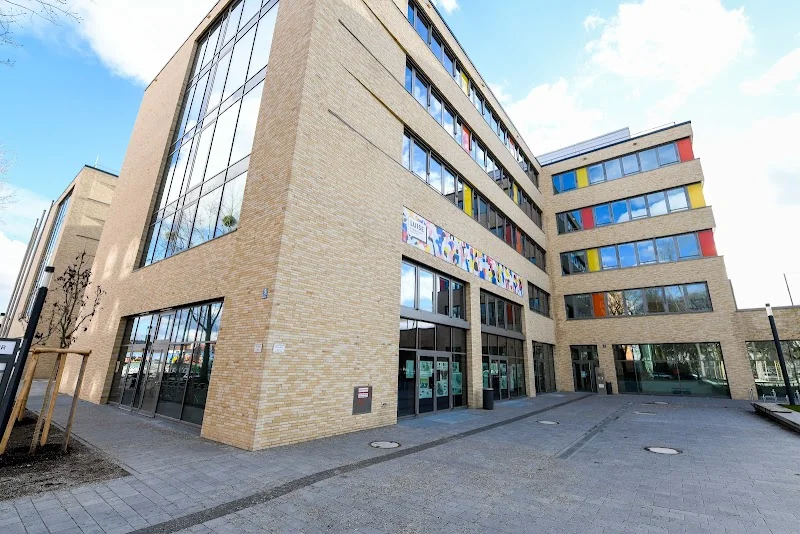
München
Ruppertstraße 5, 80337 München-Ludwigsvorstadt-Isarvorstadt, Deutschland
Cultural Center LUISE | Program & Directions
The LUISE at Ruppertstraße 5 is a vibrant cultural center in Munich that functions not only as a venue but also as an open platform for encounters, engagement, and collaborative creation. On the official website, LUISE describes itself as a place where culture is conceived by all for all, and where people can contribute ideas and take them back out with them. The house combines a diverse program with flexibly usable spaces and a clear social stance: those who come here do not simply find a stage or a hall, but a cultural address with a strong neighborhood connection, participatory claim, and offerings for very different target groups. This mixture makes LUISE interesting for visitors, initiatives, associations, and cultural creators. LUISE is funded by the Cultural Department of the City of Munich; the sponsor is Glockenbachwerkstatt e.V., which, according to the website, has been doing socio-cultural neighborhood work in Munich for over forty years. This firmly anchors LUISE in the city while remaining open to new ideas, projects, and formats. ([luise-kultur.de](https://www.luise-kultur.de/ueberuns?utm_source=openai))
Program and Upcoming Events at LUISE
Those searching for the cultural center LUISE often mean one thing above all: the program. And this is precisely where the house shows its strength, as the website not only lists individual dates but also a wide range of culture, workshops, children's offerings, open discussion formats, and much more. LUISE sees itself as a platform for readings, concerts, theater, children's offerings, workshops, and consultations on various topics. This is important for seekers because the location is not reduced to a single genre but consciously allows many formats. On the program page and in the current notices on the website, open, low-threshold, and community-oriented offerings regularly appear, which very well describe the character of the house. These include formats such as the dialogue café, which, according to the homepage, currently takes place on Wednesdays from 6:00 PM to 7:00 PM, or changing participatory offerings that connect culture and encounters. For visitors, this means: LUISE is not just a place to watch but also to participate, try out, and meet. This openness is a central part of its profile and explains why the search for programs, events, and current dates is among the most important inquiries related to the house. ([luise-kultur.de](https://www.luise-kultur.de/programm?utm_source=openai))
Particularly interesting is that LUISE does not communicate its program like a classic ticket house but as part of a broader cultural and engagement effort. The website showcases recurring formats, thematic series, and projects that often connect to specific social or cultural questions. This makes the program approachable and contemporary, as it is not just a collection of events but an invitation to engage with topics, people, and neighborhoods. From an SEO perspective, these terms are crucial: program, upcoming events, workshops, theater, concerts, children's offerings, and open formats. Those researching LUISE often look for a location with genuine content diversity and an address that is both culturally and organizationally reliable. The official program page is therefore the best point of contact to get an overview and find the right date. ([luise-kultur.de](https://www.luise-kultur.de/programm?utm_source=openai))
Directions to Ruppertstraße 5 and Parking at LUISE
The approach to LUISE is clearly oriented towards public transport. According to the contact page, the Poccistraße subway station on lines U3 and U6 is about 300 meters or a five-minute walk away. Particularly convenient is that there is a lift from the subway to the surface at Lindwurmstraße, corner of Schmellerstraße. This makes the way to the location not only short but also well-planned. Additionally, bus line 62 stops directly in front of the building at the Tumblingerstraße stop. For visitors, this is an advantage because LUISE is located in the city center, making it easy to reach by public transport. Those coming from other parts of Munich or wanting to combine several program points in one evening find here a central, well-connected address. Especially for events with a fixed start time, this location is a real plus, as the last meters are manageable and easy to find. ([luise-kultur.de](https://www.luise-kultur.de/kontakt?utm_source=openai))
When it comes to parking, LUISE is very clear: due to its city center location and environmental reasons, arriving by car is discouraged. Those who still rely on a car or special solutions should coordinate the location planning early with the team, as accessible parking spaces can only be offered by prior arrangement for organizational reasons. Therefore, the recommendation for the majority of visitors is clear: use the subway or bus and walk the short distance. This is not only the more sustainable but also the less stressful solution. For SEO search queries like cultural center LUISE parking, directions, or Munich parking, this information is central, as it directly answers the most common practical question. LUISE positions itself as an inner-city cultural address that consciously relies on good public transport accessibility while openly communicating what is possible and what is not regarding parking. ([luise-kultur.de](https://www.luise-kultur.de/kontakt?utm_source=openai))
Overview of the Hall, Rooms, and Equipment
A strong reason why LUISE is so relevant for events, workshops, and cultural work lies in its room structure. The website mentions a hall of 250 square meters, which is used depending on the seating arrangement and is suitable for theater, readings, music, conferences, and other formats. In addition, there are four additional rooms with clear usage focuses: Room 1 with 27 square meters for workshops and meetings, Room 2 with 38 square meters for workshops, meetings, and crafts, Room 3 with 37 square meters for workshops, meetings, and seminars, and Room 4 with 70 square meters for workshops, dance, and other movement formats. The naming is very characteristic as it presents the rooms as part of a cultural concept: LUISE plays, LUISE thinks, LUISE works, LUISE sings, and LUISE dances. This makes the location memorable and functional at the same time. So, for those looking for space, hall, equipment, or venue, they find here a house with a clear structure and versatile possibilities. ([luise-kultur.de](https://www.luise-kultur.de/raeume?utm_source=openai))
The equipment is also remarkable as it is tailored to various event formats. In the hall, there is a stage with a lift, a projector, artist dressing rooms with accessible restrooms, and an inductive hearing system available. Additionally, the website mentions a free-to-use tea kitchen, presentation materials like flip charts, pinboards, moderation cases, and projectors upon request, as well as event technology by arrangement. For the use of the rooms, it is important that LUISE does not offer rentals for private celebrations and also does not provide in-house catering. External bookings are possible a maximum of 12 months in advance, with the corresponding month of the following year being released on the first day of each month. There are also operational holidays in summer and winter that should be considered in planning. These framework conditions show: LUISE is not just any event space but a professionally organized cultural venue with clear rules and a strong focus on public, cultural, and social use. ([luise-kultur.de](https://www.luise-kultur.de/raeume?utm_source=openai))
Accessibility and Visitor Information for a Relaxed Visit
Accessibility is not an addition at LUISE but part of the fundamental understanding. The website clearly states that all rooms are on the ground floor and accessible without thresholds or steps. The hall is equipped with an induction system, the stage has a lift, and the artist dressing rooms have an accessible toilet. This fulfills important requirements for events where accessibility plays a central role. The arrival is also coordinated with this: at the Poccistraße subway station, there is a lift, and the bus stop for line 62 is right outside the door. For people who rely on a planable, as smooth as possible arrival, this is a significant plus. Equally important is the information that accessible parking spaces can only be offered by prior arrangement. Thus, LUISE not only communicates its strengths but also the organizational conditions openly and understandably. ([luise-kultur.de](https://www.luise-kultur.de/barrierefreiheit?utm_source=openai))
Practical visitor information also includes a rather small but important note: companions of people with severe disability ID cards generally do not pay admission. Those with special needs should contact the provided email address or call for assistance. This makes it clear that LUISE aims to create inclusive structures not only architecturally but also communicatively. For organizers and guests, this is crucial because a good location must offer more than just beautiful spaces; it must also function in everyday practice. LUISE demonstrates a very consistent approach here, where accessibility, reachability, and personal communication are thought together. Especially in the search for a location in Munich, this is a strong argument as it provides visitors with security and simplifies planning. ([luise-kultur.de](https://www.luise-kultur.de/barrierefreiheit?utm_source=openai))
Background of LUISE and Its Socio-Cultural Mission
LUISE is more than just a venue because it clearly understands itself as a socio-cultural platform. The website describes it as a place where people from the neighborhood, initiatives, associations, artists, and engaged groups can come together. Rooms of various sizes are regularly or temporarily available for rehearsals, meetings, events, and projects. This is important because it shows that LUISE is not only focused on public events but also on continuous work in the neighborhood. It is funded by the Cultural Department of the City of Munich, which underscores its urban anchoring. The sponsor is named as Glockenbachwerkstatt e.V., an institution in Munich that, according to the website, has been doing socio-cultural neighborhood work for over forty years. This combination of sponsorship, funding, and contentual claim forms the framework for everything that happens in the house. ([luise-kultur.de](https://www.luise-kultur.de/ueberuns?utm_source=openai))
Particularly formative is the idea that culture at LUISE is not conceived top-down but together with the environment. The website emphasizes that the work is accompanied by a user advisory board made up of actors from the neighborhood. This is more than just an organizational detail, as it shows an attitude: LUISE is a place where participation is not just a word but is structurally anchored. Projects like Culture in the Block further demonstrate that LUISE also impacts the neighborhood beyond the building. It is about art and culture in the districts of Isarvorstadt-Ludwigsvorstadt and Sendling, thus about cultural presence close to the people. For users looking for a cultural center in Munich, this mixture of program, neighborhood reference, and engagement is particularly attractive. LUISE thus stands for a type of location that is both practical, social, and culturally relevant. ([luise-kultur.de](https://www.luise-kultur.de/ueberuns?utm_source=openai))
Photos, First Impressions, and Why LUISE Stands Out in the Search Process
Many people searching for cultural center LUISE photos or reviews primarily want one thing: a quick, credible impression of the place. The website supports this need with images, a clear room presentation, and a tour of the rooms announced on the homepage. This creates a relatively precise picture of how LUISE functions even before the first visit: open, functional, friendly, and prepared for various uses. The visual language of the website fits this impression as it does not rely on grand show effects but on closeness, everyday usability, and cultural diversity. Those interested in the rooms quickly realize that it is not just about a large hall but about a place with several levels that can be used for different formats. This is particularly relevant for people who want to compare whether a location appears more like a classic stage, workshop room, or meeting house. ([luise-kultur.de](https://www.luise-kultur.de/?utm_source=openai))
In the further search process, it becomes clear why LUISE frequently appears in combination with program searches, directions, parking, and accessibility. The location is centrally located, easily accessible by subway and bus, spatially flexible, and broadly positioned in content. This mixture ensures that a first glance at photos or impressions can quickly turn into a concrete intention to visit. Even though the official website is not a classic review site, it conveys a very complete impression through program information, room overview, and arrival instructions. So, for those primarily looking for a reliable cultural address in Munich, LUISE is a place that answers practical questions while also conveying an inviting atmosphere. For the search for a location with character but without unnecessary hurdles, this is a strong overall picture. ([luise-kultur.de](https://www.luise-kultur.de/?utm_source=openai))
Sources:
Show moreShow less
Cultural Center LUISE | Program & Directions
The LUISE at Ruppertstraße 5 is a vibrant cultural center in Munich that functions not only as a venue but also as an open platform for encounters, engagement, and collaborative creation. On the official website, LUISE describes itself as a place where culture is conceived by all for all, and where people can contribute ideas and take them back out with them. The house combines a diverse program with flexibly usable spaces and a clear social stance: those who come here do not simply find a stage or a hall, but a cultural address with a strong neighborhood connection, participatory claim, and offerings for very different target groups. This mixture makes LUISE interesting for visitors, initiatives, associations, and cultural creators. LUISE is funded by the Cultural Department of the City of Munich; the sponsor is Glockenbachwerkstatt e.V., which, according to the website, has been doing socio-cultural neighborhood work in Munich for over forty years. This firmly anchors LUISE in the city while remaining open to new ideas, projects, and formats. ([luise-kultur.de](https://www.luise-kultur.de/ueberuns?utm_source=openai))
Program and Upcoming Events at LUISE
Those searching for the cultural center LUISE often mean one thing above all: the program. And this is precisely where the house shows its strength, as the website not only lists individual dates but also a wide range of culture, workshops, children's offerings, open discussion formats, and much more. LUISE sees itself as a platform for readings, concerts, theater, children's offerings, workshops, and consultations on various topics. This is important for seekers because the location is not reduced to a single genre but consciously allows many formats. On the program page and in the current notices on the website, open, low-threshold, and community-oriented offerings regularly appear, which very well describe the character of the house. These include formats such as the dialogue café, which, according to the homepage, currently takes place on Wednesdays from 6:00 PM to 7:00 PM, or changing participatory offerings that connect culture and encounters. For visitors, this means: LUISE is not just a place to watch but also to participate, try out, and meet. This openness is a central part of its profile and explains why the search for programs, events, and current dates is among the most important inquiries related to the house. ([luise-kultur.de](https://www.luise-kultur.de/programm?utm_source=openai))
Particularly interesting is that LUISE does not communicate its program like a classic ticket house but as part of a broader cultural and engagement effort. The website showcases recurring formats, thematic series, and projects that often connect to specific social or cultural questions. This makes the program approachable and contemporary, as it is not just a collection of events but an invitation to engage with topics, people, and neighborhoods. From an SEO perspective, these terms are crucial: program, upcoming events, workshops, theater, concerts, children's offerings, and open formats. Those researching LUISE often look for a location with genuine content diversity and an address that is both culturally and organizationally reliable. The official program page is therefore the best point of contact to get an overview and find the right date. ([luise-kultur.de](https://www.luise-kultur.de/programm?utm_source=openai))
Directions to Ruppertstraße 5 and Parking at LUISE
The approach to LUISE is clearly oriented towards public transport. According to the contact page, the Poccistraße subway station on lines U3 and U6 is about 300 meters or a five-minute walk away. Particularly convenient is that there is a lift from the subway to the surface at Lindwurmstraße, corner of Schmellerstraße. This makes the way to the location not only short but also well-planned. Additionally, bus line 62 stops directly in front of the building at the Tumblingerstraße stop. For visitors, this is an advantage because LUISE is located in the city center, making it easy to reach by public transport. Those coming from other parts of Munich or wanting to combine several program points in one evening find here a central, well-connected address. Especially for events with a fixed start time, this location is a real plus, as the last meters are manageable and easy to find. ([luise-kultur.de](https://www.luise-kultur.de/kontakt?utm_source=openai))
When it comes to parking, LUISE is very clear: due to its city center location and environmental reasons, arriving by car is discouraged. Those who still rely on a car or special solutions should coordinate the location planning early with the team, as accessible parking spaces can only be offered by prior arrangement for organizational reasons. Therefore, the recommendation for the majority of visitors is clear: use the subway or bus and walk the short distance. This is not only the more sustainable but also the less stressful solution. For SEO search queries like cultural center LUISE parking, directions, or Munich parking, this information is central, as it directly answers the most common practical question. LUISE positions itself as an inner-city cultural address that consciously relies on good public transport accessibility while openly communicating what is possible and what is not regarding parking. ([luise-kultur.de](https://www.luise-kultur.de/kontakt?utm_source=openai))
Overview of the Hall, Rooms, and Equipment
A strong reason why LUISE is so relevant for events, workshops, and cultural work lies in its room structure. The website mentions a hall of 250 square meters, which is used depending on the seating arrangement and is suitable for theater, readings, music, conferences, and other formats. In addition, there are four additional rooms with clear usage focuses: Room 1 with 27 square meters for workshops and meetings, Room 2 with 38 square meters for workshops, meetings, and crafts, Room 3 with 37 square meters for workshops, meetings, and seminars, and Room 4 with 70 square meters for workshops, dance, and other movement formats. The naming is very characteristic as it presents the rooms as part of a cultural concept: LUISE plays, LUISE thinks, LUISE works, LUISE sings, and LUISE dances. This makes the location memorable and functional at the same time. So, for those looking for space, hall, equipment, or venue, they find here a house with a clear structure and versatile possibilities. ([luise-kultur.de](https://www.luise-kultur.de/raeume?utm_source=openai))
The equipment is also remarkable as it is tailored to various event formats. In the hall, there is a stage with a lift, a projector, artist dressing rooms with accessible restrooms, and an inductive hearing system available. Additionally, the website mentions a free-to-use tea kitchen, presentation materials like flip charts, pinboards, moderation cases, and projectors upon request, as well as event technology by arrangement. For the use of the rooms, it is important that LUISE does not offer rentals for private celebrations and also does not provide in-house catering. External bookings are possible a maximum of 12 months in advance, with the corresponding month of the following year being released on the first day of each month. There are also operational holidays in summer and winter that should be considered in planning. These framework conditions show: LUISE is not just any event space but a professionally organized cultural venue with clear rules and a strong focus on public, cultural, and social use. ([luise-kultur.de](https://www.luise-kultur.de/raeume?utm_source=openai))
Accessibility and Visitor Information for a Relaxed Visit
Accessibility is not an addition at LUISE but part of the fundamental understanding. The website clearly states that all rooms are on the ground floor and accessible without thresholds or steps. The hall is equipped with an induction system, the stage has a lift, and the artist dressing rooms have an accessible toilet. This fulfills important requirements for events where accessibility plays a central role. The arrival is also coordinated with this: at the Poccistraße subway station, there is a lift, and the bus stop for line 62 is right outside the door. For people who rely on a planable, as smooth as possible arrival, this is a significant plus. Equally important is the information that accessible parking spaces can only be offered by prior arrangement. Thus, LUISE not only communicates its strengths but also the organizational conditions openly and understandably. ([luise-kultur.de](https://www.luise-kultur.de/barrierefreiheit?utm_source=openai))
Practical visitor information also includes a rather small but important note: companions of people with severe disability ID cards generally do not pay admission. Those with special needs should contact the provided email address or call for assistance. This makes it clear that LUISE aims to create inclusive structures not only architecturally but also communicatively. For organizers and guests, this is crucial because a good location must offer more than just beautiful spaces; it must also function in everyday practice. LUISE demonstrates a very consistent approach here, where accessibility, reachability, and personal communication are thought together. Especially in the search for a location in Munich, this is a strong argument as it provides visitors with security and simplifies planning. ([luise-kultur.de](https://www.luise-kultur.de/barrierefreiheit?utm_source=openai))
Background of LUISE and Its Socio-Cultural Mission
LUISE is more than just a venue because it clearly understands itself as a socio-cultural platform. The website describes it as a place where people from the neighborhood, initiatives, associations, artists, and engaged groups can come together. Rooms of various sizes are regularly or temporarily available for rehearsals, meetings, events, and projects. This is important because it shows that LUISE is not only focused on public events but also on continuous work in the neighborhood. It is funded by the Cultural Department of the City of Munich, which underscores its urban anchoring. The sponsor is named as Glockenbachwerkstatt e.V., an institution in Munich that, according to the website, has been doing socio-cultural neighborhood work for over forty years. This combination of sponsorship, funding, and contentual claim forms the framework for everything that happens in the house. ([luise-kultur.de](https://www.luise-kultur.de/ueberuns?utm_source=openai))
Particularly formative is the idea that culture at LUISE is not conceived top-down but together with the environment. The website emphasizes that the work is accompanied by a user advisory board made up of actors from the neighborhood. This is more than just an organizational detail, as it shows an attitude: LUISE is a place where participation is not just a word but is structurally anchored. Projects like Culture in the Block further demonstrate that LUISE also impacts the neighborhood beyond the building. It is about art and culture in the districts of Isarvorstadt-Ludwigsvorstadt and Sendling, thus about cultural presence close to the people. For users looking for a cultural center in Munich, this mixture of program, neighborhood reference, and engagement is particularly attractive. LUISE thus stands for a type of location that is both practical, social, and culturally relevant. ([luise-kultur.de](https://www.luise-kultur.de/ueberuns?utm_source=openai))
Photos, First Impressions, and Why LUISE Stands Out in the Search Process
Many people searching for cultural center LUISE photos or reviews primarily want one thing: a quick, credible impression of the place. The website supports this need with images, a clear room presentation, and a tour of the rooms announced on the homepage. This creates a relatively precise picture of how LUISE functions even before the first visit: open, functional, friendly, and prepared for various uses. The visual language of the website fits this impression as it does not rely on grand show effects but on closeness, everyday usability, and cultural diversity. Those interested in the rooms quickly realize that it is not just about a large hall but about a place with several levels that can be used for different formats. This is particularly relevant for people who want to compare whether a location appears more like a classic stage, workshop room, or meeting house. ([luise-kultur.de](https://www.luise-kultur.de/?utm_source=openai))
In the further search process, it becomes clear why LUISE frequently appears in combination with program searches, directions, parking, and accessibility. The location is centrally located, easily accessible by subway and bus, spatially flexible, and broadly positioned in content. This mixture ensures that a first glance at photos or impressions can quickly turn into a concrete intention to visit. Even though the official website is not a classic review site, it conveys a very complete impression through program information, room overview, and arrival instructions. So, for those primarily looking for a reliable cultural address in Munich, LUISE is a place that answers practical questions while also conveying an inviting atmosphere. For the search for a location with character but without unnecessary hurdles, this is a strong overall picture. ([luise-kultur.de](https://www.luise-kultur.de/?utm_source=openai))
Sources:
Cultural Center LUISE | Program & Directions
The LUISE at Ruppertstraße 5 is a vibrant cultural center in Munich that functions not only as a venue but also as an open platform for encounters, engagement, and collaborative creation. On the official website, LUISE describes itself as a place where culture is conceived by all for all, and where people can contribute ideas and take them back out with them. The house combines a diverse program with flexibly usable spaces and a clear social stance: those who come here do not simply find a stage or a hall, but a cultural address with a strong neighborhood connection, participatory claim, and offerings for very different target groups. This mixture makes LUISE interesting for visitors, initiatives, associations, and cultural creators. LUISE is funded by the Cultural Department of the City of Munich; the sponsor is Glockenbachwerkstatt e.V., which, according to the website, has been doing socio-cultural neighborhood work in Munich for over forty years. This firmly anchors LUISE in the city while remaining open to new ideas, projects, and formats. ([luise-kultur.de](https://www.luise-kultur.de/ueberuns?utm_source=openai))
Program and Upcoming Events at LUISE
Those searching for the cultural center LUISE often mean one thing above all: the program. And this is precisely where the house shows its strength, as the website not only lists individual dates but also a wide range of culture, workshops, children's offerings, open discussion formats, and much more. LUISE sees itself as a platform for readings, concerts, theater, children's offerings, workshops, and consultations on various topics. This is important for seekers because the location is not reduced to a single genre but consciously allows many formats. On the program page and in the current notices on the website, open, low-threshold, and community-oriented offerings regularly appear, which very well describe the character of the house. These include formats such as the dialogue café, which, according to the homepage, currently takes place on Wednesdays from 6:00 PM to 7:00 PM, or changing participatory offerings that connect culture and encounters. For visitors, this means: LUISE is not just a place to watch but also to participate, try out, and meet. This openness is a central part of its profile and explains why the search for programs, events, and current dates is among the most important inquiries related to the house. ([luise-kultur.de](https://www.luise-kultur.de/programm?utm_source=openai))
Particularly interesting is that LUISE does not communicate its program like a classic ticket house but as part of a broader cultural and engagement effort. The website showcases recurring formats, thematic series, and projects that often connect to specific social or cultural questions. This makes the program approachable and contemporary, as it is not just a collection of events but an invitation to engage with topics, people, and neighborhoods. From an SEO perspective, these terms are crucial: program, upcoming events, workshops, theater, concerts, children's offerings, and open formats. Those researching LUISE often look for a location with genuine content diversity and an address that is both culturally and organizationally reliable. The official program page is therefore the best point of contact to get an overview and find the right date. ([luise-kultur.de](https://www.luise-kultur.de/programm?utm_source=openai))
Directions to Ruppertstraße 5 and Parking at LUISE
The approach to LUISE is clearly oriented towards public transport. According to the contact page, the Poccistraße subway station on lines U3 and U6 is about 300 meters or a five-minute walk away. Particularly convenient is that there is a lift from the subway to the surface at Lindwurmstraße, corner of Schmellerstraße. This makes the way to the location not only short but also well-planned. Additionally, bus line 62 stops directly in front of the building at the Tumblingerstraße stop. For visitors, this is an advantage because LUISE is located in the city center, making it easy to reach by public transport. Those coming from other parts of Munich or wanting to combine several program points in one evening find here a central, well-connected address. Especially for events with a fixed start time, this location is a real plus, as the last meters are manageable and easy to find. ([luise-kultur.de](https://www.luise-kultur.de/kontakt?utm_source=openai))
When it comes to parking, LUISE is very clear: due to its city center location and environmental reasons, arriving by car is discouraged. Those who still rely on a car or special solutions should coordinate the location planning early with the team, as accessible parking spaces can only be offered by prior arrangement for organizational reasons. Therefore, the recommendation for the majority of visitors is clear: use the subway or bus and walk the short distance. This is not only the more sustainable but also the less stressful solution. For SEO search queries like cultural center LUISE parking, directions, or Munich parking, this information is central, as it directly answers the most common practical question. LUISE positions itself as an inner-city cultural address that consciously relies on good public transport accessibility while openly communicating what is possible and what is not regarding parking. ([luise-kultur.de](https://www.luise-kultur.de/kontakt?utm_source=openai))
Overview of the Hall, Rooms, and Equipment
A strong reason why LUISE is so relevant for events, workshops, and cultural work lies in its room structure. The website mentions a hall of 250 square meters, which is used depending on the seating arrangement and is suitable for theater, readings, music, conferences, and other formats. In addition, there are four additional rooms with clear usage focuses: Room 1 with 27 square meters for workshops and meetings, Room 2 with 38 square meters for workshops, meetings, and crafts, Room 3 with 37 square meters for workshops, meetings, and seminars, and Room 4 with 70 square meters for workshops, dance, and other movement formats. The naming is very characteristic as it presents the rooms as part of a cultural concept: LUISE plays, LUISE thinks, LUISE works, LUISE sings, and LUISE dances. This makes the location memorable and functional at the same time. So, for those looking for space, hall, equipment, or venue, they find here a house with a clear structure and versatile possibilities. ([luise-kultur.de](https://www.luise-kultur.de/raeume?utm_source=openai))
The equipment is also remarkable as it is tailored to various event formats. In the hall, there is a stage with a lift, a projector, artist dressing rooms with accessible restrooms, and an inductive hearing system available. Additionally, the website mentions a free-to-use tea kitchen, presentation materials like flip charts, pinboards, moderation cases, and projectors upon request, as well as event technology by arrangement. For the use of the rooms, it is important that LUISE does not offer rentals for private celebrations and also does not provide in-house catering. External bookings are possible a maximum of 12 months in advance, with the corresponding month of the following year being released on the first day of each month. There are also operational holidays in summer and winter that should be considered in planning. These framework conditions show: LUISE is not just any event space but a professionally organized cultural venue with clear rules and a strong focus on public, cultural, and social use. ([luise-kultur.de](https://www.luise-kultur.de/raeume?utm_source=openai))
Accessibility and Visitor Information for a Relaxed Visit
Accessibility is not an addition at LUISE but part of the fundamental understanding. The website clearly states that all rooms are on the ground floor and accessible without thresholds or steps. The hall is equipped with an induction system, the stage has a lift, and the artist dressing rooms have an accessible toilet. This fulfills important requirements for events where accessibility plays a central role. The arrival is also coordinated with this: at the Poccistraße subway station, there is a lift, and the bus stop for line 62 is right outside the door. For people who rely on a planable, as smooth as possible arrival, this is a significant plus. Equally important is the information that accessible parking spaces can only be offered by prior arrangement. Thus, LUISE not only communicates its strengths but also the organizational conditions openly and understandably. ([luise-kultur.de](https://www.luise-kultur.de/barrierefreiheit?utm_source=openai))
Practical visitor information also includes a rather small but important note: companions of people with severe disability ID cards generally do not pay admission. Those with special needs should contact the provided email address or call for assistance. This makes it clear that LUISE aims to create inclusive structures not only architecturally but also communicatively. For organizers and guests, this is crucial because a good location must offer more than just beautiful spaces; it must also function in everyday practice. LUISE demonstrates a very consistent approach here, where accessibility, reachability, and personal communication are thought together. Especially in the search for a location in Munich, this is a strong argument as it provides visitors with security and simplifies planning. ([luise-kultur.de](https://www.luise-kultur.de/barrierefreiheit?utm_source=openai))
Background of LUISE and Its Socio-Cultural Mission
LUISE is more than just a venue because it clearly understands itself as a socio-cultural platform. The website describes it as a place where people from the neighborhood, initiatives, associations, artists, and engaged groups can come together. Rooms of various sizes are regularly or temporarily available for rehearsals, meetings, events, and projects. This is important because it shows that LUISE is not only focused on public events but also on continuous work in the neighborhood. It is funded by the Cultural Department of the City of Munich, which underscores its urban anchoring. The sponsor is named as Glockenbachwerkstatt e.V., an institution in Munich that, according to the website, has been doing socio-cultural neighborhood work for over forty years. This combination of sponsorship, funding, and contentual claim forms the framework for everything that happens in the house. ([luise-kultur.de](https://www.luise-kultur.de/ueberuns?utm_source=openai))
Particularly formative is the idea that culture at LUISE is not conceived top-down but together with the environment. The website emphasizes that the work is accompanied by a user advisory board made up of actors from the neighborhood. This is more than just an organizational detail, as it shows an attitude: LUISE is a place where participation is not just a word but is structurally anchored. Projects like Culture in the Block further demonstrate that LUISE also impacts the neighborhood beyond the building. It is about art and culture in the districts of Isarvorstadt-Ludwigsvorstadt and Sendling, thus about cultural presence close to the people. For users looking for a cultural center in Munich, this mixture of program, neighborhood reference, and engagement is particularly attractive. LUISE thus stands for a type of location that is both practical, social, and culturally relevant. ([luise-kultur.de](https://www.luise-kultur.de/ueberuns?utm_source=openai))
Photos, First Impressions, and Why LUISE Stands Out in the Search Process
Many people searching for cultural center LUISE photos or reviews primarily want one thing: a quick, credible impression of the place. The website supports this need with images, a clear room presentation, and a tour of the rooms announced on the homepage. This creates a relatively precise picture of how LUISE functions even before the first visit: open, functional, friendly, and prepared for various uses. The visual language of the website fits this impression as it does not rely on grand show effects but on closeness, everyday usability, and cultural diversity. Those interested in the rooms quickly realize that it is not just about a large hall but about a place with several levels that can be used for different formats. This is particularly relevant for people who want to compare whether a location appears more like a classic stage, workshop room, or meeting house. ([luise-kultur.de](https://www.luise-kultur.de/?utm_source=openai))
In the further search process, it becomes clear why LUISE frequently appears in combination with program searches, directions, parking, and accessibility. The location is centrally located, easily accessible by subway and bus, spatially flexible, and broadly positioned in content. This mixture ensures that a first glance at photos or impressions can quickly turn into a concrete intention to visit. Even though the official website is not a classic review site, it conveys a very complete impression through program information, room overview, and arrival instructions. So, for those primarily looking for a reliable cultural address in Munich, LUISE is a place that answers practical questions while also conveying an inviting atmosphere. For the search for a location with character but without unnecessary hurdles, this is a strong overall picture. ([luise-kultur.de](https://www.luise-kultur.de/?utm_source=openai))
Sources:
Frequently Asked Questions
Reviews
No reviews found