
München
Maxvorstadt, 80333 München, Deutschland
Art District Munich | Map & Opening Hours
The Art District Munich is not a single building, but a dense cultural quarter between Königsplatz, Pinakotheken, and Theresienstraße. Within 500 x 500 meters, 18 museums and exhibition houses, over 20 galleries, six universities, and numerous cultural institutions come together. Those who stroll here experience art, architecture, science, and urban life in a single walk. This is why many visitors search for maps, opening hours, tickets, children's offers, restaurants, photos, or the Art District Festival 2025. For orientation, it is important to note: The area itself cannot be grasped with a single visiting format. Instead, the Art District Walks and the interactive map help systematically connect buildings, paths, and offers, allowing one to plan their day in the Art District wisely. ([kunstareal.de](https://kunstareal.de/historie))
Map, Maps, and Orientation in the Art District Munich
Those looking for the Art District Munich should think of it as a quarter, not as a single attraction. The office is located at Brienner Straße 21, 80333 Munich, but the actual area unfolds around Königsplatz, the Pinakotheken, and the axes of Maxvorstadt. According to the official description, the ensemble covers about 500 x 500 meters and is located in the heart of the city. This compact size makes it pleasant for a walk: one can combine several buildings, squares, and open spaces in one day without constantly switching between distant locations. This is why the search for the Art District map is so important. It helps realistically assess the distance between individual stations and plan the order of visits sensibly. For first-time visitors, this spatial overview is often the difference between randomness and a relaxed, well-structured art day. ([kunstareal.de](https://kunstareal.de/historie))
Especially helpful are the Art District Walks. They are free, interactive, and always available, work without an app, and lead to 5, 9, or 12 stations depending on the route. The all-inclusive walk includes 12 stations and about 200 years of architectural history, the contemporary walk focuses on modern buildings from the last 20 years, and the after-work walk bundles nine important structures on a more compact route. Along the way, there are audio files, video contributions, photo galleries, and visitor information about the locations. Those planning from home can also access content in German Sign Language, media galleries, and simple language. This is not only practical for architecture fans but also for anyone wanting to prepare their first visit to the Art District in a structured way. Thus, a vague search for maps becomes a clear, digitally accompanied tour through one of the city's densest cultural quarters. ([kunstareal.de](https://kunstareal.de/walks))
The interactive map holds the actual service benefit. It not only shows the most important places but can also be filtered by cafés and restaurants, points out the nearest public transport stop, and provides information on ATMs, rest areas, accessible toilets, Wi-Fi, and accessibility. Additionally, under the entries, opening hours and relevant aspects of accessibility are listed. So, those searching for Art District Munich maps are often actually looking for a compact visiting strategy: first orientation, then route, then specific buildings. This is exactly what the official map is intended for. It makes the paths between the museums comprehensible, helps with spontaneous changes of plans, and also supports people who are organizing their visit with children, in a wheelchair, or within a tight time frame. ([kunstareal.de](https://kunstareal.de/walks))
Opening Hours, Tickets, and Admission Prices at a Glance
Regarding the keywords opening hours, tickets, and admission prices, the most important clarification is surprisingly simple: There is no single common ticket booth for the Art District Munich and no central time for all buildings. The quarter consists of many independent museums, exhibition houses, universities, and cultural venues, each with its own rules. Therefore, the most sensible way always leads through the respective institution or through the Art District Walks, where opening hours and accessibility for each location are documented. So, those coming on a specific day should not look for a flat-rate Art District ticket but for the specific building they wish to visit. This structure is often unfamiliar to guests, but it also offers freedom: one can plan their visit very individually and only select those stations that truly fit their own program. ([kunstareal.de](https://kunstareal.de/walks))
For many visitors, the ticket concept is secondary anyway, as the Art District is already experienceable as a city quarter through its open spaces, architecture, and paths. However, for special formats and events, it depends on the individual offer. The Art District Festival 2025 took place from June 27 to 29, 2025, with free admission, and the festival idea of the venue has relied on a public, low-threshold cultural experience since its premiere in 2013. At the same time, there are places in the quarter like FLUX, which consciously operate without tickets, without opening hours, and without consumption pressure. This creates an exciting mix of paid museum admissions, free program points, and freely accessible gathering places. Those who want to manage their time and budget well can therefore switch flexibly between classic museum visits, open architecture, and free meeting spaces in the Art District. ([kunstareal.de](https://kunstareal.de/en/kunstareal-fest/2025?utm_source=openai))
Those wishing to compare prices should always pay attention to the respective house page. In the Art District, for example, large collections, specialized museums, and smaller cultural venues are located close to each other, and their admission models differ significantly. Especially for families, groups, or day visitors, a mix of free paths, freely accessible outdoor areas, and individual ticket stations is worthwhile. The advantage for planning: one can flexibly assemble their visit and choose between free strolling, guided walks, and paid exhibitions depending on their budget. This mixture of openness and specialization makes the Art District so appealing. It is not a place that can be understood only with a map or only with a ticket, but an ensemble that needs both: an overview for the paths and precise information for the individual buildings. ([kunstareal.de](https://kunstareal.de/walks))
Art District for Children: Guide, Walks, and Family Offers
The Art District for children is not a side topic but a clear focus. The homepage introduces the museum guide for children of primary school age, available under the title whatyoumakeme into poster shops and selected bookstores. Additionally, there is the free Art District Guide, which is interactive and always available, both on-site and conveniently from home. This is ideal for families, as the visit can be structured in a child-friendly manner not only in the museum but also during preparation. Children can choose which stations they find exciting, while adults still keep the overall picture in view. The combination of a printed guide and a digital guide lowers the entry barrier and makes the Art District accessible to younger target groups without simplifying or trivializing it. ([kunstareal.de](https://kunstareal.de/))
The Art District Walks are also helpful for families, as they function in several formats. The content is available in German and English, there are audio contents also in German Sign Language, texts in simple language, and wheelchair-accessible routes. The all-inclusive walk takes about 1.5 hours on foot, about 2 hours and 15 minutes with a wheelchair, and includes twelve stations. Especially with children, this is an advantage, as one can adapt the round to their own energy and can always incorporate breaks. The Art District thus does not become a strenuous marathon but a relaxed space for learning and discovery. Those traveling with school children can use the paths between the buildings as part of the experience and thus understand the city as a cultural space. ([kunstareal.de](https://kunstareal.de/walks))
For those looking for an even more active family program, additional offers can be found around the Museum Brandhorst. The Factory established there in 2021 was also physically opened in 2023 and is an art maker space for children, teenagers, and adults. Here, one can create their own artworks with different materials and media, accompanied by workshops, music events, lectures, and talks. For families, this is exciting because the Art District consists not only of viewing and reading but also of participation. This mixture explains why the search term children often appears in connection with the Art District. Therefore, those planning a visit can connect museum, break, creative format, and walk instead of limiting themselves to just one station. ([kunstareal.de](https://kunstareal.de/historie))
Art District Festival 2025: Program, Free Admission Days, and Encounters
The Art District Festival is one of the strongest reasons to understand the quarter not just as a museum collection but as a public space for experience. The official page describes the festival as a joint project of the Free State of Bavaria, the City of Munich, and the Art District Munich Support Association. The 2025 edition took place from June 27 to 29 and was admission free. The basic idea is already remarkable: the open spaces become a promenade, museums and buildings open their special programs, and visitors move from place to place as if through a single large cultural festival. Those looking for a combination of program, program variety, and open urban space will find exactly the right topic here. ([kunstareal.de](https://kunstareal.de/en/kunstareal-fest/2025?utm_source=openai))
Since its premiere in 2013, the Art District Festival has taken place every two years. According to the official history, there were already over 300 events at 40 locations during the first festival, and free admissions to museums as well as special programs have been part of the concept from the beginning. This explains why the search terms festival, program, and 2025 are so strongly linked: those attending the Art District Festival do not get a central stage event but many parallel formats from exhibitions to guided tours to workshops. This diversity makes the festival attractive for culture fans, families, and spontaneous city walkers alike. The Art District clearly shows during these days that it is not just a collection of individual buildings but a jointly used urban space where the paths between the locations feel almost as important as the places themselves. ([kunstareal.de](https://kunstareal.de/historie))
For 2025, FLUX added a particularly interesting component. On the south side of the Pinakothek der Moderne, the first third place in the Art District opened at the end of June 2025, a meeting point without tickets, opening hours, or consumption pressure. FLUX is described as a walkable installation and offers cultural programs, culinary offerings, open workshops, table tennis, community yoga, silent disco, or karaoke. So, those searching for the Art District Festival are not only looking for a date but for exactly this form of open encounter between museum, neighborhood, and city. The festival thus becomes a preview of the future of the quarter: more quality of stay, more exchange, and more opportunities to stay spontaneously. ([kunstareal.de](https://kunstareal.de/historie))
Poster Competition and Photos: The Visual Side of the Art District
The Art District poster competition fits perfectly with the search queries poster competition and poster. The open call invites creative minds every year to translate personal associations with the Art District into a poster motif. In 2025, there were two prizes, the jury prize and the audience prize, both worth 2,500 euros; the winning motif of the jury prize was printed in an edition of 1,000 copies. The competition is more than just design: it shows how diverse the quarter is perceived, from museums and universities to sports and weekly markets to living and working. This is why it also works so well communicatively. It turns a geographical location into an image, a collection of buildings into a shared narrative, and a local initiative into a recognizable motif. ([kunstareal.de](https://kunstareal.de/plakatwettbewerb))
The response is also remarkable. On the page for the 2025 competition, 4,630 votes cast are noted, and the website keeps the awarded motifs publicly in the archive. Those who missed the participation deadline in 2025 will explicitly get a new chance in 2026. This is relevant from an SEO perspective because the topic is not only searched retrospectively but also gains momentum anew every year. For editorial offices, artists, and designers, the competition is therefore an ongoing point of observation and not a one-time event. The poster idea in the Art District is thus not only understood as decoration but as a conscious medium that connects identity, participation, and recognizability. ([kunstareal.de](https://kunstareal.de/plakatwettbewerb))
The visual identity of the Art District also includes photos, 360° views, and image galleries on the official website. The homepage invites a 360° tour from Königsplatz to the Museum Brandhorst, and the walks offer media galleries with photos, videos, and drawings. Especially for those searching for photos or images of the Art District, this is an important hint: the official presentation relies heavily on imagery, orientation, and atmospheric impressions. This creates a place that can not only be visited but also experienced digitally. For social media, press work, and initial inspiration before a visit, this visual level is enormously helpful as it makes the architectural diversity of the quarter immediately tangible. ([kunstareal.de](https://kunstareal.de/))
History, Architecture, and Restaurants between Pinakotheken and Königsplatz
Historically, the Art District is a grown ensemble. The official history describes it as a site of art and education of global significance, as a forum of European culture, and as a space where 5,000 years of cultural history become experienceable. Between Königsplatz and Theresienstraße, historical buildings meet modern architecture, including the Alte Pinakothek, the Pinakothek der Moderne, the Museum Brandhorst, the Lenbachhaus, the State Museum of Egyptian Art, and the NS Documentation Center. This mixture of antiquity, modernity, and the present makes the charm of the quarter and explains why architecture enthusiasts find just as much to enjoy here as classical museum fans. Thus, those visiting the Art District are not only moving through exhibitions but through a dense, almost readable urban history. ([kunstareal.de](https://kunstareal.de/walks?utm_source=openai))
The spatial density is particularly strong. The area includes 18 museums and exhibition houses, over 20 galleries, six internationally renowned universities, and numerous cultural institutions in close proximity to each other. In addition, there are the characteristic open spaces, which have repeatedly been described as meeting places in history and current projects. The official Art District history also emphasizes that Munich residents regularly meet here at open-air concerts, summer cinema, and festivals, bringing thousands of people to the center of the Art District. For an SEO text, this is important because the Art District is not only a collection but also a city landscape. Those who are out and about here experience architectural highlights, vibrant squares, and different uses in close proximity. ([kunstareal.de](https://kunstareal.de/historie))
For breaks and culinary stops, the quarter is also well prepared. The interactive map can be filtered by cafés and restaurants, and there are specific places to linger at several spots. The official walks even name the large meadows in front of and behind the Alte Pinakothek as good resting places in nice weather. FLUX has been complementing the offer since 2025 with coffee, cake, burgers, and Japanese ramen, while visitors enjoy the open atmosphere of a third place. So, those searching for a restaurant, break, or a place to catch their breath will find in the Art District rather a whole network of possibilities than a single address. This is what makes the visit pleasant: art, food, movement, and relaxation can be combined here almost effortlessly. ([kunstareal.de](https://kunstareal.de/walks))
In the end, the Art District Munich is so searchable precisely because it answers many questions simultaneously: Where is the map? How long is it open? What tickets do I need? What is there for children? When is the festival? Where can I find food, rest, and orientation? The official website bundles these topics and transforms a complex cultural site into a comprehensible walking space. Those visiting the Art District purposefully can plan a morning for architecture, an afternoon for museum visits, and an evening for open spaces, events, or gastronomy. This multifacetedness makes the place in Munich so special, and it explains why the quarter repeatedly appears in search engines with maps, opening hours, tickets, children's offers, photos, and program questions. ([kunstareal.de](https://kunstareal.de/walks))
Sources:
Show moreShow less
Art District Munich | Map & Opening Hours
The Art District Munich is not a single building, but a dense cultural quarter between Königsplatz, Pinakotheken, and Theresienstraße. Within 500 x 500 meters, 18 museums and exhibition houses, over 20 galleries, six universities, and numerous cultural institutions come together. Those who stroll here experience art, architecture, science, and urban life in a single walk. This is why many visitors search for maps, opening hours, tickets, children's offers, restaurants, photos, or the Art District Festival 2025. For orientation, it is important to note: The area itself cannot be grasped with a single visiting format. Instead, the Art District Walks and the interactive map help systematically connect buildings, paths, and offers, allowing one to plan their day in the Art District wisely. ([kunstareal.de](https://kunstareal.de/historie))
Map, Maps, and Orientation in the Art District Munich
Those looking for the Art District Munich should think of it as a quarter, not as a single attraction. The office is located at Brienner Straße 21, 80333 Munich, but the actual area unfolds around Königsplatz, the Pinakotheken, and the axes of Maxvorstadt. According to the official description, the ensemble covers about 500 x 500 meters and is located in the heart of the city. This compact size makes it pleasant for a walk: one can combine several buildings, squares, and open spaces in one day without constantly switching between distant locations. This is why the search for the Art District map is so important. It helps realistically assess the distance between individual stations and plan the order of visits sensibly. For first-time visitors, this spatial overview is often the difference between randomness and a relaxed, well-structured art day. ([kunstareal.de](https://kunstareal.de/historie))
Especially helpful are the Art District Walks. They are free, interactive, and always available, work without an app, and lead to 5, 9, or 12 stations depending on the route. The all-inclusive walk includes 12 stations and about 200 years of architectural history, the contemporary walk focuses on modern buildings from the last 20 years, and the after-work walk bundles nine important structures on a more compact route. Along the way, there are audio files, video contributions, photo galleries, and visitor information about the locations. Those planning from home can also access content in German Sign Language, media galleries, and simple language. This is not only practical for architecture fans but also for anyone wanting to prepare their first visit to the Art District in a structured way. Thus, a vague search for maps becomes a clear, digitally accompanied tour through one of the city's densest cultural quarters. ([kunstareal.de](https://kunstareal.de/walks))
The interactive map holds the actual service benefit. It not only shows the most important places but can also be filtered by cafés and restaurants, points out the nearest public transport stop, and provides information on ATMs, rest areas, accessible toilets, Wi-Fi, and accessibility. Additionally, under the entries, opening hours and relevant aspects of accessibility are listed. So, those searching for Art District Munich maps are often actually looking for a compact visiting strategy: first orientation, then route, then specific buildings. This is exactly what the official map is intended for. It makes the paths between the museums comprehensible, helps with spontaneous changes of plans, and also supports people who are organizing their visit with children, in a wheelchair, or within a tight time frame. ([kunstareal.de](https://kunstareal.de/walks))
Opening Hours, Tickets, and Admission Prices at a Glance
Regarding the keywords opening hours, tickets, and admission prices, the most important clarification is surprisingly simple: There is no single common ticket booth for the Art District Munich and no central time for all buildings. The quarter consists of many independent museums, exhibition houses, universities, and cultural venues, each with its own rules. Therefore, the most sensible way always leads through the respective institution or through the Art District Walks, where opening hours and accessibility for each location are documented. So, those coming on a specific day should not look for a flat-rate Art District ticket but for the specific building they wish to visit. This structure is often unfamiliar to guests, but it also offers freedom: one can plan their visit very individually and only select those stations that truly fit their own program. ([kunstareal.de](https://kunstareal.de/walks))
For many visitors, the ticket concept is secondary anyway, as the Art District is already experienceable as a city quarter through its open spaces, architecture, and paths. However, for special formats and events, it depends on the individual offer. The Art District Festival 2025 took place from June 27 to 29, 2025, with free admission, and the festival idea of the venue has relied on a public, low-threshold cultural experience since its premiere in 2013. At the same time, there are places in the quarter like FLUX, which consciously operate without tickets, without opening hours, and without consumption pressure. This creates an exciting mix of paid museum admissions, free program points, and freely accessible gathering places. Those who want to manage their time and budget well can therefore switch flexibly between classic museum visits, open architecture, and free meeting spaces in the Art District. ([kunstareal.de](https://kunstareal.de/en/kunstareal-fest/2025?utm_source=openai))
Those wishing to compare prices should always pay attention to the respective house page. In the Art District, for example, large collections, specialized museums, and smaller cultural venues are located close to each other, and their admission models differ significantly. Especially for families, groups, or day visitors, a mix of free paths, freely accessible outdoor areas, and individual ticket stations is worthwhile. The advantage for planning: one can flexibly assemble their visit and choose between free strolling, guided walks, and paid exhibitions depending on their budget. This mixture of openness and specialization makes the Art District so appealing. It is not a place that can be understood only with a map or only with a ticket, but an ensemble that needs both: an overview for the paths and precise information for the individual buildings. ([kunstareal.de](https://kunstareal.de/walks))
Art District for Children: Guide, Walks, and Family Offers
The Art District for children is not a side topic but a clear focus. The homepage introduces the museum guide for children of primary school age, available under the title whatyoumakeme into poster shops and selected bookstores. Additionally, there is the free Art District Guide, which is interactive and always available, both on-site and conveniently from home. This is ideal for families, as the visit can be structured in a child-friendly manner not only in the museum but also during preparation. Children can choose which stations they find exciting, while adults still keep the overall picture in view. The combination of a printed guide and a digital guide lowers the entry barrier and makes the Art District accessible to younger target groups without simplifying or trivializing it. ([kunstareal.de](https://kunstareal.de/))
The Art District Walks are also helpful for families, as they function in several formats. The content is available in German and English, there are audio contents also in German Sign Language, texts in simple language, and wheelchair-accessible routes. The all-inclusive walk takes about 1.5 hours on foot, about 2 hours and 15 minutes with a wheelchair, and includes twelve stations. Especially with children, this is an advantage, as one can adapt the round to their own energy and can always incorporate breaks. The Art District thus does not become a strenuous marathon but a relaxed space for learning and discovery. Those traveling with school children can use the paths between the buildings as part of the experience and thus understand the city as a cultural space. ([kunstareal.de](https://kunstareal.de/walks))
For those looking for an even more active family program, additional offers can be found around the Museum Brandhorst. The Factory established there in 2021 was also physically opened in 2023 and is an art maker space for children, teenagers, and adults. Here, one can create their own artworks with different materials and media, accompanied by workshops, music events, lectures, and talks. For families, this is exciting because the Art District consists not only of viewing and reading but also of participation. This mixture explains why the search term children often appears in connection with the Art District. Therefore, those planning a visit can connect museum, break, creative format, and walk instead of limiting themselves to just one station. ([kunstareal.de](https://kunstareal.de/historie))
Art District Festival 2025: Program, Free Admission Days, and Encounters
The Art District Festival is one of the strongest reasons to understand the quarter not just as a museum collection but as a public space for experience. The official page describes the festival as a joint project of the Free State of Bavaria, the City of Munich, and the Art District Munich Support Association. The 2025 edition took place from June 27 to 29 and was admission free. The basic idea is already remarkable: the open spaces become a promenade, museums and buildings open their special programs, and visitors move from place to place as if through a single large cultural festival. Those looking for a combination of program, program variety, and open urban space will find exactly the right topic here. ([kunstareal.de](https://kunstareal.de/en/kunstareal-fest/2025?utm_source=openai))
Since its premiere in 2013, the Art District Festival has taken place every two years. According to the official history, there were already over 300 events at 40 locations during the first festival, and free admissions to museums as well as special programs have been part of the concept from the beginning. This explains why the search terms festival, program, and 2025 are so strongly linked: those attending the Art District Festival do not get a central stage event but many parallel formats from exhibitions to guided tours to workshops. This diversity makes the festival attractive for culture fans, families, and spontaneous city walkers alike. The Art District clearly shows during these days that it is not just a collection of individual buildings but a jointly used urban space where the paths between the locations feel almost as important as the places themselves. ([kunstareal.de](https://kunstareal.de/historie))
For 2025, FLUX added a particularly interesting component. On the south side of the Pinakothek der Moderne, the first third place in the Art District opened at the end of June 2025, a meeting point without tickets, opening hours, or consumption pressure. FLUX is described as a walkable installation and offers cultural programs, culinary offerings, open workshops, table tennis, community yoga, silent disco, or karaoke. So, those searching for the Art District Festival are not only looking for a date but for exactly this form of open encounter between museum, neighborhood, and city. The festival thus becomes a preview of the future of the quarter: more quality of stay, more exchange, and more opportunities to stay spontaneously. ([kunstareal.de](https://kunstareal.de/historie))
Poster Competition and Photos: The Visual Side of the Art District
The Art District poster competition fits perfectly with the search queries poster competition and poster. The open call invites creative minds every year to translate personal associations with the Art District into a poster motif. In 2025, there were two prizes, the jury prize and the audience prize, both worth 2,500 euros; the winning motif of the jury prize was printed in an edition of 1,000 copies. The competition is more than just design: it shows how diverse the quarter is perceived, from museums and universities to sports and weekly markets to living and working. This is why it also works so well communicatively. It turns a geographical location into an image, a collection of buildings into a shared narrative, and a local initiative into a recognizable motif. ([kunstareal.de](https://kunstareal.de/plakatwettbewerb))
The response is also remarkable. On the page for the 2025 competition, 4,630 votes cast are noted, and the website keeps the awarded motifs publicly in the archive. Those who missed the participation deadline in 2025 will explicitly get a new chance in 2026. This is relevant from an SEO perspective because the topic is not only searched retrospectively but also gains momentum anew every year. For editorial offices, artists, and designers, the competition is therefore an ongoing point of observation and not a one-time event. The poster idea in the Art District is thus not only understood as decoration but as a conscious medium that connects identity, participation, and recognizability. ([kunstareal.de](https://kunstareal.de/plakatwettbewerb))
The visual identity of the Art District also includes photos, 360° views, and image galleries on the official website. The homepage invites a 360° tour from Königsplatz to the Museum Brandhorst, and the walks offer media galleries with photos, videos, and drawings. Especially for those searching for photos or images of the Art District, this is an important hint: the official presentation relies heavily on imagery, orientation, and atmospheric impressions. This creates a place that can not only be visited but also experienced digitally. For social media, press work, and initial inspiration before a visit, this visual level is enormously helpful as it makes the architectural diversity of the quarter immediately tangible. ([kunstareal.de](https://kunstareal.de/))
History, Architecture, and Restaurants between Pinakotheken and Königsplatz
Historically, the Art District is a grown ensemble. The official history describes it as a site of art and education of global significance, as a forum of European culture, and as a space where 5,000 years of cultural history become experienceable. Between Königsplatz and Theresienstraße, historical buildings meet modern architecture, including the Alte Pinakothek, the Pinakothek der Moderne, the Museum Brandhorst, the Lenbachhaus, the State Museum of Egyptian Art, and the NS Documentation Center. This mixture of antiquity, modernity, and the present makes the charm of the quarter and explains why architecture enthusiasts find just as much to enjoy here as classical museum fans. Thus, those visiting the Art District are not only moving through exhibitions but through a dense, almost readable urban history. ([kunstareal.de](https://kunstareal.de/walks?utm_source=openai))
The spatial density is particularly strong. The area includes 18 museums and exhibition houses, over 20 galleries, six internationally renowned universities, and numerous cultural institutions in close proximity to each other. In addition, there are the characteristic open spaces, which have repeatedly been described as meeting places in history and current projects. The official Art District history also emphasizes that Munich residents regularly meet here at open-air concerts, summer cinema, and festivals, bringing thousands of people to the center of the Art District. For an SEO text, this is important because the Art District is not only a collection but also a city landscape. Those who are out and about here experience architectural highlights, vibrant squares, and different uses in close proximity. ([kunstareal.de](https://kunstareal.de/historie))
For breaks and culinary stops, the quarter is also well prepared. The interactive map can be filtered by cafés and restaurants, and there are specific places to linger at several spots. The official walks even name the large meadows in front of and behind the Alte Pinakothek as good resting places in nice weather. FLUX has been complementing the offer since 2025 with coffee, cake, burgers, and Japanese ramen, while visitors enjoy the open atmosphere of a third place. So, those searching for a restaurant, break, or a place to catch their breath will find in the Art District rather a whole network of possibilities than a single address. This is what makes the visit pleasant: art, food, movement, and relaxation can be combined here almost effortlessly. ([kunstareal.de](https://kunstareal.de/walks))
In the end, the Art District Munich is so searchable precisely because it answers many questions simultaneously: Where is the map? How long is it open? What tickets do I need? What is there for children? When is the festival? Where can I find food, rest, and orientation? The official website bundles these topics and transforms a complex cultural site into a comprehensible walking space. Those visiting the Art District purposefully can plan a morning for architecture, an afternoon for museum visits, and an evening for open spaces, events, or gastronomy. This multifacetedness makes the place in Munich so special, and it explains why the quarter repeatedly appears in search engines with maps, opening hours, tickets, children's offers, photos, and program questions. ([kunstareal.de](https://kunstareal.de/walks))
Sources:
Art District Munich | Map & Opening Hours
The Art District Munich is not a single building, but a dense cultural quarter between Königsplatz, Pinakotheken, and Theresienstraße. Within 500 x 500 meters, 18 museums and exhibition houses, over 20 galleries, six universities, and numerous cultural institutions come together. Those who stroll here experience art, architecture, science, and urban life in a single walk. This is why many visitors search for maps, opening hours, tickets, children's offers, restaurants, photos, or the Art District Festival 2025. For orientation, it is important to note: The area itself cannot be grasped with a single visiting format. Instead, the Art District Walks and the interactive map help systematically connect buildings, paths, and offers, allowing one to plan their day in the Art District wisely. ([kunstareal.de](https://kunstareal.de/historie))
Map, Maps, and Orientation in the Art District Munich
Those looking for the Art District Munich should think of it as a quarter, not as a single attraction. The office is located at Brienner Straße 21, 80333 Munich, but the actual area unfolds around Königsplatz, the Pinakotheken, and the axes of Maxvorstadt. According to the official description, the ensemble covers about 500 x 500 meters and is located in the heart of the city. This compact size makes it pleasant for a walk: one can combine several buildings, squares, and open spaces in one day without constantly switching between distant locations. This is why the search for the Art District map is so important. It helps realistically assess the distance between individual stations and plan the order of visits sensibly. For first-time visitors, this spatial overview is often the difference between randomness and a relaxed, well-structured art day. ([kunstareal.de](https://kunstareal.de/historie))
Especially helpful are the Art District Walks. They are free, interactive, and always available, work without an app, and lead to 5, 9, or 12 stations depending on the route. The all-inclusive walk includes 12 stations and about 200 years of architectural history, the contemporary walk focuses on modern buildings from the last 20 years, and the after-work walk bundles nine important structures on a more compact route. Along the way, there are audio files, video contributions, photo galleries, and visitor information about the locations. Those planning from home can also access content in German Sign Language, media galleries, and simple language. This is not only practical for architecture fans but also for anyone wanting to prepare their first visit to the Art District in a structured way. Thus, a vague search for maps becomes a clear, digitally accompanied tour through one of the city's densest cultural quarters. ([kunstareal.de](https://kunstareal.de/walks))
The interactive map holds the actual service benefit. It not only shows the most important places but can also be filtered by cafés and restaurants, points out the nearest public transport stop, and provides information on ATMs, rest areas, accessible toilets, Wi-Fi, and accessibility. Additionally, under the entries, opening hours and relevant aspects of accessibility are listed. So, those searching for Art District Munich maps are often actually looking for a compact visiting strategy: first orientation, then route, then specific buildings. This is exactly what the official map is intended for. It makes the paths between the museums comprehensible, helps with spontaneous changes of plans, and also supports people who are organizing their visit with children, in a wheelchair, or within a tight time frame. ([kunstareal.de](https://kunstareal.de/walks))
Opening Hours, Tickets, and Admission Prices at a Glance
Regarding the keywords opening hours, tickets, and admission prices, the most important clarification is surprisingly simple: There is no single common ticket booth for the Art District Munich and no central time for all buildings. The quarter consists of many independent museums, exhibition houses, universities, and cultural venues, each with its own rules. Therefore, the most sensible way always leads through the respective institution or through the Art District Walks, where opening hours and accessibility for each location are documented. So, those coming on a specific day should not look for a flat-rate Art District ticket but for the specific building they wish to visit. This structure is often unfamiliar to guests, but it also offers freedom: one can plan their visit very individually and only select those stations that truly fit their own program. ([kunstareal.de](https://kunstareal.de/walks))
For many visitors, the ticket concept is secondary anyway, as the Art District is already experienceable as a city quarter through its open spaces, architecture, and paths. However, for special formats and events, it depends on the individual offer. The Art District Festival 2025 took place from June 27 to 29, 2025, with free admission, and the festival idea of the venue has relied on a public, low-threshold cultural experience since its premiere in 2013. At the same time, there are places in the quarter like FLUX, which consciously operate without tickets, without opening hours, and without consumption pressure. This creates an exciting mix of paid museum admissions, free program points, and freely accessible gathering places. Those who want to manage their time and budget well can therefore switch flexibly between classic museum visits, open architecture, and free meeting spaces in the Art District. ([kunstareal.de](https://kunstareal.de/en/kunstareal-fest/2025?utm_source=openai))
Those wishing to compare prices should always pay attention to the respective house page. In the Art District, for example, large collections, specialized museums, and smaller cultural venues are located close to each other, and their admission models differ significantly. Especially for families, groups, or day visitors, a mix of free paths, freely accessible outdoor areas, and individual ticket stations is worthwhile. The advantage for planning: one can flexibly assemble their visit and choose between free strolling, guided walks, and paid exhibitions depending on their budget. This mixture of openness and specialization makes the Art District so appealing. It is not a place that can be understood only with a map or only with a ticket, but an ensemble that needs both: an overview for the paths and precise information for the individual buildings. ([kunstareal.de](https://kunstareal.de/walks))
Art District for Children: Guide, Walks, and Family Offers
The Art District for children is not a side topic but a clear focus. The homepage introduces the museum guide for children of primary school age, available under the title whatyoumakeme into poster shops and selected bookstores. Additionally, there is the free Art District Guide, which is interactive and always available, both on-site and conveniently from home. This is ideal for families, as the visit can be structured in a child-friendly manner not only in the museum but also during preparation. Children can choose which stations they find exciting, while adults still keep the overall picture in view. The combination of a printed guide and a digital guide lowers the entry barrier and makes the Art District accessible to younger target groups without simplifying or trivializing it. ([kunstareal.de](https://kunstareal.de/))
The Art District Walks are also helpful for families, as they function in several formats. The content is available in German and English, there are audio contents also in German Sign Language, texts in simple language, and wheelchair-accessible routes. The all-inclusive walk takes about 1.5 hours on foot, about 2 hours and 15 minutes with a wheelchair, and includes twelve stations. Especially with children, this is an advantage, as one can adapt the round to their own energy and can always incorporate breaks. The Art District thus does not become a strenuous marathon but a relaxed space for learning and discovery. Those traveling with school children can use the paths between the buildings as part of the experience and thus understand the city as a cultural space. ([kunstareal.de](https://kunstareal.de/walks))
For those looking for an even more active family program, additional offers can be found around the Museum Brandhorst. The Factory established there in 2021 was also physically opened in 2023 and is an art maker space for children, teenagers, and adults. Here, one can create their own artworks with different materials and media, accompanied by workshops, music events, lectures, and talks. For families, this is exciting because the Art District consists not only of viewing and reading but also of participation. This mixture explains why the search term children often appears in connection with the Art District. Therefore, those planning a visit can connect museum, break, creative format, and walk instead of limiting themselves to just one station. ([kunstareal.de](https://kunstareal.de/historie))
Art District Festival 2025: Program, Free Admission Days, and Encounters
The Art District Festival is one of the strongest reasons to understand the quarter not just as a museum collection but as a public space for experience. The official page describes the festival as a joint project of the Free State of Bavaria, the City of Munich, and the Art District Munich Support Association. The 2025 edition took place from June 27 to 29 and was admission free. The basic idea is already remarkable: the open spaces become a promenade, museums and buildings open their special programs, and visitors move from place to place as if through a single large cultural festival. Those looking for a combination of program, program variety, and open urban space will find exactly the right topic here. ([kunstareal.de](https://kunstareal.de/en/kunstareal-fest/2025?utm_source=openai))
Since its premiere in 2013, the Art District Festival has taken place every two years. According to the official history, there were already over 300 events at 40 locations during the first festival, and free admissions to museums as well as special programs have been part of the concept from the beginning. This explains why the search terms festival, program, and 2025 are so strongly linked: those attending the Art District Festival do not get a central stage event but many parallel formats from exhibitions to guided tours to workshops. This diversity makes the festival attractive for culture fans, families, and spontaneous city walkers alike. The Art District clearly shows during these days that it is not just a collection of individual buildings but a jointly used urban space where the paths between the locations feel almost as important as the places themselves. ([kunstareal.de](https://kunstareal.de/historie))
For 2025, FLUX added a particularly interesting component. On the south side of the Pinakothek der Moderne, the first third place in the Art District opened at the end of June 2025, a meeting point without tickets, opening hours, or consumption pressure. FLUX is described as a walkable installation and offers cultural programs, culinary offerings, open workshops, table tennis, community yoga, silent disco, or karaoke. So, those searching for the Art District Festival are not only looking for a date but for exactly this form of open encounter between museum, neighborhood, and city. The festival thus becomes a preview of the future of the quarter: more quality of stay, more exchange, and more opportunities to stay spontaneously. ([kunstareal.de](https://kunstareal.de/historie))
Poster Competition and Photos: The Visual Side of the Art District
The Art District poster competition fits perfectly with the search queries poster competition and poster. The open call invites creative minds every year to translate personal associations with the Art District into a poster motif. In 2025, there were two prizes, the jury prize and the audience prize, both worth 2,500 euros; the winning motif of the jury prize was printed in an edition of 1,000 copies. The competition is more than just design: it shows how diverse the quarter is perceived, from museums and universities to sports and weekly markets to living and working. This is why it also works so well communicatively. It turns a geographical location into an image, a collection of buildings into a shared narrative, and a local initiative into a recognizable motif. ([kunstareal.de](https://kunstareal.de/plakatwettbewerb))
The response is also remarkable. On the page for the 2025 competition, 4,630 votes cast are noted, and the website keeps the awarded motifs publicly in the archive. Those who missed the participation deadline in 2025 will explicitly get a new chance in 2026. This is relevant from an SEO perspective because the topic is not only searched retrospectively but also gains momentum anew every year. For editorial offices, artists, and designers, the competition is therefore an ongoing point of observation and not a one-time event. The poster idea in the Art District is thus not only understood as decoration but as a conscious medium that connects identity, participation, and recognizability. ([kunstareal.de](https://kunstareal.de/plakatwettbewerb))
The visual identity of the Art District also includes photos, 360° views, and image galleries on the official website. The homepage invites a 360° tour from Königsplatz to the Museum Brandhorst, and the walks offer media galleries with photos, videos, and drawings. Especially for those searching for photos or images of the Art District, this is an important hint: the official presentation relies heavily on imagery, orientation, and atmospheric impressions. This creates a place that can not only be visited but also experienced digitally. For social media, press work, and initial inspiration before a visit, this visual level is enormously helpful as it makes the architectural diversity of the quarter immediately tangible. ([kunstareal.de](https://kunstareal.de/))
History, Architecture, and Restaurants between Pinakotheken and Königsplatz
Historically, the Art District is a grown ensemble. The official history describes it as a site of art and education of global significance, as a forum of European culture, and as a space where 5,000 years of cultural history become experienceable. Between Königsplatz and Theresienstraße, historical buildings meet modern architecture, including the Alte Pinakothek, the Pinakothek der Moderne, the Museum Brandhorst, the Lenbachhaus, the State Museum of Egyptian Art, and the NS Documentation Center. This mixture of antiquity, modernity, and the present makes the charm of the quarter and explains why architecture enthusiasts find just as much to enjoy here as classical museum fans. Thus, those visiting the Art District are not only moving through exhibitions but through a dense, almost readable urban history. ([kunstareal.de](https://kunstareal.de/walks?utm_source=openai))
The spatial density is particularly strong. The area includes 18 museums and exhibition houses, over 20 galleries, six internationally renowned universities, and numerous cultural institutions in close proximity to each other. In addition, there are the characteristic open spaces, which have repeatedly been described as meeting places in history and current projects. The official Art District history also emphasizes that Munich residents regularly meet here at open-air concerts, summer cinema, and festivals, bringing thousands of people to the center of the Art District. For an SEO text, this is important because the Art District is not only a collection but also a city landscape. Those who are out and about here experience architectural highlights, vibrant squares, and different uses in close proximity. ([kunstareal.de](https://kunstareal.de/historie))
For breaks and culinary stops, the quarter is also well prepared. The interactive map can be filtered by cafés and restaurants, and there are specific places to linger at several spots. The official walks even name the large meadows in front of and behind the Alte Pinakothek as good resting places in nice weather. FLUX has been complementing the offer since 2025 with coffee, cake, burgers, and Japanese ramen, while visitors enjoy the open atmosphere of a third place. So, those searching for a restaurant, break, or a place to catch their breath will find in the Art District rather a whole network of possibilities than a single address. This is what makes the visit pleasant: art, food, movement, and relaxation can be combined here almost effortlessly. ([kunstareal.de](https://kunstareal.de/walks))
In the end, the Art District Munich is so searchable precisely because it answers many questions simultaneously: Where is the map? How long is it open? What tickets do I need? What is there for children? When is the festival? Where can I find food, rest, and orientation? The official website bundles these topics and transforms a complex cultural site into a comprehensible walking space. Those visiting the Art District purposefully can plan a morning for architecture, an afternoon for museum visits, and an evening for open spaces, events, or gastronomy. This multifacetedness makes the place in Munich so special, and it explains why the quarter repeatedly appears in search engines with maps, opening hours, tickets, children's offers, photos, and program questions. ([kunstareal.de](https://kunstareal.de/walks))
Sources:
Upcoming Events
No events found
Frequently Asked Questions
Reviews
Our_Discoveries5
28. September 2025
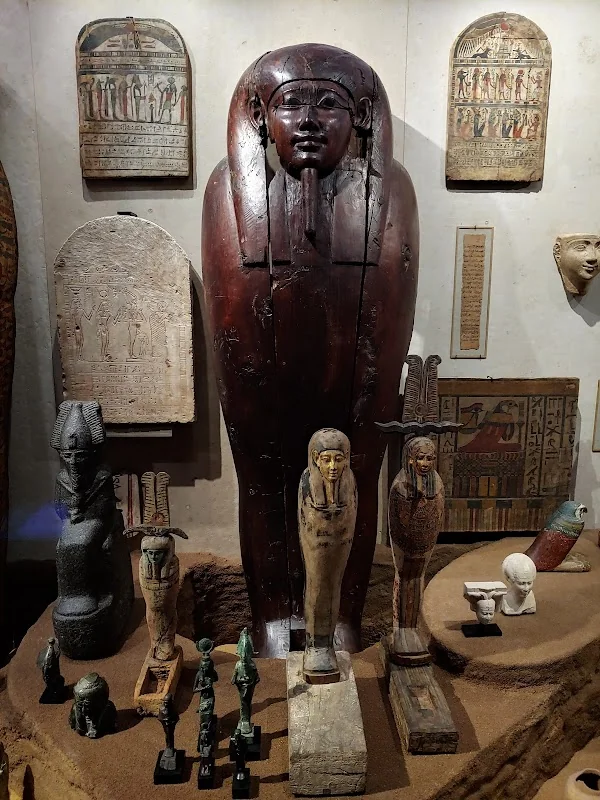
The Art Museum in Munich’s Kunstareal district is part of the city’s renowned cultural hub, where several museums and galleries are located in one area. It showcases a diverse collection of artworks, from ancient artifacts such as Egyptian and Roman statues to modern art and contemporary sculptures. The museum offers a perfect blend for both art and history lovers, combining the charm of the past with the creativity of modern times. With its calm atmosphere and well-organized exhibitions, it provides a refined cultural experience.
Nails and Art by Gıe
7. February 2026
Such a beautiful place to visit.
BradinHK
31. July 2018
Kunstareal is the Museum District in Munich. Here you find a handful of art, artifact, and history museums located within close proximity to each other. Visit the Kunstareal and Pinakothek websites for more information on the full list of museums to be found around Kunstareal. During our recent visit to Munich, we visited the three Pinakotheken museums; Alte Pinakothek, Neue Pinakothek, and Pinakothek der Moderne (includes the Die Neue Sammlung) as well as the Lenbach House. These were all good art museums that we enjoyed. Note: You can visit the Pinakothek museums on Sunday for €1 per museum, making this a great day to visit 2-3 museums you are interested in.
Bernhard Buchner
18. August 2022
The Egyptian Museum is a must to visit. Extremely well laid out, displays are perfect and explanations exhaustive.
Armando Allgjata
28. August 2025
internacjonal